ASF outbreaks in Western Visayas trigger pork bans, price hikes, and government food relief efforts
African Swine Fever resurfaces in Western Visayas, prompting four provinces to ban pork trade, while government and private sector initiatives address food affordability and MSME digitalization.
The resurgence of African Swine Fever (ASF) in Western Visayas dominated the conversation on June 30, 2026, as four provinces imposed temporary bans on the trading and transport of live hogs, pork, and pork by-products. The outbreak, confirmed in Iloilo, Capiz, and Negros Occidental, triggered swift government action, with local authorities tightening border controls and confiscating processed pork items like hotdog and tocino at checkpoints. Public sentiment on social media reflected a mix of anxiety, support for decisive measures, and dark humor over the absurdity of confiscating processed goods. Meanwhile, separate narratives emerged around government efforts to lower food prices through direct farm-to-table procurement and private-sector initiatives like Grab's digital upskilling program for MSMEs. Century Pacific Food Inc. announced a 3% price hike across its product categories, citing rising costs, while the cement industry unveiled a long-term decarbonization roadmap. The day's conversation highlighted the fragility of food supply chains and the intersecting pressures of disease outbreaks, inflation, and climate risks.
Key themes
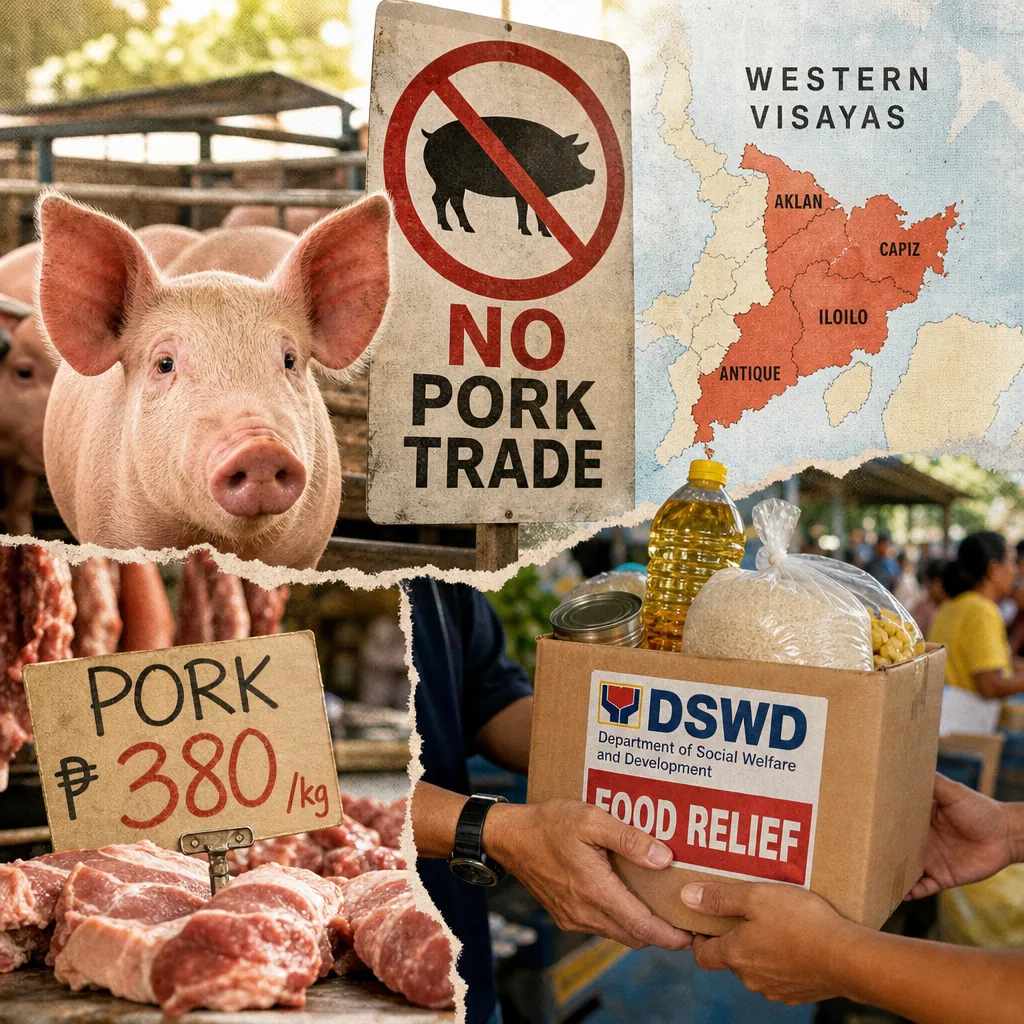
- ASF outbreaks trigger rapid pork trade bans – Four provinces in Western Visayas—Iloilo, Capiz, Aklan, and Negros Occidental—temporarily banned the trading and transport of live hogs, pork, and by-products after new ASF cases were confirmed. Local governments in Antique, Bacolod, and Capiz tightened border controls and urged hog raisers to report unusual pig deaths. The bans disrupted supply chains, with processed items like hotdog and tocino confiscated at checkpoints, raising concerns about food safety and availability.
- Public sentiment swings from anxiety to dark humor – Initial reports of hog deaths drew sad reactions on Facebook, reflecting genuine distress among pork-dependent communities. As enforcement became visible, the tone shifted: a video of confiscated hotdog and tocino garnered haha reactions, suggesting grim humor amid worry. Government announcements of strict border measures received love reactions, indicating public support for proactive action.
- Industry vs. government messaging diverges – The Pork Producers Federation of the Philippines (PPFP) emphasized that the industry has adjusted through strict biosecurity measures despite no available vaccine. This optimistic framing contrasted with aggressive provincial bans and confiscations, creating a credibility gap. Consumers and small hog raisers expressed skepticism, with one angry reaction on a news post signaling distrust in official reassurances.
- Government pushes direct farm-to-table procurement to lower food prices – President Ferdinand R. Marcos Jr. directed the Department of Social Welfare and Development (DSWD) and the Department of Agriculture (DA) to buy directly from farmers, cutting out middlemen to reduce food costs. State media amplified the narrative, with posts receiving modest engagement but significant shares, indicating active dissemination among pro-administration audiences.
- Grab expands digital upskilling for MSMEs amid inflation – Grab Philippines announced the expansion of its Grab Asenso: Digital Diskarte Program to Western Visayas, focusing on upskilling grocery MSMEs on GrabMart. A featured merchant in Bacolod reported that 50% of daily transactions now come through GrabMart, illustrating the shift to delivery-first operations as a buffer against inflation.
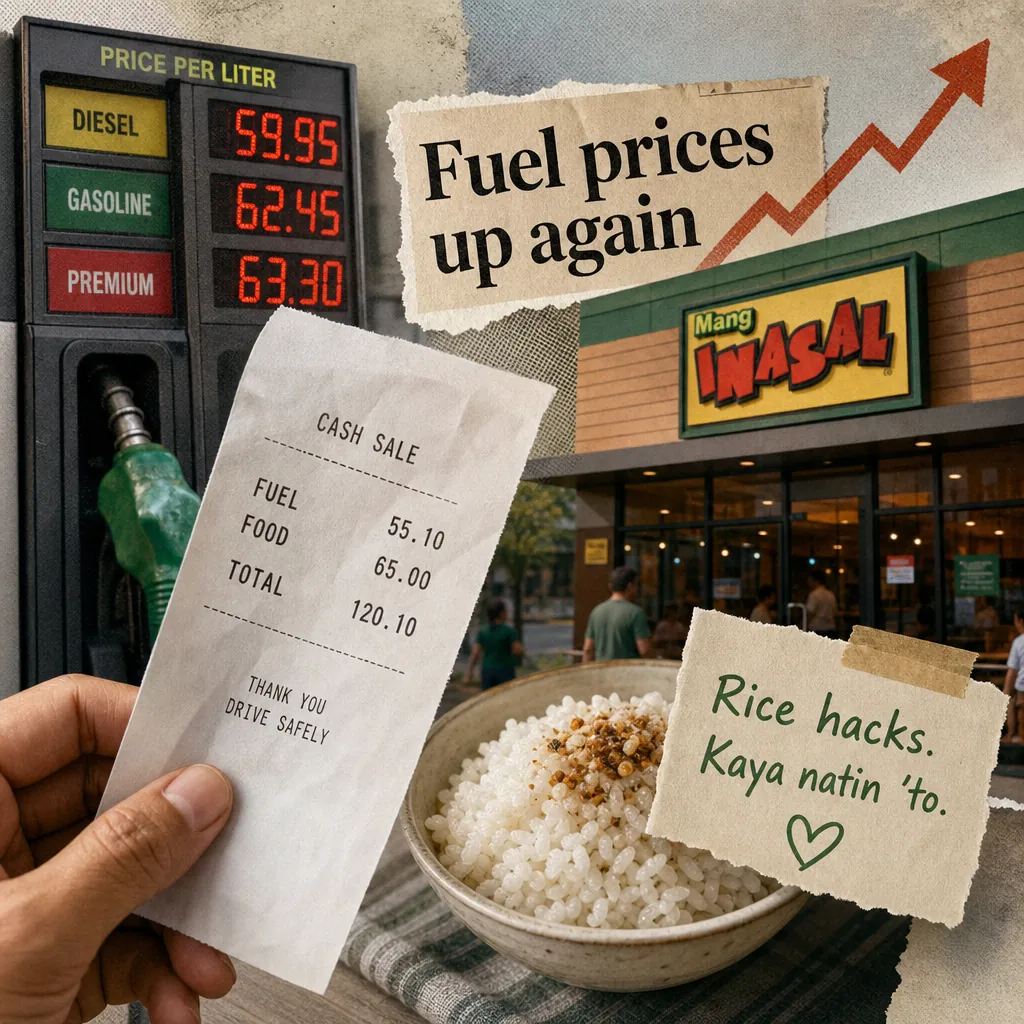
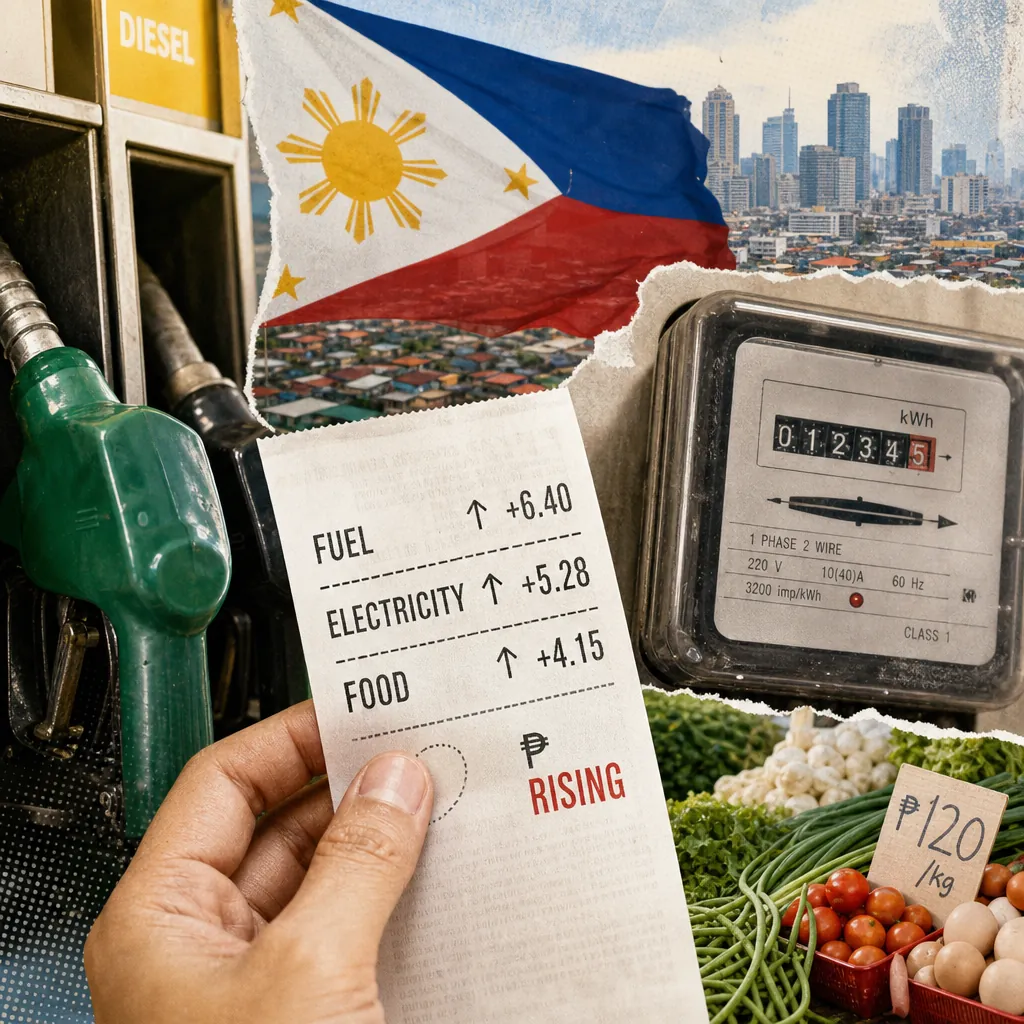
- Century Pacific raises prices, citing rising costs – Century Pacific Food Inc. (CPFI) implemented an average 3% price increase across its product categories in late May, citing higher operating costs. Executive Chairman Christopher Po noted that the increase remained below the 6.8% inflation rate and that further adjustments would depend on oil prices and geopolitical tensions.
- Cement industry launches decarbonization roadmap – The Cement Manufacturers Association of the Philippines (CeMAP) unveiled a long-term roadmap to cut carbon emissions by nearly tripling alternative fuel use to 36% by 2050 and reducing clinker content to 58%. The roadmap aims to align the industry with global climate goals while supporting infrastructure demand.
- El Niño and pests threaten sugar production – The BusinessMirror editorial highlighted that El Niño conditions and red-striped soft-scale insect infestations pose dual threats to sugarcane farms, potentially tightening domestic sugar supplies. The Food and Agriculture Organization reported a 7.5% month-on-month increase in global sugar prices in May, driven by concerns over production in India and Thailand.
How the narratives stack
Dominant – Within the captured set, the ASF outbreak and resulting pork trade bans formed the dominant narrative, generating the most social media engagement and news coverage. The story unfolded rapidly from initial uncertainty on Monday to concrete enforcement by Tuesday, with multiple provincial governments issuing directives and confiscating products. The emotional tone—predominantly sad and love reactions—indicated genuine public concern and support for government action. The coverage value of ASF-related articles in the set was substantial, with items from Daily Guardian online alone totaling over ₱587,000 in estimated advertising-equivalent value.
Counter-narrative – The industry's claim of adaptation through biosecurity measures, as voiced by the Pork Producers Federation, served as a counter-narrative to the alarmist tone of outbreak reports. However, this message received minimal engagement and one angry reaction, suggesting it failed to reassure the public. The divergence between industry optimism and government enforcement created a credibility gap that could fuel consumer panic or hoarding.
Emerging – The government's direct farm-to-table procurement initiative and Grab's digital upskilling program represent emerging narratives around systemic solutions to food affordability. These stories are still in early stages, with modest engagement but high share counts, indicating potential for growth as inflation and supply chain pressures persist. The cement industry's decarbonization roadmap also emerged as a forward-looking narrative, though it is tangential to the food-focused conversation.
Suppressed – The impact of ASF on small-scale hog raisers and consumers in affected provinces is under-covered. While government announcements dominate, the voices of individual farmers and sari-sari store owners are largely absent from the conversation. The potential for price spikes and menu substitutions in quick-service restaurants (QSRs) like Jollibee and Mang Inasal is also underexplored, despite the clear supply chain implications.
Platform insights
- Facebook – Dominated the conversation with detailed government announcements, local news reports, and user-generated content. The provinceofantique page received the highest engagement (99 likes, 35 love reactions) for its strict border control message, while a video of confiscated pork by-products shifted sentiment from fear to dark humor. News outlets like Manila Bulletin and Digicast Negros maintained a factual tone, with sad reactions indicating public anxiety. Facebook was the primary platform for both official and grassroots voices.
- Twitter – Minimal activity was observed, with only one tweet from Remate on June 30 receiving 15 views and zero engagement. Twitter was not a significant venue for this localized ASF story, likely due to the regional nature of the outbreak and the demographic preference for Facebook in the Visayas.
- YouTube – No relevant YouTube content was captured in the dataset. The absence suggests that video content was not a major channel for this conversation, though it could be leveraged for explainer videos on biosecurity or supply chain transparency.
Key voices and communities
- Provincial government authorities – Governors and mayors in Western Visayas emerged as the most authoritative voices, issuing border control directives and public advisories. Their posts generated high engagement, with the Antique provincial page receiving 99 likes, 35 love reactions, and 33 shares. The emotional response skewed toward concern and support, reflecting public trust in proactive government action.
- News media outlets – Mainstream and regional news accounts, including Manila Bulletin, Remate, One News PH, and Digicast Negros, amplified ASF developments with moderate reach. While individual post likes were low, these outlets acted as trusted aggregators whose content was widely shared. The emotional tone from commenters showed more sad and angry reactions when news outlets reported suspected ASF cases.
- Hog industry representatives – The Pork Producers Federation of the Philippines (PPFP), represented by President Eric Harina, spoke for the commercial hog industry in a single post on One News PH. Although engagement was minimal (0 likes, 1 angry reaction), this account represents the organized voice of producers directly affected by ASF and border controls.
- Local municipal government units – The mayor of Amlan, Negros Oriental, represented a cautious, evidence-based local response, refusing to prematurely label hog deaths as ASF without diagnostic confirmation. This post received 93 likes and 43 shares—the highest share count in the dataset—indicating that measured messaging resonates with a concerned but cautious public.
- Government agencies and state media – The DSWD, DA, PIA, and PTV framed food price reduction as a direct result of bypassing middlemen and sourcing produce straight from farmers. Their posts generated moderate engagement, with the DSWD's earthquake relief post receiving over 200 likes and 67 shares, indicating strong public resonance with disaster food aid messaging.
Narrative streams
ASF outbreak and pork trade bans
The conversation around ASF began quietly on Monday, June 29, when Digicast Negros reported that Amlan Mayor Manjoe Sycip cautioned it was "premature to conclude the hog deaths were caused by ASF," as municipal authorities were still gathering information. The post received 93 likes and 31 sad reactions, indicating an anxious but restrained public mood. That same day, the provinceofantique Facebook page published a more urgent tone, with Governor Paolo Javier calling for strict border control: "Kinahanglan ta striktuhan ang pagbantay sa atun mga border kay indi natun gusto magrapta liwat ang ASF sa atun probinsya. Nadudla ron kita." This post gathered 99 likes, 35 love reactions, and only 1 sad, suggesting strong public support for proactive measures.
By Tuesday, June 30, the narrative sharply escalated as Remate and Manila Bulletin announced that four provinces in Western Visayas had temporarily banned the trading and transport of live hogs, pork, and by-products. The Manila Bulletin post received 4 sad reactions, reflecting growing public concern over supply disruptions. The Daily Guardian online published multiple articles detailing border controls in Antique, Bacolod, and Capiz, with coverage worth an estimated ₱587,517 in total advertising-equivalent value across the set. One article quoted Governor Javier: "There are confirmed and suspected cases in our neighboring provinces in Region 6. We need to strictly guard our borders because we do not want ASF to spread again in our province."
User-generated content added a layer of enforcement evidence. A video posted by Ednel Arevalo showed pork by-products—hotdog and tocino—being confiscated at a Capiz border checkpoint. The post garnered 6 haha reactions, indicating a mix of grim humor and relief that enforcement was real. The confiscation of processed items highlighted the broad scope of the bans, which extended beyond live hogs to include finished products.
Government direct farm-to-table procurement
Starting around midday on June 30, both PIA and PTV posted identical messaging about President Marcos's directive for the DSWD to purchase directly from farmers to reduce food prices. The narrative emphasized eliminating middlemen to increase farmer income while lowering consumer costs. The PIA post received 2 likes but 42 shares, indicating that while initial reaction was muted, the content was seen as share-worthy—possibly by those supportive of agriculture policy. The PTV version added a call to ensure "sapat at abot-kayang pagkain" (enough and affordable food) and drew 3 comments, suggesting a small but engaged audience.
This narrative stream is part of a broader government effort to address food inflation, which has been a persistent issue in the Philippines. The DSWD and DA are tasked with buying harvests directly from farmers, bypassing intermediaries who typically add margins. The program aims to lower retail prices while ensuring farmers receive fair compensation. However, the lack of public pushback or detailed implementation critique in the dataset suggests the messaging has not yet been stress-tested by consumers or analysts.
Grab Asenso digital upskilling for MSMEs
Grab Philippines' post about its Western Visayas Learning Caravan provided a parallel narrative focused on tech-enabled adaptation. The post featured a quote from Bacolod City's representative, Dr. Mae Ferrer-Llamas, who stated "resilience alone is not enough"—a framing that subtly critiqued a purely survivalist approach in favor of proactive digital training. The story of ACM Grocery Store's owner, Sheila Parreno Murcia, who said "being on a platform is one thing, but knowing how to grow on it… that's what turns a digital storefront into a business that lasts," anchored the narrative in grassroots success.
With only 5 likes and 1 love reaction, the engagement was low, but the content was long-form and informational, typical of corporate press releases that rely on organic sharing rather than virality. The program aims to equip grocery MSMEs with AI tools, search optimization, and promotion strategies to survive inflation and rising costs. The featured merchant in Bacolod reported that roughly half of its daily transactions now come through GrabMart, a shift from traditional storefront to delivery-first operations.
Century Pacific price hike
Century Pacific Food Inc. (CPFI) raised prices by an average of about 3% across its product categories, citing higher costs while also seeking to keep food affordable for consumers. Executive Chairman Christopher Po told reporters on Tuesday that the company had held off implementing price increases until the second half of May despite mounting cost pressures. "So far, we understand that part of our role is really making food accessible and affordable, so even with the cost pressures that we're experiencing, we waited until the back half of May to increase our prices," Po said after the company's annual stockholders meeting.
The average increase of around 3% remained below the country's inflation rate of 6.8% as of May. Po said they were still evaluating whether further price adjustments would be necessary, noting that easing oil prices and the de-escalation of tensions in the Middle East could help temper some cost pressures. The company is maintaining its P8-billion to P9-billion capital expenditure program this year, focusing on expanding production capacity for domestic and export businesses.
Cement industry decarbonization roadmap
The Cement Manufacturers Association of the Philippines (CeMAP) unveiled the Philippine Cement and Concrete Industry Decarbonization Roadmap, a long-term strategy to cut carbon emissions. Under the roadmap, CeMAP aims to nearly triple alternative fuel use to 36% by 2050 from 13% in 2024, and cut clinker content to 58% by 2050 from 75% in 2024. Clinker, a by-product when heating limestone and clay, is the largest source of carbon dioxide emissions in cement manufacturing, accounting for about 90% of the industry's emissions.
CeMAP President John Reinier Dizon said the industry will pursue a unified decarbonization strategy while meeting infrastructure and housing demand. The roadmap was developed in partnership with the Department of Trade and Industry (DTI), the Government of Canada, and the United Nations Industrial Development Organization (UNIDO). The initiative positions the Philippine cement sector for a green transition, aligning with global climate goals.
El Niño and pest threats to sugar
The BusinessMirror editorial highlighted that El Niño conditions and red-striped soft-scale insect (RSSI) infestations pose dual threats to sugarcane farms. The Food and Agriculture Organization reported that its sugar price index averaged 95.1 points in May, up 7.5% from April, marking the highest level since October 2025. Additional support to prices came from concerns that El Niño could adversely affect sugar production in India and Thailand until next year, potentially reducing global export availability.
As the Philippines has increasingly relied on imports in recent years to prevent domestic sugar prices from skyrocketing, the editorial urged the government and private sector to work together to eliminate threats to local supply. The article underscores the vulnerability of the sugar sector to climate and pest pressures, which could further strain food affordability.
Conversation trajectory
- ASF outbreak escalation (next 2–3 weeks) – The conversation will likely shift from outbreak reporting to sustained discussion of pork price increases, with consumer budget meal alternatives and sari-sari store impacts becoming dominant topics. The anticipated official ASF case confirmation reports from the Bureau of Animal Industry (likely within days) and the imposition of wider inter-provincial travel bans will intensify consumer price sensitivity and brand accountability demands.
- Government direct farm-to-table program (next 4–6 weeks) – Expect this conversation to dominate agricultural commodity discussions (rice, sugar, pork) as the administration seeks visible wins ahead of the next State of the Nation Address and mid-term elections. The approaching planting and harvest season for rice and onions (August–September) will test the direct-buy model and either strengthen or weaken public trust in the government's price-control messaging.
- Digital transformation of neighborhood food retailers (next 3–6 months) – The Grab Asenso program's focus on digital skills for sari-sari store owners indicates that the food retail ecosystem is actively pivoting toward delivery-first models as a buffer against inflation. This trend will intensify as more mom-and-pop stores in provincial hubs adopt digital platforms, creating a new competitive front for legacy QSRs and FMCG brands.
- Price hike and value meal discourse (late Q3 2026) – The twin pressures of government price relief narratives and private-sector digital enablement will likely push consumer conversation toward value meals, budget bundles, and comparisons of online vs. physical store prices across QSRs and delivery platforms. The release of the July 2026 consumer price index will either validate or undermine government claims of inflation easing, generating a 2–3 day wave of comparison posts.
Trigger events – Official ASF case confirmation reports from the Bureau of Animal Industry; imposition of wider inter-provincial travel bans; release of July 2026 consumer price index data; next Grab Asenso regional caravan; approaching planting and harvest season for rice and onions.
Response guidance
Platform approaches:
- Facebook – Publish localized updates acknowledging the ASF situation while emphasizing strict sourcing protocols and biosecurity measures. Use infographics to explain the difference between raw pork products and processed, cooked items in the context of border controls. Engage with commenters expressing fear or anger by sharing verified facts about industry adjustments and government cooperation.
- Twitter – Share concise threads clarifying industry preparedness and highlighting how biosecurity protocols have evolved since the 2023 outbreak. Retweet official announcements from government agencies to position your brand as aligned with safety protocols. Publish real-time updates on supply chain adjustments to reassure consumers.
- YouTube – Produce short explainer videos featuring a company veterinarian or supply chain manager walking through safety checks applied to incoming pork raw materials. Create a playlist of "Ask the Expert" clips addressing common consumer questions about ASF transmission and food safety.
Key messages:
- "The Philippine pork industry has strengthened biosecurity protocols since past outbreaks, allowing producers to better protect herds even without a vaccine."
- "All pork products from our supply chain undergo rigorous inspection and come only from farms that comply with strict national and local safety standards."
- "We fully support LGU border controls and work closely with the Department of Agriculture to ensure that our sourcing remains within designated ASF-free zones."
- "Consumers can continue to enjoy processed pork items like hotdog and tocino, as these products are subject to high heat treatment that neutralizes the ASF virus."
Sensitive topics to navigate:
- Confiscation of pork by-products at checkpoints – Acknowledge that local bans may be precautionary, but emphasize that industry processing methods are validated by science and FDA regulations.
- Industry credibility after past outbreaks – Balance transparency about past challenges with concrete evidence of improved containment measures today.
- Potential price impact on pork products – Avoid making price guarantees, but proactively communicate that supply chain diversification helps mitigate shortages. Do not fuel panic buying by over-reassuring on price stability.
Response priorities:
- Proactively communicate safety assurances before negative narratives take root. Release a statement detailing sourcing protocols and regulatory compliance, linking to official LGU and DA advisories.
- Partner with local government information campaigns in affected areas to co-create content reinforcing that properly processed pork is safe.
- Monitor and respond to emerging consumer sentiment by setting up alerts for keywords like "ASF hotdog" or "pork ban" to quickly address misinformation with pre-approved language.
See the full picture behind today's signals.
This report draws from Media Meter's MediaWatch, our real-time monitoring engine tracking 2,470+ Philippine sources across print, broadcast, digital, and social. Explore how the platform turns raw coverage into decision-grade intelligence, then see how it's configured for teams like yours — whether you're in PR agencies, corporate comms, government, or marketing.
Want more? Browse our Report Library for sector and crisis intelligence, or request a demo and we'll have your brand set up before the call.
Want this kind of intelligence on your brand?
This brief is built on the same MediaWatch methodology that runs continuously across every brand we monitor. See your competitive landscape, Impact Score, and narrative trajectory in a 30-minute demo.