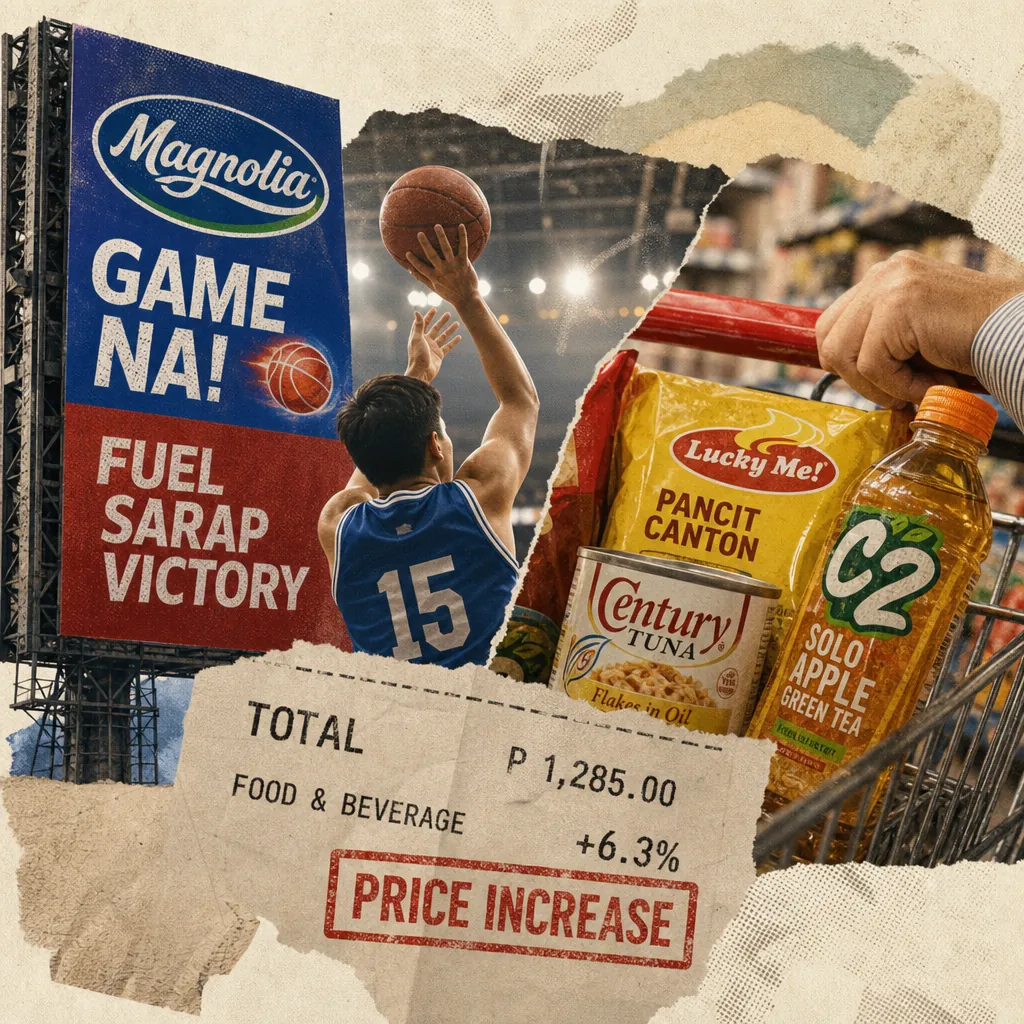
Fuel and electricity price surges deepen cost-of-living crisis as consumers turn to survival budgeting
A daily snapshot of the conversation around fuel, food, and electricity price hikes in the Philippines, covering social media reactions and news coverage from July 13-14, 2026.
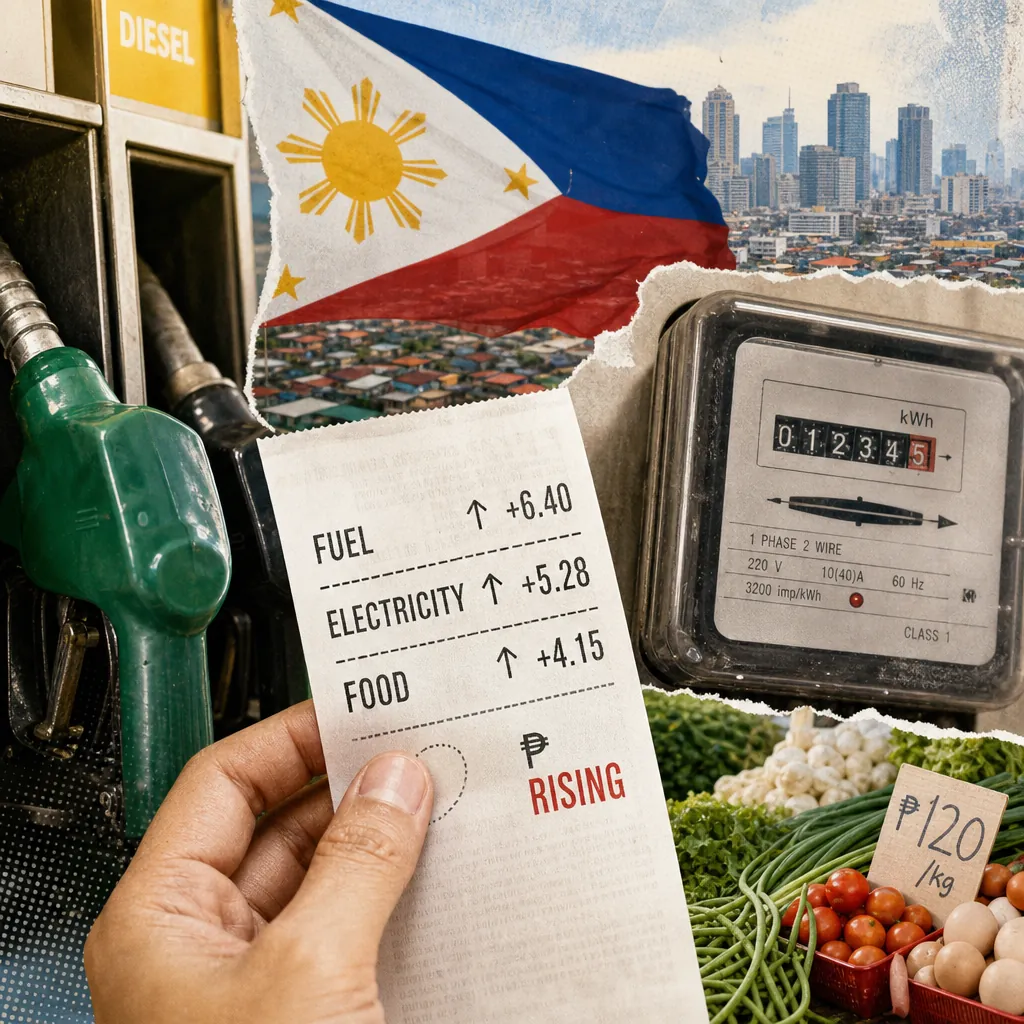
The conversation on July 13 and 14 was dominated by a fresh wave of fuel price increases—diesel up by as much as P4.62 per liter, kerosene by P4.22, and gasoline by P1—driven by renewed US-Iran hostilities and the closure of the Strait of Hormuz. The Department of Energy (DOE) announced it would revert to fixed price adjustments instead of ranges to prevent abuse, while Senator Risa Hontiveros called for a Senate investigation into the Energy Regulatory Commission (ERC) over disputed electricity bills and meter readings. On social media, the dominant narrative shifted from macro-level complaints to personal survival strategies: a Reddit post about surviving on P100 per day for food drew 65 upvotes and 53 comments, and a Facebook post about motorists fearing P100-per-liter fuel garnered 947 reactions and 270 comments. The government's direct-buy-from-farmers program, promoted by state media, attracted minimal engagement, highlighting a trust gap between official messaging and peer-generated stories of hardship.
Key themes
- Fuel price hikes driven by Middle East tensions — Renewed conflict between the US and Iran, including attacks on military bases and the Strait of Hormuz closure, pushed global crude prices higher. The DOE announced diesel could rise by P2.62 to P4.62 per liter, kerosene by P2.22 to P4.22, and gasoline by up to P1. Seaoil, Shell, and Petron implemented increases effective July 14. The DOE said it would scrap the price range system next week and impose fixed maximum or minimum adjustments to prevent oil companies from choosing the higher end.
- Electricity cost concerns and ERC scrutiny — Senator Risa Hontiveros filed a resolution to investigate the ERC over alleged anti-consumer policies, including requiring disputed bills to be paid before complaints are processed. The Visayas Grid was placed under yellow alert due to forced outages at over 20 plants. Meralco inaugurated Phase 1 of the MTerra Solar Project (600 MW) in Nueva Ecija, which the company said would help lower electricity prices in Luzon.
- Consumer survival and budgeting strategies — On Reddit, a severely underweight student (BMI 14) asked if P100 per day is enough for food, receiving 65 upvotes and 53 comments offering tips. Another user shared a self-made grocery budget app. These posts mark a shift from complaining to seeking solutions, reflecting sustained price pressures.
- Government response and trust gap — State media promoted the DSWD-DA direct-buy-from-farmers program as a way to lower food prices, but these posts generated under 100 views and single-digit reactions. In contrast, a viral tweet from transport group Piston about jeepney drivers earning only P200-300 per day garnered over 131,000 views and 1,200 likes, indicating that peer narratives resonate far more than official messaging.
- Transport sector and agricultural impact — Farmers in Benguet reported abandoning crops because delivery costs had become prohibitive, with a tweet accumulating 581 likes and 323 shares. Transport groups like Piston linked fuel hikes directly to food inflation, framing the issue as a survival crisis for drivers and commuters.
- LPG and airfare adjustments — LPG prices rose by P3 per kilo due to the reimposition of excise tax (Executive Order No. 114 had temporarily removed it). Meanwhile, the Civil Aeronautics Board announced a reduction in fuel surcharge to Level 8 starting July 16, lowering domestic and international airfares slightly.
- Broader economic slowdown — An opinion piece in the Philippine Daily Inquirer noted that the Philippines now has the slowest GDP growth (2.8% in Q1 2026) and the highest inflation (6.8% in May) among ASEAN-6 peers, alongside a 5.3% unemployment rate. This macro context underpins the public's heightened sensitivity to price increases.
How the narratives stack
Dominant — Within the captured set, the dominant narrative is the fuel price hike and its cascading effect on food and electricity costs. This story generated the most news items (over 30 articles across broadsheets, tabloids, TV, and radio) and the highest social media engagement. The DOE's announcement and the US-Iran conflict were the primary drivers, with coverage worth an estimated P7.4 million in advertising-equivalent value across the sample.
Counter-narrative — The government's direct-buy-from-farmers program and the MTerra Solar Project inauguration represent a counter-narrative of proactive intervention. However, these stories received far less attention: the solar project was covered in a few TV and radio segments, while the farm-to-table program posts on social media had negligible engagement. This suggests the public is skeptical of official solutions.
Emerging — The shift toward personal survival budgeting on Reddit and Facebook is an emerging narrative. The P100/day food budget post and the grocery app sharing indicate that consumers are moving from anger to adaptation. This could grow into a larger trend of value-seeking behavior, with implications for food and beverage brands.
Suppressed — The story of the ERC's alleged anti-consumer policies and Senator Hontiveros' investigation received some coverage (TV and tabloid) but was overshadowed by the fuel price story. Given that electricity bills are a major household expense, this issue may gain traction as more consumers face disputed charges.
Platform insights
- Facebook: The most interactive platform for emotional, personal stories. A post about motorists fearing P100-per-liter fuel drew 947 reactions and 270 comments. Regional news posts from GMA and PTV had moderate engagement (dozens to low hundreds). Government posts had very low engagement (under 100 views).
- Twitter: Drove real-time sentiment and grassroots reaction. The Piston tweet about jeepney drivers earned over 131,000 views and 1,200 likes. The Benguet farmers' tweet got 20,716 views and 323 shares. Twitter was also used for political framing, with accounts linking fuel hikes to government policy.
- Reddit: Provided the deepest narrative depth with only two relevant posts. The P100/day food budget post and the grocery app post both appeared on July 13, marking a shift toward solution-seeking behavior among young Filipinos. Engagement was modest (65 upvotes, 53 comments) but highly empathetic.
- YouTube: News clips from ANC and state media served as primary sources for factual announcements, with view counts ranging from 21 to 11,981. These videos rarely generated discussion, acting as broadcast channels rather than conversation hubs.
Key voices and communities
- Low-income consumers and households — The largest conversation driver, primarily on Facebook and Reddit, voicing distress over rising costs. A Facebook post about P100/liter fuel drew nearly 1,000 reactions; a Reddit post about P100/day food budget received 65 upvotes. Their narrative frames the issue as a survival crisis.
- Transport sector workers and public commuters — Groups like Piston are vocal and visible. Their content often goes viral because it ties macroeconomic pressures to tangible human suffering. The Piston tweet about jeepney drivers earning P200-300 per day became a rallying cry, shared 534 times.
- Farmers and agricultural producers — Farmers in Benguet and Aurora highlight that rising fuel costs make it unviable to harvest and deliver produce. Their posts receive strong public sympathy (e.g., 581 likes for the Benguet farmers' tweet).
- Government and official channels — The DOE, DA, DSWD, and state media (PTV, Radyo Pilipinas) disseminate price forecasts and policy responses. Their posts typically have low engagement (dozens to low hundreds of views), indicating a trust gap.
- Media outlets and broadcasters — Traditional media (ANC, GMA, Net 25, DZMM) amplify fuel and food price news. Their content is fact-based but the constant repetition of "big-time" and "looms" shapes public anxiety.
Narrative streams
Fuel price hikes and Middle East tensions
This stream dominated the news cycle. On July 13, the DOE announced that diesel prices could rise by P2.62 to P4.62 per liter, kerosene by P2.22 to P4.22, and gasoline by up to P1, effective July 14. The increases were attributed to renewed US-Iran hostilities, including an Iranian attack on US bases in Kuwait, Jordan, and Bahrain, and the closure of the Strait of Hormuz—a chokepoint for 20% of global oil supply. Energy Secretary Sharon Garin said the DOE would revert to fixed price adjustments next week to prevent oil companies from choosing the higher end of the range, a practice that had drawn criticism. The story was covered across all mediums: broadsheets (Malaya, Philippine Star, Manila Bulletin), tabloids (Abante, Bulgar, PM), TV (One News, GMA, DZMM Teleradyo), and radio (DZMM, DZRB). The total advertising-equivalent value of fuel price coverage in the captured set exceeded P3 million. For the sector, this means continued cost pressure on logistics and production, with no immediate relief in sight.
Electricity cost concerns and ERC scrutiny
Senator Risa Hontiveros filed Senate Resolution No. 509 to investigate the ERC over policies that she said place the burden on consumers. Specifically, she cited reports of erroneous meter readings by Meralco and a requirement that disputed bills be paid before complaints are processed. The Visayas Grid was placed under yellow alert on July 12 due to forced outages at over 20 power plants, with 14 others running at reduced capacity. Meanwhile, Meralco inaugurated Phase 1 of the MTerra Solar Project in Nueva Ecija, which will supply 600 MW to the Luzon grid. ERC Chairperson Francis Saturnino Juan attended the inauguration and defended the commission's policies, stating that rising electricity prices are due to high demand and thin supply. This stream is significant because it adds another layer to the cost-of-living crisis: households are squeezed by both fuel and electricity costs. The Hontiveros investigation could lead to policy changes that affect utility companies' billing practices.
Consumer survival and budgeting
On Reddit, a dormer posted about receiving only P100 per day for food, writing "I plan to pack can goods, bread, lutong ulam good for days" while noting her BMI of 14 classified as severely thin. The post received 65 upvotes and 53 comments, with community members offering tipid tips. Another Reddit user introduced a self-made grocery budget app, stating "Madalas akong lagpas sa grocery budget ko kaya gumawa ako ng app." These posts mark a turn from macro-level complaints to micro-level coping mechanisms. On Facebook, a post about motorists fearing P100-per-liter fuel drew 947 reactions and 270 comments, indicating visceral fear. This stream is actionable for brands: consumers are actively seeking tools and tips to stretch their budgets, presenting opportunities for value-focused messaging, loyalty programs, or partnerships with budgeting platforms.
Government response and trust gap
The administration of President Ferdinand Marcos Jr. promoted a policy of direct purchases from farmers, bypassing middlemen to lower food prices. State media amplified this narrative on July 6 and July 13, framing it as "direct relief to the people." However, these posts generated minimal engagement (under 100 views and single-digit reactions), indicating a disconnect between official messaging and the public's preoccupation with immediate price pressures. In contrast, a tweet from transport group Piston about jeepney drivers earning only P200-300 per day garnered over 131,000 views and 1,200 likes. This trust gap is a critical insight for communicators: audiences have shifted their attention to peer-generated narratives over institutional communications.
Broader economic context
An opinion piece in the Philippine Daily Inquirer by a columnist noted that the Philippines now has the slowest GDP growth (2.8% in Q1 2026) and the highest inflation (6.8% in May) among ASEAN-6 peers, alongside a 5.3% unemployment rate. The piece argued that the economy is in a familiar boom-and-bust cycle. This macro context underpins the public's heightened sensitivity to price increases and explains why fuel and electricity hikes generate such strong emotional responses.
Conversation trajectory
- Fuel prices will remain volatile (next 2-4 weeks): The US-Iran conflict shows no signs of de-escalation, and the Strait of Hormuz closure threatens global supply. The DOE's shift to fixed price adjustments may reduce uncertainty but will not lower prices. Expect continued weekly increases, with diesel potentially exceeding P60 per liter in Metro Manila.
- Electricity cost scrutiny will intensify (next 4-6 weeks): Senator Hontiveros' investigation and the yellow alert in Visayas will keep electricity costs in the spotlight. If more consumers report disputed bills, the ERC may face pressure to reform its policies. The MTerra Solar Project's contribution to lowering prices will be closely watched.
- Consumer behavior will shift toward value-seeking (next 1-3 months): The Reddit posts about P100/day budgets and grocery apps signal a grassroots turn toward extreme tipid strategies. Expect more user-generated content around budget hacks, value meal comparisons, and sari-sari store sourcing. Brands that offer transparent value will gain trust.
- Government messaging may lose further ground (ongoing): The trust gap between official communications and peer narratives is widening. Unless the government provides concrete proof of program effectiveness (e.g., price comparisons from the direct-buy program), its messaging will continue to be drowned out by viral stories of hardship.
Trigger events to watch:
- Next DOE oil price announcement (expected July 20-21)
- Peak typhoon season affecting vegetable supply (already cited in Calasiao price hikes)
- Release of June inflation data (expected early August)
- Senate hearing on ERC policies (date not yet set)
- Potential expansion of fuel subsidies for transport and agriculture
Response guidance
- Acknowledge the pain point first: Before promoting any product or policy, validate the real financial strain seen in posts like the student's P100/day budget and the jeepney driver's story. A tone-deaf message will backfire.
- Proactively launch value-focused campaigns: For food and beverage brands, accelerate the rollout of reinforced value meal lines (e.g., P49-P99 meal bundles) and communicate them consistently. Pair with messaging that highlights local sourcing or partnerships with small farmers.
- Prepare a price-justification playbook: For any unavoidable price adjustments, tie increases to transparently communicated cost drivers (fuel, logistics) and offset with visible value offers. Avoid silent shrinkflation.
- Engage with peer narratives: Instead of pushing official messaging, consider partnering with influencers or community leaders who can authentically share budget tips or value meal ideas. The Reddit grocery app trend offers an opportunity for brands to sponsor or co-create budgeting tools.
- Monitor electricity cost conversations: For utility companies and regulators, the Hontiveros investigation is a reputational risk. Proactive communication about billing accuracy and consumer protection policies is essential.
- Avoid direct political association: The government's role in price control is a flashpoint. Focus on corporate actions and consumer benefits rather than endorsing or criticizing administration policies.
See the full picture behind today's signals.
This report draws from Media Meter's MediaWatch, our real-time monitoring engine tracking 2,470+ Philippine sources across print, broadcast, digital, and social. Explore how the platform turns raw coverage into decision-grade intelligence, then see how it's configured for teams like yours — whether you're in PR agencies, corporate comms, government, or marketing.
Want more? Browse our Report Library for sector and crisis intelligence, or request a demo and we'll have your brand set up before the call.
Want this kind of intelligence on your brand?
This brief is built on the same MediaWatch methodology that runs continuously across every brand we monitor. See your competitive landscape, Impact Score, and narrative trajectory in a 30-minute demo.