Bohol Price Freeze Follows Calamity as Bakeries Shut
Bohol's provincial trade office moves to freeze prices on staples and medicines after a state of calamity, while bakers nationwide close under rising flour costs and a Leyte trade fair targets ₱6.3 million in holiday sales.
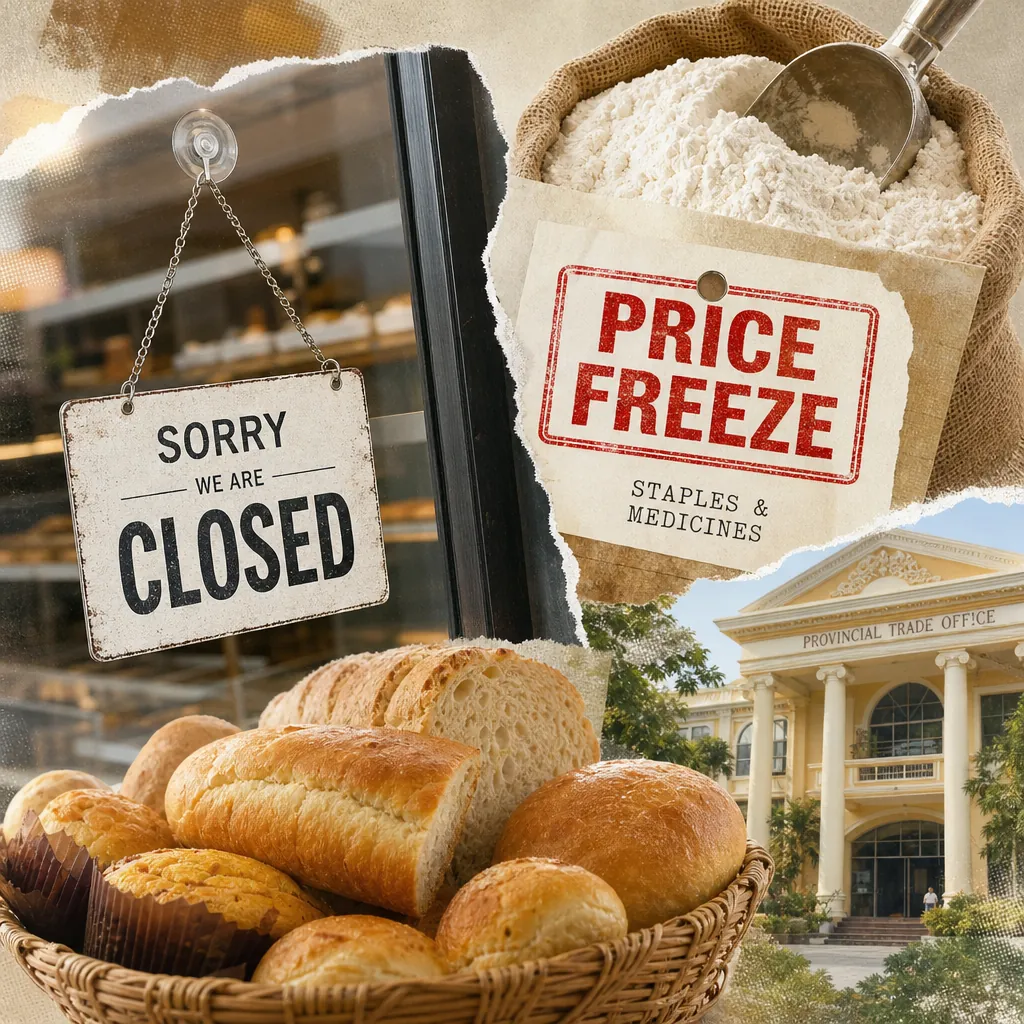
The Department of Trade and Industry's Bohol provincial office said price controls will be imposed on prime commodities, basic agricultural products and medicines after the province was placed under a state of calamity, with the freeze to run at least 60 days 3. The announcement, reported by The Bohol Tribune, is the most consequential consumer-protection action in the items reviewed for this window, and it lands in the middle of the holiday shopping season, when household budgets are already stretched.
Around it sits a wider set of stories about the cost of doing business and the cost of buying: bakers in Metro Manila closing because flour has climbed about 10% since the start of the year 20, a milk tea franchisee in Pampanga giving up after rent, utilities, raw materials and wages outran sales 28, a columnist paying nearly ₱1,000 for 250 grams of dark roast coffee 14, and a Leyte trade fair where the trade department hopes 30 small producers can sell ₱6.3 million worth of goods in five days 1. A Vietnamese-language report on Vingroup's planned US$500-million electric vehicle plant at New Clark City 2 and a Bohol electricity-rate explainer showing a 200-kilowatt-hour household bill rising from ₱2,595.12 in September to ₱3,004.72 in November 10 round out the picture of a consumer economy where input costs are moving faster than paychecks.
No social-media monitoring writeup accompanied this set, so the conversation here is entirely a news-media one, and the items are a monitored selection rather than a full record of the day's retail coverage. Within that selection, the Bohol price freeze and the bakery closures carry the most direct consequence for households and small firms; the trade fair and the Vingroup agreement point to where the sector is trying to generate growth.
Key themes
- Bohol price freeze covers staples and medicines for at least 60 days. After the province declared a state of calamity, DTI Bohol provincial director Vierna Ligan said controls will apply to prime commodities, basic agricultural products and selected medicines, with the trade department, the Department of Agriculture and the Department of Health each freezing prices in their own lane 3.
- Flour is up about 10% this year and some bakeries have closed. A bakery owner told GMA News that a sack of flour that cost ₱915 when she started selling bread now costs more than ₱1,000, and that other operating costs have risen alongside it 20.
- A seven-year-old milk tea shop closed because customers ran out of budget. Infinitea franchisee Bea Pelayo Laderas survived the pandemic but not the past year and a half of rising rent, utilities, materials and wages against flat or falling sales 28.
- DTI Leyte is betting ₱6.3 million on a five-day mall fair. The Layag Leyte Pre-Christmas Trade Fair at Robinsons Place Tacloban runs November 25 to 29 with about 30 micro, small and medium enterprises, positioned to catch holiday mall traffic 1.
- Vingroup signed a land-lease agreement for a US$500-million EV plant at New Clark City. The Vietnamese conglomerate's VinFast unit would build and assemble electric cars in Tarlac for domestic sale and export, with construction expected to take 12 to 18 months 2.
- Electricity bills in Bohol rose for three straight months. A 200-kWh household supplied by Bohol II Electric Cooperative paid ₱2,595.12 in September, ₱2,783 in October and ₱3,004.72 in November, a 15.8% increase over two months 10.
- Holiday spending is being pulled in two directions. A BusinessMirror column describes taxi drivers waiting unusually long outside Metro Manila's biggest malls weeks before Christmas 27, while a Manila Times feature on a Pan de Manila paper-bag design shows brands still investing in seasonal sentiment 7.
How the narratives stack
Dominant: the Bohol price freeze. The freeze is the item with the clearest legal force and the widest reach in this set. A state of calamity triggers the Price Act, the 1992 law that lets the government cap prices on basic necessities and prime commodities in declared disaster areas; violators face administrative sanctions and fines 3. What makes the Bohol case notable is the division of labor: the trade department handles manufactured goods, the Department of Agriculture sets the list for agricultural products such as selected fish and rice, and the Department of Health freezes selected medicine prices 3. Ligan said the province is waiting for the regional price list before enforcing the freeze, which will last at least 60 days and may be shortened depending on conditions 3. The freeze was discussed at a November 25 meeting of the Provincial Price Monitoring Council, the body that coordinates price surveillance across agencies at the local level 3.
Counter-narrative: small food businesses are closing under cost pressure. The bakery story and the milk tea closure describe the same squeeze from the supply side. Flour's roughly 10% rise since January is the headline number, but the bakery owner's comparison is more telling: ₱915 per sack at the start of her business versus more than ₱1,000 now 20. Another owner pointed to broken display shelves as a marker of how little room there is for capital spending 20. Laderas, the Infinitea franchisee, put the demand side plainly: "Kahit anong marketing mo, pag walang budget ang customer, wala kang magagawa" — no matter how much you market, if the customer has no budget, there is nothing you can do 28. The BusinessMirror piece carrying her account also notes that the Anti-Money Laundering Council has disclosed hundreds of millions of pesos in remittances from mainland China and Hong Kong routed to a local foods corporation, a juxtaposition the columnist uses to argue that honest retail is getting harder while other money moves easily 28.
Emerging: the trade department is using holiday fairs as a market-access channel. The Layag Leyte fair is the year-end culmination of DTI Leyte's 2026 assistance program for micro, small and medium enterprises — the firms with fewer than 200 employees that make up the overwhelming majority of Philippine businesses. The ₱6.3-million target across 30 exhibitors works out to about ₱210,000 per seller over five days, an ambitious number for producers who typically sell at much smaller volumes 1. The fair is also a warm-up for a larger regional Christmas fair in December 1. Separately, the Vingroup agreement with the Bases Conversion and Development Authority — the state corporation that develops former military land, including New Clark City in Tarlac — shows the same department courting much larger investment: the EV plant was first announced by DTI in October 2026 with a US$500-million price tag, and VinFast has been in the Philippine market since May 2024 with five distributor partnerships established this year 2.
Under-covered: the household budget behind the price stories. The Bohol electricity explainer does the arithmetic that the price-freeze story leaves implicit. For a household consuming 200 kWh a month — enough for a refrigerator, an electric fan and a computer — the bill rose ₱409.60 between September and November, or 15.8% 10. That is the kind of increase that eats the difference between buying rice and buying medicine, and it explains why price freezes become politically urgent after calamities. The same theme appears in the coffee column, where the writer discovers that a 250-gram bag of dark roast now leaves only ₱5 in change from a ₱1,000 bill 14, and in the BusinessMirror mall piece, where a taxi driver at the Ayala Center stand says long waits for a single fare have become normal in recent weeks 27. None of these items drew the coverage of the freeze, but together they describe the demand conditions that make the freeze necessary.
Platform insights
No social-platform monitoring data was supplied for this window, so there is no engagement evidence to report for Facebook, X, Reddit or YouTube. The conversation as captured here ran through online news outlets, community newspapers and blogs.
Key voices and communities
Provincial trade officials. Ligan in Bohol and the DTI Leyte organizers are the named decision-makers in this set. Their statements carry the weight of enforcement: the freeze, the price lists, the sales targets 31.
Small food-business owners. The bakers interviewed by GMA News and Laderas of Infinitea are the human face of the cost squeeze. Their accounts are specific — a flour price, a broken shelf, a quote about customer budgets — and they anchor the counter-narrative 2028.
Business columnists and opinion writers. The BusinessMirror pieces on malls and honest business, the Context.ph coffee column and the Inquirer Plus coconut analysis all frame retail through the lens of household and farmer economics 27281438. They shape how the business-reading public interprets the price data.
Local government and festival organizers. The presidential proclamations of special nonworking days in December 2026 and January 2027 for municipal founding anniversaries and festivals — Cainta's Sumbingtik Festival on December 1, Mlang's Kawayanan Festival on December 4, and others — set the calendar against which local retail and trade fairs will operate 3733.
Narrative streams
Bohol freezes prices on staples and medicines after calamity declaration
The mechanics matter more than the headline. Under the Price Act, once a locality is under a state of calamity, the government can impose a price freeze on basic necessities and prime commodities, and the freeze holds for 60 days unless lifted sooner 3. In Bohol, three agencies split the work: DTI for manufactured prime commodities, the Department of Agriculture for agricultural products including selected fish and rice, and the Department of Health for selected medicines 3. Ligan said enforcement awaits the regional office's price list, which means the freeze's practical start date depends on an administrative step rather than the calamity declaration itself 3. Violators face sanctions and fines 3.
For retailers in Bohol, the freeze converts a market decision into a legal one: a sari-sari store or grocery that raises prices on covered goods during the freeze period risks penalties, and the 60-day window covers the peak of the holiday season. For consumers, the protection is real but narrow — it covers listed goods, not rents, electricity or transport. The electricity data from Bohol II Electric Cooperative shows why that distinction matters: a 200-kWh household bill rose from ₱2,595.12 in September to ₱3,004.72 in November, and no price freeze touches that line item 10.
Flour costs push bakeries toward closure
GMA News' "24 Oras Weekend" report put a number on what bakers have been saying for months: flour is up about 10% since the start of the year 20. One owner, Jessel, described the shift in absolute terms — ₱915 per sack at the start of her business, more than ₱1,000 now — and said other operating expenses have become equally hard to shoulder 20. A second owner pointed to broken display shelves they have not been able to replace 20. The report does not say how many bakeries have closed or where, so the scale of the closures is uncertain; what is confirmed is that at least some operators have shut and others say they are close.
Bread is a price-sensitive staple in the Philippines, and small bakeries compete with larger chains that buy flour in bulk and can absorb cost swings. The read for the sector is that the smallest bakeries — the neighborhood panaderya — face a margin squeeze that a 10% input increase is enough to tip, and that any further flour movement in the first quarter will produce more closures unless they can raise prices or cut product lines. The Department of Trade and Industry's suggested retail price system for bread, which sets reference prices for common loaves, limits how much of the cost increase bakers can pass through, though the items reviewed here do not detail current SRP adjustments.
A milk tea franchise closes after seven years at one location
The Infinitea closure is a demand-side story. Laderas had operated the franchise since 2013 and kept the shop open through the pandemic, but the past 18 months brought rising rent, utilities, raw materials and wages against sales that stagnated or declined 28. Her quote — that no amount of marketing helps when the customer has no budget — is the clearest statement in this set of what weak consumer spending looks like at the level of a single storefront 28. The BusinessMirror column frames her closure against disclosures by the Anti-Money Laundering Council about large remittances to a local foods corporation, arguing that the contrast between struggling legitimate businesses and unexplained money flows is a policy problem 28.
For franchisors, the closure is a signal about franchisee resilience: a format that survived the pandemic can still fail on operating-cost inflation, and franchise networks with thin franchisee margins are exposed. For the sector, the read is that food-service expansion in 2027 will depend more on keeping unit costs down than on opening new locations.
DTI Leyte targets ₱6.3 million at a five-day mall fair
The Layag Leyte Pre-Christmas Trade Fair opened Wednesday, November 25, at Robinsons Place Tacloban and runs through Sunday, November 29, with about 30 local exhibitors 1. The event is the year-end culmination of DTI Leyte's 2026 assistance to micro, small and medium enterprises and a warm-up for a larger regional Christmas fair in December 1. The ₱6.3-million target relies on mall foot traffic as residents begin holiday shopping 1.
Trade fairs are one of the few channels that put very small producers in front of high-volume retail crowds without the cost of a permanent store, and the trade department uses them to convert its training and lending assistance into actual sales. The per-exhibitor math — roughly ₱210,000 over five days — is ambitious for producers who normally sell in smaller volumes, and hitting it would depend on the mall's holiday traffic holding up. The read for the sector is that MSME market access in the provinces increasingly runs through mall partnerships, and that the success of these fairs will be judged by repeat orders after the event, not just booth sales during it.
Vingroup signs land lease for a US$500-million EV plant at New Clark City
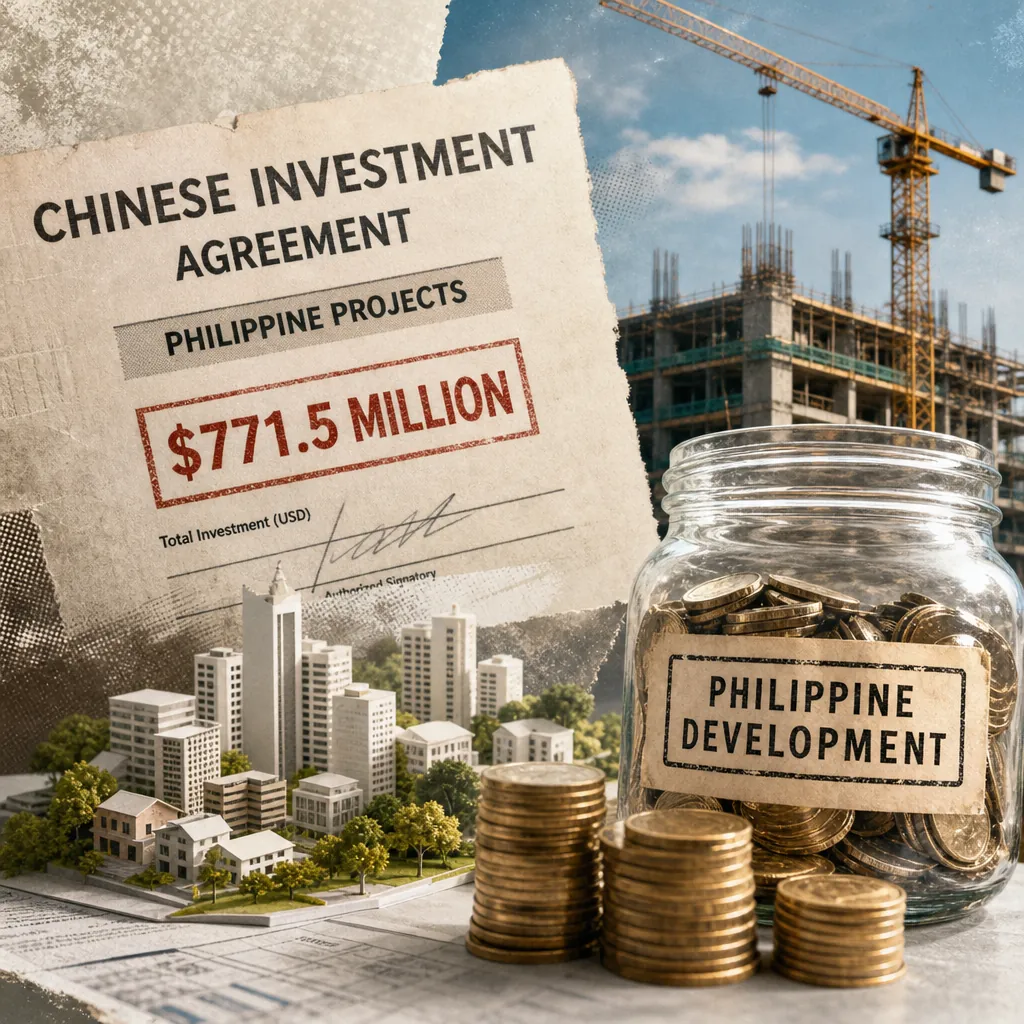
Vingroup, the Vietnamese conglomerate controlled by billionaire Pham Nhat Vuong, signed a principal agreement with the Bases Conversion and Development Authority on November 26 to lease land at New Clark City in Tarlac for an integrated industrial and commercial complex that would include manufacturing, technology firms and an electric vehicle assembly plant 2. The trade department first announced the plan in October 2026 with a US$500-million investment figure; construction is expected to take 12 to 18 months, and the plant would supply the Philippine market and export 2. VinFast entered the Philippines in May 2024 and established partnerships with five vehicle distributors in 2026, and it also plans to expand electric motorcycle sales 2.
The BCDA is the state-owned corporation that converts former US military bases, including Clark, into commercial and industrial developments; New Clark City is its flagship new town in Tarlac. For the retail and consumer sector, the plant matters less as a car factory than as a signal: it would create local manufacturing jobs and a supplier base, and it would put a low-cost EV brand into direct competition with established distributors. The agreement is a principal agreement, not a finalized lease, so the timeline remains contingent on contract execution.
Holiday sentiment and the mall economy
Two features describe the holiday retail mood from opposite ends. The Manila Times reports that artist June Digan designed Pan de Manila's 2026 Christmas paper bag around childhood memories of carols, Simbang Gabi and street vendors selling bibingka and puto bumbong outside churches, with the message "To the little eyes of a child, Christmas is pure magic" 7. The BusinessMirror column describes a taxi driver at the Ayala Center stand who was relieved to finally get a passenger and said long waits have become normal in recent weeks, despite Christmas approaching 27. The column traces the Ayala Center's history from the open-air Makati Commercial Center designed by National Artist Ildefonso P. Santos Jr. to today's enclosed giant malls 27.
Neither item carries sales data, so the strength of holiday spending is uncertain. What they show is that brands are still investing in seasonal marketing while at least some foot-traffic-dependent workers see weaker demand than the calendar would suggest. The read for retailers is that holiday campaigns should be built around value messaging rather than premium positioning this season, and that mall operators' traffic numbers through December will be the clearest test of whether the taxi driver's experience is anecdotal or representative.
Conversation trajectory
Price-freeze enforcement in Bohol, next 1–2 weeks. The freeze becomes enforceable once the DTI regional office issues its price list; watch for the list's publication and the first reported violations or inspections. The 60-day clock, if it starts in early December, runs into late January or early February 2027 3.
Bakery closures and flour prices, through the first quarter of 2027. The GMA report establishes a 10% year-to-date flour increase but not a closure count. Watch for industry-group statements or DTI announcements on bread suggested retail prices; a further flour increase without an SRP adjustment would likely produce more closures 20.
Layag Leyte fair results, November 29–early December. The fair closes Sunday, November 29; the organizer's ₱6.3-million target will be checkable against post-event sales reports, and the December regional fair will show whether the format scales 1.
Vingroup lease execution, next 3–6 months. The principal agreement with the BCDA needs to become a signed lease before construction can begin; watch for the contract signing and any groundbreaking announcement, which would confirm the 12-to-18-month construction timeline 2.
Holiday retail traffic, through December 2026. Mall traffic and consumer spending data through the Christmas season will test whether the weak foot traffic described in the BusinessMirror column is broad or localized 27.
Trigger events. A new calamity declaration elsewhere would extend price freezes to other provinces; a DTI flour or bread SRP announcement would change bakery economics; and the December regional trade fair in Eastern Visayas would provide a second data point on MSME holiday sales 3201.
Response guidance
Price-freeze compliance communications. Retailers operating in calamity-declared areas should confirm which goods are covered by the DTI, DA and DOH lists before adjusting any prices, and should document cost increases on uncovered items separately so that compliance with the freeze does not become a blanket price story 3.
Cost-increase messaging for food businesses. Bakeries and food-service operators should lead with specific input numbers — the flour price per sack, the electricity rate per kilowatt-hour — rather than general statements about inflation, because the specific figures are what reporters and customers can verify 2010.
Franchisee support. Franchisors should review franchisee unit economics for rent, utilities and wage inflation before signing new locations, and should be prepared to explain what support exists when a franchisee's sales stagnate 28.
MSME fair promotion. Trade-fair organizers and participants should set expectations around post-event repeat orders, not just booth sales, and should publish per-exhibitor results so that the format's value can be assessed 1.
Holiday value messaging. Consumer brands should weight holiday campaigns toward value and affordability, and should avoid premium positioning that clashes with the budget pressure visible in the coffee, electricity and milk tea stories 141028.
Investment announcements. Companies announcing large industrial investments should pair the headline figure with a timeline and a local-jobs estimate, since principal agreements can take months to become binding contracts 2.
See the full picture behind today's signals.
This report draws from Media Meter's MediaWatch, our real-time monitoring engine tracking 2,470+ Philippine sources across print, broadcast, digital, and social. Explore how the platform turns raw coverage into decision-grade intelligence, then see how it's configured for teams like yours — whether you're in PR agencies, corporate comms, government, or marketing.
Want more? Browse our Report Library for sector and crisis intelligence, or request a demo and we'll have your brand set up before the call.
Want this kind of intelligence on your brand?
This brief is built on the same MediaWatch methodology that runs continuously across every brand we monitor. See your competitive landscape, Impact Score, and narrative trajectory in a 30-minute demo.