BSP tightens e-money rules, GCash IPO looms, and banks brace for slower growth
The Bangko Sentral ng Pilipinas warns against unauthorized e-money partnerships, GCash prepares for a landmark IPO, and Philippine banks face headwinds from slower growth and rising energy costs.
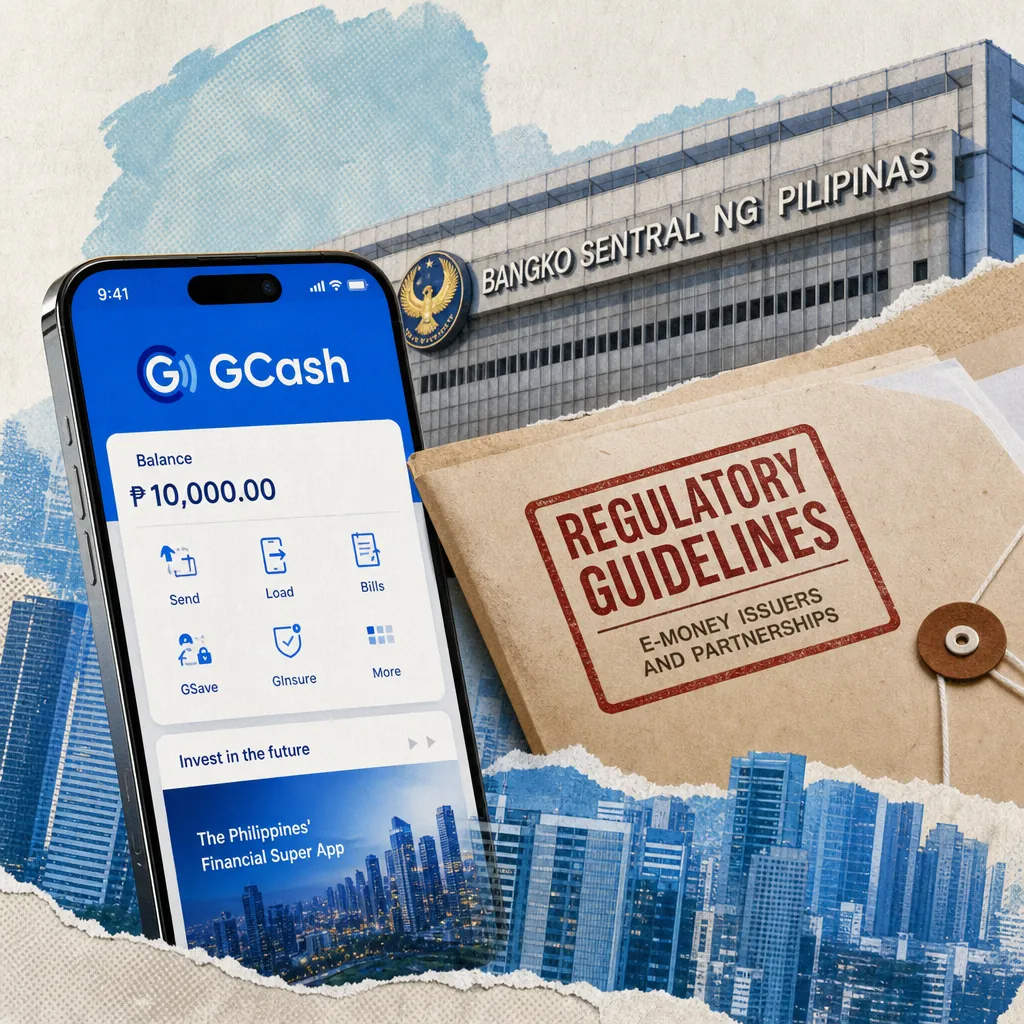
The Bangko Sentral ng Pilipinas (BSP) issued a memorandum on June 27 reminding supervised financial institutions that they cannot extend, share, or transfer their authority to offer electronic money (e-money) services to unlicensed partners, platforms, or third-party providers. The central bank said that BSP-supervised financial institutions (BSFIs) authorized to offer e-money services must ensure that such authority is used only by the entity that the regulator approved. The memorandum, signed by BSP Deputy Governor Mamerto Tangonan, covers arrangements involving technology services, platform access, co-branding, partnerships, wallet provisioning, outsourcing, and similar structures. "BSFIs shall not enter into any arrangement that results in another person or entity conducting or appearing to conduct regulated e-money activities without the requisite BSP authority," the central bank said. The reminder comes as financial institutions increasingly partner with fintech firms and other third parties to expand digital payment services. [1]
Separately, the BSP also noted that Philippine banks remain capable of absorbing potential shocks even as Fitch Ratings warned that slower economic growth, high energy prices, and rapid expansion in unsecured consumer lending could raise asset quality risks and weigh on bank earnings. In a statement, the central bank said it "notes Fitch's assessment and continues to closely monitor risks to credit quality, profitability, liquidity and capital adequacy." "Philippine banks remain well positioned to withstand potential shocks, supported by ample liquidity, adequate capital buffers and manageable asset quality," the BSP said. "While some pressure may emerge in specific borrower segments, risks remain contained, with no evidence of systemic stress." [2]
Meanwhile, the forthcoming initial public offering (IPO) of GCash, the country's leading mobile wallet, is generating significant discussion. An opinion piece in the Philippine Star argued that the GCash IPO could be a landmark event for Southeast Asia's tech sector, not because of its size but because it represents a different narrative. Unlike other regional tech listings such as Grab, GoTo, or Sea Limited, GCash was born to solve a uniquely Filipino problem: providing financial services to the unbanked. The piece noted that GCash's ecosystem is built around financial services, making it distinct from other tech companies that started as ride-hailing or e-commerce platforms. [3]
On the regulatory front, the BSP's Circular 1213, which took full effect on June 25, requires banks and e-wallet operators to replace one-time passwords (OTPs) sent via text or email for high-risk transactions with more secure authentication methods such as biometric, behavioral, adaptive, or passwordless authentication. The rules apply to BSP-supervised financial institutions that process an average of more than ₱75 million in online transactions per month. The shift is expected to have a significant impact on micro, small, and medium enterprises (MSMEs), which rely heavily on OTPs for payment verification. [4]
In other developments, the Insurance Commission (IC) called for stronger climate resilience and innovative risk financing. Insurance Commissioner Reynaldo Regalado made the call during the 22nd Asia Nat CAT and Climate Change Conference held on Thursday, according to a news release from the commission on Friday. Regalado highlighted the increasing frequency and severity of natural catastrophes and their growing impact on economies, communities, and the insurance sector. He cited the recent magnitude 7.8 earthquake that struck General Santos City and neighboring areas, displacing thousands of residents and damaging critical infrastructure. "These events remind us that the most catastrophic disasters are no longer rare, once-in-a-generation occurrences. As risks continue to evolve, so too must our efforts to strengthen financial resilience and ensure that people, businesses, and communities can withstand shocks and recover more quickly from their impact," Regalado said. [5]
On the economic front, BDO Capital & Investment Corp. president Eduardo Francisco discussed the country's soft 2.8 percent gross domestic product (GDP) growth, marking the third straight quarter of sequentially slower growth for the economy. BDO Capital expects the economy to grow by 2.2 percent by the end of the year, still below pre-pandemic levels, and 3.2 percent next year. The economy expanded by 4.4 percent in 2025. Francisco noted that broader inflationary pressures stemming from the energy supply shock triggered by the US-Iran conflict dragged down overall consumption spending, particularly for essentials. Meanwhile, private construction and capital expenditure were dampened by weak risk appetite. [6]
Additionally, BPI assistant vice president Noel Gideon Goco said that government policies such as high tariffs and price ceilings squeeze local agribusinesses' profits, reducing their capacity to invest further in the sector and expand operations. Speaking at the Agribusiness Investment Forum organized by the University of Asia and the Pacific's Center for Food and Agri Business, Goco said, "Government policies play a crucial role in shaping the competitiveness and growth of the agriculture industry. But certain regulatory measures intended to protect consumers can inadvertently stifle investment and innovation." [7]
Finally, BPI, through its social development arm BPI Foundation, partnered with Ayala Group's renewable energy company ACEN to bring financial education programs to communities near ACEN's project sites. The initiative aims to reach 3,000 direct beneficiaries through BPI's flagship financial education program, FinEd Unboxed, which equips participants with basic financial management skills. [8]
Key themes
- BSP clamps down on unauthorized e-money partnerships. The central bank issued a memorandum reminding supervised institutions that they cannot extend their e-money authority to unlicensed third parties, covering arrangements like co-branding, wallet provisioning, and outsourcing. This aims to ensure that only BSP-approved entities conduct regulated e-money activities. [1]
- Philippine banks resilient but face headwinds. The BSP acknowledged Fitch Ratings' warning that slower growth, high energy prices, and rapid unsecured consumer lending could raise asset quality risks. However, the central bank maintained that banks are well-positioned with ample liquidity, adequate capital buffers, and manageable asset quality. [2]
- GCash IPO seen as a game-changer for Philippine fintech. An opinion piece highlighted that GCash's upcoming IPO could be a landmark event, distinct from other Southeast Asian tech listings because it was built around financial services for the unbanked. The IPO is expected to change the narrative for Philippine tech companies. [3]
- BSP's new authentication rules reshape MSME payments. Circular 1213, effective June 25, requires banks and e-wallets to replace OTPs with stronger authentication for high-risk transactions. This will significantly impact MSMEs that rely on OTPs for payment verification. [4]
- Insurance Commission pushes for climate resilience and innovative risk financing. Commissioner Regalado called for stronger financial resilience against natural catastrophes, citing the recent magnitude 7.8 earthquake and the increasing frequency of disasters. He urged the insurance sector to develop innovative risk financing solutions. [5]
- Slow economic growth expected to persist. BDO Capital forecasts GDP growth of 2.2% for 2026, below pre-pandemic levels, due to inflationary pressures from the US-Iran energy supply shock and weak risk appetite dampening private construction and capital expenditure. [6]
- High tariffs and price caps hamper agribusiness investments. BPI's Goco said that government policies like high tariffs and price ceilings squeeze agribusiness profits, reducing their capacity to invest and expand. He called for a balanced approach to regulation. [7]
- BPI and ACEN partner to boost financial literacy. BPI Foundation and ACEN will bring financial education programs to communities near ACEN's renewable energy project sites, aiming to reach 3,000 beneficiaries through the FinEd Unboxed program. [8]
How the narratives stack
Dominant: The BSP's regulatory tightening on e-money partnerships and authentication standards dominates the conversation, reflecting the central bank's proactive stance on financial stability and security. The memorandum on unauthorized e-money tie-ups and the implementation of Circular 1213 signal a shift toward stricter oversight of digital financial services. This narrative is reinforced by the BSP's defense of bank resilience against Fitch's warnings, showing a coordinated message of stability amid headwinds. [1][2][4]
Counter-narrative: The GCash IPO narrative offers a contrasting, optimistic view of the Philippine fintech sector. While regulators tighten rules, the market is preparing for a landmark listing that could attract significant investment and validate the country's digital finance ecosystem. This narrative suggests that despite regulatory challenges, the sector's growth potential remains strong. [3]
Emerging: Climate risk and insurance innovation are gaining traction as a distinct theme. The Insurance Commission's call for stronger resilience and innovative risk financing, coupled with the recent earthquake, highlights a growing awareness of the financial sector's role in disaster preparedness. This could lead to new products and partnerships. [5]
Suppressed: The impact of high tariffs and price caps on agribusiness investments received relatively less attention compared to the BSP's regulatory moves. While BPI's Goco raised the issue, it was not widely covered in the captured set. This under-covered story points to structural challenges in the agriculture sector that could affect food security and rural livelihoods. [7]
Platform insights
- Online News: The majority of coverage came from online news outlets, particularly Philstar Online and Manila Times Online. These platforms carried the BSP's regulatory announcements, the GCash IPO opinion piece, and the economic outlook. The articles generated significant advertising-equivalent value, with the GCash IPO piece alone worth over ₱735,000. [1][2][3][4][5][6][7][8]
- Social Media: No social media posts were provided in the monitoring writeup, so engagement data is unavailable. However, the topics covered—especially the GCash IPO and the BSP's new authentication rules—are likely to generate discussion on platforms like Facebook and Twitter, where fintech and regulatory news often spark debate.
Key voices and communities
- Bangko Sentral ng Pilipinas (BSP): The central bank is the primary regulatory voice, issuing memoranda and statements on e-money rules, bank resilience, and authentication standards. Its communications shape the narrative around financial stability and digital finance regulation. [1][2][4]
- Insurance Commission (IC): Commissioner Reynaldo Regalado is pushing for climate resilience and innovative risk financing, positioning the IC as a proactive regulator in the face of natural catastrophes. [5]
- BDO Capital & Investment Corp.: President Eduardo Francisco provided a sobering economic outlook, forecasting slow growth and highlighting the impact of energy price shocks. His views carry weight as a leading investment bank. [6]
- Bank of the Philippine Islands (BPI): BPI officials, including Noel Gideon Goco, raised concerns about policy risks in agribusiness, while BPI Foundation's partnership with ACEN underscores the bank's commitment to financial literacy. [7][8]
- GCash and fintech advocates: The opinion piece on GCash's IPO represents a pro-fintech voice, arguing that the listing could be a transformative moment for the Philippine digital economy. [3]
Narrative streams
BSP tightens e-money rules to curb unauthorized activities
The BSP's memorandum on June 27 is a clear signal that the central bank is intensifying oversight of the rapidly growing e-money sector. The directive prohibits BSP-supervised financial institutions from extending their e-money authority to unlicensed third parties through arrangements such as technology services, platform access, co-branding, partnerships, wallet provisioning, and outsourcing. This move aims to prevent unauthorized entities from conducting regulated e-money activities, which could pose risks to consumers and the financial system. The BSP's reminder comes as financial institutions increasingly collaborate with fintech firms to expand digital payment services, raising concerns about regulatory arbitrage. The memorandum, signed by Deputy Governor Mamerto Tangonan, emphasizes that only entities approved by the BSP should be allowed to offer e-money services. This regulatory tightening is part of a broader effort to ensure the integrity and security of the digital payments ecosystem. [1]
Philippine banks resilient despite Fitch warning
Fitch Ratings' warning about slower economic growth, high energy prices, and rapid expansion in unsecured consumer lending could raise asset quality risks and weigh on bank earnings. However, the BSP pushed back, stating that Philippine banks remain well-positioned to withstand potential shocks, supported by ample liquidity, adequate capital buffers, and manageable asset quality. The central bank acknowledged that some pressure may emerge in specific borrower segments but said risks remain contained with no evidence of systemic stress. This narrative underscores the tension between external risk assessments and the domestic regulator's confidence. The BSP's statement was carried by Philstar Online, with an estimated advertising-equivalent value of over ₱300,000. [2]
GCash IPO: A different kind of tech listing
An opinion piece in Philstar Online argued that the forthcoming GCash IPO could be a landmark event for Southeast Asia's tech sector, not because of its size but because it represents a different narrative. Unlike other regional tech listings such as Grab, GoTo, or Sea Limited, GCash was born to solve a uniquely Filipino problem: providing financial services to the unbanked. The piece noted that GCash's ecosystem is built around financial services, making it distinct from other tech companies that started as ride-hailing or e-commerce platforms. The author suggested that the IPO could change the narrative for Philippine tech companies and attract significant investor interest. The article carried an estimated advertising-equivalent value of over ₱735,000, indicating strong editorial interest. [3]
BSP's new authentication rules reshape MSME payments
BSP Circular 1213, which took full effect on June 25, requires banks and e-wallet operators to replace one-time passwords (OTPs) sent via text or email for high-risk transactions with more secure authentication methods such as biometric, behavioral, adaptive, or passwordless authentication. The rules apply to BSP-supervised financial institutions that process an average of more than ₱75 million in online transactions per month. The shift is expected to have a significant impact on micro, small, and medium enterprises (MSMEs), which rely heavily on OTPs for payment verification. The article highlighted that the biggest adjustments may not be happening inside banks or e-wallets but at the checkout counters of millions of small businesses. This regulatory change is part of the BSP's broader push to strengthen the security of digital financial transactions. [4]
Insurance Commission calls for climate resilience and innovative risk financing
Insurance Commissioner Reynaldo Regalado made a strong call for stronger climate resilience and innovative risk financing during the 22nd Asia Nat CAT and Climate Change Conference. He highlighted the increasing frequency and severity of natural catastrophes, citing the recent magnitude 7.8 earthquake that struck General Santos City and neighboring areas, displacing thousands of residents and damaging critical infrastructure. Regalado emphasized that catastrophic disasters are no longer rare, once-in-a-generation occurrences and urged the insurance sector to develop innovative risk financing solutions to help people, businesses, and communities withstand shocks and recover more quickly. The article, published by Manila Times Online, carried an estimated advertising-equivalent value of over ₱166,000. [5]
Slow economic growth to persist amid energy shock
BDO Capital & Investment Corp. president Eduardo Francisco provided a sobering economic outlook during an economic briefing organized by the UP College of Business Administration Alumni Association. He discussed the country's soft 2.8 percent GDP growth, marking the third straight quarter of sequentially slower growth. BDO Capital expects the economy to grow by 2.2 percent by the end of the year, still below pre-pandemic levels, and 3.2 percent next year. The economy expanded by 4.4 percent in 2025. Francisco noted that broader inflationary pressures stemming from the energy supply shock triggered by the US-Iran conflict dragged down overall consumption spending, particularly for essentials. Meanwhile, private construction and capital expenditure were dampened by weak risk appetite. The article, published by Philstar Online, carried an estimated advertising-equivalent value of over ₱694,000. [6]
High tariffs and price caps hamper agribusiness investments
BPI assistant vice president Noel Gideon Goco said that government policies such as high tariffs and price ceilings squeeze local agribusinesses' profits, reducing their capacity to invest further in the sector and expand operations. Speaking at the Agribusiness Investment Forum organized by the University of Asia and the Pacific's Center for Food and Agri Business, Goco said, "Government policies play a crucial role in shaping the competitiveness and growth of the agriculture industry. But certain regulatory measures intended to protect consumers can inadvertently stifle investment and innovation." He called for a balanced approach to regulation that supports both consumers and producers. The article, published by Philstar Online, carried an estimated advertising-equivalent value of over ₱369,000. [7]
BPI and ACEN partner to boost financial literacy
BPI, through its social development arm BPI Foundation, partnered with Ayala Group's renewable energy company ACEN to bring financial education programs to communities near ACEN's project sites in Real, Quezon; Pakil, Pangil, and Paete, Laguna; and San Marcelino, Subic, Castillejos, Palauig, Iba and Botolan, Zambales. The initiative aims to reach 3,000 direct beneficiaries through BPI's flagship financial education program, FinEd Unboxed, which equips participants with basic financial management skills. The partnership underscores BPI's commitment to financial inclusion and sustainable development. The article, published by Philstar Online, carried an estimated advertising-equivalent value of over ₱234,000. [8]
Conversation trajectory
Over the next 4–6 weeks, the BSP's regulatory tightening on e-money partnerships and authentication standards is likely to generate further discussion as financial institutions adjust their operations. The GCash IPO, if it proceeds, will attract significant media attention and could shift the narrative toward optimism in the fintech sector. The Insurance Commission's call for climate resilience may lead to policy announcements or industry initiatives. The slow economic growth outlook will continue to be a concern, with potential implications for bank lending and consumer spending. The impact of high tariffs and price caps on agribusiness may gain more attention if food prices rise further. Trigger events include the GCash IPO filing, any BSP enforcement actions on e-money rules, and new economic data releases.
Response guidance
Communicators in the financial sector should emphasize the BSP's commitment to stability and security while highlighting the opportunities presented by digital finance innovation. For banks and fintech firms, clear communication about compliance with new authentication rules and e-money regulations will be crucial to maintain customer trust. The GCash IPO narrative offers a positive story about Philippine fintech's potential; other firms may leverage this to attract investor interest. On climate risk, insurers and financial institutions should proactively discuss their resilience strategies and innovative products. Given the slow growth outlook, messaging should balance realism with confidence in the sector's fundamentals. Avoid downplaying regulatory risks or overpromising on growth.
See the full picture behind today's signals.
This report draws from Media Meter's MediaWatch, our real-time monitoring engine tracking 2,470+ Philippine sources across print, broadcast, digital, and social. Explore how the platform turns raw coverage into decision-grade intelligence, then see how it's configured for teams like yours — whether you're in PR agencies, corporate comms, government, or marketing.
Want more? Browse our Report Library for sector and crisis intelligence, or request a demo and we'll have your brand set up before the call.
Want this kind of intelligence on your brand?
This brief is built on the same MediaWatch methodology that runs continuously across every brand we monitor. See your competitive landscape, Impact Score, and narrative trajectory in a 30-minute demo.