Cashless transit, zero-fee transfers, and security concerns shape Philippine digital finance landscape
The LRT-2 cashless fare system launch and the industry-wide shift to zero-fee InstaPay/PESONet transfers dominate the conversation, while service outages and fraud incidents underscore persistent trust challenges.
The conversation around Philippine digital finance on July 13, 2026, was defined by two major developments: the launch of a cashless fare system on LRT-2 and the continued ripple effects of banks waiving InstaPay and PESONet transfer fees. These stories, while distinct, share a common thread—the push for a more connected, cash-lite Philippines—but also expose the fault lines of reliability and security that still trouble consumers.
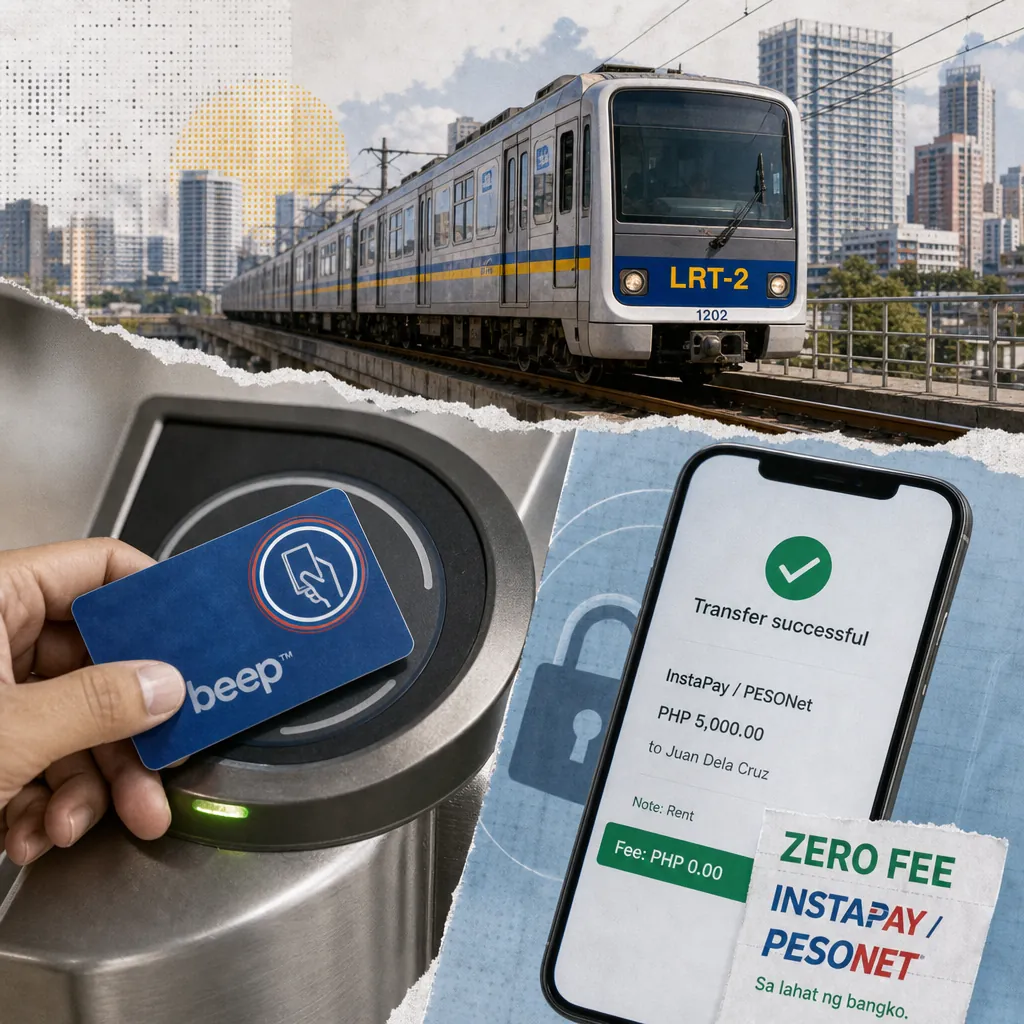
The LRT-2 launch dominated the day's news cycle, with coordinated announcements from the Department of Transportation (DOTr), the Light Rail Transit Authority (LRTA), Rizal Commercial Banking Corp. (RCBC), and Visa. Commuters can now pay fares by tapping Visa or Mastercard debit, credit, or prepaid cards, using NFC-enabled mobile wallets like Google Pay, or scanning GCash QR codes at all 13 stations from Recto to Antipolo. The system is designed to be bank-agnostic, accepting payment instruments from any participating bank or fintech provider, eliminating the need for a dedicated transit card. The coverage was extensive: GMA 7's TV report reached an estimated advertising-equivalent value of ₱252,801, while a detailed article in the Philippine Daily Inquirer carried ₱253,874 in estimated ad value. The DOTr's Facebook post, written in Filipino, highlighted the convenience and the presidential directive behind the system, earning 63 likes and 20 shares. The most engaged single piece came from LANDBANK, whose post showcasing its existing tap-to-pay capability and a personal demonstration by its chairman at Legarda station garnered 543 likes and 165 love reactions. The conversation remained uniformly positive, with no critical or skeptical comments visible in the monitored set—suggesting either strong stakeholder coordination or an early-stage sentiment that has yet to surface.
Running parallel to the transit story was the ongoing normalization of zero-fee bank transfers. Prompted by Bangko Sentral ng Pilipinas (BSP) Circular No. 1238, which aims to make digital financial services affordable and accessible, nearly every major bank—BPI, LANDBANK, UnionBank, BDO, Metrobank, Chinabank, PSBank, Security Bank, PNB, RCBC, and EastWest—has waived InstaPay and PESONet fees by mid-July. The BSP's Deputy Governor Mamerto Tangonan appeared on One News to explain the policy, stating that the goal is to "bring in more people into formal finance, formal economy." That interview alone carried an estimated advertising-equivalent value of ₱8.74 million, the highest single-item value in the captured set. On social media, a Facebook post from the Digital Banks PH community declared "Almost all banks now offer UNLIMITED FREE InstaPay and PESONet transfers," advising consumers to look beyond transfer fees when choosing a bank—highlighting minimum balance requirements, daily limits, and customer service instead. That post earned 134 likes and 66 shares. However, the fee waiver wave also sparked a counter-narrative: an opinion piece in the Philippine Daily Inquirer argued that the BSP's "free transfer fee rule" could break e-wallets like GCash and Maya, which rely on transaction fees to sustain operations, unlike traditional banks that can absorb the cost. The article, worth an estimated ₱886,032 in advertising-equivalent value, warned that consumers—especially the unbanked who depend on e-wallets—could eventually feel the consequences of this policy.
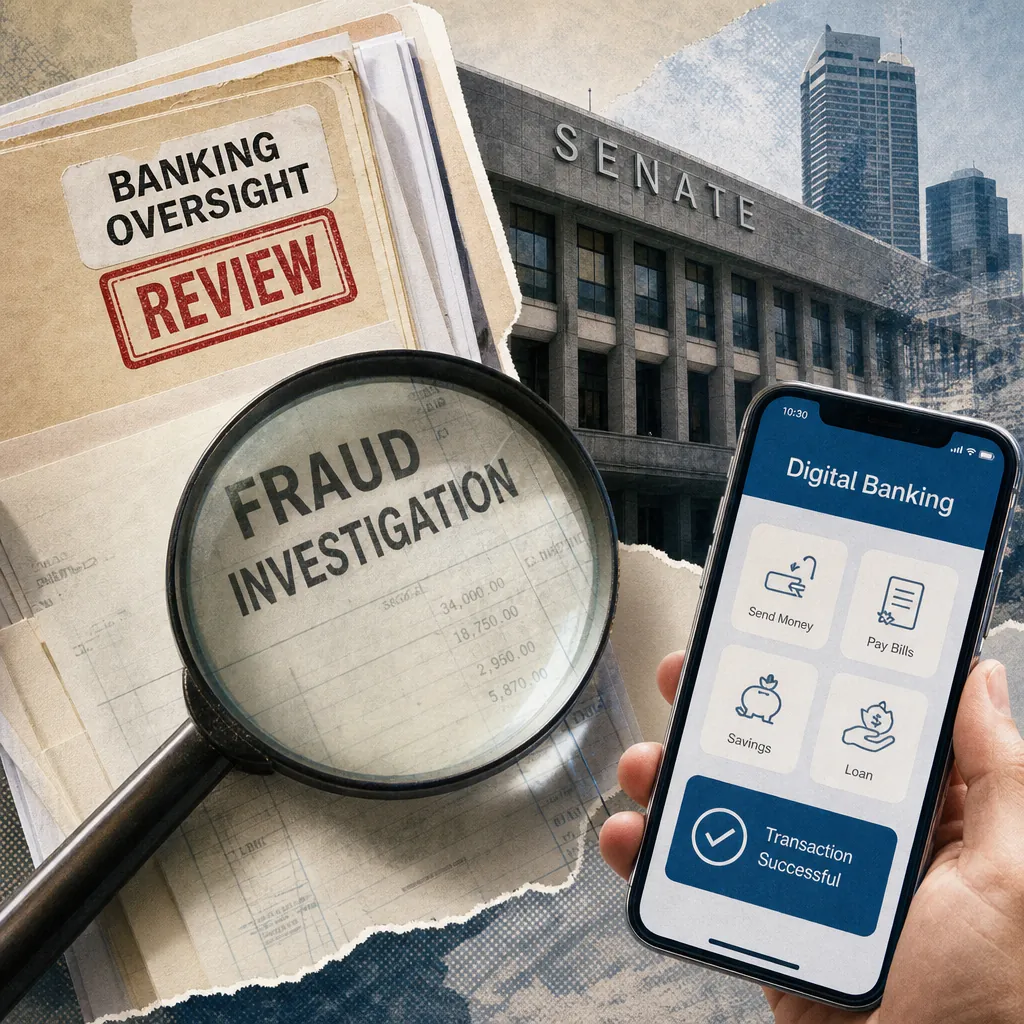
Amid these positive developments, the conversation was also shaped by persistent security concerns and service reliability issues. The BPI online banking outage in mid-June, which drew over 60,000 views on a single advisory, remained a reference point for consumer frustration. Users on Reddit and Twitter continued to share experiences of unauthorized transactions and phishing scams, with celebrity Kyline Alcantara's revelation that she fell victim to a phishing scam amplifying public anxiety. In response, LANDBANK issued a smishing awareness advisory under the hashtag #CyberSigurista, explaining the Anti-Financial Account Scamming Act (AFASA) and urging users to "Stop. Check. Report. Protect." This educational post received 356 likes and 25 shares, indicating high public concern about scam prevention. The BSP also proposed new rules that would establish financial consumer protection as a standalone supervisory function, giving regulators broader powers to examine institutions and act against harmful practices.
Key themes
- Cashless transit goes live on LRT-2: The launch of an interoperable automated fare collection system on LRT-2 allows commuters to pay using bank cards, mobile wallets, or GCash QR codes. The system is bank-agnostic and designed to serve over 58.7 million annual passengers. Coverage was extensive across TV, broadsheets, and social media, with the DOTr, LRTA, RCBC, and Visa as key partners.
- Zero-fee transfers become the new normal: Following BSP Circular No. 1238, all major banks have waived InstaPay and PESONet fees, making free interbank transfers a baseline expectation. The BSP's Deputy Governor appeared on TV to explain the policy, which aims to boost financial inclusion. However, an opinion piece warned that the rule could harm e-wallet providers that depend on transaction fees.
- Security and fraud concerns persist: High-profile phishing scams, including one involving celebrity Kyline Alcantara, have heightened public anxiety. LANDBANK's smishing advisory and the BSP's proposed consumer protection rules reflect a growing focus on safeguarding digital transactions. The BSP's draft circular would establish financial consumer protection as a distinct supervisory function.
- Service reliability remains a trust issue: The BPI outage in June continues to shape consumer expectations. Users on Reddit and Twitter demand faster restoration and clearer communication during disruptions. The contrast between BPI's reactive outage updates and CIMB's proactive maintenance advisories highlights best practices in crisis communication.
- Competitive dynamics in digital payments intensify: The LRT-2 launch prominently features RCBC, GCash, and LANDBANK, while Maya and other players are absent. The fee waiver race has leveled the playing field on cost, pushing competition toward app reliability, customer service, and value-added features like cashback and rewards.
- Islamic banking gets a new leader: Former Budget Secretary Amenah Pangandaman has been appointed chair and CEO of Al-Amanah Islamic Investment Bank of the Philippines, the country's only Islamic bank. She has pledged to expand Islamic banking and deepen financial inclusion, though her appointment comes amid controversy over her resignation from the DBM.
- Sustainability bonds see strong demand: BDO Unibank closed its sixth ASEAN Sustainability Bond offering early due to oversubscription, raising at least ₱5 billion. The bonds carry a 1.5-year tenor and a 6.26% annual coupon rate. Proceeds will finance or refinance eligible assets under BDO's Sustainable Finance Framework.
How the narratives stack
Dominant: The LRT-2 cashless fare system launch is the day's most covered story, with coordinated announcements from government agencies and private partners generating extensive media coverage and positive social media engagement. The narrative is uniformly celebratory, framing the launch as a milestone in the government's digital transformation agenda. Within the captured set, this story accounts for the highest number of individual articles and a significant share of total advertising-equivalent value.
Counter-narrative: The opinion piece in the Inquirer arguing that the BSP's free transfer fee rule could break e-wallets provides a critical counterpoint to the otherwise positive fee waiver story. It warns that while banks can absorb the cost, e-wallets like GCash and Maya—which serve many unbanked consumers—rely on transaction fees to sustain operations. This narrative challenges the assumption that zero fees are universally beneficial.
Emerging: The BSP's proposed rules to establish financial consumer protection as a standalone supervisory function signal a regulatory shift toward stronger oversight of how banks and fintechs treat customers. The draft circular would allow the BSP to conduct separate consumer protection examinations and impose sanctions, including cease-and-desist orders and fines. This development could reshape compliance priorities for financial institutions.
Suppressed: The potential exclusion of certain players from the LRT-2 payment ecosystem is an under-covered story. While the system is described as bank-agnostic, the launch materials prominently feature RCBC, GCash, and LANDBANK, with no mention of Maya, UnionBank, or other major fintechs. This could create a perception gap for brands not associated with the launch, but no critical coverage or social media discussion has emerged on this point.
Platform insights
- Facebook: Dominated the conversation with the highest engagement metrics. LANDBANK's post about the LRT-2 launch garnered 543 likes and 165 love reactions, while the Digital Banks PH community post on free transfers earned 134 likes and 66 shares. The platform served as the primary space for emotional endorsement and visual storytelling, with official posts from DOTr and LRTA generating significant love and share reactions. The Edu Manzano story about a returned mistaken GCash transfer also went viral, accumulating 1,558 likes and 943 love reactions.
- Twitter: Functioned as a real-time news relay and crisis communication channel. BPI's outage advisories in June drew tens of thousands of views, but the platform saw lower engagement for the LRT-2 launch, with ABS-CBN's breaking tweet reaching 637 views but only 2 likes. Twitter was also used for scam alerts, with a user posting a detailed list of scam account numbers that was shared six times.
- Reddit: Served as the space for detailed troubleshooting and peer support. Long threads on credit card comparisons, secured credit cards, and interbank payment posting delays accumulated hundreds of comments. The platform's upvote system elevated posts that combined personal experience with actionable advice, such as a user who shared a detailed refinancing success story with Pag-IBIG, earning 52 upvotes and 19 comments. No Reddit posts appeared in the July 13 dataset for the LRT-2 launch, indicating the platform's slower cadence captures consumer research phases rather than real-time events.
- YouTube: Tutorials on recovering wrong GCash transfers and comparing digital banking features have thousands of views, reflecting high demand for actionable guidance. A video on Atome's billing cycle has 16,025 views and 209 comments, indicating strong interest in BNPL troubleshooting.
Key voices and communities
- Government and regulatory agencies: The DOTr, LRTA, and BSP are the central institutional voices driving the LRT-2 launch narrative. Their messaging emphasizes alignment with presidential directives on modernizing public transport and expanding digital payment options. The BSP also shapes the fee waiver conversation through Circular No. 1238 and the proposed consumer protection rules. These stakeholders are critical for validating and amplifying digital payment initiatives.
- Financial institutions and payment providers: RCBC, Visa, GCash, and LANDBANK are the core commercial partners executing the LRT-2 automated fare collection system. Each entity leverages the launch for brand visibility: RCBC and Visa as technology enablers, GCash for QR-based commuting, and LANDBANK for contactless card tap-and-go. Their social media content stresses reliability, security, and innovation while showcasing high-level executives at the event.
- Mainstream media outlets: ABS-CBN, GMA News, and broadsheets like the Philippine Daily Inquirer, BusinessWorld, and The Philippine Star served as primary amplifiers, publishing both text and photo-based coverage of the LRT-2 launch and the fee waiver trend. Their reporting reached significant audiences across TV, print, and online, with the Inquirer's opinion piece on e-wallet fees generating substantial engagement.
- Digital banking consumers and fintech adopters: Active on Reddit and Facebook, this community debates the merits of neobanks, e-wallet fee structures, and app reliability. They treat zero-fee transfers as a baseline expectation and push traditional banks to match digital-native features. Their collective grievances around customer service and rewards fulfillment can erode trust, while positive resolution stories serve as valuable counter-narratives.
- Scam victims and fraud reporting community: On Twitter and Reddit, individual users expose scam tactics, share suspect account numbers, and seek recovery advice. Their posts generate high urgency and engagement, serving as early-warning systems for the broader public. The Kyline Alcantara phishing story and the Edu Manzano mistaken transfer incident both highlight the emotional stakes of digital finance.
Narrative streams
LRT-2 cashless fare system: A milestone in digital transit
The launch of the automated fare collection system on LRT-2 represents the first rail-based integration of open-loop EMV payments, mobile NFC, and QR payments on a single platform in the Philippines. The system allows commuters to pay fares by tapping Visa or Mastercard debit, credit, or prepaid cards, using NFC-enabled mobile wallets like Google Pay, or scanning GCash QR codes at all 13 stations. The platform is designed to be bank-agnostic, accepting payment instruments from any participating bank or fintech provider, eliminating the need for a dedicated transit card. The LRTA estimates that the system will serve over 58.7 million annual passengers, streamlining travel for daily commuters from Manila to Antipolo.
The launch was accompanied by a coordinated media blitz. GMA 7's TV report, worth an estimated ₱252,801 in advertising-equivalent value, emphasized the convenience of "no beep card, no problem." The Philippine Daily Inquirer's article, worth ₱253,874, detailed the partnership between RCBC, DOTr, LRTA, and Visa. The DOTr's Facebook post, written in Filipino, highlighted the convenience and the presidential directive behind the system, earning 63 likes and 20 shares. The most engaged single piece came from LANDBANK, whose post showcasing its existing tap-to-pay capability and a personal demonstration by its chairman at Legarda station garnered 543 likes and 165 love reactions. The conversation remained uniformly positive, with no critical or skeptical comments visible in the monitored set.
For the sector, the launch signals a shift toward interoperable, open-loop payment systems in public transport. The success of this pilot could pave the way for similar systems on LRT-1 and MRT-3, as hinted by DOTr officials. The involvement of multiple stakeholders—government agencies, banks, fintechs, and card networks—demonstrates the potential for public-private collaboration in digital infrastructure. However, the absence of Maya and other major fintechs from the launch materials raises questions about competitive dynamics and future inclusion.
Zero-fee transfers: A regulatory win with unintended consequences?
The BSP's push for zero-fee InstaPay and PESONet transfers has reshaped the competitive landscape in just two weeks. Under BSP Circular No. 1238, transfer fees should not differ significantly when sending money to the same bank versus another bank, with only a small "switch cost" allowed. The BSP's Deputy Governor Mamerto Tangonan appeared on One News to explain the policy, stating that the goal is to "bring in more people into formal finance, formal economy." That interview alone carried an estimated advertising-equivalent value of ₱8.74 million, the highest single-item value in the captured set.
On social media, the fee waiver wave was met with widespread approval. A Facebook post from the Digital Banks PH community declared "Almost all banks now offer UNLIMITED FREE InstaPay and PESONet transfers," earning 134 likes and 66 shares. However, the conversation also revealed that consumers now treat free transfers as table stakes, shifting their focus to other factors like app reliability, customer service, and interest rates. A Reddit thread with over 100 upvotes explicitly urged Tonik to waive its ₱8 transfer fee, framing the fee as an outlier.
The counter-narrative came from an opinion piece in the Philippine Daily Inquirer, worth an estimated ₱886,032, which argued that the BSP's rule could break e-wallets. The article noted that while banks can afford to waive fees, e-wallets like GCash and Maya—which serve many unbanked consumers—rely on transaction fees to sustain operations. The piece warned that consumers, especially those in rural areas who depend on e-wallets for remittances and payments, could eventually feel the consequences of this policy if e-wallets are forced to raise other charges or reduce services.
Security and consumer protection take center stage
Interwoven with the positive developments in digital payments is a persistent thread of security concerns. The Kyline Alcantara phishing scam, where the celebrity admitted to falling victim and not checking her account, was widely amplified across Twitter and Facebook, with over 2,000 views on a single post. This incident reinforced public anxiety about cybercrime and the need for better consumer education.
In response, LANDBANK issued a smishing awareness advisory under the hashtag #CyberSigurista, explaining the Anti-Financial Account Scamming Act (AFASA) and urging users to "Stop. Check. Report. Protect." This educational post received 356 likes and 25 shares, indicating high public concern about scam prevention. The BSP also proposed new rules that would establish financial consumer protection as a standalone supervisory function, giving regulators broader powers to examine institutions and act against harmful practices. Under the draft circular, the BSP may conduct on-site or off-site surveillance and examinations of banks and non-bank financial institutions to assess their compliance with consumer protection rules, separate from regular prudential reviews.
For the sector, these developments signal a regulatory shift toward stronger oversight of how financial institutions treat customers. The BSP's proposed rules would allow for cease-and-desist orders, fines, and suspension of operations for violations of the Financial Products and Services Consumer Protection Act (FCPA). This could increase compliance costs for banks and fintechs but also build consumer trust in the digital ecosystem.
Sustainability bonds and green financing gain momentum
BDO Unibank closed its sixth ASEAN Sustainability Bond offering early due to strong demand from retail and institutional investors. The bonds carry a 1.5-year tenor and a 6.26% annual coupon rate, with proceeds to be used to finance or refinance eligible assets under BDO's Sustainable Finance Framework. The offering was originally scheduled to run from July 9 to 21 but closed on July 10 after just one day of public sale. The bank did not disclose the final issue size but had aimed to raise at least ₱5 billion.
This development reflects growing investor appetite for sustainable fixed-income investments in the Philippines. BDO's early closure underscores the demand for green and sustainability-themed products, even in a high-interest-rate environment. The trend is echoed by LANDBANK's plans to issue a sustainability bond early next year, with a minimum target of ₱5 billion under its P200-billion bond program. Security Bank also refinanced a 17.4-MW solar plant in Bataan, strengthening its renewable energy portfolio.
Islamic banking gets a new leader amid controversy
Former Budget Secretary Amenah Pangandaman has been appointed chair and CEO of Al-Amanah Islamic Investment Bank of the Philippines, the country's only Islamic bank. She has pledged to expand Islamic banking and deepen financial inclusion, stating, "I begin this new chapter with humility and a clear commitment to help build a stronger institution that expands financial inclusion, grows Islamic banking, and delivers opportunities to more Filipinos, especially those who have long been left behind."
However, her appointment comes amid controversy. Pangandaman served as Budget chief from 2022 until November last year when she resigned after her department was linked to a massive flood control project scandal. No charges have been filed against her, and Malacañang has defended her appointment. The Muslim community, led by Sulu Gov. Sakur Tan, welcomed her appointment, calling it "a milestone that brings immense pride to Muslim Filipinos." The development highlights the government's push to promote Islamic finance as a tool for financial inclusion in Mindanao.
Conversation trajectory
- Expansion of cashless transit to other rail lines: The overwhelmingly positive reception of the LRT-2 launch creates strong public demand for similar systems on LRT-1 and MRT-3. The DOTr has already indicated plans to roll out cashless payment options on LRT-1 later this year. This trajectory directly benefits banks and fintechs that are part of the payment ecosystem, while those excluded may face pressure to join or risk being seen as absent from the digital transit space. Expect announcements within the next 6–9 months.
- Zero-fee transfer competition pivoting toward reliability and service quality: As transaction fees disappear, user attention is shifting to app stability and customer support responsiveness. The BPI outage in June demonstrated that reliability will become the new differentiator. Expect within the next quarter a sharp rise in conversations benchmarking app downtime and dispute resolution speed, especially as digital-only banks like GoTyme scale aggressively.
- Phishing scam discourse will intensify, driven by celebrity victim narratives: The Kyline Alcantara phishing scam story generated significant cross-platform traction, creating a "teachable moment" window lasting roughly 3–4 weeks. Banks and regulators are likely to ramp up scam awareness campaigns, and the BSP's proposed consumer protection rules will add regulatory teeth. Expect increased media scrutiny on fraud prevention measures.
- BNPL and digital lending scrutiny foreshadows regulatory tightening: Multiple complaints against Atome for high interest rates and aggressive collection practices are converging with broader concern about unregulated lending apps. Parallel news about Thailand's central bank fast-tracking BNPL regulations creates a regional precedent that Philippine media will likely cite. Expect within 6–9 months increased BSP or SEC attention on BNPL practices.
Key trigger events that will reshape this conversation include: the BSP Monetary Board's next policy meeting (likely in August 2026) where rate decisions and digital banking regulations may be discussed; the release of first-month ridership and transaction volume data from LRTA for the LRT-2 system (projected within 30–45 days); and any major bank outage coinciding with a payday weekend, which will reignite debates about digital banking reliability.
Response guidance
- For banks and fintechs: Proactively communicate service reliability metrics and incident response protocols. The BPI outage showed that transparency and frequent updates reduce negative sentiment. Pair every "free transfer" announcement with messaging about uptime targets and dispute resolution processes. Consider publishing a public commitment to service-level agreements (SLAs) to preempt backlash.
- For government agencies: Leverage the LRT-2 launch and fee waiver wave as tangible wins for the digitalization agenda. Coordinate with the BSP and DOTr to amplify success stories while acknowledging areas for improvement, such as consumer protection and fraud prevention. The Kyline Alcantara teachable moment offers a window to launch a national cybersecurity awareness campaign.
- For e-wallet providers: Prepare for the impact of the BSP's free transfer fee rule on revenue models. Consider diversifying income streams through value-added services like lending, insurance, or merchant tools. Communicate clearly with users about any changes to fee structures to avoid backlash.
- For consumer advocates: Monitor the implementation of the BSP's proposed consumer protection rules and advocate for strong enforcement. Educate consumers on how to spot phishing scams and report suspicious activity. The high engagement on LANDBANK's smishing advisory suggests strong appetite for practical security guidance.
- Sensitive topics to navigate: Avoid directly criticizing competitors in the LRT-2 payment ecosystem; instead, focus on one's own digital payment innovations. When discussing outages, avoid blaming third-party vendors; acknowledge the impact and share transparently what went wrong. For Islamic banking, frame the appointment of Amenah Pangandaman as a step toward financial inclusion while acknowledging the controversy around her resignation.
See the full picture behind today's signals.
This report draws from Media Meter's MediaWatch, our real-time monitoring engine tracking 2,470+ Philippine sources across print, broadcast, digital, and social. Explore how the platform turns raw coverage into decision-grade intelligence, then see how it's configured for teams like yours — whether you're in PR agencies, corporate comms, government, or marketing.
Want more? Browse our Report Library for sector and crisis intelligence, or request a demo and we'll have your brand set up before the call.
Want this kind of intelligence on your brand?
This brief is built on the same MediaWatch methodology that runs continuously across every brand we monitor. See your competitive landscape, Impact Score, and narrative trajectory in a 30-minute demo.