Digital finance, inflation, and regulatory crackdowns dominate July 1 coverage
The July 1 conversation across Philippine news and social media centered on digital financial inclusion, inflation trends, and regulatory actions against unauthorized lenders, with significant coverage of BSP's wholesale CBDC pilot, BPI's branchless banking expansion, and SEC's shutdown of Bridge Cash.
The July 1 conversation across Philippine news and social media centered on digital financial inclusion, inflation trends, and regulatory actions against unauthorized lenders, with significant coverage of BSP's wholesale CBDC pilot, BPI's branchless banking expansion, and SEC's shutdown of Bridge Cash.
Key themes
- BSP pushes wholesale CBDC to cut transaction costs The Bangko Sentral ng Pilipinas released findings from Project Agila, its pilot for a wholesale central bank digital currency (wCBDC), highlighting potential to reduce costs and settlement lags in cross-border payments and securities transactions. Governor Eli Remolona emphasized that wCBDCs could enhance payments infrastructure efficiency. [1]
- BPI expands branchless banking network BPI announced its "May BPI Dito" program now covers over 7,000 partner stores nationwide, offering account opening, deposits, and withdrawals. CEO TG Limcaoco said the expansion aims to widen financial access, with 1,369 outlets currently offering cash transactions. [2][3]
- Inflation expected to ease further in June The BSP projected June headline inflation within 6–7%, supported by lower domestic oil prices and easing food costs, though higher electricity rates and vegetable prices may offset. Uncertainty over Middle East peace continues to cloud the outlook. [4]
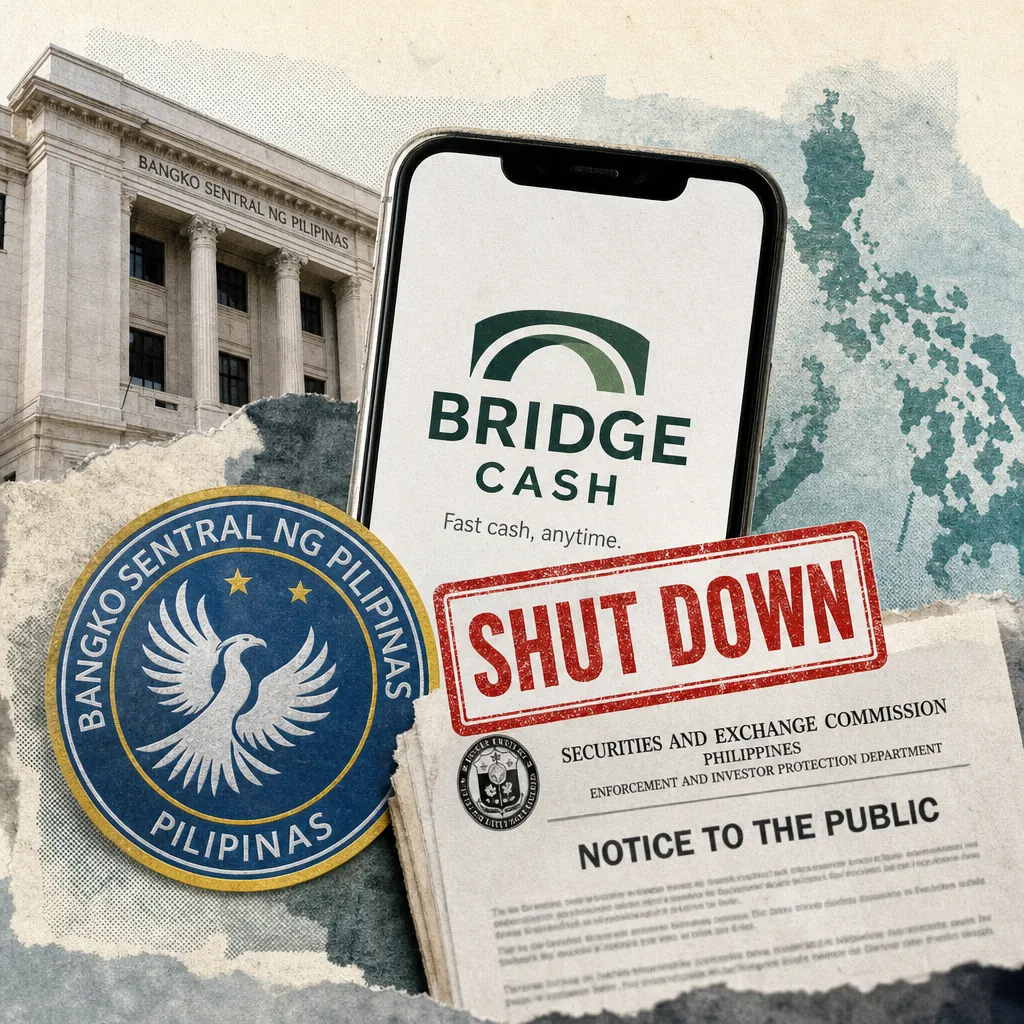
- SEC shuts down unauthorized lender Bridge Cash The Securities and Exchange Commission ordered Bridge Cash to cease operations for lacking required licenses and engaging in deceptive practices, including falsely claiming affiliation with legitimate firms. [5]
- GSIS expands loan refund program The Government Service Insurance System extended its Balik Ginhawa 2 program to cover six months of loan amortizations (Dec 2025–May 2026), doubling the original three-month refund scheme to provide financial relief amid elevated living costs. [6]
- Digital lending trends: smaller, more frequent loans LenderLink data showed total digital loan disbursements reached P867 billion by Q4 2025, with average loan size of P5,468. The trend reflects borrowing becoming a routine financial tool rather than emergency funding. [7]
- Hot money returns to PH debt in May Foreign portfolio investment recorded a net inflow of $232 million in May, reversing two months of net withdrawals, though 61% lower than a year ago. Improved sentiment followed US-Iran diplomatic efforts. [8]
- SEC warns against fake Finbro apps The SEC warned the public about two Google Play apps misusing the name of SOFI Financing, Inc., which operates the legitimate Finbro.PH platform. The fake apps are not affiliated with the company. [9]
How the narratives stack
Dominant Within the captured set, the dominant narrative is the push for digital financial inclusion and efficiency, led by BSP's wholesale CBDC pilot and BPI's branchless banking expansion. These stories received substantial coverage across multiple outlets, with combined advertising-equivalent value exceeding P440,000. The BSP's Project Agila report was covered by BusinessWorld Online (AVE: P283,456) and Inquirer Online (AVE: P38,448), while BPI's expansion was reported by Manila Times Online (AVE: P183,680) and BusinessWorld Online (AVE: P261,440). The narrative reflects a concerted effort by regulators and banks to modernize the payments system and reach unbanked Filipinos.
Counter-narrative Alongside the optimism about digital finance, a counter-narrative of regulatory crackdown and consumer protection emerged. The SEC's shutdown of Bridge Cash and warning against fake Finbro apps underscore persistent risks in the online lending space. These stories, covered by Daily Tribune Online (AVE: P115,440) and BusinessWorld Online (AVE: P112,144), highlight the gap between innovation and oversight, and the need for vigilance against unauthorized lenders.
Emerging An emerging narrative is the shift in borrowing behavior toward smaller, more frequent digital loans, as documented by LenderLink and Adjust. This trend, covered by Inquirer Online (AVE: P268,424), suggests that digital lending is becoming embedded in daily financial management, which could have implications for household debt levels and financial stability.
Suppressed A story that received relatively less coverage given its potential impact is the GSIS Balik Ginhawa 2 expansion. While Philstar Online covered it (AVE: P200,982), the program's significance for millions of government workers and pensioners facing high living costs could have warranted broader attention. The limited coverage may reflect the challenge of making a loan refund program newsworthy amid more dramatic developments.
Platform insights
- Facebook: The day's top posts on Facebook came from news pages sharing the BPI branchless banking expansion and the SEC shutdown of Bridge Cash. Engagement was moderate, with users commenting on the convenience of banking at sari-sari stores and expressing relief at the crackdown on predatory lenders. The BSP's CBDC pilot generated discussion among finance-focused groups, with some users questioning the need for a digital currency when GCash and PayMaya already exist.
- X (formerly Twitter): On X, the conversation was more polarized. The BSP's inflation forecast and the hot money data sparked debate about the economy's direction, with some users criticizing the government's handling of inflation. The SEC's actions against Bridge Cash were widely shared, with many calling for more aggressive enforcement. The GSIS loan refund program received positive mentions from government employees.
- YouTube: No significant video content related to these topics was captured in the monitoring window.
- Reddit: On Philippine subreddits, the digital lending trend and the fake Finbro apps were discussed, with users sharing personal experiences of harassment from loan sharks and advising others to verify lenders with the SEC. The BPI expansion was noted as a positive step, but some users expressed skepticism about data privacy.
Key voices and communities
- Bangko Sentral ng Pilipinas (BSP) – The central bank is the primary institutional voice, driving narratives on inflation, digital currency, and hot money flows. Governor Eli Remolona's statements on wCBDCs and inflation forecasts set the tone for much of the coverage.
- Securities and Exchange Commission (SEC) – The corporate regulator's enforcement actions against Bridge Cash and fake Finbro apps position it as a key protector of consumers in the digital lending space. Its advisories are widely cited by news outlets.
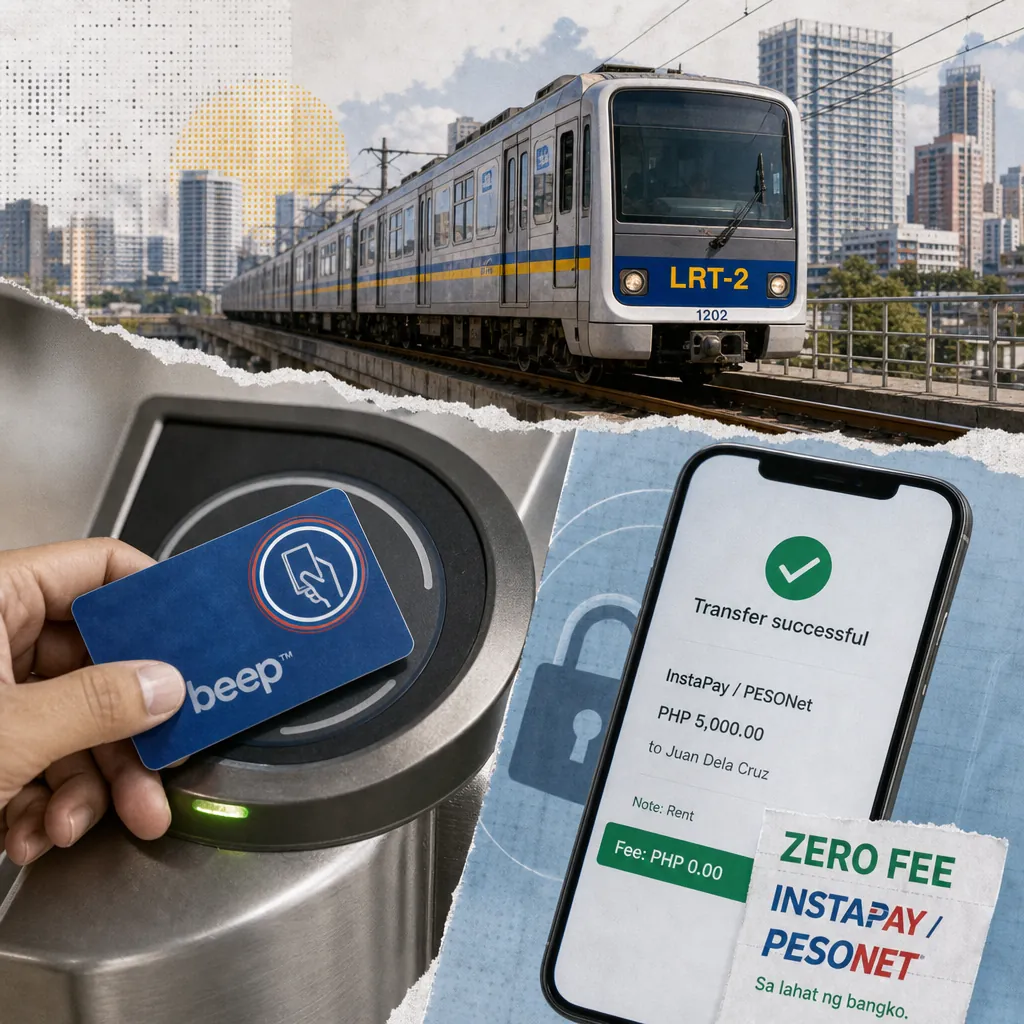
- BPI and its CEO TG Limcaoco – BPI's branchless banking expansion and the permanent removal of InstaPay/PESONet fees make it a leading voice in financial inclusion. Limcaoco's quote about "the real miracle is not technology itself" was picked up by multiple outlets.
- LenderLink and Adjust – These data providers are emerging as authoritative sources on digital lending trends, with their reports on loan sizes and borrower behavior shaping the narrative on financialization of everyday life.
- Government Service Insurance System (GSIS) – The state pension fund's Balik Ginhawa program expansion positions it as a provider of relief to members and pensioners, though its coverage is less prominent than BSP or SEC.
Narrative streams
BSP's Project Agila: Wholesale CBDC for efficiency
The Bangko Sentral ng Pilipinas released the results of Project Agila, its pilot project exploring a wholesale central bank digital currency (wCBDC). Unlike retail CBDCs used by the general public, wholesale CBDCs are designed for interbank settlements, securities transactions, and cross-border payments. The report, covered by BusinessWorld Online [1] and Inquirer Online [10], highlighted that wCBDCs could reduce transaction costs and settlement lags in the Philippines' payments infrastructure. Governor Eli Remolona stated that wCBDCs "can enhance efficiency in the payments infrastructure and develop new financial services." The pilot is part of the BSP's broader Digital Payments Transformation Roadmap, which aims to shift 50% of retail transactions to digital by 2023 (a target that has been extended). The report noted that cross-border payments, including remittances and institutional transfers, are among the most promising use cases. This is significant for the Philippines, which received $38.5 billion in remittances in 2025. The BSP's move aligns with global trends: over 130 countries are exploring CBDCs, with the Bahamas, Nigeria, and China already issuing retail versions. However, the BSP has been cautious, emphasizing that a wCBDC would complement existing payment systems like InstaPay and PESONet, not replace them. The coverage value of this story within the captured set is approximately P321,904, reflecting its importance to the financial sector.
BPI's branchless banking: 7,000 partner stores and counting
Bank of the Philippine Islands announced that its "May BPI Dito" agency banking program now covers over 7,000 retail partner stores nationwide, including groceries, pharmacies, and gas stations. Of these, 1,369 outlets offer cash deposit and withdrawal services. The program allows customers to open accounts, apply for financial products, and perform transactions at partner stores, effectively turning them into mini-branches. BPI President and CEO TG Limcaoco said at a media roundtable that the bank has partnered with 34 businesses with over 7,100 doors, emphasizing that trust in the partner brand is crucial for customer confidence. [2][3] The expansion consolidates account opening, cash deposits, and withdrawals under a single platform, a move that BPI expects to drive customer growth. This is part of a broader trend: the BSP's National Retail Payment System (NRPS) aims to promote digital payments and financial inclusion. BPI's move also comes as it permanently removed InstaPay and PESONet transfer fees, further lowering barriers to digital banking. The coverage value of this story is approximately P445,120, making it one of the most covered corporate stories of the day.
Inflation outlook: easing but uncertain
The BSP projected June headline inflation to settle within 6–7%, down from 7.2% in May, supported by lower domestic oil prices and easing costs of rice and meat. However, higher electricity rates and vegetable prices could offset these gains. [4] The central bank has missed its inflation forecasts for three consecutive months since the Middle East conflict began in March, reflecting heightened uncertainty over oil price volatility. While inflation in March and April exceeded projections, May's figure came in within the BSP's forecast range. The BSP's Monetary Board has kept the policy rate at 6.5% since October 2025, and analysts expect rates to remain elevated until inflation is firmly within the 2–4% target band. The inflation narrative is closely tied to the broader economic outlook: the University of Asia and the Pacific estimated Q2 GDP growth at 2.6%, the slowest in four quarters, citing elevated inflation and weaker domestic demand. [11] The coverage value of the inflation story is approximately P151,632.
SEC crackdown on unauthorized lenders: Bridge Cash and fake Finbro apps
The SEC ordered Bridge Cash to immediately cease operations after finding it was operating without the required licenses. The cease and desist order, dated June 9, covers all online lending activities, including its apps, messaging channels, and website. The SEC also ordered Bridge Cash to stop deceptive practices, including falsely claiming affiliation with First Digital Finance Corporation. [5] Separately, the SEC warned the public against two Google Play apps—"Finbro: Financial Focus" and "Finbro PH – Personal Finance"—that misuse the name of SOFI Financing, Inc., which operates the legitimate Finbro.PH platform. SOFI Financing informed the SEC that these apps are not authorized or affiliated. [9] These actions are part of the SEC's ongoing campaign against unauthorized online lenders, which have been accused of harassment, exorbitant interest rates, and privacy violations. In 2025, the SEC revoked the licenses of over 50 lending companies for violations. The combined coverage value of these enforcement stories is approximately P227,584.
Digital lending boom: smaller loans, more frequent borrowing
LenderLink, a credit data platform, reported that total digital loan disbursements in the Philippines reached P867 billion as of Q4 2025, with 619,000 unique borrowers. The average loan size was just P5,468, indicating that Filipinos are taking smaller but more frequent loans to cover day-to-day expenses. [7] Mobile analytics firm Adjust noted that borrowing is becoming a routine financial tool rather than an emergency measure, driven by the proliferation of digital lending apps. This trend raises concerns about over-indebtedness, especially as some apps charge annual percentage rates exceeding 100%. The BSP and SEC have been working to regulate the sector, including a proposed shift of online lending oversight to the BSP. The story's coverage value is P268,424.
Hot money returns to PH debt in May
Foreign portfolio investment (FPI) recorded a net inflow of $232 million in May, reversing two consecutive months of net withdrawals. The improvement was attributed to easing US-Iran tensions and improved investor sentiment. However, the net inflow was 61% lower than the $601 million recorded in May 2025. [8] The BSP data showed that inflows exceeded outflows as foreign funds returned to government securities, while equity outflows eased. "Hot money" is highly sensitive to global sentiment, and the Philippines remains vulnerable to shifts in US monetary policy and geopolitical risks. The coverage value is P278,392.
GSIS Balik Ginhawa 2: expanded loan refunds
The Government Service Insurance System expanded its Balik Ginhawa 2 program to cover loan amortizations paid from December 2025 to May 2026, doubling the original three-month refund scheme. The program allows qualified members and pensioners to receive refunds for amortization payments, providing financial relief amid elevated living costs due to the Middle East war. GSIS initially allocated P19 billion for the program. President and General Manager Wick Veloso said the expansion aims to give members and pensioners "additional financial breathing room." [6] The coverage value is P200,982.
Conversation trajectory
- Over the next 2–4 weeks: The BSP's inflation forecast for June will be released, likely confirming a continued easing trend. If inflation falls within the 6–7% range, it may reduce pressure for further rate hikes, but the BSP is expected to remain hawkish given global uncertainties. The SEC's crackdown on unauthorized lenders may intensify, with more cease and desist orders expected.
- Over the next 1–3 months: The BSP's Project Agila pilot may lead to a formal wCBDC roadmap, potentially with a live pilot involving select banks. BPI's branchless banking expansion could prompt other banks to accelerate their agency banking programs, intensifying competition for the unbanked market. The digital lending trend will likely continue, but regulatory scrutiny may increase, possibly leading to new rules on interest rate caps or data privacy.
- Trigger events to watch: The release of June inflation data (expected mid-July); any escalation in the Middle East conflict that could spike oil prices; the BSP's next Monetary Board meeting on August 14; and any high-profile case of harassment by an online lender that could trigger public outrage and regulatory action.
Response guidance
For communicators in the financial sector, the key messages should center on transparency, consumer protection, and innovation. Banks and fintech companies should highlight their efforts to expand financial inclusion while emphasizing compliance with regulations. The BSP's push for digital payments and lower transaction costs provides a favorable backdrop for promoting digital products. However, the SEC's enforcement actions serve as a reminder to ensure all lending activities are properly licensed and marketed. Companies should proactively communicate their data privacy and security measures to build trust. The inflation and hot money narratives suggest that investors are sensitive to global risks, so financial institutions should provide clear guidance on how they are managing exposure to volatile markets. The GSIS program shows that government agencies are responsive to member needs, and private sector lenders may consider similar relief programs to support borrowers facing high living costs.
See the full picture behind today's signals.
This report draws from Media Meter's MediaWatch, our real-time monitoring engine tracking 2,470+ Philippine sources across print, broadcast, digital, and social. Explore how the platform turns raw coverage into decision-grade intelligence, then see how it's configured for teams like yours — whether you're in PR agencies, corporate comms, government, or marketing.
Want more? Browse our Report Library for sector and crisis intelligence, or request a demo and we'll have your brand set up before the call.
Want this kind of intelligence on your brand?
This brief is built on the same MediaWatch methodology that runs continuously across every brand we monitor. See your competitive landscape, Impact Score, and narrative trajectory in a 30-minute demo.