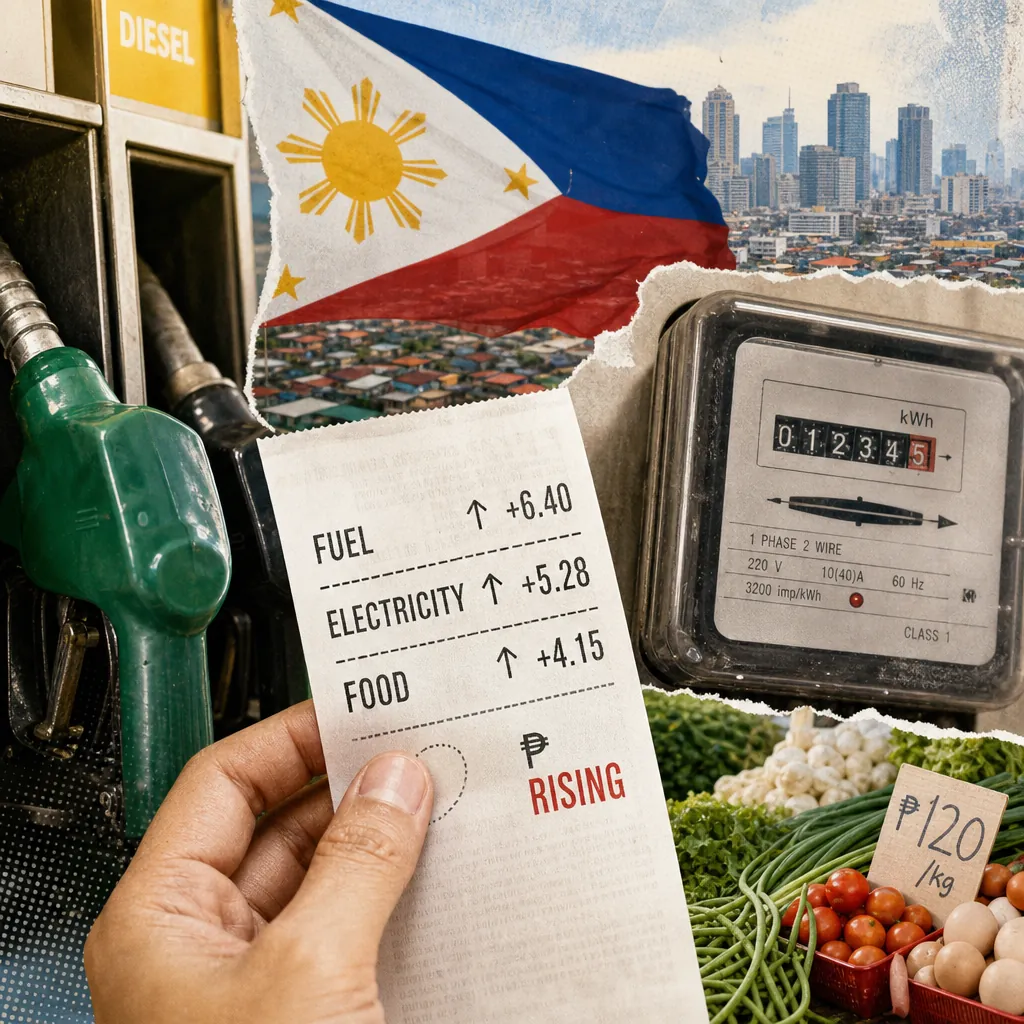
DTI pushes to lift Metro Manila ecozone ban, Jollibee eyes provincial growth, and sugar sector battles pests and imports
The Department of Trade and Industry endorses lifting the moratorium on new economic zones in Metro Manila, Jollibee sees room for expansion in underserved provinces, and the sugar industry welcomes a molasses import ban while battling a pest infestation.
The Department of Trade and Industry (DTI) and the Department of Finance (DOF) have endorsed lifting Administrative Order (AO) 18, a 2019 policy that barred the Philippine Economic Zone Authority (PEZA) from accepting new ecozone applications in Metro Manila. Trade Secretary Cristina Roque said the endorsement has been sent to President Ferdinand Marcos Jr. for approval, potentially clearing the way for pending projects in Manila, Arca South in Taguig, and Makati. The move aims to expand options for information technology-business process management (IT-BPM) locators constrained by limited PEZA-accredited parks in the capital and to open up energy-efficient buildings to new investors. [1][2]
Meanwhile, Jollibee Foods Corp. (JFC) held its annual stockholders meeting, reporting record 2025 performance with systemwide sales of ₱455.1 billion and net income of ₱10.9 billion. The company highlighted significant growth potential in provincial Philippines, noting that its market penetration in many provincial municipalities remains at only about 15%. JFC plans to balance consumer value and profitable growth amid inflation and higher operating costs through product innovation, disciplined pricing, and operational efficiencies. [3][4][5]
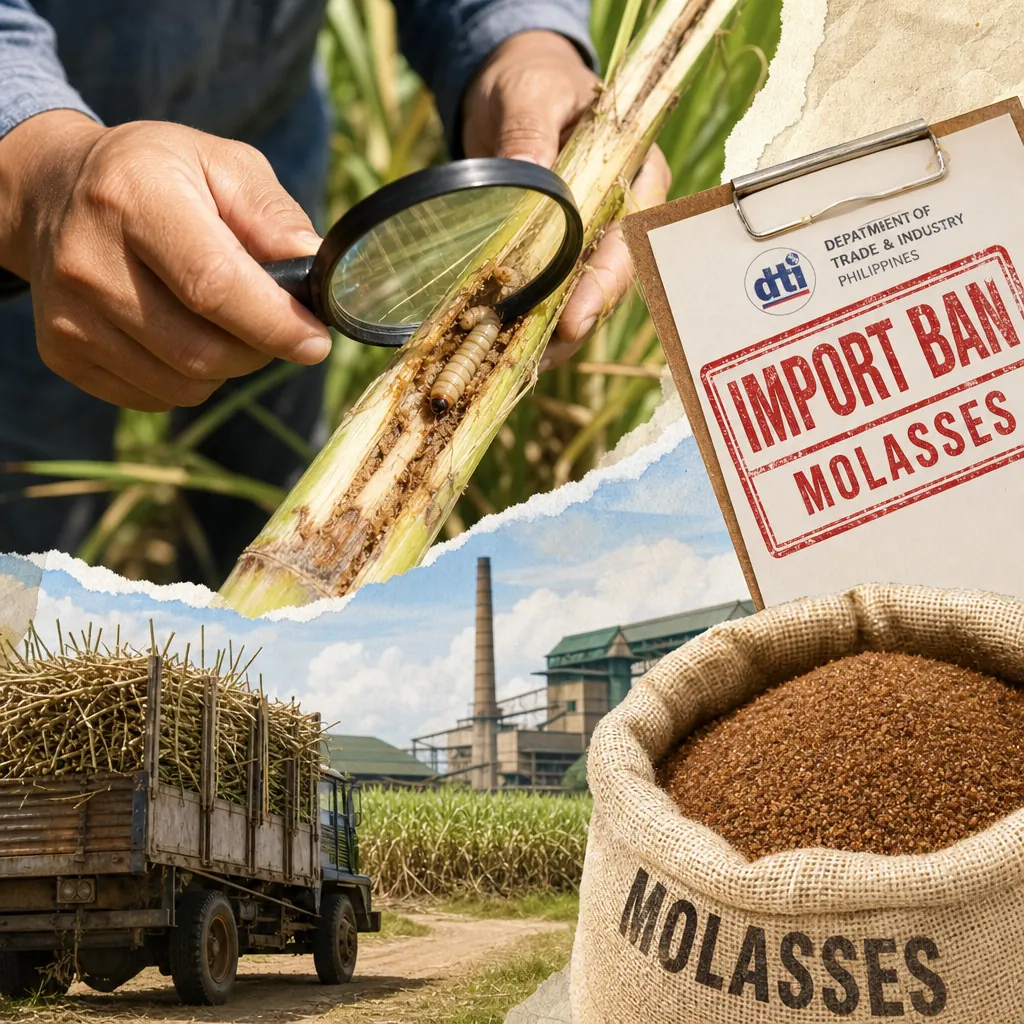
In the sugar sector, the United Sugar Producers Federation of the Philippines (Unifed) welcomed the Department of Agriculture (DA) and Sugar Regulatory Administration (SRA) ban on molasses imports used for bioethanol production, calling it a correction of a nearly two-decade oversight that could have harmed the industry. At the same time, the red-striped soft scale insect (RSSI) infestation continues to threaten sugarcane crops in the Negros Island Region, with validated infestations hitting 13,797 hectares affecting 5,258 farmers. SRA Administrator Pablo Luis Azcona warned that uncontrolled damage could reach ₱17.5 billion in lost sales. [6][7]
Other notable developments include the Philippines moving closer to imposing safeguard measures on rice imports after the DA found a causal link between import surges and injury to local farmers, and the DTI targeting completion of the revised Japan-Philippines Economic Partnership Agreement (JPEPA) by November. [8][9]
Key themes
- Lifting of Metro Manila ecozone moratorium gains momentum The DTI and DOF have endorsed the repeal of AO 18, which since 2019 has prohibited PEZA from accepting new ecozone applications in Metro Manila. The policy was originally intended to redirect investments to the provinces. Trade Secretary Roque said the endorsement is now with the Office of the President for approval. PEZA Director General Tereso Panga noted that lifting the order would allow pending projects in Manila, Arca South, and Makati to proceed, and would expand options for IT-BPM locators. [1][2]
- Jollibee reports record 2025 results, sees provincial growth runway JFC reported systemwide sales of ₱455.1 billion and net income of ₱10.9 billion for 2025. At its annual stockholders meeting, the company said it sees significant room for expansion in provincial Philippines, where market penetration is only about 15% in many municipalities. JFC plans to drive growth through delivery, digital channels, new dayparts, menu innovation, and deeper customer engagement. [3][4][5]
- Sugar industry welcomes molasses import ban, battles pest infestation Unifed lauded the DA and SRA for banning molasses imports used for bioethanol, saying the provision allowing imports had gone unamended for nearly two decades and could have killed the industry. Meanwhile, the RSSI infestation has spread to 13,797 hectares in Negros Island Region, affecting 5,258 farmers. SRA Administrator Azcona warned of potential ₱17.5 billion in lost sales if uncontrolled. Unifed backed the existing government task force managing the pest. [6][7]
- Philippines moves toward rice import safeguards The DA issued Department Order No. 18, finding a causal link between increased rice imports and serious injury to the domestic industry. The case will be transmitted to the Tariff Commission for a formal investigation to determine whether definitive safeguard measures—such as additional tariffs or quantitative restrictions—are needed. The petition was filed by the Federation of Free Farmers and Magsasaka Partylist. [8]
- Revised PH-Japan free trade deal eyed by November Trade Secretary Roque said negotiators are working to finalize updates to the Japan-Philippines Economic Partnership Agreement (JPEPA), with signing targeted for November. The review gained momentum following President Marcos' state visit to Japan in late May. A major hurdle remains in agriculture, particularly Japan's concerns over market access for specific commodities. [9]
- High power costs and corruption risks threaten supply chain role UK-based risk intelligence firm Verisk Maplecroft warned that the Philippines risks losing ground in global supply chains unless it addresses high energy costs and unresolved corruption issues surrounding infrastructure projects. The Philippines, which sources at least 90% of its oil from the Middle East, has been hit hard by the global oil crisis. The firm noted some movement in fast-tracking renewable energy projects but said more is needed. [10]
- EU prods Philippines on trade reforms at WTO review During the Philippines' Trade Policy Review at the World Trade Organization (WTO) in Geneva, the European Union acknowledged recent reforms such as amendments to the Foreign Investments Act and the Public Service Act, but sought further information on policy areas affecting trade and investment. The EU described the Philippines as a longstanding partner with shared interests in sustainable economic growth and a rules-based trading system. [11]
- Earthquake disrupts Mindanao, relief efforts underway A magnitude 6.5 earthquake jolted General Santos City and nearby provinces on June 26, suspending in-person classes. The Archdioceses of Davao, Digos, Tagum, and Mati sent a second wave of relief goods to heavily affected Balut Island, consisting of 7.1 tons of supplies including rice, canned goods, and hygiene kits. [12][13]
How the narratives stack
Dominant Within the captured set, the dominant narrative is the DTI's push to lift the Metro Manila ecozone moratorium, covered by multiple outlets including the Inquirer, Manila Times, Philstar, and Manila Bulletin. The story carries significant coverage value—the Inquirer article alone is worth an estimated ₱383,768 in advertising-equivalent value—and signals a major policy shift that could reshape the business process outsourcing (BPO) and IT sectors. The endorsement by both DTI and DOF, and the pending approval by the President, give the story high consequence for investors and locators. [1][2]
Counter-narrative A counter-narrative emerges from the Verisk Maplecroft report warning that high power costs and corruption scandals could undermine the Philippines' attractiveness for supply chain investments. This tempers the optimism around ecozone liberalization and trade deals, suggesting that structural issues remain. The report was covered by BusinessWorld, with an estimated advertising-equivalent value of ₱238,691. [10]
Emerging The rice import safeguard investigation is an emerging narrative. The DA's finding of a causal link between import surges and injury to local farmers could lead to new trade barriers, affecting rice prices and food security. The Manila Bulletin article carries an estimated ₱261,876 in advertising-equivalent value. [8]
Suppressed The RSSI pest infestation in Negros sugar farms is a significant threat to the industry, yet it received relatively limited coverage compared to the ecozone and Jollibee stories. The Daily Guardian's in-depth piece (estimated ₱234,219) and the Manila Times article (₱147,280) highlight the potential ₱17.5 billion damage, but the story has not gained national traction. [6][7]
Platform insights
- Facebook: The DTI Wedding Fair and Jollibee's record performance likely generated engagement on brand pages and news outlets' Facebook feeds. The wedding fair, which drew massive crowds at SMX Aura, may have spurred shares and comments from couples and wedding planners. The Jollibee story, with its positive financial results and provincial expansion plans, likely resonated with franchisees and consumers.
- X (formerly Twitter): The ecozone moratorium lifting and JPEPA revision updates were likely discussed by business journalists, economists, and policy watchers. Trade Secretary Roque's statements at the wedding fair were probably quoted and retweeted. The earthquake in Mindanao also generated real-time updates and relief coordination.
- YouTube: No specific video content was captured, but the DTI wedding fair and Jollibee stockholders meeting may have been covered by news channels. The earthquake aftermath and relief operations could have been featured in news reports.
- Reddit: The high power costs and corruption scandal discussion may have appeared on r/Philippines, where users often debate infrastructure and energy issues. The Verisk Maplecroft report could have been shared and critiqued.
Key voices and communities
- Trade Secretary Cristina Roque: The central figure in the ecozone moratorium and JPEPA stories. Her statements at the DTI Wedding Fair drove coverage. She represents the DTI's push for investment liberalization.
- Jollibee Group CEO Ernesto Tanmantiong: His presentation at the annual stockholders meeting highlighted record results and provincial growth strategy. He is a key voice for the food service industry's outlook.
- United Sugar Producers Federation (Unifed): President Manuel Lamata spoke on the molasses import ban and pest infestation. The group represents sugar planters and is influential in agricultural policy.
- Verisk Maplecroft: The UK-based risk intelligence firm's analyst Laura Schwartz provided an external, independent assessment of the Philippines' investment climate, adding weight to concerns about energy costs and corruption.
- Senator Loren Legarda: Her statement on MSME Day affirmed the role of small businesses as the "lifeblood" of communities. She authored the Magna Carta for MSMEs, making her a key legislative voice for the sector.
Narrative streams
DTI pushes to lift Metro Manila ecozone ban
The Department of Trade and Industry (DTI) and Department of Finance (DOF) have endorsed the lifting of Administrative Order (AO) 18, a policy signed by then-President Rodrigo Duterte in 2019 that barred the Philippine Economic Zone Authority (PEZA) from accepting, processing, and evaluating applications for new economic zones in Metro Manila. The order was intended to redirect investments to provincial areas. Trade Secretary Cristina Roque confirmed the endorsement at the DTI Wedding Fair, saying, "We already approved the lifting of AO 18." PEZA Director General Tereso Panga said the recommendation now requires the Office of the President's approval and the issuance of a new order. Lifting the moratorium would allow pending projects in Manila, Arca South in Taguig, and Makati to proceed, and would expand options for IT-BPM locators currently constrained by limited PEZA-accredited parks in the capital. The story was covered by the Inquirer (estimated advertising-equivalent value of ₱383,768), Manila Times (₱141,120), Philstar (₱241,178), and Manila Bulletin (₱215,728). [1][2]
Jollibee's record 2025 and provincial expansion strategy
Jollibee Foods Corp. (JFC) held its 2026 Annual Stockholders Meeting on June 26, reporting record 2025 performance: systemwide sales of ₱455.1 billion, consolidated revenues of ₱305.1 billion, operating income of ₱20.2 billion, and net income attributable to equity holders of ₱10.9 billion. CEO Ernesto Tanmantiong said the year "marked another defining chapter in the Jollibee Group's growth journey." The company highlighted that despite its extensive store network, market penetration in many provincial municipalities remains at only about 15%, creating substantial opportunity for expansion. JFC plans to drive growth through delivery, digital channels, new dayparts, menu innovation, and deeper customer engagement. The company also aims to balance consumer value and profitable growth amid inflation and higher operating costs through productivity initiatives, disciplined pricing, and procurement savings. The story was covered by the Manila Bulletin (₱209,612), BusinessWorld (₱145,925), Manila Times (₱210,560), and Inquirer (₱37,736). [3][4][5]
Sugar industry: molasses import ban and pest infestation
The United Sugar Producers Federation of the Philippines (Unifed) lauded the Department of Agriculture (DA) and Sugar Regulatory Administration (SRA) for banning molasses imports used as feedstock for bioethanol production. Unifed President Manuel Lamata said the provision allowing imports had gone unamended for nearly two decades, despite two earlier revisions to the policy, calling it "an oversight that could have killed the industry." At the same time, the red-striped soft scale insect (RSSI) infestation continues to spread in the Negros Island Region. As of June 21, validated infestations had hit 13,797 hectares of sugarcane, involving 5,258 farmers. SRA Administrator Pablo Luis Azcona warned that if left uncontrolled, the damage could reach ₱17.5 billion in lost sales, roughly equivalent to losing nearly one-fifth of the country's sugar output in a single crop year. Unifed backed the existing government task force managing the pest, arguing against creating a new body. The Daily Guardian ran an in-depth piece (₱234,219) and the Manila Times covered the ban (₱147,280). [6][7]
Philippines moves toward rice import safeguards
The Department of Agriculture (DA) issued Department Order No. 18 on June 24, finding a causal link between increased rice imports and serious injury to the domestic industry. The order states that the DA's investigation found that the surge in rice shipments is directly harming farmers and the local rice sector. The case records will be transmitted to the Tariff Commission for a formal investigation to determine whether definitive safeguard measures—such as additional tariffs, quantitative restrictions, or other trade remedies—are needed. The petition was filed by the Federation of Free Farmers and Magsasaka Partylist. The Manila Bulletin covered the story with an estimated advertising-equivalent value of ₱261,876. [8]
Revised PH-Japan free trade deal eyed by November
Trade Secretary Cristina Roque said negotiators are working to finalize updates to the Japan-Philippines Economic Partnership Agreement (JPEPA), with signing targeted for November. The review gained momentum following President Marcos' state visit to Japan in late May. Roque said the review would not be "complicated" as Japan was also keen to conclude the long-overdue renegotiation. Under the original agreement, which took effect in 2008, the Philippines and Japan were supposed to begin reviewing the pact by 2011 and every five years thereafter. A major hurdle remains in the agriculture sector, particularly Japan's concerns over market access for specific commodities. The story was covered by the Inquirer (₱394,448), Manila Bulletin (₱215,728), and Manila Times (₱141,120). [9]
High power costs and corruption risks threaten supply chain role
UK-based risk intelligence firm Verisk Maplecroft warned that the Philippines risks losing ground in global supply chains unless it addresses high energy costs and unresolved corruption issues surrounding infrastructure projects. Senior Asia analyst Laura Schwartz said, "The Philippines' biggest infrastructure challenge is its relatively high cost of energy, which has been exacerbated by the Hormuz crisis." The Philippines, which sources at least 90% of its oil supply from the Middle East, has been one of the most affected by the global oil crisis. Schwartz also noted that last year's corruption scandal linking state officials and contractors in substandard flood control projects continues to weigh on investor sentiment. The report was covered by BusinessWorld with an estimated advertising-equivalent value of ₱238,691. [10]
EU prods Philippines on trade reforms at WTO review
During the Philippines' Trade Policy Review at the World Trade Organization (WTO) in Geneva on June 24, the European Union acknowledged recent reforms such as amendments to the Foreign Investments Act, the Public Service Act, and the Retail Trade Liberalization Act, as well as the creation of Green Lanes for Strategic Investments. However, EU Ambassador María Martin-Prat sought further information on several policy areas affecting trade and investment. The EU described the Philippines as a longstanding partner with shared interests in sustainable economic growth, regional stability, and a rules-based international trading system. The Business Mirror covered the story with an estimated advertising-equivalent value of ₱195,536. [11]
Earthquake disrupts Mindanao, relief efforts underway
A magnitude 6.5 earthquake jolted General Santos City and nearby provinces on June 26, prompting the suspension of in-person classes in all public elementary and secondary schools in General Santos City on June 29. The earthquake was tectonic in origin, occurring 90 kilometers southwest of Balut Island at a depth of 10 kilometers. The Archdioceses of Davao, Digos, Tagum, and Mati sent a second wave of relief goods to heavily affected Balut Island, consisting of 7.1 tons of supplies including rice, canned goods, and hygiene kits, transported by the Philippine Coast Guard. The Inquirer (₱131,008) and Sunstar (₱153,090) covered the story. [12][13]
Conversation trajectory
- Short-term (1–2 weeks): The lifting of AO 18 is likely to be approved by the President, triggering a wave of new ecozone applications in Metro Manila. The rice safeguard investigation will proceed to the Tariff Commission, with potential tariff increases within months. The JPEPA revision talks will continue, with a signing target in November.
- Medium-term (3–6 months): Jollibee's provincial expansion will accelerate, with new store openings in underserved municipalities. The sugar pest infestation may worsen if control measures are not intensified, potentially leading to higher sugar prices. The impact of high power costs on investment decisions will become clearer as more companies evaluate the Philippines against regional peers.
- Long-term (6–12 months): The revised JPEPA could boost Philippine exports to Japan, particularly in agriculture and services. The ecozone liberalization may attract new BPO investments, but energy costs and infrastructure bottlenecks remain constraints. The rice safeguard measures could stabilize local farm incomes but may raise consumer prices.
Trigger events to watch: Presidential approval of AO 18 repeal; Tariff Commission ruling on rice safeguards; JPEPA signing in November; spread of RSSI to new regions; oil price movements affecting power costs.
Response guidance
- For DTI and PEZA: Communicate the benefits of ecozone liberalization clearly to investors, emphasizing the streamlined approval process and availability of energy-efficient buildings. Address concerns about congestion and infrastructure in Metro Manila by highlighting ongoing flood control and transport projects.
- For Jollibee and other consumer brands: Emphasize value-for-money messaging amid inflation. Highlight provincial expansion as a commitment to inclusive growth and job creation. Use digital channels to engage younger consumers in underserved areas.
- For sugar industry stakeholders: Coordinate with DA and SRA on pest control messaging. Emphasize the molasses import ban as a victory for local producers. Provide regular updates on infestation control to maintain stakeholder confidence.
- For government communicators: On rice safeguards, balance farmer protection with consumer price concerns. On the JPEPA, highlight the benefits of updated market access for Philippine exporters. On earthquake response, maintain transparency on relief efforts and infrastructure assessments.
- Sensitive topics: Avoid downplaying corruption scandals; acknowledge concerns and highlight reforms. On power costs, avoid blaming specific entities; focus on long-term solutions like renewable energy.
See the full picture behind today's signals.
This report draws from Media Meter's MediaWatch, our real-time monitoring engine tracking 2,470+ Philippine sources across print, broadcast, digital, and social. Explore how the platform turns raw coverage into decision-grade intelligence, then see how it's configured for teams like yours — whether you're in PR agencies, corporate comms, government, or marketing.
Want more? Browse our Report Library for sector and crisis intelligence, or request a demo and we'll have your brand set up before the call.
Want this kind of intelligence on your brand?
This brief is built on the same MediaWatch methodology that runs continuously across every brand we monitor. See your competitive landscape, Impact Score, and narrative trajectory in a 30-minute demo.