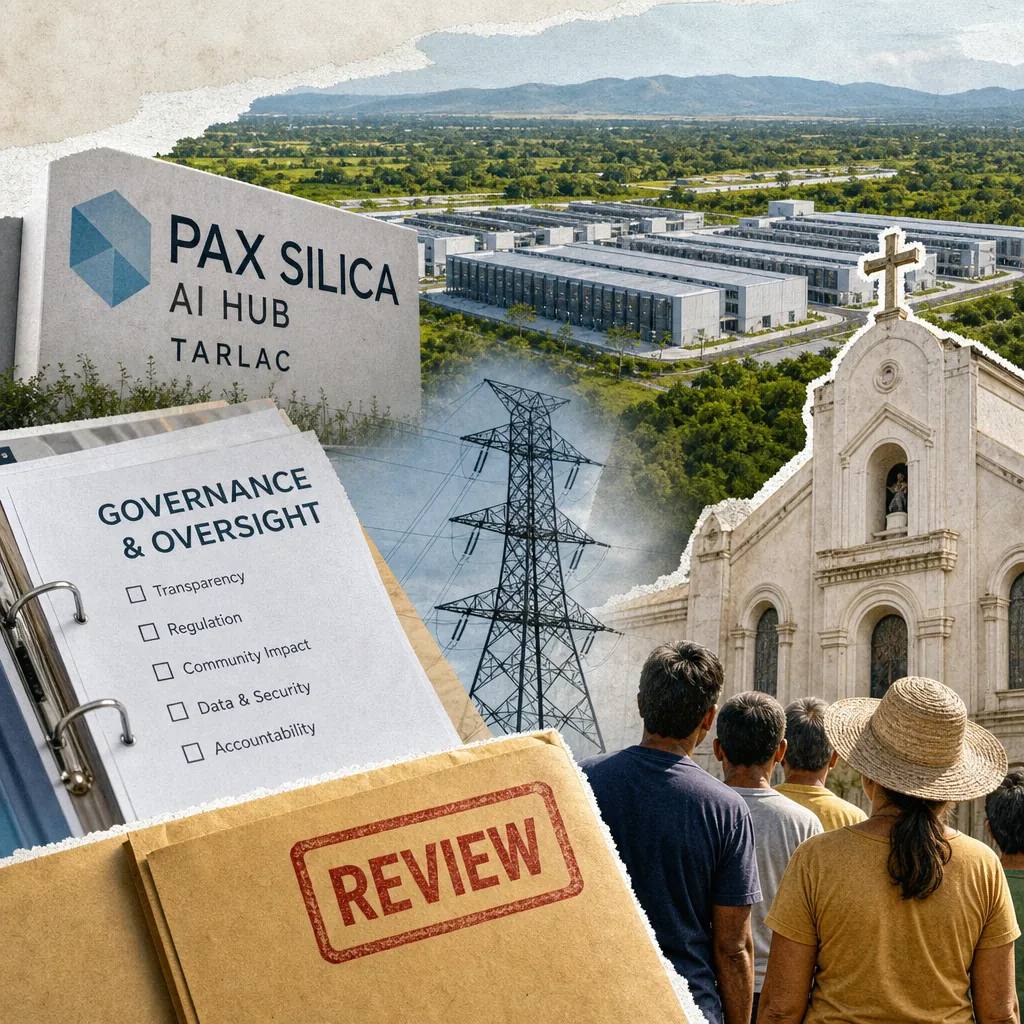
Pax Silica sparks debate; housing news muted
On August 2, 2026, the Philippine real estate conversation was dominated by the Pax Silica project's potential and controversies, while official housing announcements struggled for attention. Social media engagement favored political drama and infrastructure critiques over policy launches.
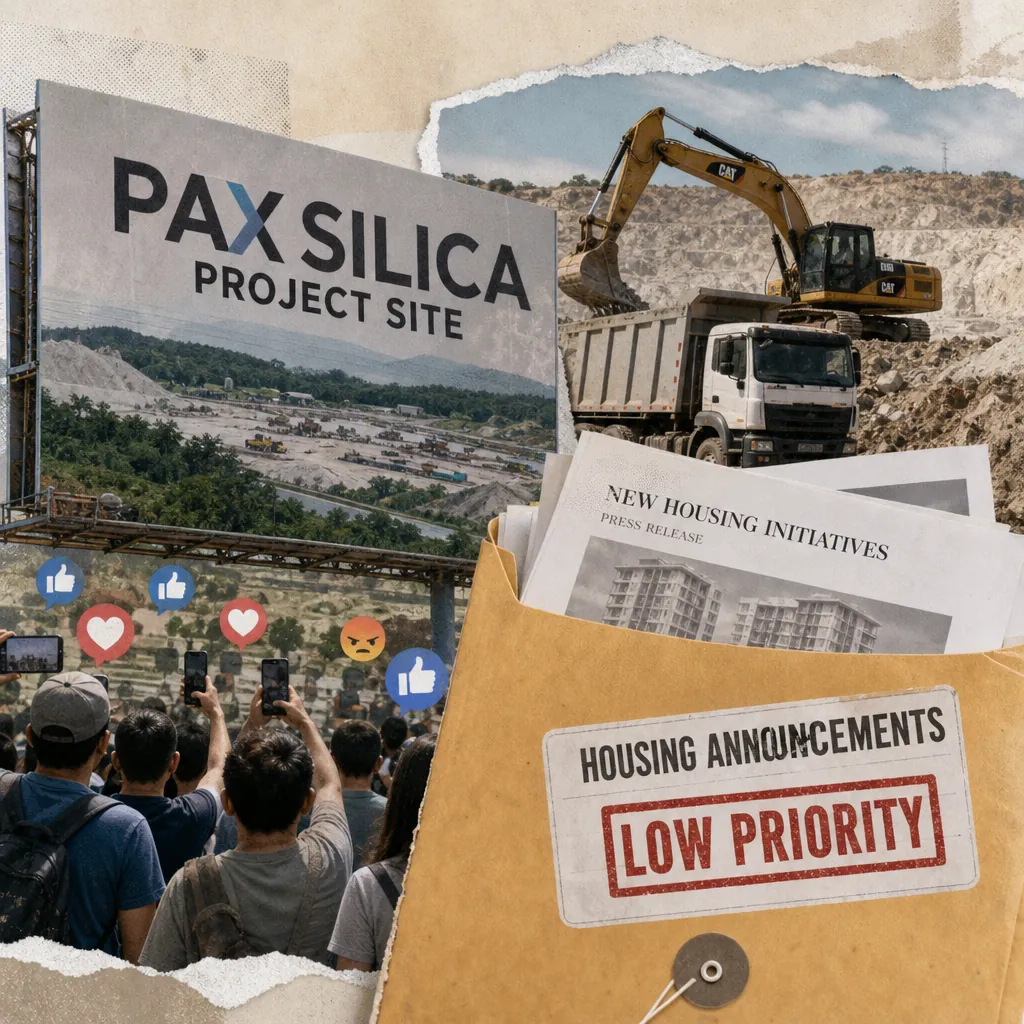
The day's conversation around Philippine real estate was a study in contrasts. On one hand, the ambitious Pax Silica project—a US-led initiative to build a high-tech industrial hub in New Clark City—generated a flurry of news coverage and political debate, drawing both optimism and sharp criticism. On the other, a Pag-IBIG Fund announcement about expanded housing loans for low-income buyers barely registered on social media, with a single post drawing just 45 views and zero engagement. This disconnect between the topics that dominate institutional media and those that resonate with the public was the defining feature of the day.
On social media, the loudest voices were not talking about housing policy at all. A political spat between Senators Panfilo Lacson and Alan Peter Cayetano over Taguig's flood control projects became the most-engaged story, with Lacson's quip about drowning in floodwater drawing over 15,000 views on Twitter and more than 5,700 "haha" reactions on Facebook. Meanwhile, a Reddit thread about the lack of rail transit in Las Piñas and Parañaque sparked a substantive discussion about infrastructure gaps, attracting 197 upvotes and 132 comments. These contrasting reactions—mockery on Facebook, earnest debate on Reddit—highlighted the fragmented nature of public engagement with housing-adjacent issues.
In the news media, Pax Silica dominated the business pages. The Manila Times, BusinessWorld, and other outlets ran multiple stories on the project's potential to boost the industrial property sector, its financing structure, and the concerns raised by farmers, indigenous groups, and church leaders. The coverage was substantial, with several articles carrying significant advertising-equivalent value, reflecting the project's perceived importance to the national economy. Yet, even as Pax Silica captured headlines, the human cost of development—the farmers facing displacement—emerged as a counter-narrative that could shape public perception in the weeks ahead.
Key themes
- Pax Silica: A double-edged sword for Philippine real estate The proposed high-tech hub in New Clark City promises billions in investment and thousands of jobs, but faces mounting opposition from farmers, indigenous communities, and environmentalists concerned about displacement and resource strain.
- Official housing announcements fail to break through The Pag-IBIG Fund's expanded housing program for low-income buyers drew minimal social media attention, underscoring the challenge of making policy news resonate with the public.
- Political drama overshadows housing policy The Lacson-Cayetano feud over Taguig's flood control projects became the day's most-engaged story, with audiences treating it as entertainment rather than a serious discussion of flood risk.
- Reddit emerges as a forum for substantive infrastructure debate A user-generated thread on the lack of rail transit in Las Piñas and Parañaque attracted significant engagement, suggesting that concrete commuter pain points resonate more than abstract policy announcements.
- Flood risk surfaces as a recurring concern From Taguig to Bacolod, flooding emerged as a key issue, with political exchanges, relocation orders, and church appeals highlighting the vulnerability of urban and peri-urban communities.
- Economic headwinds cast a shadow over property market With GDP growth expected to slow to 2.8% in the second quarter, analysts warn that weak consumer spending and infrastructure delays could dampen demand for housing and commercial space.
- Local governance and safety incidents color perceptions Stories of a Bulacan village chief implicated in a teacher's killing and a BGC arrest of a foreign national added to the ambient noise around residential corridors, potentially influencing perceptions of safety and governance.
How the narratives stack
Dominant
Within the captured set, Pax Silica was the dominant narrative, generating the most news articles and the highest advertising-equivalent value. The project's promise of transforming New Clark City into a global AI hub captured the imagination of business reporters, while its controversies—land acquisition, farmer displacement, and environmental impact—provided ample material for critical coverage. The Manila Times alone ran four stories on the project, with a combined estimated advertising-equivalent value of over ₱1.6 million, making it the most-covered topic in the sample. This dominance reflects the project's perceived significance to the national economy and the real estate sector, even as its ultimate impact remains uncertain.
Counter-narrative
The counter-narrative came from those questioning Pax Silica's benefits. Senator Imee Marcos, church leaders, and environmental groups argued that the project could harm farmers and indigenous communities, with Cardinal Pablo Virgilio David warning that the Philippines risked becoming a mere source of land, resources, and cheap labor. This narrative gained traction in the news media, with several outlets covering the opposition, but it did not translate into significant social media engagement, suggesting that the public has yet to fully engage with the issue.
Emerging
The Reddit thread on transit accessibility in Las Piñas and Parañaque represents an emerging narrative that could grow in importance. The thread's strong engagement—197 upvotes and 132 comments—indicates a public appetite for grassroots infrastructure discussions. As the government moves forward with rail projects, this community-driven conversation could influence how developers and policymakers communicate about transit-oriented developments.
Suppressed
The Pag-IBIG housing program announcement was the most under-covered story in the sample. Despite its direct relevance to low-income and first-time homebuyers, the announcement drew minimal attention, with the single monitored post receiving only 45 views. This suggests that official policy announcements are not breaking through the noise, and that more creative communication strategies are needed to reach intended audiences.
Platform insights
- Twitter: The platform was dominated by political and crime news, with the Lacson-Cayetano feud drawing over 15,000 views and the Bulacan slay story attracting 2,675 views. In contrast, the Pag-IBIG announcement and Pax Silica commentary drew minimal engagement, highlighting the difficulty of making policy news viral on this platform.
- Facebook: Facebook users engaged with political stories primarily through humor, as evidenced by the 5,762 "haha" reactions on the Lacson-Cayetano post. The LTO-Cavite clarification, however, drew a more serious response, with 656 likes and 115 comments, suggesting that governance issues affecting daily commuters can generate substantive discussion.
- Reddit: Reddit proved to be the platform for substantive infrastructure debate, with the Las Piñas-Parañaque transit thread attracting 197 upvotes and 132 comments. The platform's users favored concrete, relatable issues over political theater, as the Lacson-Cayetano story drew only 3 upvotes and zero comments.
Key voices and communities
- Government and policy communicators: The Pag-IBIG Fund and other agencies are the primary sources of housing policy news, but their messages often fail to resonate with the public. Their influence is institutional rather than viral, and they may need to adopt more engaging formats to reach their target audiences.
- Local news distributors: Accounts like Inquirer Online and Manila Bulletin play a crucial role in shaping perceptions of safety, governance, and development in specific areas. Their coverage of incidents like the BGC arrest and the Bulacan slay can influence how residents and investors view these locations.
- Urban residents and property watchers: This community, active on Facebook and Twitter, is concerned with quality of life in Metro Manila's central business districts. They respond to stories about security, flooding, and local governance, often with a mix of concern and cynicism.
- Infrastructure advocates on Reddit: A smaller but highly engaged community, these users are passionate about transit planning and its impact on residential communities. Their discussions can provide valuable insights for developers and policymakers.
- Business and economic analysts: Economists and real estate consultants, such as those quoted in BusinessWorld and the Manila Times, provide expert commentary on market conditions and policy impacts. Their analyses are influential among investors and industry stakeholders.
Narrative streams
Pax Silica: Promise and Peril
The Pax Silica project, named from the Latin "pax" (peace) and "silica" (the raw material for silicon chips), is a US-led initiative involving 24 countries, including the Philippines, to secure global supply chains for critical minerals, semiconductors, and AI infrastructure. The project plans to build an industrial hub on a 1,619-hectare site in New Clark City, Tarlac, with the potential to attract $70 billion in investment and generate up to 190,000 direct jobs. President Ferdinand Marcos Jr. has championed the project as a way to position the Philippines as an AI and digital infrastructure hub.
Real estate consultancy Colliers Philippines said the project could open a new growth channel for the country's industrial property sector, but its payoff hinges on how the government tackles infrastructure, environmental, and geopolitical hurdles. "Pax Silica could complement the growth of industrial parks and logistics hubs, especially those tied to data centers," said Joey Roi Bondoc, Colliers' head of research.
However, the project faces significant opposition. Senator Imee Marcos called for a Senate investigation into the agreement, citing complaints that farmers are being ordered to stop planting and facing intimidation. "We cannot prioritize stripping farmers of their livelihoods simply to expedite land conversion," she said. Church leaders, including Cardinal Pablo Virgilio David, echoed these concerns, warning that the Philippines could be reduced to a source of land, resources, and cheap labor without proper safeguards.
The Maharlika Investment Corp. (MIC), the country's sovereign wealth fund, said it would not directly invest in AI companies but could serve as a vehicle for pooling investments for Pax Silica. "We're having a dialogue with the BCDA," said MIC President Rafael Consing Jr., referring to the Bases Conversion and Development Authority, the lead agency for the project.
The coverage of Pax Silica in the captured set was extensive, with multiple articles across the Manila Times, BusinessWorld, and other outlets. The total advertising-equivalent value of these articles was substantial, reflecting the project's perceived importance. However, the social media response was muted, with a single post about the project drawing only 79 views. This disconnect suggests that while Pax Silica is a major story for the business press, it has yet to capture the public's imagination.
The Pag-IBIG Announcement That Didn't Land
On August 1, the Pag-IBIG Fund, the Philippines' state-run savings and housing finance agency, announced a program aimed at making homeownership more accessible for low-income and first-time buyers. The post, written in Filipino, read: "Mas magiging abot-kamay na ang pangarap na sariling bahay para sa mga low-income at first-time home buyers dahil sa programang iniaalok ng Pag-IBIG Fund" (The dream of owning a home will become more attainable for low-income and first-time home buyers because of the program offered by the Pag-IBIG Fund).
Despite the positive policy framing, the post generated only 45 views and zero likes, comments, or shares. This lack of engagement is a stark reminder that official announcements, no matter how beneficial, often fail to break through the noise of social media. The absence of any audience reaction—no questions, no shares, no sentiment—means there is no organic conversation for communicators to tap into.
For real estate stakeholders, this presents both a challenge and an opportunity. The challenge is that the program's benefits are not reaching its intended audience. The opportunity is that there is a wide-open space for third-party content that simplifies eligibility, reservation, and loan terms for prospective buyers. Developers and marketers could fill this gap by creating explainer videos, infographics, and testimonials that make the program more relatable.
The Pag-IBIG announcement was the only item in the captured set that was directly about housing policy, making its low visibility particularly notable. It underscores the need for more creative communication strategies in the housing sector.
Flood Risk: From Punchline to Policy
The Lacson-Cayetano exchange over Taguig's flood control projects was the day's most-engaged story on social media. Senator Panfilo Lacson turned down an invitation from Senate minority leader Alan Peter Cayetano to jointly inspect Taguig's flood control projects, quipping, "'BAKA DOON PA AKO MALUNOD SA TUBIG BAHA'" (I might drown in flood water there). The remark drew 15,292 views, 242 likes, and 35 shares on Twitter, while the Facebook version accumulated 1,612 likes, 148 shares, 809 comments, and a striking 5,762 "haha" reactions.
Cayetano fired back, saying Lacson would "drown in the truth" if he visited Taguig, and claimed that the city's flood problem has significantly improved over the past 30 to 40 years. The exchange, while entertaining, did little to address the underlying issue of flood risk in one of the country's most valuable real estate markets.
The overwhelming "haha" reaction on Facebook suggests that the public is treating the issue as a joke rather than a serious concern. This is a warning sign for developers and city officials: the window to insert credible flood mitigation narratives remains wide open, but it may close if the issue continues to be trivialized.
Flooding was also a concern in other parts of the country. In Bacolod City, the local government ordered the relocation of families living beneath Lupit Bridge after heavy rains caused the river to swell and damage makeshift homes. In Cebu, Archbishop Alberto Uy appealed to government officials and developers to prioritize environmental protection in the wake of widespread flooding.
Transit Gaps and the Reddit Effect
A Reddit thread titled "Ano kaya pwedeng idagdag dito?" (What could be added here?) sparked a substantive discussion about the lack of rail transit in Las Piñas and Parañaque. The original poster argued that residents on the eastern side of these cities are underserved by the planned LRT-1 alignment and still rely on jeepneys, enduring heavy traffic. The post proposed an additional line along Alabang-Zapote Road, writing, "Malala trapik diyan, hopefully our government considers that kahit technically hindi siya part ng ginawang study ni JICA" (Traffic is terrible there, hopefully our government considers that even if it's technically not part of the JICA study).
The thread gained 197 likes and 132 comments, far exceeding the engagement of the Pag-IBIG announcement. This suggests that Reddit users are more receptive to grassroots infrastructure discussions than to official program launches. The conversation explicitly connected transit accessibility to daily commuter pain points, framing infrastructure gaps as a quality-of-life issue tied to residential areas.
For real estate stakeholders, this thread signals that transit accessibility is a core factor in property desirability and long-term value. Developers with projects in Las Piñas, Parañaque, or along the Alabang-Zapote corridor should anticipate growing public scrutiny of accessibility and commute times in location marketing. Participating in these organic discussions by providing data, context, or expert commentary could position developers as constructive voices in the urban planning discourse.
Economic Headwinds and the Property Market
The Philippine economy is facing significant headwinds, with economists projecting GDP growth of just 2.8% in the second quarter of 2026, down from 5.4% in the same period last year. This slowdown, driven by high inflation, geopolitical tensions, and weak public infrastructure spending, could dampen demand for housing and commercial space.
A BusinessWorld poll of 21 economists yielded a median growth estimate of 2.8% for the April-to-June period, which would bring the first-half average to 2.8%, below the government's 3.5%-4.5% full-year target. The Philippine Statistics Authority will release the official data on August 7.
For the real estate sector, a slower economy could mean reduced consumer spending power and weaker demand for new homes. However, some analysts remain cautiously optimistic, noting that lower oil prices and the start of the academic year could support consumer spending in the coming months.
Local Governance and Safety: The Noise Around the Signal
Several local news stories added to the ambient noise around residential corridors. In Bulacan, a village chief was implicated in the killing of a teacher through a dying declaration, drawing 2,675 views on Twitter but no engagement. The suspect later surrendered to police. In BGC, a Chinese national was arrested for public disorder, drawing 546 views on Twitter and 43 likes on Facebook. These incidents, while not directly related to real estate, can influence perceptions of safety and governance in these areas.
The LTO-Cavite clarification, which stated that local government traffic enforcers have no legal authority to confiscate driver's licenses, drew 2,881 views on Twitter and 656 likes on Facebook. This story resonated with commuters in Cavite's residential corridors, suggesting that governance issues affecting daily life can sustain real conversation.
Conversation trajectory
Over the next 4-6 weeks, the Pax Silica project is likely to remain a dominant topic in the news media, especially as the government works to finalize a framework agreement with the US. The Senate investigation called for by Senator Imee Marcos could bring more attention to the concerns of farmers and indigenous communities, potentially shifting public opinion. If the project's benefits are communicated effectively, it could boost confidence in New Clark City and surrounding areas; if not, it could become a flashpoint for anti-development sentiment.
The Pag-IBIG program's low visibility suggests that official housing announcements will continue to struggle for attention unless communicators adopt more engaging formats. The release of detailed program guidelines and interest rate schedules could generate consumer discussion, but only if they are promoted through channels that reach first-time buyers.
The Reddit thread on transit accessibility may be a precursor to broader public engagement with infrastructure planning. As the government moves forward with rail projects, expect more discussions on social media about the impact of transit on residential communities. Developers who participate in these conversations could gain a competitive edge.
Flood risk will remain a recurring theme, especially during the rainy season. The Lacson-Cayetano exchange may have been a joke, but it highlighted a real concern. Any major flooding event in Taguig or other urban areas could quickly turn the conversation from humor to alarm, making it essential for developers and city officials to have credible mitigation narratives ready.
Trigger events to watch:
- Release of Q2 GDP data on August 7, which could affect market sentiment.
- Senate hearings on Pax Silica, which could amplify opposition voices.
- Pag-IBIG's release of detailed program guidelines, which could spark consumer interest.
- Any major flooding incident in Metro Manila, which could intensify scrutiny of flood control projects.
- Official announcements on the LRT-1 extension or other transit projects, which could energize the Reddit community.
Response guidance
For communicators in the real estate sector, the key takeaway from this day's conversation is the need to bridge the gap between policy announcements and public engagement. Official messages, no matter how beneficial, will not resonate unless they are packaged in ways that speak to people's daily concerns.
- On Twitter and Facebook: Use visual storytelling—infographics, short videos, and testimonials—to explain complex programs like Pag-IBIG loans. Avoid press-release-style language; instead, focus on the tangible benefits for first-time buyers.
- On Reddit: Engage with grassroots infrastructure discussions by providing data, context, and expert commentary. This can position your brand as a constructive voice in urban planning debates.
- On flood risk: Do not treat flooding as a joke. Acknowledge the concern and share credible information about mitigation efforts. This is an opportunity to build trust with residents and investors.
- On Pax Silica: If you have interests in New Clark City or surrounding areas, prepare content that addresses both the opportunities and the concerns. Transparency about land acquisition and community impact will be crucial.
- On local governance: Monitor stories about local officials and safety incidents in your areas of operation. Be prepared to respond with factual information that reassures stakeholders without taking sides in political disputes.
- Sensitive topics: Avoid commenting on the nationality of individuals involved in incidents like the BGC arrest. Focus on the facts and the legal process. Similarly, avoid endorsing any political figure in the flood control debate; instead, emphasize the importance of infrastructure investment and resilience.
See the full picture behind today's signals.
This report draws from Media Meter's MediaWatch, our real-time monitoring engine tracking 2,470+ Philippine sources across print, broadcast, digital, and social. Explore how the platform turns raw coverage into decision-grade intelligence, then see how it's configured for teams like yours — whether you're in PR agencies, corporate comms, government, or marketing.
Want more? Browse our Report Library for sector and crisis intelligence, or request a demo and we'll have your brand set up before the call.
Want this kind of intelligence on your brand?
This brief is built on the same MediaWatch methodology that runs continuously across every brand we monitor. See your competitive landscape, Impact Score, and narrative trajectory in a 30-minute demo.