Floods, Shooting, and Graft Probes Dominate Aug. 18
On August 18, 2026, the Philippines faced a convergence of crises: Tropical Depression Neneng formed, a school shooting in Zamboanga killed two, and the Ombudsman suspended transport chiefs and probed Senator Legarda. Social media reacted with a mix of fear, mockery, and demands for accountability.
The Conversation
August 18, 2026, was a day when the Philippines' multiple fault lines—weather, public safety, and political accountability—collided in public view. The day began with the state weather bureau PAGASA announcing that a low-pressure area had intensified into Tropical Depression Neneng, tracking 1,025 kilometers east of northern Luzon. Almost simultaneously, the Department of Justice (DOJ) confirmed it had filed five criminal cases against Marikina Representative Marcelino "Marcy" Teodoro, involving two female police officers. The Facebook post announcing the charges drew 50 reactions and 26 comments within hours, but the reaction mix was telling: 21 "haha" responses alongside 5 "sad" and 2 "angry" markers—an early sign of polarized public sentiment.
By midday, the Ateneo de Zamboanga shooting had become the dominant emotional driver. Authorities confirmed two students dead and another wounded, and Senator Robin Padilla publicly called on Meta to remove graphic videos and images of the incident from its platforms. The Facebook post about the shooting received 79 likes and 8 shares, but zero sad or angry reactions—unusual for a tragedy, suggesting either low visibility or a desensitized audience still processing the event. Meanwhile, House Speaker Faustino Dy III assured victims that the House response would "go beyond sympathy," a statement that drew 13 "haha" reactions on Facebook, indicating public skepticism about legislative follow-through.
The conversation then expanded to include accountability queries. Malacañang challenged former Public Works Secretary Rogelio Singson to prove his claim that the Convergence and Special Support Fund was a scam, and the Department of the Interior and Local Government (DILG) launched an inquiry into the 911 hotline's slow response following a complaint from a user who lost a relative. The Department of Health (DOH) issued steps to prevent leptospirosis for those who waded through floodwaters, while the Social Security System (SSS) announced emergency loans of up to P20,000 for members affected by Tropical Storm Maymay and the enhanced Southwest Monsoon. These overlapping threads created a fragmented but cohesive conversation about institutional responsiveness during compounding emergencies.
Key themes
- Tropical Depression Neneng forms, refocusing attention on flooding — PAGASA confirmed Neneng's formation, immediately shifting public attention to the perennial flooding problem. The MMDA's announcement that it would study live-streaming flood-prone areas drew 73 likes and 17 comments on Facebook, while the agency separately confirmed it would seek inclusion of a "drainage master plan" in the 2027 national budget. By late afternoon, the DPWH's plan to construct a detention basin near G. Araneta Avenue became the most engaged flood-related story of the day, amassing 407 likes and 127 comments on Facebook—a clear signal that concrete, localized infrastructure solutions resonated more strongly than broad policy statements.
- DOJ charges against Rep. Teodoro spark polarized reactions — The DOJ's confirmation of rape and acts of lasciviousness charges against Rep. Teodoro emerged as the most divisive political story. On Reddit, the post gained 37 upvotes with only 2 dislikes and 3 comments, but the Facebook version attracted far more emotional engagement, with 21 "haha" reactions suggesting a segment of the audience treated the news with disbelief or derision rather than sympathy. This contrast reveals a sentiment split: Reddit's smaller but more focused audience engaged analytically, while Facebook's reaction buttons became a proxy for political tribalism.
- Ateneo de Zamboanga shooting becomes a content moderation flashpoint — The school shooting at Ateneo de Zamboanga Junior High School became the most urgent social issue of the day. Senator Robin Padilla's challenge to Meta to remove graphic videos marked a turning point, shifting the discourse from the tragedy itself to the ethics of content dissemination. The Facebook post about the shooting received 79 likes and 8 shares, but zero sad or angry reactions—unusual for a tragedy, suggesting either low visibility or a desensitized audience still processing the event.
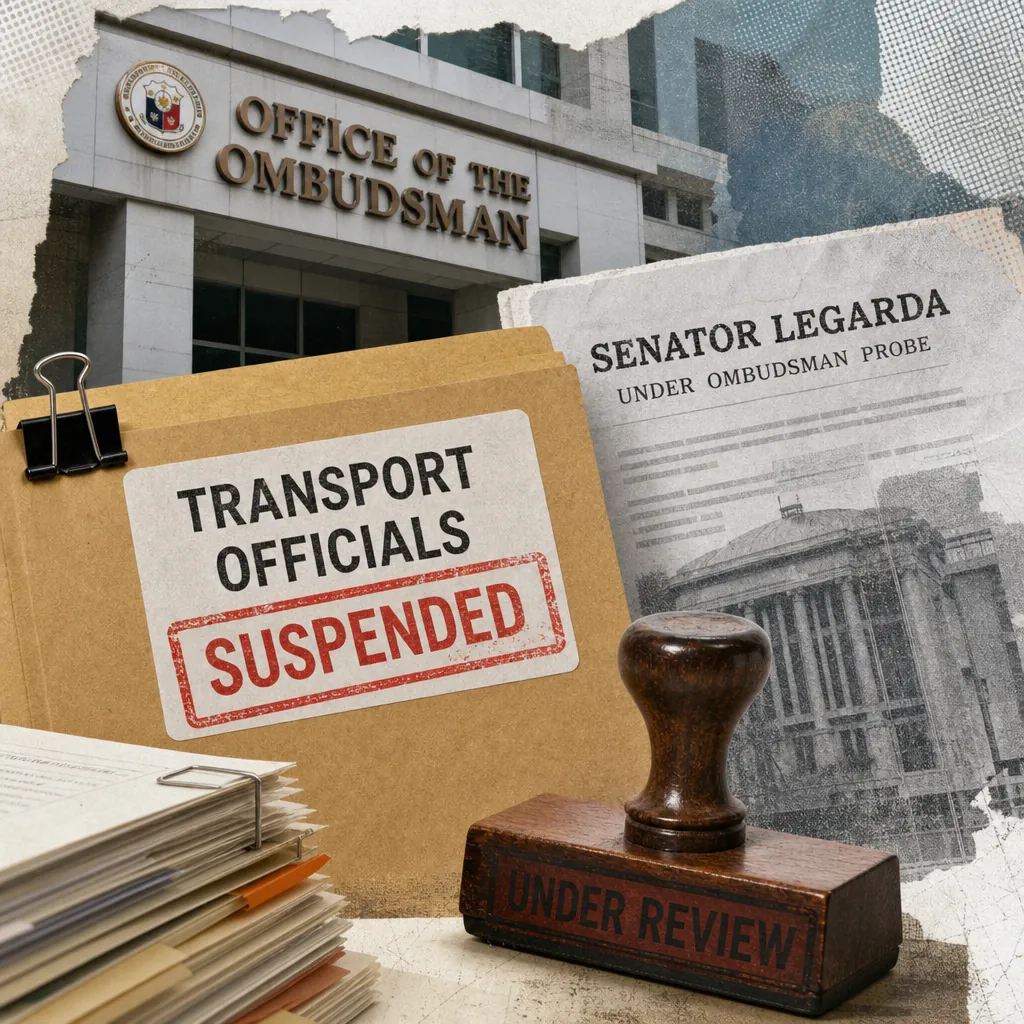
- Ombudsman suspends LTFRB and OTC chiefs over P13 billion fee issue — The Office of the Ombudsman ordered the six-month preventive suspension of Land Transportation Franchising and Regulatory Board (LTFRB) Chairperson Vigor Mendoza II and Office of Transport Cooperatives (OTC) chief Teofilo Guadiz III. The suspension stems from a controversy involving the Stradcom Corporation-operated system and over P13 billion in additional fees flagged by state auditors. The Department of Transportation (DOTr) immediately issued a statement respecting the order and assuring uninterrupted operations.
- Senator Legarda's medical leave extension called "suspicious" — The Ombudsman's characterization of Sen. Loren Legarda's repeated medical leave extensions as "quite suspicious" drew a defiant response from the senator, who declared "I have committed absolutely no wrongdoing." Her Facebook statement drew 327 likes and a striking 4,103 "haha" reactions, signaling widespread public skepticism rather than sympathy. The Ombudsman also threatened to cancel the passports of Legarda and her son, Batangas Rep. Leandro Leviste, adding a familial and travel-related dimension.
- Vice President Duterte challenges Palace on travel disclosures — Vice President Sara Duterte disputed reports of her scheduled Japan trip, calling them "inaccurate," and challenged Malacañang to publicly disclose all travel authorities, expenses, and public funds used by government officials. A Reddit post on this transparency challenge gained 246 upvotes and 192 comments, indicating strong resonance. The narrative was fueled by a report that the government had spent nearly P7 million on Duterte's security and staff for foreign trips.
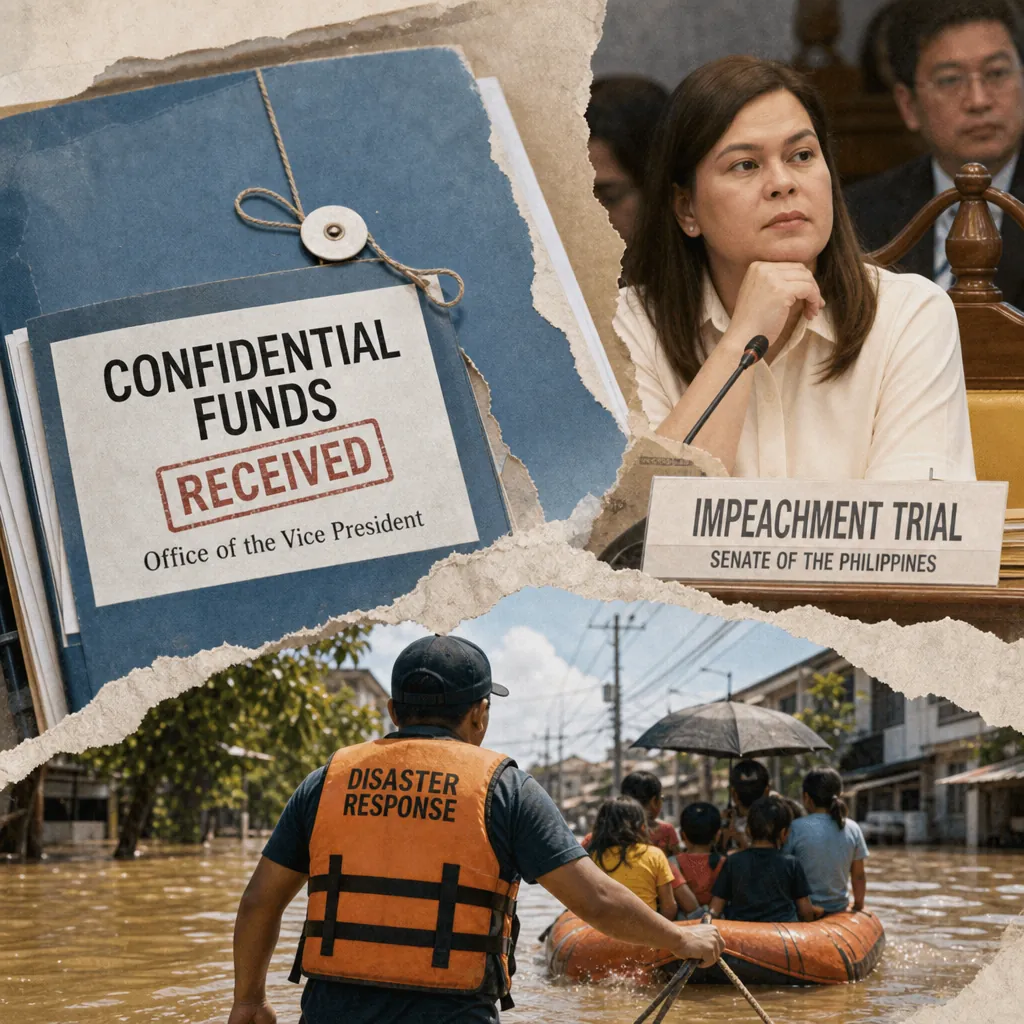
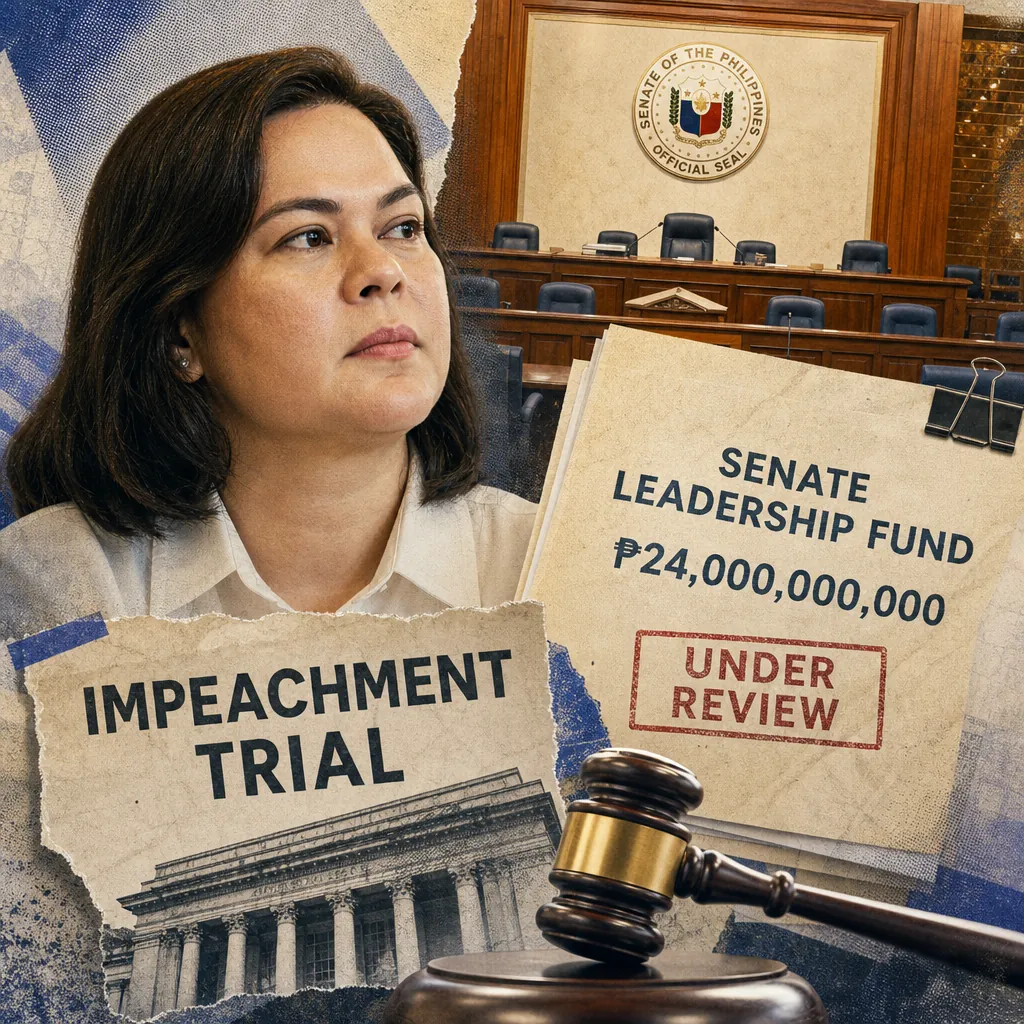
- Impeachment trial canceled again due to monsoon rains — The impeachment trial of Vice President Sara Duterte, scheduled for August 19, was canceled for the second time that week due to continued heavy rains from the southwest monsoon. The defense team also objected to the prosecution's use of AI-generated images, citing accuracy concerns. Veteran journalist Mon Tulfo opined that reconciliation between Marcos and Duterte was now unlikely.
- Flood control budget criticized as "corruption-prone" — ACT Teachers Rep. Antonio Tinio criticized the proposed P107.4 billion allocation for flood control projects in the 2027 national budget, saying it is likely to "end up in corruption once again" despite worsening floods. He contrasted this with only 700 classrooms planned for construction next year, which is "grossly" insufficient to the 166,000 classroom shortage.
How the narratives stack
Dominant — Within the captured set, the dominant narrative is the convergence of crises: the tropical depression, the school shooting, and the accountability battles. The flood control story drew the highest engagement on Facebook (407 likes on the detention basin post), while the Legarda story drew the most mockery (4,103 "haha" reactions). The shooting at Ateneo de Zamboanga was the most urgent emotional driver, but the political accountability stories (Teodoro, Legarda, Duterte) generated the most sustained conversation across platforms.
Counter-narrative — The counter-narrative is the government's response: agencies positioning themselves as proactive and responsive. The DOTr's immediate compliance statement on the suspensions, the SSS emergency loan program, the DOH's leptospirosis guidance, and the PNP's evacuation operations all present a government actively managing crises. This narrative is undercut by public skepticism, as evidenced by the "haha" reactions on serious stories and the DILG's own investigation into 911 response failures.
Emerging — The emerging narrative is the platform governance debate. Senator Padilla's call for Meta to remove graphic content signals a push toward platform regulation discourse. This is a developing story that could escalate if Meta fails to act, with reputational implications for any agency associated with the incident's aftermath.
Under-covered — The displacement of over 300 workers from Davao Mighty Steel Corporation following a raid for substandard products drew attention to labor welfare concerns but received relatively little engagement compared to the headline stories. Similarly, the DOLE's advisory on work alternatives and no sanctions amid disruptive events was a practical, welfare-focused story that did not gain traction in the social conversation.
Platform insights
- Facebook — The primary arena for emotional and visceral reactions. The reaction buttons provided a granular view of sentiment distribution, including the notable 21 "haha" reactions on a sexual assault case and 14 "sad" reactions on the Neneng announcement. Engagement numbers were consistently higher than Twitter's, especially for infrastructure stories like the detention basin (407 likes) and the SSS emergency loan announcement.
- Twitter — Served as the distribution channel for official agency announcements and breaking news. Government accounts posted updates on the DOLE holiday pay guidelines, the DOJ charges, and the MMDA's flood prevention plans. View counts ranged from 96 for the DPWH denial to 705 for the MMDA garbage ticketing story, but engagement (likes, shares, comments) was nearly nonexistent across all posts, indicating a broadcast-heavy environment rather than an interactive one.
- Reddit — Provided the most analytically oriented discussion. The Teodoro charges received 37 upvotes and only 3 comments, suggesting users preferred to upvote the news without engaging in extended debate. The Legarda story drew 52 upvotes and 41 comments, with users scrutinizing her claim of having "committed absolutely no wrongdoing" against the backdrop of allegations involving more than P10 billion in "ghost" solar projects. The Duterte transparency challenge drew 246 upvotes and 192 comments, indicating substantive community interest in transparency issues.
- YouTube — The least active platform. Video posts from Inquirer and Rappler on the Legarda story drew 1,338 and 1,291 views respectively, but generated almost no discussion (7 and 2 comments). The Inquirer's YouTube coverage of Neneng drew over 5,100 views and 70 likes, but again minimal comments. This suggests that video format failed to capture the attention that text-based updates did, likely due to the breaking-news nature of the stories favoring immediate written updates.
Key voices and communities
- Government agency communications teams — Official and semi-official accounts of DPWH, MMDA, DOLE, DILG, DSWD, and SSS drive the bulk of conversation volume across Twitter and Facebook. Their announcements serve as the primary source material for subsequent news coverage and public discussion. The DPWH detention basin announcement alone drew over 400 reactions and 127 comments on Facebook, while MMDA's live-streaming proposal attracted 73 reactions and 17 comments.
- Philippine news media outlets — Professional news organizations and their social media distribution arms serve as the primary amplification layer for government announcements and political developments. The Inquirer's YouTube coverage of Neneng drew over 5,100 views and 70 likes, while their Facebook coverage of the same story generated 62 reactions and 14 sad responses. Their coverage of the DOJ charges against Rep. Teodoro generated highly polarized reactions on Facebook, with 21 "haha" responses and 26 comments on a single post.
- Elected officials and political figures — Senators, congressmen, and former government officials form a highly active stakeholder group. Sen. Robin Padilla's call for Meta to remove shooting-related videos drew attention across Twitter, while DPWH Secretary Vince Dizon's denial of Rep. Erice's allegations and Malacañang's challenge to former Secretary Singson demonstrate ongoing political friction. These figures generate modest but politically consequential engagement volumes, with individual posts typically drawing between 96 and 428 views on Twitter.
- Affected communities and civil society voices — Residents, workers, and community members affected by government actions or inactions represent the fourth significant stakeholder cluster. Their engagement is driven by lived experience—complaints about 911 hotline failures, displaced steel plant workers seeking assistance, and communities facing flooding or evacuation. While individual posts from this group may draw lower volumes, the emotional weight of their content frequently drives follow-up coverage and institutional responses.
- Anti-corruption oversight communities — A coalition of accountability-focused accounts and news media audiences drives the narrative around Ombudsman actions. These voices, primarily active on Facebook and Twitter, amplify official announcements and frame them as necessary checks on power. Their influence stems from their role as first-movers in disseminating investigative updates.
Narrative streams
Flood control: from weather forecast to infrastructure critique
The day began with PAGASA confirming Tropical Depression Neneng's formation, which immediately refocused public attention on the perennial flooding problem. The narrative arc moved from weather forecast to infrastructure critique to specific project announcements, showing how quickly public appetite shifted from awareness to demand for action. President Marcos ordered the DPWH to fast-track a "holistic approach" to flood control projects, but this broad directive drew only 6 comments on Facebook. In contrast, the DPWH's plan to construct a detention basin near G. Araneta Avenue amassed 407 likes and 127 comments—the highest engagement of any flood-related story. This suggests that specific, named projects generate more engagement and public trust than broad policy pronouncements.
The MMDA also announced it would study live-streaming flood-prone areas to help motorists avoid being stranded, drawing 73 likes and 17 comments, while the agency separately confirmed it would seek inclusion of a "drainage master plan" in the 2027 national budget. The Metro Manila Council welcomed a proposal for a Garbage Single Ticketing System following garbage that floated on a river system in Parañaque City, with Las Piñas Rep. Mark Anthony Santos assuring that the proposal would not strip local governments of their powers.
ACT Teachers Rep. Antonio Tinio criticized the proposed P107.4 billion allocation for flood control projects in the 2027 national budget, saying it is likely to "end up in corruption once again" despite worsening floods. He contrasted this with only 700 classrooms planned for construction next year, which is "grossly" insufficient to the 166,000 classroom shortage. This criticism highlights the tension between infrastructure spending and education priorities, a theme that resonates with public concerns about misprioritization.
Read for the sector: For government agencies and infrastructure clients, the public's reaction to infrastructure announcements is highly localized and emotional. Communicators should lead with tangible deliverables—specific projects with timelines and locations—rather than broad policy statements. The flood control narrative is a reputational risk if the government is seen as slow to act; visible, measurable field operations are the most effective antidote to negative narrative cycles.
The Ombudsman's expanding enforcement: suspensions and probes
The Office of the Ombudsman's actions on August 18 created two distinct narratives: the six-month preventive suspension of LTFRB Chairman Vigor Mendoza II and OTC Chairman Teofilo Guadiz III, and the escalating probe into Sen. Loren Legarda and her son, Rep. Leandro Leviste. The suspension story was framed primarily as a direct accountability win, with state auditors linking the contested Stradcom system to over P13 billion in added public fees—a concrete, quantifiable harm that resonates strongly with audiences. The DOTr's immediate response—expressing respect for the order and assuring uninterrupted operations—was among the first institutional reactions, providing a counterpoint to the brewing controversy.
The Legarda story dominated engagement metrics. Her defiant Facebook statement, "WE WILL BE VINDICATED," drew 327 likes and a striking 4,103 "haha" reactions, signaling widespread public skepticism rather than sympathy. On Reddit, the same denial post accumulated 52 upvotes and 41 comments, with users scrutinizing her claim of having "committed absolutely no wrongdoing" against the backdrop of allegations involving more than P10 billion in "ghost" solar projects. The narrative took a more aggressive turn mid-day when Twitter users highlighted Assistant Ombudsman Mico Clavano's threat to cancel the passports of both Legarda and her son, with one post noting the "deafening silence" from Leviste amid the escalating pressure.
The Ombudsman also announced preliminary investigations into Surigao del Sur Governor Johnny Pimintel and former Pampanga Rep. Aurelio Dong Gonzalez Jr. over alleged links to construction firms that won Public Works contracts while they were in office. Former House Speaker Martin Romualdez has already answered complaints against him, with his counter-affidavit including the recantation of the so-called "maleta boys" to bolster his defense.
Read for the sector: For government-facing clients, the "anti-corruption" narrative is currently owned by the Ombudsman, not the administration. The suspension orders are being presented as decisive institutional action, and any perceived interference or slow-walking of compliance will be seized upon as evidence of selective justice. The DOTr's immediate statement of compliance—assuring uninterrupted operations while upholding accountability—is a useful template for crisis management.
The Ateneo de Zamboanga shooting: tragedy and platform governance
The school shooting at Ateneo de Zamboanga Junior High School became the most urgent social issue of the day. Authorities confirmed two students dead and another wounded, with the shooter identified as a Grade 9 student who used a government-issued firearm. The Department of Education ordered its regional office in Zamboanga Peninsula to provide psychosocial support to students, teachers, and families affected by the incident. Education Secretary Sonny Angara sent condolences, saying "As a father, my heart goes out to the parents who are grieving today."
Senator Robin Padilla's call for Meta to remove graphic videos and images of the shooting marked a turning point in the conversation, shifting the discourse from the tragedy itself to the ethics of content dissemination. The Facebook post about the shooting received 79 likes and 8 shares, but zero sad or angry reactions—unusual for a tragedy, suggesting either low visibility or a desensitized audience still processing the event. House Speaker Faustino Dy III assured victims that the House response would "go beyond sympathy," a statement that drew 13 "haha" reactions on Facebook, indicating public skepticism about legislative follow-through.
The shooting also raised questions about whether the incident justifies allocating confidential funds (CF) within the Department of Education (DepEd)—just like what Vice President Sara Duterte did when she headed the agency. Despite what happened, several members of the prosecution team still believe that DepEd must not be given confidential funds, as addressing threats should fall on law enforcement agencies. Manila Rep. Joel Chua said, "Unang-una, may mga tamang ahensya o departamento na tumitingin pagdating dito sa mga security. So ang focus dapat ng DepEd ay sa pag-aaral, sa curriculum ng ating mga estudyante."
Read for the sector: The shooting narrative became a test of both institutional credibility and platform governance. Communications teams should avoid purely symbolic statements and instead pair them with concrete protective actions for affected communities. The mixed emotional reactions on institutional posts—including significant "haha" responses on a House response article—indicate public cynicism toward performative political sympathy.
Vice President Duterte's travel controversy and the transparency challenge
Vice President Sara Duterte's travel disclosure controversy intersected with the ongoing impeachment proceedings. She disputed reports of her scheduled Japan trip, calling them "inaccurate," and warned that disclosing her schedule could compromise her security. She then challenged Malacañang to publicly disclose all travel authorities, expenses, and public funds used by government officials. This dual messaging—denying specific reports while broadening the transparency demand—generated substantial engagement across platforms.
A Reddit post on the transparency challenge gained 246 upvotes and 192 comments, indicating strong resonance with transparency-focused messaging. The narrative was fueled by a report that the government had spent nearly P7 million on Duterte's security and staff for foreign trips. This statistic injected a concrete data point into the discussion, transforming it from a political challenge into a potential fiscal scandal.
The impeachment trial itself faced procedural friction. The defense team objected to the prosecution's use of AI-generated images, citing concerns over accuracy. The trial was canceled again on August 19 due to the southwest monsoon, adding a layer of procedural frustration to the political narrative. Veteran journalist Mon Tulfo opined that reconciliation between Marcos and Duterte was now unlikely.
Read for the sector: The Vice President's transparency challenge is gaining traction with engaged audiences and may trigger further Palace disclosures or counter-accusations within the next 48-72 hours. For Malacañang-facing communications, the key risk is that a single weather event can rapidly shift the narrative from infrastructure investment to immediate-response inadequacy. The "haha" reaction pattern on Facebook suggests that content mocking the VP's travel denial is resonating broadly—this affective response should be tracked as a sentiment indicator separate from substantive political commentary.
The impeachment trial: procedural battles and public skepticism
The impeachment trial of Vice President Sara Duterte continued to unfold against a backdrop of procedural challenges. The defense team objected to the prosecution's use of AI-generated images, citing concerns over accuracy. The trial was canceled again on August 19 due to the southwest monsoon, the second time that week. House prosecutors presented documents showing the Office of the Vice President's "repeated resistance" to scrutiny of its confidential fund spending, including refusal to attend congressional hearings and attempts to prevent the Commission on Audit from turning over documents.
House prosecutor Rep. Joel Chua said Duterte has shown "repeated reliance" on confidential funds since serving as Davao City mayor to heading the OVP and DepEd. He pointed to the sharp increase in confidential funds during her tenure as Davao City mayor, followed by confidential fund allocations for the OVP and DepEd under her leadership. "Hindi mo alam kung ganun nga, pero kung titingnan mo parang may pattern," Chua said. ("I don't know if that's how it is, but if you look at it, there's a pattern.")
Benjamin "Jay" Tolosa Jr., House prosecution counsel and spokesman, said documents accepted by the defense showed attempts to hide the truth behind the alleged misuse of a total of P612.5 million in confidential funds of the OVP and DepEd under Duterte. The trial also saw former special disbursing officer Gina Acosta take the witness stand as the first hostile witness, with explainers published on what an SDO does in managing confidential funds.
Read for the sector: The impeachment trial is the single largest reputational risk factor for both the Vice President and the administration. The repeated cancellations due to weather, combined with the AI-generated image objection and perjury complaints, create a narrative of a trial under strain. Communications teams should avoid commentary that could be interpreted as either supporting or undermining the trial's legitimacy—stick to procedural neutrality.
Conversation trajectory
- Escalation of political accountability narratives — The conversation is shifting from policy discussion toward individual conduct and abuse-of-power allegations. This is evidenced by the confirmed filing of criminal charges against a sitting congressman, as well as the active denial from a cabinet secretary regarding accusations of pork barrel-style threats against a critic. Expect this trajectory to intensify over the coming 2-3 weeks as opposition figures leverage these narratives to challenge the administration's reform messaging, particularly with the 2028 election cycle beginning to enter public consciousness. Observation window: 2-3 weeks.
- Crisis response and public safety convergence — An emerging pattern combines natural disaster preparedness with security incidents, creating a layered public anxiety. The formation of Tropical Depression Neneng has drawn significant attention, with one video report already generating five-figure engagement. Simultaneously, the Ateneo de Zamboanga shooting has triggered calls from a sitting senator for social media platforms to remove graphic content, signaling a push toward platform regulation discourse. This convergence will likely drive increased scrutiny on government response times and resource allocation, with the DILG's ongoing 911 hotline inquiry providing a concrete hook for critics within the next 7-10 days. Observation window: 7-10 days.
- Infrastructure accountability under weather pressure — Flood control has emerged as a dominant theme, with presidential directives for a "holistic approach" colliding with questions about past project efficacy. The DPWH's new detention basin planning and MMDA's live-streaming proposal represent reactive measures that will likely be scrutinized as insufficient by some voices, especially as Neneng approaches northern Luzon. Expect a 3-4× spike in flood management conversation within the next 48-72 hours if the storm strengthens. Observation window: 48-72 hours.
- Displacement and worker welfare as secondary narrative — Beyond the headline topics, a sub-thread on economic disruption is visible, including displaced workers at a steel plant following a government raid and emergency loan offerings from SSS. This welfare-focused conversation will likely grow in prominence over the next two weeks, broadening the accountability frame beyond corruption to include adequacy of social safety nets during crises. Observation window: 2 weeks.
Trigger events: The approaching landfall or intensification of Tropical Depression Neneng within the next 48-72 hours will likely shift a significant portion of conversation toward disaster response and flood mitigation performance. The August 21 Ninoy Aquino Day and August 31 National Heroes Day holidays will provide structured pauses that often invite retrospective commentary on governance legacy and current administration comparisons. The ongoing DOJ process regarding the congressman case will likely produce new procedural developments that reignite engagement within 1-2 weeks.
Response guidance
Flood response communication framework — Prepare a coordinated resilience narrative within the next 48 hours, combining the Marcos directive with MMDA and DPWH initiatives. Lead with specific, named projects and timelines, as the public responds more strongly to tangible deliverables than broad policy statements. Use visual breakdowns of project timelines and agency coordination to counter skepticism about execution capacity.
Accountability and ethics messaging — Issue a measured statement within 5-7 days that acknowledges the seriousness of allegations while emphasizing due process. The current window before the holiday breaks offers an opportunity to shape the narrative framework before extended recess periods reduce daily news cadence. Coordinate with relevant agency heads to ensure consistent messaging across all platforms.
Platform-specific approaches — On Facebook, prioritize rapid response on high-engagement posts relating to agency accountability and public safety incidents. Designate a comment-monitoring protocol for official pages that immediately acknowledges concerns and redirects users to verified updates. On Twitter, use short, time-stamped updates to clarify factual details and counter misinformation. On Reddit, engage with the discourse around transparency issues by drafting neutral, factual breakdowns of current protocols.
Sensitive topics to navigate — Criminal charges against public officials: maintain a factual tone that confirms processes without characterizing guilt or innocence. School shooting and graphic content circulation: coordinate with platform providers on content moderation requests while respecting freedom of expression. Flood control infrastructure delays: acknowledge legitimate frustrations while emphasizing technical complexity and multi-agency coordination.
Key messages — "Government agencies are actively coordinating across departments to deliver immediate assistance and long-term resilience for affected communities." "Official investigations and legal processes are already underway, and we urge the public to rely only on verified information from authorized sources." "Accountability mechanisms remain in place, including internal reviews and external oversight, to ensure public trust is preserved."
See the full picture behind today's signals.
This report draws from Media Meter's MediaWatch, our real-time monitoring engine tracking 2,470+ Philippine sources across print, broadcast, digital, and social. Explore how the platform turns raw coverage into decision-grade intelligence, then see how it's configured for teams like yours — whether you're in PR agencies, corporate comms, government, or marketing.
Want more? Browse our Report Library for sector and crisis intelligence, or request a demo and we'll have your brand set up before the call.
Want this kind of intelligence on your brand?
This brief is built on the same MediaWatch methodology that runs continuously across every brand we monitor. See your competitive landscape, Impact Score, and narrative trajectory in a 30-minute demo.