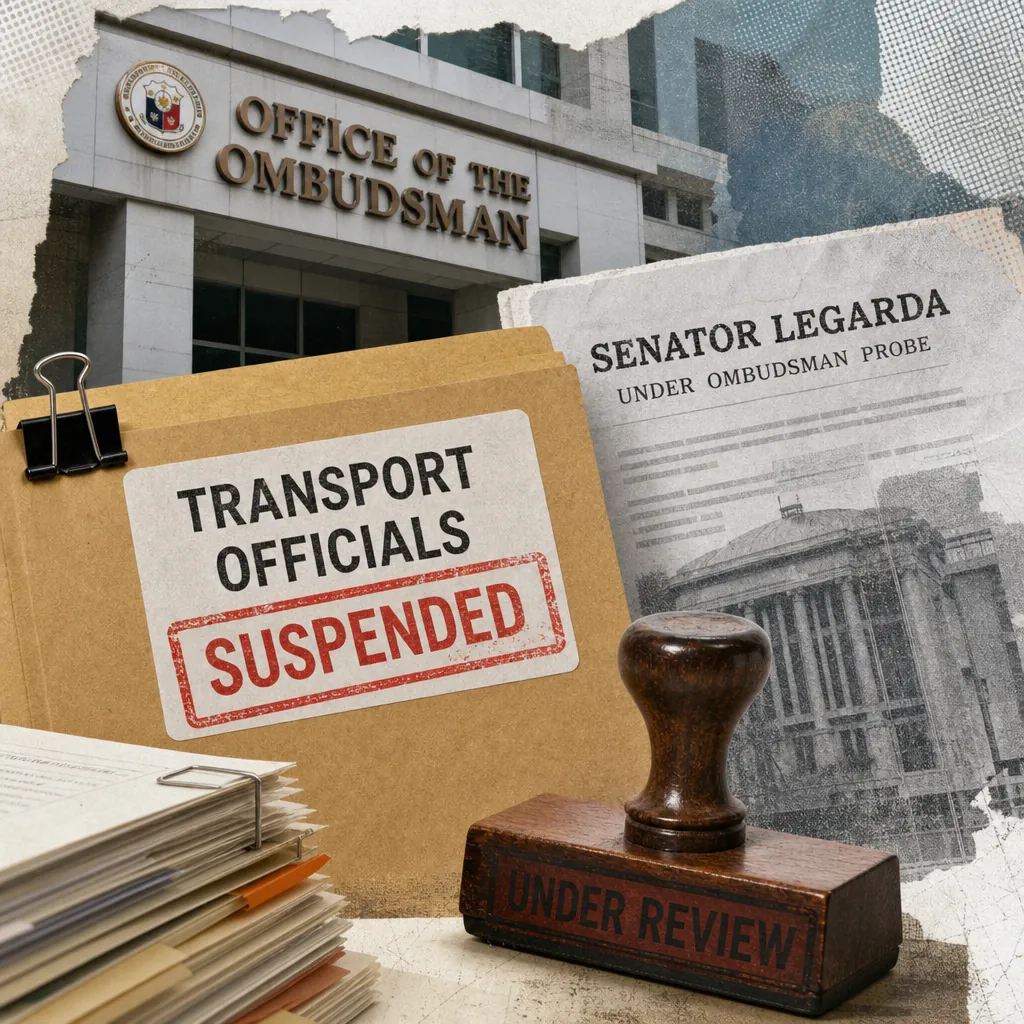
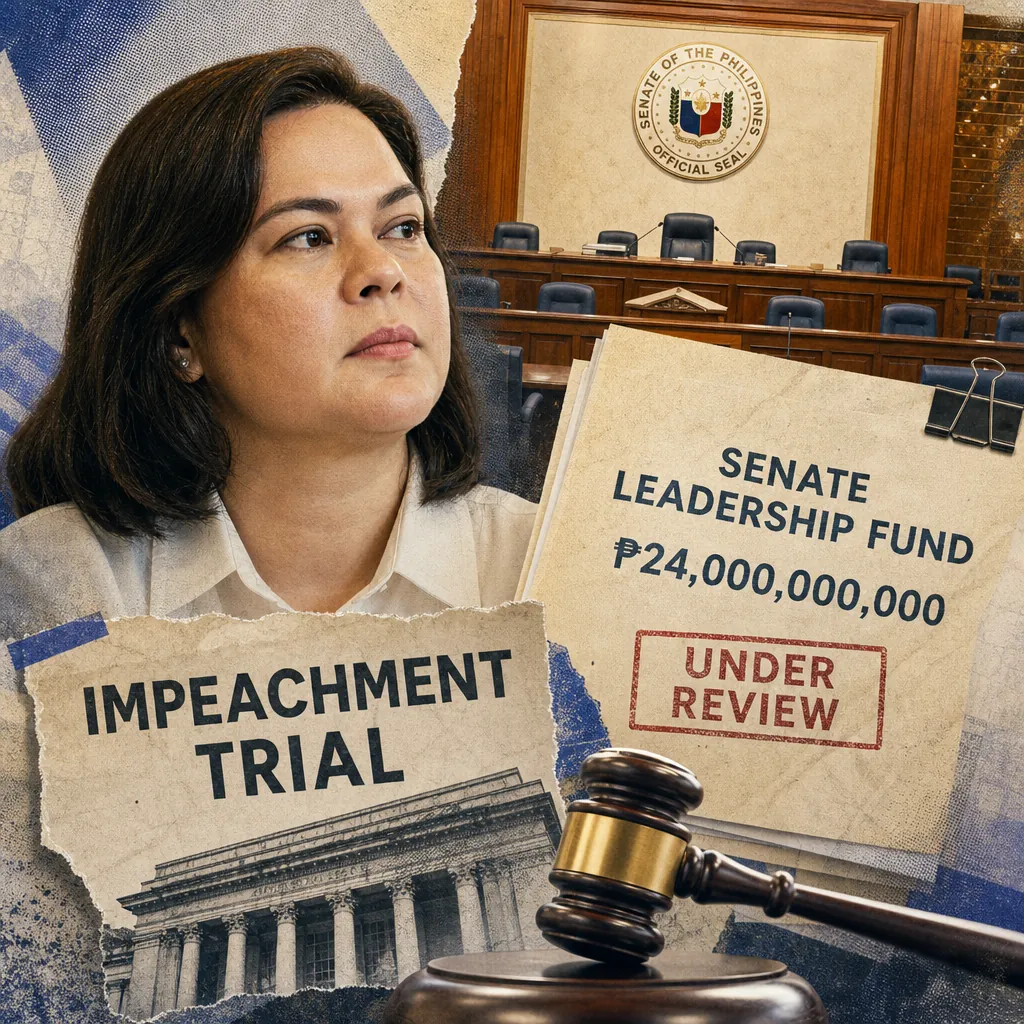
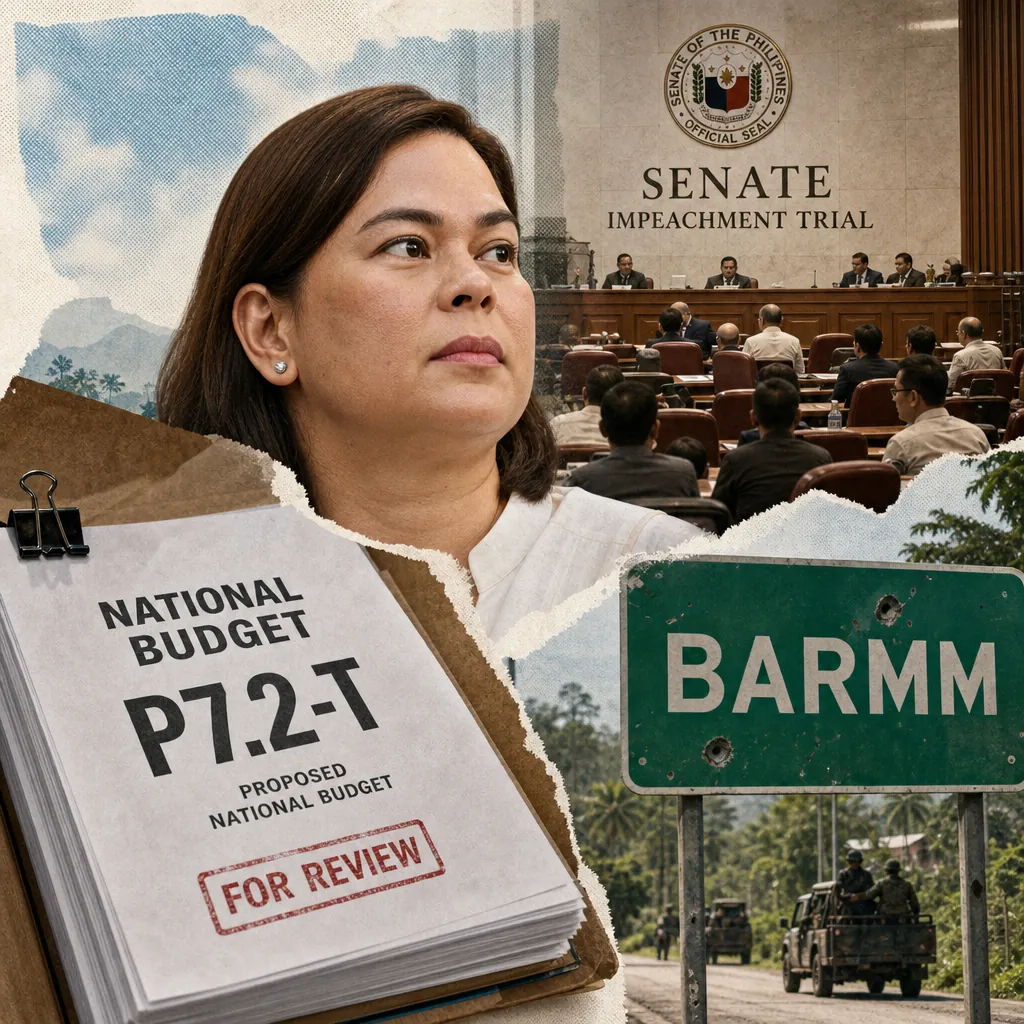
Habagat floods, impeachment testimony dominate Aug. 17
On August 17, 2026, the Philippines faced severe southwest monsoon flooding while the Sara Duterte impeachment trial heard key testimony on confidential funds. This snapshot covers the day's social and news media conversation, highlighting public sentiment, government response, and emerging accountability narratives.
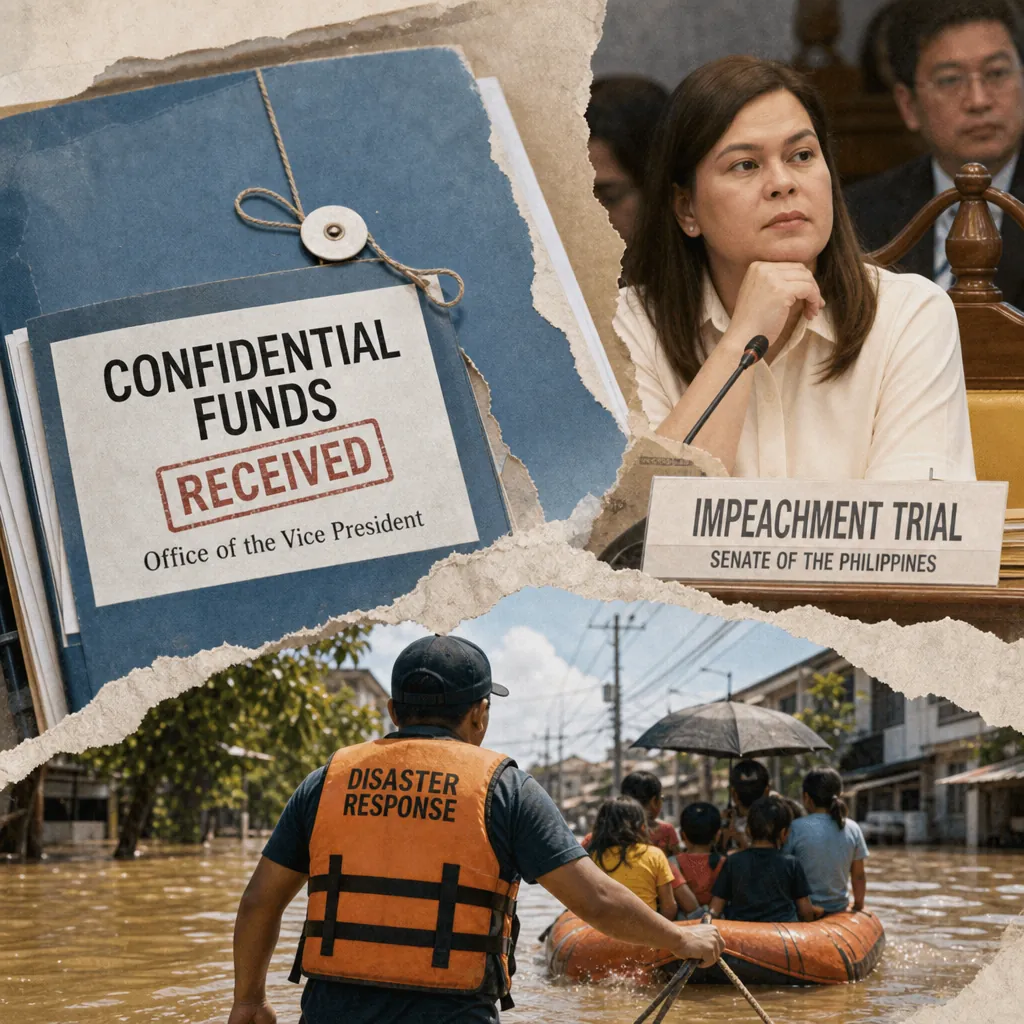
The day's conversation on August 17, 2026, was defined by two powerful, interlocking narratives: the relentless southwest monsoon (habagat) that submerged parts of Luzon, and the 16th day of Vice President Sara Duterte's impeachment trial, where a former aide testified she ordered the release of P125 million in confidential funds. On social media, these stories competed for attention, with the flooding drawing deep public sympathy and the trial generating a mix of outrage, mockery, and partisan division. Meanwhile, news outlets provided wall-to-wall coverage of both, alongside a host of related governance, labor, and security stories. The result was a day where the public's emotional energy was split between a natural disaster and a political crisis, each exposing different fault lines in Philippine society.
The flooding narrative escalated rapidly. What began as a routine weather advisory from the Philippine Atmospheric, Geophysical and Astronomical Services Administration (PAGASA) about a low-pressure area (LPA) with a medium chance of becoming a storm quickly turned into a full-blown crisis. By mid-morning, Masinloc, Zambales, had declared a state of calamity, and videos of head-level floodwaters in Quezon City's Barangay Tatalon circulated widely. The human cost became tangible as Manila Mayor Isko Moreno Domagoso shared footage of rescue teams evacuating 121 residents from Old Sta. Mesa. On Facebook, an Inquirer.net post about the Zambales calamity drew 536 sad reactions and 340 shares, while the rescue video accumulated 143 likes and 133 sad reactions. The public was not just consuming news; they were expressing collective anxiety and frustration about disaster preparedness. This sentiment was amplified by Senator Panfilo Lacson's pointed question on X: "FLOOD CONTROL VS UNCONTROLLED FLOOD: PhP1.939 trillion funded the DPWH flood control management program under three presidents from 2011-2025 and the result is uncontrolled flood." His post, which cited the Department of Public Works and Highways' (DPWH) flood management budget over 14 years, resonated with a public that had just watched their streets turn into rivers.
Simultaneously, the impeachment trial provided a different kind of drama. Former Office of the Vice President (OVP) Special Disbursing Officer Gina Acosta testified that Duterte directly instructed her to release P125 million in cash to security officer Col. Raymund Dante Lachica. This testimony, which echoed her earlier statements before a House committee, became the day's dominant political story. A Facebook post carrying the details quickly amassed 97 likes and 28 comments, with a mix of "love," "haha," and "angry" reactions, revealing deep partisan polarization. The trial's procedural pause added another layer: the Senate announced the suspension of Tuesday's session due to forecast heavy rains, a decision that drew 26 "haha" reactions on one post, suggesting public skepticism about the timing. Meanwhile, Manila Rep. Bienvenido Abante's challenge to Duterte—"MAAWA KA NAMAN SA MGA STAFF MO!" (Have pity on your staff!)—shifted part of the discourse toward accountability, framing her absence as a burden on her subordinates.
These two narratives did not exist in isolation. The flooding exposed vulnerabilities in infrastructure and governance, while the impeachment trial raised questions about the use of public funds. Together, they painted a picture of a government under strain, both from nature and from its own internal conflicts. The day's coverage, as captured in the monitored articles and social posts, reflects a public that is engaged, emotional, and increasingly critical of institutional performance.
Key themes
- Monsoon floods trigger crisis response and public empathy: The southwest monsoon caused severe flooding across Metro Manila and nearby provinces, leading to mass evacuations, class and work suspensions, and a state of calamity in Masinloc, Zambales. Social media was flooded with videos and posts showing the human toll, drawing thousands of sad and care reactions. The public's emotional response highlighted both sympathy for victims and frustration with the government's preparedness.
- Impeachment trial testimony on P125 million confidential funds: Former OVP disbursing officer Gina Acosta testified that Vice President Sara Duterte ordered her to release P125 million in confidential funds to security chief Col. Raymund Lachica. This testimony dominated political coverage and social media, with reactions split along partisan lines. The trial's suspension due to weather added a procedural twist that some viewed with skepticism.
- Government accountability questioned over flood control spending: Senator Panfilo Lacson's post questioning the effectiveness of P1.939 trillion in flood control spending from 2011 to 2025 went viral, tapping into public anger over recurring floods. Lawmakers also raised concerns about budget allocations, with some suggesting funds be redirected to classrooms. This theme connected the disaster to long-standing issues of infrastructure mismanagement.
- Labor and economic policy under strain: The Department of Labor and Employment (DOLE) filed a motion to lift the freeze on the P85 minimum wage hike in Metro Manila, a move that drew mixed reactions. Meanwhile, the Bureau of Internal Revenue (BIR) extended tax deadlines due to the monsoon, and remittance growth slowed to a four-year low, reflecting broader economic pressures.
- Security and territorial tensions persist: The West Philippine Sea remained a flashpoint, with the Department of National Defense (DND) vowing to enforce Philippine law against Chinese activities. A fisherman's three-day survival adrift in the area drew sympathy, humanizing the geopolitical issue. In the BARMM, a gunman killed a bread vendor despite an election gun ban, highlighting security challenges ahead of parliamentary elections.
- Public safety and health concerns amid flooding: The Philippine National Police (PNP) reported a rise in mothers tagged in online child sexual abuse cases, drawing outrage. In flood-affected areas, health centers offered free doxycycline to prevent leptospirosis, but a shortage of the drug at some hospitals raised concerns. The public was urged to seek medical evaluation after wading through floodwaters.
- Political controversies and governance scrutiny: Beyond the impeachment trial, stories about confidential funds, "leadership funds," and alleged "honey trap" plots against officials fueled public skepticism. The First Lady's "birthday sabbatical" selfie during the floods drew backlash, and lawmakers questioned the House's own budget transparency. These stories contributed to a narrative of eroding trust in institutions.
- Infrastructure vulnerability exposed by extreme weather: A condominium ceiling collapse in Quezon City and a landslide in Olongapo City highlighted the fragility of urban infrastructure. These incidents sparked discussions about building safety standards and the need for better urban planning, linking the disaster to long-term development challenges.
How the narratives stack
Dominant: The southwest monsoon flooding and its aftermath dominated the day's conversation, both in terms of volume and emotional weight. The crisis was not just a weather event but a test of government response, with the public closely watching evacuation efforts, aid distribution, and infrastructure resilience. The high engagement on posts about the Zambales calamity and rescue operations—thousands of sad reactions and shares—underscored the public's deep concern. This narrative was amplified by Senator Lacson's critique of flood control spending, which framed the disaster as a failure of governance. The flooding also had practical consequences, forcing the suspension of the impeachment trial and government work, making it the day's central event.
Counter-narrative: The impeachment trial provided a counter-narrative that competed for attention, particularly among politically engaged audiences. While the flooding drew sympathy, the trial drew partisan reactions, with supporters and critics of Duterte clashing in comment sections. The testimony about P125 million in confidential funds was a significant development, but it was often framed through a political lens rather than a legal one. The trial's suspension due to weather was met with some mockery, suggesting that a segment of the public viewed it as an unwelcome delay. This narrative was less about the substance of the allegations and more about the political battle between the administration and its opponents.
Emerging: A notable emerging theme was the intersection of the flooding with infrastructure and budget accountability. Senator Lacson's post, along with lawmakers' calls to redirect flood control funds to classrooms, signaled a growing public demand for transparency and effectiveness in public spending. This was not just about the immediate disaster but about long-term planning and the government's ability to deliver on its promises. The conversation around the "Build Better More" program and the DPWH's performance suggested that the flooding could become a catalyst for broader scrutiny of infrastructure projects.
Suppressed: Under-covered in the day's conversation was the situation in the Bangsamoro Autonomous Region in Muslim Mindanao (BARMM), where an attack on the Interim Chief Minister and a shooting during an election gun ban raised concerns about security ahead of parliamentary elections. While the impeachment trial and flooding dominated headlines, the BARMM's stability was a critical issue that received less attention. Similarly, the rise in online child sexual abuse cases, while reported, did not generate sustained discussion, possibly because of the sensitivity of the topic. These stories, though under-covered, carry significant implications for regional stability and public welfare.
Platform insights
- Facebook: Facebook was the primary venue for emotional engagement and community reaction. Posts about the flooding, such as the Inquirer.net article on the Zambales calamity, drew thousands of sad reactions and shares, reflecting the public's empathy and concern. The platform also hosted the most heated political debates, with posts about the impeachment testimony receiving a mix of "love," "haha," and "angry" reactions. Facebook's comment sections became spaces for both information sharing and partisan bickering, making it the most dynamic platform for this story.
- X (formerly Twitter): X served as the breaking-news feed, with concise updates on the flooding, the impeachment trial, and government announcements. Senator Lacson's post on flood control spending gained traction, and the platform was used for real-time updates on class suspensions and evacuation orders. Engagement was lower than on Facebook, but the platform's role in disseminating official information was crucial. The hashtag #habagat was used to organize information, though it did not trend as prominently as expected.
- YouTube: YouTube carried the full video testimony of Gina Acosta, which drew over 30,000 views and 70 likes, making it the deepest engagement with the trial's content. The platform also hosted news clips of the flooding, but these had minimal engagement. YouTube served as a documentary hub, providing the raw material that other platforms discussed, but it was not a primary venue for real-time conversation.
Key voices and communities
- Government agencies and local officials: PAGASA, the Department of Transportation (DOTr), and local government units like Manila and Quezon City were key voices, providing official updates on weather, rescue operations, and free ride services. Their posts were widely shared, and their actions were closely scrutinized. Mayor Isko Moreno Domagoso's rescue footage was particularly well-received, setting a benchmark for visible government response.
- Senators and lawmakers: Senator Panfilo Lacson's critique of flood control spending was a standout, resonating with public frustration. Other lawmakers, including Rep. Bienvenido Abante and Rep. Toby Tiangco, contributed to the accountability narrative, questioning budget transparency and the Vice President's attendance. Their statements were amplified on social media, though engagement varied.
- Media outlets: Inquirer.net, GMA News Online, and Daily Tribune were among the most active publishers, providing comprehensive coverage of both the flooding and the impeachment trial. Their Facebook posts drew significant engagement, and their articles were widely shared. The media's framing of the day's events shaped public perception, particularly in connecting the disaster to governance issues.
- The public and affected communities: Residents in flood-affected areas, such as Quezon City and Pasig, shared their own videos and updates, providing ground-level evidence of the crisis. Their posts, while individually modest, collectively shaped the narrative of government response adequacy. The public's emotional reactions—sadness, anger, and even humor—reflected a complex mix of empathy and frustration.
- Political commentators and partisan accounts: Accounts aligned with both pro- and anti-Duterte camps were active, particularly on Facebook and X. They amplified the impeachment testimony and the flooding news through their own lenses, contributing to the polarized nature of the conversation. Their content often drew more engagement than neutral reporting, highlighting the role of partisanship in shaping public discourse.
Narrative streams
The Flooding Crisis: A Test of Government Response
The southwest monsoon, or habagat, brought relentless rain to Luzon on August 17, 2026, causing widespread flooding that displaced thousands and disrupted daily life. The Philippine Atmospheric, Geophysical and Astronomical Services Administration (PAGASA) reported that a low-pressure area (LPA) east of Northern Luzon had a medium chance of developing into a tropical cyclone within 48 hours, prolonging the rains. By evening, Pasig City had evacuated 3,189 residents to 18 evacuation centers, while Quezon City sheltered 10,368 people in 52 centers. The scale of the displacement was unprecedented for a single day, and the public's response on social media was one of deep concern.
The emotional weight of the crisis was captured in the engagement metrics. An Inquirer.net post about the Masinloc state of calamity drew 536 sad reactions and 340 shares, while a video of rescue operations in Manila's Old Sta. Mesa accumulated 143 likes and 133 sad reactions. These numbers reflect not just passive consumption but active empathy, as users shared the posts to spread awareness. The public's frustration was also evident in comments demanding better disaster preparedness and questioning urban planning. Senator Panfilo Lacson's post on X, which highlighted the P1.939 trillion spent on flood control from 2011 to 2025, tapped into this sentiment, framing the disaster as a failure of governance.
The government's response was a mix of proactive measures and reactive challenges. The Department of Transportation (DOTr) announced free rides for stranded commuters on Tuesday, deploying 43 vehicles, while the Bureau of Internal Revenue (BIR) extended tax deadlines. Local governments suspended classes and work, and the House of Representatives shifted to virtual sessions. However, the suspension of the impeachment trial due to weather was met with some skepticism, as "haha" reactions on Facebook suggested that some viewed it as an unwelcome delay. The flooding also exposed infrastructure vulnerabilities, with a condominium ceiling collapse in Quezon City and a landslide in Olongapo City raising questions about building safety.
For the sector, this narrative underscores the importance of disaster preparedness and the need for transparent, effective infrastructure spending. The public's emotional response indicates that they are not just looking for relief but for accountability. The government's ability to manage the crisis will likely influence public trust in the coming weeks, especially as the LPA threatens to develop into a storm.
The Impeachment Trial: Testimony on Confidential Funds
On Day 16 of Vice President Sara Duterte's impeachment trial, the prosecution presented former OVP Special Disbursing Officer Gina Acosta, who testified that Duterte directly ordered her to release P125 million in confidential funds to security officer Col. Raymund Dante Lachica. Acosta's testimony was consistent with her earlier statements before a House committee, and prosecution counsel Benjamin Tolosa Jr. said there was "no more doubt" about Duterte's involvement. The testimony was a significant development, as it directly linked the Vice President to the disbursement of funds that are at the center of the impeachment complaint.
The public's reaction was polarized. A Facebook post carrying the details drew 97 likes and 28 comments, with a mix of "love," "haha," and "angry" reactions. The YouTube video of the testimony attracted over 30,000 views and 57 comments, indicating sustained interest. However, the trial's suspension due to weather on Tuesday drew 26 "haha" reactions on one post, suggesting that some viewed the delay with cynicism. Rep. Bienvenido Abante's challenge to Duterte—"MAAWA KA NAMAN SA MGA STAFF MO!"—added a personal dimension, framing her absence as a burden on her staff.
The trial also intersected with other governance controversies. The Senate impeachment court allowed the prosecution to question Acosta about Davao City's use of confidential funds during Duterte's mayoralty, despite defense objections. This expanded the scope of the inquiry, potentially linking her actions as mayor to her vice presidency. The defense argued that the matter was irrelevant since Duterte was not an impeachable officer at the time, but the court allowed it as pattern evidence.
For the sector, this narrative highlights the fragility of public trust in institutions. The public's reaction—a mix of mockery and anger—suggests that the trial is being consumed as entertainment as much as a legal process. The allegations, if proven, could have significant political consequences, but the public's skepticism about the process itself may undermine the trial's legitimacy. The resumption of the trial, once weather permits, will be a key moment to watch.
Flood Control Spending Under Scrutiny
Senator Panfilo Lacson's post on X, questioning the effectiveness of P1.939 trillion in flood control spending from 2011 to 2025, became a rallying point for public frustration. The post, which included a chart showing annual allocations rising from P11.3 billion in 2011 to P287 billion in 2025, was widely shared and discussed. Lacson's framing—"FLOOD CONTROL VS UNCONTROLLED FLOOD"—resonated with a public that had just witnessed severe flooding in Metro Manila and nearby provinces.
The scrutiny extended to the budget process. During a congressional briefing, ACT Teachers Partylist Rep. Antonio Tinio argued that the proposed P107.4 billion for flood control should be redirected to classrooms, citing a shortage of 160,000 classrooms. Navotas Rep. Toby Tiangco questioned why the House of Representatives was not subject to the same budget scrutiny as other agencies, asking, "Is there a law that exempts the House of Representatives from presenting the budget to our colleagues before it goes into plenary?" These questions reflect a broader demand for transparency and accountability in public spending.
The Department of Public Works and Highways (DPWH) has been at the center of these debates, with allegations of "ghost projects" and "leadership funds" adding to the controversy. The Palace has denied the existence of such funds, but the public's skepticism remains. The flooding has provided a concrete example of the consequences of ineffective spending, making this narrative particularly potent.
For the sector, this narrative suggests that infrastructure spending will be a major flashpoint in the upcoming budget deliberations. The public's demand for results, not just allocations, will likely shape the debate. Agencies involved in flood control and infrastructure will need to demonstrate tangible outcomes to regain public trust.
Labor and Economic Pressures
The Department of Labor and Employment (DOLE) filed a motion on August 17 to lift the freeze on the P85 daily minimum wage hike in Metro Manila, which had been halted by a court injunction. Labor Secretary Francis Tolentino filed the motion before the Pasig Regional Trial Court, arguing that the court lacked jurisdiction and that the wage order should be implemented. The move was seen as a proactive step to support workers, but the public's reaction was mixed, with some expressing frustration over the slow pace of wage adjustments.
The economic context was challenging. Remittance growth slowed to a four-year low in June, with cash remittances rising only 1.7% year-on-year, according to the Bangko Sentral ng Pilipinas (BSP). The slowdown was attributed to the Middle East conflict and rising prices in host countries. This trend could persist, affecting household incomes and consumer spending. The BIR's extension of tax deadlines due to the monsoon provided some relief, but the overall economic picture remained uncertain.
For the sector, the wage hike case and remittance data are indicators of consumer purchasing power and economic confidence. The public's divided reaction to the wage hike—some angry, some amused—suggests skepticism about the government's ability to deliver economic relief. The outcome of the court case will be closely watched, as it could have implications for labor policy and public sentiment.
Security and Territorial Tensions
The West Philippine Sea remained a source of tension, with the Department of National Defense (DND) vowing to continue enforcing Philippine law against Chinese activities. DND spokesperson Arsenio Andolong said, "The DND exists to protect Philippine sovereignty, our territory, and our people. That duty is non-negotiable." This statement came in response to the Chinese embassy's dismissal of Philippine concerns as "political rhetoric." The DND's firm stance was echoed in social media, though engagement was moderate.
A human-interest story provided a different angle: a fisherman, Robin Bondol Trinidad, survived three days adrift in the West Philippine Sea after his boat was caught in rough weather. His story drew sympathy, with 5 sad and 2 care reactions on Facebook and over 2,000 views on Twitter. The narrative humanized the maritime issue, shifting focus from geopolitical claims to the human cost.
In the Bangsamoro Autonomous Region in Muslim Mindanao (BARMM), security concerns were heightened by an attack on the Interim Chief Minister and a shooting that killed a bread vendor during an election gun ban. These incidents, while under-covered in the day's conversation, underscored the challenges ahead of the parliamentary elections. The military's installation of a new Western Mindanao Command chief was reported without notable engagement, but it signaled a focus on regional stability.
For the sector, these security narratives highlight the importance of maintaining public trust in institutions responsible for safety and sovereignty. The human-interest angle of the fisherman story offers an opportunity for more relatable messaging, while the BARMM situation requires careful monitoring to prevent escalation.
Public Health and Safety Concerns
The flooding brought public health risks to the forefront. The Manila Health Department announced that health centers would be open half-day on Tuesday to provide free doxycycline, an antibiotic used to prevent leptospirosis, a bacterial infection spread through floodwater. The University of Santo Tomas Hospital refuted reports of depleted doxycycline stocks, saying it had sufficient supply. However, a Vietnamese tourist in Pasay City expressed fear of contracting leptospirosis after wading barefoot through floodwaters, highlighting the public's anxiety.
The Philippine National Police (PNP) also reported a rise in mothers tagged in online child sexual abuse cases, drawing outrage on social media. The story received 2,696 views on Twitter and 9 angry reactions on Facebook, reflecting public concern. The PNP's handling of this issue will be closely watched, as it involves sensitive matters of child protection.
For the sector, these health and safety issues require sensitive communication. The public's fear of leptospirosis is legitimate, and health agencies must provide clear guidance on prevention and treatment. The online child abuse story demands careful messaging to avoid stigmatizing families while emphasizing enforcement and support.
Conversation trajectory
- Flooding and disaster response (next 48-72 hours): The low-pressure area has a medium chance of developing into a storm, which could prolong the rains and worsen flooding. The government's response will be under intense scrutiny, and any perceived inadequacy could fuel criticism. Expect continued high engagement on flooding-related posts, with a focus on rescue operations and aid distribution. Trigger events: PAGASA updates on the LPA, new calamity declarations, and reports of infrastructure damage.
- Impeachment trial resumption (within a week): The trial is suspended until weather permits, but the testimony on P125 million will likely dominate when it resumes. The prosecution may present more witnesses, and the defense will have opportunities to cross-examine. The public's reaction will depend on how the testimony is framed in the media. Trigger events: resumption of trial, new testimony, and any legal rulings on evidence.
- Budget deliberations (over the next 2-3 weeks): The flooding has intensified scrutiny of flood control spending, and lawmakers are already questioning budget allocations. The 2027 national budget will be a flashpoint for accountability narratives, with calls for transparency and effectiveness. Trigger events: budget hearings, statements from the Department of Budget and Management, and reports on infrastructure projects.
- Labor and economic policy (over the next month): The DOLE's motion to lift the wage freeze will be decided by the court, and the outcome will affect public sentiment on labor issues. Remittance growth is expected to remain slow, which could impact consumer spending. Trigger events: court ruling on wage hike, BSP reports on remittances, and inflation data.
- Security and territorial tensions (ongoing): The West Philippine Sea and BARMM situations will continue to evolve. The DND's stance and any incidents in the region will shape public discourse. The BARMM elections are a key event to watch, as security concerns could affect turnout and stability. Trigger events: new incidents in the West Philippine Sea, BARMM election-related violence, and statements from the military.
Response guidance
For communicators in the government and public sector, the day's events underscore the need for proactive, transparent, and empathetic communication. The flooding has created a crisis that demands immediate and visible action. Agencies should prioritize sharing verified information about rescue operations, evacuation centers, and aid distribution. Visual content, such as videos of rescue efforts, can humanize the response and build trust. However, it is crucial to avoid appearing defensive or reactive; instead, focus on the actions being taken and the safety of affected communities.
On the impeachment trial, communicators should emphasize the importance of due process and the rule of law. Avoid engaging in personal attacks or speculation about the allegations. Instead, provide factual updates on the trial's progress and the legal framework. The public's skepticism about the process suggests that transparency is key; consider releasing explainer materials that clarify the trial's procedures and the significance of the testimony.
For infrastructure and flood control agencies, the scrutiny over spending requires a proactive response. Publish data on project outcomes and the steps being taken to improve effectiveness. Acknowledge the public's frustration and outline concrete plans for addressing vulnerabilities. The "Build Better More" program should be positioned as a long-term solution, but communicators must be honest about current limitations.
On labor and economic issues, acknowledge the public's concerns about wages and living costs. The DOLE's legal move should be framed as a determined effort to support workers, while being transparent about the legal constraints. For remittance data, provide context on global factors and the government's efforts to support overseas Filipino workers.
Finally, on security and territorial issues, use human-interest stories to connect with the public. The fisherman's survival story is an opportunity to highlight Filipino resilience and the human stakes of maritime safety. For the BARMM, emphasize the government's commitment to peace and stability, while being sensitive to the complexities of the region.
In all communications, avoid amplifying partisan narratives or engaging in mockery. The public's emotional responses—whether sadness, anger, or humor—should be acknowledged with empathy, not dismissed. By focusing on facts, transparency, and a genuine commitment to public welfare, communicators can help rebuild trust in institutions during these challenging times.
See the full picture behind today's signals.
This report draws from Media Meter's MediaWatch, our real-time monitoring engine tracking 2,470+ Philippine sources across print, broadcast, digital, and social. Explore how the platform turns raw coverage into decision-grade intelligence, then see how it's configured for teams like yours — whether you're in PR agencies, corporate comms, government, or marketing.
Want more? Browse our Report Library for sector and crisis intelligence, or request a demo and we'll have your brand set up before the call.
Want this kind of intelligence on your brand?
This brief is built on the same MediaWatch methodology that runs continuously across every brand we monitor. See your competitive landscape, Impact Score, and narrative trajectory in a 30-minute demo.