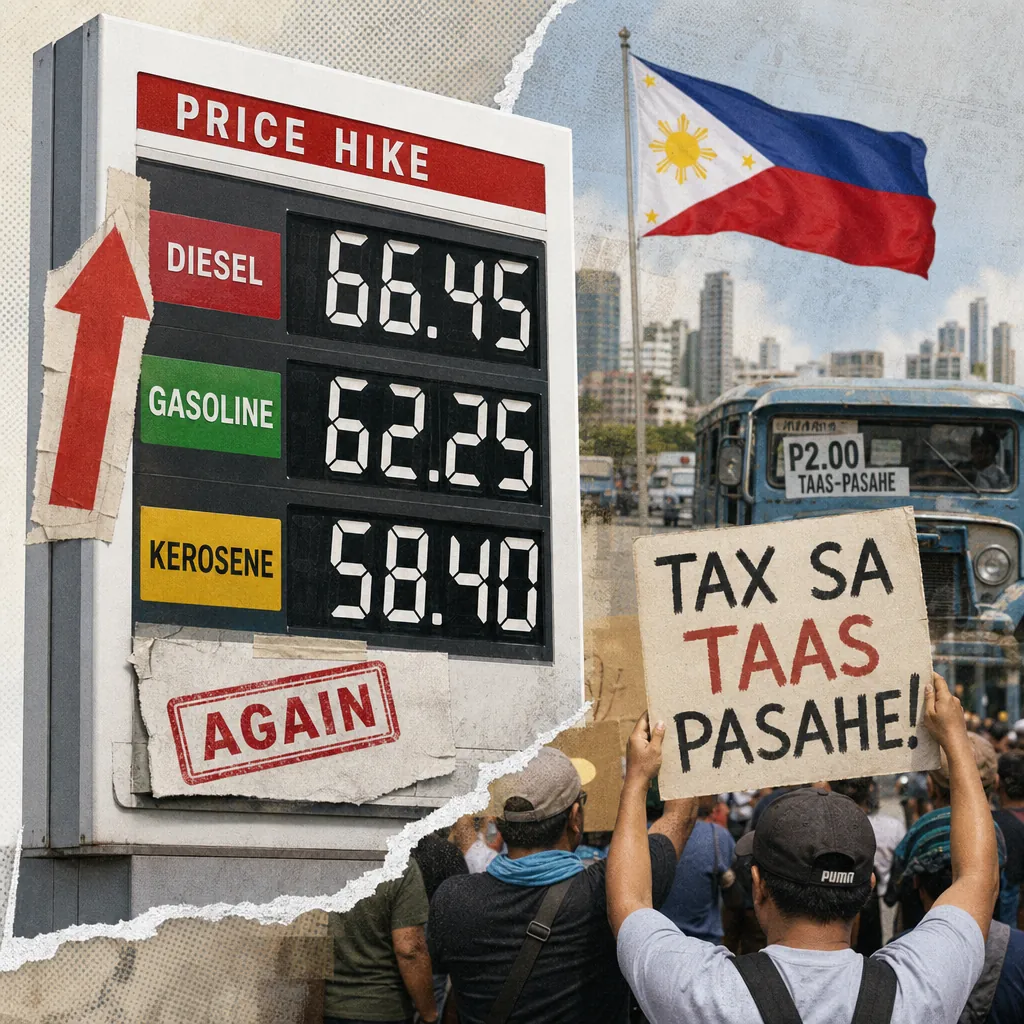
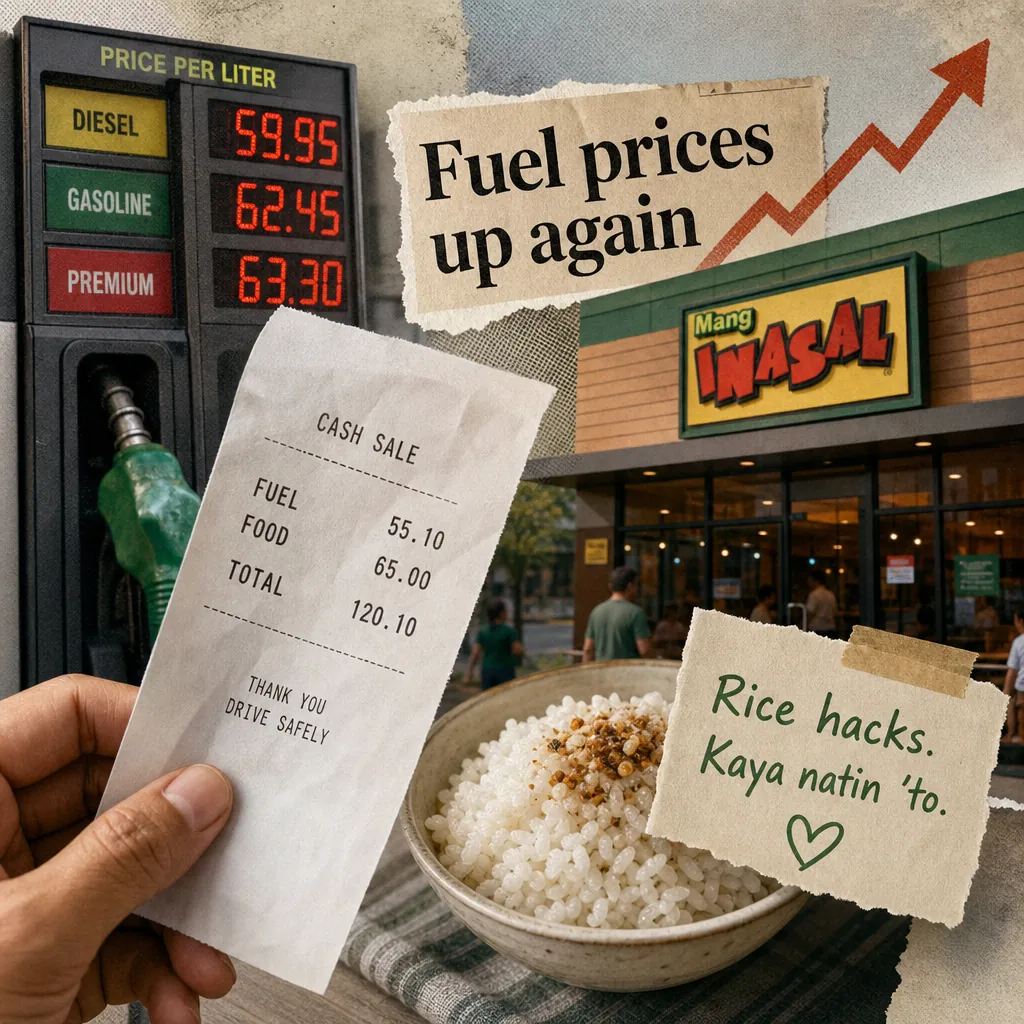
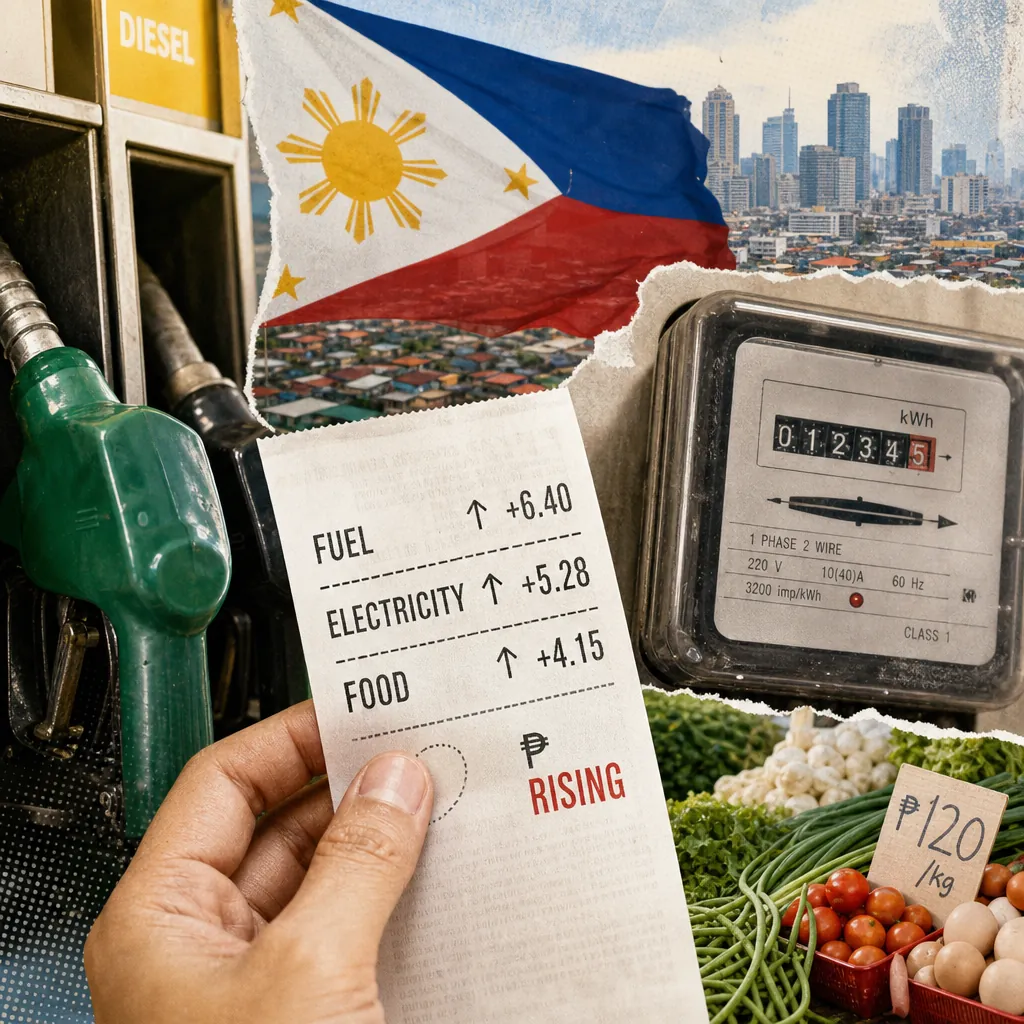
High prices persist despite easing inflation as oil hikes compound cost-of-living crisis
Government acknowledges food prices remain high for many Filipinos even as inflation falls, while consecutive oil price hikes deepen household pain. The conversation spans official pledges of aid, transport group protests, and consumer frustration, with implications for food and beverage brands navigating price sensitivity.
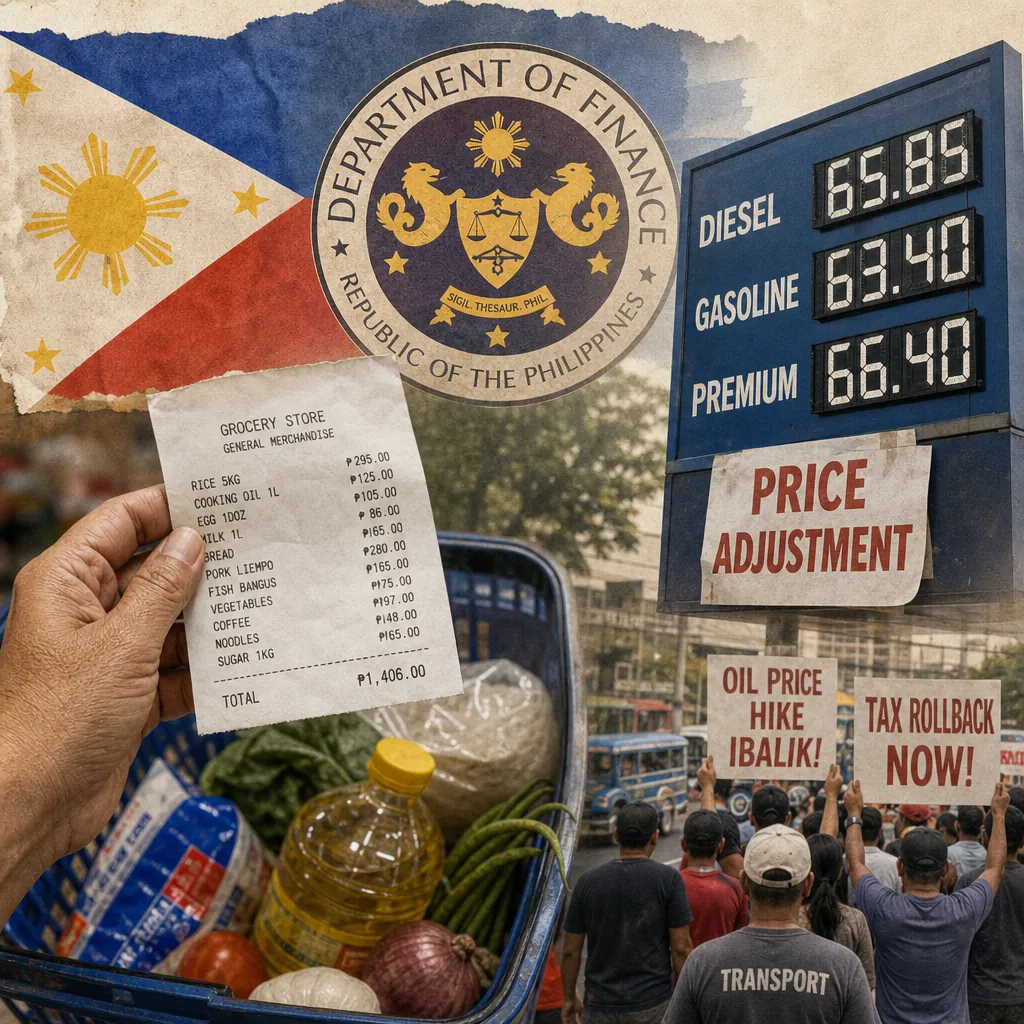
The conversation on June 29, 2026, was dominated by a painful contradiction: the government admitted that food and basic goods prices remain high for many Filipinos even as official inflation figures ease, while oil companies announced another round of fuel price increases. The day's discourse moved from macroeconomic progress to household-level pain, with users on Facebook and Twitter reacting with frustration and resignation.
Malacañang, through Palace Press Officer Undersecretary Claire Castro, acknowledged that food prices are still high for many Filipinos, signaling possible additional subsidies. Bombo Radyo Philippines reported this with the caption: "PANOORIN: Aminado ang Malacañang na nananatiling mataas para sa maraming Pilipino ang presyo ng pagkain at iba pang pangunahing bilihin, sa kabila ng pagbaba ng inflation." [1] The post gained 140 likes and 4 shares, but the 21 comments were likely critical. By contrast, PTV Philippines on Twitter struck a more reassuring tone, stating: "Hindi magpapakampante ang administrasyon ni Pangulong Ferdinand R. Marcos Jr. #PBBM sa pagsusumikap na gawing mas abot-kaya ang presyo ng mga bilihin." [2] This cautious official messaging created a tension that the public quickly pounced on.
Simultaneously, DZMM Radyo Patrol 630 posted a stark warning about fuel prices: "INCREASE NANAMAN 😣 TINGNAN: Dagdag-singil sa presyo ng produktong petrolyo ang nag-aantay sa mga motorista ngayong linggo." [3] The post's emotional reactions revealed clear sentiment: 12 sad, 1 angry, and 4 haha reactions out of 36 total, with 9 comments. The significance for food prices was immediate — transport costs directly affect the price of everything from rice to cooking oil. Bombo Radyo Dagupan amplified this by covering the Alliance of Concerned Transport Organization's (ACTO) plea to lower diesel prices, with president Liberty De Luna stating that consecutive oil price hikes continue to burden public utility drivers and operators. [4]
Regional and language-specific variations of the same core story appeared across Bombo Radyo's local stations. Bombo Radyo Davao posted a Cebuano version of the Palace announcement, reaching audiences in Mindanao with the same message about ayuda and high food prices. [5] This localized framing ensured the conversation about inflation and subsidies permeated provincial areas, not just Metro Manila. Meanwhile, the Manila Times YouTube channel consolidated the day's news in a single video, reporting diesel price rollback of up to P1.16 per liter but gasoline increases of up to P1.90 per liter, creating confusion and mixed sentiment among viewers. [6]
Public frustration was most visible on the DZMM post, where the aggregate emotional reactions (12 sad, 4 haha, 3 angry, 1 wow) against only 16 likes demonstrated a disconnect between official optimism and grassroots anger. The "haha" reactions likely indicated sarcastic disbelief at yet another price hike. Across all platforms, the recurring demand was for tangible government intervention beyond rhetoric — the Palace's promise of "posibleng may dagdag na ayuda" was met with skepticism, as users had heard similar reassurances before without seeing real relief in their food budgets.
Beyond the core inflation and fuel story, the day's coverage included several other developments relevant to the food and beverage sector. The Japanese government, through the Japan International Cooperation Agency (JICA), is backing a P184.2-million project to upgrade the National Food Authority's (NFA) grain quality testing system, aiming to reduce postharvest losses. [7] Agriculture Secretary Francisco Tiu Laurel Jr. said the project will strengthen the NFA's technical capability and help build a more resilient grain management system. Separately, Cebu City Mayor Nestor Archival ordered intensified preventive measures against African Swine Fever (ASF), directing the Department of Veterinary Medicine and Fisheries to strengthen surveillance across backyard and commercial swine farms. [8] Sugar planters in Negros, through the Asociacion de Agricultores de La Carlota Y Pontevedra Inc. (AALCPI) and Universal Robina Corp. (URC), have vowed to support the government's campaign against red-striped soft scale insect (RSSI) infestation, with URC committing time, money, and effort to help farmers. [9] A long-term policy piece in the Manila Bulletin argued for market-enhancing measures and collaborative roles among national government, local governments, the private sector, and communities to achieve food security. [10]
Key themes
- Government acknowledges high food prices, promises aid — Malacañang admitted that food and basic goods prices remain high for many Filipinos despite easing inflation, signaling possible additional subsidies. This official acknowledgment validates consumer pain but is met with skepticism given past unfulfilled promises. [1][2]
- Consecutive oil price hikes compound cost-of-living crisis — Gasoline is expected to rise by up to P1.90 per liter and kerosene by P1.22 per liter, while diesel may see a slight rollback. Transport groups like ACTO protest that these hikes burden drivers and operators, directly impacting food logistics and retail prices. [3][4][6]
- Regional and localized framing of the inflation narrative — Bombo Radyo's local stations in Dagupan, Davao, and elsewhere carried the same core story in regional languages, ensuring the conversation reached provincial audiences. This highlights the need for brands to address cost concerns outside Metro Manila. [4][5]
- Public frustration expressed through emotional reactions on social media — Posts about fuel price increases drew disproportionately sad and angry reactions (12 sad, 3 angry on one post), while "haha" reactions signaled sarcastic disbelief. Likes were relatively low, indicating that users engaged to vent rather than endorse. [3]
- Government and industry efforts to stabilize food supply chains — Japan-funded NFA grain testing upgrade, Cebu City's ASF prevention measures, and sugar planters' collaboration against RSSI pests all aim to reduce postharvest losses and protect domestic production. These initiatives could help stabilize food costs over time. [7][8][9]
- Long-term food security policy debate — A Manila Bulletin opinion piece argued for market-enhancing regulations and collaborative governance among national and local governments, the private sector, and communities to achieve food security, emphasizing that roles are interactive, not linear. [10]
- Consumer boycott sentiment as a latent risk — A YouTube video about the Coca-Cola boycott in Brazil, with over 11,000 views and 1,550 likes, signals growing global consumer activism that could transfer to the Philippines if major brands raise prices or are perceived as profiteering during inflation. [11]
How the narratives stack
Dominant — Within the captured set, the dominant narrative is the government's acknowledgment of persistent high food prices and the promise of additional subsidies, coupled with the immediate pain of oil price hikes. This narrative is carried by multiple news outlets (Bombo Radyo, DZMM, PTV, Manila Times) and generates the highest engagement, particularly on Facebook where emotional reactions are strong. The story is framed as a rolling crisis of affordability, with the government trying to reassure while consumers express frustration. [1][2][3]
Counter-narrative — A counter-narrative, though less prominent, comes from transport advocacy groups like ACTO, who argue that oil price hikes are unsustainable and demand government intervention to lower diesel prices. This narrative shifts blame from global oil markets to government inaction, and it resonates with small-scale food distributors and delivery services. [4]
Emerging — An emerging narrative is the long-term policy discussion on food security, as seen in the Manila Bulletin opinion piece and the NFA grain testing upgrade. These stories suggest that structural solutions are being considered, but they remain in the background compared to the immediate price pain. [7][10]
Suppressed — The story of African Swine Fever (ASF) prevention in Cebu City and the sugar pest infestation in Negros received coverage but did not break into the mainstream conversation. These are significant threats to pork and sugar supply chains, yet they were overshadowed by the broader inflation and fuel narrative. Brands reliant on these commodities should monitor these developments closely. [8][9]
Platform insights
- Facebook — Facebook emerged as the primary arena for broadcast-style announcements from news pages like Bombo Radyo and DZMM. Posts about food prices and oil hikes generated high initial engagement (e.g., 140 likes, 21 comments on one post), but the comment sections were largely controlled by page administrators, limiting organic back-and-forth. The reaction emoji breakdowns — especially sad and angry — served as a silent protest against worsening affordability. Brands should monitor these high-engagement posts for sentiment and respond with empathetic, value-focused messaging.
- Twitter — Twitter saw sparser but more direct political commentary. PTV Philippines and News5 shared bite-sized updates on oil prices and inflation, but with low engagement (5 likes, 1 reply on one post; 1 like on another), suggesting that Twitter discussions were either muted or shifted to personal accounts rather than media handles. The platform's real-time nature allowed users to track price movements and official statements as they broke, but few public replies were captured in the dataset. Brands can use Twitter for concise, transparent updates on cost pressures and value offerings.
- YouTube — YouTube served as a long-form consolidator, with the Manila Times compiling the full day's news including oil price projections and other headlines. The video received 4,041 views and 44 likes, indicating that viewers sought comprehensive context rather than real-time debate. However, the comment count of only 3 suggests that YouTube is a passive consumption channel for this topic. Brands can produce short explainer videos on how global trends affect local prices, but should not expect high engagement.
Key voices and communities
- Government and regulatory bodies — Official accounts from the Department of Trade and Industry (DTI), the Presidential Communications Office, and state media such as PTV and PNA form a cohesive stakeholder cluster with coordinated messaging on food affordability and economic reforms. The DTI's post about the WTO Trade Policy Review received only 7 likes and 1 share, while Palace announcements about pending subsidies attracted 140 likes and 21 comments, indicating higher public interest in direct relief measures. [1][2] Their narrative emphasizes that the administration acknowledges high prices and promises additional subsidies, while highlighting legislative reforms (e.g., Rice Tariffication Law, CREATE Act) as long-term solutions.
- Mainstream media outlets — Traditional news organizations (Bombo Radyo, DZMM, The Manila Times, PTV) and their regional affiliates dominate the conversation by amplifying government announcements and oil price updates, but they also carry public sentiment through reader comments. Their posts on fuel price increases generate emotional reactions (12 sad, 3 angry on one post) and dozens of comments, reflecting widespread consumer frustration that indirectly affects food cost expectations. [3][6] Media outlets are the primary channel for reaching price-sensitive consumers.
- Consumer and transport advocacy groups — The Alliance of Concerned Transport Organization (ACTO) emerges as a vocal stakeholder representing public utility drivers and operators, whose operating costs directly affect food distribution and ultimately retail prices. ACTO president Liberty De Luna stated that consecutive oil price hikes continue to burden drivers and operators, linking fuel costs to the broader burden on commuters and goods transport. [4] This group is a proxy for small-scale food distributors (karinderya owners, palengke vendors) who face the same cost pressures.
- International brand sentiment observers — A YouTube video discussing the Coca-Cola boycott in Brazil, while geographically distant, signals a growing global consumer activism pattern that Philippine food and beverage brands cannot ignore. The video received 1,552 likes and 11,227 views, suggesting significant interest in boycott mechanics and local brand alternatives. [11] The creator details how Brazilian consumers are shifting to regional cola brands because local manufacturers can operate with lower costs and many consumers prefer to buy Brazilian products, implying that perceived foreign dominance and price increases can trigger substitution behavior.
Narrative streams
Government acknowledgment and conditional optimism
The government's admission that food prices remain high despite easing inflation was the day's most significant development. Palace Press Officer Undersecretary Claire Castro stated: "PANOORIN: Aminado ang Malacañang na nananatiling mataas para sa maraming Pilipino ang presyo ng pagkain at iba pang pangunahing bilihin, sa kabila ng pagbaba ng inflation." [1] This acknowledgment, while validating consumer pain, was paired with a promise of possible additional subsidies — "posibleng may dagdag na ayuda o subsidy para sa mga sektor na nahihirapan pa." The post gained 140 likes and 21 comments, indicating strong public interest. However, the cautious tone from PTV Philippines — "Hindi magpapakampante ang administrasyon... sa pagsusumikap na gawing mas abot-kaya ang presyo ng mga bilihin" [2] — suggests the government is trying to manage expectations without overpromising. For the food and beverage sector, this creates both an opportunity and a risk: brands that align with value messaging may benefit from the government's focus on affordability, while those perceived as contributing to price pressures may face backlash. The regional spread of this narrative via Bombo Radyo's local stations [5] means that any brand response must also target provincial audiences, not just Metro Manila.
Oil price hikes and the cascading burden on food costs
Consecutive oil price increases were the second major thread, directly intersecting with food costs. DZMM Radyo Patrol 630 posted: "INCREASE NANAMAN 😣 TINGNAN: Dagdag-singil sa presyo ng produktong petrolyo ang nag-aantay sa mga motorista ngayong linggo." [3] The post's emotional reactions — 12 sad, 1 angry, 4 haha — revealed clear sentiment. The Manila Times reported that diesel prices are expected to go down by up to P1.16 per liter, but gasoline may increase by up to P1.90 per liter and kerosene by P1.22 per liter. [6] This mixed signal creates confusion for consumers and businesses alike. The Alliance of Concerned Transport Organization (ACTO) called for lower diesel prices, with president Liberty De Luna stating that consecutive oil price hikes continue to burden public utility drivers and operators. [4] For food brands, the link between fuel and food is direct: transport costs affect the price of everything from rice to cooking oil. Quick-service restaurants (QSRs) and delivery platforms should prepare for heightened sensitivity to delivery fees and fuel surcharges. The emotional tone (12 sad reactions on a single fuel post) warns that any perceived corporate profiteering during this period could trigger backlash.
Regional and localized inflation discourse
The conversation about inflation and subsidies was not confined to Metro Manila. Bombo Radyo Davao posted a Cebuano version of the Palace announcement, reaching audiences in Mindanao with the same message about ayuda and high food prices. [5] Similarly, Bombo Radyo Dagupan covered ACTO's plea for lower diesel prices, bringing the issue to audiences in the Ilocos region. [4] This localized framing ensures that the conversation permeates provincial areas, where food price sensitivity may be even higher due to lower average incomes. For brands with extensive distribution networks in the provinces (e.g., sari-sari store channels), this means that any value messaging must be tailored to regional languages and contexts. The government's promise of additional subsidies, if realized, could temporarily boost spending power in these areas, but if aid remains just talk, brands must brace for prolonged price sensitivity.
Long-term food security and supply chain resilience
Amid the immediate price pain, several stories pointed to longer-term efforts to stabilize food supply chains. The Japanese government, through JICA, is backing a P184.2-million project to upgrade the NFA's grain quality testing system, aiming to reduce postharvest losses. [7] Agriculture Secretary Francisco Tiu Laurel Jr. said the project will strengthen the NFA's technical capability and help build a more resilient grain management system. Separately, Cebu City Mayor Nestor Archival ordered intensified ASF preventive measures, directing the Department of Veterinary Medicine and Fisheries to strengthen surveillance across backyard and commercial swine farms. [8] Sugar planters in Negros, through AALCPI and URC, have vowed to support the government's campaign against RSSI infestation, with URC committing resources to help farmers. [9] A long-term policy piece in the Manila Bulletin argued for market-enhancing measures and collaborative governance to achieve food security, emphasizing that roles of national government, local governments, the private sector, and communities are interactive, not linear. [10] These stories, while less prominent in the day's conversation, signal that structural solutions are being pursued. For food brands, these developments could eventually stabilize input costs, but in the short term, the focus remains on managing price sensitivity.
Consumer boycott sentiment as a latent risk
A YouTube video discussing the Coca-Cola boycott in Brazil, while geographically distant, signals a growing global consumer activism pattern that Philippine food and beverage brands cannot ignore. The video received 1,552 likes and 11,227 views, suggesting significant interest in boycott mechanics and local brand alternatives. [11] The creator details how Brazilian consumers are shifting to regional cola brands (Dolly, Cini, Fruki) because local manufacturers can operate with lower costs and many consumers prefer to buy Brazilian products. This implies that perceived foreign dominance and price increases can trigger substitution behavior. While this is a foreign case, it demonstrates the latent power of consumer movements in emerging markets when inflation squeezes household budgets. For Philippine brands like Jollibee, Mang Inasal, or Lucky Me, any perception of shrinkflation or unjustified price hikes could amplify similar sentiment, especially as DTI and WTO reviews emphasize transparency and trade facilitation. Brands should preemptively strengthen localization narratives and value messaging.
Conversation trajectory
- Persistent food price anxiety driving value-seeking behavior — Despite official inflation easing, government sources acknowledge that food prices remain high for many Filipinos. This contradiction — declining inflation yet stubbornly high shelf prices — is fueling skepticism toward official data and intensifying demand for affordable meal solutions. The conversation is shifting from macro-level inflation complaints toward micro-level "budget hack" content, with traction expected to accelerate over the next 2-3 weeks as households prepare for back-to-school and holiday spending. Brands that already offer value meals or affordable bundles will see increased positive mentions, while premium-priced items face greater scrutiny.
- Fuel price volatility compounding cost-of-living narrative — Multiple news sources report successive oil price hikes, with gasoline expected to increase by up to P1.90 per liter and kerosene by P1.22 per liter. This directly impacts food logistics costs and is being framed by transport groups as a cascading burden on food prices. Expect conversation to link every new oil price adjustment to corresponding food price increases within 48-72 hours, creating recurring engagement cycles. Quick-service restaurants and delivery platforms should prepare for heightened sensitivity to delivery fees and fuel surcharges.
- Consumer boycott sentiment gaining transnational momentum — A detailed analysis of Coca-Cola's experience with boycotts in Brazil is gaining significant traction, with over 11,000 views and 1,550 likes on a YouTube post. While not directly about Philippines-based brands, the content outlines how regional competitors can thrive during boycott movements — a narrative that could easily transfer to local contexts. If major Philippine FMCG players announce price increases in the coming weeks, expect calls for boycotts or "local-first" campaigns to emerge rapidly, especially on Facebook and Twitter where price hike complaints already generate strong sad/angry reactions.
- Government subsidy announcements as temporary narrative shifters — Malacañang has signaled additional ayuda for struggling sectors, with President Marcos expected to announce details. This creates a predictable conversation spike — positive coverage immediately following the announcement, followed by scrutiny over distribution and sufficiency within 5-7 days. Brands can participate by linking their own value initiatives to this government narrative (e.g., "supplementing ayuda with affordable meal bundles"), but must avoid appearing opportunistic.
Key trigger events that will reshape this conversation include: the upcoming oil price adjustment window (weekly, with next rollback for diesel but hike for gasoline expected around July 1-2); President Marcos' aid package announcement (timing unspecified but imminent per multiple sources); and potential quarterly inflation report releases from the Philippine Statistics Authority (expected mid-July). Each trigger will amplify price sensitivity and reinforce the need for clear value communication.
Response guidance
Platform-specific approaches:
- Facebook — Use localized, conversational responses in Filipino to acknowledge consumer frustration about rising costs, directly addressing comments on posts about oil price hikes and food affordability. Avoid generic corporate language; instead, share practical tips on stretching budgets (e.g., value meal offers, promos) that align with the government's acknowledgment of high prices. Deploy short video updates from brand representatives explaining how the company manages cost pressures while maintaining quality, similar to how news outlets use "PANOORIN" formats. Partner with community-focused pages to co-create content about affordable meal solutions, leveraging trusted local voices rather than directly defending price increases. Monitor high-engagement posts about "dagdag ayuda" and position the brand as an ally by highlighting existing value offerings or loyalty programs.
- Twitter — Engage with real-time sentiment using concise threads that contextualize price movements — for example, linking gasoline price hikes to logistics costs, while emphasizing efforts to absorb some increases. Use polling features to gauge consumer priorities on budget meals. Retweet and reply to official government accounts that provide price outlooks, adding brand-relevant commentary such as "we're keeping our sizzling plates affordable despite these challenges." Create a dedicated hashtag (e.g., #SulitSulitMeal) to aggregate user-generated content about affordable eating, counteracting the negative sentiment from "INCREASE NANAMAN" reactions.
- YouTube — Produce short explainer videos (under 60 seconds) that visually break down how global oil and commodity trends affect local food prices, similar to news shorts from PTV and GMA Regional TV. Use on-screen graphics to show cost components and brand efforts to minimize pass-through. Respond to top comments under news clips about price hikes by linking to these explainers, offering value-conscious menu recommendations. Collaborate with food vloggers who focus on "budget meals" to feature affordable brand items, tapping into the food vlog trend while steering the narrative toward accessible quality.
Key messages:
- "We understand that every peso counts. Our commitment is to keep offering delicious, filling meals that give you the best value for your hard-earned money." This directly responds to the public's frustration over rising prices.
- "Rising fuel and raw material costs affect everyone, but we are actively finding ways to minimize the impact on our customers — without compromising on taste or quality." This acknowledges external pressures while showing proactive measures.
- "Look for our ongoing promos and value meals designed for Filipino families. We're here to help you enjoy your favorite dishes even during challenging times." This provides a positive, actionable alternative to the "increase again" narrative.
- "We support government efforts to ease inflation's burden. As a homegrown brand, we remain committed to helping communities through accessible food options and local sourcing." This aligns with official statements from Malacañang about additional aid and reforms.
Sensitive topics to navigate:
- Direct comparisons to government aid announcements — Avoid appearing to substitute for or mock government "dagdag ayuda." Instead, frame brand actions as complementary — e.g., "while waiting for additional subsidies, here's a meal deal that helps." Any tone of superiority will backfire given the emotional posts about high prices.
- Oil price hikes as a justification for price increases — While legitimate, repeatedly citing fuel costs can sound like an excuse. Balance with concrete examples of internal cost-saving measures (e.g., packaging efficiencies, supply chain improvements). The mixed news about diesel drop and gasoline rise should be referenced carefully to avoid seeming opportunistic.
- Labor/transport sector grievances — Posts from ACTO calling for lower diesel highlight broader economic pain. Any brand communication should avoid trivializing these concerns. If engaging, express solidarity with workers and highlight how the brand supports its own delivery partners or franchisees.
Response priorities:
- Acknowledge and reframe frustration on high-engagement Facebook posts. With 140 likes and 21 comments on the Bombo Radyo post about food prices, this is a hot zone. Respond with empathetic, non-corporate language that validates the difficulty while offering immediate value (e.g., "We hear you. Here's a limited-time B1G1 on our best-sellers."). Speed is critical — within hours of viral posts.
- Clarify cost structure in response to oil price increase news. Posts about gasoline going up generate strong negative emotions (12 sad, 3 angry reactions). Use Twitter threads or Facebook comment replies to explain that logistics costs represent only part of the price, and that the brand is absorbing a portion. Share a simple breakdown graphic to build trust.
- Amplify value meal messaging to counter "presyo" search trends. The keyword set includes "value meals" and "budget meals" during a period of high food price sensitivity. Prioritize promoting existing lower-priced items across all platforms, using direct response ads targeting those searching for affordable dining. Tie this to the government's "Bawat Bayan Makikinabang" program as a show of support.
See the full picture behind today's signals.
This report draws from Media Meter's MediaWatch, our real-time monitoring engine tracking 2,470+ Philippine sources across print, broadcast, digital, and social. Explore how the platform turns raw coverage into decision-grade intelligence, then see how it's configured for teams like yours — whether you're in PR agencies, corporate comms, government, or marketing.
Want more? Browse our Report Library for sector and crisis intelligence, or request a demo and we'll have your brand set up before the call.
Want this kind of intelligence on your brand?
This brief is built on the same MediaWatch methodology that runs continuously across every brand we monitor. See your competitive landscape, Impact Score, and narrative trajectory in a 30-minute demo.