Jollibee, fuel rollback, and ASF: Philippine food sector signals
A snapshot of the Philippine food and beverage conversation on June 15-16, 2026, covering Jollibee's international award and CSR program, fuel price rollbacks, African Swine Fever vaccine development, and consumer price sensitivity.

The Philippine food and beverage conversation on June 15-16, 2026, was dominated by positive brand signals from Jollibee, alongside significant developments in fuel prices and agricultural policy that will shape consumer sentiment and industry costs in the weeks ahead. The day's most engaging content came from Jollibee's international recognition and community support programs, while parallel narratives around fuel rollbacks and African Swine Fever (ASF) vaccine funding provided important context for the sector's operating environment.
Conversation snapshot. The day's conversation was anchored by two Jollibee posts that together generated over 800 reactions. ABS-CBN News reported that Jollibee won an award at the Foodie Forks 2026 in Hong Kong, a recognition of the best bars, cafes, restaurants, and chefs in the territory. The post received 370 likes, 351 love reactions, and 60 shares, indicating strong positive sentiment and national pride. The official Jollibee Philippines Facebook page then posted about its FoodAID program, which had served over 8,000 meals to families in General Santos City and Sarangani in partnership with local government and other organizations. That post generated 44 likes and 48 love reactions, reinforcing a community-oriented brand image. Meanwhile, Grab Philippines promoted GrabUnlimited membership with up to 15% off GrabFood and 30% off GrabMart, though the post saw minimal engagement with only 7 likes and 1 share. A separate segment from GMA Public Affairs featured a trending soy chicken dish at Fusion Alley on its morning show "Unang Hirit," tapping into street food culture.
Key themes
- Jollibee's dual positive reputation signals. The Foodie Forks 2026 award and the FoodAID program created a powerful narrative of global recognition combined with local compassion. The award post had a 95% positive reaction ratio (love + like), with no negative reactions, indicating strong brand loyalty and consumer pride. The FoodAID post received care reactions, suggesting the audience values humanitarian efforts.
- Fuel price rollback as economic relief. Multiple news outlets reported a diesel rollback of P3.71 to P5.71 per liter and kerosene by P0.50 to P2.50 per liter starting June 16, 2026. One major news network's post on this topic gained over 1,000 likes and 240 comments, indicating strong public interest in relief from price pressures. The Department of Energy (DOE) noted that fuel prices could take six to twelve months to return to pre-war levels, tempering expectations.
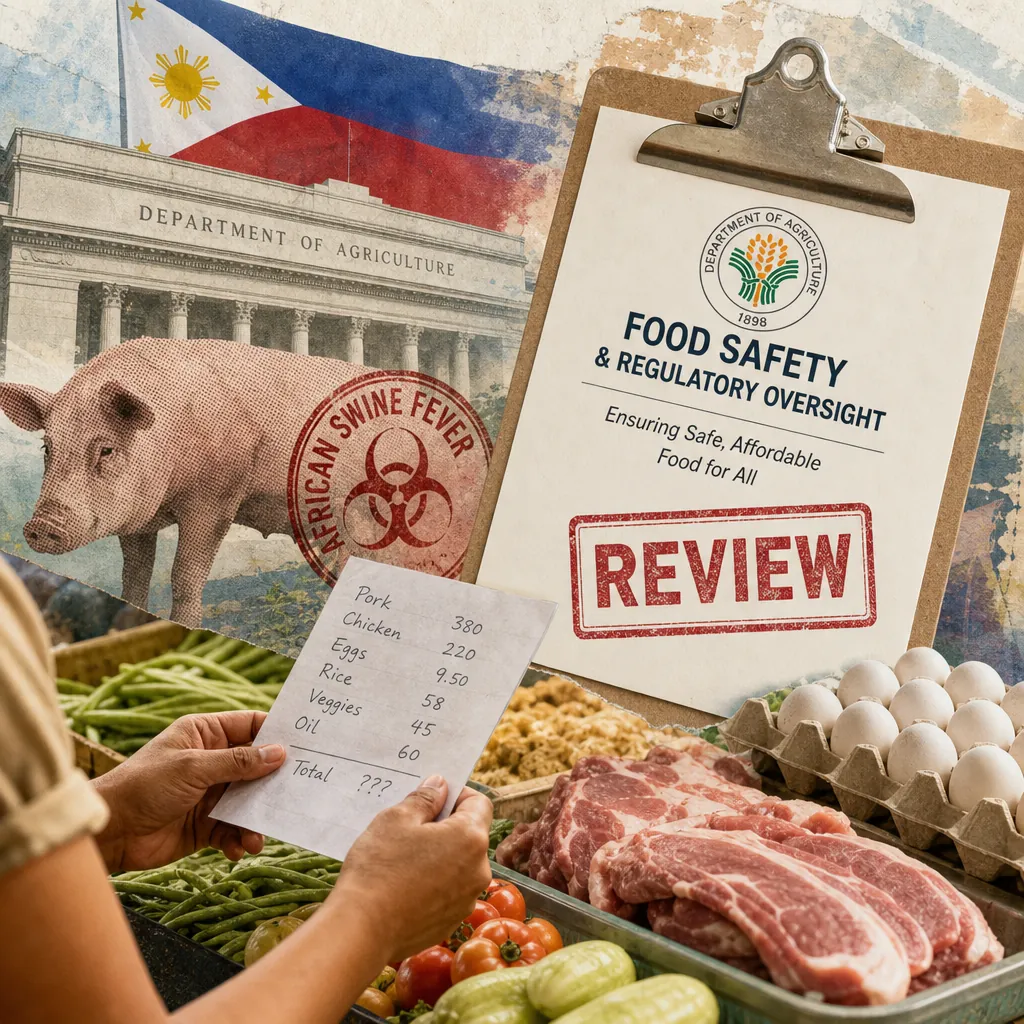
- African Swine Fever vaccine development. The Department of Agriculture (DA) launched an Animal Vaccine Development Program with P140.9 million in funding over three years to develop vaccines against African Swine Fever and foot-and-mouth disease. This directly addresses long-standing pork supply concerns and could stabilize future meat prices. Separately, 23 ASF cases were reported in three towns of Nueva Vizcaya, highlighting ongoing challenges.
- Consumer price sensitivity and value-seeking. The fuel rollback discussions, combined with ongoing food price monitoring, reflect a consumer base that is highly attentive to cost-of-living pressures. The GrabUnlimited promo, though low-engagement, signals that food delivery platforms are actively addressing cost-conscious consumers.
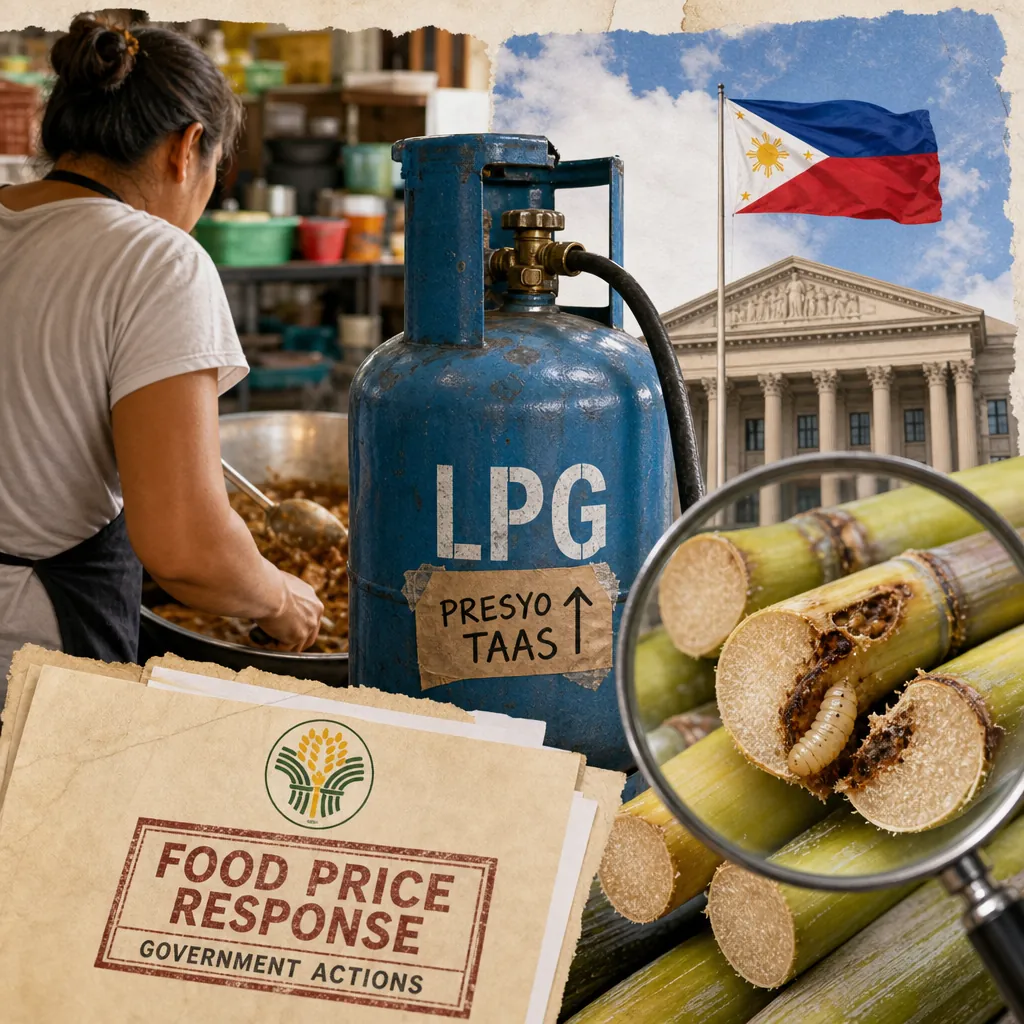
- Agricultural supply chain resilience. Beyond ASF, the Sugar Regulatory Administration (SRA) reported an 8.43% decline in raw sugar output due to pest infestation and weather shocks. The DA also expressed optimism that the US-Iran peace deal could lower food prices by reducing input costs.
- Government regulatory oversight. The Department of Trade and Industry (DTI) continued its price monitoring efforts, including a price guide for school supplies, reinforcing its role in consumer protection. The DTI also conducted an electric vehicle charging safety seminar in Subic, supporting the government's push for renewable energy.
- Cross-cultural food promotion. Rakuten Viki launched "Kumusta," a Korean-Filipino reality series featuring Filipino dishes like inasal, kare-kare, lechon, and sisig, introducing Filipino cuisine to Korean audiences. This highlights the growing global interest in Filipino food.
How the narratives stack
Dominant narrative. The dominant narrative is that Jollibee is successfully balancing international acclaim with local community support, reinforcing its position as a trusted brand. The Foodie Forks award and FoodAID program together create a story of a company that excels globally while caring for its home market. This narrative is supported by overwhelmingly positive social media reactions and mainstream news coverage.
Counter-narrative. The counter-narrative is that despite positive brand signals, consumers remain under significant financial pressure. Fuel prices, though rolling back, are still high, and food prices at public markets remain volatile. The Department of Energy's warning that it could take up to a year for fuel prices to normalize tempers the optimism around the rollback. Additionally, the ASF outbreak in Nueva Vizcaya and the sugar production decline remind consumers that agricultural supply chains are fragile.
Emerging narrative. An emerging narrative is the potential for the US-Iran peace deal to reshape the economic landscape. The Department of Agriculture has expressed optimism that the reopening of the Strait of Hormuz will reduce input costs for agriculture, potentially lowering food prices. This geopolitical development is being watched closely by industry stakeholders, as it could provide a tailwind for the sector.
Suppressed narrative. The suppressed narrative is the ongoing impact of the magnitude 7.8 earthquake in Mindanao on food supply chains. While the Department of Social Welfare and Development reported that 1.4 million people were affected, and the Philippine National Police tightened coastal security to prevent consumption of potentially toxic marine life from uplifted seabeds, this story received less attention than the fuel rollback or Jollibee award. The earthquake's disruption to agriculture and fishing in affected areas could have longer-term implications for food prices and availability.
Platform insights
Facebook. Facebook was the primary platform for brand and news content. Jollibee's award post from ABS-CBN News generated the highest engagement, with over 700 positive reactions and 60 shares. The platform's reaction buttons allowed users to express pride (love) and agreement (like), with no negative reactions. The Jollibee FoodAID post also performed well, with care reactions indicating emotional resonance. In contrast, the GrabUnlimited promo post saw very low engagement, suggesting that direct promotional content without a strong narrative hook may not resonate as well.
YouTube. GMA News' "Unang Hirit" segment featuring the soy chicken dish at Fusion Alley blended food vlog-style content with traditional media. The video format allowed for visual storytelling, tapping into the street food culture that resonates with Filipino audiences. However, engagement metrics were not provided for this content.
Twitter. While no specific Twitter posts were captured in the dataset, the fuel rollback conversation likely generated significant discussion on the platform, given the high engagement on Facebook posts about the topic. Twitter is often used for real-time reactions to economic news.
Key voices and communities
- Mainstream news outlets. ABS-CBN News, GMA News, and other major outlets served as primary sources of information. Their posts on Jollibee's award and fuel price adjustments reached large audiences and set the agenda for the day's conversation.
- Brand accounts. Jollibee Philippines and Grab Philippines used their official Facebook pages to share positive news and promotions. Jollibee's dual posts on the award and FoodAID program effectively reinforced brand values.
- Government agencies. The Department of Agriculture and Department of Energy were key voices on policy developments. The DA's announcement of the ASF vaccine program and the DOE's comments on fuel price normalization provided authoritative information.
- Consumer advocates. A legal commentator and consumer advocate generated significant engagement by drawing attention to DTI regulatory requirements, with a post receiving over 20,000 likes and 2,100 comments. This indicates strong public interest in consumer protection issues.
- Health and nutrition advocates. A medical doctor's post comparing the benefits of fish versus meat, including warnings about mercury contamination and red tide, reached health-conscious consumers. This group influences public perception of food safety.
Narrative streams
Jollibee's award and CSR program
On June 15, ABS-CBN News reported that Jollibee was awarded at the Foodie Forks 2026 in Hong Kong, an event that recognizes the best bars, cafes, restaurants, and chefs in the territory. The post generated 370 likes, 351 love reactions, and 60 shares, indicating strong positive sentiment and national pride. The official Jollibee Philippines Facebook page then posted about its FoodAID program, which had already served over 8,000 meals to families in General Santos City and Sarangani, generating 44 likes and 48 love reactions. This CSR-focused narrative built on the award news, reinforcing Jollibee's dual image as a globally acclaimed brand and a socially responsible corporation.
The Foodie Forks award is significant because it comes from an international culinary community, validating Jollibee's quality on a global stage. The FoodAID program, meanwhile, demonstrates the company's commitment to its home market, particularly in Mindanao where food insecurity may be acute. Together, these stories create a powerful narrative that can be leveraged in future communications.
Fuel price rollback and consumer relief
Multiple news outlets reported that diesel prices would decline by P3.71 to P5.71 per liter, kerosene by P0.50 to P2.50 per liter, while gasoline may see a minimal rollback or slight increase beginning June 16, 2026. One major news network's post on this topic gained over 1,000 likes and 240 comments, indicating strong public interest in relief from price pressures. The Department of Energy, however, tempered expectations by noting that fuel prices could take six to twelve months to return to pre-war levels, even with the US-Iran peace deal.
This fuel price narrative runs parallel to the food cost discussion, creating a complex consumer environment where falling transportation costs could ease supply chain expenses for quick-service restaurant (QSR) and fast-moving consumer goods (FMCG) brands, but retail food prices themselves remain persistently high. The Department of Agriculture expressed optimism that the reopening of the Strait of Hormuz would reduce input costs for agriculture, potentially lowering food prices.
African Swine Fever vaccine development
The Department of Agriculture launched an Animal Vaccine Development Program with P140.9 million in funding over three years to develop vaccines against African Swine Fever and foot-and-mouth disease. This directly addresses long-standing pork supply concerns and could stabilize future meat prices. The program is a proactive step that could mitigate future price volatility in pork, a staple protein in the Filipino diet.
However, the ongoing challenge of ASF was highlighted by reports of 23 cases in three towns of Nueva Vizcaya. The provincial veterinarian noted that cases remained isolated and had not spread to other areas, but strict security measures were being implemented in markets. The Department of Agriculture allocated P10 million each to two towns under the Swine Repopulation Project to help rebuild the hog industry.
Consumer price sensitivity and value-seeking
The day's conversations were primarily positive, centered on brand achievement, community support, and meal deals, with no trace of price hike complaints, food safety issues, or regulatory debates. However, the fuel rollback discussions and the GrabUnlimited promo indicate that consumers are actively seeking savings. The GrabUnlimited promo offered up to 15% off GrabFood and 30% off GrabMart, targeting cost-conscious consumers.
This value-seeking behavior is consistent with the broader economic context. The Philippines has been experiencing elevated inflation, and household spending, which accounts for 80% of national output, has slowed. The fuel rollback provides a timely macroeconomic tailwind that could encourage spending on food-away-from-home.
Conversation trajectory
Based on engagement patterns and content evolution, the Philippine food and beverage conversation shows clear signals of developing in ways that impact the sector:
- Jollibee brand equity reinforcement through recognition and CSR. The Foodie Forks 2026 award generated overwhelmingly positive reactions, with love reactions far exceeding negative responses, indicating strong consumer pride and brand trust. This dual narrative of global recognition and local compassion is likely to amplify conversations around Jollibee's market leadership and may invite comparisons with other QSR brands within the next 2-4 weeks.
- African Swine Fever vaccine development as a turning point narrative. The launch of the P140.9 million Animal Vaccine Development Program targeting ASF signals a potential shift from crisis coverage (pork price spikes, supply shortages) toward recovery optimism. Current engagement is low, but this topic has high latent interest among farmers, meat sellers, and consumers. Expect conversation to intensify once trial milestones are announced or if pork prices stabilize, creating opportunities for pork-dependent brands to align messaging with food security.
- Value-oriented food delivery conversations gaining traction. Amid ongoing fuel rollback discussions, GrabFood's promotion of up to 15% off positions value messaging front and center. Although this post had modest engagement, similar "tipid" (savings) content on platforms like Facebook and Twitter historically drives high sharing when combined with payday cycles. This trend suggests consumers are actively seeking budget-friendly ordering options, and brands that highlight bundle deals or zero-delivery promos could capture share of voice in the next 7-10 days.
Key trigger events that will reshape this conversation include: the next Department of Agriculture update on ASF vaccine rollout (likely within 1-2 months, given the three-year funding timeline), which will prompt discussions on pork price recovery. Also, Jollibee's mid-year menu innovation announcements (historically in July) could leverage the award momentum. Lastly, the June 30 end of Samsung's mid-year deals (unrelated but same timeframe) may signal a broader consumer push for savings that food brands can tap into with "value meal" or "sulit" campaigns.
Response guidance
For communicators tracking the Philippine food and beverage sector, the current conversation offers several strategic opportunities:
Platform approaches. On Facebook, leverage positive brand stories like Jollibee's award and CSR program to reinforce brand trust. Share these stories with a celebratory but humble tone, thanking the community and reinforcing commitment to quality and value. On Twitter, engage with fuel rollback conversations by acknowledging that lower fuel prices may help reduce logistics costs, which could benefit food prices over time. On YouTube, consider producing short "Price Check" videos that contrast raw ingredient costs with prepared meal prices, emphasizing convenience and value.
Key messages. Messages should emphasize value, transparency, and community support. For example: "We support DTI's consumer protection efforts and ensure all our products meet the agency's labeling and pricing guidelines." "Value doesn't mean compromising quality. We continuously review our supply chain to keep prices stable without sacrificing safety or taste." "Global recognition is a testament to our commitment to serving authentic Filipino flavors that the world loves."
Sensitive topics to navigate. Avoid trivializing consumer pain by saying "just skip one coffee" or "it's only a few pesos more." Instead, validate the difficulty and focus on what the brand controls. Be careful with any mention of "shrinkflation" or portion changes; if the brand has reduced sizes, disclose proactively rather than waiting for consumers to notice. When discussing the ASF vaccine program, present it as a "long-term solution" without overpromising immediate price drops.
See the full picture behind today's signals.
This report draws from Media Meter's MediaWatch, our real-time monitoring engine tracking 2,470+ Philippine sources across print, broadcast, digital, and social. Explore how the platform turns raw coverage into decision-grade intelligence, then see how it's configured for teams like yours — whether you're in PR agencies, corporate comms, government, or marketing.
Want more? Browse our Report Library for sector and crisis intelligence, or request a demo and we'll have your brand set up before the call.
Want this kind of intelligence on your brand?
This brief is built on the same MediaWatch methodology that runs continuously across every brand we monitor. See your competitive landscape, Impact Score, and narrative trajectory in a 30-minute demo.