Negros Occidental Declares Calamity as Sugarcane Pest Spreads; ASF Returns to Bacolod
A sugar pest outbreak covering 32% of Negros Occidental's planted area prompts a state of calamity, while African swine fever resurfaces in Bacolod City. Meanwhile, the PSEi rebounds, Marcos weighs extending the rice price cap, and corporate sustainability moves gain traction.
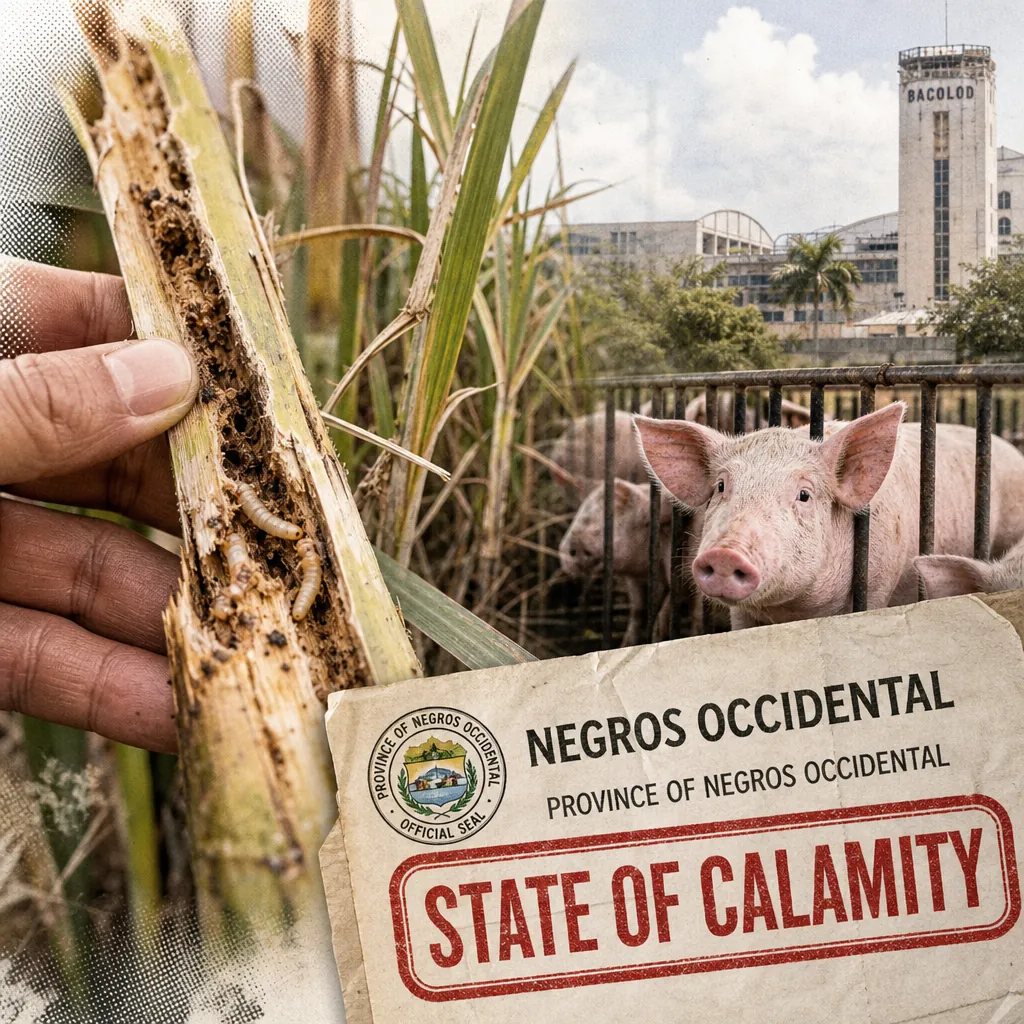
The province of Negros Occidental has been placed under a state of calamity after the Red-Striped Soft Scale Insect (RSSI) infested 61,242 hectares of sugarcane — 32.18% of the province's total planted area of 190,314.19 hectares. The declaration, approved by the Sangguniang Panlalawigan on June 23, followed a resolution from the Provincial Disaster Risk Reduction and Management Council endorsed by Governor Eugenio Jose Lacson. The Sugar Regulatory Administration confirmed the pest's presence and continued spread across multiple villages, threatening the country's sugar capital at the start of the crop year. The calamity status unlocks emergency funds and allows the provincial government to fast-track control measures, including biological control agents and possible quarantine protocols. The outbreak adds pressure to an industry already grappling with rising input costs and competition from imported sugar. [1]
Separately, Bacolod City confirmed four cases of African swine fever (ASF) in two barangays — two hogs in Bangga Riles, Barangay Alijis, and two in Purok 5, Barangay Taculing. City Veterinary Office head Dr. Maria Agueda Dela Torre said samples tested positive at the Regional Animal Disease Diagnostic Laboratory in Iloilo City. Mayor Greg Gasataya ordered border controls at the city's entry and exit points to prevent the disease from spreading further. The affected areas were placed under cordon measures, and the city government is conducting surveillance and disinfection. ASF, a viral disease fatal to pigs but harmless to humans, devastated Philippine hog farms in 2019–2020 and has periodically resurfaced since. The new cases come as the hog industry is still recovering from earlier outbreaks and high feed costs. [2]
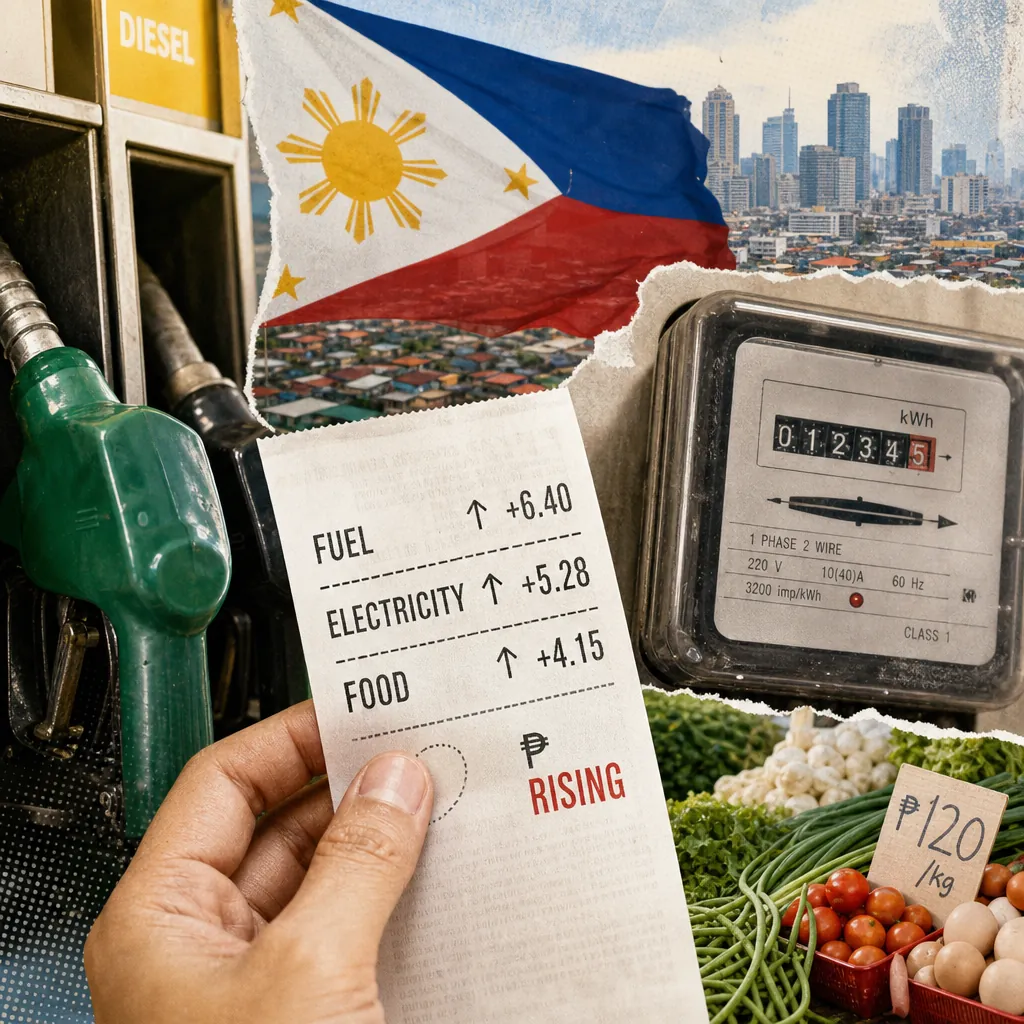
On the economic front, the Philippine Stock Exchange Index (PSEi) rebounded 0.53% to 6,069.26 on Wednesday, driven by bargain hunting after the previous session's decline. Analysts at Philstocks Financial and Regina Capital said easing tensions in the Middle East — particularly US-Iran diplomatic engagement — helped lower oil prices and improved risk appetite. However, trading remained subdued, with net value turnover at P3.94 billion and foreign investors posting net outflows of P79.59 million. The peso weakened further to P61.62 against the US dollar. [3][4]
President Ferdinand Marcos Jr. is studying an extension of the P50 per kilo price cap on imported rice, which lapsed last month. Palace press officer Claire Castro said the National Price Coordinating Council submitted its recommendation to the President, who is weighing the expected wet season harvest in September. The price cap was originally imposed on May 13 via Executive Order to curb rising rice prices. A decision was expected before Marcos departed for Canada on Wednesday evening for his first official visit there in over a decade. [5]
In corporate sustainability, LT Group Inc. — the conglomerate of taipan Lucio Tan — signed an agreement with Lopez-led First Gen Corp. to supply 21 megawatts of renewable energy to its subsidiaries, including Philippine Airlines, Lufthansa Technik Philippines, and MacroAsia units. Six Eton Properties projects will receive an additional 8 MW. The power will come from First Gen's geothermal plants. The deal marks one of the largest corporate renewable energy transitions in the Philippines. [6] Separately, First Gen and Jollibee Group's partnership at the Danao Commissary was highlighted in a BusinessMirror editorial, noting the facility achieved 99% clean energy use through rooftop solar and geothermal power, cutting emissions by over 70% while reducing energy costs. [7]
Century Pacific Food Inc. reported that its General Santos plant is nearing full operations after a major earthquake on June 8 disrupted production. Executive Chairman Christopher T. Po said operations resumed within a week and are close to normal as of June 30, with only some raw materials still being replaced. [8]
In the cement industry, the Department of Trade and Industry (DTI), together with the Cement Manufacturers Association of the Philippines (CeMAP) and international partners, launched the Philippine Cement and Concrete Industrial Decarbonization Roadmap. The roadmap aims to reduce carbon emissions while maintaining cement quality for infrastructure development. The Philippines is among the first Southeast Asian countries to have a government-endorsed decarbonization roadmap for cement. [9]
DoubleDragon Corp. is bringing its Hotel101 brand to Thailand through a joint venture with Origin Property Public Co. Ltd. The 770-room Hotel101-Bangkok will be located along Phahon Yothin Road near Don Mueang International Airport and a BTS station. [10]
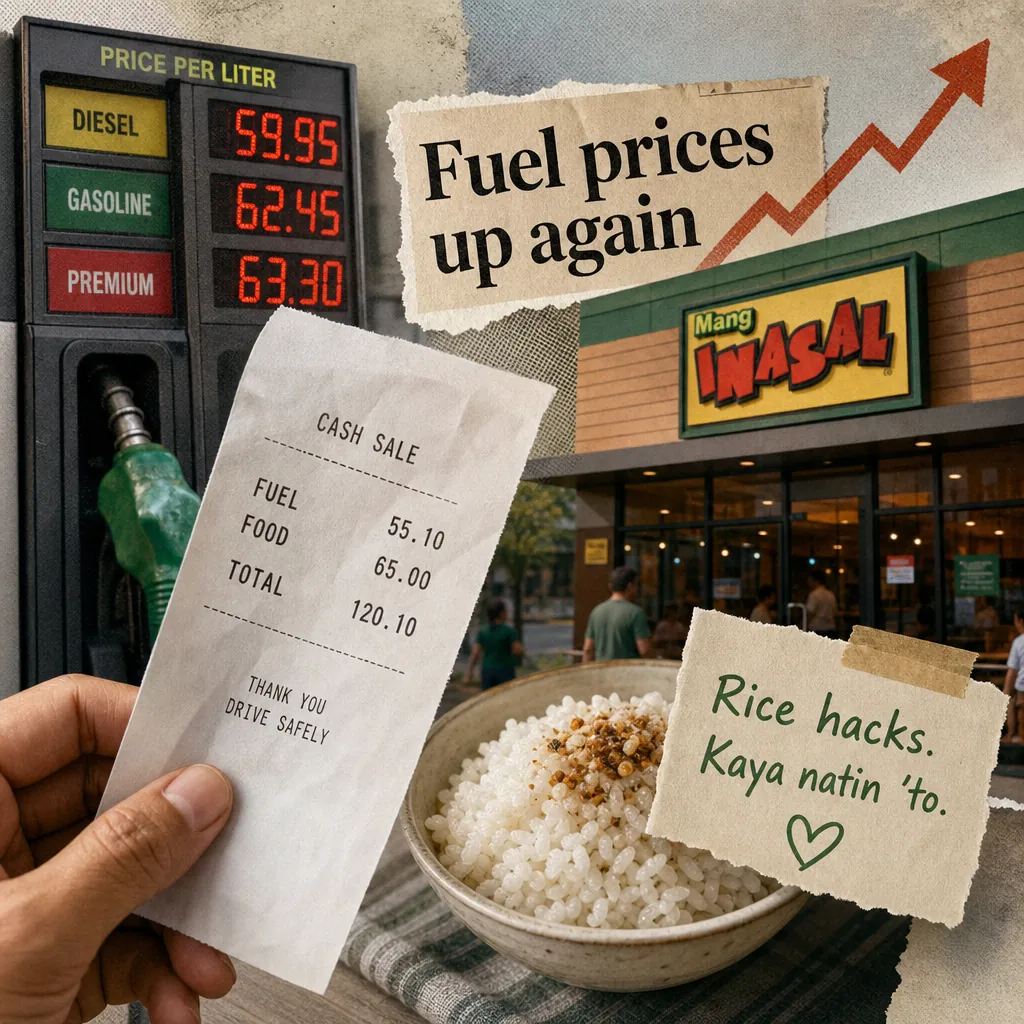
In the food and beverage sector, Mang Inasal was named the strongest quick-service restaurant brand in the Philippines by the 2026 Brand Finance Report, with a Brand Strength Index score of 95.2/100 and an upgrade to AAA+. The brand's value rose 28%, attributed to its value-for-money positioning amid inflation. Mang Inasal also announced a National Pork BBQ Blowout on July 8, offering a 2-stick Pork BBQ meal with rice for P69. [11][12]
McDonald's Philippines and Ronald McDonald House Charities, in partnership with Megawide Foundation, reopened a refurbished Bahay Bulilit Learning Center in Bacoor, Cavite, marking its 15th year of supporting early childhood education. [13]
In technology, ASUS launched the ExpertBook Ultra in the Philippines, a sub-1kg AI-powered business laptop targeting executives. The launch at Okada Manila drew over 1,200 attendees. [14]
On the sports front, Gilas Pilipinas completed a two-game sweep of NBL clubs Manawatu Jets and Franklin Bulls in preparation for their FIBA World Cup Asian Qualifiers match against New Zealand on Friday. Coach Tim Cone hopes the momentum carries over. Meanwhile, Malick Diouf and Elizabeth Means secured Philippine passports, boosting the Gilas 3x3 program. [15][16]
In other news, the DTI pavilion at Cosmobeauté Philippines 2026 generated P58.54 million in sales for micro, small and medium enterprises in the beauty sector. [17] The University of the Philippines Visayas licensed a shellfish depuration technology to the Pinamuk-an Aquatic Products Producers Association to improve food safety and market access. [18]
Key themes
- Sugarcane pest outbreak triggers calamity in Negros Occidental — The Red-Striped Soft Scale Insect has infested over 61,000 hectares, prompting a state of calamity. The pest weakens sugarcane by sucking sap, reducing yields and sugar content. Control measures include biological agents and quarantine, but the economic impact on farmers and millers could be severe if the infestation spreads further.
- African swine fever resurfaces in Bacolod — Four confirmed cases in two barangays raise concerns about a wider outbreak. The city has imposed border controls and cordon measures. ASF remains a threat to the hog industry, which is still recovering from previous outbreaks.
- PSEi rebounds on bargain hunting, peso weakens — The stock market recovered from a sell-off, but trading volume was low and foreign investors remained net sellers. The peso continued to weaken, reflecting broader economic pressures.
- Rice price cap extension under consideration — President Marcos is studying whether to extend the P50/kilo cap on imported rice, balancing consumer relief against the upcoming harvest season. The cap was meant to lower retail prices but may discourage imports.
- Corporate renewable energy transitions gain momentum — LT Group's deal with First Gen and the Jollibee-First Gen partnership highlight a growing trend among large corporations to shift to clean energy, driven by cost savings and sustainability goals.
- Cement industry launches decarbonization roadmap — The DTI and CeMAP unveiled a long-term strategy to reduce carbon emissions, positioning the Philippines as a regional leader in sustainable cement production.
- Mang Inasal named strongest QSR brand — The Brand Finance report underscores the value of affordability and brand loyalty in the quick-service restaurant sector amid inflationary pressures.
- Gilas Pilipinas prepares for New Zealand clash — The national basketball team's friendly wins and the naturalization of Diouf and Means signal continued investment in the sport ahead of the FIBA qualifiers.
How the narratives stack
Dominant — The agricultural crises in Negros Occidental and Bacolod dominate the day's news, with the sugarcane pest outbreak and ASF cases both posing immediate threats to livelihoods and food supply. The calamity declaration and border controls reflect the seriousness of the situations. Within the captured set, these stories generated substantial coverage across multiple outlets, including Daily Guardian, Manila Bulletin, and Philstar.
Counter-narrative — Corporate sustainability stories, such as LT Group's renewable energy switch and the cement decarbonization roadmap, offer a positive counterpoint. They show that businesses are investing in long-term environmental goals despite short-term economic headwinds. However, these stories received less prominent placement than the crisis coverage.
Emerging — The trend of large corporations transitioning to renewable energy is emerging as a significant narrative. The LT Group and Jollibee deals, along with the cement roadmap, suggest that clean energy adoption is moving from niche to mainstream in Philippine industry. This could reshape energy demand and policy discussions.
Suppressed — The impact of the peso's continued depreciation on consumers and businesses received relatively little attention compared to the stock market rebound. While the PSEi rose, the peso fell to P61.62, which could increase import costs and inflation. This story was covered but not foregrounded.
Platform insights
- Facebook — The SBP's announcement of Diouf and Means securing Philippine passports generated significant engagement, with the post being shared widely among basketball fans. The Mang Inasal BBQ blowout promo also saw high interaction, with users tagging friends and sharing the offer.
- X (formerly Twitter) — The PSEi rebound and peso weakness were discussed by financial analysts and news outlets, with some users expressing skepticism about the sustainability of the rally. The ASF cases in Bacolod trended locally, with residents sharing updates and concerns.
- YouTube — No significant video content related to the day's top stories was captured in the monitoring sample.
- Reddit — No notable activity detected in the sample.
Key voices and communities
- Government officials — President Marcos, Palace press officer Claire Castro, Bacolod Mayor Greg Gasataya, and Negros Occidental Governor Eugenio Jose Lacson are central to the rice price cap and ASF narratives. Their statements and decisions directly affect policy and public response.
- Industry associations — The Cement Manufacturers Association of the Philippines (CeMAP) and the Sugar Regulatory Administration (SRA) are key voices in the decarbonization and pest outbreak stories, respectively. Their technical assessments shape industry direction.
- Corporate leaders — Christopher T. Po (Century Pacific), Mike V. Castro (Mang Inasal), and executives from LT Group and First Gen drive the sustainability and business recovery narratives. Their public statements provide insight into corporate strategy.
- Sports organizations — The Samahang Basketbol ng Pilipinas (SBP) and Gilas Pilipinas coach Tim Cone are prominent in the basketball coverage, with the Diouf/Means passport story generating fan engagement.
- Local communities — Residents of Bacolod and Negros Occidental are directly affected by the ASF and sugarcane pest outbreaks. Their concerns are reflected in local news reports and social media posts.
Narrative streams
Sugarcane pest outbreak in Negros Occidental
The Red-Striped Soft Scale Insect (RSSI) is a sap-sucking pest that weakens sugarcane plants, reducing both yield and sugar content. The infestation now covers 32.18% of Negros Occidental's planted area, prompting a state of calamity. The provincial government, through the PDRRMC, has activated emergency protocols, including the release of funds for control measures. The SRA is coordinating with local governments to contain the spread, but the pest's rapid advance raises concerns about the upcoming milling season. Negros Occidental produces more than half of the country's sugar, so the outbreak could affect domestic supply and prices. The calamity declaration also allows the province to seek national government assistance. [1]
African swine fever returns to Bacolod
Four ASF cases were confirmed in two barangays — Alijis and Taculing — after hog mortalities were reported last week. The City Veterinary Office collected samples that tested positive at the regional lab. Mayor Gasataya ordered border controls at city entry points to prevent the movement of pigs and pork products. ASF is highly contagious among pigs and has no vaccine; the only effective control is culling infected animals and strict biosecurity. The last major ASF outbreak in the Philippines began in 2019, leading to the culling of millions of pigs and billions of pesos in losses. The hog industry has been slowly recovering, but new cases threaten that progress. [2]
Stock market rebound and peso weakness
The PSEi rose 0.53% to 6,069.26, recovering from a sharp drop the previous day. Analysts attributed the rebound to bargain hunting and optimism over US-Iran negotiations, which kept oil prices low. However, trading activity was muted, with net value turnover at P3.94 billion, and foreign investors remained net sellers. The peso weakened to P61.62 per dollar, reflecting continued pressure from a strong US dollar and domestic inflation concerns. The mixed signals suggest that while short-term sentiment improved, structural challenges remain. [3][4]
Rice price cap extension weighed
President Marcos is considering extending the P50 per kilo price cap on imported rice, which lapsed in June. The cap was imposed to lower retail rice prices, which had risen due to global supply constraints and domestic production shortfalls. However, the approaching wet season harvest in September may provide relief, and extending the cap could discourage imports and hurt farmers. The National Price Coordinating Council has submitted its recommendation, and a decision is expected soon. The issue highlights the tension between consumer affordability and producer incentives. [5]
Corporate renewable energy transitions
LT Group's agreement with First Gen to supply 21 MW of geothermal power to its subsidiaries, including Philippine Airlines and Eton Properties, marks a significant shift toward clean energy. The deal covers six LTG firms and six Eton projects, with power sourced from First Gen's geothermal plants. Similarly, the Jollibee-First Gen partnership at the Danao Commissary achieved 99% renewable energy use, combining rooftop solar and geothermal. These transitions are driven by both cost savings and sustainability commitments, and they signal that large Philippine corporations are increasingly investing in renewable energy as a viable alternative to fossil fuels. [6][7]
Cement industry decarbonization roadmap
The DTI, CeMAP, and international partners launched a roadmap to reduce carbon emissions in cement production. The Philippines is among the first in Southeast Asia to have a government-endorsed plan. The roadmap includes measures such as using alternative fuels, improving energy efficiency, and adopting low-carbon technologies. Cement production is a major source of CO2 emissions, and the roadmap aims to align the industry with global climate goals while supporting infrastructure development. [9]
Mang Inasal's brand strength and promo
Mang Inasal was named the strongest QSR brand in the Philippines by Brand Finance, with a brand value increase of 28%. The brand's strength index of 95.2/100 and AAA+ rating reflect its ability to maintain customer loyalty amid inflation. The National Pork BBQ Blowout on July 8, offering a meal for P69, is a tactical move to drive traffic and reinforce value perception. The promo is exclusive to dine-in and takeout, with a limit of three orders per transaction. [11][12]
Gilas Pilipinas and basketball developments
Gilas Pilipinas swept two friendly matches against NBL clubs in New Zealand, winning 92-61 and 94-66, ahead of their FIBA World Cup Asian Qualifier against New Zealand on Friday. Coach Tim Cone hopes the wins translate to competitive performance. Meanwhile, Malick Diouf and Elizabeth Means secured Philippine passports, making them eligible to play for the national 3x3 teams. The SBP announced the development on Facebook, generating excitement among fans. [15][16]
Conversation trajectory
- Over the next 1–2 weeks: The ASF situation in Bacolod will be closely monitored. If more cases emerge, the city may expand quarantine zones, affecting hog raisers and pork supply. The sugarcane pest outbreak may lead to reduced sugar production estimates, potentially driving up prices.
- Over the next 1 month: The President's decision on the rice price cap will impact retail prices and farmer incomes. If extended, consumers may see continued relief, but imports could slow. If not extended, prices may rise.
- Over the next 3–6 months: Corporate renewable energy deals like LT Group's and Jollibee's could accelerate as more companies seek to hedge against volatile fossil fuel prices and meet sustainability targets. The cement decarbonization roadmap may attract international funding and technology partnerships.
- Trigger events: A significant escalation of ASF or the sugarcane pest could prompt national government intervention. A decision on the rice price cap is imminent. The Gilas-New Zealand game result may influence public sentiment and sports coverage.
Response guidance
- For agricultural stakeholders: Communicate clearly about containment measures for ASF and the sugarcane pest. Provide regular updates to affected communities and coordinate with local governments. Emphasize biosecurity and early reporting.
- For corporations in renewable energy: Highlight cost savings and environmental benefits of clean energy transitions. Use partnerships like LT Group-First Gen as case studies to encourage adoption among peers.
- For consumer brands: Leverage value messaging amid inflation, as Mang Inasal did with its BBQ promo. Emphasize quality and affordability to maintain customer loyalty.
- For sports organizations: Capitalize on positive momentum from Gilas wins and naturalization stories to engage fans and build anticipation for upcoming games.
- Sensitive topics: Avoid downplaying the severity of agricultural crises. Be transparent about risks and government responses. Do not speculate on price impacts without data.
See the full picture behind today's signals.
This report draws from Media Meter's MediaWatch, our real-time monitoring engine tracking 2,470+ Philippine sources across print, broadcast, digital, and social. Explore how the platform turns raw coverage into decision-grade intelligence, then see how it's configured for teams like yours — whether you're in PR agencies, corporate comms, government, or marketing.
Want more? Browse our Report Library for sector and crisis intelligence, or request a demo and we'll have your brand set up before the call.
Want this kind of intelligence on your brand?
This brief is built on the same MediaWatch methodology that runs continuously across every brand we monitor. See your competitive landscape, Impact Score, and narrative trajectory in a 30-minute demo.