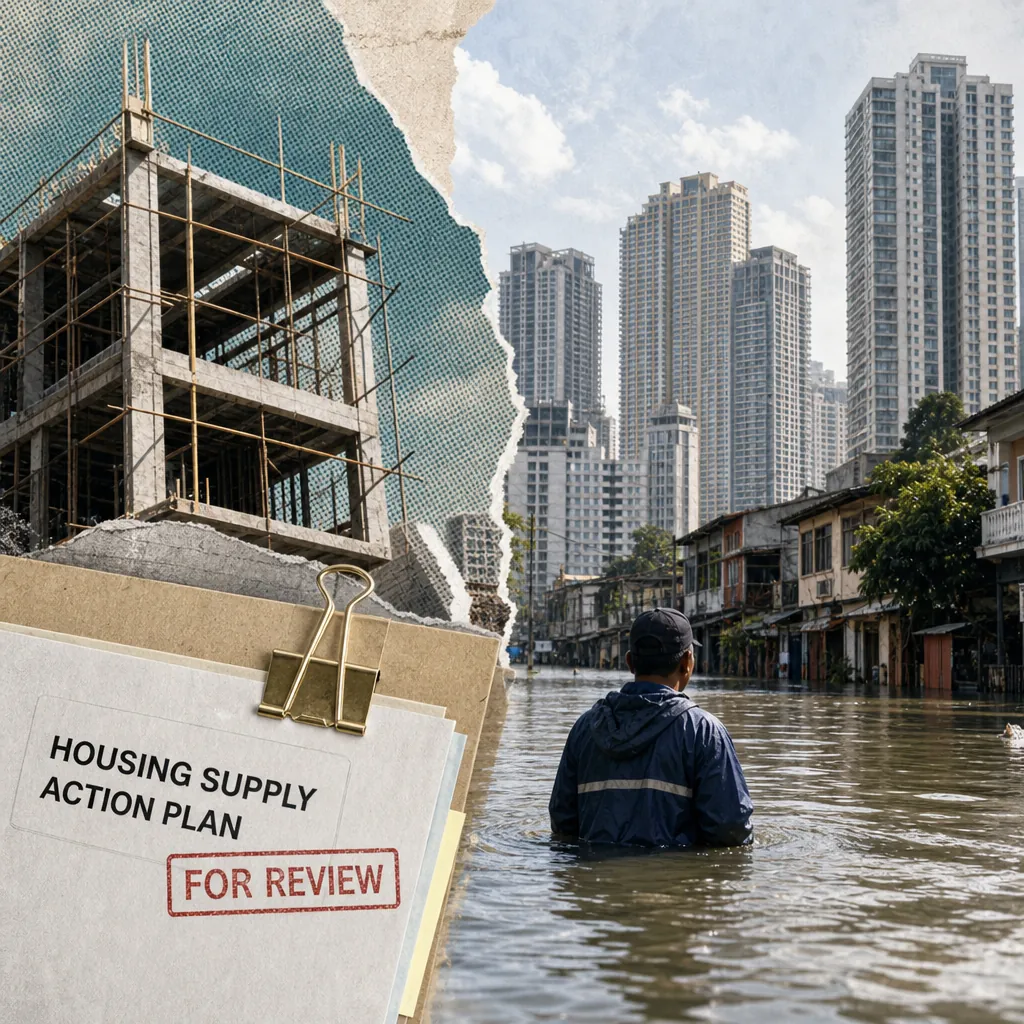
Pax Silica scrutiny, Taguig reclamation row dominate
A daily snapshot of Philippine property and infrastructure conversation, covering Senate scrutiny of the Pax Silica hub, the Taguig reclamation dispute, and corporate earnings.
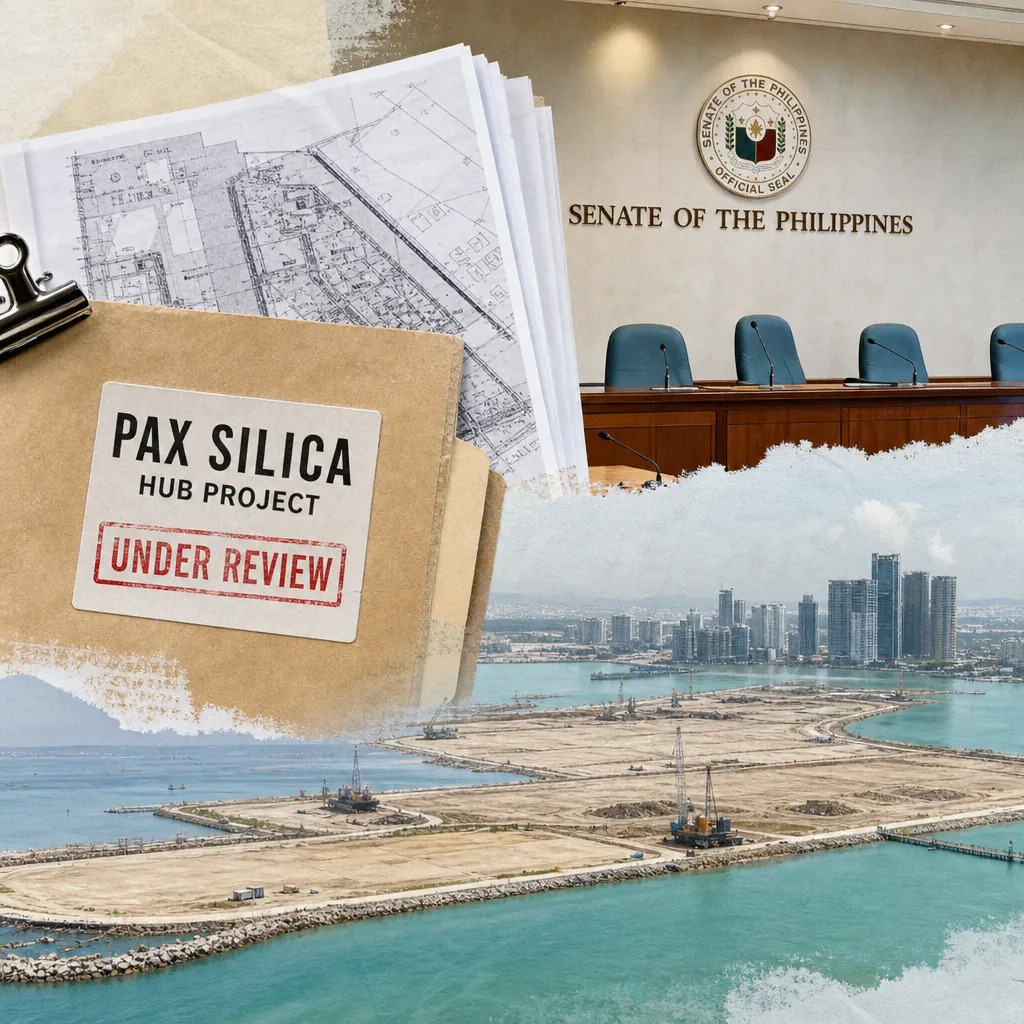
The day's conversation around Philippine property and infrastructure development turned sharply political. On August 4, Senator Panfilo "Ping" Lacson announced on X (formerly Twitter) that he would push for the forfeiture of what he called illegally reclaimed land along the Laguna Lake shoreline in Taguig City, following a meeting with officials of the Philippine Reclamation Authority. The post drew only 71 views and no engagement, but it injected a new layer of legal and political risk into the sector's discourse. Meanwhile, Senator Risa Hontiveros filed a resolution calling for a Senate inquiry into the proposed Pax Silica industrial hub at New Clark City, and the Science Communicators Philippines issued a public statement demanding full disclosure of the project's terms before any commitment. These developments unfolded against a backdrop of corporate earnings reports from major property firms, signaling resilience in the sector despite regulatory and environmental headwinds.
On the news side, the day's coverage was dominated by the Pax Silica debate and the Taguig reclamation controversy. The Science Communicators' statement, published in the BusinessMirror, carried an estimated advertising-equivalent value of ₱595,428, reflecting the weight of the scientific community's call for transparency. Senator Hontiveros's resolution, reported by Manila Bulletin Online, drew coverage worth an estimated ₱214,720. The Taguig reclamation story, covered by multiple outlets including Head Topics Online and United News, generated substantial coverage value, with the Head Topics piece alone worth ₱342,300. These stories, along with the ongoing graft trials involving former public works officials, framed the day's narrative around accountability and the rule of law in land development.
Social media conversation, as captured in the monitoring writeup, was quieter but analytically rich. A Reddit analysis comparing Pax Silica's projected water and electricity demands against existing industrial zones in Calabarzon drew 16–19 likes and 17–18 comments, reflecting active deliberation among technically engaged audiences. A Facebook video post highlighting wildlife conservation concerns drew 26 likes and 18 "love" reactions, indicating emotional resonance with environmental narratives. The Lacson post, by contrast, generated minimal traction, suggesting that audiences were still processing the announcement. The overall pattern across platforms was one of cautious engagement, with substantive discussion concentrated on Reddit and emotional reactions on Facebook, while Twitter served primarily as a broadcast channel for official statements.
Key themes
- Political scrutiny of land development intensifies — Senator Lacson's threat to confiscate allegedly illegal reclaimed land in Taguig, and Senator Hontiveros's call for a Senate inquiry into Pax Silica, signal a new phase of political oversight over property projects. These moves shift the conversation from technical feasibility to legal accountability.
- Calls for transparency on Pax Silica — The Science Communicators Philippines' statement, "No terms, no commitment," and Hontiveros's resolution both demand full disclosure of the project's terms before any commitment. This reflects a growing public insistence on evidence-based decision-making.
- Environmental and community concerns persist — Facebook posts and Reddit analyses continue to raise questions about the environmental impact of large-scale developments, including water consumption, electricity demand, and potential displacement of farmers. The emotional resonance of these concerns is evident in the "love" and "care" reactions to conservation-focused content.
- Corporate earnings show resilience — Filinvest REIT Corp., Shang Properties, and Maynilad Water Services all reported strong first-half results, indicating that the property and infrastructure sector remains financially robust despite regulatory and environmental headwinds.
- Graft trials cast a shadow over public works — The ongoing Sandiganbayan trials involving former public works officials and senators, including the testimony of state witness Roberto Bernardo, continue to dominate news coverage, reinforcing themes of corruption and accountability in infrastructure spending.
- Weather disruptions and disaster preparedness — Tropical Depression Maymay and the southwest monsoon caused class suspensions and flooding in several regions, highlighting the vulnerability of communities and the need for resilient infrastructure, a theme that intersects with the flood control projects under scrutiny.
- Regulatory approvals for REITs — RL Commercial REIT secured Philippine Competition Commission clearance for a ₱10.62-billion asset infusion, indicating continued growth in the real estate investment trust sector.
How the narratives stack
Dominant — Within the captured set, the dominant narrative is the political and regulatory scrutiny of major land development projects, specifically the Taguig reclamation controversy and the Pax Silica inquiry. This narrative drew the most coverage value and social media attention, with multiple news articles and social posts addressing these issues. The Lacson announcement, though low on engagement, was picked up by several outlets, and Hontiveros's resolution added a formal legislative dimension. This dominance reflects the day's most consequential developments for the property sector.
Counter-narrative — The counter-narrative comes from the corporate sector, which reported strong earnings and continued investment. Filinvest REIT, Shang Properties, and Maynilad all posted double-digit profit growth, suggesting that despite regulatory and environmental concerns, the underlying business remains healthy. This narrative offers a more optimistic view of the sector's prospects, countering the negative implications of political scrutiny.
Emerging — An emerging narrative is the call for evidence-based evaluation of large-scale projects, as articulated by the Science Communicators and the Reddit analysts. This narrative seeks to move the conversation beyond fear and political posturing toward data-driven assessment. It is still developing but has the potential to shape how stakeholders engage with projects like Pax Silica.
Suppressed — A story that received relatively little attention in the captured set is the environmental impact of quarry operations in Iloilo, which may have contributed to unprecedented flooding. This story, reported by Panay News Online, raises questions about the role of extractive industries in exacerbating natural disasters, but it did not generate the same level of engagement as the political stories. Its under-coverage may reflect the monitoring scope, but it remains a significant concern for affected communities.
Platform insights
- Facebook: Facebook served as the primary platform for emotional and community-oriented reactions. A video post highlighting wildlife conservation concerns drew 26 likes and 18 "love" reactions, indicating strong emotional resonance. A post about a tragic incident in a Laguna farm drew 315 reactions, predominantly "sad" (342 reactions), and 48 comments, reflecting high sensitivity to displacement and livelihood loss. These posts demonstrate that Facebook is where the human stakes of development projects are most vividly expressed.
- X (Twitter): Twitter functioned as a broadcast channel for official and political announcements. Senator Lacson's post on the Taguig reclamation drew 71 views with zero engagement, mirroring the minimal interaction seen with Malacañang's earlier Pax Silica statement. This pattern suggests that Twitter is used for distribution rather than discussion, and that political statements alone do not generate sustained conversation without accompanying data or community engagement.
- Reddit: Reddit remained the analytical powerhouse of the conversation. A detailed comparative analysis of Pax Silica's water and electricity demands drew 16–19 likes and 17–18 comments, reflecting active deliberation among technically engaged users. The analysis argued that the project's greatest challenge is electricity supply, not water, and called for transparent documentation and independent verification. This platform is where evidence-based reasoning thrives, offering a counterpoint to both government optimism and environmental alarmism.
- YouTube: While not explicitly covered in the monitoring writeup, YouTube served as a distribution channel for news videos, such as GMA News's coverage of flooding in Northern Luzon. These videos likely drew views but were not captured in the engagement metrics provided. The platform's role in disseminating local news and weather updates is significant, particularly during disaster events.
Key voices and communities
- Government and regulatory actors — Senators Panfilo Lacson and Risa Hontiveros are the most prominent voices in this conversation. Lacson's threat to confiscate illegally reclaimed land in Taguig and Hontiveros's call for a Senate inquiry into Pax Silica represent a shift from administrative communications to political intervention. Their statements generate modest engagement on social media but carry significant news coverage value, as seen in the multiple articles covering their actions.
- Environmental and community advocates — A coalition of environmental advocates, civil society voices, and concerned citizens actively scrutinizes large-scale projects through sustainability and social equity lenses. Operating primarily on Facebook, this group produces content that frames projects as potential threats to wildlife, ecosystems, and local livelihoods. Their posts generate meaningful engagement, with one video post drawing 26 likes and 18 "love" reactions, indicating emotional resonance with broader ecological preservation values.
- Technically engaged analysts — A smaller but influential cluster of participants, active primarily on Reddit, produces data-driven analyses that contextualize projects against existing industrial benchmarks. Their content is characterized by measured, evidence-based argumentation, comparing water consumption estimates (65–130 million liters per day) and electricity requirements (up to 3 gigawatts) against existing industrial zones like Laguna Technopark and Cavite Economic Zone. This group's balanced analytic approach offers a constructive counterpoint to both government optimism and environmental alarmism.
- Corporate leaders — Executives from major property firms, such as Maricel Brion-Lirio of Filinvest REIT and Steven Tan of SM Supermalls, contribute to the conversation through earnings announcements and public statements. Their messaging emphasizes resilience, disciplined leasing, and adaptation to consumer preferences, providing a counter-narrative to the political and environmental concerns dominating the news.
- Local community and agricultural voices — Conversations touching on farmer displacement and rural livelihoods form a distinct, emotionally charged voice cluster. A Facebook post about a tragic incident in a Laguna farm drew 315 reactions, predominantly "sad," and 48 comments, demonstrating high emotional engagement with rural community struggles. This group's discourse reflects anxieties about livelihoods, land security, and social safety nets that resonate with broader displacement concerns around infrastructure projects.
Narrative streams
The Taguig reclamation controversy: A political and legal flashpoint
Senator Panfilo Lacson's announcement on August 4 that he would push for the forfeiture of illegally reclaimed land along the Laguna Lake shoreline in Taguig City marks a significant escalation in the political scrutiny of land development. Lacson, a former chair of the Senate blue ribbon committee, said his investigation had uncovered a "cauldron of worms," including "ghost slope protection projects" and "illegally reclaimed tracts of land covering Laguna Lake." He warned, "Malulunod sa katotohanan" (You will drown in the truth), in a direct retort to Senate Minority Leader Alan Peter Cayetano, who had earlier accused Lacson of doubling his income as a senator.
The controversy is rooted in a heated exchange between Lacson and Cayetano, who represents Taguig. Cayetano had challenged Lacson to visit Taguig, saying he would "drown in a flood of truth." Lacson countered that Cayetano might be the one drowning, citing his meeting with Philippine Reclamation Authority officials who allegedly described harassment tactics employed by Cayetano. The Philippine Reclamation Authority is the government agency responsible for regulating reclamation projects in the country, and its officials' claims add weight to Lacson's allegations.
The implications for the property sector are significant. Taguig is home to major developments such as Bonifacio Global City and the Entertainment City casino complex, and any legal challenges to reclamation could affect investor confidence in waterfront projects. The story drew heavy coverage, with the Head Topics Online article alone carrying an estimated advertising-equivalent value of ₱342,300, and the United News piece worth ₱76,953. However, the low engagement on Lacson's social media post suggests that the public has not yet formed strong opinions, positioning this as an emerging narrative rather than an active debate.
For developers, this development underscores the importance of regulatory compliance not merely as a procedural matter but as a substantive reputational and operational risk. The senator's willingness to threaten confiscation over an allegedly illegal reclamation project suggests that political oversight can have direct consequences for land assets. Stakeholders with exposure to reclamation-adjacent projects should prepare scenario messaging that addresses environmental compliance and legal due diligence proactively.
Pax Silica: The fight for transparency
The proposed Pax Silica industrial hub at New Clark City in Tarlac continues to generate intense debate, with the day's developments adding a formal legislative dimension. Senator Risa Hontiveros filed Proposed Senate Resolution No. 563, calling for a Senate inquiry into the project's potential economic and socioeconomic impact. In her resolution, Hontiveros emphasized that "foreign direct investment of the magnitude contemplated warrants evaluation not upon its headline value alone," signaling a demand for thorough scrutiny beyond the project's $70 billion price tag.
The Science Communicators Philippines, a professional organization of science communicators, issued a public statement titled "Science before commitment," which was published in the BusinessMirror. The statement acknowledged the project's potential to bring advanced manufacturing, semiconductor development, and artificial intelligence opportunities, but declared, "We cannot endorse Pax Silica while its essential terms remain undisclosed. Our position and recommendation for the country is unequivocal: No terms, no commitment." The statement drew coverage worth an estimated ₱595,428 in advertising-equivalent value, reflecting the weight of the scientific community's call for transparency.
The project, which is part of the U.S.-led Pax Silica initiative, is expected to create up to 190,000 direct jobs and attract substantial foreign investment. However, concerns about water consumption (estimated at 65–130 million liters per day), electricity demand (up to 3 gigawatts), and potential displacement of farmers have fueled public skepticism. A Reddit analysis compared these figures against existing industrial zones in Calabarzon, arguing that while water consumption is significant, it is not unprecedented, and that the greater challenge lies in electricity supply—the 3-gigawatt requirement being roughly ten times the combined peak demand of major Calabarzon industrial zones.
The government has maintained that no farmers will be displaced, citing "buildable zones" identified as early as 2019. However, civil society voices remain unconvinced, and the information vacuum created by the government's reluctance to provide details has allowed speculative narratives to gain traction. The Senate inquiry, if pursued, could force the disclosure of project terms and provide a platform for evidence-based evaluation.
For stakeholders, the Pax Silica discourse carries direct implications for New Clark City's positioning as a flagship township. The project's success depends on addressing public concerns through transparent documentation and independent verification. The Science Communicators' stance suggests that the scientific community is willing to support the project if its terms are disclosed and its impacts are properly assessed, offering a potential path forward for developers who engage with evidence-based reasoning.
Corporate earnings: Resilience amid uncertainty
Amid the political and environmental debates, the property sector's corporate players reported strong first-half results, signaling resilience. Filinvest REIT Corp. (FILRT) grew its first-half net income by 34% to ₱874 million, driven by the full-period contribution of Festival Main Mall, which helped lift occupancy to 87%, up six percentage points year-on-year. Revenues rose 31% to ₱2.05 billion. "Our first-half performance reflects the resilience of our portfolio," said FILRT President and CEO Maricel Brion-Lirio.
Shang Properties posted a 30.4% increase in second-quarter attributable net income to ₱981.8 million, driven by higher residential sales and stronger contributions from associates and a joint venture. Condominium sales climbed to ₱697.3 million from ₱469.6 million, driven by ongoing projects including Shang Summit in Quezon City, Laya by Shang Properties in Pasig City, and Shang Bauhinia Residences in Cebu City.
Maynilad Water Services, the west zone concessionaire, reported a 17.4% increase in second-quarter net income to ₱4.52 billion, aided by lower interest expenses and taxes. Operating revenues rose 2.4% to ₱10.02 billion on higher billed water volume and an expanding customer base. The company's investments in infrastructure helped improve water service coverage to 94.99% from 94.76% a year earlier.
These earnings reports, covered by BusinessWorld Online and other outlets, provide a counter-narrative to the political and environmental concerns dominating the news. They suggest that the underlying business fundamentals remain strong, even as regulatory and reputational risks loom. For investors, the resilience of these companies offers some reassurance, but the political developments could still affect market sentiment, as evidenced by the PSEi's 0.60% decline on August 4 amid geopolitical tensions and inflation jitters.
Graft trials and the shadow over public works
The Sandiganbayan trials involving former public works officials and senators continued to dominate news coverage, reinforcing themes of corruption and accountability in infrastructure spending. State witness Roberto Bernardo, a former DPWH undersecretary, testified that "almost all" senators—except Lacson—requested project allocations from former Public Works Secretary Manuel Bonoan. Bernardo also revealed that losing bidders in fake biddings earned a "salary" for their participation, describing a system where legislators' preferred contractors were coordinated with DPWH district engineering offices, making bidding outcomes predetermined.
The trials are part of the malversation case against former Senator Bong Revilla over an alleged ghost project in Pandi, Bulacan worth ₱92.8 million. Revilla, who has denied the accusations, was granted bail on Friday. Former DPWH Secretary Bonoan is set to testify against Revilla on August 12, and the Sandiganbayan has refused to remove Bonoan from a related graft case involving an alleged ₱855-million flood control project, ruling that his exclusion would prejudice Senator Jinggoy Estrada's right to a fair defense.
These trials, covered extensively by Inquirer Online and Philstar Online, with coverage values ranging from ₱189,000 to ₱393,502, cast a long shadow over the public works sector. They highlight the risks of corruption in infrastructure spending and the importance of transparent procurement processes. For property developers, the trials serve as a reminder that regulatory compliance is not just a legal requirement but a reputational imperative.
Weather disruptions and the need for resilient infrastructure
Tropical Depression Maymay and the enhanced southwest monsoon brought heavy rains and flooding to parts of Luzon and Visayas, leading to class suspensions in multiple areas and flooding in 14 barangays in Cabanatuan City. The weather bureau Pagasa reported that the low pressure area west of La Union developed into Tropical Depression Maymay, with wind signal no. 1 raised in 17 provinces. Typhoon Dolphin was also being monitored outside the Philippine area of responsibility.
The flooding highlighted the vulnerability of communities and the need for resilient infrastructure. In Iloilo, unprecedented flooding in Barangay Sohoton, Barotac Nuevo, which swamped a home for the first time in 70 years, prompted the Provincial Government Environment and Natural Resources Office to investigate whether quarry operations contributed to the inundation. The investigation, reported by Panay News Online, raises questions about the role of extractive industries in exacerbating natural disasters.
The weather events also intersected with the flood control projects under scrutiny in the graft trials. The Department of Public Works and Highways announced it will conduct a comprehensive feasibility study for a Bulacan flood mitigation infrastructure master plan by 2027, following recent scandals involving ghost projects in the province. The study will require a ₱200-million budget allocation, underscoring the need for proper planning and investment in flood control.
For the property sector, the weather disruptions serve as a reminder of the importance of climate resilience in development projects. Developers must consider flood risks, water management, and infrastructure reliability in their planning, particularly in areas prone to flooding and extreme weather events.
Conversation trajectory
Over the next 2–3 weeks, the conversation around Philippine property and infrastructure is likely to intensify, driven by several forward signals. First, the Senate inquiry into Pax Silica, if pursued, could force the disclosure of project terms and provide a platform for evidence-based evaluation. The Science Communicators' stance suggests that the scientific community is willing to support the project if its terms are disclosed and its impacts are properly assessed, offering a potential path forward for developers who engage with evidence-based reasoning. Watch for the Senate committee's schedule and any public hearings, which could generate significant media coverage and public engagement.
Second, the Taguig reclamation controversy is likely to escalate as Senator Lacson follows through on his threat to push for forfeiture. Any formal legislative action, such as a resolution or bill, will catalyze broader discussions about regulatory risks affecting property developers in environmentally sensitive zones. The reaction from local government units and development authorities will determine whether this remains a localized issue or expands into a wider conversation about reclamation and land conversion policies. Monitoring for responses from industry associations will be critical, as their positioning will signal how the private sector intends to navigate this emerging regulatory scrutiny.
Third, the ongoing graft trials will continue to generate headlines, particularly with former DPWH Secretary Bonoan's testimony scheduled for August 12. The trials could reveal more details about corruption in public works, further eroding public trust and increasing pressure for reform. For property developers, the trials serve as a reminder that regulatory compliance is not just a legal requirement but a reputational imperative.
Finally, the weather season is far from over, with Typhoon Dolphin being monitored and the southwest monsoon expected to bring more rains. The impact of these weather events on communities and infrastructure will keep disaster preparedness and climate resilience in the spotlight, potentially influencing public perception of development projects in vulnerable areas.
Trigger events to watch include: any formal statement or legislative action resulting from Lacson's confiscation intention; the Senate committee's decision on Hontiveros's resolution; Bonoan's testimony on August 12; and any major weather-related disasters that could shift public attention to infrastructure resilience.
Response guidance
For communicators in the property and infrastructure sector, the day's developments underscore the importance of proactive transparency and evidence-based engagement. Key messages should emphasize a commitment to regulatory compliance, environmental stewardship, and community welfare. Avoid commenting on the specifics of the Taguig reclamation allegations or the Pax Silica inquiry, but be prepared to confirm that your own projects hold all necessary permits and clearances.
On Pax Silica, consider publishing verified environmental impact projections and independent hydrological and grid-capacity studies to preempt speculation. The Reddit analysis suggests that the public is receptive to evidence-based reasoning but remains unconvinced by government assertions alone. Engaging with technically engaged analysts through data-driven communication could help de-escalate polarized debates.
For projects near Laguna Lake or reclamation zones, prepare scenario messaging that addresses environmental compliance and legal due diligence proactively. The low current engagement levels on the Taguig story suggest this is an opportune moment to establish monitoring baselines before the conversation potentially escalates through mainstream media coverage or legislative developments.
Finally, monitor the farmer displacement narrative closely, as official assurances have not quelled skepticism from civil society voices. The conflicting claims regarding land use and community impact should be addressed through independently verifiable documentation, as the Reddit analysis suggests the public is receptive to evidence-based reasoning but remains unconvinced by government assertions alone. By demonstrating a commitment to scientific rigor and transparency, stakeholders can build trust and mitigate reputational risk.
See the full picture behind today's signals.
This report draws from Media Meter's MediaWatch, our real-time monitoring engine tracking 2,470+ Philippine sources across print, broadcast, digital, and social. Explore how the platform turns raw coverage into decision-grade intelligence, then see how it's configured for teams like yours — whether you're in PR agencies, corporate comms, government, or marketing.
Want more? Browse our Report Library for sector and crisis intelligence, or request a demo and we'll have your brand set up before the call.
Want this kind of intelligence on your brand?
This brief is built on the same MediaWatch methodology that runs continuously across every brand we monitor. See your competitive landscape, Impact Score, and narrative trajectory in a 30-minute demo.