PDIC Fund Row Draws Skepticism as Banks Post Record Resources
A political coalition's threat to sue over P107 billion in PDIC funds drew public mockery on social media, while the financial sector reported record resources and awaited BSP policy signals.
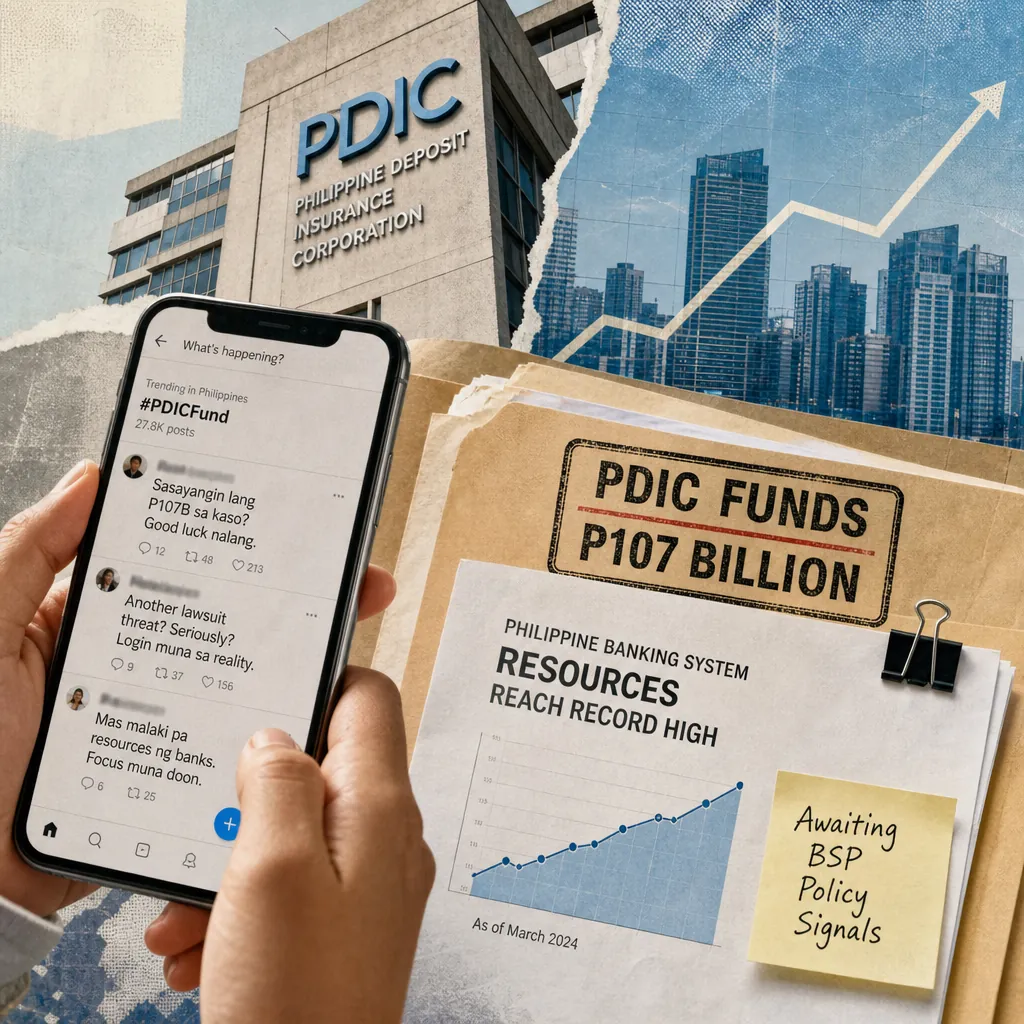
The day's conversation in the Philippine financial sector ran on two tracks that rarely touched. On social media, a political coalition's threat to sue the government over P107 billion in deposit-insurance funds was met largely with laughter, a signal of public fatigue with political posturing. In the news media, the story was different: banks reported record-high total resources, economists debated whether the central bank's rate-hiking cycle was over, and the government's budget deliberations began with the PDIC fund restoration tucked into unprogrammed appropriations. The contrast between the dismissive public reaction and the substantive policy coverage is itself the day's story.
The social conversation centered on 1Sambayan, a coalition of opposition figures and civil society groups, which announced on August 16 that it would file a Supreme Court petition if the Marcos administration failed to secure funding to return P107 billion to the Philippine Deposit Insurance Corporation (PDIC). The announcement first appeared on Twitter (now X), where it drew modest attention—about 2,954 views and only three likes—before being cross-posted to Facebook, where it gained more traction: 224 reactions, 62 comments, and 14 shares. The striking detail was the reaction breakdown: 62 "haha" reactions dominated, far outnumbering the three "love" and one "angry" responses. The public, it seemed, viewed the threat as political theater rather than a credible financial crisis.
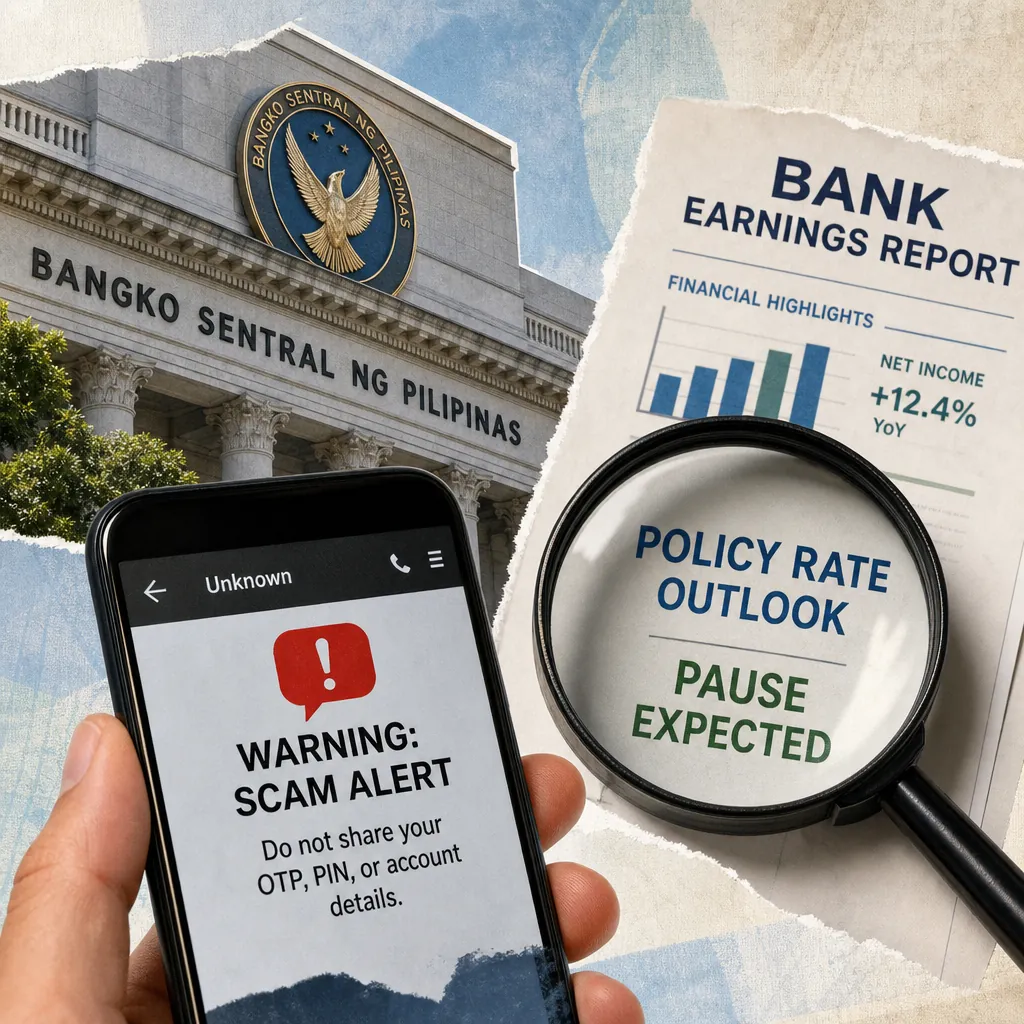
Meanwhile, the news media carried a different set of stories. The Bangko Sentral ng Pilipinas (BSP) reported that the financial system's total resources—the combined funds and assets of banks and non-bank financial institutions—reached a record P38.3 trillion as of June, up 8.9 percent from a year earlier. Digital banks saw particularly strong growth, with resources surging 46.7 percent to P208.4 billion. Several outlets also covered the upcoming BSP policy meeting on August 27, with Standard Chartered Bank suggesting the tightening cycle may be over and rate cuts possible by mid-2027. The House of Representatives began deliberations on the P7.2-trillion national budget for 2027, which includes P57 billion in unprogrammed appropriations for the "Restoration of the Fund Balances of the PDIC"—a key element in the 1Sambayan dispute.
Key themes
- Public skepticism toward political legal threats: The dominant social media reaction to 1Sambayan's lawsuit threat was mockery, with "haha" reactions far outnumbering serious ones. This suggests audiences are fatigued by repeated political ultimatums and may not take the threat seriously, which could undermine the coalition's credibility.
- Record financial system resources signal sector strength: The BSP reported that the financial system's total resources hit P38.3 trillion in June, a record high, driven by growth in bank assets, loans, and deposits. This provides a counter-narrative to any concerns about banking stability.
- BSP policy uncertainty dominates market outlook: With the BSP's rate-setting meeting on August 27 approaching, analysts are divided on whether the central bank will hike again or pause. Standard Chartered believes the tightening cycle may be over, while others see another increase as possible. This uncertainty is keeping stock and bond markets range-bound.
- PDIC fund restoration tied to budget process: The P107 billion dispute is now intertwined with the 2027 national budget, which allocates P57 billion in unprogrammed appropriations for restoring PDIC fund balances. This means the resolution may depend on budget deliberations, not just legal action.
- Digital banks show rapid growth: Digital banks' resources surged 46.7 percent year-on-year, reflecting the sector's expansion and the BSP's push for financial inclusion. This growth is a positive sign for the industry but also raises questions about regulatory oversight.
- Geopolitical risks weigh on inflation and rates: The ongoing US-Iran conflict and its impact on oil prices are key factors in inflation expectations and BSP policy. A spike in oil prices could force the BSP to hike rates, while a de-escalation could allow for cuts.
- Government spending and economic growth concerns: Standard Chartered cut its Philippine growth forecast to 3.5 percent for 2026, citing weak second-quarter growth and reliance on government spending. This adds pressure on the BSP to support the economy through monetary policy.
How the narratives stack
Dominant: The dominant narrative in the captured set is the financial system's record growth and the BSP's policy outlook. Multiple news articles highlighted the P38.3 trillion in resources, and several analysts weighed in on the upcoming rate decision. This is a story of sector strength and cautious optimism, with the BSP's next move as the key uncertainty. The coverage value of these items was substantial, with the Manila Times' banking roundtable alone worth an estimated ₱1.3 million in advertising-equivalent value, and the Standard Chartered forecast drawing significant attention.
Counter-narrative: The counter-narrative comes from the social media reaction to the 1Sambayan threat. While the news media treated the PDIC fund dispute as a serious policy matter, the public's response was largely dismissive, with laughter dominating. This suggests a disconnect between how the issue is framed in official circles and how it is received by ordinary Filipinos, who may see it as political maneuvering rather than a genuine threat to deposit insurance.
Emerging: An emerging narrative is the potential for the PDIC dispute to spill over into broader concerns about banking stability. While current discussions focus on the political and legal dimensions, there is a risk that comment threads begin connecting the P107 billion figure to deposit safety. The BSP's record resources and the PDIC's role as a guarantor of deposits could become a point of public anxiety if the story escalates.
Suppressed: A story that received relatively little attention in the captured set is the BSP's partnership with Berdeng Kalabaw on waste management, which was covered by the Daily Tribune but not widely picked up. This is a minor sustainability initiative, but it reflects the BSP's broader environmental, social, and governance (ESG) agenda, which could be a positive narrative for the central bank if amplified.
Platform insights
- Facebook: The primary platform for public reaction to the 1Sambayan threat. The post accumulated 224 reactions, 62 comments, and 14 shares, with "haha" reactions dominating. This indicates a dismissive, cynical sentiment among users, who may be fatigued by political posturing. The comment section likely contained a mix of supporters and detractors, but the overall tone was one of amusement rather than concern.
- X (Twitter): The initial post on X drew only 2,954 views and three likes, with no retweets or comments. This suggests that the platform's audience did not find the story newsworthy or were unaware of it. The low engagement may reflect fatigue with similar announcements from opposition groups.
- YouTube: No significant YouTube activity was captured in the monitoring writeup, but the platform could become relevant if the story escalates and news outlets produce video coverage. For now, the conversation is primarily text-based on Facebook and X.
- Reddit: No Reddit activity was captured, but specialized finance forums could host deeper discussions on the legal merits of the claim. These communities often feature more detailed analysis that can shape opinion among informed publics.
Key voices and communities
- 1Sambayan and legal-advocacy coalitions: This group, which includes former Finance Undersecretary Cielo Magno, is driving the legal threat narrative. They position themselves as watchdogs over government financial conduct and use legal ultimatums to pressure the administration. Their content is factual and threat-focused, but the public's reaction suggests their credibility may be waning.
- General public and concerned citizens: This diffuse group participates through reactions and comments, often with a cynical or mocking tone. Their "haha" reactions to the 1Sambayan threat indicate a lack of concern about the PDIC dispute, which could be a valuable signal for crisis communications.
- Financial analysts and economists: Voices like Michael Ricafort of RCBC and Jonathan Koh of Standard Chartered are shaping the narrative on BSP policy and economic growth. Their analyses are widely cited in the news media and influence market expectations.
- News aggregators and media watchers: Outlets like Inquirer, BusinessWorld, and Manila Times are distributing the stories and setting the framing. Their headlines often prime the audience for conflict or economic data, and they play a key role in how the public perceives financial news.
- Government and regulatory bodies: The BSP, PDIC, and the Department of Budget and Management are central to the policy narrative. Their statements and data releases are closely monitored, and their actions will determine the outcome of the PDIC dispute and the direction of monetary policy.
Narrative streams
The PDIC fund dispute: from legal threat to budget reality
The 1Sambayan coalition's threat to sue the government over P107 billion in PDIC funds is rooted in a complex financial and legal history. The PDIC is a government agency that insures bank deposits up to a certain amount, protecting depositors in case of bank failure. In January 2025, the PDIC remitted P107.23 billion in "unrestricted retained earnings" to the national treasury, as required by a special provision in the 2024 national budget law. However, the Supreme Court later struck down that provision, ruling that the government had no authority to take the funds. 1Sambayan now demands that the government return the money, and has threatened to file a petition if the 2027 budget does not include the full amount.
The 2027 National Expenditure Program (NEP), the government's proposed budget for next year, allocates P57 billion in unprogrammed appropriations for the "Restoration of the Fund Balances of the PDIC." Unprogrammed appropriations are funds that are not automatically released but become available if revenue collections exceed targets. This means the P57 billion is not guaranteed, and the remaining P50 billion is still unaccounted for. 1Sambayan convenor Cielo Magno, a former Finance Undersecretary, argues that the funds should be included in the programmed appropriations, which are guaranteed, to ensure the PDIC's financial stability.
The public's reaction to this dispute has been largely dismissive, as evidenced by the "haha" reactions on Facebook. This suggests that many Filipinos do not see the issue as a threat to their deposits, perhaps because the PDIC has a strong track record of protecting depositors. However, the dispute could become more salient if it drags on and raises questions about the government's commitment to deposit insurance. For the banking sector, the key is to reassure depositors that their funds are safe, regardless of the political wrangling.
Record financial system resources: a sign of resilience
The BSP's report that the financial system's total resources reached P38.3 trillion in June is a significant milestone. This figure includes the funds and assets of banks and non-bank financial institutions, such as cash, loans, deposits, capital, and investment securities. It excludes the central bank's own resources. The 8.9 percent year-on-year growth was driven by continued expansion in bank credit and deposits, despite the economic challenges posed by the Middle East conflict and high inflation.
Universal and commercial banks accounted for the bulk of the resources, with P29.65 trillion, up 9.3 percent. Thrift banks grew 11.3 percent to P1.51 trillion, and digital banks saw a remarkable 46.7 percent surge to P208.4 billion. This growth reflects the increasing adoption of digital banking services and the BSP's push for financial inclusion. Rural and cooperative banks maintained their balances, while non-bank financial institutions also held steady.
Economists attribute the growth to rising bank deposits and lending activity, as well as hedging activities ahead of potential interest rate changes. The record resources provide a buffer against economic shocks and underscore the sector's resilience. For depositors, this is a reassuring sign that the banking system is well-capitalized and able to absorb losses.
BSP policy crossroads: to hike or not to hike?
The BSP's next policy meeting on August 27 is the focal point for market participants. The central bank has been raising interest rates to combat inflation, which has been above its target range of 2-4 percent. However, the economy's weak growth—just 2.3 percent in the second quarter—has led some analysts to argue that the BSP should pause or even cut rates.
Standard Chartered Bank's Jonathan Koh believes the tightening cycle may be over, citing soft demand-driven inflation. He has taken his August hike call off the table and sees rate cuts possible by mid-2027. Other analysts, like those at UnionBank, expect another hike because inflation remains elevated. The BSP governor, Eli Remolona, has sounded less hawkish recently, saying the central bank can afford to be less aggressive given below-potential growth.
The uncertainty is keeping the stock market range-bound, with the PSEi closing at 6,297.30, up just 0.11 percent for the week. Foreign investors were net sellers, unloading P3.66 billion worth of shares. The peso weakened to P61.45 against the dollar, its lowest in two weeks, due to elevated oil prices. The outcome of the BSP meeting will have significant implications for borrowing costs, investment, and the peso's value.
The 2027 budget and the PDIC restoration
The House of Representatives began deliberations on the P7.2-trillion national budget for 2027 on August 16. The budget includes P57 billion in unprogrammed appropriations for the PDIC fund restoration, which is a key demand of 1Sambayan. The Development Budget Coordination Committee (DBCC), composed of the Department of Budget and Management, the Department of Finance, the National Economic and Development Authority, and the BSP, briefed lawmakers on the budget's priorities.
The budget process is crucial for the PDIC dispute because it determines whether the funds will be returned. If the P57 billion remains unprogrammed, it may not be released, and 1Sambayan could follow through on its legal threat. The coalition argues that the funds should be programmed to ensure the PDIC's financial health and protect depositors. The government, however, may argue that unprogrammed appropriations are a standard practice for contingent liabilities.
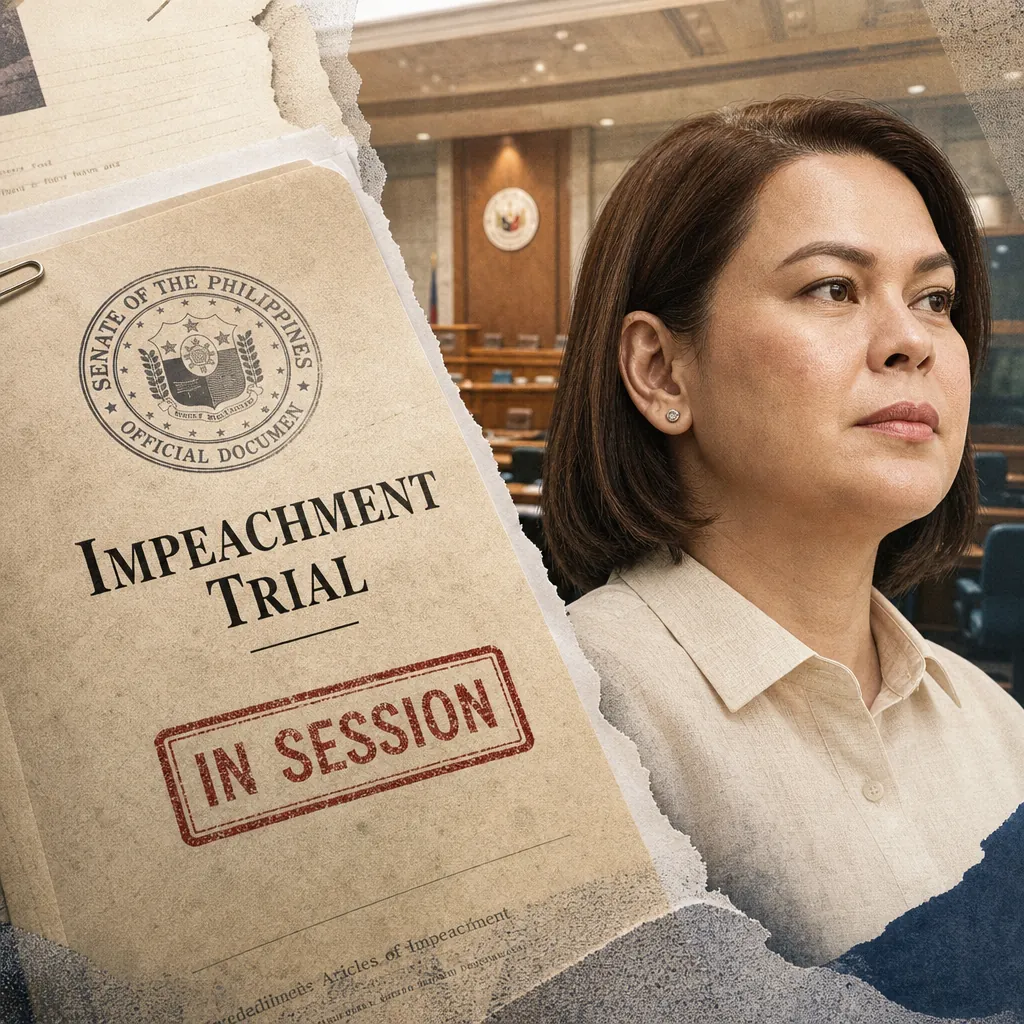
The budget deliberations also come amid broader concerns about government spending and corruption. The impeachment trial of Vice President Sara Duterte, which involves allegations of misuse of confidential funds, has heightened public scrutiny of government finances. The PDIC dispute could become entangled in these political battles, further complicating its resolution.
Digital banking and financial inclusion
The BSP's push for financial inclusion is evident in the rapid growth of digital banks. Their resources surged 46.7 percent to P208.4 billion, reflecting increased adoption of digital banking services. The BSP has been encouraging digital banks to offer affordable and accessible financial services, particularly to underserved populations. However, this growth also raises questions about cybersecurity and consumer protection.
The BSP recently signed a partnership with Berdeng Kalabaw, an environmental organization, to improve waste management in its facilities. This is part of the central bank's broader sustainability agenda, which includes promoting green finance and responsible banking practices. While this story received limited coverage, it highlights the BSP's efforts to integrate environmental, social, and governance (ESG) considerations into its operations.
Conversation trajectory
Over the next 1-2 weeks, the PDIC dispute is likely to remain in the news as the budget deliberations continue and the 1Sambayan deadline approaches. The coalition has not specified a deadline, but the threat of legal action will keep the issue alive. The government's response—whether it acknowledges the demand, denies it, or remains silent—will shape the narrative. If the government includes the full P107 billion in the programmed appropriations, the dispute could be resolved amicably. If not, 1Sambayan may file a petition, which could drag on for months.
The BSP's policy meeting on August 27 is the next major trigger event. If the BSP hikes rates, it could strengthen the peso and curb inflation but may also dampen economic growth. If it holds rates, it could support growth but risk inflation expectations. The market's reaction will depend on the BSP's forward guidance. A dovish tone could boost stocks and bonds, while a hawkish tone could lead to sell-offs.
Geopolitical developments, particularly the US-Iran conflict, will also influence the trajectory. A de-escalation could lower oil prices and reduce inflation pressures, giving the BSP room to cut rates. An escalation could push oil prices to $120-130 per barrel, forcing the BSP to hike rates and potentially destabilizing the financial system.
Trigger events to watch:
- The BSP's rate decision on August 27 and the accompanying statement.
- The House budget deliberations and any amendments to the PDIC allocation.
- Any official statement from 1Sambayan or the government regarding the P107 billion.
- Oil price movements and US-Iran negotiations.
- The release of second-quarter GDP data and other economic indicators.
Response guidance
For communicators in the banking and financial sector, the key is to maintain public confidence in the stability of the financial system. The PDIC dispute, while politically charged, should not be allowed to undermine trust in deposit insurance. Banks should proactively communicate their PDIC coverage and sound capital positions, framing the issue as a governance matter separate from the safety of deposits.
On social media, the dismissive public reaction to the 1Sambayan threat suggests that over-engaging with the story could amplify it. Instead, banks should focus on positive, reassuring content about deposit safety and financial health. Educational posts about PDIC insurance limits and bank stability metrics can help counter misinformation without appearing defensive.
For the BSP and government agencies, a coordinated response is essential. A joint statement affirming the integrity of the deposit insurance fund could preempt any spillover anxiety. The BSP should also continue to highlight the record resources of the financial system as evidence of its resilience.
Finally, communicators should monitor the conversation for signs of escalation, particularly if the PDIC dispute becomes linked to broader concerns about government corruption or banking stability. Being prepared with factual backgrounders and plain-language explanations will help manage the narrative if the story gains traction.
See the full picture behind today's signals.
This report draws from Media Meter's MediaWatch, our real-time monitoring engine tracking 2,470+ Philippine sources across print, broadcast, digital, and social. Explore how the platform turns raw coverage into decision-grade intelligence, then see how it's configured for teams like yours — whether you're in PR agencies, corporate comms, government, or marketing.
Want more? Browse our Report Library for sector and crisis intelligence, or request a demo and we'll have your brand set up before the call.
Want this kind of intelligence on your brand?
This brief is built on the same MediaWatch methodology that runs continuously across every brand we monitor. See your competitive landscape, Impact Score, and narrative trajectory in a 30-minute demo.