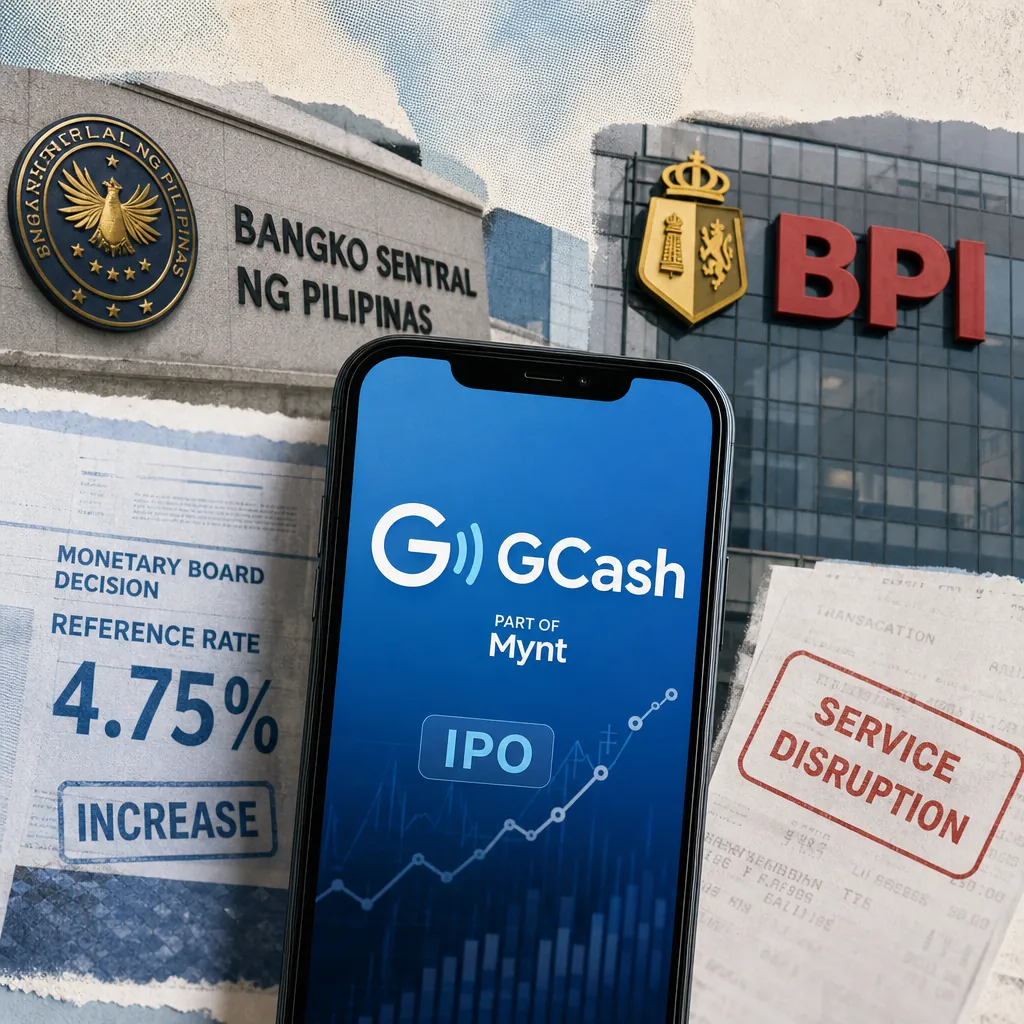
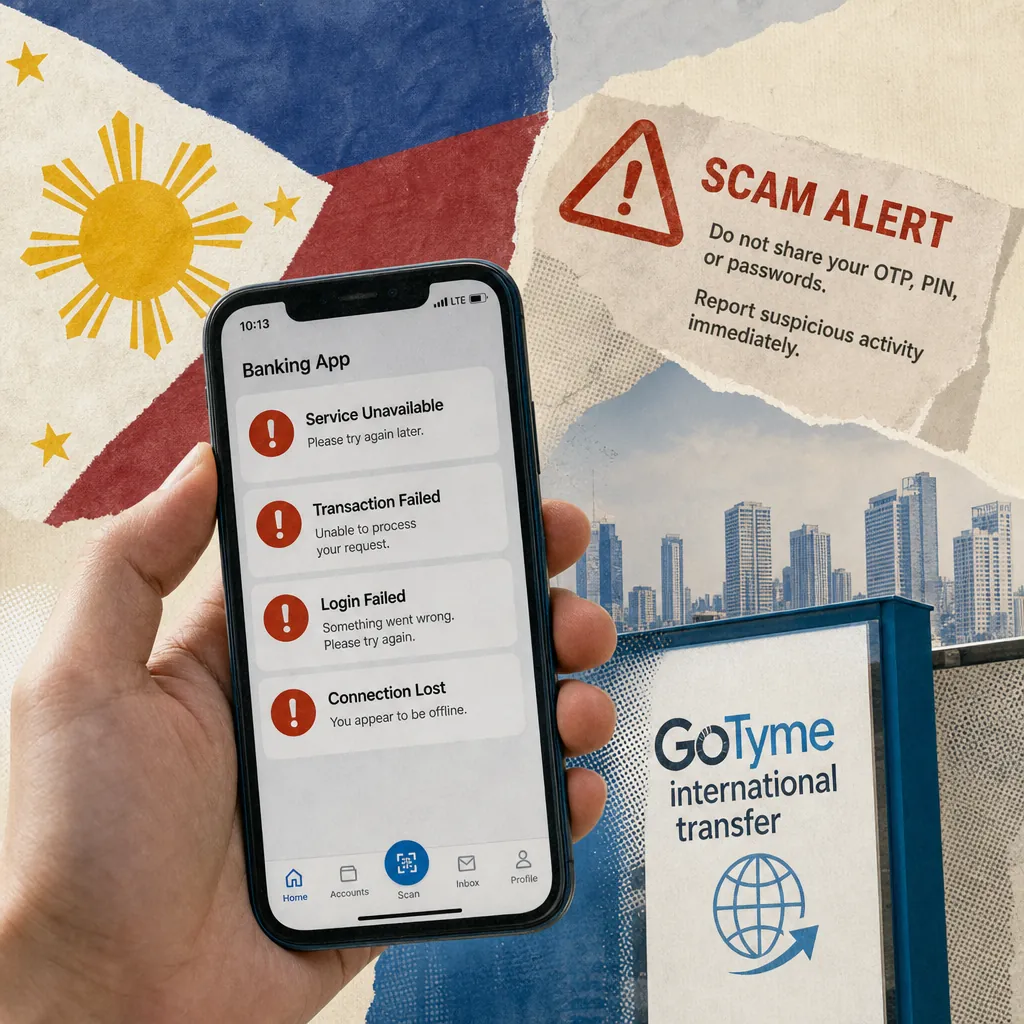
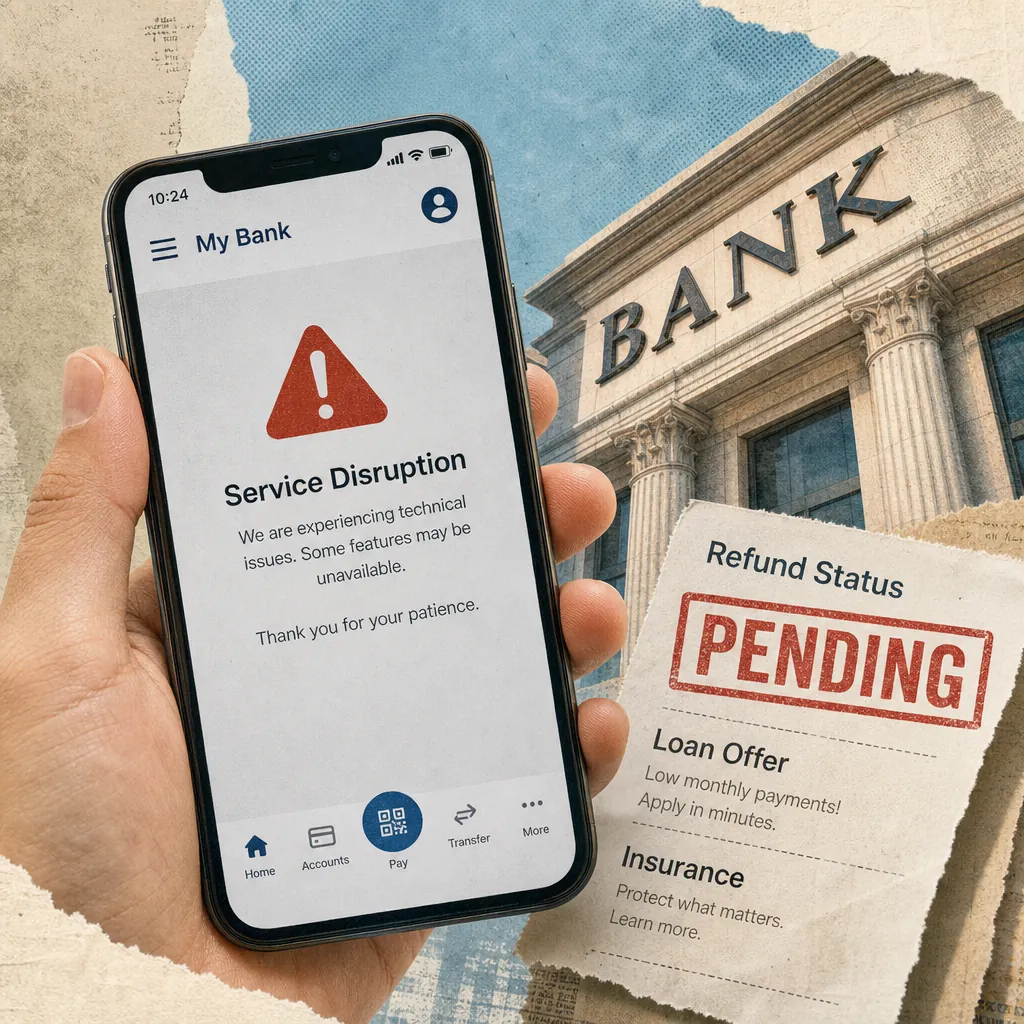
Philippine digital banking trust erodes as glitches, scams mount
A wave of user complaints on Reddit and Twitter reveals growing frustration with unexplained charges, failed transfers, and opaque customer service at GCash, Maya, and major banks, while regulators tighten crypto rules and the BSP flags structural economic risks.
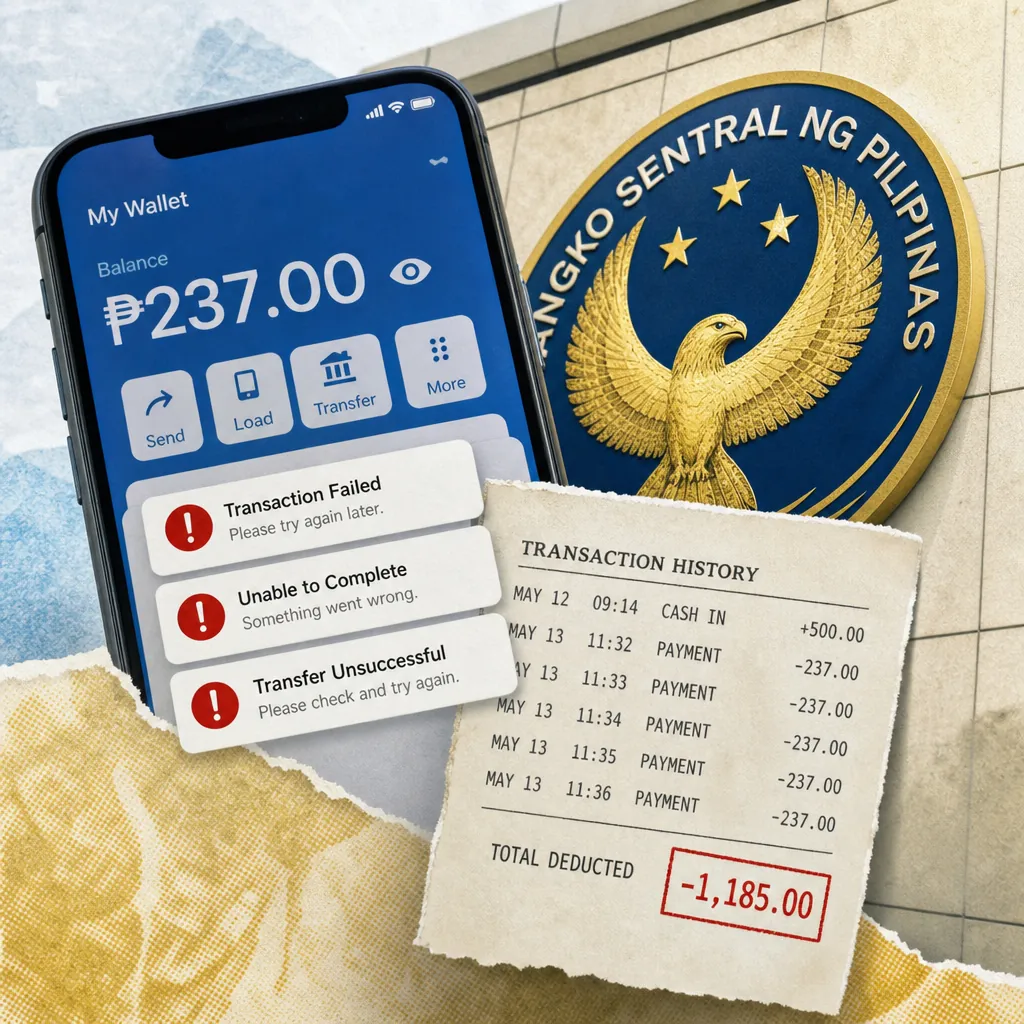
The conversation on June 12, 2026, in Philippine financial services was dominated by a cascade of user-reported technical failures and opaque billing practices at digital wallets and banks, set against a backdrop of regulatory tightening on cryptocurrencies and broader economic vulnerability. While no single post went viral, the sheer volume and variety of complaints—spanning GCash, Maya, BDO, UnionBank, and others—painted a picture of an industry struggling with reliability and transparency. At the same time, the Bangko Sentral ng Pilipinas (BSP) issued new rules banning privacy coins and flagged structural risks to the country's current account, while the Philippine Stock Exchange index fell on geopolitical jitters. The day's conversation signals that consumer trust in digital banking is fraying, and that both regulators and institutions face pressure to address systemic gaps.
Conversation snapshot. On Reddit, a user reported an unexplained PHP 189 auto-debit from GCash labeled as a Google charge, with no matching payment history on either of their two Google accounts and an error when checking linked subscriptions—the post received 1 like and 2 comments. Another user detailed a PayPal-to-Maya transfer that showed as successful on PayPal's side but remained uncredited in Maya for days, with support telling them to "wait till Monday" despite this being the third occurrence—the post got 1 comment. A GCash card application form rejected a valid condo address, drawing 3 likes and 10 comments from users sharing similar frustrations. A BDO Amex Blue-to-Platinum points adjustment complaint noted no breakdown from customer service after two months, with 5 likes and 2 comments. A UnionBank supplementary cardholder saw their available credit drop from PHP 20,000 to PHP 3,000 without new purchases, receiving 4 likes and 2 comments. A user rejected from BDO's credit card restructuring program for a PHP 97,000 debt asked about negotiating with collection agencies, with 2 likes and 2 comments. Meanwhile, a positive post about an RCBC manual credit limit request after 17 months of on-time payments received 12 comments. On Twitter, a GCash billing issue from June 11 continued to draw attention with 254 views.
Key themes
- Unexplained charges and billing opacity. Multiple users reported unauthorized or unrecognized deductions from GCash, with no clear way to trace or dispute them. The parallel complaints on Reddit and Twitter suggest a systemic issue with subscription management and transaction transparency.
- Cross-platform transfer failures. A recurring PayPal-to-Maya transfer delay left funds in limbo for days, with the user noting this was the third such incident. The lack of real-time tracking and support resolution erodes trust in digital wallets as reliable payment rails.
- Application and UX friction. The GCash card application form's rejection of a valid condo address highlights poor form validation that disproportionately affects urban dwellers. Users shared workarounds but expressed frustration.
- Opaque credit management. UnionBank's unexplained drop in supplementary card available credit and BDO's lack of breakdown for a points adjustment both point to poor communication about how credit limits and rewards work.
- Debt restructuring confusion. A user rejected from BDO's restructuring program sought advice on negotiating with collection agencies, reflecting a knowledge gap about settlement rights and procedures.
- Positive signals from proactive communication. An RCBC cardholder's manual credit limit request, though still under review, was seen as a hopeful sign, suggesting that clear, proactive communication can build goodwill even when processes are slow.
- Regulatory tightening on crypto. The BSP ordered virtual asset service providers to delist privacy coins and set thresholds for asset monitoring, signaling a stricter stance on traceability and consumer protection.
- Macroeconomic vulnerability. The BSP published a book flagging structural risks to the Philippines' current account, including weak manufacturing and import dependence, while the PSEi fell on renewed US-Iran tensions.
How the narratives stack
Dominant narrative. The dominant story is that digital banking and fintech platforms in the Philippines are experiencing a trust crisis driven by recurring technical glitches, opaque billing, and poor customer service. Users are increasingly vocal about unexplained charges, failed transfers, and unresponsive support, and these complaints are accumulating across platforms like Reddit and Twitter. The pattern suggests that these are not isolated incidents but systemic issues that, if unaddressed, could drive users to competitors or back to traditional banking.
Counter-narrative. Not all user experiences are negative. The RCBC credit limit request post shows that when banks communicate proactively—even with a manual, slow process—customers respond with patience and optimism. This suggests that transparency and clear communication can mitigate frustration and build loyalty, even when outcomes are uncertain.
Emerging narrative. A growing narrative is the sophistication of Filipino cardholders, who are actively comparing credit cards for travel perks, forex fees, and mileage programs. This segment is research-oriented and willing to switch providers for better value, putting pressure on banks to offer transparent, competitive products.
Suppressed narrative. The broader economic context—rising living costs, inflation, and the BSP's warning about structural current account risks—is largely absent from user conversations, which focus on immediate transactional pain points. Yet these macroeconomic pressures are likely exacerbating financial stress and making users more sensitive to fees and errors. The disconnect between individual complaints and systemic economic fragility is a story that deserves more attention.
Platform insights
Reddit served as the primary hub for detailed, narrative-driven complaints and advice-seeking. Posts ranged from niche technical issues (GCash card form validation) to emotionally charged debt management queries. Engagement was moderate (1–12 comments per post), but the variety of topics—covering GCash, Maya, BDO, UnionBank, RCBC, and HSBC—demonstrates that Reddit is becoming a catch-all for financial grievances. The platform's structure allows users to share workarounds and validate each other's experiences, amplifying the sense of systemic failure.
Twitter saw lower engagement but served as an early signal for billing issues. The GCash auto-debit complaint from June 11 continued to accumulate views (254) but no amplification, indicating that individual disputes rarely go viral without official acknowledgment or widespread impact. Twitter's real-time nature makes it a useful channel for monitoring emerging issues, but its low engagement suggests that users prefer Reddit for in-depth discussion.
Traditional news outlets covered regulatory and macroeconomic developments—the BSP's crypto ban, the PSEi decline, and the current account warning—but these stories did not generate significant social conversation. The gap between institutional news and user-level complaints highlights a disconnect: regulators and banks communicate through formal channels, while consumers air grievances on social platforms where they seek peer validation rather than official responses.
Key voices and communities
Individual consumers on Reddit are the most vocal group, sharing personal experiences with technical glitches, billing disputes, and debt management. Their posts are detailed and emotionally charged, often seeking advice or validation. This group is the most direct reflection of pain points and can serve as an early warning system for reputational risks.
Digital-first banks and fintechs (GCash, Maya) are the subjects of most complaints, but they rarely engage directly in the conversation. Their absence from user threads allows negative narratives to fester without correction or resolution. GCash's billing issues and Maya's cross-platform transfer failures are recurring themes that, if unaddressed, could drive users to competitors like GoTyme or traditional banks.
Traditional banks (BDO, UnionBank, RCBC) appear in both positive and negative contexts. BDO and UnionBank are associated with opaque credit management and poor customer service, while RCBC's proactive communication on credit limit reviews is seen positively. This suggests that traditional banks can differentiate themselves through transparency and responsiveness.
Regulators (BSP, SEC) are active in issuing new rules and clarifications, but their messaging does not reach the consumer conversation on social media. The BSP's crypto ban and the SEC's clarification on BlockShoals' sandbox status were covered by news outlets but did not generate user discussion, indicating a gap between regulatory action and public awareness.
Narrative streams
User-reported technical failures and billing disputes
On June 12, a Reddit user reported an unexplained PHP 189 auto-debit from GCash labeled as a Google charge, with no matching payment history on either of their two Google accounts and an error when checking linked subscriptions. This echoed a Twitter complaint from June 11 about a GCash deduction for YouTube Premium Lite with no receipt. Together, these posts suggest that GCash's subscription management system may be unreliable, and that customers lack a clear remediation path for disputed charges.
A separate, extensively detailed post described a PayPal-to-Maya transfer that showed as successful on PayPal's side but remained uncredited in Maya for days, with support telling the user to "wait till Monday" despite this being the third occurrence. The user explicitly warned others to avoid direct transfers, saying "your money should not be at risk of vanishing into a black hole just because it's a long weekend." This post, though low in engagement, highlights a critical gap in cross-border digital wallet reliability that could affect freelancers and overseas Filipino workers (OFWs) who depend on timely fund arrival.
Another user struggled with the GCash card application form, which refused to accept their unit number and building name for a condo address, displaying a persistent "Please enter house no. and street address" error despite correct input. The post drew sympathy and workaround suggestions from other condo dwellers who had faced similar validation failures, indicating a systemic UX problem that disproportionately affects urban users.
Opaque credit management and debt restructuring confusion
A UnionBank supplementary cardholder reported a puzzling drop in their available credit—from PHP 20,000 to PHP 3,000 without any new purchases—raising questions about how principal cardholder spending affects supplementary limits. The post received 4 likes and 2 comments, with users expressing confusion about shared credit mechanics. This lack of clear communication from banks on how shared credit limits work can erode trust, especially among family members who rely on supplementary cards.
A BDO Amex Blue-to-Platinum upgrade left a user with a massive, unexplained points adjustment, with customer service failing to provide a breakdown even after two months. The post, with 5 likes and 2 comments, revealed that the user had called customer service but received no detailed explanation, highlighting a gap in post-issuance support for loyalty rewards.
A user rejected from BDO's credit card restructuring program with a PHP 97,000 debt asked whether a collection agency would accept a one-time principal-only payment and whether a written settlement agreement was necessary. With 2 likes and 2 comments, the post drew guidance on negotiation tactics, reinforcing the narrative that distressed borrowers are seeking legal and procedural clarity that banks are not providing.
Positive signal: proactive communication builds goodwill
Not all user experiences were negative. A Reddit user shared a cautiously hopeful update about their RCBC credit card: after 17 months of on-time payments with no limit increase and a prior rejection, the bank had suddenly initiated a manual credit limit request, sending an SMS that the request was "under review". The post, with 12 comments, reflected a mix of relief and skepticism, as commenters debated whether this signaled an actual approval or a routine bank process. This case suggests that even manual, slower processes can be perceived positively when the institution proactively communicates next steps—a lesson for banks modernizing their credit management systems.
Regulatory tightening: BSP bans privacy coins, SEC clarifies sandbox
The Bangko Sentral ng Pilipinas (BSP) issued Memorandum No. 23-2026, prohibiting virtual asset service providers (VASPs) from trading privacy coins—cryptocurrencies designed to conceal transaction details—to ensure traceability and transparency in the financial system. VASPs are also required to conduct ongoing monitoring of listed assets and set internal thresholds for value drops or trading activity declines that would trigger a review or delisting. This move aligns with global trends toward stricter crypto regulation and aims to protect consumers from illicit activities.
Separately, the Securities and Exchange Commission (SEC) clarified that the 90-day integration period granted to BlockShoals Technologies Inc. under its regulatory sandbox program does not signal the resumption of public cryptocurrency trading. The period is solely for integrating technical infrastructure between BlockShoals and a BSP-licensed VASP. This clarification followed reports that neither BlockShoals nor its partner Binance holds a VASP license, underscoring the regulatory hurdles facing crypto platforms in the Philippines.
Macroeconomic headwinds: BSP flags current account risks, PSEi falls
The BSP published a book warning that managing the Philippines' current account is becoming increasingly challenging due to weak manufacturing, underdeveloped agriculture, import dependence, and emerging global risks. The country has diverged from the traditional industrialization path followed by other successful East Asian economies, making it more vulnerable to external shocks.
Meanwhile, the Philippine Stock Exchange Index (PSEi) fell 0.53% to 5,910.06 on June 11, driven by renewed military exchanges between the US and Iran and concerns over higher oil prices. The peso strengthened slightly to PHP 61.35 per US dollar. The market's decline reflects broader geopolitical uncertainty that could further strain household finances and consumer confidence.
Conversation trajectory
The conversation is likely to intensify over the next 2–4 weeks as more users encounter similar technical issues and share their experiences online. The long weekend (June 12, Independence Day) may have temporarily suppressed engagement, but as users return to work and check their accounts, a new wave of complaints could emerge. The BSP's crypto ban and the SEC's sandbox clarification may generate more discussion if users perceive them as affecting their ability to trade or invest.
Next 2–4 weeks: Expect continued Reddit posts about GCash billing issues and Maya transfer delays, especially if the platforms do not issue public statements or fixes. The BDO debt restructuring rejection and UnionBank supplementary limit confusion may prompt more users to seek advice, potentially leading to a broader conversation about credit management transparency.
Next 1–3 months: If the BSP's crypto rules are enforced strictly, some VASPs may delist popular privacy coins, potentially sparking user backlash or migration to unregulated platforms. The SEC's sandbox for BlockShoals could lead to a controlled crypto trading launch, but only if the company secures a VASP license—a process that may take months.
Trigger events that would reshape the conversation: A major security breach or widespread service outage at GCash or Maya would dominate headlines and accelerate user migration. Conversely, a clear, empathetic response from any of the affected platforms—such as a public apology, a refund policy, or a system fix—could shift the narrative toward accountability and improvement. The BSP's next monetary policy meeting and any new inflation data will also influence the macroeconomic backdrop against which these consumer complaints are viewed.
Response guidance
For communicators in the Philippine financial sector, the key takeaway is that transparency and proactive communication are powerful trust-builders. The RCBC credit limit post shows that even slow, manual processes can be received positively if the bank communicates clearly. Conversely, the GCash and Maya complaints demonstrate that silence or generic responses allow negative narratives to fester.
Platform approaches: On Reddit, institutions should engage directly in threads where their services are discussed, offering factual explanations and directing users to official support channels. Avoid defensive or promotional language; instead, acknowledge the issue and provide a clear path to resolution. On Twitter, monitor for emerging issues and respond quickly with a public acknowledgment and a private channel for details. Traditional news outlets should be used to amplify regulatory updates and educational content, but these messages should be framed in plain language that connects to consumer concerns.
Key messages: Emphasize that the institution is aware of the issue, is investigating, and will provide updates. For billing disputes, offer a clear refund or dispute process. For credit management confusion, publish simple explainers on how limits, points, and supplementary cards work. For debt restructuring, provide clear eligibility criteria and a direct contact for assistance.
Sensitive topics to navigate: Avoid blaming users for technical glitches or billing errors. Do not speculate about the causes of unexplained charges or transfer delays without internal confirmation. When discussing debt, avoid threatening language and emphasize that options are available. For crypto regulation, frame it as consumer protection rather than restriction.
See the full picture behind today's signals.
This report draws from Media Meter's MediaWatch, our real-time monitoring engine tracking 2,470+ Philippine sources across print, broadcast, digital, and social. Explore how the platform turns raw coverage into decision-grade intelligence, then see how it's configured for teams like yours — whether you're in PR agencies, corporate comms, government, or marketing.
Want more? Browse our Report Library for sector and crisis intelligence, or request a demo and we'll have your brand set up before the call.
Want this kind of intelligence on your brand?
This brief is built on the same MediaWatch methodology that runs continuously across every brand we monitor. See your competitive landscape, Impact Score, and narrative trajectory in a 30-minute demo.