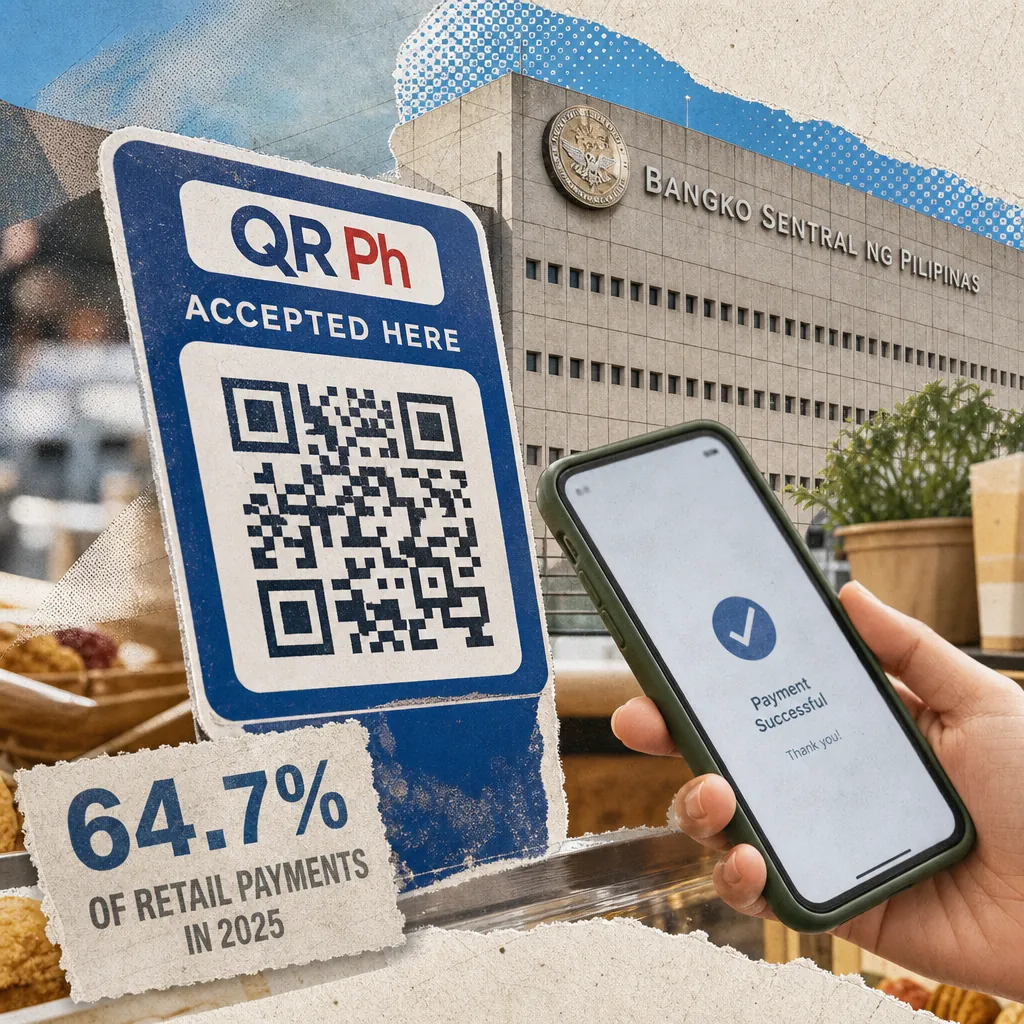
Digital payments hit 64.7% of retail transactions in 2025
The BSP reports digital payments reached 64.7% of retail transactions in 2025, up from 57.4% in 2024. Meanwhile, the peso hit a record low near 62 per dollar, and TransUnion's credit perception index rose to 75, reflecting growing but cautious consumer sentiment.
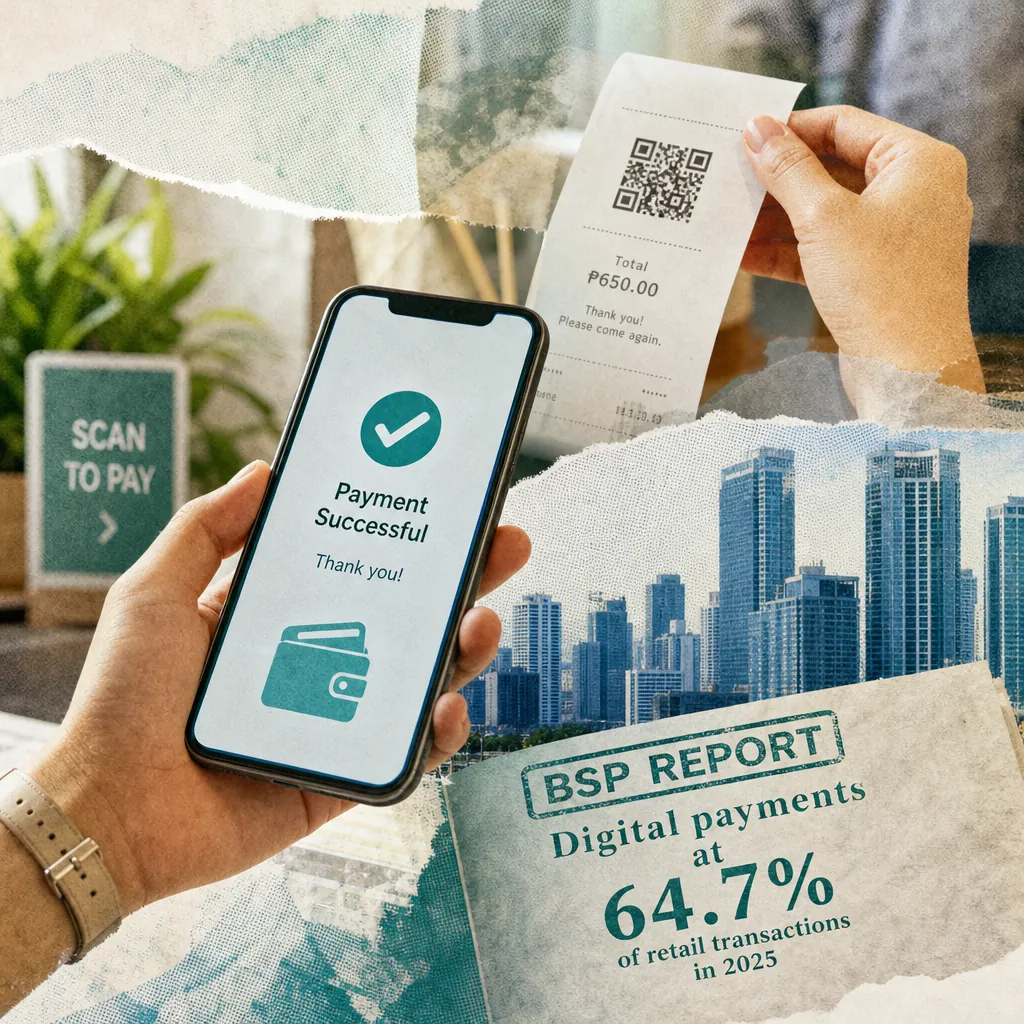
The Bangko Sentral ng Pilipinas (BSP) reported that digital payments accounted for 64.7% of all retail transactions in 2025, up from 57.4% in 2024, according to its 2025 Report on the Status of Digital Payments in the Philippines. The central bank said the increase puts the country within its 60% to 70% target for digital payments under the Philippine Development Plan for 2023-2028. BSP Governor Eli M. Remolona Jr. attributed the growth to the central bank's insistence on interoperability, ensuring that a growing number of businesses and service providers are on one system. "That brings in more users, which makes the network more valuable for everyone in it, including consumers, businesses, banks, e-wallets, and other platforms," Remolona said. The report also noted a 69.4% growth in the number of digital payment accounts and a 36.3% rise in merchant locations accepting digital payments.
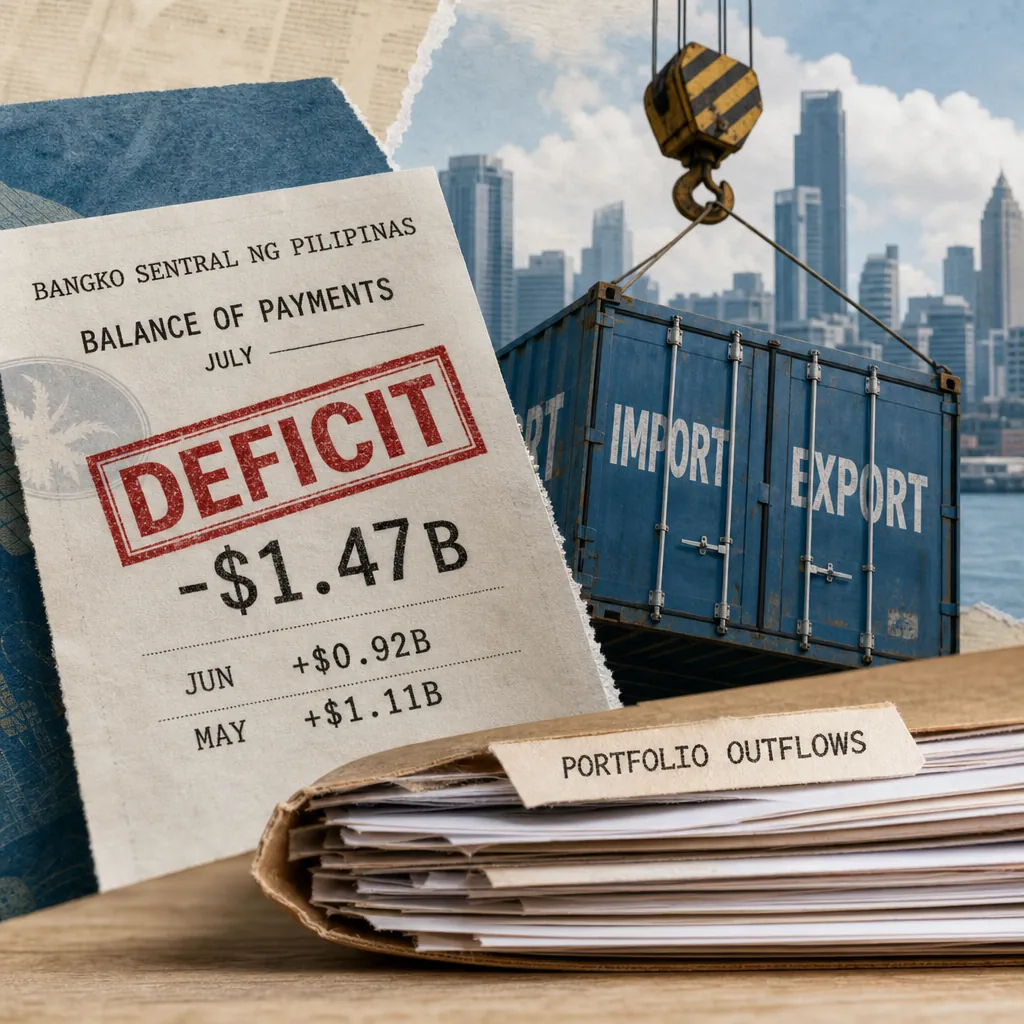
On the same day, the Philippine peso weakened to a record low, nearly touching 62 to the US dollar, as Middle East tensions and uncertainty over US interest rates strengthened the greenback. The peso closed at 61.815, down three centavos from the previous session, after hitting an intraday low of 61.995. Trading volume rose to nearly $1.9 billion from $1.3 billion. The peso's depreciation raised concerns about inflation and borrowing costs, dragging the Philippine Stock Exchange index down by 1.7% to 6,158.34.
Meanwhile, TransUnion's 2026 Credit Perception Index (CPI) rose to 75 out of 100, the highest since the study began in 2023, up from 73 in 2025. The survey of 1,000 consumers found that Filipinos' favorability toward credit products increased by four points, trust by three points, and self-reported knowledge by three points. Digital banks saw the biggest gain in borrowing intention, up 11 percentage points to 22%, while traditional banks rose 8 points to 34% and credit cards rose 6 points to 43%. Borrowing from family or friends remained the top preference at 45%, but fell 11 points from 56%.
These developments come amid a broader economic slowdown. The Philippine economy grew by 2.3% in the second quarter of 2026, slower than the 5.4% growth in the same period last year and the 2.8% in the first quarter. The World Bank reclassified the Philippines as an upper-middle-income economy in July, a milestone four decades in the making. However, a FWD Life Insurance study found that 74% of middle-income Filipinos still worry about rising everyday expenses.
On social media, the conversation around financial inclusion was notably muted. A Manila Bulletin Facebook post about the 2025 Annual Report on the National Strategy for Financial Inclusion, which framed inclusion as a "promise we intend to keep," received only 2 likes, 1 share, and 5 "haha" reactions, with no comments. The "haha" reactions, outnumbering positive reactions, suggest a skeptical or dismissive audience. A Reddit thread on a related topic was removed by moderators, leaving only one comment before deletion.
Key themes
- Digital payments reach 64.7% of retail transactions in 2025 — The BSP reported that digital payments grew from 57.4% in 2024 to 64.7% in 2025, meeting the national target. The growth was driven by interoperability and a 69.4% increase in digital payment accounts.
- Peso hits record low near 62 per dollar — The currency closed at 61.815, its weakest close in over three weeks, after touching an intraday low of 61.995. The depreciation was driven by Middle East tensions and US interest rate uncertainty, and it weighed on the stock market.
- Filipinos' perception of credit improves to highest level since 2023 — TransUnion's Credit Perception Index rose to 75, driven by gains in favorability, trust, and knowledge. Digital banks saw the biggest jump in borrowing intention, up 11 points to 22%.
- Bank deposits grow 8.34% year on year to P22.4 trillion — The number of deposit accounts jumped 20.48% to 190.95 million, and the number of depositors rose 7.82% to 28.77 million. Analysts said the growth reflects continued confidence in the banking system.
- Banks and e-wallets ramp up anti-scam measures — GCash launched a Security Center feature, and BPI partnered with Gogolook to provide free access to Whoscall Premium Basic for 12 months. These moves align with the Anti-Financial Account Scamming Act.
- Economic slowdown and cost-of-living concerns persist — The economy grew only 2.3% in Q2 2026, and 74% of middle-income Filipinos worry about rising costs. The World Bank's upgrade to upper-middle-income status has not yet translated into widespread optimism.
- Institutional financial inclusion messaging meets public skepticism — A Manila Bulletin post about the National Strategy for Financial Inclusion received more "haha" reactions than likes, and a related Reddit thread was removed by moderators, indicating a disconnect between official narratives and public reception.
- Monsoon rains expected to weigh on Q3 corporate activity — Analysts said prolonged rains could drag on retail, construction, and logistics, with potential delays and higher costs.
How the narratives stack
Dominant — The BSP's digital payments milestone is the day's most significant development, as it marks a concrete achievement in the country's financial inclusion agenda. The 64.7% figure is a headline number that reflects years of policy work on interoperability and digital infrastructure. It also sets the stage for further growth, with the BSP targeting 60-70% of retail payments to be digital. The coverage in the captured set includes multiple outlets, including Panay News and BusinessWorld, indicating broad interest.
Counter-narrative — The peso's record low and the stock market decline present a counter-narrative of economic vulnerability. While digital payments are growing, the currency's weakness raises inflation and borrowing cost concerns, which could dampen consumer spending and investment. This narrative is supported by the Q2 GDP slowdown and the FWD study showing widespread cost-of-living worries.
Emerging — The rise of digital banks as a preferred borrowing source is an emerging trend. TransUnion's data shows a significant jump in borrowing intention for digital banks, suggesting that consumers are increasingly comfortable with digital-only lenders. This could reshape the competitive landscape, as traditional banks and credit cards also saw gains but at a slower pace.
Under-covered — The removal of a Reddit thread on financial inclusion is an under-covered story. While the writeup notes the removal, it does not explore why the post was removed or what it might have contained. This could indicate active moderation of financial discussions, which may suppress critical consumer sentiment. The lack of engagement on the Manila Bulletin post also suggests that official financial inclusion narratives are not resonating with the public, a gap that could become a reputational risk if left unaddressed.
Platform insights
- Facebook — The Manila Bulletin post about the National Strategy for Financial Inclusion received minimal engagement: 2 likes, 1 share, and 5 "haha" reactions, with no comments. The "haha" reactions, outnumbering positive reactions, suggest a dismissive or ironic reading of the institutional messaging. This indicates that official financial inclusion narratives are not generating meaningful dialogue on Facebook, and the platform is functioning more as a broadcast channel than a space for discussion.
- Reddit — A thread on a financial inclusion-related topic was removed by moderators, leaving only one comment before deletion. The removal suggests either a rule violation or an attempt to curb discussion that may have veered into sensitive territory. This points to active moderation of financial topics on Reddit, which could push critical conversations to less visible platforms. The low engagement on the removed thread (1 comment, 0 likes) indicates minimal public pushback on the removal.
Key voices and communities
- Bangko Sentral ng Pilipinas (BSP) — The central bank is the primary source of authoritative data on digital payments and financial inclusion. Its report on digital payments and its statements on interoperability shape the official narrative. The BSP's role is central to the day's news, as it announced the 64.7% figure and continues to push for financial inclusion.
- TransUnion Philippines — The credit insights firm's Credit Perception Index provides a key measure of consumer sentiment toward credit. Its president, Peter Faulhaber, highlighted the paradox of improved credit perception amid financial uncertainty, making TransUnion a key voice in understanding consumer behavior.
- Financial institutions (GCash, BPI, RCBC) — These companies are actively responding to the digital payments trend and the threat of scams. GCash's Security Center and BPI's partnership with Gogolook are examples of how institutions are adapting to the digital landscape. RCBC's call for simplified merchant onboarding also reflects the industry's focus on expanding digital payments adoption.
- Media outlets (Manila Bulletin, BusinessWorld, Inquirer) — These outlets are the primary channels for disseminating financial news. Their coverage of the BSP report, the peso's decline, and TransUnion's study shapes public understanding of these developments. The Manila Bulletin's Facebook post, however, shows that media content does not always translate into engagement.
- Passive digital audiences — The general public, as represented by social media users, is largely silent on financial inclusion topics. The low engagement on the Manila Bulletin post and the removal of the Reddit thread suggest that consumers are not actively discussing these issues, which may indicate a lack of interest or a sense of disconnect from institutional messaging.
Narrative streams
Digital payments reach 64.7% of retail transactions in 2025
The BSP's announcement that digital payments accounted for 64.7% of all retail payments in 2025 is a significant milestone. The figure, up from 57.4% in 2024, puts the country within its target of 60-70% for the Philippine Development Plan 2023-2028. Governor Remolona attributed the growth to the BSP's insistence on interoperability, which ensures that different payment systems can work together, making the network more valuable for all participants. The report also noted a 69.4% growth in digital payment accounts and a 36.3% rise in merchant locations accepting digital payments.
This development is part of a broader trend toward digital finance in the Philippines. The BSP has been actively promoting digital payments through initiatives like the National Retail Payment System and the Paleng-QR Ph program, which encourages market vendors to accept QR payments. The growth in digital payments is also reflected in the rise of e-wallets like GCash and Maya, which have become household names. However, the pace of adoption varies across segments, with small businesses and rural areas still lagging.
Read for the sector: For banks and fintech companies, the 64.7% figure signals that digital payments are now the norm rather than the exception. This means institutions must continue to invest in digital infrastructure, security, and interoperability to meet customer expectations. It also opens opportunities for new services, such as digital lending and insurance, as the digital ecosystem expands. However, the remaining 35.3% of retail payments that are still cash-based represent a significant opportunity for further growth, particularly in underserved segments.
Peso hits record low, stocks tumble
The peso's decline to a record low near 62 per dollar is a stark reminder of the country's economic vulnerabilities. The currency closed at 61.815, down three centavos, after touching an intraday low of 61.995. The depreciation was driven by Middle East tensions and uncertainty over US interest rates, which strengthened the dollar. Trading volume rose to $1.89 billion, indicating heightened market activity.
The peso's weakness has direct implications for the economy. A weaker peso makes imports more expensive, which can fuel inflation. It also increases the cost of servicing foreign debt and may deter foreign investment. The stock market reacted negatively, with the PSEi falling 1.7% to 6,158.34. Analysts said the peso's decline raised concerns over inflation and borrowing costs, which could weigh on corporate earnings and consumer spending.
The peso's record low comes amid a broader economic slowdown. The economy grew only 2.3% in Q2 2026, the slowest since the pandemic, and the FWD study found that 74% of middle-income Filipinos worry about rising costs. The World Bank's upgrade to upper-middle-income status in July was a positive milestone, but it has not yet translated into widespread optimism.
Read for the sector: For businesses, the peso's weakness means higher input costs, particularly for imported goods and services. Companies with foreign currency debt will face higher repayment costs. For consumers, the weaker peso could lead to higher prices for goods and services, further squeezing household budgets. Financial institutions should prepare for potential increases in loan defaults and adjust their risk management strategies accordingly.
Filipinos' credit perception improves, but caution remains
TransUnion's 2026 Credit Perception Index (CPI) rose to 75, the highest since the study began in 2023. The index measures how Filipinos view and engage with lending products. The improvement was driven by a four-point rise in favorability, a three-point rise in trust, and a three-point rise in knowledge. Digital banks saw the biggest gain in borrowing intention, up 11 percentage points to 22%, while traditional banks rose 8 points to 34% and credit cards rose 6 points to 43%.
TransUnion Philippines President Peter Faulhaber noted the paradox: "Filipinos have never felt better about credit than they do now. On the other hand, they have also not felt this uncertain about their own finances since we began measuring this in 2023." This suggests that while consumers are more open to credit, they are also more cautious about their financial prospects. The survey also found that borrowing from family or friends remains the top preference at 45%, but this fell 11 points from 56%, indicating a shift toward formal credit sources.
The rise in credit perception is partly driven by the expansion of formal borrowing channels, including digital banks. The BSP's digital payments push has made it easier for consumers to access financial services, and digital banks are leveraging this to offer credit products. However, the survey also highlights the need for financial education, as knowledge of credit products remains a key factor in perception.
Read for the sector: For lenders, the improved credit perception is an opportunity to expand their customer base. Digital banks, in particular, are well-positioned to capture the growing demand for credit, given their lower barriers to entry and convenience. However, the caution among consumers means that lenders must be transparent about terms and conditions and ensure responsible lending practices. The shift away from borrowing from family and friends also suggests that formal credit is becoming more accepted, which could lead to increased competition among lenders.
Banks and e-wallets step up anti-scam measures
In response to the growing threat of cyberattacks and scams, financial institutions are rolling out new security features. GCash launched a Security Center feature that allows users to manage their security settings, including a Lock My Account feature that can freeze their account immediately. The feature is in line with the Anti-Financial Account Scamming Act, which aims to protect consumers from fraud.
BPI partnered with Gogolook, the developer of Whoscall, to provide qualified clients with free access to Whoscall Premium Basic for 12 months. The app lets users identify unknown callers, block spam and scam calls, and filter suspicious messages. BPI Head of Unsecured Lending and Cards Alma Aldip said, "At a time when scams are becoming more sophisticated and harder to detect, building awareness is just as important as providing protection."
The rise in scams is a significant concern for the financial sector. A Business Mirror column noted that digital scams in the Philippines surged in 2026, with over 16,600 cases reported. The column drew a parallel between the ghost month and the lingering threat of scams, urging caution online.
Read for the sector: For financial institutions, investing in anti-scam measures is not just a regulatory requirement but a competitive advantage. Consumers are increasingly aware of the risks of digital banking, and they expect their providers to protect them. Partnerships with specialized security firms, like BPI's with Gogolook, can enhance credibility and trust. However, institutions must also educate customers about security best practices, as human error remains a major factor in scams.
Institutional financial inclusion messaging meets public skepticism
The Manila Bulletin's Facebook post about the 2025 Annual Report on the National Strategy for Financial Inclusion received minimal engagement, with 2 likes, 1 share, and 5 "haha" reactions. The post quoted the report's foreword, stating that "behind every account and transaction is someone trying to build a better life." The "haha" reactions, outnumbering positive reactions, suggest that audiences may view the institutional messaging as disconnected from their lived experiences.
A Reddit thread on a related topic was removed by moderators, leaving only one comment before deletion. The removal could indicate a rule violation or an attempt to curb discussion that veered into sensitive territory. This suggests that financial inclusion topics may face active suppression on Reddit, which could push critical conversations to less visible platforms.
The lack of engagement on the Manila Bulletin post and the removal of the Reddit thread point to a gap between institutional messaging and public reception. While the BSP and other institutions promote financial inclusion as a national priority, consumers may be more focused on practical issues like bank outages, e-wallet fraud, and the cost of digital banking. The "haha" reactions may be a passive-aggressive acknowledgment that the report's promise feels unfulfilled to users who have experienced service failures.
Read for the sector: For banks, fintechs, and government agencies, the muted public response to financial inclusion messaging is a warning sign. Official narratives are not resonating with the public, and there is a risk that consumers will become cynical about inclusion promises if their actual experiences do not improve. To bridge this gap, institutions should focus on communicating tangible benefits, such as lower fees, better service reliability, and easier access to credit. They should also engage with consumers on platforms where they are more active, such as community forums, and address specific pain points like scams and outages.
Conversation trajectory
- Digital payments adoption to continue growing — The BSP's 64.7% figure is likely to be followed by further growth, as the central bank continues to push for interoperability and financial inclusion. Over the next 2-4 weeks, expect more institutional players to adopt value-driven messaging around digital payments, as the annual report circulates through policy and corporate communications channels. The low engagement on the initial post suggests early circulation among professional audiences, creating a window for clients to position themselves within this narrative before it reaches mainstream attention.
- Peso weakness to persist in the near term — The peso's record low is likely to remain under pressure as long as Middle East tensions and US interest rate uncertainty persist. Over the next 7-14 days, monitor the release of US Federal Reserve minutes and any developments in the Middle East, as these could trigger further volatility. The BSP's policy meeting next week will also be closely watched for signals on interest rates.
- Credit perception to improve further, but with caution — TransUnion's CPI is likely to continue rising as formal credit channels expand and financial literacy improves. However, the survey's finding that consumers are uncertain about their finances suggests that growth in credit uptake may be tempered by caution. Over the next 3-6 weeks, expect more commentary from analysts and financial institutions on how to balance credit expansion with responsible lending.
- Anti-scam measures to become a key differentiator — As scams continue to rise, financial institutions will increasingly compete on security features. Over the next 1-2 months, expect more partnerships between banks and security firms, as well as new in-app security features. The BSP's Anti-Financial Account Scamming Act will also drive compliance and innovation in this area.
- Trigger events to watch — The formal publication and circulation of the full 2025 National Strategy for Financial Inclusion report will likely generate a wave of analytical and commentary pieces within 2-3 weeks. The upcoming BSP monetary policy meeting will be a key inflection point for the peso and interest rates. Any major scam-related incident could also reshape the conversation around digital banking security.
Response guidance
- Digital payments narrative — Emphasize the 64.7% milestone as a testament to the industry's commitment to financial inclusion. Use specific customer outcomes, such as first-time account openings or small business digital adoption, to make the narrative relatable. Avoid overpromising on future growth; instead, focus on the tangible benefits of digital payments, such as convenience and security.
- Peso weakness — Acknowledge the challenges posed by the peso's decline, but avoid alarmist language. Provide clear, factual information on how the currency movement affects consumers and businesses. For financial institutions, reassure customers that measures are in place to manage risks, such as hedging and diversified funding sources.
- Credit perception — Leverage the improved credit perception to promote responsible borrowing. Highlight the benefits of formal credit channels, such as digital banks, while emphasizing the importance of understanding terms and conditions. Use TransUnion's data to show that Filipinos are becoming more knowledgeable about credit, but also address the underlying uncertainty about personal finances.
- Anti-scam measures — Promote new security features as evidence of the industry's commitment to customer protection. Use clear, simple language to explain how features like GCash's Security Center and BPI's Whoscall partnership work. Encourage customers to take proactive steps to protect their accounts, such as enabling two-factor authentication and reporting suspicious activity.
- Sensitive topics — Avoid making definitive promises about future service improvements or timelines, as unfulfilled commitments can amplify reputational damage. Do not dismiss audience skepticism, as this may provoke defensive responses. When addressing the removal of the Reddit thread, do not speculate on the reasons; instead, focus on the broader issue of financial inclusion and how institutions are working to address consumer concerns.
See the full picture behind today's signals.
This report draws from Media Meter's MediaWatch, our real-time monitoring engine tracking 2,470+ Philippine sources across print, broadcast, digital, and social. Explore how the platform turns raw coverage into decision-grade intelligence, then see how it's configured for teams like yours — whether you're in PR agencies, corporate comms, government, or marketing.
Want more? Browse our Report Library for sector and crisis intelligence, or request a demo and we'll have your brand set up before the call.
Want this kind of intelligence on your brand?
This brief is built on the same MediaWatch methodology that runs continuously across every brand we monitor. See your competitive landscape, Impact Score, and narrative trajectory in a 30-minute demo.