Philippine digital finance trust erodes as app failures and scams mount
A wave of app outages, unauthorized transactions, and scam warnings on June 12-13, 2026, is eroding consumer trust in Philippine banks and fintechs, even as new services like GoTyme's international transfers offer bright spots.
The conversation on June 12 and 13, 2026, in Philippine digital finance was dominated by a cascade of app failures, unauthorized transactions, and scam warnings that collectively eroded consumer trust. The day opened with an emotional Facebook post from Ateneo de Davao University, which shared a donation drive for the family of a deceased community member, channeling contributions through GCash. The post received 1,216 likes, 4,025 shares, and an overwhelming 5,140 love reactions, alongside 179 sad reactions, reflecting deep community empathy. However, by midday, the Department of Social Welfare and Development (DSWD) issued a sharp warning about a circulating fake announcement claiming "Php3,000 Independence Day cash assistance via GCash," explicitly denying any such program and urging the public not to share personal information or click suspicious links. This created a clear cause-and-effect arc: genuine charitable use of digital wallets was immediately followed by a reminder of their vulnerability to scams, setting the stage for a day of caution and critical scrutiny.
Simultaneously, Reddit users began navigating the complexities of credit card promotions and digital banking choices. User u/cherreicola shared a detailed timeline of confusion with UnionBank's Rewards Visa Platinum credit card application—applied June 8, encountered a system error, rejected then approved, and now worried about meeting a 20,000 peso minimum spend for a No Annual Fee for Life (NAFFL) offer within 60 days. By June 12, u/DN_2174 had posted twice asking for "hacks" to meet RCBC's 30,000 peso spend requirement for annual fee waiver, explicitly referencing tricks used on Maya and BPI. These posts, earning only 0–3 upvotes but sparking 6–7 comments each, revealed a niche but persistent user concern: first-time credit card holders are desperate for reliable, quick methods to avoid fees, and they actively seek community-shared loopholes rather than official bank channels. Later that same day, u/seensible posted about a Miles+ UnionBank application, revealing a 5-month-old U-Mastercard and an annual income of 336,000 pesos just shy of the 360,000 peso requirement, asking if approval was possible after six months and hoping for a raise. This added a layer of aspirational anxiety—users want premium travel cards but are acutely aware of income thresholds and credit history gaps.
A third narrative thread emerged around digital banking comparisons. User u/kitkat0329 opened a high-engagement Reddit thread with 152 upvotes and 56 comments, asking "Gotyme vs Maribank any thoughts?" after receiving a Maribank card and exploring a GoTyme kiosk the previous week. This sparked a comparative discussion that, by the same day, included a frustrated post from u/jjhlvs who complained that GoTyme had been unresponsive since May 8, requiring repeated government ID submissions and saying "i didn't even experience anythibg like this sa ibang digital banks." The sentiment evolved from curiosity to exasperation, highlighting that even as digital banks gain popularity, customer service gaps can quickly turn potential advocates into detractors. Amplifying this friction, u/Maximum_Horse_4420 asked whether BPI BanKo BLU units offer the same services as branches—specifically Know Your Customer (KYC) verification and debit card issuance for a Todo Savings account over 50,000 pesos—noting only BLU and pawnshops nearby, revealing a gap in physical service access for rural customers. At the same time, security concerns surfaced when u/RobinInPH reported the RCBC app's card lock feature was not working, saying "Hindi ako mapakali. Ayaw mag lock ng card sa RCBC app," signaling real-time anxiety over mobile banking controls.
On June 13, the digital banking friction intensified with three separate app issues: u/Complete_Finger3462 posted that after a BPI app update, the credit card section showed no data—only debit card details appeared—prompting others to confirm the same glitch. Similarly, u/spacejunk88 reported the BDO app repeatedly displaying "session expired" when sending money, even without switching apps, a problem persisting for days and affecting both interbank and internal BDO transfers. Meanwhile, u/Alarming_Stuff_1598 shared a growing concern: a PESONet transfer from Landbank to GCash had been pending for two days, with the user worrying that splitting 1,000 pesos twice to avoid fees might have caused the delay, and other users responding with advice on InstaPay alternatives and timing. Later that same day, additional reliability reports emerged: u/Interesting-Cold-709 found the BPI Card Control feature's one-time PIN completely non-functional, preventing them from toggling e-commerce settings. u/janakew1996 faced a Tonik app outage and vented, "bulok app kakapikon jusko kaya babayaran ko na buong loan ko bwsit." u/KyeuTiMoniqu3 reported that a 38,000 peso Instapay transfer from Chinabank to Maribank had been debited but not credited for hours, writing "Grabe yung anxiety ko kasi 38k din yun." In contrast, u/lutilicious shared a positive development: a new GoTyme feature allowing direct offshore account funding via Wise, positioning the bank as a bridge for international investing. These posts marked a turning point: users moved from comparing digital banks to reporting live system failures, shifting the conversation toward reliability and responsiveness while also noting new value-added features.
Conversation snapshot. The two-day window saw a total of 31 tracked posts across Facebook and Reddit. The Ateneo de Davao GCash donation post on Facebook was the highest-engagement item, with 1,216 likes, 4,025 shares, and 5,140 love reactions. The DSWD scam warning on Facebook received 71 likes and 38 shares, indicating cautious dissemination. On Reddit, the GoTyme vs. Maribank comparison thread drew 152 upvotes and 56 comments, making it the most engaged Reddit post. Credit card confusion posts averaged 1–5 upvotes but generated 6–11 comments each, reflecting deep troubleshooting. App failure reports (BPI, BDO, RCBC, Tonik) each received 1–2 upvotes and 1–2 comments, suggesting isolated but concerning incidents. The positive GoTyme-Wise post had 2 likes and 1 comment. Landbank's PayBilis raffle promo on Facebook received 273 likes and 67 love reactions, offering a positive institutional counterpoint.
Key themes
- Digital wallet scams vs. genuine charity — The day began with the Ateneo de Davao GCash donation post (high engagement, heavy care reactions), but by late morning the DSWD's warning against a fake GCash cash assistance program shifted the tone from altruistic to wary. This contrast reinforced the public's need for official verification before engaging with any financial call-to-action on social media. Later, u/Significant-Talk3328 detailed a SIM deactivation crisis affecting one-time passwords (OTPs) for Metrobank and GCash, revealing that dormant but registered SIMs can stop working, locking users out of critical accounts and forcing them to visit physical stores for reactivation or replacement. On June 13, the scam narrative continued as u/airbiender reported recurring unauthorized Google charges on GCash that only seemed to occur after using the in-app RFID loading feature, with GCash repeatedly rejecting disputes as "authorized." Another user, u/IcyCantaloupe1260, received a legitimate RCBC remittance SMS but remained suspicious, calling the bank hotline to verify before visiting a branch. These incidents reinforced the need for users to independently verify any financial notification and for banks to provide clearer transaction alerts and robust dispute resolution.
- Credit card promotional confusion — Multiple Reddit posts on June 12 documented frustration with UnionBank, RCBC, and Metrobank promos. u/cherreicola's UnionBank approval timeline showed systemic backend errors and unclear NAFFL eligibility. u/tizhay reported Metrobank card delivery failed after a single courier attempt with no notification. u/seensible's income shortfall for UnionBank Miles+ further illustrated that even cardholders with good standing face rigid approval criteria. And u/Unlucky-Ad7608, an Overseas Filipino Worker (OFW) in Qatar, asked for credit card recommendations from China Bank, Metrobank, UnionBank, and BDO, highlighting the special constraints of overseas applicants who only have four weeks of vacation to complete in-person requirements. On June 13, the theme expanded with u/Ok_Moose4837's lengthy Metrobank Secured Credit Card (SCC) saga—application submitted April 14, approved May 4, but card never delivered after two months of follow-ups and broken promises from customer service. u/draj_24 expressed doubt about a Security Bank NAFFL offer for Gold Circle members. u/futurehumanitarian sought clarity on using a UnionBank credit card for Health Maintenance Organization (HMO) installment payments. And a deleted title "Almost 7 months unpaid bdo credit card" hinted at delinquency concerns. These accounts collectively illustrated that banks' promotional promises often clash with poor operational execution and unclear eligibility, leaving users feeling misled and anxious.
- Digital banking onboarding friction and security gaps — The GoTyme vs. Maribank thread dominated Reddit with 56 comments, but u/jjhlvs's post about a month-long GoTyme verification delay provided a concrete counterpoint. This narrative demonstrated that while digital banks are praised for high interest rates and convenience, inconsistent onboarding processes can erode trust quickly. u/Maximum_Horse_4420's BPI BanKo question highlighted that even branch-lite units may not support full KYC, forcing customers to travel further. Meanwhile, u/RobinInPH's report of a non-functional card lock in the RCBC app introduced a security dimension—if the lock feature fails, users feel vulnerable. Adding to integration concerns, u/Saphysap asked whether GoTrade users should include zeros in RCBC account numbers when withdrawing, with no helpful customer service response, revealing how cross-platform transfers still cause confusion. By June 13, the friction escalated to real-time app failures: u/Complete_Finger3462's BPI app bug and u/spacejunk88's BDO session-expired loop showed that even routine updates and transfers could break core functionality. At the same time, u/Alarming_Stuff_1598's PESONet delay story revealed that users are uncertain about transaction limits and fee structures, and that two-day pending statuses erode trust in interbank rails. New app-specific issues added more fuel: the BPI Card Control OTP failure, the Tonik app outage, and a stalled 38,000-peso Instapay transfer from Chinabank to Maribank that triggered acute anxiety. In a positive twist, GoTyme introduced a Wise-powered international transfer feature, showing that some digital banks are expanding functionality even as others struggle with reliability.
- Regulatory crackdown on fake lending platforms — The Securities and Exchange Commission (SEC) issued warnings against several online lending platforms that misuse the identities of legitimate companies. The SEC flagged the website Perasayo.com for allegedly using the name, corporate identity, and regulatory information of Pera Sayo Lending Inc. without authorization to solicit loan applications. The SEC also reiterated warnings against platforms exploiting the branding of Tala Financing Philippines Inc., including Tala-Cash Loan Philippines, Tala AISI-loan app quickly, and Tala Shuk Lending Inc., linking them to possible phishing, unauthorized data collection, and abusive collection activities. Another platform, Finpine, was found operating without SEC registration and allegedly using deceptive tactics, including automatically releasing loans and subjecting borrowers to aggressive collection, while displaying logos of the SEC and Bangko Sentral ng Pilipinas (BSP) to appear legitimate. This regulatory action underscores the growing threat of digital lending scams and the need for consumer vigilance.
- Declining financial resilience among Filipinos — Sun Life Philippines' Financial Resilience Index 2026 revealed a sharp decline in the proportion of Filipinos classified as having "high" financial resilience, falling to 19 percent from 33 percent in 2025. The share of respondents with moderate resilience increased to 64 percent from 56 percent, while those with low resilience rose to 16 percent from 11 percent. Highly resilient households are defined as those that feel financially secure, plan more than five years ahead, and are well prepared for financial emergencies. Sun Life Philippines country head and CEO JJ Moreno said rising living costs are forcing more households to sacrifice long-term financial security to cope with immediate pressures. This macro trend provides context for the heightened anxiety seen in the social conversation around fees, scams, and app reliability.
- BSP tightens rules on virtual asset service providers — The Bangko Sentral ng Pilipinas (BSP) issued new guidelines requiring virtual asset service providers (VASPs) to conduct more rigorous due diligence before listing digital tokens, and to establish procedures for suspending or delisting tokens that pose heightened risks. The BSP also directed VASPs to conduct ongoing monitoring of listed virtual assets and set thresholds that would trigger suspension or delisting. This regulatory move aims to better protect consumers and limit risks to the financial system, reflecting growing concerns about the safety of digital asset transactions.
- GoTyme launches international money transfer service — GoTyme Bank announced the launch of "Send Money Abroad," a fully digital international money transfer service powered by Wise Platform. The service allows customers to send money internationally, track transfers in real time, and view exchange rates and delivery estimates before confirming. GoTyme reported that unique users of its international payments feature increased by more than 85 percent since it partnered with Wise Platform last year. This development positions GoTyme as a leader in cross-border digital banking services, offering a positive counterpoint to the reliability issues plaguing other platforms.
How the narratives stack
- Dominant narrative — The dominant narrative is one of eroding trust in Philippine digital finance. A steady stream of app failures (BPI, BDO, RCBC, Tonik), unauthorized transactions (GCash Google charges), and scam warnings (DSWD fake cash assistance, SEC fake lending platforms) has created a perception that digital financial services are unreliable and insecure. Users are increasingly turning to social media—particularly Reddit—to report problems, seek peer validation, and share workarounds, bypassing official customer service channels. This narrative is reinforced by the Sun Life Financial Resilience Index, which shows that fewer Filipinos feel financially secure, making them more vulnerable to the stress of transaction delays and fraud.
- Counter-narrative — The counter-narrative is that digital banking still offers significant value and innovation. The GoTyme vs. Maribank comparison thread attracted high engagement, indicating strong consumer interest in digital banking options. GoTyme's launch of a Wise-powered international transfer service demonstrates that some digital banks are expanding functionality and meeting evolving customer needs. Landbank's PayBilis raffle promo generated positive engagement, showing that gamification and rewards can still drive goodwill. Additionally, the BSP's new regulations on VASPs and the SEC's crackdown on fake lending platforms signal that regulators are actively working to protect consumers, which could restore confidence over time.
- Emerging narrative — An emerging narrative is the growing dependency on SIM-based OTPs as a single point of failure. The SIM deactivation story from u/Significant-Talk3328, where a dormant SIM caused lockout from Metrobank and GCash, highlights a vulnerability that affects millions of users. As more financial services rely on SMS OTPs for authentication, any disruption in telecom services—whether from SIM deactivation, network outages, or SIM swap scams—can lock users out of their accounts entirely. This narrative is likely to gain traction as more users encounter similar issues, potentially prompting calls for alternative authentication methods such as authenticator apps or biometrics.
- Suppressed narrative — The suppressed narrative is the systemic nature of these failures and their impact on financial inclusion. While individual posts about app glitches and transfer delays may seem isolated, the cumulative effect is a significant erosion of trust in digital financial services, particularly among lower-income and rural users who rely on these platforms for basic transactions. The BPI BanKo BLU question from u/Maximum_Horse_4420 illustrates that even as banks expand their digital footprint, physical service gaps remain for rural customers. The OFW credit card constraints highlighted by u/Unlucky-Ad7608 show that overseas workers—a key demographic for remittances and digital banking—face unique barriers. These structural issues are under-covered in the mainstream conversation but are critical for understanding the long-term health of the sector.
Platform insights
- Facebook — Facebook hosted two high-reach, high-engagement posts that framed the entire day's conversation: the emotional charity appeal from Ateneo de Davao (5,140 love reactions, 1,139 care reactions) and the critical scam warning from DSWD (71 likes but 38 shares, indicating cautious dissemination). Facebook served as the public square where trust in digital financial tools was both built and challenged. On June 13, Landbank's raffle promo post (273 likes, 67 loves) offered a positive institutional presence but generated no user discussion beyond the announcement. Facebook's strength lies in its ability to amplify emotional and urgent messages, but it lacks the detailed troubleshooting culture of Reddit.
- Reddit — Reddit was the primary platform for detailed user-generated threads on practical financial tools. The GoTyme vs. Maribank comparison attracted 152 upvotes, while credit card hacks, SIM OTP crises, and app security issues averaged 1–5 upvotes but generated rich comment exchanges. Reddit became the space for troubleshooting, peer-validated advice, and real-time problem reporting—often more trusted than official bank channels. On June 13, Reddit continued to host detailed complaint threads (BPI Card Control, Tonik down, Instapay delay, Metrobank SCC saga) alongside one positive feature discovery (GoTyme Wise), reinforcing the platform's dual role as both a complaint board and a source of innovative tips. The platform's upvote system allows high-quality troubleshooting to rise, but low-engagement posts about critical issues (e.g., BDO session expired) may be overlooked.
- YouTube — A single Indian news video about insurance payout data was posted but received only 52 views and zero engagement—completely irrelevant to the Philippine financial conversation. This platform contributed no meaningful data to the local narrative.
Key voices and communities
- Digital bank adopters — Active Reddit users comparing emerging digital banks like GoTyme and Maribank, with one post generating over 150 upvotes and 56 comments. They exhibit high engagement with practical, experience-driven content and frequently cross-reference features across platforms such as Maya and BPI. Their discussions center on fee structures, account opening friction, and promotional offers. New posts reinforce these themes, with users asking whether BPI BanKo's BLU units offer the same KYC and debit card services as a full branch, and another struggling with GoTrade account number formatting for RCBC withdrawals. A separate thread highlights the critical dependency on SIM-based OTPs for accessing digital banks and GCash—a failure that can lock users out entirely. Additionally, a Reddit user reported that a PESONet transfer from Landbank to GCash remained pending for two days, raising concerns about transaction reliability and prompting commenters to advise contacting support or waiting longer. Another user described repeated "session expired" errors when sending money via the BDO app, even when staying within the same session, indicating a persistent app-level bug. New developments include a user who successfully funded offshore brokerage accounts via GoTyme Bank's send-money-abroad feature (powered by Wise), highlighting a novel cross-border use case, while another reported that the Tonik app was down, preventing login and loan payment—a frustration that amplified existing reliability complaints. An Instapay transfer from China Bank to Maribank failed to reflect after eight hours, causing significant anxiety over a 38,000 peso amount and underscoring persistent settlement delays. On a more positive note, Landbank's official announcement of its PayBilis payroll raffle winners (with 273 likes and 67 love reactions) shows that gamified promotions can generate warm engagement among digital banking users.
- Traditional bank credit card users — A vocal segment on Reddit and Facebook managing credit cards from UnionBank, RCBC, Metrobank, and BDO, with multiple threads dedicated to waiving annual fees (NAFFL) and meeting minimum spend requirements. Engagement on these posts is modest (1–5 likes) but the comments often contain detailed, shared strategies, indicating a tightly-knit knowledge-sharing community. New posts expand the community's concerns: a first-time UnionBank cardholder eyeing the Miles+ card worries about the 360,000 peso income requirement, while an OFW in Qatar seeks credit card recommendations from Metrobank, China Bank, UnionBank, and BDO for an upcoming visit. Additionally, a user reports that the RCBC app's card-lock feature is not working, raising security-feature reliability concerns. A BDO credit card user expressed worry about not receiving billing statements or fees since June 2025, wondering if annual fees could accumulate unnoticed. Another user asked if reapplying for a cancelled BDO AMEX would result in approval difficulty, reflecting concerns about re-acquisition. Furthermore, a BPI app update caused the credit card to disappear from the interface, leaving only the debit card visible, creating confusion about account visibility. New data adds several more threads: a user reported that BPI's card-control feature (one-time PIN for e-commerce) stopped working entirely, preventing them from turning on the feature, while a Security Bank Platinum cardholder received an email offering NAFFL but was hesitant about its legitimacy, reflecting trust issues with promotional offers. A first-time SCC (secured credit card) applicant at Metrobank detailed a two-month ordeal of broken follow-ups and missed delivery attempts, earning 5 likes and 11 comments—a clear signal of systemic service failure. A user with seven months of unpaid BDO credit card debt posted (then deleted) a query, indicating distressed borrower anxiety, while another asked if a UnionBank credit card could be used for installment-based HMO payments, pointing to demand for flexible payment options.
- Scam-alert and security-conscious public — Official institutions (DSWD, SEC) and informal voices on Facebook and Reddit actively warn about phishing scams, especially those exploiting GCash and other e-wallet brands. The DSWD post about a fake "3,000 pesos Independence Day cash assistance" scam garnered 71 likes and 38 shares, while other posts discuss account holds and unauthorized transactions. A new post deepens this category: a user whose Smart SIM (used solely for OTPs from Metrobank and GCash) stopped working, leading to a complete lockout from both accounts. Meanwhile, the RCBC app's card-lock failure raises alarms about the reliability of built-in security tools. New data adds two more security-related threads: a user received a legitimate-looking RCBC remittance SMS with a valid reference number but no known sender, causing confusion about whether the money was intended for a past loan or a scam; another user reported recurring unauthorized "Google" charges on GCash that occur after using the in-app bills payment feature for RFID loading, with disputes repeatedly rejected because GCash claims the transactions were "authorized." The latter post (1 like, 1 comment) points to a potential billing-feature vulnerability or a pattern of fraud that GCash is not adequately addressing.
- Regulators and policymakers — The Bangko Sentral ng Pilipinas (BSP) and Securities and Exchange Commission (SEC) are active in issuing advisories and regulations. The BSP's new guidelines on VASPs require more rigorous due diligence and delisting procedures for risky tokens. The SEC's crackdown on fake lending platforms, including Perasayo.com and entities misusing Tala's branding, demonstrates regulatory vigilance. These actions are covered by mainstream news outlets and contribute to the broader narrative of consumer protection, but they do not generate direct engagement on social media.
Narrative streams
App failures and transaction delays erode trust
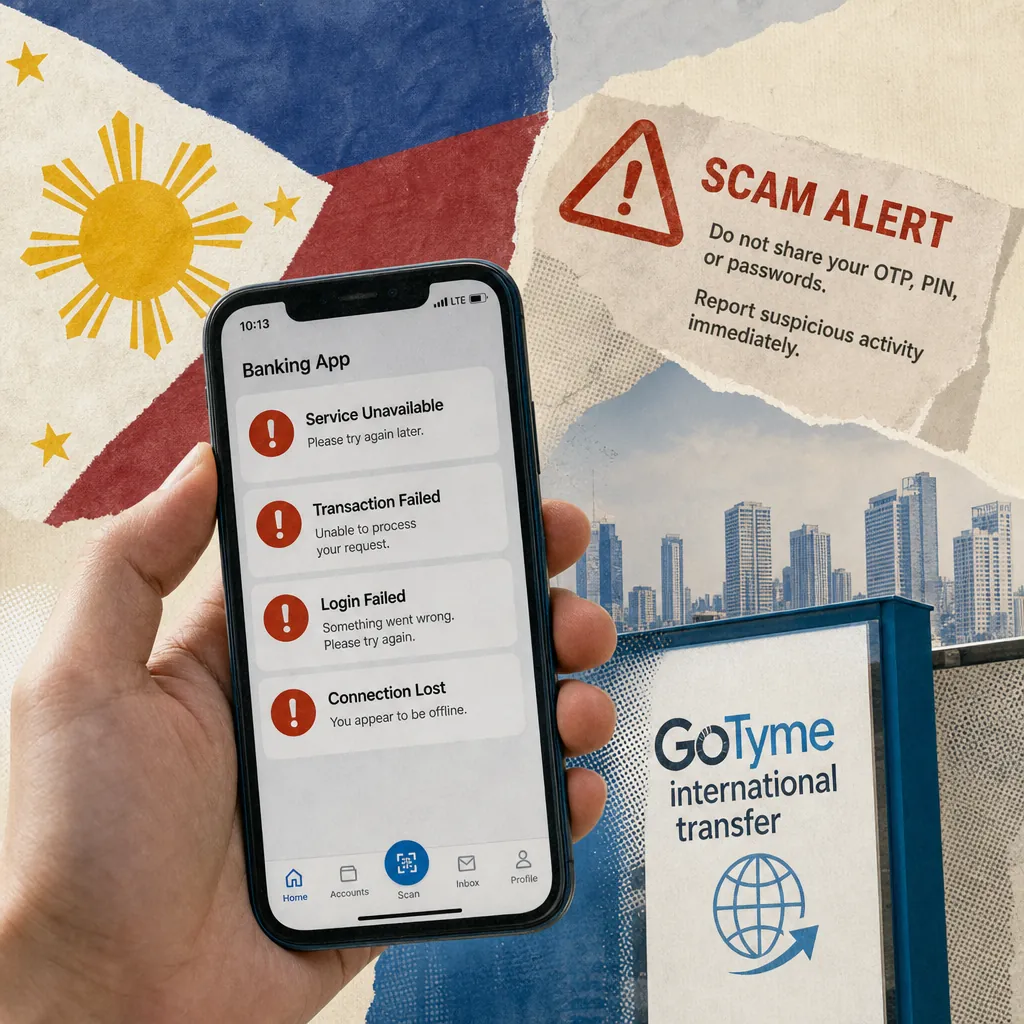
The most significant narrative stream is the accumulation of app failures and transaction delays across multiple banks and fintechs. On June 13 alone, users reported: the BPI app update causing credit card data to disappear, the BDO app repeatedly showing "session expired" during transfers, a PESONet transfer from Landbank to GCash pending for two days, the BPI Card Control one-time PIN not working, the Tonik app completely down, and an Instapay transfer from Chinabank to Maribank stuck for hours. These are not isolated incidents but a pattern that suggests systemic reliability issues across the sector. The emotional language used by users—"Hindi ako mapakali" (I can't rest easy), "Grabe yung anxiety ko" (My anxiety is extreme), "bulok app" (rotten app)—indicates that these failures cause genuine distress, particularly when large sums of money are involved. The fact that users turn to Reddit to confirm whether others are experiencing the same issues, rather than contacting bank support, suggests a breakdown in trust in official communication channels. Banks that fail to acknowledge these issues publicly or provide timely updates risk further reputational damage.
Credit card promo confusion and operational failures
A parallel narrative stream involves confusion and frustration around credit card promotions and delivery. The UnionBank NAFFL saga—where a user was rejected then approved with unclear terms—illustrates how backend errors and poor communication can undermine promotional campaigns. The Metrobank SCC delivery failure—where a card was approved but never delivered after two months of follow-ups—represents a more severe operational breakdown. The Security Bank NAFFL offer skepticism shows that even legitimate promotions are viewed with suspicion due to scam fatigue. These stories collectively paint a picture of banks that are eager to acquire customers through attractive offers but fail to execute on the basics of customer service and operational reliability. For OFWs like u/Unlucky-Ad7608, who have only a short vacation window to complete applications, these failures are particularly costly. The deleted post about seven months of unpaid BDO debt hints at the financial distress that can result from poor communication and fee accumulation.
Scam landscape expands with new vectors
The scam narrative is evolving beyond simple phishing. The DSWD warning about fake GCash cash assistance shows that scammers are exploiting government programs and holidays. The SEC's crackdown on fake lending platforms that misuse legitimate company identities reveals a sophisticated fraud ecosystem. The GCash unauthorized Google charges linked to RFID loading suggest that scammers may be exploiting legitimate in-app features to initiate transactions that are then disputed as unauthorized. The SIM deactivation story highlights a new vulnerability: users who maintain a separate SIM solely for OTPs may find it deactivated due to inactivity, locking them out of their financial accounts. Even legitimate notifications, like the RCBC remittance SMS, cause confusion and require time-consuming verification. This expanding scam landscape places an increasing burden on consumers to verify every financial interaction, while also demanding that banks and fintechs provide clearer, more secure communication channels.
Regulatory response and industry adaptation
Amid the consumer distress, regulators are taking action. The BSP's new guidelines on VASPs require more rigorous due diligence and ongoing monitoring of digital tokens, with clear procedures for suspension or delisting of risky assets. The SEC's warnings against fake lending platforms demonstrate a proactive approach to protecting consumers from online fraud. Meanwhile, GoTyme's launch of a Wise-powered international transfer service shows that some digital banks are innovating to meet customer needs, potentially differentiating themselves in a crowded market. The BlockShoals partnership with a BSP-regulated VASP, as part of the SEC's Strategic Sandbox program, indicates that the regulatory framework for crypto assets is evolving, though with careful oversight. These regulatory and industry responses may help restore confidence over time, but the immediate consumer experience remains one of frustration and anxiety.
Conversation trajectory
- Next 2–4 weeks: The conversation around app failures and transaction delays is likely to intensify as more users share their experiences. The BPI and BDO app issues, if not resolved quickly, could generate negative media coverage and regulatory scrutiny. The PESONet and Instapay delays may prompt the BSP to issue guidance on expected settlement times or require banks to provide better in-app tracking. The GCash unauthorized Google charges story could escalate if more users come forward with similar experiences, potentially leading to a formal investigation by the BSP or the National Privacy Commission.
- Next 4–6 weeks: The end-of-June deadlines for several NAFFL promotions (UnionBank, RCBC) will likely trigger a wave of posts from users who missed the minimum spend or are confused about confirmation timelines. Banks that proactively clarify terms and offer flexible alternatives will capture positive attention. The SEC's crackdown on fake lending platforms may lead to more advisories and potential enforcement actions, keeping the scam narrative in the news. The Sun Life Financial Resilience Index findings may spark broader media coverage about the financial health of Filipino households, providing context for the anxiety seen in the social conversation.
- Next 2–3 months: The BSP's new VASP guidelines could lead to the delisting of certain cryptocurrencies, which may generate debate among crypto investors. The GoTyme-Wise integration may prompt other digital banks to launch similar services, sparking a competitive dynamic around cross-border transfers. The SIM deactivation issue could draw attention from the National Telecommunications Commission (NTC), potentially leading to new rules on SIM registration and reactivation for financial services. The overall trajectory depends on whether banks and fintechs address the root causes of app failures and improve customer communication, or whether the pattern of incidents continues, further eroding trust.
Trigger events that would reshape the conversation: A major outage affecting a large bank (e.g., BPI, BDO) during a peak transaction period (e.g., payday) would dominate headlines and likely prompt a BSP inquiry. A successful class-action lawsuit or regulatory fine against a bank for app failures would set a precedent and encourage more consumer complaints. A high-profile scam involving a well-known fintech brand (e.g., GCash) could trigger a crisis of confidence and lead to a temporary drop in digital transaction volumes. Conversely, a coordinated industry initiative to improve app reliability and customer communication, perhaps led by the BSP, could begin to restore trust.
Response guidance
- Platform approaches: On Facebook, financial institutions should proactively counter misinformation by publishing clear, official advisories from credible institutions, especially regarding fake cash assistance schemes using e-wallet names. Use visual cards with logos and simple "FAKE" / "LEGIT" labeling for quick scanning. Amplify community-driven fundraising posts that utilize bank or e-wallet channels by sharing them from official brand pages with a note of support, reinforcing trust in digital payment platforms. On Reddit, actively monitor and respond to first-time credit card user questions with helpful, non-salesy explanations of promo mechanics, such as NAFFL minimum spend requirements and installment conversion steps, to reduce confusion and frustration. Address digital bank onboarding complaints by acknowledging the inconvenience, explaining standard review times, and providing a direct escalation path. For fee-waiver and credit limit conversion inquiries, publish a dedicated community resource (e.g., a Reddit "megathread" or AMA) that collects verified methods without promoting any "hack" that could violate terms of service.
- Key messages: 1) We prioritize customer security and actively warn against scams that misuse trusted financial brand names; always verify offers through official channels. 2) Our digital platforms and credit card products are designed for convenience, but we encourage users to fully understand terms—especially promo conditions—to maximize benefits without unexpected requirements. 3) We are committed to resolving onboarding and service issues promptly; your feedback helps us improve verification processes, delivery logistics, and app stability. 4) Philippine banks and fintechs are key enablers of economic growth, providing capital, digital inclusion, and innovative products that reach underserved communities. 5) For remittance, holiday-affected transfers, and SIM-linked OTP access, we recommend planning ahead, keeping SIMs active with periodic reloads, and using real-time domestic rails to avoid disruptions. 6) We continuously work to improve app reliability; if you encounter session timeouts, missing card data, or delayed transfers, please report them so we can address potential backend issues and fraud prevention triggers.
- Sensitive topics to navigate: Scam and fraud allegations involving reputable brands require responses that clearly disclaim the scam without implying the institution is responsible; instead, reinforce security best practices and official communication channels. Credit card promo confusion and system errors should be acknowledged without blaming internal systems; instead, commit to clearer communication of promo timelines. Digital bank account opening delays and service disruptions should be met with empathy and a clear escalation path rather than defensive explanations. SIM deactivation leading to loss of OTP access is a cross-industry issue (telco + financial services) that can be incorrectly perceived as bank negligence; responses should clearly distinguish the telco responsibility while providing actionable steps for re-linking accounts. App feature malfunctions (e.g., RCBC card lock not working) should be acknowledged quickly with a temporary workaround while a fix is deployed. OFW credit card eligibility concerns based on income should be handled by guiding users on alternative products or timing after appraisal, rather than implying strict denial. PESONet delays due to fraud prevention should be explained without confirming specific security triggers, but by providing a standard timeline for manual review. App update bugs causing missing card data or session expirations should be addressed without blaming the user's device or connection, and with a commitment to a timeline for an app patch. Annual fee accumulation on dormant cards should be explained clearly, with proactive waivers offered to retain goodwill. Unsolicited remittance SMS or messages should be validated through official channels while cautioning against sharing personal details publicly. Unauthorized GCash charges linked to specific features should be investigated thoroughly, with a clear path to revoke permissions. App outages on due dates (Tonik) require immediate alternative payment channels and a public apology. InstaPay delays on high-value transfers should be addressed by reassuring the user that funds are safe and explaining standard dispute resolution timelines. Metrobank SCC card delivery delays should be handled by proactively coordinating with the branch and customer service to ensure the next attempt is tracked. Long-term unpaid credit card debt should be met with non-shaming resources for debt management and settlement options. HMO installment feasibility using credit cards should be clarified by explaining that installment depends on merchant agreement and bank promo, and advising users to check the app's installment calculator or call customer service.
See the full picture behind today's signals.
This report draws from Media Meter's MediaWatch, our real-time monitoring engine tracking 2,470+ Philippine sources across print, broadcast, digital, and social. Explore how the platform turns raw coverage into decision-grade intelligence, then see how it's configured for teams like yours — whether you're in PR agencies, corporate comms, government, or marketing.
Want more? Browse our Report Library for sector and crisis intelligence, or request a demo and we'll have your brand set up before the call.
Want this kind of intelligence on your brand?
This brief is built on the same MediaWatch methodology that runs continuously across every brand we monitor. See your competitive landscape, Impact Score, and narrative trajectory in a 30-minute demo.