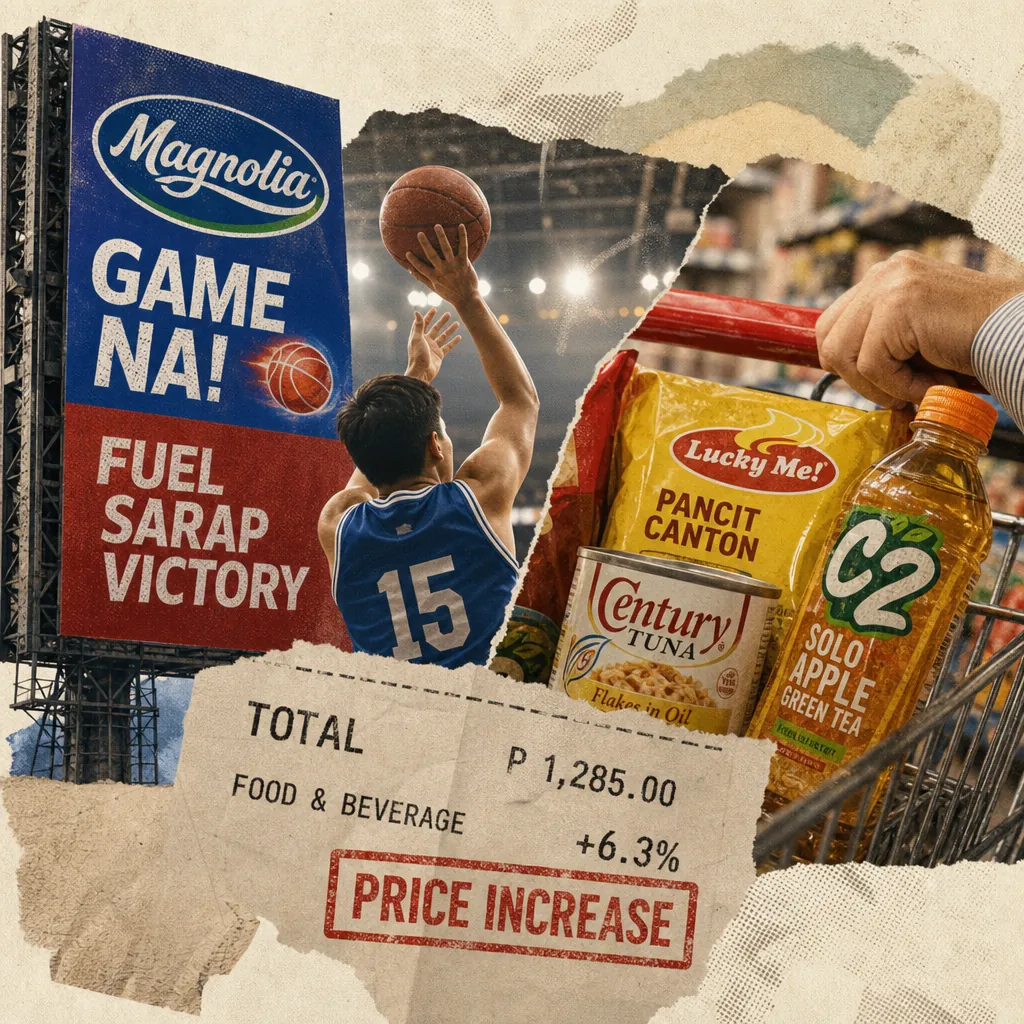
Philippine food prices rise as fuel costs drop: a tale of two economies
On June 19, 2026, Filipino consumers faced rising vegetable prices due to rain-induced supply disruptions, while anticipating a major oil price rollback linked to a US-Iran peace deal. The snapshot covers these twin narratives and their implications for household budgets, government programs, and the food and beverage industry.
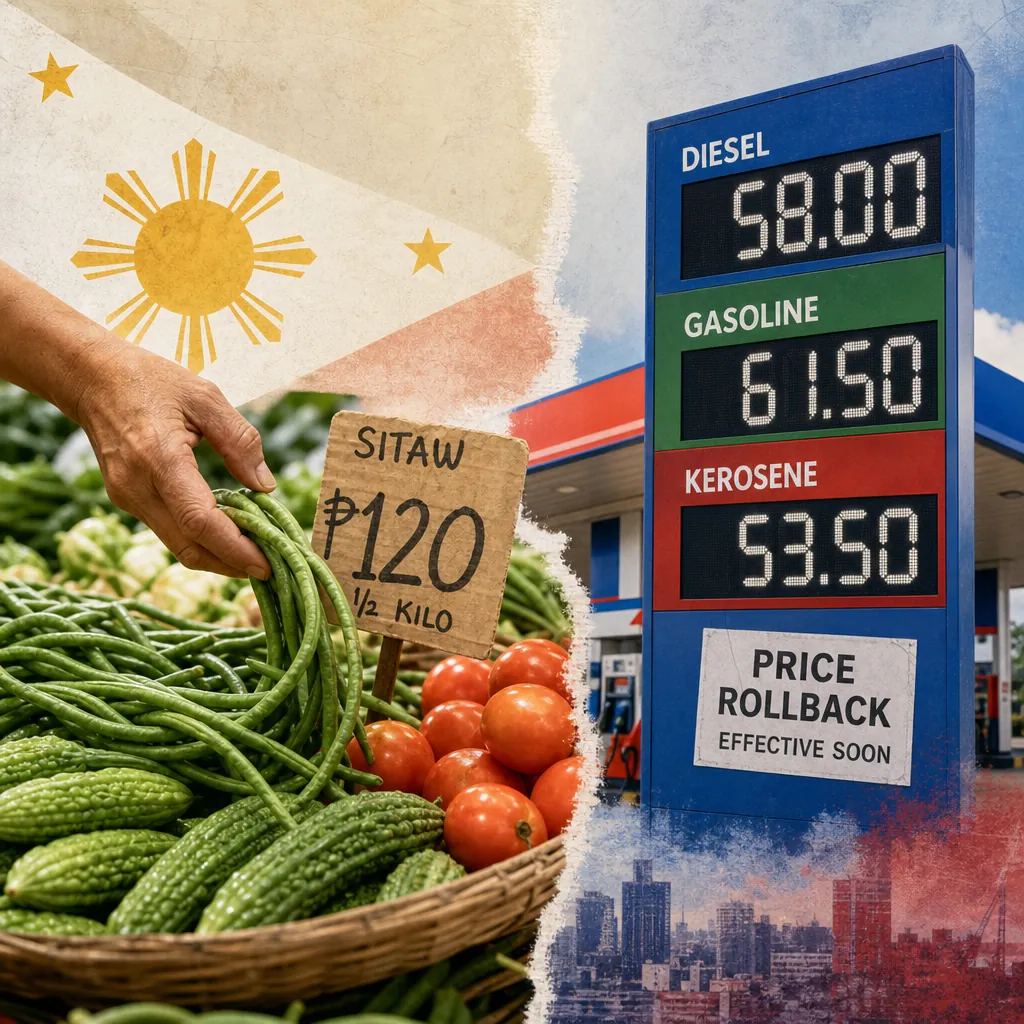
The conversation on rising food costs in the Philippines began on June 19, 2026, when GMA Regional TV's Facebook page posted a report detailing how heavy rains had disrupted vegetable supplies, driving prices upward. The post from onenorthcentralluzon garnered 54 likes and 3 shares with no comments, suggesting an immediate awareness but limited public engagement at that early hour. A corresponding video on YouTube from GMARegionalTV titled "Presyo ng ilang gulay, tumaas matapos maapektuhan ang suplay" received 65 views, further spreading the news of supply-side pressure on staple vegetables. These posts acted as the initial signal of a broader price trend that consumers were beginning to feel at palengke and karinderya alike.
Later that same day, a second narrative thread emerged from assortedge on Facebook, which reframed the price discussion around government intervention. The post highlighted the KADIWA program as a decades-old bridge between farmers and consumers, offering more affordable access amid rising bilihin costs. This content received 7 likes, 10 shares, and 2 love reactions, indicating a more positive sentiment compared to the vegetable price news. The 10 shares suggest that users were actively spreading information about alternative, cheaper food sources as a practical response to the price hikes reported earlier. The two posts on the same day created a clear cause-and-effect narrative: first the problem (vegetable supply disruption and price rise), then a potential solution (KADIWA's direct-to-consumer model).
Meanwhile, a separate but related conversation about fuel prices was gaining significant traction. On June 18, PTV's YouTube channel posted a segment linking an anticipated oil price drop to a peace deal between the US and Iran, setting the stage for widespread relief among motorists. By June 19, multiple news outlets amplified the message with increasingly specific figures – News5's Facebook post promised "malaking bawas-presyo" and quickly accumulated 466 likes and 51 shares, while ABS-CBN News framed the rollback as "malaking tulong" and received 154 likes, 70 love reactions, and 22 comments, indicating strong positive sentiment. The narrative shifted from simple announcement to cautious optimism as the day progressed, with GMA's regional arm One Western Visayas providing localized estimates of P10/L for diesel and P6/L for gasoline, though this post garnered minimal engagement (zero likes, shares, or comments), suggesting regional news may have lower reach but still served important community information. A Twitter post from ibcdigital13 on the same day attempted to broaden the discussion by citing a Japanese research group's projection that Filipino consumers would feel relief across all commodities, but this thread failed to gain traction with only 4 views, highlighting how the conversation remained tightly focused on fuel rather than cascading benefits to food prices or other household expenses.
Conversation snapshot. The day's conversation was split between two distinct but interconnected narratives. On the food price front, the vegetable price alert from GMA Regional TV received 54 likes and 3 shares on Facebook, while the KADIWA program post earned 7 likes, 10 shares, and 2 love reactions – the higher share count indicating that practical solutions resonated more than problem statements. The YouTube video on vegetable prices drew only 65 views, suggesting low engagement on that platform. On the fuel price side, engagement was far higher: News5's Facebook post garnered 466 likes and 51 shares, while ABS-CBN's post generated 154 likes, 70 love reactions, and 22 comments – the only post in the dataset with a visible comment thread. YouTube coverage from four channels (News5, ABS-CBN, PTV, One PH, BNC) accumulated over 5,500 combined views, with BNC's "Agenda" leading at 3,993 views and 43 likes. The lone Twitter post on the topic had virtually no engagement (4 views). Overall, the fuel price conversation dominated in volume and emotional intensity, while the food price discussion remained more localized and solution-oriented.
Key themes
- Supply-driven vegetable price increases – Heavy rains disrupted vegetable supplies in Central Luzon, driving prices upward. This theme set the stage for consumer anxiety over affordability, as vegetables are a core component of daily meals. The GMA Regional TV posts documented the cause-and-effect relationship between weather and prices, though engagement remained low.
- Government programs as a mitigation strategy – The KADIWA program, a government initiative that connects farmers directly to consumers, was promoted as a way to access cheaper food. The post from assortedge framed it as a decades-old solution, and the 10 shares indicated that users saw value in spreading this information to help others find budget-friendly alternatives.
- Oil price rollback as a major relief event – The anticipated fuel price drop, linked to the US-Iran peace deal, generated widespread positive sentiment. Posts from major news outlets promised significant reductions (P7.50–P10/L for diesel, P3–P6/L for gasoline), and the high engagement (466 likes on News5, 70 loves on ABS-CBN) reflected strong public interest in cost-of-living relief.
- Regional vs. national framing of consumer impact – Regional news outlets like One Western Visayas provided localized price estimates in local languages, but these posts received minimal engagement compared to national broadcasts. This suggests that while regional information is important for community awareness, it does not drive the same level of social media interaction.
- Limited public dialogue and missed engagement – Across both narratives, comment activity was sparse. The vegetable price posts had no comments, and the fuel price posts had only 22 comments total (all on one ABS-CBN post). This indicates that the conversation was still in an early information-sharing phase, with consumers absorbing news rather than debating it.
- Absence of direct brand criticism – No posts in the dataset directly criticized food brands or QSRs for price increases. The conversation remained issue-driven (weather, supply, government programs) rather than brand-targeted, offering a window for proactive reputation management.
- Potential for cascading consumer expectations – While the fuel price conversation did not yet connect to food prices, the ibcdigital13 post hinted at broader relief across commodities. If fuel prices drop as projected, consumers may soon begin expecting lower food prices, creating pressure on food manufacturers and retailers.
How the narratives stack
Dominant narrative – The dominant story of the day is the anticipated oil price rollback, framed as a direct result of the US-Iran peace deal. Major news outlets across Facebook and YouTube amplified this message with specific price estimates, generating high engagement and positive sentiment. The narrative is one of cautious optimism: prices are expected to drop significantly, but sustained relief depends on diplomatic follow-through. This story dominates because it offers immediate, tangible relief to a broad audience – motorists, transport operators, and anyone affected by fuel costs – and is backed by official sources like the Department of Energy.
Counter-narrative – The counter-narrative is the vegetable price increase caused by rain-induced supply disruptions. While the fuel price story offers hope, the vegetable price story grounds the conversation in the reality that some costs are rising due to factors beyond anyone's control. This narrative is more localized and less engaged, but it serves as a reminder that not all prices are falling. The KADIWA program post attempts to bridge this gap by offering a solution, but it does not directly challenge the fuel price narrative.
Emerging narrative – An emerging narrative is the potential connection between fuel price drops and broader consumer relief. The ibcdigital13 Twitter post, though low-engagement, cited a Japanese research group projecting that Filipino consumers would feel relief across all commodities. This thread has not yet gained traction, but if fuel prices indeed drop by P10/L, social media conversations could pivot quickly toward "when will food prices follow?" This narrative is currently latent but has the potential to become dominant in the coming weeks.
Suppressed narrative – The suppressed narrative is the impact of weather-driven supply disruptions on agricultural producers and the long-term food security implications. While the vegetable price increase was reported, there was no discussion of farmer livelihoods, the need for climate-resilient agriculture, or the structural vulnerabilities in the food supply chain. The conversation focused on immediate consumer impacts rather than systemic issues. Similarly, the corruption chain in agriculture grants, as discussed in an Inquirer Plus article, received no social media attention, despite its significance for the effectiveness of government programs like KADIWA.
Platform insights
Facebook – Facebook was the primary platform for both narratives. The vegetable price post from onenorthcentralluzon generated passive awareness (54 likes), while the KADIWA post from assortedge drove active sharing (10 shares). On the fuel price side, News5's post received the highest engagement (466 likes, 51 shares), and ABS-CBN's post generated a rich emotional mix (70 loves, 14 cares) and the only visible comment thread (22 comments). The platform served as both a news broadcaster and a solution-sharing space. The absence of critical voices or questions suggests that the conversation remained one-directional, with official news pages disseminating information rather than sparking debate.
YouTube – YouTube hosted video coverage from multiple news channels, accumulating over 5,500 combined views on fuel price content. BNC's "Agenda" led with 3,993 views and 43 likes, while other videos had lower engagement. The vegetable price video received only 65 views and zero likes or comments. Comments were sparse across all YouTube videos (only 14 total in the dataset), suggesting that viewers consumed the news passively rather than using the platform for discussion. YouTube served as a broadcast channel for in-depth reporting, but not as a conversational space.
Twitter – Twitter had minimal activity. Jollibee used Twitter to announce a new store opening and festival participation, achieving moderate view counts (5,872 and 603) but low engagement (70 and 8 likes). The ibcdigital13 post on fuel price relief had virtually no engagement (4 views). Twitter appears to serve more as a broadcast channel for brand news than a conversational platform for these topics.
Reddit – Only one relevant post appeared: a user asking for commute directions to Jollibee Plaza Ortigas, which received 1 like and 2 comments. Reddit remains a niche space for practical logistics rather than brand hype or economic discussion.
Key voices and communities
National broadcast news outlets – Major television news organizations including ABS-CBN, News5, GMA, PTV, and BNC dominate both the food price and fuel price conversations across Facebook and YouTube. Their combined YouTube content on fuel prices alone accumulated over 5,000 views within a single day. These outlets consistently pair announcements with context on causes (weather, US-Iran deal) and official sources (Department of Energy), creating a unified narrative of cautious optimism. For food industry stakeholders, these outlets are the primary gatekeepers of public perception about cost-of-living trends.
Regional and local news media – Regional news channels such as One Western Visayas provide localized framing of both food and fuel price stories, often featuring specific price estimates in local languages. Their content generates modest direct engagement but serves as a trusted source for provincial audiences. For food companies with supply chains that rely heavily on provincial transport, regional media reach is vital for communicating how reduced logistics costs translate to affordable food prices.
Government and institutional advocates – This stakeholder includes agencies and programs promoting affordable food access, such as the KADIWA initiative. Their messaging emphasizes bridging the gap between farmers and consumers through direct-market interventions. While not a high-volume voice, their content carries authority and is shared by community pages, giving it outsized influence among cost-conscious audiences. The KADIWA post explicitly frames the program as a decades-long solution, suggesting consistent institutional messaging around food security.
Concerned consumers – Everyday Filipino households and online community members reacting to rising food costs, primarily active on Facebook and YouTube. Their conversations center on the affordability of basic goods, with posts about vegetable price increases and alternative sourcing programs generating modest engagement. The 10 shares on the KADIWA post suggest that content about direct-to-consumer food access resonates with price-sensitive audiences. This group is the primary target audience for any brand or policy aiming to address food affordability.
Agricultural producers and farmers – Farmers and agricultural suppliers are the upstream stakeholders whose supply constraints directly drive price increases. The conversation captures their vulnerability to seasonal weather – specifically, heavy rains disrupting vegetable harvests. This group's influence is felt through supply-side narratives that explain price swings, though they have limited direct social media voice in the sampled data. News coverage of the supply drop received 65 video views on YouTube, indicating moderate local interest in understanding why prices are climbing.
Narrative streams
Vegetable price hikes and the search for affordable alternatives
The first narrative stream centers on rising vegetable prices due to rain-induced supply disruptions. On June 19, GMA Regional TV's Facebook and YouTube channels reported that heavy rains had damaged crops in Central Luzon, a key agricultural region, leading to higher prices at market. The Facebook post received 54 likes and 3 shares, while the YouTube video garnered 65 views – modest engagement that suggests the information was being consumed but not widely discussed.
This narrative is significant because vegetables are a staple in Filipino diets, and price increases directly affect household budgets. The lack of comments or critical voices indicates that consumers were still processing the news rather than reacting emotionally. However, the subsequent KADIWA post from assortedge, which received 10 shares, shows that consumers were actively seeking solutions. The KADIWA program, run by the Department of Agriculture, allows farmers to sell directly to consumers at lower prices by cutting out intermediaries. The post framed it as a "decades-old bridge" between farmers and consumers, positioning it as a reliable alternative to regular market channels.
For the food industry, this narrative creates both risk and opportunity. The risk is that consumers may perceive commercial retailers as overpriced compared to government-subsidized alternatives. The opportunity lies in brands that can demonstrate value through budget-friendly bundling or localized sourcing stories. The absence of any direct criticism of commercial brands in these posts suggests the conversation is currently issue-driven rather than brand-targeted, offering a window for proactive reputation management.
Oil price rollback: a geopolitical windfall for Filipino consumers
The second narrative stream is the anticipated oil price rollback, driven by a peace deal between the US and Iran. The conversation began on June 18 with PTV's YouTube segment and intensified on June 19 as multiple news outlets provided specific price estimates. News5's Facebook post promised "malaking bawas-presyo" (big price cut) and received 466 likes and 51 shares, while ABS-CBN's post framed the rollback as "malaking tulong" (big help) and generated 154 likes, 70 love reactions, and 22 comments – the only post in the dataset with a visible comment thread.
The price estimates varied by outlet but consistently signaled large reductions: P7.50–P9.50 per liter for diesel and P3–P5 per liter for gasoline, according to One PH's "Sa Totoo Lang" segment, while One Western Visayas projected P10/L for diesel and P6/L for gasoline. The Department of Energy was repeatedly cited as the authority projecting that prices could continue falling if both nations adhered to the agreement, adding institutional credibility.
This narrative is important for the food industry because fuel costs are a major component of logistics and supply chain expenses. A significant rollback would lower the cost of transporting raw ingredients and finished products, potentially allowing food companies to maintain or reduce prices. However, the conversation has not yet made this connection – consumers are focused on fuel prices themselves, not on the cascading effects. The ibcdigital13 Twitter post attempted to broaden the discussion to include all commodities, but its negligible reach (4 views) shows that the cognitive leap has not yet been made.
The high engagement on fuel price posts (466 likes, 70 loves) indicates strong emotional investment in cost-of-living improvements. If fuel prices indeed drop by P10/L, expect social media conversations to pivot quickly toward "when will food prices follow?" – a narrative thread that is currently absent but ripe for emergence.
The KADIWA program as a buffer against inflation
The KADIWA program post from assortedge represents a third narrative stream: government intervention as a solution to rising food prices. The post received 7 likes, 10 shares, and 2 love reactions, with the high share count indicating that users found the information valuable enough to pass along. The timing is critical – this post appeared after the vegetable price news, framing itself as a response to rising costs.
KADIWA (short for "Kadiwa ng Pangulo," or the President's Kadiwa) is a government program that connects farmers directly to consumers, eliminating middlemen and reducing prices. It operates through pop-up markets and permanent stores, offering fresh produce and other goods at below-market rates. The program has been around for decades but has gained renewed attention during periods of high inflation.
For food brands, the KADIWA narrative presents both a challenge and an opportunity. The challenge is that consumers may see government programs as the only affordable option, overlooking commercial alternatives like value menus or sari-sari store partnerships. The opportunity lies in brands that can position themselves as cost-effective and accessible without triggering comparisons to state-subsidized channels. The absence of critical voices in this small sample suggests that proactive narrative shaping, rather than reactive crisis management, is the appropriate posture.
Conversation trajectory
Based on engagement patterns and content evolution, the Philippine food price conversation shows clear signals of developing in ways that impact the food and beverage industry:
- Escalating cost-of-living narratives tied to staple goods – Discussions about vegetable prices spiking due to weather disruptions are gaining traction, with shared content highlighting the immediate impact on household budgets. This trend will likely intensify over the next 2–3 weeks as monsoon rains persist, driving further search interest around "presyo ng gulay" and "budget meals." The connection between supply shocks and everyday affordability is becoming a dominant theme, creating an opening for value-focused messaging from QSRs and FMCG brands. (Observation window: next 2–3 weeks)
- Renewed attention on government subsidy and alternative retail channels – The KADIWA program is being positioned as a lifeline amid rising prices, with content emphasizing its role in connecting farmers directly to consumers. This conversation stream is likely to grow as more shoppers seek affordable alternatives to palengke and grocery stores. Expect increased mentions of "KADIWA," "murang pagkain," and "direct-from-producer" models over the next month, particularly if additional government announcements coincide with the harvest season. (Observation window: next 4–6 weeks)
- Consumer optimism from fuel rollback may temporarily suppress food price complaints – The widely reported P7.50 to P10 per liter diesel rollback and P3 to P6 per liter gasoline cut is being framed as "good news" and "ginhawa" across major news outlets. This will likely reduce the volume of complaints about food inflation for approximately 4–6 weeks, as motorists – who overlap heavily with sari-sari store owners and karinderya operators – feel temporary relief. Engagement on "budget meals" and "value meal" content may see a slight dip as the immediate financial pressure eases. (Observation window: next 4–6 weeks)
- Increased discretionary spending at QSRs and delivery platforms – With transportation costs dropping, low-to-middle-income households may redirect savings toward occasional eating out or delivery. Expect a moderate uptick in conversations about Jollibee value meals, Mang Inasal "unli rice" promos, and GrabFood discount codes within 2–3 weeks after the rollback takes effect (June 23–24). Posts comparing "same price, bigger portion" or "worth it ba?" will gain traction. This is a short window – watch for a spike in sharing of cashback/tipid hacks across Facebook and TikTok. (Observation window: next 2–3 weeks)
- Length of relief will depend on global oil stability – a key uncertainty – The posts repeatedly tie the rollback to the US-Iran peace deal. If that deal holds for 2–3 months, the positive sentiment could extend into the next "noche buena" planning season (August–September). However, any news of a breakdown or new tensions will instantly reverse the conversation, returning focus to "presyo ng petrolyo, presyo ng pagkain" narratives. Early signals of volatility from geopolitical commentators should be monitored. (Observation window: ongoing)
Key trigger events that will reshape this conversation include: the actual pump price adjustment on June 23–24 (when motorists verify the promised rollback); the July 2026 inflation report release (which will show if food CPI decelerates or not); and any announcement from the Department of Energy or major oil firms about subsequent price movements. Each event will either reinforce or dismantle the current optimism.
Response guidance
Platform-specific approaches
Facebook – Highlight value-for-money offerings and budget-friendly meal options to directly address consumer concerns about rising prices. Use visual cards comparing regular prices versus promo bundles or family packs. Share behind-the-scenes content showing partnerships with local farmers or KADIWA-style initiatives to reinforce commitment to affordable food access. Deploy community management scripts that acknowledge price sensitivity without making forward-looking price commitments, focusing instead on current value propositions. Use pinned comments to redirect discussions about weather-driven supply issues toward your sourcing resilience or alternative menu options.
YouTube – Produce short explainer videos (under 90 seconds) that visually break down how a P10/L diesel rollback impacts the cost of delivering supplies to restaurants and sari-sari stores. Use animated infographics for clarity. Optimize video titles and descriptions with terms like "budget meal tips" or "affordable ulam" to capture search traffic from price-conscious consumers. Respond in comments to user questions about price hikes with factual, non-defensive language that acknowledges the broader context without blaming external factors.
Twitter – Publish timely, data-driven threads that explain the correlation between global oil prices and domestic food costs, citing the US-Iran peace deal as a catalyst. Keep threads concise and shareable, with a focus on consumer benefit. Respond to user queries about value meals or price holds with direct, optimistic replies that reference the rollback trend as a positive factor for maintaining affordability. Create a branded hashtag that ties the rollback to better deals on your products, and encourage user-generated content showing budget-friendly meals using your items.
Key messages
- "We understand the strain of rising costs and are committed to offering meals that fit tight budgets without compromising quality."
- "Our supply chain team works year-round to source ingredients responsibly, minimizing the impact of seasonal weather disruptions on our menu prices."
- "Value bundles, family deals, and loyalty rewards are designed to help Filipino families enjoy their favorite meals even during challenging times."
- "Lower fuel costs mean lower logistics expenses, and we're committed to passing those savings along so your favorite meals stay affordable."
Sensitive topics to navigate
- Comparison with government programs like KADIWA – Acknowledge the program's intent without criticizing it; position your brand as a complementary option, not a replacement. Avoid claiming your prices are lower than KADIWA's.
- Weather-related supply shortages – Do not downplay the impact on farmers or consumers; instead, focus on your proactive steps to secure alternative sources. Be careful not to appear tone-deaf.
- Price increase announcements – If your own prices must rise, communicate transparently and tie the increase to specific, verifiable cost drivers (e.g., raw material costs) rather than general inflation.
- Overpromising relief – Avoid claiming direct price cuts on products solely due to fuel rollbacks, as other cost factors (e.g., raw materials, labor) may offset savings. Frame as "passing along savings where possible" rather than promising immediate reductions.
Response priorities
- Proactively publish value narrative content within the next 48 hours on Facebook, leveraging the current conversation window. Use the KADIWA and vegetable price posts as reality anchors to frame your messaging. This preempts criticism by showing you're listening.
- Monitor and respond to direct price-related questions with a standard empathetic acknowledgment plus a link to current promotions or menu options. Do not engage in debates about profit margins or executive compensation.
- Prepare a rapid-response FAQ document for customer service channels addressing: "Will your prices go up?", "Why is [specific item] more expensive now?", and "How do you compare to karinderya/turo-turo?"
- Align pricing communication with fuel rollback timing – Within the next two weeks, issue a public statement or social media campaign linking the fuel savings to stable or improved value offerings. This preempts consumer criticism and reinforces value leadership.
Example language for common scenarios
- [When a user asks why prices are high]: "We know every peso counts. Our team works hard to keep our menu affordable despite rising costs for ingredients like vegetables and cooking oil. Here's a look at our current value meal options that can help stretch your budget."
- [When a user compares your brand to cheaper alternatives like KADIWA]: "It's great that more affordable food options are available for Filipinos. At [Brand], we focus on providing consistent quality and convenience alongside our own value offerings. Check out our [specific promo] for a sulit meal."
- [When a user blames your company for shrinkflation]: "We hear your concern about portion sizes. Our product recipes and packaging are regularly reviewed to balance quality with affordability. If you have a specific item in mind, we'd like to look into it – please send us a message with details."
- [When asked about price cuts on specific products]: "We're grateful that fuel rollbacks are easing cost pressures across our supply chain. While we can't guarantee immediate price drops on every item, we are reviewing our value bundles to maximize savings for you. Stay tuned for promotional updates."
See the full picture behind today's signals.
This report draws from Media Meter's MediaWatch, our real-time monitoring engine tracking 2,470+ Philippine sources across print, broadcast, digital, and social. Explore how the platform turns raw coverage into decision-grade intelligence, then see how it's configured for teams like yours — whether you're in PR agencies, corporate comms, government, or marketing.
Want more? Browse our Report Library for sector and crisis intelligence, or request a demo and we'll have your brand set up before the call.
Want this kind of intelligence on your brand?
This brief is built on the same MediaWatch methodology that runs continuously across every brand we monitor. See your competitive landscape, Impact Score, and narrative trajectory in a 30-minute demo.