BPI outage, GSave backlash, and peace deal reshape PH banking conversation
A major BPI app outage, a GCash GSave promo backlash, and a US-Iran peace deal that sent stocks and the peso soaring dominated the Philippine financial conversation over two days, revealing deep consumer frustration with digital reliability and a rapid shift toward self-directed investing.
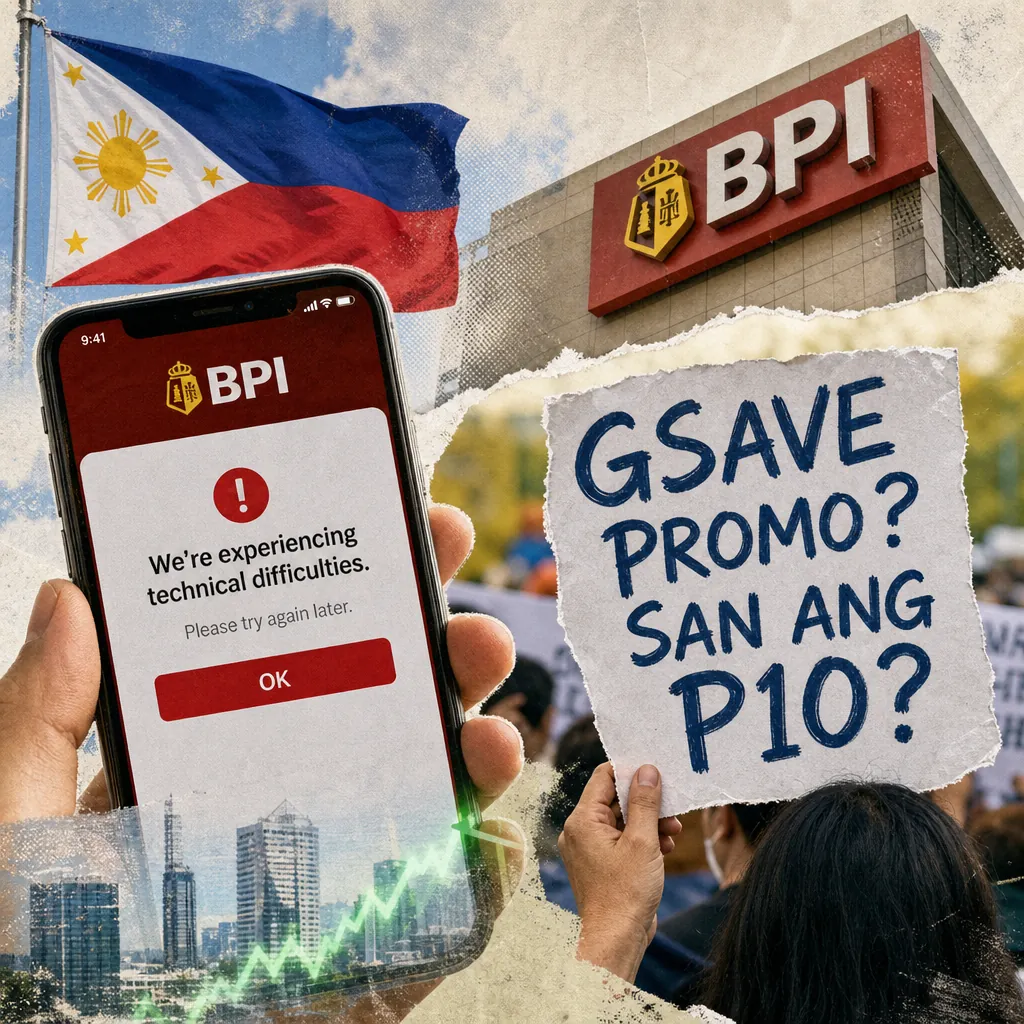
The conversation on Sunday, June 14, 2026, was dominated by a major BPI app outage that triggered a cascade of user frustration and practical concerns across Reddit. The first wave of posts appeared early in the day, with user beshies posting "BPI down again today" and expressing gratitude that credit cards still worked while demanding BSP investigation and penalties for unannounced outages. This sentiment quickly spread as __sosubtle echoed the frustration with "Palagi nalang may system issue ang BPI jusko," revealing that during prior outages ATM withdrawals were also blocked—a concern that directly led to a follow-up question from Known_Tea_3293 asking "is BPI ATM withdrawal already working?" By mid-morning, the technical failure had shifted conversations toward broader preparedness: LowerFroyo4623 posted about choosing a traditional bank for emergency funds, explicitly weighing accessibility and app reliability, while a turning point came when One-Memory3730 directly compared "Maya vs. BPI Banko [for savings]" and sought advice on maximizing interest and understanding withdrawal fees. This juxtaposition of outage angst with proactive financial planning marked a clear shift from crisis reaction to strategic comparison.
On Monday, June 15, the conversation broadened significantly as users moved beyond immediate outage complaints to discuss long-term investment regrets and cross-border banking tools. International_Cry_44, an OFW, posted a remorseful reflection—earning 47 likes and 52 comments—on having locked 50% of their portfolio in MP2 while now earning more in US and JP stocks via Interactive Brokers within months. The post gained traction as others shared similar experiences, effectively reframing the week's narrative from reactive bank troubleshooting toward proactive asset allocation. Meanwhile, Infinite_Leek_9457 shared a positive experience with GoTyme's new Send Money Abroad feature (powered by Wise), praising transparent fees and ETA tracking; the post collected 14 likes and sparked curiosity about using digital bank balances for direct international transfers without opening separate dollar accounts. These two threads—investment regret and convenient cross-border remittance—created a thematic bridge from the prior day's reliability concerns into Monday's focus on optimizing financial infrastructure.
As Monday progressed, additional conversations reinforced and expanded these themes. While some users still grappled with BPI's service reliability—Consistent-Hawk-3160 reported being unable to access the BPI app on their due date and resorted to paying via GCash—others turned to stock market moves: Boring-Ad-3955 bought MREIT as a second utility stock after selling BPI shares, and Ill_Success9800 lamented missing BPI's dip to 90-92 as the stock recovered from pandemic lows. The Sun Life Philippines page announced a 4% annual payout rate for its Peso Global Opportunity Payout Fund, generating 45 likes and 77 shares, signaling positive consumer reception to VUL fund performance. In stark contrast, GCash's promotional post for GSave's 4.15% interest rate—which also offered a ₱30 bonus for a ₱100 deposit—drew 62 angry reactions and 574 comments, revealing deep dissatisfaction likely tied to confusion or unfulfilled expectations. Meanwhile, institutional accounts pushed security awareness and new services: PNB amplified BSP's anti-scam tips about fake bank callers (29 likes, 49 shares), EastWest promoted free QR InstaPay on EasyWay until June 30, and GoTyme Bank announced impending Apple Pay support, though customers reported the message "Your Issuer Does Not Yet Offer Support for This Card in the Philippines" still appeared. The BSP also moved forward on policy, with BusinessWorld reporting that the central bank plans to allow borrowers and financial institutions to access its credit information registry to improve risk management and financial inclusion. Cebuana Lhuillier announced branch relocations, while Fun-Weight-9827's query on travel insurance sparked recommendations—including GCash's offering—and creative baggage hacks using IKEA bags.
Conversation snapshot. The two-day window saw a total of 28 tracked posts across Reddit and Facebook. On Reddit, the BPI outage posts drew 39 and 19 likes respectively, with dozens of comments each, while the investment regret thread (International_Cry_44) earned 47 likes and 52 comments—the highest engagement on the platform. On Facebook, the GCash GSave promo post generated 61 likes but also 62 angry reactions and 574 comments, making it the most commented-on post by far. Sun Life's VUL payout announcement received 45 likes and 77 shares, while PNB's security tips got 29 likes and 49 shares. The GoTyme Apple Pay announcement earned 25 likes and 8 comments. Overall, the conversation was driven by a mix of crisis reaction (BPI outage, GCash backlash) and strategic comparison (investment regret, digital bank features), with Facebook serving as the primary venue for institutional announcements and customer blowback, while Reddit remained the hub for peer-to-peer troubleshooting and advice.
Key themes
- BPI service reliability crisis and consumer backlash — The BPI app outage on Sunday triggered widespread frustration, with users demanding BSP investigation and penalties. The crisis persisted into Monday, with a user unable to access the app to pay a credit card bill, forcing reliance on GCash. This real-time dependency on peer verification illustrated how quickly trust erodes during repeated digital failures.
- Digital banking adoption and comparative guidance — The outage drove new users to explore alternatives: a newly 18-year-old asked which digital banks to start using, while others compared Maya vs. BPI Banko for savings. GoTyme's Apple Pay announcement and EastWest's free QR InstaPay promo added to the comparison landscape.
- Failed transactions, payment anxiety, and incentive breakdowns — A PNB InstaPay transfer that failed but was deducted created concern over "floating" money. Metrobank customers complained about uncredited cash incentives for card upgrades, and users sought clarity on BDO credit card payment allocation and UnionBank EasyCash charges.
- Long-term investment strategy and lock-in regret — An OFW's post about locking 50% of their portfolio in MP2 for five years sparked a debate on opportunity cost, with many commenters advocating for self-directed US/JP stock investing. Sun Life's 4% VUL payout announcement offered a contrasting positive signal.
- Cross-border remittance innovation and scam vulnerability — GoTyme's Wise-powered transfer feature received positive reviews for transparency, while a user reported losing ₱13,000 to a rental scam paid via Maya, highlighting the irreversibility of instant digital payments. PNB's BSP security tips directly addressed this vulnerability.
- Macroeconomic tailwinds from US-Iran peace deal — The US-Iran peace agreement sent the PSEi surging 6.14% and the peso strengthening to ₱60.48 per dollar. Oil prices fell over 4%, easing inflation fears and reducing pressure for aggressive BSP rate hikes. This macro backdrop influenced investment discussions, with users noting BPI stock recovery and buying opportunities.
- GCash GSave promo backlash — GCash's promotional post for GSave's 4.15% interest rate and ₱30 bonus drew 62 angry reactions and 574 comments, signaling widespread dissatisfaction. The backlash likely stems from confusion over terms, low realized rates, or unfulfilled bonus expectations, posing a reputational risk for GCash's savings product.
- BSP credit information registry and financial inclusion — The BSP proposed opening its credit information registry to borrowers and financial institutions, aiming to improve risk management and expand access to financing. While the announcement garnered little organic engagement, it represents a significant policy move that could reshape credit access in the Philippines.
How the narratives stack
Dominant narrative — The dominant narrative is that Filipino consumers are increasingly frustrated with the reliability of traditional banking digital services (BPI outage) and promotional offers (GCash GSave backlash), and are actively seeking alternatives. This frustration is driving a shift toward self-directed investing (stocks, US/JP equities) and digital banking features that offer transparency and convenience (GoTyme's Wise remittance, Apple Pay). The macro backdrop of the US-Iran peace deal, which boosted the stock market and peso, reinforces the appeal of equity investing over traditional savings products.
Counter-narrative — Despite the frustration, institutional announcements (Sun Life VUL payout, PNB security tips, EastWest promo) show that traditional financial products and security messaging still resonate with consumers when delivered clearly. Sun Life's 4% payout announcement received strong positive engagement (45 likes, 77 shares), suggesting that value-oriented products can still attract attention. The BSP's credit registry proposal also signals that regulators are working to address systemic issues, though this has not yet translated into consumer awareness.
Emerging narrative — The emerging narrative is the rapid adoption of digital banking features that bridge the gap between local and international finance. GoTyme's Wise-powered remittance and Apple Pay integration, along with EastWest's QR InstaPay promo, point to a future where digital banks become one-stop shops for payments, savings, and cross-border transfers. The positive reception of these features suggests that consumers are eager for frictionless, transparent financial tools.
Suppressed narrative — The under-covered story is the vulnerability of consumers to scams and the lack of robust fraud protection in e-wallet ecosystems. The Maya scam post (₱13,000 lost) received only 7 likes and 6 comments, far less engagement than the BPI outage or GSave backlash. Yet the financial impact on individuals is severe, and the reliance on peer advice rather than institutional support indicates a gap in consumer protection that institutions are not adequately addressing. The BSP's credit registry proposal, while important, also received minimal attention, suggesting that regulatory initiatives are not yet capturing consumer interest.
Platform insights
Reddit — Reddit remained the epicenter for both crisis-driven and strategic financial conversations. Sunday's BPI outage generated high-engagement posts (39 and 19 likes) that cascaded into EF placement and digital bank comparisons. By Monday, the dialogue expanded to include investment strategy (International_Cry_44's MP2 regret at 47 likes), cross-border transfers (GoTyme review at 14 likes), stock picking (MREIT, BPI recovery), and persistent app access issues (Consistent-Hawk-3160). Reddit's role as a real-time troubleshooting hub that also incubates long-term financial planning discussions was evident. Additional practical queries—such as payroll account confusion, CLI requests while overseas, credit-building strategies, and car loan interest rates—rounded out the platform's value as a crowdsourced financial guide.
Facebook — Facebook saw a surge in institutional activity on Monday after a quiet Sunday. PNB's security awareness post (29 likes, 49 shares), Sun Life's VUL payout announcement (45 likes, 77 shares), EastWest's InstaPay promo (4 likes), and Cebuana Lhuillier's branch update (21 likes) all contributed to a more diverse content mix. However, the standout was GCash's GSave promo, which drew 61 likes but a disproportionate 62 angry reactions and 574 comments—a strong signal of user dissatisfaction, likely stemming from confusion over terms or failed bonus expectations. This engagement level dwarfs all other Facebook posts in the dataset and suggests the platform is a key venue for both promotional announcements and customer blowback.
Key voices and communities
Affected customers and service critics — This group consists of consumers actively experiencing banking service disruptions, failed transactions, and other operational issues. Their conversation volume spikes during specific incidents—the BPI app outage generated posts with almost 40 likes and over a dozen comments. Their influence is driven by emotional resonance and practical urgency, making them highly effective at amplifying dissatisfaction. New data reinforces this profile: a victim of a rental scam who lost ₱13,000 through Maya detailed the incident and sought reversal advice, receiving moderate engagement and sympathetic comments. Additional frustrations emerge from a Metrobank customer awaiting a cash incentive from a card upgrade promo, with the user reporting no resolution after months of follow-ups. A BPI user unable to access the mobile app to pay a credit card bill highlighted the inconvenience of branch hours conflicting with work schedules. Furthermore, the official GCash GSave promo post attracted 62 angry reactions and 574 comments, signaling widespread discontent with the product's terms or performance.
Digital banking enthusiasts and advisors — These are active Reddit community members who provide detailed, comparative advice on digital banks, e-wallets, and savings strategies to a largely youthful audience. They drive conversation about product features—interest rates, withdrawal fees, card designs—and shape the choices of new users. Posts soliciting advice on which bank to use for emergency funds or which digital bank to start with receive 10–15 comments each. New posts show this group expanding into investment comparisons and international remittance: one user detailed moving from MP2 to digital banks then to US/Japanese stocks via IBKR, earning 47 likes and 52 comments. Another user shared a positive experience with GoTyme's new Send Money Abroad feature powered by Wise, highlighting transparent fees and ETA tracking, which garnered 14 likes. New data adds a GoTyme Bank announcement of impending Apple Pay support, generating 25 likes and 8 comments as the community discussed the message "Your Issuer Does Not Yet Offer Support for This Card in the Philippines." A user planning their first international trip asked for travel insurance recommendations, specifically mentioning GCash as a potential option, and received 6 comments with advice. Additionally, a stock market beginner shared their renewed interest in buying BPI shares at current lows, attracting 11 likes and 17 comments discussing recovery prospects.
Brand and institutional promoters — This group includes official accounts of financial and partner institutions. Their content is otherwise transactional and low in engagement, but they serve as a benchmark for how institutions present digital payment innovations. They do not participate in the complaint-driven conversations, remaining separate from the customer voice. New data adds several institutional voices: Sun Life Philippines announced a 4% annual payout rate for a VUL fund, earning 45 likes and 77 shares with predominantly positive reactions (41 loves, 2 wows). Philippine National Bank (PNB) shared BSP security tips against scam callers, garnering 29 likes and 49 shares. EastWest Bank promoted a QR InstaPay promo for travel payments, though it received only 4 likes and 2 comments. Cebuana Lhuillier continued its raffle campaign with a new post announcing winners at select branches, receiving 21 likes and 13 comments. BusinessWorld shared BSP's plan to allow borrowers and financial institutions access to its credit information registry, a regulatory announcement with minimal engagement (1 share, 1 love, 1 wow). Notably, GCash's GSave promo post—promising up to 4.15% interest and a ₱30 bonus—attracted 61 likes but also 62 angry reactions and 574 comments, indicating significant customer backlash against the product or its terms. Another GCash post on online shopping safety received 27 likes and 34 comments with only 1 angry reaction, showing the difference in sentiment between promotional and educational content.
Narrative streams
BPI outage and the erosion of trust in traditional digital banking
The BPI app outage on Sunday, June 14, was the catalyst for the week's conversation. The bank first acknowledged the disruption in an advisory published at 8:50 pm, confirming that BPI's online banking, mobile app, and e-commerce transactions were affected. The outage lasted nearly two days, with users reporting continued access issues into Monday. On Reddit, users expressed frustration not just at the inconvenience but at the lack of prior notice and the impact on essential payments. One user, Consistent-Hawk-3160, reported being unable to access the BPI app on their credit card due date and resorted to paying via GCash, but worried about posting timelines. This real-time dependency on peer verification—users asking others if ATMs were working, if payments would post on time—illustrated how quickly trust erodes during repeated digital failures. The outage also drove users to explore alternatives: a newly 18-year-old asked which digital banks to start using, while others compared Maya and BPI Banko for savings. The BPI outage narrative is not just about a technical glitch; it is about the broader reliability of traditional banks' digital infrastructure and the willingness of consumers to switch to alternatives.
GCash GSave promo backlash: a reputational sink
GCash's promotional post for GSave's 4.15% interest rate and ₱30 First Ipon Bonus drew 61 likes but also 62 angry reactions and 574 comments—the highest engagement of any post in the dataset. The volume of negative sentiment suggests widespread frustration, likely stemming from unclear terms, low realized rates, or unfulfilled bonus expectations. This backlash is a significant reputational risk for GCash, as GSave is a key savings product aimed at driving user deposits. The contrast with another GCash post on online shopping safety (27 likes, 34 comments, only 1 angry reaction) shows that educational content is well-received, but promotional offers that fail to meet expectations can quickly erode trust. The backlash also highlights a broader trend: consumers are increasingly vocal about transparency and are quick to call out perceived misleading marketing. For GCash, addressing this backlash with clear communication about how the interest rate and bonus are calculated will be critical to restoring confidence.
Investment regret and the shift toward self-directed investing
International_Cry_44's post about locking 50% of their portfolio in MP2 for five years and regretting it as US and JP stocks delivered equivalent gains in months resonated deeply with the Reddit community, earning 47 likes and 52 comments. The post served as a cautionary tale about opportunity cost, and commenters debated the trade-offs between guaranteed Pag-IBIG dividends and equity market volatility. This thread was complemented by other investment moves: Boring-Ad-3955 bought MREIT as a second utility stock after taking profit from BPI, while Ill_Success9800 noted BPI's recovery from 90-92 and regretted not entering at that level. The macro backdrop of the US-Iran peace deal, which sent the PSEi surging 6.14% and the peso strengthening, reinforced the appeal of equity investing. Sun Life's announcement of a 4% annual payout for its Peso Global Opportunity Payout Fund (45 likes, 77 shares) offered a contrasting positive signal for VUL products, but the overall trend points to a growing preference for liquid, self-directed investments over long-term lock-in products.
Cross-border remittance innovation and scam vulnerability
Monday saw a dual narrative around international money movement. Infinite_Leek_9457's favorable review of GoTyme's Wise-powered transfer (14 likes, 3 comments) highlighted growing demand for seamless, transparent cross-border payments. The user praised the transparent fees and ETA tracking, noting that they no longer needed to open a separate dollar account. In stark contrast, Ok-Contribution3949 posted on Sunday about losing ₱13,000 to a rental scam paid via Maya, and asked for transaction reversal and identification of the scammer's number owner. This thread (7 likes, 6 comments) exposed the dark side of instant digital payments—irreversibility and limited fraud protection—and sparked advice on reporting to Maya and the NBI, reinforcing the need for stronger consumer safeguards in e-wallet ecosystems. Monday's security post by PNB, promoting BSP's #BSPSecuriTips against phone scams, directly addressed this vulnerability by urging users not to share OTPs or passwords with unknown callers. The contrast between the positive GoTyme experience and the Maya scam highlights the dual nature of digital financial innovation: it can empower consumers but also expose them to new risks.
Macroeconomic tailwinds: US-Iran peace deal boosts markets
The US-Iran peace agreement, announced on Sunday, June 14, had an immediate and dramatic impact on Philippine financial markets. The Philippine Stock Exchange Index (PSEi) surged 362.82 points, or 6.14%, to close at 6,272.88 on Monday, its best single-day performance in over six years. The peso appreciated sharply to ₱60.48 per US dollar from ₱61.35, its strongest level in over a month. Oil prices fell over 4% as concerns over supply disruptions through the Strait of Hormuz eased, reducing inflation fears among oil-importing economies like the Philippines. Trading activity was robust, with value turnover reaching ₱11.38 billion and foreign investors posting ₱1.03 billion in net inflows. Financials led the rally, surging 9.04%, with BDO Unibank emerging as the top performer. This macro backdrop influenced the investment conversation on Reddit, with users noting BPI stock recovery and discussing entry points. The peace deal also reduced the urgency for aggressive BSP rate hikes, with economists now expecting a more measured 25-basis-point increase at the June 18 policy meeting rather than a larger move.
Conversation trajectory
Investment product dissatisfaction accelerating migration to stocks and digital banks, now compounded by GCash GSave backlash — The previous regret narrative around MP2 lock-in has been joined by a massive negative reaction to GCash's GSave promo, which drew 62 angry reactions and 574 comments—an unusually high volume that signals widespread consumer frustration with promised yields versus actual performance. A user also noted BPI stock is "recovering now" and regretted not buying when it was around 90–92, reinforcing the shift toward direct equity investing. Over the next 4–6 weeks, expect an increase in side-by-side comparisons of digital bank savings rates, stock dividends, and unit-linked fund payouts—particularly as Sun Life's Peso Global Opportunity Payout Fund announced a 4% annual payout, drawing 45 likes and 77 shares.
Credit access and rebuilding becoming a central sub-trend, now with added policy tailwinds and auto loan anxiety — A user evaluating the BDO auto loan at 13.9% interest for a ₱1.31M car loan over 36 months signals that higher lending rates are prompting borrowers to seek community validation. Meanwhile, the BSP announced plans to open its credit information registry to borrowers and financial institutions to improve risk management and financial inclusion—a move that could demystify credit scoring and accelerate credit-building conversations. Questions like "how's your experience using EasyCash UB" alongside Metrobank card upgrade incentive complaints show sustained interest in credit products among both first-timers and existing cardholders. Expect the BSP registry to drive increased discussion of secured credit lines and BNPL alternatives within 60–90 days.
Payment friction and fraud recovery anxieties persist, with e-wallets as both enabler and risk vector—now compounded by app access issues — A user unable to access the BPI app to pay a credit card due date, and forced to rely on GCash with delayed posting, highlights ongoing frustration with banking app reliability and payment settlement delays. This mirrors the earlier Maya scam case, reinforcing that even when the bank's own app fails, customers turn to e-wallets—creating a second layer of friction. BSP security tips shared by PNB (29 likes, 49 shares) indicate that institutions are proactively messaging about phone scams, but the community still seeks peer-led solutions for real-time problems. Over the next 2–3 weeks, expect a rise in posts comparing app availability, card payment via e-wallet speeds, and "how to dispute unauthorized transactions" guides.
Digital wallet ecosystem expansion via Apple Pay and QR InstaPay promos signals competitive pressure on traditional banks — GoTyme Bank has announced imminent Apple Pay support, though cards are not yet fully supported locally—generating 25 likes and 8 comments from users eager to adopt contactless payments. EastWest is also running a free QR InstaPay promo on EasyWay until June 30, 2026, promoting hassle-free group payment splitting. These developments point to a fast-evolving digital payments landscape where wallet integration (Apple Pay, QR) becomes a key differentiator. Within the next quarter, expect competing banks to accelerate similar partnerships, and for user-generated content comparing "digital bank with Apple Pay vs. traditional bank with InstaPay" to multiply.
Travel insurance and remittance product discovery via digital banks gains casual traction — A first-time international traveler asks for travel insurance recommendations, noting that GCash is mentioned as an option, receiving 6 comments—indicating that e-wallets are becoming the default starting point for travel-related financial products even among novices. This overlaps with the earlier GoTyme Wise remittance narrative, suggesting that digital banks and e-wallets are increasingly viewed as one-stop shops for financial needs beyond basic banking, a trend that will intensify as the summer travel season continues.
Key trigger events that will reshape this conversation include: the July–August back-to-school and hiring surge, which will spike first-time credit product queries and app usage complaints; the June 30 expiry of EastWest's free QR InstaPay promo, which may drive backlash if customers perceive a reduction in free transfers; and the BSP's formal launch of its credit information registry (likely within 90 days), which will ignite discussion about credit access transparency and potentially reduce lending app harassment.
Response guidance
Platform-specific approaches:
- Facebook: Leverage the GCash GSave promotional post as an opportunity to address high engagement and visible anger (62 angry reactions, 574 comments) by deploying a dedicated customer service response team in the comments section, acknowledging specific concerns about interest rates and bonus terms rather than generic replies. Pair this with re-posting the BSP credit information registry news to position the institution as an advocate for responsible lending and financial inclusion. For positive announcements like Sun Life's 4% annual payout rate, amplify through employee and partner networks to build credibility around investment products, and cross-post to Facebook groups focused on financial planning. Similarly, use Cebuana Lhuillier's branch change notice as a template for transparent operational updates that preempt confusion about physical locations. For institutions like BPI appearing in new Reddit complaints about app access (credit card due date concerns), publish a pinned post explaining alternative payment channels (GCash, online banking) and clarify posting timelines for non-BPI payment methods.
- Reddit: Create an official subreddit presence or coordinate with moderators to host periodic "Ask Us Anything" threads on digital banking features, interest rates, and security protocols, directly addressing the many first-time users and new investors asking for recommendations (e.g., BDO auto loan rates, GoTyme Apple Pay support, travel insurance from GCash). Post verified information about credit card payment allocation (installment vs. total due) to cut through confusion seen in BDO payment questions. Proactively contribute to comparison threads (e.g., UnionBank EasyCash vs. RCBC/Metrobank credit-to-cash offers) by outlining transparent fee structures, early settlement penalties, and statement formatting clarity to address user complaints about "surprise or confusing charges." Avoid disparaging competitors; instead, highlight standardized disclosures and BSP-mandated transparency. Address investment timing regret narratives (e.g., user missing BPI entry at ₱90–92) by sharing educational content on dollar-cost averaging and market volatility, reinforcing that no single entry point guarantees returns.
- Twitter (X): Establish a dedicated status account or pinned tweet thread for real-time updates during service disruptions, using the BPI app access issue as a case study: tweet specific services affected (app, credit card payments), alternative payment methods (GCash, bank transfer), and expected posting timelines for third-party payments. This reduces repetitive "unable to access" posts and shows proactive accountability. For promotional content, follow the EastWest model of coupling QR InstaPay promos with clear terms, DTI permit numbers, and end dates to minimize confusion. Respond to users with bonus-related questions by offering a simple eligibility checker link. Similarly, use GoTyme's Apple Pay announcement to create a short explainer thread on what "Your Issuer Does Not Yet Offer Support" means and expected launch timeline. Leverage the BSP credit registry news to position as an industry thought leader: tweet a brief thread explaining how the registry will help borrowers improve credit scores and help lenders manage risk, tagging relevant fintech and banking associations.
Key messages:
- "We prioritize system reliability and continuously invest in infrastructure to minimize downtime, but when issues occur, we communicate updates transparently and restore services as quickly as possible."
- "Digital banking tools and promos are designed to be clear and easy to use. We provide detailed terms, fee breakdowns, and payment timelines so you can make informed decisions."
- "Your financial safety is our responsibility. We follow strict protocols against fraud, and we encourage reporting any suspicious activity or unauthorized deductions without hesitation."
- "Investment choices depend on your risk appetite, time horizon, and financial goals. Market timing is less important than consistent, disciplined investing."
- "We are committed to advancing financial inclusion. The BSP credit information registry will empower both borrowers and lenders to make better credit decisions, and we support initiatives that improve access to responsible credit."
Sensitive topics to navigate:
- Service outage accountability: The BPI app access post adds urgency: the user had a credit card due and couldn't pay via app or branch due to timing. Avoid defensive language; acknowledge the inconvenience of not just app downtime but also its impact on payment deadlines. Offer specific guidance on alternative channels and clarify posting timelines (2–3 banking days for GCash payments) to prevent anxiety about late fees.
- Promo disappointment and delayed incentives: The Metrobank card upgrade cash credit delay post shows frustration when users meet conditions but don't receive promised rewards. Do not promise immediate resolution; instead, provide transparent processing timelines and a clear escalation path. Avoid blaming system issues without specifics. Similarly, the GCash GSave promo's high anger count suggests many users may have issues with bonus eligibility or interest calculations—prepare templated responses that verify eligibility rather than dismissing complaints.
- Cross-product comparisons: Users comparing UnionBank EasyCash vs. RCBC/Metrobank credit-to-cash offers are looking for hidden fees. Balance transparency with competitive positioning: highlight your own fee structures without directly criticizing competitors. Avoid language that implies "others have hidden fees"; instead, emphasize BSP-mandated standardized disclosures and your own clear statement formatting.
- Investment timing regret: New investors posting about missed entry points (e.g., BPI at ₱90–92) may be discouraged. Respond with empathy and education about long-term investing rather than reinforcing the idea that they "missed out." Do not give stock-specific advice; instead, direct to general principles of dollar-cost averaging and risk management.
- First-time travel insurance confusion: A user asked about GCash travel insurance and IKEA bag as luggage. Respond by clearly explaining coverage differences between e-wallet travel insurance and traditional policies, and note that non-traditional luggage may have restrictions. Avoid overpromising coverage; direct to terms and conditions.
Response priorities:
- Resolve the BPI app access and payment panic narrative: This is a high-urgency scenario where a user cannot pay a credit card due to app downtime and branch closing hours. A public comment from an official account stating alternative payment methods, clarifying that GCash payments post after 2–3 banking days but are still considered on time if initiated on due date, and offering a waiver of late fees for affected users, can prevent escalation. Pair with an internal review of how third-party payment posting times are communicated to customers.
- Address GCash GSave promo backlash: With 574 comments and 62 angry reactions, this post is a potential reputational sink. Deploy a social media team to scan the top complaints (likely bonus not credited, interest rate confusion, withdrawal issues) and respond with templated questions that gather details (reference number, date of deposit) for private resolution. Follow up with a public post clarifying common misunderstanding about the ₱30 bonus and the 4.15% interest rate mechanics, including any caps or conditions.
- Capitalize on new user education demand: Many posts come from first-time credit card holders, travelers, and investors. Create a centralized "getting started" resource (e.g., a pinned guide, video series, or interactive FAQ) that explains: how credit card payments are allocated (installment vs. total due), how auto loan interest rates are calculated (add-on rate vs. diminishing balance), how travel insurance works (coverage limits, pre-existing conditions), and how investment returns are affected by timing. This positions the institution as a trusted educational partner.
- Leverage BSP credit registry announcement for trust building: Share the news on all platforms with a commentary on how it benefits consumers (e.g., better credit terms, faster loan approvals) and businesses (better risk management). Invite questions about how credit scores work and how to dispute errors. This aligns with the broader narrative of financial inclusion and consumer protection.
- Guide credit card upgrade and promo expectation management: For users waiting for cash incentives (Metrobank) or comparing installment conversion offers (UnionBank EasyCash), publish clear timelines and fee schedules. Recommend enabling email/SMS notifications for promo status updates to reduce anxiety from lack of communication.
See the full picture behind today's signals.
This report draws from Media Meter's MediaWatch, our real-time monitoring engine tracking 2,470+ Philippine sources across print, broadcast, digital, and social. Explore how the platform turns raw coverage into decision-grade intelligence, then see how it's configured for teams like yours — whether you're in PR agencies, corporate comms, government, or marketing.
Want more? Browse our Report Library for sector and crisis intelligence, or request a demo and we'll have your brand set up before the call.
Want this kind of intelligence on your brand?
This brief is built on the same MediaWatch methodology that runs continuously across every brand we monitor. See your competitive landscape, Impact Score, and narrative trajectory in a 30-minute demo.