Philippine real estate: Housing finance fears, corporate moves, and infrastructure bets
A daily snapshot of the Philippine real estate conversation on June 18-19, 2026, covering mortgage cost anxiety, government housing programs, developer consolidation, and infrastructure developments.
The Philippine real estate conversation on June 18 and 19, 2026, was shaped by a mix of personal finance anxiety, government housing milestones, corporate consolidation, and infrastructure developments. The most resonant thread came from a personal finance coach who detailed the staggering interest costs of a housing loan, while official announcements about the government's 4PH housing program, Megaworld's expansion, and DoubleDragon's takeover of MerryMart drew more muted but strategically significant attention. Meanwhile, infrastructure projects in Bulacan and New Clark City signaled long-term shifts in growth corridors.
Conversation snapshot. The day's most engaging post was a personal finance coach's Facebook breakdown of a ₱3.136 million housing loan, which drew 254 likes, 118 shares, and 91 love reactions — far exceeding any other single post. The post's emotional resonance (2 sad, 2 care reactions) and high share count indicated that mortgage cost anxiety is a deeply felt issue. In contrast, official announcements about the Department of Human Settlements and Urban Development (DHSUD) modular shelter turnover in Naga City received 72 likes but also 90 "haha" reactions, suggesting public skepticism. Corporate news about DoubleDragon's acquisition of nearly 99% of MerryMart shares drew 37 likes and 20 "haha" reactions on Facebook, while a tweet about the same story on Twitter garnered only 318 views and no engagement. Infrastructure posts about New Clark City and the Bases Conversion and Development Authority (BCDA) received negligible engagement, with zero likes on some posts.
Key themes
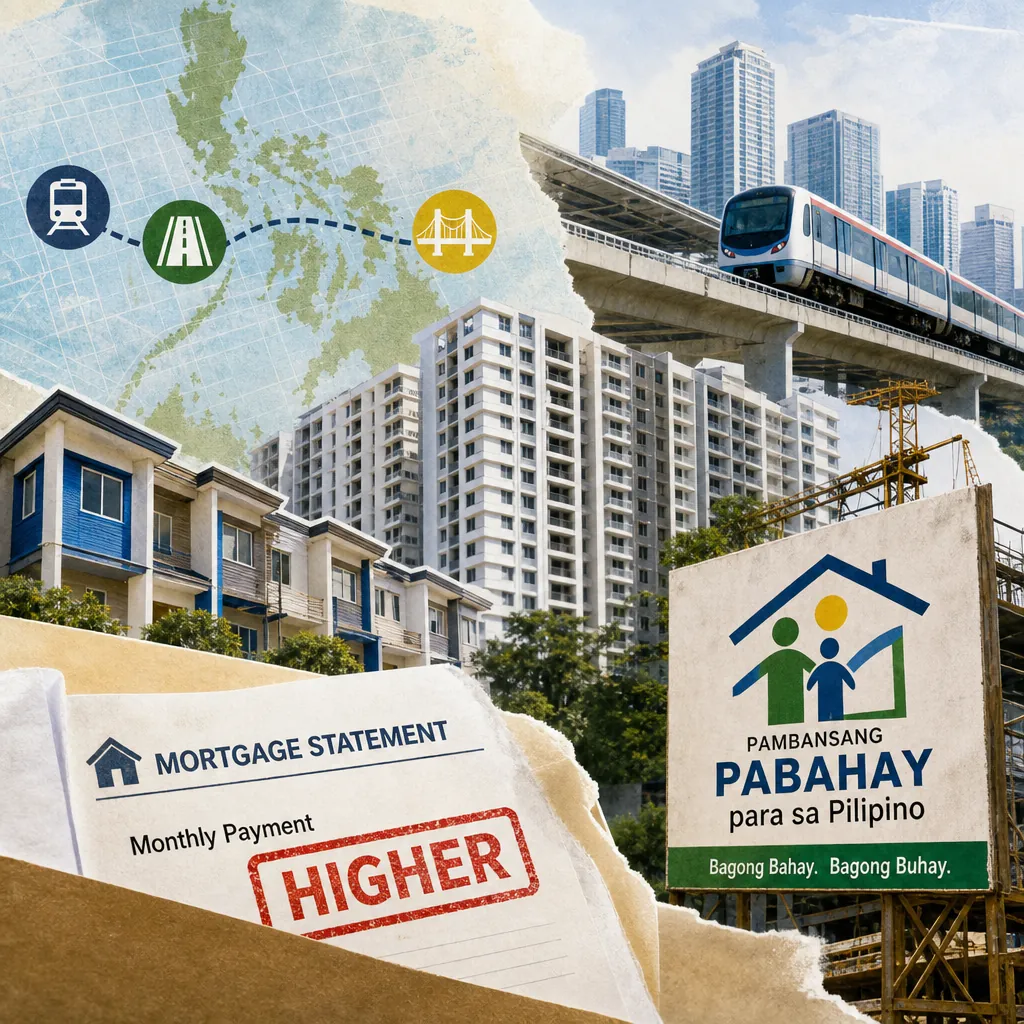
- Housing loan cost shock dominates consumer conversation. A detailed personal account of mortgage interest costs — where a ₱3.136 million loan at 6.75% resulted in nearly ₱946,000 in interest over five years, and a rate repricing to 9% pushed monthly payments from ₱27,754 to ₱30,619 — generated the highest engagement of any post. The post's advice to limit mortgage to 30% of take-home pay and make extra principal payments resonated widely.
- Government housing programs draw mixed reactions. The DHSUD's turnover of 300 modular shelter units in Naga City under the "Pambansang Pabahay para sa Pilipino" (4PH) program — the Marcos administration's flagship housing initiative — was covered by multiple news outlets. However, the 90 "haha" reactions on the Philippine News Agency post indicated public skepticism about the scale and pace of delivery. Naga City Mayor Leni Robredo praised the program as "aggressive," noting nearly ₱700 million in total housing projects.
- Developer consolidation and expansion signal corporate confidence. DoubleDragon Corp. secured nearly 99% shareholder approval to absorb MerryMart Consumer Corp., a move framed as "Project Solidify" to streamline operations. Megaworld's real estate investment trust, MREIT, announced it would reach one million square meters of gross leasable area three years ahead of schedule, with its largest asset injection (Wave 5) expected in the second half of 2026. Megaworld also reported ₱28 billion in sales from four sold-out residential village projects across Quezon City, Cavite, Palawan, and Ilocos Norte.
- Infrastructure developments in Bulacan and New Clark City gain traction. The Department of Public Works and Highways (DPWH) completed a 67.93-kilometer bypass road in Doña Remedios Trinidad, Bulacan, improving access to remote "Last Mile Schools". The BCDA announced plans for a digital infrastructure project in Morong and confirmed that the National Bureau of Investigation (NBI) would host critical facilities in New Clark City. A US gun manufacturer, Battle Arms Development Inc. (BADI), is considering Subic or Cavite for a new plant.
- Office market shows divergent trends. Makati City accounted for 66% of office take-up in the first five months of 2026, driven by higher vacancies and cheaper rents, but Bonifacio Global City (BGC) dominated expansion plans, with 82% of active demand. SM Offices began construction of North Tower 3, a 22-storey Philippine Economic Zone Authority (PEZA)-accredited office building in the SM North EDSA Complex, scheduled for completion in the second half of 2026.
- Environmental and safety concerns emerge. A condominium fire at Eastwood City forced 191 people to evacuate, sparking discussions about building safety. The Ayala Group ramped up relief efforts in earthquake-hit areas of Mindanao following a magnitude 7.8 earthquake on June 8. A tropical depression east of Visayas was expected to enter the Philippine area of responsibility by the weekend.
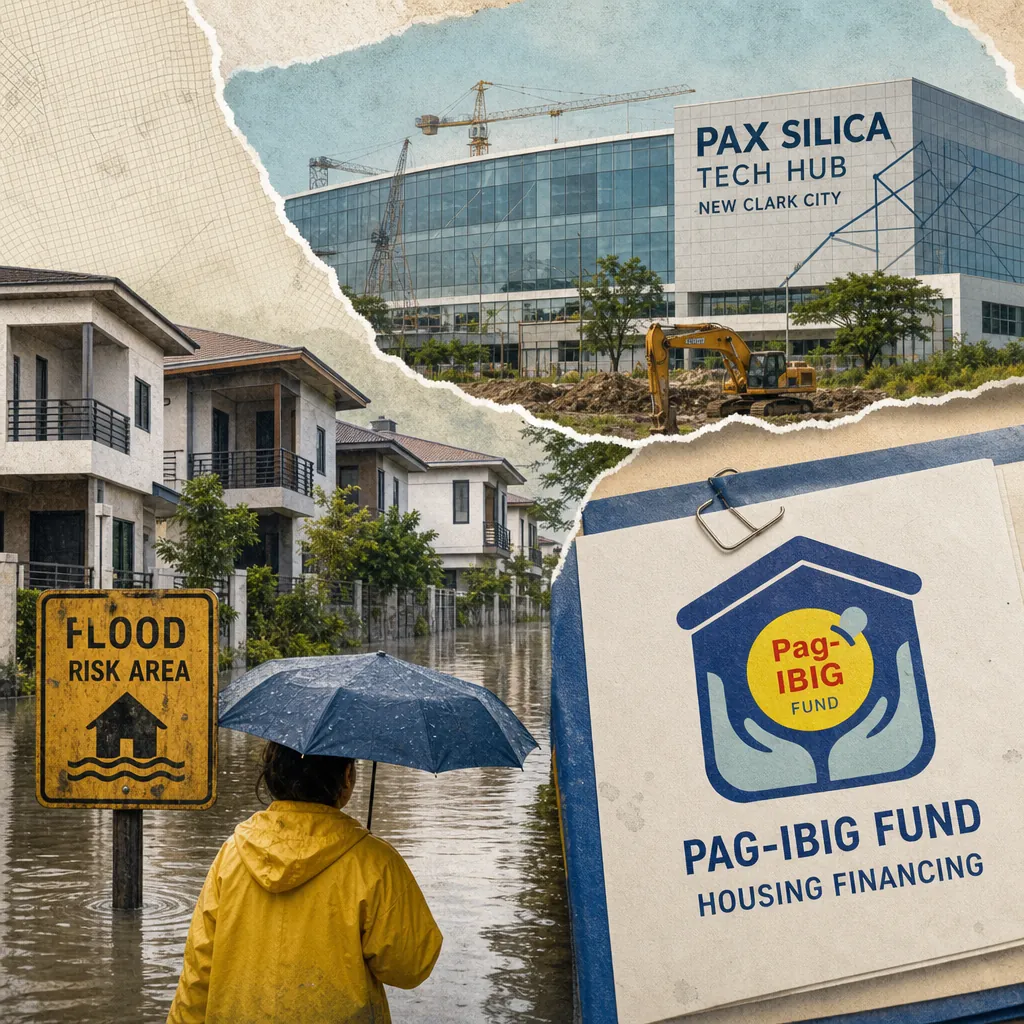
- Pag-IBIG Fund lowers housing loan rates. The Home Development Mutual Fund (Pag-IBIG Fund) offered promotional rates for loans above the socialized housing price ceiling up to ₱10 million, with a ₱2.5 million loan over 30 years estimated at ₱12,667 monthly amortization. The fund also launched a Special Assistance for Financial Emergencies (SAFE) Loan of up to ₱10,000 at 5.95% interest.
How the narratives stack
Dominant narrative — Housing affordability is under pressure. The most visible story is that homebuyers are struggling with high interest rates and mortgage costs. The viral personal finance post crystallized fears that banks profit excessively from loans, and that rate repricing can catch borrowers off guard. This narrative is reinforced by the flood of "pasalo" (assumed balance) and rent-to-own listings on Facebook, which suggest distress among original buyers. The Pag-IBIG rate reduction and SAFE loan are government responses to this pressure, but the skepticism evident in the "haha" reactions to the 4PH turnover suggests that official messaging is not fully trusted.
Counter-narrative — Developer and government actions show progress. Against the backdrop of consumer anxiety, major developers are executing ambitious plans. Megaworld's MREIT expansion and sold-out residential villages, DoubleDragon's successful consolidation, and SM Offices' new PEZA tower all signal that the corporate sector sees long-term value. The DHSUD's 4PH program, while criticized, is delivering units — 300 modular shelters in Naga City alone — and local officials like Mayor Robredo are publicly endorsing it. This narrative suggests that while the market is challenging, it is not collapsing.
Emerging narrative — Infrastructure is reshaping growth corridors. The completion of the Bulacan bypass road, the BCDA's digital infrastructure plans, and the NBI's move to New Clark City point to a shift in where development is happening. The potential BADI plant in Subic or Cavite adds an industrial dimension. These stories are currently low-engagement but could gain traction as projects materialize and create jobs, driving housing demand in those areas.
Suppressed narrative — Environmental and safety risks are under-discussed. The Eastwood City fire and the Mindanao earthquake received coverage but did not generate sustained conversation about building codes, disaster preparedness, or climate resilience. The tropical depression warning and flooding risks in Cavite and Bulacan were noted but not connected to real estate decisions. Given the Philippines' vulnerability to natural disasters, this is a significant gap that could become a major issue after the next event.
Platform insights
Facebook was the primary platform for both emotional engagement and official announcements. The personal finance post's 254 likes and 118 shares demonstrated that relatable, educational content outperforms corporate press releases. Official posts from DHSUD and news outlets received moderate engagement but were often met with skeptical reactions (e.g., 90 "haha" reactions). Property listing posts from agents, though numerous, attracted virtually zero engagement, indicating audience fatigue with generic sales content.
Twitter served as a channel for breaking news but generated minimal interaction. The DoubleDragon takeover tweet from inquirerdotnet had only 318 views and no likes or comments. Infrastructure and corporate news on Twitter struggled to gain traction, suggesting that the platform's real estate audience is small or passive.
Reddit functioned as a space for practical, peer-to-peer advice. A user's question about Pag-IBIG versus bank financing fees, noting a ₱150,000 difference, received only one comment but reflected a genuine information gap. Another user seeking honest feedback on Fullerton Suites in Silang, Cavite, got zero replies, indicating a vacuum of user experience that developers could fill.
YouTube featured coverage of the Eastwood fire (2,778 views, 23 likes) and a nostalgic piece on Pansol Laguna resorts (9,344 views, 279 likes), the latter tapping into emotional ties to provincial real estate.
Key voices and communities
- Personal finance influencers and homebuyers. The most influential voice was a personal finance coach whose detailed mortgage breakdown resonated with a wide audience. This community values transparency and practical advice, and their content shapes perceptions of developer financing and bank lending practices.
- Government housing agencies. The DHSUD, Pag-IBIG Fund, and the Social Housing Finance Corporation (SHFC) are central to the socialized housing narrative. Their announcements about the 4PH program, modular shelters, and loan rate reductions set the policy agenda, but public reception is mixed.
- Major developers and industry bodies. Ayala Land, Megaworld, DoubleDragon, and SM Offices drive corporate news. Their stock performance, project launches, and CSR initiatives influence investor and buyer sentiment. The Chamber of Real Estate and Builders' Associations (CREBA) Realtors Forum, featuring Colliers research director Joey Roi Bondoc, signals industry efforts to address market shifts.
- Real estate agents and brokers. A dense volume of property listings on Facebook promotes "pasalo" and rent-to-own deals, often using DHSUD license numbers for legitimacy. While individual posts get low engagement, the sheer frequency creates a dominant consumer-facing layer that shapes expectations about pricing and financing.
- Local government officials. Naga City Mayor Leni Robredo emerged as a key voice endorsing the 4PH program, providing political validation that could influence public trust. Bulacan Governor Daniel Fernando received a "Duyan Ka ng Magiting" award for public service, reinforcing the province's image as a growth area.
Narrative streams
Housing loan cost and financial literacy
The most powerful narrative stream was the personal finance coach's candid account of his housing loan experience. He revealed that over 15 years, he would pay ₱2.203 million in interest on a ₱3.136 million balance — effectively 70 centavos per peso borrowed. His monthly payment jumped from ₱27,754 to ₱30,619 when the fixing period ended and his rate rose to 9%. The post's advice — limit mortgage to 30% of take-home pay, lock in low fixed rates, and pay extra principal — became the core of the discussion. The high share count (118) suggests many readers passed it along as a cautionary guide. This narrative directly challenges developer messaging about affordability and could delay purchase decisions if widely adopted.
Government housing programs under scrutiny
The DHSUD's turnover of 300 modular shelter units in Naga City under the 4PH program was a major official story. The units, built in Barangay Pacol, are intended for families affected by government clearing operations and disaster-related risks. Mayor Robredo thanked the national government, calling the program "aggressive" and noting that nearly ₱700 million in housing projects are underway in Naga. However, the 90 "haha" reactions on the Philippine News Agency post suggest public skepticism about the program's implementation — whether the units are sufficient, well-located, or delivered on time. The Pag-IBIG Fund's promotional rate reduction and SAFE loan are complementary efforts to make housing more affordable, but they may not fully address the trust deficit.
Developer consolidation and expansion
DoubleDragon's acquisition of nearly 99% of MerryMart shares was the top corporate story. Founder Edgar "Injap" Sia II said the move, called "Project Solidify," would streamline operations and strengthen synergies across retail, property, hospitality, and industrial businesses. The 20 "haha" reactions on the Facebook post suggest public skepticism or amusement, possibly reflecting concerns about minority shareholder treatment or the speed of consolidation. Meanwhile, Megaworld's MREIT announced it would reach one million square meters of gross leasable area three years ahead of schedule, with Wave 5 adding 12 properties including malls and a hotel. Megaworld also reported ₱28 billion in sales from four sold-out residential village projects, indicating resilient demand for premium lots despite higher borrowing costs.
Infrastructure and growth corridors
Several infrastructure developments point to where future real estate demand may concentrate. The DPWH completed a 67.93-kilometer bypass road in Doña Remedios Trinidad, Bulacan, improving access to remote schools and potentially opening up areas for residential development. The BCDA signed a deal with Brightside Group to explore digital infrastructure in Morong, including a telecommunications gateway and data centers. The NBI confirmed it would host critical facilities in New Clark City, reinforcing the township's strategic importance. A US gun manufacturer, BADI, is considering Subic or Cavite for a plant, which could boost industrial property demand. These stories currently have low engagement but represent long-term value drivers.
Office market divergence
Makati City is winning office leases due to higher vacancies and cheaper rents, accounting for 66% of take-up in the first five months of 2026. However, BGC dominates expansion plans, with 82% of active demand. This suggests a two-tier market: cost-sensitive tenants go to Makati, while growth-oriented firms prefer BGC's premium environment. SM Offices' new PEZA-accredited tower in Quezon City adds supply in a third node, targeting business process outsourcing (BPO) firms and multinationals seeking tax incentives.
Conversation trajectory
Housing loan cost scrutiny will intensify over the next 2–4 weeks. The viral personal finance post is likely to trigger a wave of similar shared experiences, shifting the conversation from general "buy vs. rent" debates toward granular financial breakdowns. Expect a 3–4x increase in posts comparing fixed-rate lock-in offers, prepayment penalties, and refinancing strategies as mortgage repricing events for 2021-era loans approach their anniversary dates. This trend directly impacts developers' sales messaging: value propositions centered on "manageable monthly amortizations" will face heightened skepticism unless backed by transparent, bank-agnostic loan calculators.
Government housing programs will remain politically charged. The 4PH program's rollout in Naga City, with Mayor Robredo's endorsement, creates a template for other local governments. However, the skeptical reactions suggest that opposition-aligned voices may amplify criticism about pace, quality, or location. The next national rollout milestones (e.g., target of 300 units in Naga) will be key trigger events. Proactive messaging around success stories could help stabilize perception.
Developer consolidation and expansion will be watched for execution risk. DoubleDragon's MerryMart takeover and MREIT's Wave 5 injection are ambitious moves. If they deliver on promised synergies and dividends, they could boost confidence in developer stocks and REITs. If they stumble, they could fuel skepticism about corporate governance. The July 1 record date for DoubleDragon preferred dividends will refocus attention on cash flows.
Infrastructure stories will gain traction as projects break ground. The BCDA's digital infrastructure plans and the NBI's move to New Clark City are currently niche topics, but as construction begins and jobs are created, they will attract more attention from homebuyers and investors. The anticipated US-Philippines framework agreement for the Pax Silica AI hub in New Clark City could catalyze a spike in speculative land-buying threads.
Key trigger events that will reshape the conversation include: the release of the Eastwood condo fire investigation report (likely within two weeks), which will reignite questions about building safety; the commencement of the monsoon season's peak, which will amplify flooding-related conversations about real estate purchases in flood-prone areas; and the resolution of the PrimeWater takeover dispute in Bulacan, which could set a precedent for public-private utility arrangements in master-planned townships.
Response guidance
Communicators in the Philippine real estate sector should consider the following approaches:
- Address housing loan affordability concerns head-on. Create educational content that explains fixed-rate locking, prepayment benefits, and total cost comparisons between Pag-IBIG and bank financing. Partner with trusted personal finance voices to distribute this content, as their credibility exceeds that of corporate marketing. A simple infographic showing how early principal payments can save hundreds of thousands of pesos could counter the negative narrative.
- Amplify government housing program successes with transparency. The 4PH program's modular shelter turnover in Naga City is a tangible achievement, but the skeptical reactions suggest a need for more transparent progress updates. Developers can collaborate with DHSUD to share case studies, beneficiary testimonials, and timelines. Co-branded content that highlights public-private partnerships could build trust.
- Leverage corporate expansion stories to reinforce long-term value. Megaworld's MREIT expansion and DoubleDragon's consolidation are signals of sector health. Communicators should frame these moves as evidence of strong fundamentals, not just corporate maneuvering. Dividend announcements and project milestones should be paired with clear explanations of how they benefit homeowners and investors.
- Prepare for environmental and safety narratives. The Eastwood fire and Mindanao earthquake are reminders that disaster resilience is a latent concern. Developers should proactively publish fire safety protocols, flood mitigation measures, and building code compliance records. A "safety and resilience" explainer package can be deployed when the next incident occurs, positioning the brand as proactive rather than reactive.
- Monitor infrastructure developments for messaging opportunities. The Bulacan bypass road, New Clark City facilities, and potential BADI plant are stories that can be woven into marketing for projects in those areas. Highlighting job creation, improved connectivity, and government backing can differentiate townships from competitors.
- Sensitive topics to navigate: Land disputes and agrarian reform should be framed as voluntary settlements, not admissions of fault. Condo fire incidents require immediate acknowledgment and specific safety measures, not downplaying. Financing cost concerns should be addressed with neutral, educational content that avoids criticizing banks or agents. Local government vs. private utility disputes should be framed as confirmations of due process and contractual stability.
See the full picture behind today's signals.
This report draws from Media Meter's MediaWatch, our real-time monitoring engine tracking 2,470+ Philippine sources across print, broadcast, digital, and social. Explore how the platform turns raw coverage into decision-grade intelligence, then see how it's configured for teams like yours — whether you're in PR agencies, corporate comms, government, or marketing.
Want more? Browse our Report Library for sector and crisis intelligence, or request a demo and we'll have your brand set up before the call.
Want this kind of intelligence on your brand?
This brief is built on the same MediaWatch methodology that runs continuously across every brand we monitor. See your competitive landscape, Impact Score, and narrative trajectory in a 30-minute demo.