Philippine Real Estate: Trust Gaps, Flood Risks, and Retail Anchors
A daily snapshot of Philippine real estate conversation on June 14, 2026, covering buyer trust issues, flood risks, infrastructure delays, and positive retail milestones.
On June 14, the Philippine real estate conversation was shaped by two new threads that both enriched and redirected existing narratives. The first was a Facebook post from sunstarcebu announcing the official opening of Robinsons Supermarket’s 12th store in Cebu, located at Filinvest Shoppes Cebu IT Park. While the post itself garnered minimal engagement—just 2 likes and 1 love—it signals a tangible retail milestone within a key mixed-use development zone, reinforcing the appeal of Cebu IT Park as a live-work-play hub for investors and end-users alike. The second thread came from Reddit user RealEstateGuide_Ilo, who posted a detailed guide titled “Finding a trusted agent is the real challenge,” explicitly targeting overseas Filipino workers (OFWs) and seafarers. The post warned against agents who “ghost” post-sale and promoted the Filipino Homes ecosystem, which integrates property management and tenant screening via Rent.ph. It received 5 comments, marking a notable uptick in discussion compared to many other posts that same day. This thread directly addressed the trust deficit that had been surfacing across earlier buyer frustration posts, providing a structured solution to a problem that first-time buyers and overseas investors consistently raised.
Meanwhile, the conversation continued to be dominated by a flood incident in a Santa Rosa, Laguna subdivision, which generated over 2,400 reactions and 1,100 comments on a gmanews Facebook post. This event underscored that flooding remains a top-of-mind concern for homebuyers in Laguna, a key growth area. Other threads included a Deed of Absolute Sale (DOAS) discussion on Reddit where a buyer questioned an agent’s suggestion to understate the purchase price to reduce taxes—a practice that attracted 12 comments warning about Bureau of Internal Revenue (BIR) audit risks. A separate Reddit post from a first-time homebuyer asking about verifying a developer’s Department of Human Settlements and Urban Development (DHSUD) license to sell, negotiating total contract price, and checking agent accreditation revealed deep buyer anxiety over legal compliance and transparency. These threads, combined with the agent-trust guide, paint a picture of a market where buyers are becoming more discerning, infrastructure reliability remains a concern, and institutional trust is fragile—yet solution-oriented content is beginning to fill the gap.
Conversation snapshot. The day’s real estate conversation was modest in volume but rich in thematic signals. The most engaging post was the flood report from gmanews on Facebook, which drew 2,493 likes and 1,150 comments—far exceeding any other real estate-related post. On Reddit, the DOAS thread led in replies with 12 comments despite zero upvotes, indicating strong interest in tax and legal risks. The agent-trust guide by RealEstateGuide_Ilo received 5 comments, the highest comment count among Reddit real estate posts on June 14, signaling growing appetite for actionable solutions to agent misconduct. The Robinsons Supermarket opening post on Facebook had minimal engagement (2 likes, 1 love), but its value lies in the signal it sends about retail maturation in mixed-use developments. Other posts, such as the Baguio Luna Terraces housing project announcement and individual property listings, generated only a handful of reactions each, suggesting that routine updates and listings do not capture broad attention unless tied to a pain point like flooding or trust.
Key themes
- Buyer trust and agent accountability. A Reddit guide targeting OFWs and seafarers highlighted the problem of agents who disappear after closing, leaving buyers to handle turnover, construction delays, and tenant-finding alone. The post promoted a full-service ecosystem that handles unit turnover, move-in assistance, and property management—a model that directly addresses the hands-free needs of overseas buyers. This theme builds on earlier buyer frustration posts about unresponsive agents at Amaia Series Nuvali and questions about DHSUD permits.
- Flood risk as a dominant concern. A flood in a Santa Rosa, Laguna subdivision after heavy rain generated over 2,400 reactions and 1,100 comments on a gmanews Facebook post. This massive engagement signals that flooding is a top-of-mind issue for homebuyers in Laguna, a key growth area. The incident reinforces the need for developers to communicate flood mitigation measures and drainage investments.
- Tax and legal transparency in property transactions. A Reddit thread about a Deed of Absolute Sale where the stated amount was lower than the purchase price based on zonal value attracted 12 comments discussing BIR audit risk and double taxation. This real-world example of tax-driven price manipulation will likely fuel further scrutiny of documentary stamp tax and capital gains tax transparency in secondary transactions.
- Government housing funding gaps. The stalled Luna Terraces Housing Project in Baguio—a 662-unit socialized housing development—continued to be a reference point for funding challenges. The city is seeking alternative financing from Pag-IBIG Fund and the Social Housing Finance Corporation after DHSUD funding gaps halted construction. This pattern of local governments pivoting to alternative financing sources will likely become a recurring narrative.
- Retail milestones in mixed-use developments. The opening of Robinsons Supermarket at Filinvest Shoppes Cebu IT Park, though low in engagement, signals that retail anchor tenants are actively expanding into mixed-use developments outside Metro Manila, enhancing the liveability proposition of projects in Cebu IT Park and similar hubs.
- Infrastructure reliability concerns. Power outage reports in subdivisions like St. Joseph Homes in Cabuyao, Laguna, and scheduled interruptions by Meralco in Metro Manila, Bulacan, Cavite, and Rizal highlight utility reliability as a recurring pain point for homeowners. Water service interruptions were also announced for similar areas. These posts, while low in engagement individually, collectively reinforce a narrative of infrastructure fragility that real estate buyers must factor into location decisions.
- First-time buyer due diligence. A Reddit post from a first-time homebuyer asking detailed questions about DHSUD license-to-sell verification, agent accreditation, and contract terms underscores ongoing consumer vigilance around regulatory compliance and transparency. This suggests that buyers are becoming more sophisticated in their research.
How the narratives stack
Dominant narrative — The dominant narrative is one of buyer caution and due diligence. Across multiple threads, buyers are expressing anxiety about agent trust, legal compliance, tax risks, and flood hazards. The flood incident in Santa Rosa is the most visible manifestation of this, but the DOAS thread and the agent-trust guide also reflect a market where buyers are actively seeking information to protect themselves. This narrative is driven by real-world pain points—ghosting agents, unclear permits, and natural disasters—and is amplified by social media platforms where users share warnings and solutions.
Counter-narrative — The counter-narrative is one of positive development and institutional progress. The Robinsons Supermarket opening at Filinvest Shoppes Cebu IT Park demonstrates that retail infrastructure is maturing in key urban hubs, reinforcing the value proposition of mixed-use townships. Additionally, the Department of Public Works and Highways (DPWH) Secretary Vince Dizon’s assurance that the long-delayed Alaminos–San Pablo City Bypass Road in Laguna will be completed by December offers a counterpoint to infrastructure frustration. The Department of Human Settlements and Urban Development (DHSUD) also extended the deadline for homeowners association re-registration to December 18, providing relief to associations that had not yet complied. These developments suggest that despite challenges, government and private sector actors are making progress.
Emerging narrative — An emerging narrative is the rise of solution-oriented content that addresses buyer pain points. The agent-trust guide by RealEstateGuide_Ilo is a prime example: it does not just complain about a problem but offers a structured solution—a full-service ecosystem that handles turnover, move-in, and property management. This marks a shift from complaint to proposed remedy within the buyer due diligence narrative. Similarly, the DOAS thread, while highlighting a problem, also generated discussion about proper procedures, indicating that users are seeking and sharing practical advice. This trend could lead to increased demand for third-party verification services, accredited agent networks, and post-sale support packages.
Suppressed narrative — The suppressed narrative is the long-term impact of climate change on property values and insurance availability. While the Santa Rosa flood generated massive engagement, the conversation focused on immediate drainage and developer responsibility rather than the broader systemic risk of more frequent extreme weather events. Similarly, the power and water interruptions were discussed as isolated incidents rather than as symptoms of aging infrastructure that may require significant investment. This under-covered story matters because it affects the long-term viability of certain locations and could reshape buyer preferences toward higher-elevation or better-serviced areas. Developers and policymakers have an opportunity to address this proactively, but the conversation has not yet reached that level of depth.
Platform insights
Facebook — Facebook remained the dominant platform for high-engagement content, driven by the flood post from gmanews which garnered 2,493 likes and 1,150 comments. This post’s massive engagement shows that disaster-related content generates the highest cross-section of user participation. In contrast, the Robinsons Supermarket opening post from sunstarcebu received only 2 likes and 1 love, indicating that positive retail milestones do not generate viral excitement but may still be valuable for signaling ecosystem maturity to a targeted audience. The Baguio Luna Terraces housing post received a mix of reactions, including 13 “haha” reactions, which may indicate public skepticism or mockery of government housing promises. Overall, Facebook is the platform where emotional and urgent content—especially about flooding—drives the most interaction.
Reddit — Reddit served as the platform for detailed, solution-oriented discussions. The agent-trust guide by RealEstateGuide_Ilo received 5 comments, the highest comment count among Reddit real estate posts on June 14, indicating that practical advice on avoiding agent misconduct resonates with the forum’s audience. The DOAS thread still led in total replies (12 comments despite 0 upvotes), but the new guide signaled a growing appetite for actionable solutions rather than just warnings. Reddit users also engaged in first-time buyer questions about DHSUD permits and agent accreditation, showing that the platform is a hub for due diligence and peer-to-peer advice. Unlike Facebook, where engagement is driven by emotional reactions, Reddit fosters deeper, more analytical conversations.
Twitter — No new real estate–related tweets appeared in the June 14 data beyond earlier power outage and DPWH bypass road announcements. The bypass road post remained at 100 views, suggesting infrastructure news on Twitter has limited organic reach. Twitter appears to be a secondary platform for real estate conversation, with lower engagement compared to Facebook and Reddit.
Key voices and communities
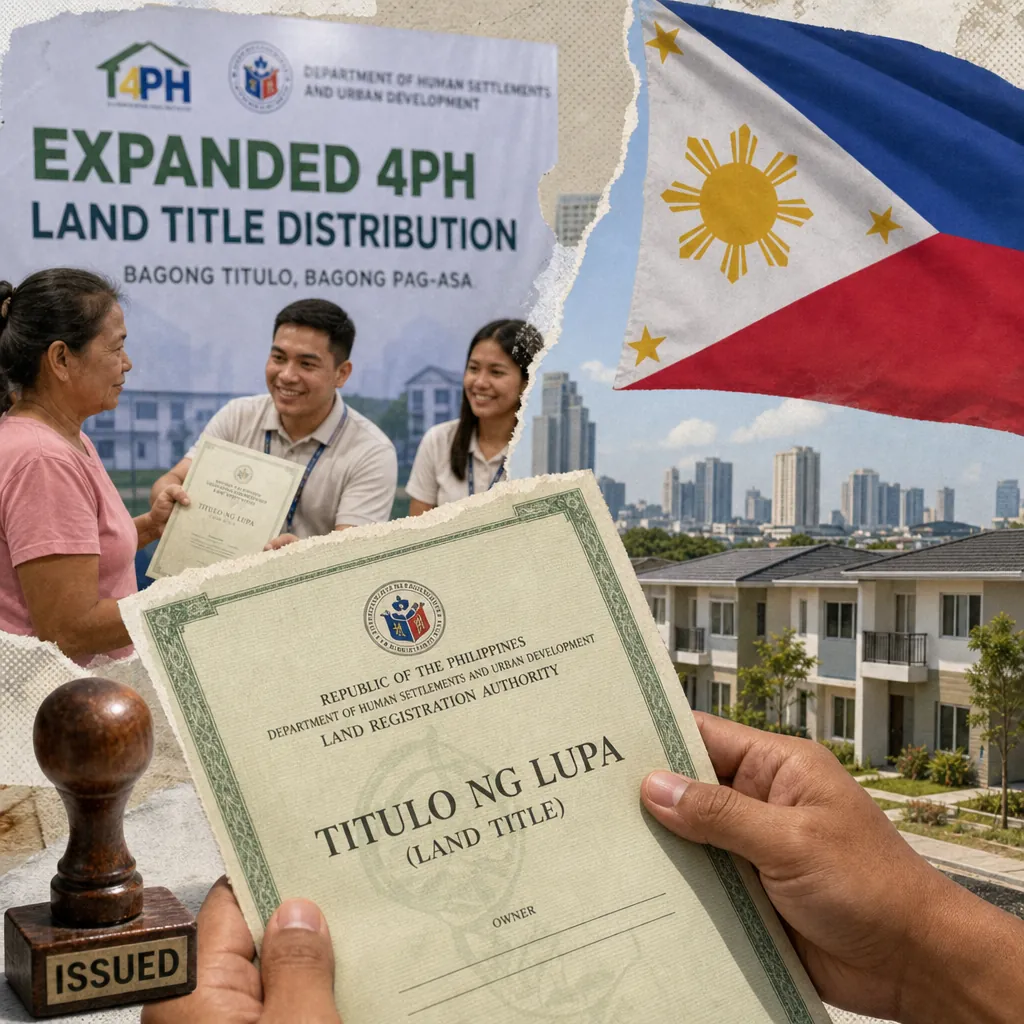
- Government housing agencies and local government units. Government-affiliated accounts and local government information offices drive institutional conversation around housing policy, particularly on Facebook. They focus on program updates, funding mechanisms, and project milestones. The Baguio city government’s post about the Luna Terraces Housing Project is a key example, detailing a 662-unit development where the city is seeking alternative financing after DHSUD funding gaps halted construction. These stakeholders align closely with socialized housing and government-subsidized initiatives, making them key partners for developers involved in the Pambansang Pabahay para sa Pilipino Program (4PH) or Pag-IBIG-financed projects.
- Individual property sellers and homeowners. Individual sellers on Reddit actively list residential properties—lots, townhouses, and condos—with clear emphasis on clean titles, updated taxes, and HOA dues. These posts generate very low engagement (1–3 likes) but serve as direct signals of market activity for preselling and resale properties. A new luxury listing in Angeles City near Clark offers a 9-bedroom estate with pool and jacuzzi, reduced from ₱75 million to ₱55 million, garnering 3 likes and 2 comments, reflecting niche high-end seller activity. These voices represent the secondary market and individual transactions, offering insights into price points and buyer concerns.
- Implied homebuyer audience and commenters. Although not always directly posting, the comments and reactions on housing-related content reveal an audience actively seeking clarity on financing, legal processes, and developer reliability. The flood post’s 1,150 comments show that homebuyers are deeply concerned about environmental risks. The DOAS thread’s 12 comments reveal anxiety about tax compliance. The agent-trust guide’s 5 comments indicate that overseas buyers need post-sale accountability and turnkey management. This stakeholder group is the target market for developers, and understanding their pain points can inform more effective marketing and customer service strategies.
- Local business news and media outlets. Regional news publishers and business press outlets occasionally cover retail and commercial milestones tied to major real estate developments, particularly on Facebook. The sunstarcebu post about the Robinsons Supermarket opening is a key example. These posts generate low direct engagement but serve as authoritative third-party validations of project progress and amenity build-out. Developers can proactively pitch such milestones to local media to build a positive narrative around project completion and livability.
Narrative streams
Buyer trust and agent accountability
The most significant narrative stream on June 14 was the growing demand for agent accountability and post-sale support. The Reddit guide by RealEstateGuide_Ilo explicitly targeted OFWs and seafarers, a segment that is particularly vulnerable to agent ghosting because they are not physically present to follow up on turnover issues, delayed construction, or tenant-finding. The guide promoted a full-service ecosystem (Filipino Homes integrated with Rent.ph) that handles unit turnover, move-in assistance, and property management—a model that directly addresses the hands-free needs of overseas buyers. This thread received 5 comments, the highest comment count among Reddit real estate posts on June 14, indicating that practical advice on avoiding agent misconduct resonates with the forum’s audience.
This narrative builds on earlier buyer frustration posts. On June 13, a potential buyer of Amaia Series Nuvali townhouses contacted multiple agents but received no updates, raising concerns that agents may be withholding inventory to drive up prices. Another first-time homebuyer posted detailed questions about verifying a developer’s DHSUD license to sell, negotiating total contract price, and checking agent accreditation—revealing deep buyer anxiety over legal compliance and transparency. Together, these threads suggest that trust-brokerage models (platforms that guarantee agent accountability) could become a competitive differentiator in the Philippine market.
For developers, this narrative presents both a risk and an opportunity. The risk is that negative experiences with agents can damage a developer’s brand, even if the agents are independent. The opportunity is that developers who invest in lifecycle support—such as verified agent accreditation programs, post-turnover support bundles, or partnerships with property management platforms—can differentiate themselves and rebuild confidence among OFW and first-time buyer segments.
Flood risk and environmental livability
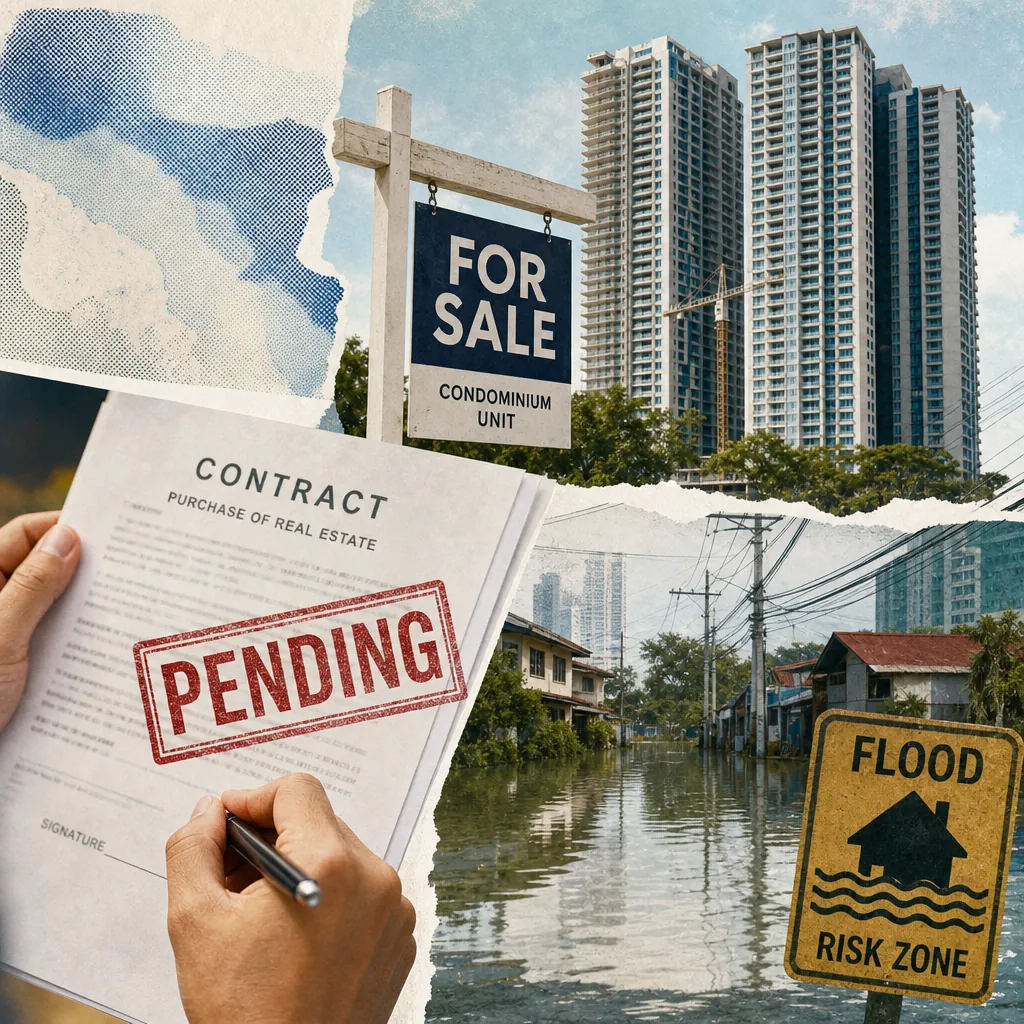
The flood incident in a Santa Rosa, Laguna subdivision on June 13–14 dramatically escalated the conversation around environmental risks. The gmanews Facebook post reporting the flood received 2,493 likes and 1,150 comments, making it the most engaging real estate-related post of the day. This massive engagement signals that flooding is a top-of-mind concern for homebuyers in Laguna, a key growth area where many subdivisions are located.
The flood incident is particularly significant because it occurred in a subdivision, directly tying residential flooding to location decisions. For developers with projects in Laguna—especially in Santa Rosa, Nuvali, and surrounding areas—this creates a pressing need to communicate flood mitigation measures and drainage investments. The incident also amplifies the broader risk of extreme weather affecting residential subdivisions, a concern that is likely to intensify as the rainy season progresses.
A related post from the Philippine Atmospheric, Geophysical and Astronomical Services Administration (PAGASA) during Typhoon and Flood Awareness Week further amplifies the broader risk of extreme weather affecting residential subdivisions. Developers can leverage this by proactively sharing drainage master plans, flood-free certifications, and compliance with DPWH/PAGASA standards in their marketing.
Tax and legal transparency in property transactions
The Deed of Absolute Sale (DOAS) thread on Reddit highlighted a common but risky practice: understating the purchase price on the deed to reduce taxes for the seller. The buyer, who was in the process of purchasing a vacant lot, was told by the agent that stating a lower amount based on zonal value would save the seller on capital gains tax. However, commenters warned that this practice exposes both buyer and seller to BIR audit, penalties, and future capital gains tax liability when the buyer resells. The thread attracted 12 comments, the highest reply count among Reddit real estate posts on June 14, indicating strong interest in this issue.
This narrative underscores widespread confusion about capital gains tax and documentary stamp tax among buyers and sellers. Developers and real estate professionals have an opportunity to produce simple explainers on proper property transfer procedures, reducing legal risk for buyers and enhancing trust. The DOAS thread also reinforces the earlier theme of buyer due diligence: buyers are increasingly scrutinizing every aspect of a transaction, from permits to tax compliance.
Government housing funding gaps
The stalled Luna Terraces Housing Project in Baguio continued to be a reference point for government housing challenges. The project, a 662-unit socialized housing development, was originally funded by DHSUD and the National Housing Authority (NHA) but halted due to funding gaps. The Baguio city government is now seeking alternative financing from Pag-IBIG Fund and the Social Housing Finance Corporation (SHFC) under the Pambansang Pabahay para sa Pilipino Program (4PH). The post received a mix of reactions, including 13 “haha” reactions, which may indicate public skepticism or mockery of government housing promises.
This pattern of local governments pivoting to alternative financing sources will likely become a recurring narrative over the next 3–6 months as similar projects face budget shortfalls. For developers, this presents an opportunity to demonstrate secured funding and proactive government partnerships, as the Baguio city government’s efforts to pursue multiple funding sources portray local government responsiveness.
Retail milestones in mixed-use developments
The opening of Robinsons Supermarket at Filinvest Shoppes Cebu IT Park, while low in engagement, is a positive signal for the mixed-use development model. The post from sunstarcebu announced the official opening of the supermarket’s 12th store in Cebu, located within the Filinvest Shoppes at Cebu IT Park. This retail milestone reinforces the appeal of Cebu IT Park as a live-work-play hub for investors and end-users alike.
For developers, such operational updates are quiet signals of ecosystem maturity. When a reputable news outlet reports retail openings within a developer’s township, it reinforces buyer confidence in the location’s long-term viability. Developers can actively seek media coverage of such milestones to build a positive narrative around project completion and livability.
Conversation trajectory
The conversation is likely to evolve in several directions over the coming weeks and months:
- Increased focus on flood risk and climate resilience (next 4–6 weeks). The Santa Rosa flood incident will likely renew calls for stricter flood risk disclosure in property listings and may push DHSUD to mandate flood-zone mapping for new subdivisions. Developers in flood-prone areas should prepare to communicate their drainage investments and flood-free certifications. The onset of the rainy season will keep this topic top-of-mind.
- Growing demand for agent accountability and post-sale services (next 1–2 months). The agent-trust guide targeting OFWs and seafarers signals that the conversation around service reliability—especially for remote buyers—will intensify. Brands that can demonstrate transparent turnover assistance, tenant management, and legal compliance will capture significant share of voice among the OFW segment. This could lead to partnerships between developers and property management platforms.
- Continued scrutiny of tax and legal compliance (next 3 months). The DOAS thread highlights a common risky practice that will likely fuel further scrutiny of documentary stamp tax and capital gains tax transparency in secondary transactions. Developers and real estate professionals should produce educational content on proper procedures to reduce legal risk and enhance trust.
- Government housing funding gaps as a recurring narrative (next 3–6 months). The Luna Terraces case is likely to be followed by similar stories as other local governments face budget shortfalls. The DHSUD’s evaluation of the Luna Terraces position paper and subsequent funding approval decision (expected within 60–90 days) could either validate the 4PH program’s effectiveness or expose further bureaucratic delays.
- Infrastructure improvements as a counter-narrative (next 6 months). The planned completion of the Alaminos–San Pablo City Bypass Road within the year will draw attention to infrastructure-housing linkages in Laguna and could spur similar bypass projects in Cavite and Bulacan. Developers can reference this as evidence of improving regional connectivity.
Trigger events that would reshape the conversation:
- A major flood event in another key growth area (e.g., Cavite, Bulacan) would amplify the flood risk narrative and potentially trigger regulatory changes.
- A high-profile case of agent fraud or ghosting going viral could accelerate demand for accredited agent networks and post-sale service guarantees.
- A BIR audit or penalty related to understated DOAS prices could serve as a cautionary tale and drive more educational content.
- A DHSUD funding decision on the Luna Terraces project could either restore confidence in the 4PH program or expose further delays.
Response guidance
For communicators tracking the Philippine real estate conversation, the following approaches are recommended:
Platform approaches:
- Facebook: Leverage the public interest in affordable housing and flood risk by sharing transparent updates on project milestones and flood mitigation measures. Use community-focused posts to highlight successful project stages and retail milestones. Respond to inquiries about clean title and tax status by providing clear, standardized FAQs.
- Reddit: Engage in buyer-advice threads by offering checklists and guides on DHSUD license verification, agent accreditation, and tax compliance. Avoid direct marketing; instead, position your brand as a helpful authority. Monitor threads about agent ghosting and offer best practices for vetting real estate companies.
- Twitter: Use infrastructure news (e.g., bypass road completion) to reinforce positive narratives about regional connectivity. Share bite-sized updates on retail openings and community events. Avoid directly replying to individual complaints; instead, create pinned threads consolidating responses to frequently asked questions.
Key messages:
- Access to affordable housing remains a national priority, with government programs like the 4PH actively pursuing funding and site development partnerships.
- Clean titles and transparent transaction documentation are non-negotiable for both buyers and sellers—verification through DHSUD and local assessors ensures long-term security of ownership.
- Infrastructure improvements—such as access roads, drainage, and retail amenities—are critical to making housing projects livable and resilient, especially in areas prone to severe weather.
- Buyers should always verify DHSUD licenses per project phase and confirm agent accreditation through PRC or company channels before committing to a purchase.
- Choosing a company that provides end-to-end support—from turnover to property management—reduces risks of being left unsupported after closing, especially for OFWs and seafarers.
Sensitive topics to navigate:
- Stalled government projects: Acknowledge funding challenges but avoid speculating on blame. Frame as a collaborative effort to resume construction.
- Weather-related property risks: Do not downplay risks; emphasize mitigation features and due diligence for buyers.
- Agent reliability and post-sale abandonment: Avoid disparaging freelance agents; instead, promote industry standards such as verified company affiliations and post-sale service commitments.
- Underdeclared purchase price on DOAS: Acknowledge the buyer’s tax-saving instinct but clearly explain the legal risks without judging the parties involved.
See the full picture behind today's signals.
This report draws from Media Meter's MediaWatch, our real-time monitoring engine tracking 2,470+ Philippine sources across print, broadcast, digital, and social. Explore how the platform turns raw coverage into decision-grade intelligence, then see how it's configured for teams like yours — whether you're in PR agencies, corporate comms, government, or marketing.
Want more? Browse our Report Library for sector and crisis intelligence, or request a demo and we'll have your brand set up before the call.
Want this kind of intelligence on your brand?
This brief is built on the same MediaWatch methodology that runs continuously across every brand we monitor. See your competitive landscape, Impact Score, and narrative trajectory in a 30-minute demo.