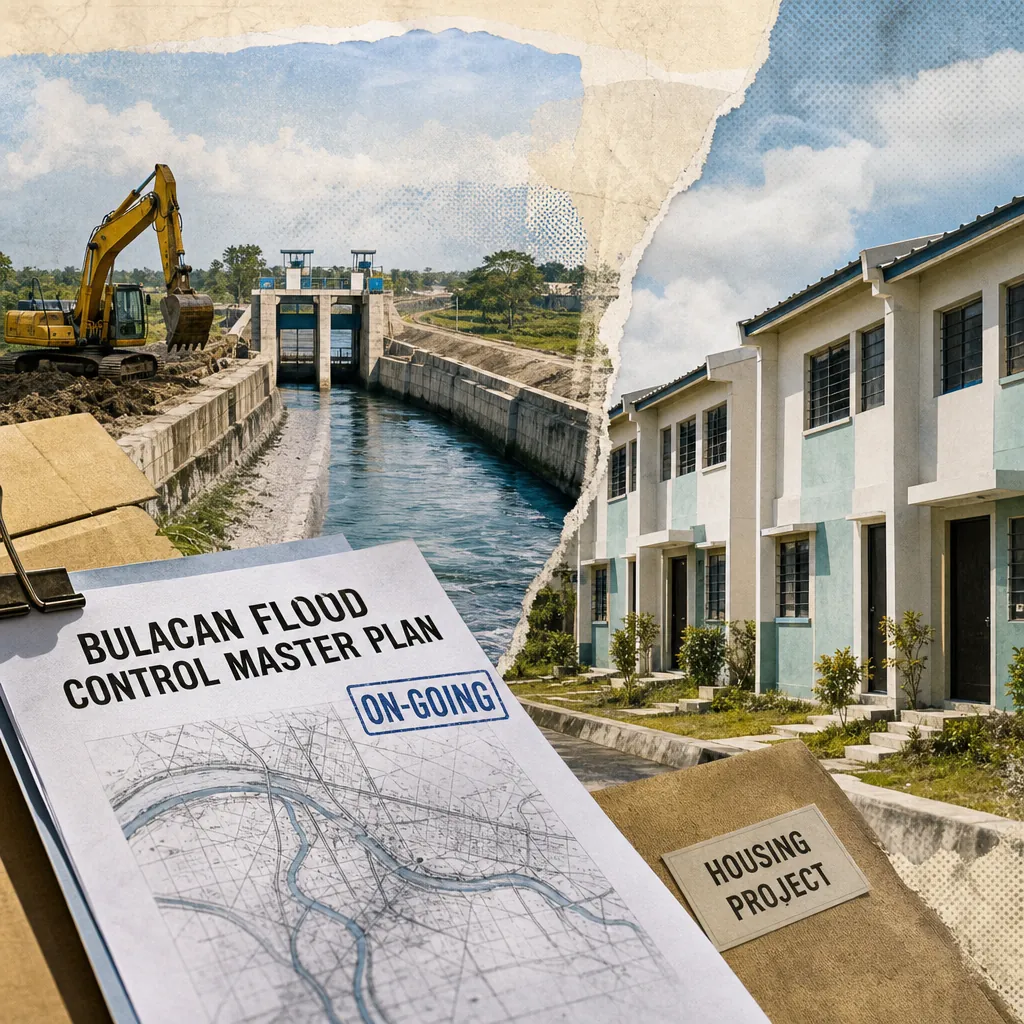
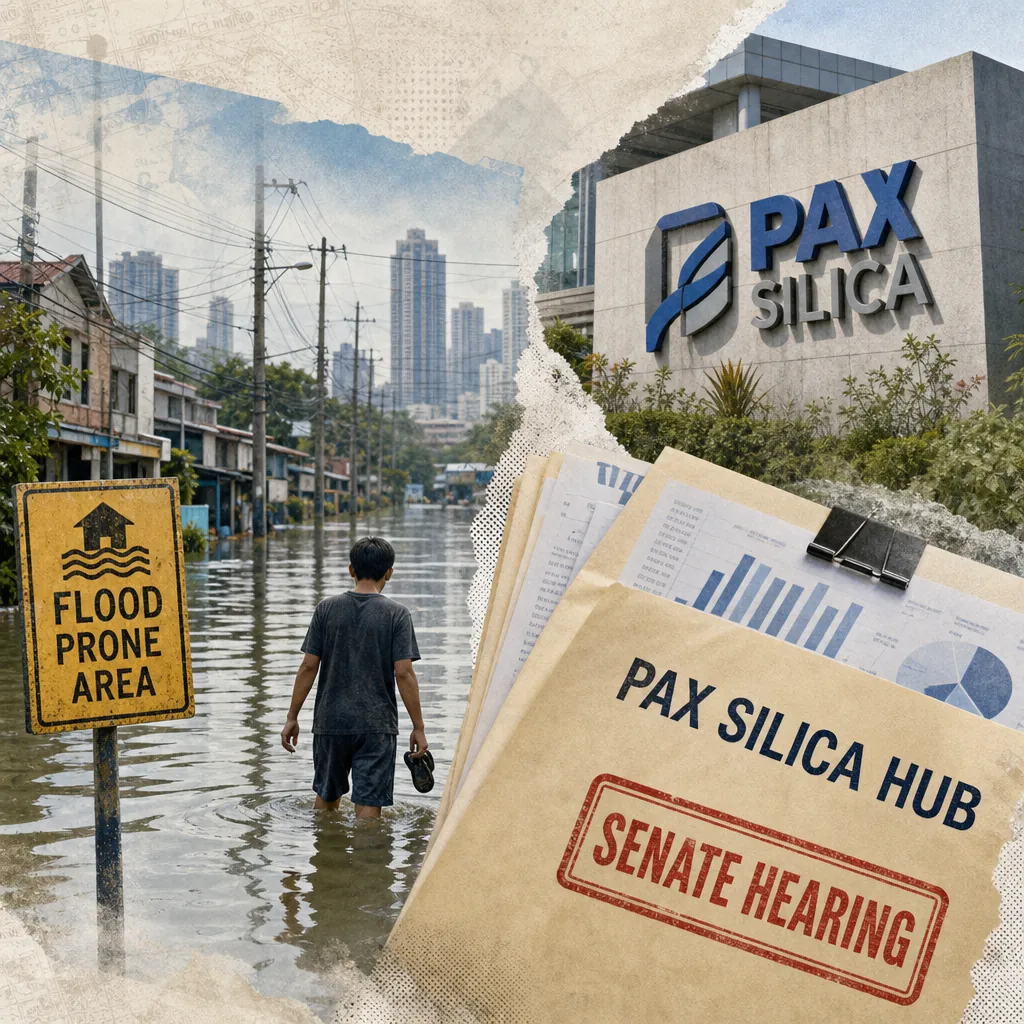
Senate GPS mandate for flood funds; monsoon floods persist
The Senate mandates GPS coordinates for P107B flood projects amid ghost project concerns, while monsoon floods persist across Luzon, affecting property markets and prompting infrastructure scrutiny.
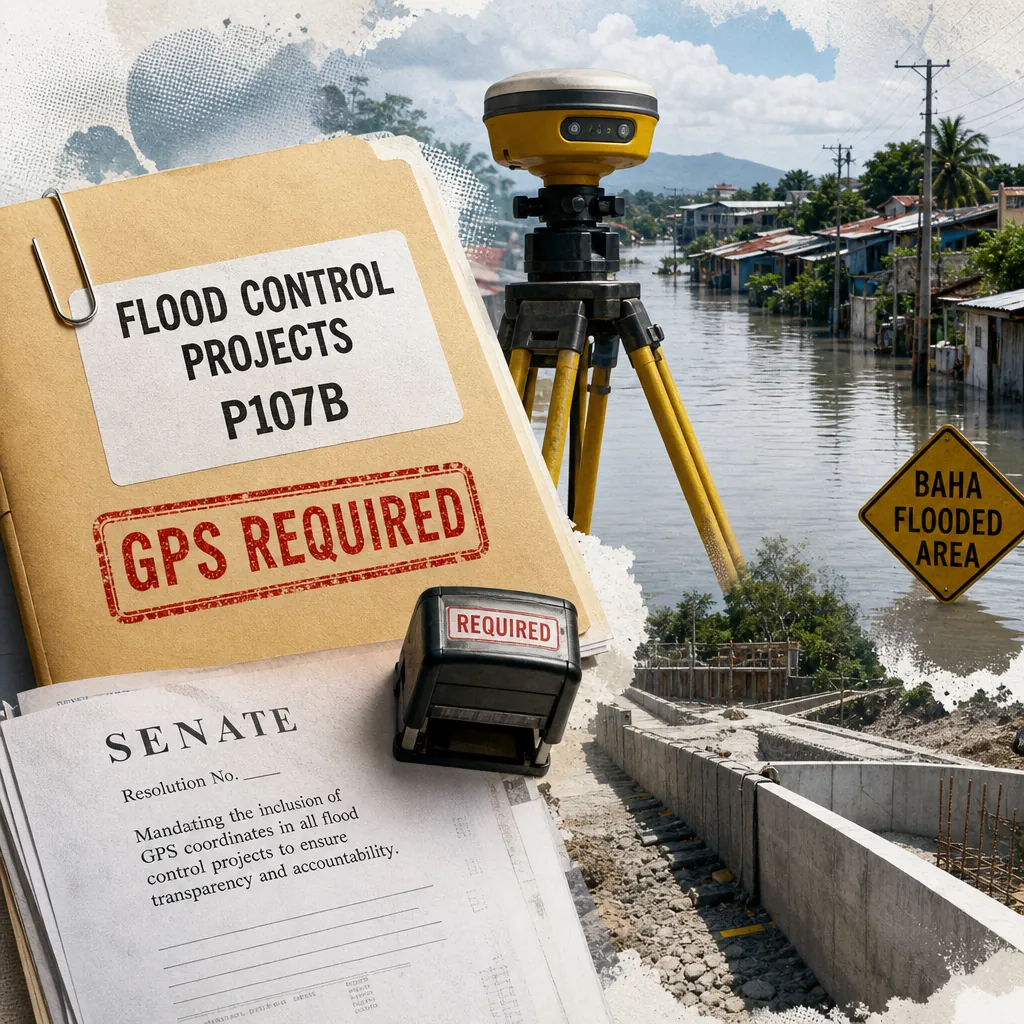
The day's conversation opened on a somber note as the southwest monsoon continued to batter Luzon, with class suspensions in Cavite and Batangas and widespread flooding in Bulacan. But the most consequential development came from the Senate, which announced it would require exact geographic coordinates for all flood control projects funded under the proposed P107 billion allocation for 2027. This move, aimed at preventing the funding of "ghost projects," follows a year of public outrage over alleged corruption in flood control infrastructure. The announcement, made by Senate President Sherwin Gatchalian on radio dzBB, signals a new era of accountability for infrastructure spending, with direct implications for property developers and buyers in flood-prone areas.
Meanwhile, the conversation on social media reflected a mix of concern and passive consumption. A post about the arrest of a wanted person in Bulacan drew 5,373 views but minimal engagement, while a lawmaker's question about water supply for the proposed AI hub at New Clark City drew only 139 views. The most engaged post of the day was the class suspension announcement for General Trias and Nasugbu, which garnered 51 likes and 4 shares, indicating that residents are actively tracking weather-related disruptions that affect their daily lives.
Key themes
- Senate mandates GPS for flood projects: The Senate will require the Department of Public Works and Highways (DPWH) to submit exact geographic coordinates and station numbers for all flood control projects under the proposed P107 billion allocation for 2027. This is a direct response to the "ghost project" scandal, where funds were allegedly allocated for non-existent or duplicated projects.
- Monsoon floods persist across Luzon: Heavy rains from the southwest monsoon continue to cause flooding in Bulacan, Cavite, Batangas, and Metro Manila. In Bulacan, 116 barangays remain submerged, with 8,728 people in evacuation centers. The flooding has led to class suspensions and raised concerns about property livability in these areas.
- Infrastructure readiness questioned for New Clark City: A lawmaker has raised concerns about water supply for the proposed AI infrastructure under the Pax Silica initiative at New Clark City. This adds to growing scrutiny of the project's environmental and resource impacts, with the Senate vowing strict oversight.
- SM Prime adopts cautious stance on residential launches: SM Prime Holdings, one of the country's largest property developers, announced it will not launch new residential projects in Metro Manila for the rest of 2026, citing weak market sentiment and a large inventory of unsold units. This reflects broader challenges in the residential property market.
- Flood control corruption allegations resurface: Former DPWH Secretary Manuel Bonoan's testimony about "leadership funds" and the "Convergence and Special Support Program" has reignited public debate over corruption in infrastructure spending. The Senate's GPS mandate is seen as a direct response to these allegations.
- Weather disruptions affect property perception: The class suspensions in Cavite and Batangas, along with flooding in Bulacan, are shaping buyer perceptions of these growth corridors. Developers are being urged to communicate flood mitigation measures proactively.
- Pax Silica initiative draws scrutiny and support: The proposed AI and semiconductor hub at New Clark City is generating both excitement and concern. While some see it as a "once-in-a-lifetime" opportunity for economic growth, others worry about its environmental and social impacts, including water and power demands.
- Infrastructure projects move forward despite challenges: Despite the controversies, several major infrastructure projects are progressing, including the Wawa Pumped Storage Power Project, the Clark National Food Hub, and the Sangley Point International Airport. These projects are seen as critical to the country's long-term development.
How the narratives stack
Dominant: The dominant narrative is the Senate's mandate for GPS coordinates on flood control projects, which directly addresses the ghost project scandal and signals a new era of accountability. This story dominated the news cycle, with multiple outlets covering Gatchalian's announcement. Within the captured set, this story drew significant coverage, including from Philstar and other major outlets, with an estimated advertising-equivalent value of over ₱1 million across the items reviewed. The narrative is driven by public anger over corruption and the ongoing flooding that has exposed the failures of past infrastructure spending.
Counter-narrative: A counter-narrative emphasizes the positive aspects of infrastructure development, highlighting projects like the Wawa Pumped Storage Power Project, the Clark National Food Hub, and the Sangley Point International Airport. This narrative, often promoted by government and business leaders, argues that despite challenges, the country is making progress on critical infrastructure. It also includes the Pax Silica initiative, which is framed as a transformative opportunity for the Philippines to become a high-value technology hub.
Emerging: An emerging narrative focuses on the environmental and resource constraints of large-scale development, particularly the water and power requirements of data centers and AI infrastructure. The lawmaker's question about New Clark City's water supply, and the Senate's oversight of Pax Silica, are early signals of this narrative. It also includes concerns about the impact of flooding on property values and the need for developers to address climate resilience.
Suppressed: A suppressed story is the human cost of the flooding, particularly the 22 deaths and 3 missing persons reported by the National Disaster Risk Reduction and Management Council (NDRRMC). While the flooding itself is covered, the deeper story of inadequate flood control and the systemic failures that led to these deaths is often overshadowed by political and business narratives. The story of the 70 families being relocated from riverbanks in Bulacan, and the collapse of a river wall in Marilao just two months after completion, are also under-covered.
Platform insights
- Facebook: Facebook was the primary platform for community-level information sharing, particularly around class suspensions and weather updates. The General Trias and Nasugbu class suspension post drew the highest engagement of the day, with 51 likes and 4 shares, including a care reaction. This indicates that residents are actively using Facebook to stay informed about disruptions that affect their daily lives, and it serves as a barometer for local sentiment around property livability.
- Twitter: Twitter hosted the more policy-oriented conversations, including the lawmaker's question about New Clark City's water supply and the arrest of a wanted person in Bulacan. However, engagement was minimal, with the arrest post drawing only 3 likes and the water supply question drawing zero engagement. This suggests that while policy issues are being raised on Twitter, they are not yet resonating with a broader audience.
- YouTube: No significant YouTube activity was observed in the captured set, but it is likely that news outlets and vloggers are producing video content about the flooding and infrastructure issues. This could be a channel to monitor for more in-depth coverage and public reaction.
- Cross-platform flow: There was no evidence of cross-platform amplification, with Twitter and Facebook operating independently on separate storylines. This suggests that the conversation is fragmented, with different audiences engaging with different aspects of the story.
Key voices and communities
- Government and regulatory bodies: The Senate, led by President Sherwin Gatchalian, is the most active voice in this conversation, pushing for accountability in infrastructure spending. The DPWH, under Secretary Vince Dizon, is also active, conducting inspections and announcing flood control projects. Their messaging focuses on transparency and the need to protect communities from flooding.
- Property developers: SM Prime, Megaworld, and other developers are key voices, particularly in discussions about the residential market and infrastructure development. SM Prime's cautious stance on new launches reflects the challenges facing the sector, while Megaworld's renewable energy initiatives and Iloilo Business Park development highlight the industry's efforts to adapt to changing market conditions.
- Policy and legislative voices: Lawmakers like Rep. Chel Diokno and Senate President Gatchalian are raising questions about infrastructure readiness and resource adequacy. Their statements, while low in engagement, carry significant policy weight and could influence public perception of major projects like New Clark City.
- Media and journalists: Major outlets like Inquirer, Philstar, and BusinessWorld are shaping the narrative through their coverage of the flooding, the ghost project scandal, and infrastructure developments. Their reporting provides the context and analysis that informs public opinion.
- Local communities and residents: Residents in flood-affected areas, particularly in Bulacan, Cavite, and Batangas, are the most directly impacted by the flooding. Their voices are often heard through class suspension announcements and social media posts, but they are not always given a platform in the broader conversation.
Narrative streams
Senate's GPS mandate: A new era of accountability
The Senate's decision to require GPS coordinates for all flood control projects under the proposed P107 billion allocation for 2027 is a direct response to the "ghost project" scandal that has plagued the DPWH. The scandal, which came to light last year, involved the alleged funding of non-existent or duplicated flood control projects, leading to public outrage and President Marcos's infamous "Mahiya naman kayo!" (Have some shame!) remark. Senate President Sherwin Gatchalian explained that leaving project locations vague gives district engineers too much leeway to duplicate funding. By requiring exact coordinates and station numbers, the Senate aims to ensure that every peso is accounted for and that projects are actually built where they are supposed to be.
This move has significant implications for the construction and real estate sectors. For developers, it means greater scrutiny of infrastructure projects, which could lead to delays but also to more reliable flood protection. For buyers, it offers hope that the government is finally addressing the root causes of flooding, which have long been a deterrent to investing in flood-prone areas. The mandate also sets a precedent for other infrastructure projects, potentially leading to more transparent and accountable spending across the board.
Monsoon floods: A recurring crisis with deep roots
The southwest monsoon has brought persistent rains to Luzon, causing widespread flooding in Bulacan, Cavite, Batangas, and Metro Manila. In Bulacan alone, 116 barangays remain submerged, with 8,728 people in evacuation centers. The flooding has led to class suspensions, disrupted livelihoods, and raised concerns about the livability of these areas. The situation is exacerbated by the fact that many flood control projects have been delayed or poorly implemented, as highlighted by the collapse of a river wall in Marilao just two months after its completion.
The flooding is not just a weather event; it is a symptom of systemic failures in infrastructure planning and maintenance. The ghost project scandal, which involved the alleged diversion of funds meant for flood control, has left many communities vulnerable. The Senate's GPS mandate is a step in the right direction, but it will take years to rebuild trust and infrastructure. For property developers, the flooding is a reminder that location is not just about accessibility and amenities but also about resilience to natural disasters. Buyers are increasingly asking about flood history and drainage infrastructure before committing to a purchase, and developers who can demonstrate proactive flood mitigation measures will have a competitive advantage.
New Clark City and Pax Silica: Ambition meets scrutiny
New Clark City, a master-planned development in Tarlac, is at the center of a growing debate over the country's infrastructure ambitions. The proposed Pax Silica initiative, a US-led effort to secure global supply chains for semiconductors, AI, and critical minerals, would establish a 1,618-hectare AI and advanced manufacturing hub in New Clark City. Proponents, including Senate President Gatchalian, see it as a "once-in-a-lifetime" opportunity to shift the Philippines from low-value assembly to high-value technology, potentially generating 200,000 direct jobs and up to 800,000 indirect jobs.
However, the project has drawn scrutiny over its environmental and social impacts. Rep. Chel Diokno has questioned whether the water supply is sufficient to support the AI infrastructure, while the Senate has vowed strict oversight to ensure that the project does not compromise environmental safety, constitutional sovereignty, or the rights of local communities. The former Israeli ambassador to the Philippines, Ilan Fluss, has urged the country to move fast but responsibly, with strong regulation and environmental safeguards.
For property developers, New Clark City represents both an opportunity and a risk. The project could transform the area into a major economic hub, boosting demand for residential and commercial properties. But if infrastructure gaps are not addressed, it could also become a cautionary tale about the dangers of overpromising and underdelivering. The scrutiny of New Clark City's water supply is a preview of the type of questions that could be asked of other large-scale townships, particularly those built on greenfield sites where utilities are still being established.
SM Prime's cautious stance: A barometer for the residential market
SM Prime Holdings, the country's largest property developer, has adopted a "wait-and-see" approach to new residential launches, with no new projects planned for Metro Manila for the rest of 2026. The company has an inventory of around 29,000 residential units, of which only 13% are ready for occupancy. This cautious stance reflects a broader slowdown in the residential market, driven by high interest rates, inflation, and wary consumer sentiment. SM Prime's president, Jeffrey Lim, said the company would focus on selling existing inventory and completing ongoing projects, rather than launching new ones.
This news is significant for the real estate sector as a whole. SM Prime is often seen as a bellwether for the industry, and its cautious approach suggests that other developers may follow suit. The company's decision to prioritize ready-for-occupancy units, which tend to have faster take-up, indicates that buyers are looking for immediate occupancy rather than pre-selling units. This shift could have implications for the broader market, as developers may need to adjust their strategies to focus on completion and delivery rather than new launches.
Flood control corruption: The ghost project scandal
The ghost project scandal, which involves the alleged funding of non-existent or duplicated flood control projects, continues to dominate the conversation. Former DPWH Secretary Manuel Bonoan's testimony about "leadership funds" and the "Convergence and Special Support Program" has shed light on the extent of the problem. Bonoan revealed that the CSSP, a separate public works budget amounting to P1.1 trillion from 2022 to 2024, was another major source of anomalous and ghost projects. These revelations have fueled public anger and prompted the Senate to take action.
The scandal has also had a direct impact on the real estate sector. Flooding is a major concern for property buyers, and the knowledge that flood control projects may have been corrupted undermines confidence in the government's ability to protect communities. The Senate's GPS mandate is a positive step, but it will take time to restore trust. In the meantime, developers in flood-prone areas are being urged to communicate their own flood mitigation measures to reassure buyers.
Conversation trajectory
Over the next 4-6 weeks, the conversation is likely to be shaped by several key factors. First, the continuation of the southwest monsoon, which is expected to persist through late September, will keep flooding and weather-related disruptions in the news. This will reinforce the narrative of environmental vulnerability and could lead to increased scrutiny of developers' flood mitigation efforts. Second, the Senate's GPS mandate for flood projects will be implemented, and any delays or controversies in its execution could become a story. Third, the operational launch timeline for the New Clark City AI infrastructure project will be closely watched, as it will reignite debates over water supply and infrastructure readiness.
Trigger events to watch include: the release of the final list of flood control projects with GPS coordinates, which could reveal the extent of the ghost project problem; any major flooding event that causes significant damage or loss of life, which could lead to calls for more aggressive action; and the fourth-quarter property fair season, where developers will need to address buyer concerns about flooding and infrastructure. Additionally, the ongoing Senate hearings on Pax Silica could produce new revelations about the project's environmental and social impacts, which could affect public perception and investor confidence.
Response guidance
For communicators in the real estate and infrastructure sectors, the key is to be proactive and transparent. Developers should:
- Emphasize flood resilience: In marketing and communications, highlight specific flood mitigation measures, such as drainage systems, elevated designs, and coordination with local governments. Avoid dismissive language about weather risks that communities are experiencing firsthand.
- Address infrastructure readiness: For projects in growth corridors like New Clark City, proactively publish information about utility agreements, water supply contracts, and development timelines. This can preempt scrutiny and position the development as responsibly planned.
- Monitor weather-related disruptions: Track class suspensions and flood advisories in key markets like Cavite, Batangas, and Bulacan. Use this data to inform buyer communications and to demonstrate awareness of local conditions.
- Engage with policy discussions: Stay informed about legislative developments, such as the Senate's GPS mandate and oversight of Pax Silica. Be prepared to respond to questions about how your projects comply with new requirements.
- Avoid speculation on sensitive topics: When it comes to issues like water supply adequacy or flood risk, defer to official feasibility studies and avoid making guarantees that cannot be verified. Focus on concrete actions and measurable outcomes.
By taking these steps, communicators can help build trust with buyers and stakeholders, and position their projects as resilient and responsibly developed in the face of ongoing challenges.
See the full picture behind today's signals.
This report draws from Media Meter's MediaWatch, our real-time monitoring engine tracking 2,470+ Philippine sources across print, broadcast, digital, and social. Explore how the platform turns raw coverage into decision-grade intelligence, then see how it's configured for teams like yours — whether you're in PR agencies, corporate comms, government, or marketing.
Want more? Browse our Report Library for sector and crisis intelligence, or request a demo and we'll have your brand set up before the call.
Want this kind of intelligence on your brand?
This brief is built on the same MediaWatch methodology that runs continuously across every brand we monitor. See your competitive landscape, Impact Score, and narrative trajectory in a 30-minute demo.