Habagat floods Metro Manila, sparking P1.9T spending questions
Severe southwest monsoon flooding paralyzed Metro Manila on August 17, 2026, prompting widespread social media documentation, work suspensions, and renewed scrutiny of the government's P1.939 trillion flood control spending. The day's conversation also featured developer earnings updates and a low-engagement fiscal debt announcement.
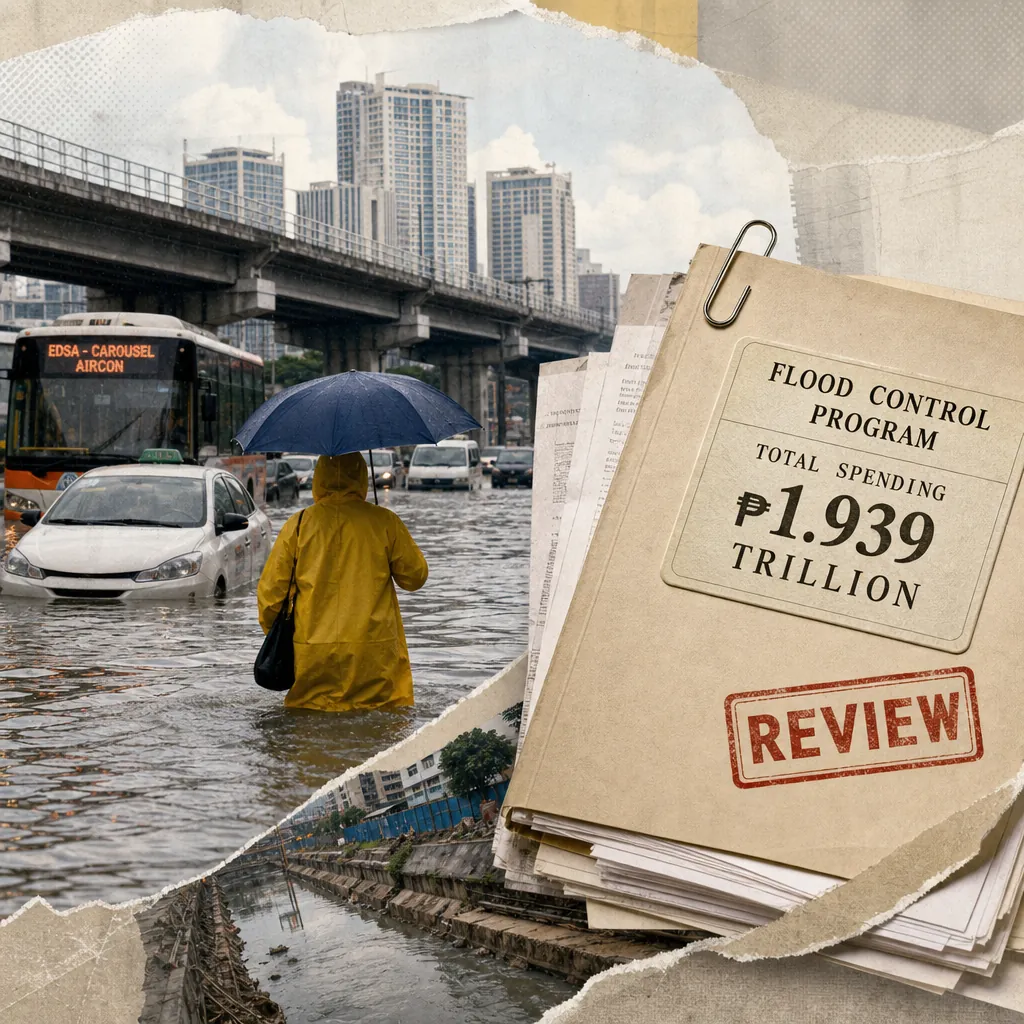
The conversation on August 17, 2026, was dominated by a single, overwhelming reality: the southwest monsoon, or habagat, had turned Metro Manila's streets into rivers. From early morning, social media feeds became a real-time flood map, with posts from media outlets like UNTV News and Rescue and Abante Radyo documenting impassable roads, stranded commuters, and rising waters in Quezon City, Manila, and Makati. The day's narrative arc moved from practical traffic advisories to visceral human impact, and finally to a blend of dark humor and resilience that became the defining cultural response. By mid-morning, a video of a resident jet-skiing down Xavierville Avenue in Quezon City had gone viral, shifting the tone from emergency reporting to spectacle. This was followed by the "Baha ka lang, Pilipino kami!" (You may be a flood, but we are Filipinos!) meme, which reframed the adversity with a distinctly Filipino sense of gallows humor. The most engaged post of the day, a photo of a stalled vehicle on Mother Ignacia Avenue captioned with a Grand Theft Auto cheat code reference, accumulated over 9,000 likes and 1,300 comments, crystallizing the public's coping mechanism: acknowledging the severity while mocking the situation through pop culture references.
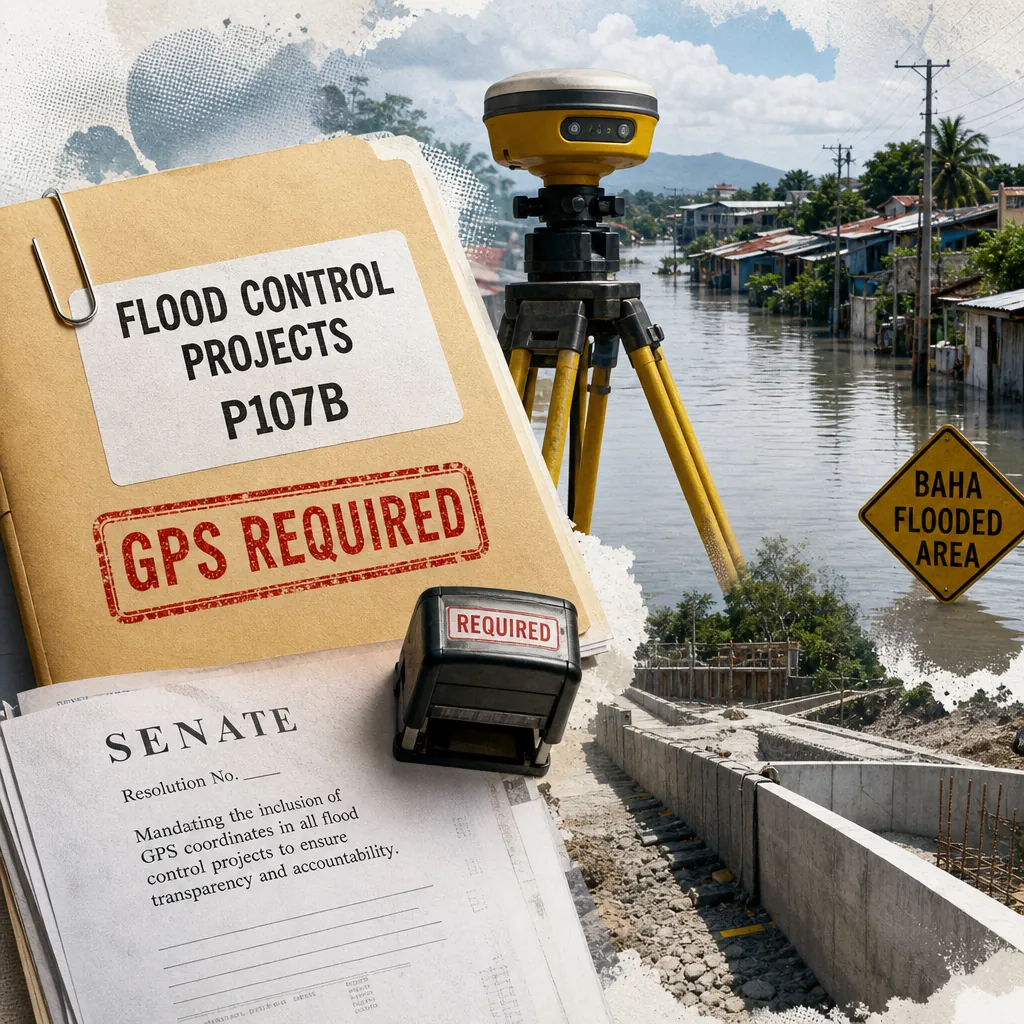
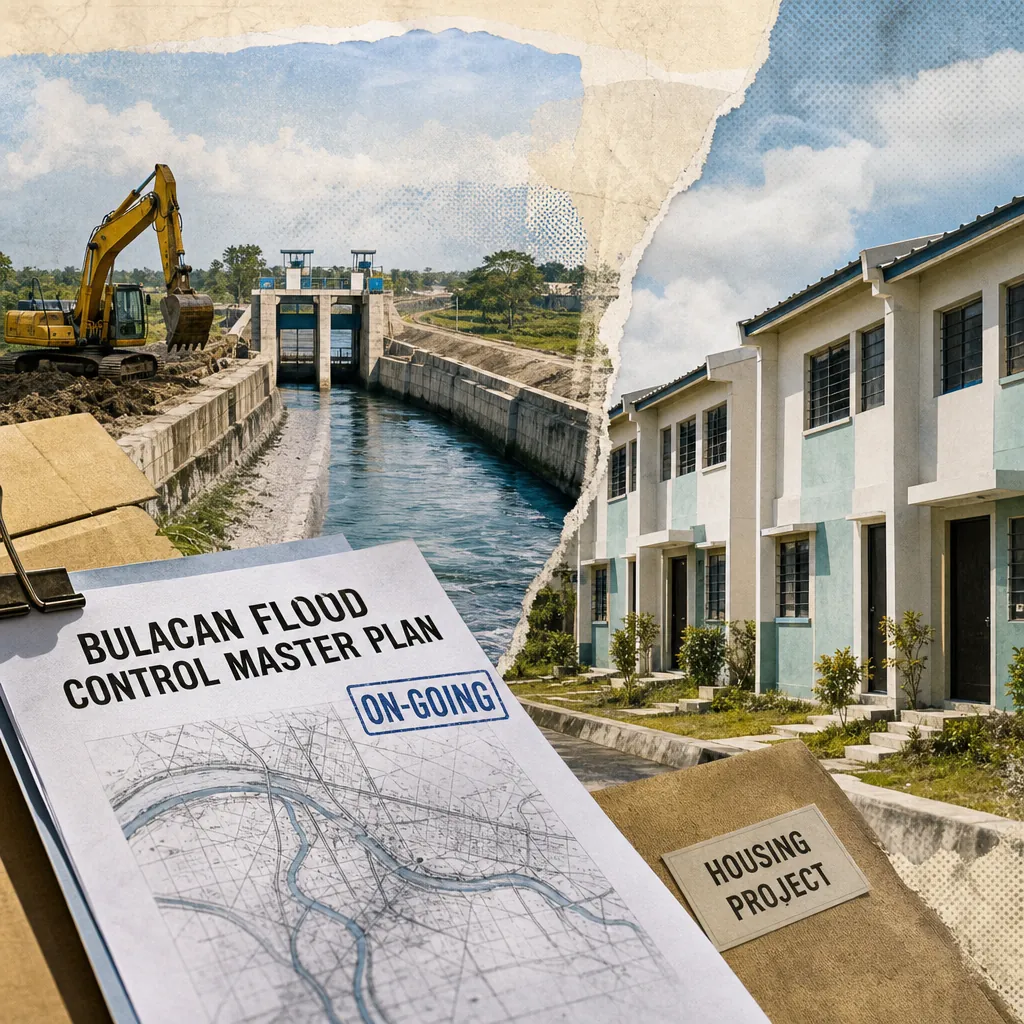
Amidst the flood coverage, a parallel narrative emerged on the news pages: Senator Panfilo Lacson's questioning of the government's flood control spending. In a post on X, Lacson highlighted that the Department of Public Works and Highways (DPWH) had been allocated P1.939 trillion for flood management from 2011 to 2025, yet flooding remained uncontrolled. This story, picked up by multiple outlets including Inquirer Online, GMA News Online, and The Global Filipino Magazine, drew heavy coverage worth an estimated ₱1.2 million in advertising-equivalent value across the captured set. The juxtaposition of the day's flooding with the senator's fiscal critique created a powerful narrative: billions spent, yet streets still submerged. This was further amplified by reports of a "ghost" flood control project in Bulacan, where a complaint was filed against local officials, and by the government's own announcement of a P2.7 trillion debt servicing obligation for 2027, which, despite its scale, generated almost no public engagement on social media.
Meanwhile, the real estate sector continued to push forward with its own stories. DoubleDragon Corp. reported a 162% surge in core net income, Ayala Land announced a new retail component for its Alviera estate, and Megaworld broke ground on a new residential tower in Palawan. These corporate updates, however, were largely overshadowed by the flood crisis, which raised immediate questions about the resilience of properties in flood-prone areas. The day's conversation thus presented a stark contrast: the industry's optimism about growth and expansion against the public's lived experience of urban vulnerability.
Key themes
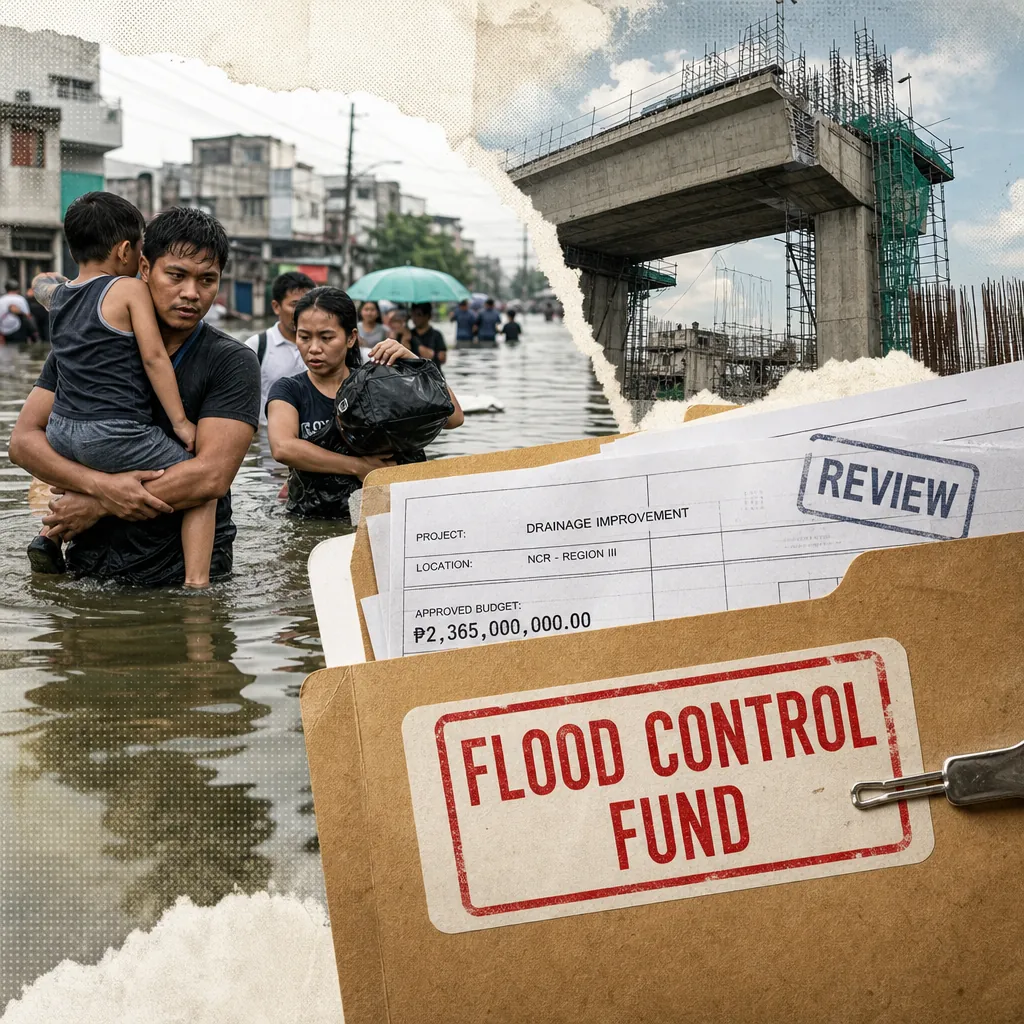
- Flooding as a crisis of urban planning: The sheer scale of the flooding, with reports of waist-to-overhead-deep water in multiple barangays, shifted the narrative from a weather event to a systemic failure of infrastructure. Posts showing students wading past a drainage repair project board in Manila visually juxtaposed the promised solution against the present reality, implicitly criticizing the pace of infrastructure improvements.
- The P1.939 trillion question: Senator Lacson's post questioning the effectiveness of P1.939 trillion in flood control spending under three presidents became a major news story, drawing heavy coverage across online news outlets. The figure, which Lacson has invoked repeatedly since mid-2025, resonated with a public frustrated by recurring floods.
- Resilience and dark humor as coping mechanisms: The viral jet-ski video and the "Baha ka lang, Pilipino kami!" meme provided a counterpoint to the distress, allowing users to share in a collective, wry acknowledgment of their situation. This thread became the defining cultural takeaway of the day, with the Grand Theft Auto cheat code post on Mother Ignacia Avenue drawing over 9,000 likes.
- Business district vulnerability: The flooding of the Magallanes Tunnel in Makati, a critical artery connecting the country's premier business district, raised concerns about the operational capacity of the financial center. The image of a rider pushing his motorcycle through waist-deep water became a symbol of the day's disruption, with implications for office location viability and commercial property resilience.
- Developer earnings amid the deluge: Despite the crisis, major developers released positive earnings updates. DoubleDragon's core net income surged 162% to P2.41 billion, while Citicore Renewable Energy's net income nearly doubled. These stories, however, received less social media attention than the flood coverage, highlighting a disconnect between corporate optimism and public concern.
- Government response and work suspensions: Malacañang ordered work-from-home arrangements for government offices in 15 areas, and several malls offered free overnight parking to motorists. These practical measures were widely shared, but also drew criticism for being reactive rather than preventive.
- The fiscal shadow: The government's announcement of a P2.7 trillion debt servicing obligation for 2027, posted on Twitter, generated only 71 views and zero engagement, underscoring the public's disengagement from abstract fiscal figures. This low-engagement story, however, carries indirect implications for infrastructure spending and housing programs.
How the narratives stack
Dominant: The flooding narrative, driven by real-time social media documentation and amplified by news coverage, was the day's dominant story. Within the captured set, flood-related articles and posts accounted for the majority of engagement and coverage value. The human impact—stranded students, impassable roads, and submerged communities—was the most significant news of the day, with consequences for public safety and urban planning.
Counter-narrative: The resilience and humor thread, exemplified by the jet-ski video and the "Pilipino kami" meme, served as a counter-narrative to the despair. This narrative, while not diminishing the severity of the flooding, provided a space for collective coping and showcased the Filipino spirit. It also created a potential opening for brands to engage with the public in a way that acknowledges the crisis without being tone-deaf.
Emerging: The fiscal accountability narrative, centered on Senator Lacson's P1.939 trillion question, emerged as a significant storyline. While not as emotionally charged as the flood coverage, it gained traction in the news media and could shape future policy discussions. The government's P2.7 trillion debt announcement, though low-engagement, is a nascent macro-fiscal storyline that could intersect with real estate discourse if linked to housing subsidies or infrastructure spending.
Suppressed: The developer earnings stories, such as DoubleDragon's profit surge and Ayala Land's retail expansion, were largely overshadowed by the flood crisis. These positive corporate updates received minimal social media attention, reflecting a public focus on immediate concerns rather than long-term market fundamentals. This suppression is notable because it suggests that during crisis periods, corporate messaging may need to be more proactive to break through.
Platform insights
- Facebook: Facebook served as the primary crisis communication hub, with rapid-fire posts from media outlets and barangay-level disaster response units. The platform's multimedia capabilities allowed for the sharing of videos and images that drove high engagement, such as the jet-ski video (over 6,400 "haha" reactions) and the flooded bus video (over 1,400 reactions). Facebook also hosted the most engaged post of the day, the Grand Theft Auto cheat code photo, which drew over 9,000 likes. The platform's role evolved from information dissemination to collective emotional processing, with users sharing both distress and humor.
- Twitter: Twitter played a crucial role in amplifying breaking news and relaying official warnings from local government units and the state weather bureau. The platform's character limit fostered a style of rapid, fact-focused reporting, with posts from journalists and official accounts establishing the factual baseline. Engagement was lower than on Facebook, but Twitter served as the authoritative source for time-sensitive alerts, such as the red rainfall warning in Zambales and the "lagpas-tao" flooding in Barangay Tatalon.
- YouTube: While not directly measured in the monitoring writeups, YouTube likely served as a repository for longer-form video documentation, such as the GMA News reports on the flooding. These videos, when shared on Facebook and Twitter, contributed to the viral spread of flood imagery.
Key voices and communities
- Local news and rescue media outlets: Organizations like UNTV News and Rescue, Abante Radyo, and GMA News were the primary amplifiers of the flooding narrative, providing real-time video documentation and verified updates. Their posts consistently generated high engagement, with some drawing over 500 reactions. Their coverage set the public narrative about flood-prone locations, making them essential for assessing reputational risk for developers.
- Barangay-level disaster response units: Quezon City's barangay DRRMO units, such as those in Tatalon and Katipunan, provided authoritative, localized updates on flood depths and evacuation needs. Their posts, which documented life-threatening conditions, generated significant engagement and community trust. For developers, these units are critical sources for flood risk assessments and early-warning intelligence.
- Affected commuters and residents: Individual citizens sharing firsthand accounts constituted the most emotionally charged stakeholder group. Their content ranged from genuine distress to viral moments of dark humor, and their documentation of flooding directly affected perceptions of location viability. The high engagement on their posts, such as the jet-ski video and the flooded bus, demonstrated the power of user-generated content in shaping the narrative.
- Public figures and personality-driven accounts: Former PBA player Mark Cardona's "aqua training" video, which drew over 800 reactions, added a distinct dimension to the conversation. These posts perform well because they combine viral entertainment with implicit commentary on urban infrastructure, creating lasting associations between specific locations and flooding.
- Government infrastructure and policy commentators: Senator Panfilo Lacson emerged as a key voice, using his platform to question the effectiveness of flood control spending. His post on X, which was widely covered by news outlets, framed the flooding as evidence of systemic failure rather than isolated weather impacts. This group's commentary is significant for developers because it connects acute events to chronic infrastructure deficiencies, potentially influencing public scrutiny of development approvals.
Narrative streams
The Flood Crisis: A City Under Water
The day's most significant narrative stream was the real-time documentation of the flooding across Metro Manila. Beginning with early morning posts about "gutter deep" flooding on España Boulevard and Taft Avenue, the conversation quickly escalated as reports of "lagpas-taong" (over head-height) flooding emerged from barangays like Tatalon and Katipunan. The Barangay Tatalon post, showing over-person-deep flooding, received 1,595 likes and 889 comments, making it a primary source of information about the hardest-hit areas. The emotional response was palpable: the Barangay Katipunan DRRMO update on Lower Manga Street, where flood levels exceeded six feet, drew 121 "sad" reactions and 18 "care" reactions, indicating genuine public concern.
The flooding extended into major business districts, with the Magallanes Tunnel in Makati becoming a symbol of the crisis. A photo of a rider pushing his motorcycle through waist-deep water in the tunnel, though generating modest engagement of 185 views, signaled that flooding was not confined to residential zones but was penetrating the country's premier financial district. This geographic expansion raised concerns about workplace continuity and the operational capacity of the Makati CBD, with implications for commercial property stakeholders.
The human impact was further highlighted by reports of a Vietnamese tourist wading barefoot through floodwaters in Pasay City, expressing fear of leptospirosis, and a student's three-hour journey home from the University of Santo Tomas, which became a slow crawl through flooded roads. These personal stories, shared across social media, underscored the daily disruption and the physical strain of navigating the city during the monsoon.
For the real estate sector, the flood crisis presented an immediate reputational risk. The repeated documentation of flooding in high-value corridors, such as the Magallanes Tunnel and Xavierville Avenue, created a cumulative visual archive that could influence buyer perceptions of property safety and location viability. Developers with projects in affected areas were advised to prepare flood-resilience messaging and to engage with barangay-level data to demonstrate risk management competency.
The P1.939 Trillion Question: Fiscal Accountability and Infrastructure Failure
Senator Panfilo Lacson's post on X, questioning the effectiveness of P1.939 trillion in flood control spending, became a major news story on August 17. Lacson's chart showed annual allocations rising from P11.3 billion in 2011 to P287 billion in recent years, yet flooding remained uncontrolled. "FLOOD CONTROL VS UNCONTROLLED FLOOD," he wrote, "PhP1.939 trillion funded the DPWH flood control management program under three presidents from 2011-2025 and the result is uncontrolled flood." This narrative, which Lacson has invoked since mid-2025 when he chaired the Senate Blue Ribbon Committee's inquiry into anomalous flood control projects, resonated with a public frustrated by recurring floods.
The story drew heavy coverage across online news outlets, including Inquirer Online, GMA News Online, and The Global Filipino Magazine, with an estimated advertising-equivalent value of over ₱1.2 million in the captured set. The coverage also highlighted alleged "ghost" flood control projects in Bulacan and Mindoro Oriental, where complaints had been filed against local officials. This fiscal accountability narrative is significant for the real estate sector because it raises questions about the government's capacity to fund infrastructure improvements, which are essential for supporting township developments and property values in flood-prone areas.
For developers, the implication is that public scrutiny of flood control spending could translate into demands for greater transparency and accountability in development approvals, particularly for projects in areas with inadequate drainage. The narrative also creates an opportunity for developers to position themselves as part of the solution, by highlighting their own flood mitigation investments and community engagement.
Developer Optimism Amid the Deluge: Earnings and Expansion
Despite the flood crisis, the real estate sector continued to project confidence. DoubleDragon Corp. reported a 161.89% surge in core net income to P2.41 billion in the first half, driven by a transition toward recurring operating revenues. The company announced plans to open 13 new properties, including malls, warehouses, supermarkets, and hotels, in the second half. Ayala Land and Leonio Land announced the construction of The Shops Alviera, a retail hub in Pampanga, targeted to open by the end of 2026. Megaworld broke ground on The Bellagio Palawan, its first upscale residential condominium in Puerto Princesa, featuring smart home units and sustainable features.
These stories, however, received minimal social media attention compared to the flood coverage. The SM Prime "record year" projection, which had been circulating the previous day, also saw low engagement. This disconnect between corporate optimism and public concern suggests that during crisis periods, audiences are less receptive to promotional content. For developers, this means that communications strategies may need to be adjusted during such windows, focusing on empathy and practical support rather than sales pitches.
The earnings stories also provided a counterpoint to the flood narrative, reinforcing the sector's financial resilience. DoubleDragon's core profit surge, for example, was attributed to the completion of investment properties that are now generating recurring revenues, a sign of the sector's long-term viability. However, the flood crisis raised questions about the resilience of these assets, particularly those in flood-prone areas, and whether developers are adequately addressing climate risks.
The Fiscal Shadow: P2.7 Trillion Debt and Its Implications
A low-engagement but potentially significant narrative stream was the government's announcement of a P2.7 trillion debt servicing obligation for 2027. Posted on Twitter by the national government's official account, the post gained only 71 views and zero engagement, making it the lowest-performing real estate-adjacent post observed in the monitoring window. The figure, covering principal amortization and interest payments, carries indirect implications for infrastructure spending, housing subsidies, and the overall fiscal environment affecting developers.
For the real estate sector, the debt figure could influence buyer confidence, particularly for mid-range and socialized housing segments where financing accessibility is a primary barrier. It also raises questions about the government's capacity to fund housing programs and infrastructure projects that support township developments. The lack of public engagement with this story suggests that fiscal sustainability concerns are not currently penetrating public awareness, but the narrative could gain traction if linked to housing affordability or mortgage rates.
For communicators, this low-engagement window presents an opportunity to proactively shape the narrative before third parties make the connection between national debt and property market conditions. By framing the debt figure as a context indicator rather than a direct market driver, developers can position themselves as resilient and forward-looking, independent of government fiscal constraints.
Conversation trajectory
- Flood risk as a permanent purchasing consideration: The extensive documentation of flooding on August 17 is likely to reset consumer expectations regarding due diligence. Within the next 30-45 days, conversations about property values, resale viability, and flood history are expected to escalate, particularly for areas like Quezon City's Xavierville and Tatalon, and Makati's Magallanes Tunnel corridor. Developers should prepare to address flood risk proactively in their marketing and sales materials.
- Infrastructure accountability discourse: The P1.939 trillion question is likely to fuel a broader discourse on infrastructure accountability, with potential scrutiny of zoning decisions and development approvals in flood-prone areas. Within 3-6 weeks, this could expand to include regulatory accountability for building permits and subdivision approvals. Developers should monitor for any shift from neutral situation reports to questions about drainage impact assessments.
- Resilience storytelling as a differentiator: The viral humor and resilience narrative, while a coping mechanism, also creates an opportunity for developers to pivot messaging toward flood-resilient design features. However, this window is narrow; if flooding repeats within the next two weeks, the humor could sour into accusations of insensitivity. Developers should time any resilience-focused content for the week following the immediate crisis, when the focus turns to reconstruction and prevention.
- Fiscal policy signals: The P2.7 trillion debt announcement, while low-engagement, could become a reference point in future discussions about government capacity to fund housing programs and infrastructure. Monitor for any posts connecting government borrowing to housing affordability, mortgage rates, or infrastructure spending, as these could signal a shift in public sentiment.
Trigger events to watch: The release of third-quarter earnings reports in late October through November will test whether the "record year" narrative extends beyond first-half results. Any major fiscal policy announcements related to the 2027 debt servicing projections could reframe property market confidence. The approach of peak typhoon season will likely produce weather-related disruptions that either reinforce or complicate the financial resilience storyline.
Response guidance
For communicators in the real estate and property development sector, the August 17 flooding event underscores the need for proactive, empathetic, and transparent communication. The following guidance is tailored to the sector as a whole:
- Acknowledge the crisis and prioritize safety: In the immediate aftermath of flooding, communications should focus on public safety and community support, not sales. Acknowledge the hardship faced by residents and commuters, and provide practical information about flood preparedness and emergency protocols. Avoid tone-deaf promotional posts during ongoing rescue operations.
- Prepare flood-resilience messaging: Develop location-specific content that transparently addresses flood resilience, such as elevated ground floors, drainage systems, and flood-resistant materials. This content should be deployed within the next week to compete with authentic, user-generated flood imagery. Position flood resilience as a design feature rather than a defensive response.
- Engage with barangay-level data: Establish relationships with barangay disaster response units to gain early-warning intelligence and demonstrate community responsibility. Sharing barangay-level flood risk assessments can position developers as proactive and transparent, differentiating them from competitors.
- Monitor for attribution shifts: Track whether flood discussions begin to connect to specific developments or brands. The current posts do not name developers, but the geographic proximity creates a latent risk. Prepare holding statements that acknowledge community hardship while highlighting any flood mitigation measures already in place.
- Frame fiscal narratives carefully: When addressing the P1.939 trillion flood control spending or the P2.7 trillion debt figure, maintain strict neutrality and focus on market implications rather than policy judgments. Avoid engaging with fear-based speculation about tax increases or spending cuts, and instead frame responses around fiscal sustainability and targeted investment.
- Leverage resilience storytelling: The "Baha ka lang, Pilipino kami!" meme reflects a public appetite for coping mechanisms. While brands should not directly engage with the humor, they can acknowledge the spirit of resilience and pivot to constructive action, such as community clean-up support or infrastructure improvement advocacy.
- Review sales collateral for flood risk: For properties in flood-prone areas, update sales materials to include flood-resilience specifics, such as elevated driveway access, backup power for garage pumps, and alternative route guidance. Proactive transparency preempts reactive defensiveness when the next flood image surfaces.
- Integrate flood risk into long-term planning: This event will likely reset consumer expectations regarding due diligence. Integrate flood risk as a standing filter in all media scanning and sentiment analysis, and track discussions around terms like "high-rise" versus "mid-rise" in flood contexts, as these may shift buyer preferences and influence future project positioning.
See the full picture behind today's signals.
This report draws from Media Meter's MediaWatch, our real-time monitoring engine tracking 2,470+ Philippine sources across print, broadcast, digital, and social. Explore how the platform turns raw coverage into decision-grade intelligence, then see how it's configured for teams like yours — whether you're in PR agencies, corporate comms, government, or marketing.
Want more? Browse our Report Library for sector and crisis intelligence, or request a demo and we'll have your brand set up before the call.
Want this kind of intelligence on your brand?
This brief is built on the same MediaWatch methodology that runs continuously across every brand we monitor. See your competitive landscape, Impact Score, and narrative trajectory in a 30-minute demo.