Pork Producers Extend Sales Halt as DA Weighs Import Pause
Hog raisers extended their three-day pork sales halt and rallied outside the Department of Agriculture, while the DTI locked in a price freeze on 204 basic goods through December 31 and fuel prices split between diesel and gasoline.
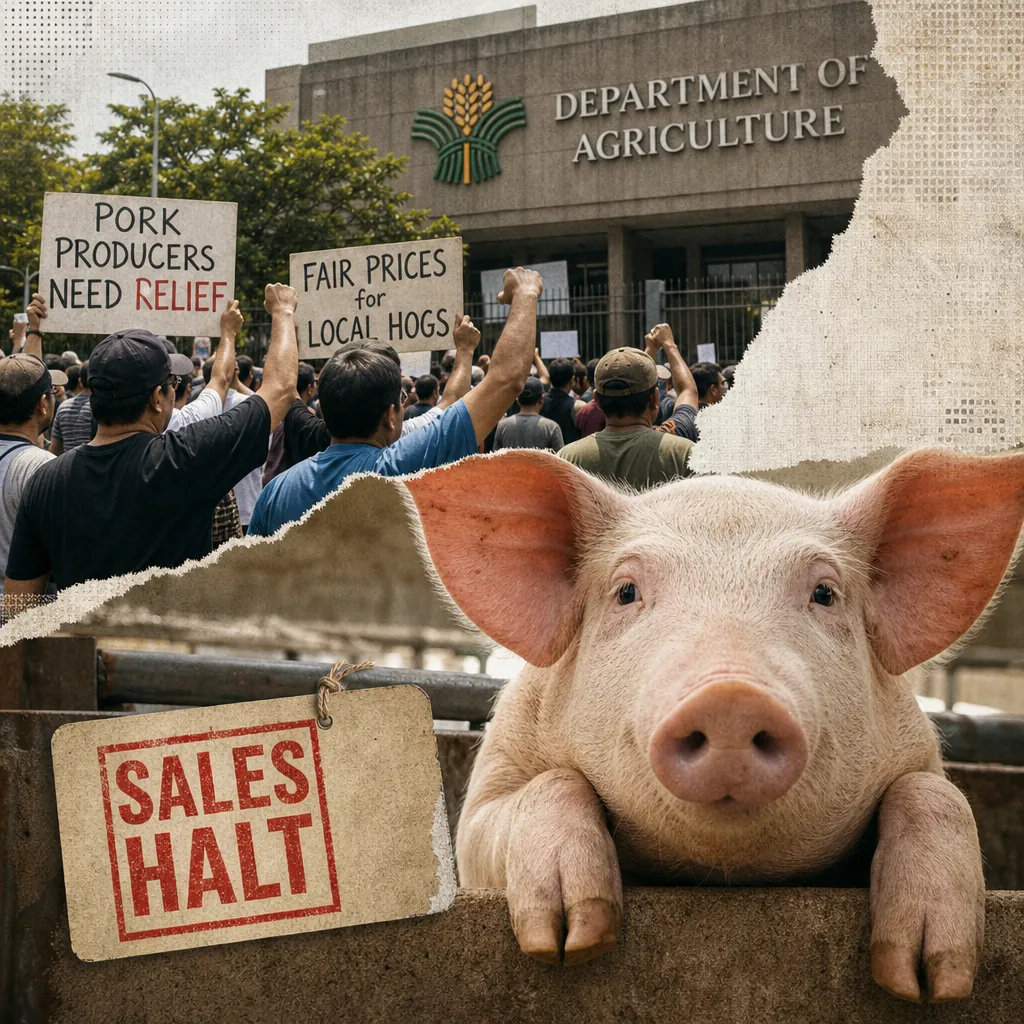
Hundreds of hog raisers gathered in front of the Department of Agriculture's central office in Quezon City on Friday morning, the second day of a voluntary three-day halt in pork sales, and organizers said the stoppage would run through Sunday rather than end as originally planned64. The rally, led by Pork Producers Federation of the Philippines Inc. (ProPork) chairman and AGAP Party-list Rep. Nicanor Briones, pressed the government to prioritize the local pig industry and raise tariffs on imported pork64. Police and organizers put the crowd at roughly 1,500 hog raisers, well above the 1,000 that DZMM TeleRadyo had reported were expected earlier in the week364.
The producers' complaint is a price gap. Rolando Tambago, ProPork's vice-chairman, said farmgate prices — what traders pay farmers at the farm — had been falling for a year while pork stayed expensive on market shelves, squeezing livelihoods on the production side of the chain3. The Department of Agriculture (DA), the agency that sets agricultural policy and runs the country's food supply programs, has said separately that pork prices are unlikely to rise over Christmas because domestic supply is sufficient for about 170 days2. Those two statements describe different points on the same chain and do not directly contradict each other, but they have left the public with two competing pictures of the same market.
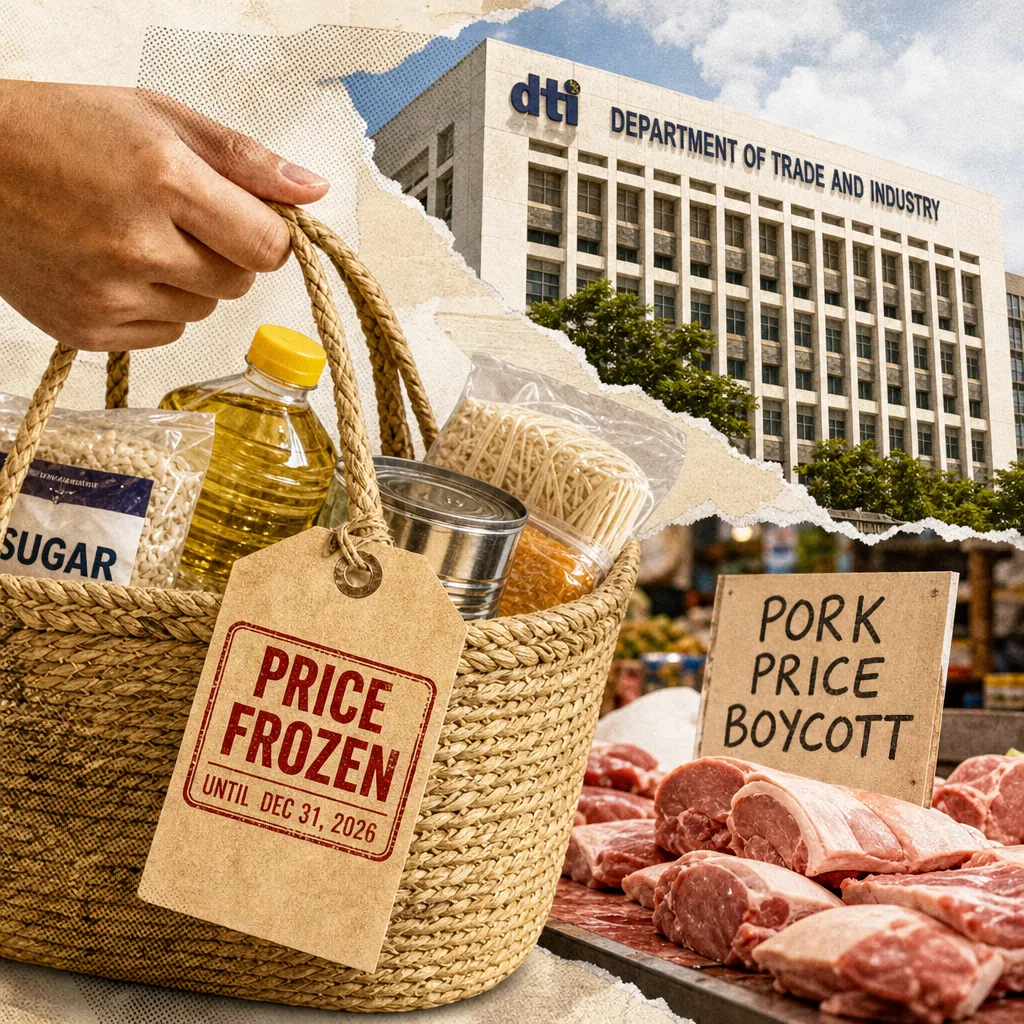
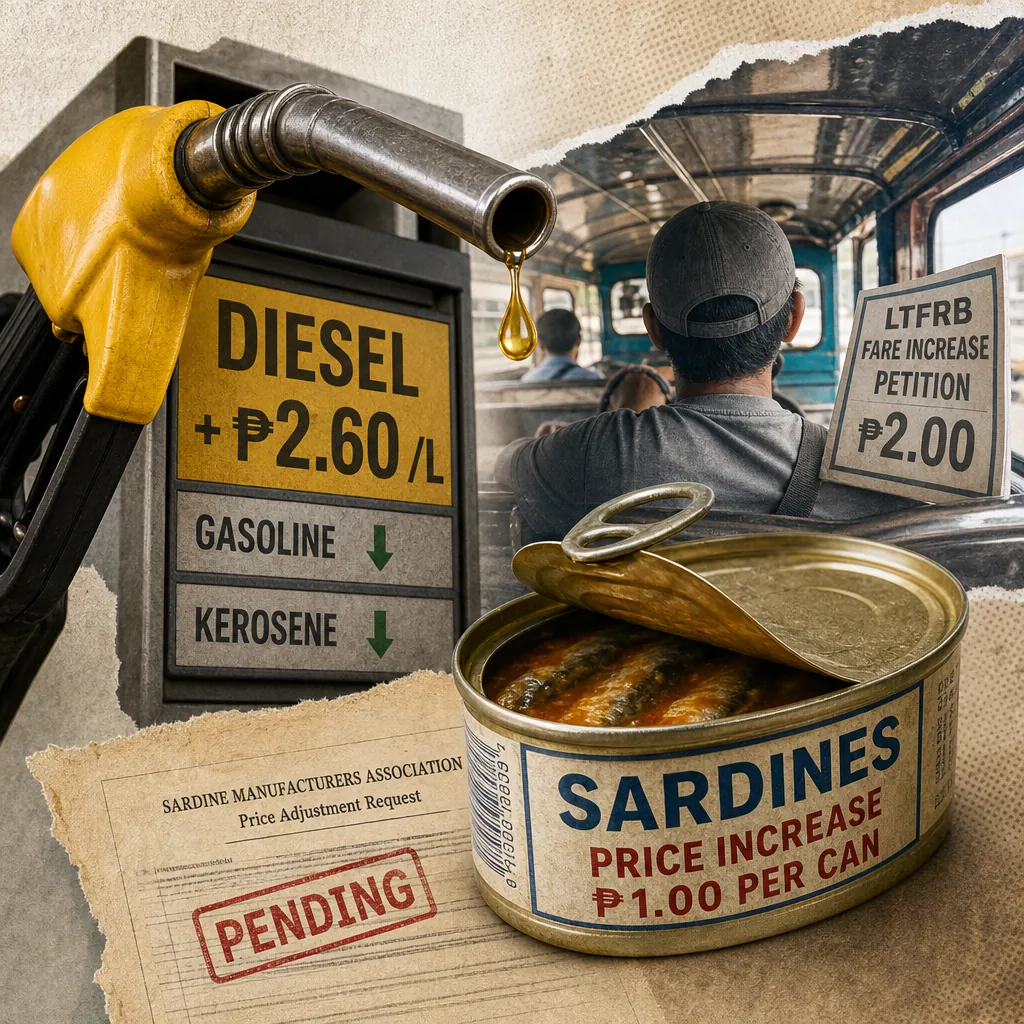
The pork dispute was the loudest agricultural story of the day, but it was not the only one. The Department of Trade and Industry (DTI) confirmed that manufacturers had agreed to hold prices on 204 specific product varieties — stock-keeping units, meaning individual package sizes and formulations — through December 31, covering canned sardines, milk, coffee, bread, instant noodles, soap and condiments8910. The commitment was reported across GMA Network, Philstar and BusinessMirror on October 23, and repeated by broadcasters and social accounts101113. On the fuel side, industry projections pointed to diesel rising by ₱2 to ₱2.50 per liter next week while gasoline falls by ₱1 to ₱1.50, with the Department of Energy due to publish the official adjustment on Monday, October 263963.
Key themes
- Hog raisers extended their sales halt through Sunday and rallied about 1,500 strong at the DA. The "Pig Holiday," a voluntary three-day stoppage that began October 22, was originally set to end Friday; organizers said it would continue to Sunday64. The action targets imported pork and low farmgate prices, not retail prices directly.
- Farmgate prices have fallen for a year while retail pork stayed high, according to ProPork. Tambago said the gap has hurt farmers' incomes even as consumers pay premium prices3. The federation has not published the specific farmgate and retail figures behind that claim in the material reviewed here.
- The DA says supply covers 170 days and Christmas pork prices should hold. The agency's supply-based assurance rests on domestic stock levels rather than on the price farmers receive2. It addresses availability, not the margin between farm and market.
- Senate Majority Leader Migz Zubiri pressed Agriculture Secretary Francisco Tiu Laurel on price manipulation. Speaking at a Senate hearing on the DA's proposed 2027 budget, Zubiri called for more visible enforcement and welcomed a plan to temporarily halt selected pork imports1.
- The DTI locked in a price freeze on 204 basic-goods varieties through December 31. Trade Secretary Cristina Roque announced the manufacturers' commitment at the National Trade Fair Coconut Philippines, saying it held despite higher fuel and raw-material costs78. The freeze covers listed products only, not all food or household goods9.
- A separate DTI discussion on Noche Buena products has no announced outcome. Noche Buena refers to the foods traditionally served at the Christmas Eve meal — ham, cheese, fruit cocktail and the like. The agency has said it plans talks with manufacturers and retailers on those items but has not reported a result7.
- Diesel is projected to rise ₱2 to ₱2.50 per liter next week while gasoline falls ₱1 to ₱1.50. The estimates rest on the first four days of trading in the Mean of Platts Singapore (MOPS), the regional benchmark for refined petroleum in Asia-Pacific, and on foreign-exchange movements, and do not yet include weekly freight-cost changes6365. The Department of Energy is scheduled to issue the official list on Monday39.
- The DTI proposed mandatory safety certification for light electric vehicles and their batteries. The draft regulation would require e-bicycles, e-mopeds, electric motorcycles and personal mobility devices, plus their batteries, to meet Philippine National Standards before sale, with batteries certified separately from complete vehicles3159. The agency cited electrical faults, overheating and fires46.
How the narratives stack
Dominant. The pork producers' stoppage and rally dominated the day's agricultural coverage in the items reviewed here. It drew the most distinct reports — a Senate hearing exchange, a DA supply assurance, a broadcast report on the sales pause, and a same-day account of the Quezon City protest — and it is the only story in the set with a scheduled next event (the extended halt through Sunday)12364. The DTI price freeze ran a close second in volume, picked up by GMA Network, Philstar, BusinessMirror, a GMA Radio item and several social accounts, and it carries a firmer date: December 318101113.
Counter-narrative. The DA's position that supply is sufficient for 170 days and that Christmas pork prices should hold sits against the producers' account of falling farmgate prices23. The two are not a direct contradiction — one is about volume, the other about the margin between farm and market — but in public conversation they read as competing claims about whether the pork market is working. The DTI's price freeze carries its own counter-narrative: manufacturers agreed to hold prices despite citing higher fuel and raw-material costs, which means the freeze is a voluntary commitment rather than a price control, and it expires December 3178.
Emerging. The DTI's proposed certification regime for light electric vehicles is at draft stage, with no announced effectivity date in the items reviewed3159. It matters because e-bikes and e-mopeds have become everyday transport for delivery riders and commuters, and the proposal would add a compliance step for manufacturers and importers before sale. Separately, the Department of Labor and Employment (DOLE) met 13 ride-hailing, delivery and e-commerce platforms on Friday to discuss a draft advisory protecting riders from heat-related penalties, with Labor Secretary Francis Tolentino saying the goal is that "delivery riders are not penalized and customers are not inconvenienced"30. That advisory is not yet issued.
Under-covered. The Western Visayas wage order — a ₱40 to ₱45 daily minimum-wage increase approved by the Regional Tripartite Wages and Productivity Board and sent to the National Wages and Productivity Commission on October 21 — appeared in a single regional report in this set43. It would raise the region's highest daily minimum wage to ₱590 for non-agricultural workers and ₱565 for agricultural workers, and it bears directly on the same cost-of-living pressure driving the pork and price-freeze stories. Also lightly covered: the Commission on Audit's finding that ₱1.079 billion in Philippine Rural Development Project works in Iloilo were delayed, terminated or left idle, a DA initiative supported by the World Bank51.
Platform insights
- Facebook. The DTI price freeze travelled furthest on Facebook, carried by community and advocacy pages. The Cagayan Valley Forum page posted the announcement that basic necessities and prime commodities would hold prices, and the Nation on the Move page repeated the 204-product figure in a stylized graphic post713. These are shareable, plain-language formats aimed at household budgets, and they carried the story to audiences that may not read business pages. The pork rally, by contrast, generated little Facebook pickup in the items reviewed; its record sits mainly in broadcast and news-site reporting.
- Reddit. A post in r/newsPH on the price freeze through December 31 drew a single comment12. That is a low-engagement signal on a platform where policy news typically draws discussion only when it touches a personal grievance; the absence of a thread here suggests the freeze was received as straightforward good news rather than a controversy.
- YouTube. Broadcast clips carried both the pork and fuel stories. The Senate hearing exchange between Zubiri and Laurel, the DA's 170-day supply assurance, and the DZMM TeleRadyo report on the sales halt all circulated as video items123. Video is where the pork story's human voices — Tambago on falling farmgate prices, Zubiri on enforcement — reached audiences directly.
- X. No post-level engagement data for X appears in the material reviewed here, so the platform's role in the day's conversation cannot be characterized.
Key voices and communities
Hog raisers and ProPork. The federation, led by Briones and vice-chairman Tambago, is the organized voice of backyard and commercial pig farmers. Its framing is producer welfare: farmgate prices down for a year, production costs up, imports undercutting local supply364. The group's decision to extend the sales halt past its original three days signals it intends to keep pressure on the DA rather than settle for the import-pause plan alone.
The Department of Agriculture. Secretary Francisco Tiu Laurel is caught between producers asking for import restrictions and a supply picture the agency describes as comfortable for 170 days2. The DA's public line — sufficient supply, stable Christmas prices — is aimed at consumers; its budget hearing appearance put the same officials in front of senators demanding enforcement against price manipulation1.
The Senate and House. Zubiri used the DA's 2027 budget hearing to call for visible action on pork price manipulation and to back a temporary import halt1. In a separate track, House prosecutors raised Vice President Sara Duterte's denial that she owns Jollibee franchises during impeachment proceedings on October 20; the items reviewed give no next hearing date, so the issue's course is unclear456. Jollibee is the country's largest fast-food chain, and the franchise question is being pursued as part of the impeachment record rather than as a trade matter.
The DTI and consumer-facing manufacturers. Trade Secretary Cristina Roque is the public face of the price freeze, announcing it at a trade fair and framing it as a commitment that held despite cost pressures78. Manufacturers and retailers are the parties to the commitment, and their compliance through December 31 is what consumers will actually experience.
Delivery riders and platform companies. The 13 platforms that met DOLE — Grab, Angkas, Foodpanda, Lalamove, Shopee, Maxim, Move It, Para Xpress, InDrive, Flash Express, Lazada, Ninja Van and the Alliance of Tech Innovators for the Nation — represent the gig-delivery economy that the heat advisory would cover30. Riders are the group most exposed to extreme heat and to the penalty structures the draft advisory targets.
Narrative streams
Hog raisers extend the Pig Holiday and take the protest to the DA
The "Pig Holiday" began October 22 as a voluntary three-day suspension of pork sales by hog raisers protesting cheap imported pork and low farmgate prices3. By Friday, the second day, organizers had decided to extend it through Sunday and had moved the protest to the DA's central office in Quezon City, where roughly 1,500 hog raisers gathered under the ProPork banner64. The demands were specific: prioritize the local pig industry and raise tariffs on imported pork64.
Tambago's account of the economics is the core of the producers' case. Farmgate prices, he said, had been falling for a year while pork remained expensive in markets, and the squeeze was affecting farmers' livelihoods3. That is a claim about the spread between what farmers receive and what consumers pay — a spread that, if it has widened, points to margins captured somewhere between the farm gate and the meat counter rather than to a shortage. The federation has not published the underlying price series in the material reviewed here, so the size of that spread is not established.
The DA's counter-position is about volume. The agency said pork prices were unlikely to rise during the Christmas season because supplies were sufficient and would last 170 days2. That is a statement about availability, and it does not address the farmgate-to-retail gap the producers describe. For consumers, the practical question is whether the sales halt tightens supply enough to move retail prices before Christmas; for farmers, it is whether the government responds with tariff action or an import pause.
At the Senate hearing on the DA's proposed 2027 budget, Zubiri urged Laurel to act against pork price manipulation and called for more visible enforcement and concrete measures to protect both producers and consumers1. He also welcomed Laurel's plan to temporarily halt selected pork imports, saying it could help producers facing low farmgate prices and rising production costs1. The import moratorium, if implemented, would reduce competition from imported pork for a period — a direct benefit to local producers and a potential cost to consumers if domestic supply tightens.
The read for the sector: hog raisers have escalated from a three-day stoppage to an open-ended one with a street protest, which raises the cost of government inaction before the Christmas demand peak. Meat processors, retailers and institutional buyers that depend on steady pork supply should plan for continued disruption through the weekend and watch whether the DA converts the import-pause plan into an actual order. The producers' leverage is time-limited — a sales halt is costly to farmers themselves — so the next few days will show whether the strategy produces tariff action or fades.
The DTI's 204-product price freeze runs to December 31
Trade Secretary Cristina Roque said manufacturers had agreed with the DTI to keep prices unchanged on basic necessities and prime commodities through December 31, and that the commitment held despite higher fuel and raw-material costs78. The freeze covers 204 stock-keeping units — individual product varieties, not whole categories — including canned sardines, milk, coffee, bread, instant noodles, soap and condiments910. BusinessMirror reported that the DTI was also preparing support for businesses and farmers facing possible El Niño-related disruptions10. El Niño is the periodic warming of the Pacific that tends to bring below-normal rainfall to parts of the Philippines, and the DOST-PAGASA, the national weather agency, has warned of its effects on rainfall and water supply42.
The commitment is voluntary and time-bound. It applies to the listed products, not to all food or household goods, and it does not establish what happens after December 319. A separate DTI discussion with manufacturers and retailers on Noche Buena products — the Christmas Eve meal items — has been planned but has produced no announced outcome7. That gap matters because Noche Buena goods are where holiday demand concentrates, and a freeze that covers sardines and noodles but not ham and cheese leaves a visible hole in the household budget story.
The coverage of the freeze was broad within the items reviewed: GMA Network, Philstar and BusinessMirror all reported it on October 23, a GMA Radio item carried the agency's framing, and social pages repeated the 204 figure8101113. The story drew heavy newspaper and broadcast pickup relative to its news weight, which is characteristic of price announcements that land directly on household budgets.
The read for the sector: consumer-goods manufacturers have committed to holding shelf prices through the year's biggest selling season while their input costs — fuel, raw materials, and now a projected diesel increase — are moving against them. Retailers and brands should expect scrutiny of whether the 204 listed varieties actually hold at the shelf, and the DTI's Noche Buena talks are the next decision point. For farmers and small businesses, the parallel signal is the agency's El Niño preparation, which suggests the government expects supply-side pressure to outlast the price freeze.
Fuel splits: diesel up, gasoline down, official list Monday
Industry projections point to diesel rising by ₱2 to ₱2.50 per liter next week while gasoline falls by ₱1 to ₱1.50, according to Jetti Petroleum president Leo Bellas and reports citing industry sources226365. The estimates rest on the first four days of trading in the Mean of Platts Singapore, the Asia-Pacific benchmark for refined petroleum, and on peso-dollar movements, and they do not yet include week-on-week freight-cost changes6365. The Department of Energy is scheduled to publish the official adjustment list on Monday, October 2639.
The drivers differ by product. Diesel is being pushed up by escalating Middle East hostilities — intensified Houthi attacks on Saudi infrastructure and vessels in the Gulf — and by fears of supply delays, with Ukrainian attacks on Russian refineries also cited226365. Gasoline is expected to fall on separate market movements65. The split matters because diesel is the fuel that moves goods: trucks, buses, fishing boats and delivery fleets. A diesel increase feeds into transport costs, which feed into food prices, which is the chain the DTI price freeze is trying to hold still.
The read for the sector: logistics operators, freight forwarders and agricultural haulers face a cost increase next week that gasoline-driven commuters will not feel. The DTI's price commitment on basic goods was made before this diesel projection was widely reported, and manufacturers cited fuel costs as a pressure they were absorbing. Whether the freeze survives a sustained diesel climb through December is the open question, and Monday's official DOE list is the first hard data point.
The DTI moves on e-bike and battery safety
The DTI proposed mandatory safety certification for light electric vehicles and their batteries, requiring compliance with Philippine National Standards before distribution or sale3159. The draft covers electric bicycles, personal e-mobility devices, electrically propelled mopeds, electric motorcycles and their dedicated batteries, with batteries certified separately from complete vehicles31. The agency cited electrical hazards, overheating, power malfunctions and fire risks, and recent months have seen reports of fires allegedly started by faulty batteries3146.
The proposal reflects the growth of e-bikes and e-mopeds as everyday transport, particularly for delivery riders and short-distance commuters. A separate certification track for batteries addresses the component most implicated in fires, since a battery can fail independently of the vehicle it powers3159. The draft excludes charging and battery-swapping stations, stand-alone charging equipment and stationary storage systems, though components may be tested as part of a complete assembly31.
The read for the sector: importers and assemblers of e-bikes and e-mopeds face a new compliance step before sale, and the separate battery certification will fall hardest on sellers who source cells and packs independently. Delivery platforms whose riders depend on e-bikes should track the draft's effectivity, since certification requirements can raise unit prices and slow fleet replacement. The proposal is at draft stage with no announced timetable in the items reviewed.
Delivery riders and heat: a draft advisory takes shape
Labor Secretary Francis Tolentino met representatives of 13 ride-hailing, delivery and e-commerce platforms on Friday to discuss measures preventing and managing heat stress among riders30. The platforms included Grab, Angkas, Foodpanda, Lalamove, Shopee, Maxim, Move It, Para Xpress, InDrive, Flash Express, Lazada, Ninja Van and the Alliance of Tech Innovators for the Nation30. Under the proposed advisory, platforms would be prohibited from deducting riders' earnings or reducing their standing for heat-related delays30.
Tolentino framed the goal plainly: "The goal is to ensure that delivery riders are not penalized and customers are not inconvenienced"30. The advisory is being drafted to protect workers from the effects of El Niño and other periods of extreme heat30. It is not yet issued, and the material reviewed does not give a target date.
The read for the sector: delivery and e-commerce platforms face a change in how they score and penalize riders during heat events, which touches their incentive systems, their customer-delivery promises and their labor relations. Riders gain protection from penalties they currently absorb for delays outside their control. The advisory's scope — whether it covers all heat events or only declared El Niño periods — will determine how often platforms must adjust operations.
Regional wage and rural development stories sit below the national fold
A ₱40 to ₱45 daily minimum-wage increase for Western Visayas moved closer after the Regional Tripartite Wages and Productivity Board approved a new wage order and submitted it to the National Wages and Productivity Commission on October 2143. The adjustment would raise the region's highest daily minimum wage to ₱590 for non-agricultural workers and ₱565 for agricultural workers, up from ₱550 for non-agricultural establishments employing more than 10 workers43. Implementation awaits the commission's clearance43.
Separately, the Commission on Audit flagged implementation and operational deficiencies in 17 Philippine Rural Development Project works in Iloilo with a combined allocation of ₱1.079 billion, citing construction delays, unliquidated fund transfers, unrecorded transactions and completed facilities that were non-operational or deteriorating51. The project is a DA initiative supported by the World Bank and participating local governments51.
The read for the sector: the wage order sets a new floor for employers in Western Visayas once cleared, raising labor costs for agricultural and non-agricultural businesses in the region at the same time that fuel and input costs are climbing. The audit finding matters for DA program credibility as the agency asks Congress for its 2027 budget — the same hearing where Zubiri pressed for enforcement on pork prices151.
Conversation trajectory
Through Sunday, October 25 — the extended Pig Holiday. The sales halt now runs through Sunday, and the protest at the DA central office has given organizers a visible focal point64. Watch whether the DA issues a formal response, whether the import-pause plan becomes an order, and whether retail pork prices move. If the halt ends Sunday without a government commitment, the producers' next step is the open question.
Monday, October 26 — the official fuel adjustment. The Department of Energy is scheduled to publish the official price list, converting the industry projections into confirmed numbers39. A diesel increase at the top of the ₱2 to ₱2.50 range would put immediate pressure on transport and food costs and test the DTI price freeze's durability.
Before December 31 — the DTI's Noche Buena talks. The agency has said it plans separate discussions with manufacturers and retailers on Christmas Eve products but has not announced an outcome7. An agreement extending the freeze to Noche Buena goods would close the most visible gap in the household-budget story; no agreement would leave holiday staples exposed.
Over the next four to six weeks — the light electric vehicle draft. The DTI's certification proposal is at draft stage, and the consultation and finalization timeline is not stated in the items reviewed3159. Watch for a published draft with an effectivity date and for industry comment from e-bike importers and delivery platforms.
Over the next quarter — the Western Visayas wage order. The National Wages and Productivity Commission's review will determine when the ₱40 to ₱45 increase takes effect43. Approval would make Western Visayas one of the higher minimum-wage regions and could prompt similar petitions elsewhere.
Trigger events to watch. A formal DA order on pork imports; a government statement on the hog raisers' tariff demand; the DOE's Monday list; a DTI announcement on Noche Buena; and any DOLE issuance of the heat-stress advisory for delivery riders30.
Response guidance
Pork producers and meat processors: prepare for a weekend of disrupted supply and a possible import pause. The sales halt runs through Sunday and the import moratorium remains a plan rather than an order164. Processors and institutional buyers should confirm weekend and early-week supply and hold contingency sourcing. Producers should keep farmgate and retail price data ready for public release, since the gap between the two is the argument the government has not yet answered.
Consumer-goods manufacturers and retailers: verify shelf compliance on the 204 listed varieties. The commitment is voluntary and covers specific stock-keeping units, not whole categories9. Retailers should confirm that the listed items hold at the stated prices and be ready to explain any exceptions, because the freeze will be judged at the shelf rather than in the announcement.
Logistics and transport operators: price in the diesel increase now. The projected ₱2 to ₱2.50 per liter rise takes effect with Monday's official list3963. Fleets should model the cost against December volumes and communicate any pass-through early, since transport costs feed directly into the food prices the DTI is trying to hold.
E-bike and battery sellers: treat certification as a planning assumption. The DTI draft would require separate battery certification before sale3159. Importers should review their battery sourcing against Philippine National Standards and budget for certification lead times rather than waiting for the final rule.
Delivery and e-commerce platforms: review rider penalty systems ahead of the heat advisory. The draft advisory would bar deductions and standing reductions for heat-related delays30. Platforms should map where their scoring systems penalize late deliveries and prepare an operational adjustment for extreme-heat days, including customer communication that accounts for delays.
Communicators across food and agriculture: keep the two price stories separate. The DA's supply assurance and the producers' farmgate complaint describe different parts of the price chain23. Messages that conflate them will read as evasive to whichever audience — consumers or farmers — is being addressed. State which price is being discussed and at which point in the chain it is measured.
See the full picture behind today's signals.
This report draws from Media Meter's MediaWatch, our real-time monitoring engine tracking 2,470+ Philippine sources across print, broadcast, digital, and social. Explore how the platform turns raw coverage into decision-grade intelligence, then see how it's configured for teams like yours — whether you're in PR agencies, corporate comms, government, or marketing.
Want more? Browse our Report Library for sector and crisis intelligence, or request a demo and we'll have your brand set up before the call.
Want this kind of intelligence on your brand?
This brief is built on the same MediaWatch methodology that runs continuously across every brand we monitor. See your competitive landscape, Impact Score, and narrative trajectory in a 30-minute demo.