Anti-Pink Tax Bill Filed as PBA Playoffs Open
Sen. Loren Legarda files SBN 2483, the Anti-Pink Tax Act, targeting gender-based pricing in consumer goods, while the PBA Governors Cup quarterfinals tip off and pork tariff debate continues.

A bill filed in the Senate this week would make it illegal to charge more for a product because it is marketed to women, and the proposal arrived with a name most Filipino shoppers already recognize: the pink tax. Sen. Loren Legarda's Senate Bill No. 2483, the Anti-Pink Tax Act, would prohibit gender-based price discrimination in consumer goods and services, and the Inquirer's report on the filing drew the heaviest coverage value of any consumer story in the items reviewed for this snapshot, at an estimated ₱525,420 in advertising-equivalent space 1. The measure targets a pricing pattern Legarda's office describes as systemic: everyday products marketed toward one gender priced higher than practically identical items marketed toward another 1.
The bill was not the only consumer-facing story in the day's captured coverage. The British Chamber of Commerce of the Philippines (BCCP) urged the government to keep reduced pork import tariffs in place, warning that scheduled increases would add to food inflation while the domestic hog industry recovers from African swine fever 31. A trade briefing encouraged Philippine exporters to look at Chile as a market 21, and a Manila Times business feature covered a midnight iPhone 18 Pro launch at Robinsons Magnolia 9. Sports coverage was dominated by the opening of the Philippine Basketball Association (PBA) Governors Cup quarterfinals, with at least eight separate items across the Inquirer, Manila Times, Daily Tribune and Philstar 24712152932363943.
No social-media monitoring writeup accompanied these items, so this snapshot rests entirely on the published coverage captured for the day. That coverage is broad and shallow rather than deep on any single story: the pink tax bill received one item, the pork tariff story one, the Chile briefing one. The PBA, by contrast, drew a cluster of items across several outlets, which is where most of the day's editorial attention sat. What follows separates the consumer-protection story, which carries the most consequence for ordinary shoppers, from the sports and trade stories that filled more column inches.
Key themes
- A bill would ban charging more for products marketed to women. Senate Bill No. 2483, the Anti-Pink Tax Act, would prohibit gender-based price discrimination in consumer goods and services, addressing what its author calls a systemic disparity in which goods are priced unequally based on the gender they are marketed to 1.
- The "pink tax" is not a tax. The Inquirer's report is explicit that the practice is not a levy collected by government but a pricing scheme that uses gender discrimination to generate more profit, falling mostly on female consumers buying daily necessities 1.
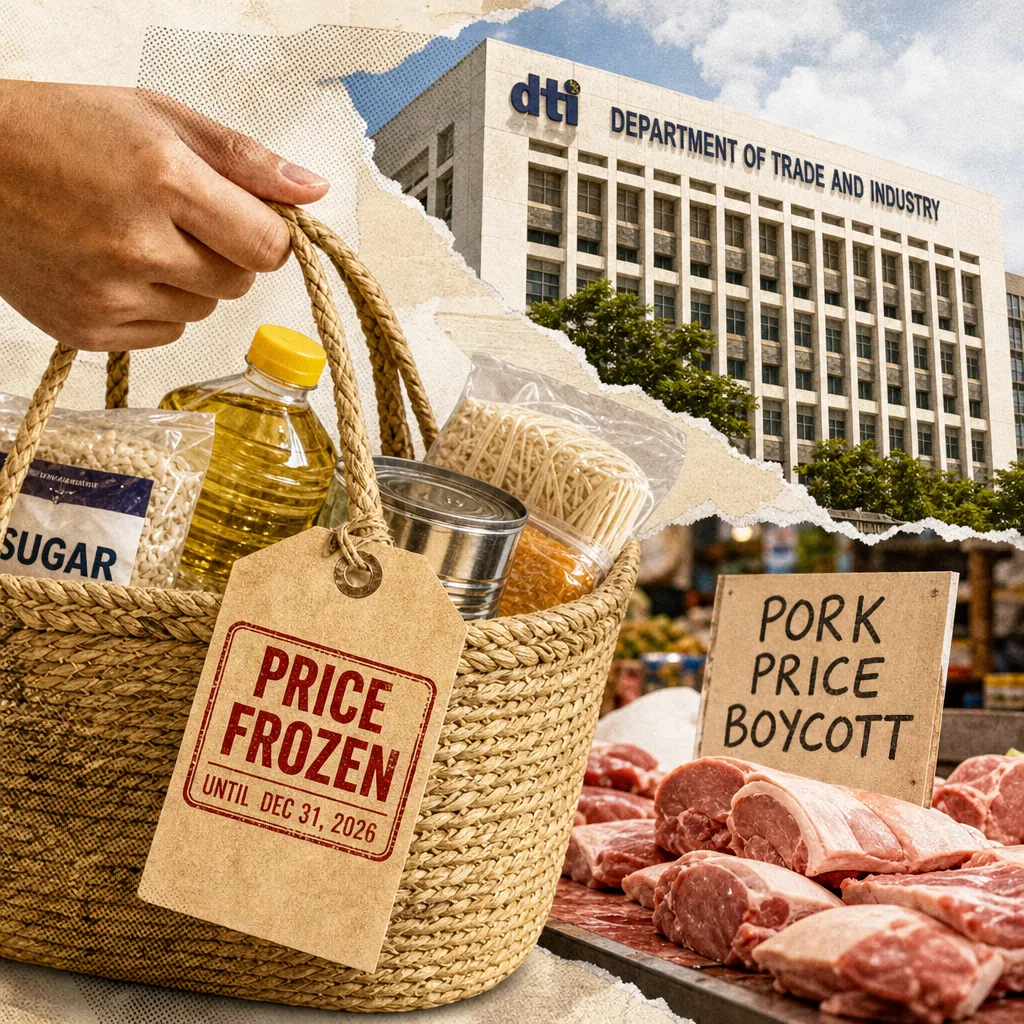
- The BCCP wants pork tariffs left where they are. The chamber warned that raising import duties would worsen consumer pressure amid rising food inflation, limited domestic supply and continuing African swine fever outbreaks 31.
- Pork tariffs are scheduled to climb in 2027 and 2028. Under Executive Order No. 62, pork imports are taxed at 15 percent within quota and 25 percent outside it; the Department of Agriculture proposes 25 and 35 percent in 2027, then 30 and 40 percent in 2028 31.
- The PBA Governors Cup quarterfinals opened with a Sunday doubleheader. NLEX faced Phoenix and Magnolia met defending champion TNT at the Ynares Center in Antipolo, all series best-of-five with no twice-to-beat advantage for higher seeds 743.
- NLEX locked up the No. 1 pick in the 2027 Rookie Draft. Blackwater's elimination fixed the draft order, with NLEX selecting first on Jan. 17, followed by Titan Ultra and Barangay Ginebra 2.
- Exporters were pointed toward Chile. A Department of Trade and Industry briefing heard that Chile's $18,000 GDP per capita and $357-billion economy offer room to grow a trade relationship in which Philippine exports to Chile reached only $64 million in 2024 against $263 million the other way 21.
- Apple's iPhone 18 Pro went on sale at midnight in Manila. Robinsons Magnolia hosted a launch event on Oct. 15 ahead of availability at 12:01 a.m. on Oct. 16, drawing preorder customers from Laguna, Pampanga and nearby provinces 9.
How the narratives stack
Dominant. Within the items captured here, the PBA Governors Cup quarterfinals drew the most items by a wide margin — at least eight separate stories across four outlets, in English and Filipino, covering schedules, matchups, coaches' comments and draft implications 24712152932363943. That dominance is a property of this captured set, which included heavy sports coverage; it is not evidence that basketball was the most important story in the country. The consumer story with the clearest consequences for household budgets — the pink tax bill — drew a single item, though a substantial one 1.
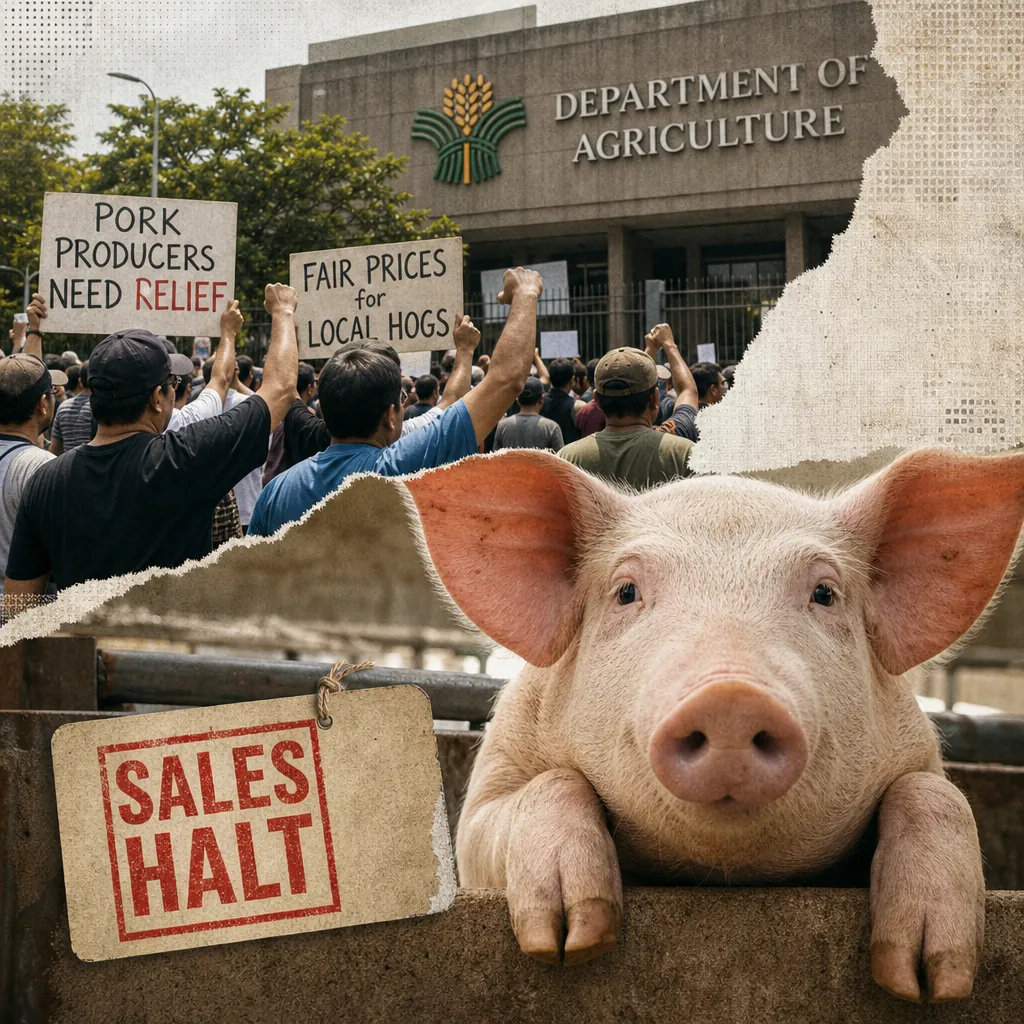
Counter-narrative. The BCCP's position on pork tariffs runs against the direction the Department of Agriculture has proposed. The chamber argues that keeping tariffs low protects consumers while the local hog herd recovers from African swine fever, a viral disease that has killed pigs across the country and reduced domestic supply 31. The Agriculture department's proposed schedule of increases points the other way, toward protecting local producers as they rebuild. Both positions are about the same trade-off — cheaper pork now versus a stronger domestic industry later — and the coverage captured here presents only the importer's side 31.
Emerging. The pink tax bill is the first legislative attempt in this set to regulate gender-based pricing directly, and it opens a question consumer brands have not had to answer in a Philippine legal forum before: how a company justifies a price difference between a product and its counterpart marketed to another gender 1. The bill's filing is the start of a legislative process, not a rule. It has no committee assignment or hearing date in the coverage captured here.
Under-covered. The Chile export briefing and the iPhone launch both received a single item each 921. The Chile story in particular carries information exporters would want — a named market, a proposed bilateral trade agreement, and a large gap between what Chile sells to the Philippines and what the Philippines sells to Chile — but it ran once and in one outlet.
Platform insights
The items captured for this snapshot came from online news outlets and blogs; no social-platform monitoring data accompanied them, so there is no engagement evidence to compare across Facebook, X, Reddit or YouTube for this window.
Key voices and communities
Sen. Loren Legarda and her legislative staff. Legarda filed SBN 2483 and framed it as consumer protection aimed at a pricing pattern that falls disproportionately on women buying daily necessities 1. Her office's explanation is the primary account of what the bill would do.
The British Chamber of Commerce of the Philippines. Executive Vice Chairman Chris Nelson argued for keeping pork tariffs low on supply, food security and inflation grounds, speaking for the interests of British and international businesses operating in the Philippines 31.
PBA coaches and team officials. Tim Cone of Barangay Ginebra, LA Tenorio of Magnolia, Jimmy Alapag of NLEX and Charles Tiu of Phoenix all gave post-game or pre-series comments that shaped the day's basketball coverage 12152932. Their remarks carried the color and the tactical read on the quarterfinal matchups.
The Department of Trade and Industry. The DTI's Export Marketing Bureau organized the Chile briefing, and its Philippine Trade and Investment Center in New York organized a separate art exhibition on Filipino identity and migration 2133. The department appears in the day's coverage as both trade promoter and cultural diplomat.
Consumer shoppers. The pink tax bill's intended beneficiaries are ordinary buyers of daily necessities, mostly women, who pay more for products marketed to them 1. They are the constituency the bill names but did not speak in the coverage captured here.
Narrative streams
The Anti-Pink Tax Act targets a pricing pattern, not a government levy
Senate Bill No. 2483 would prohibit gender-based price discrimination in consumer goods and services, and its author's explanation is careful about what the practice actually is. The "pink tax" is not a tax in the sense of a levy collected by the Bureau of Internal Revenue; it is a pricing scheme in which products marketed to women cost more than equivalent products marketed to men, and the difference generates profit rather than revenue for government 1. The Inquirer's report describes the burden as falling predominantly on female consumers buying daily necessities 1.
The bill's practical effect, if passed, would be to give regulators and consumers a legal basis to challenge price differences between products that are practically the same but marketed to different genders. That is a harder standard to enforce than it sounds: a pink razor and a blue razor may differ in packaging, scent or marketing budget, and a company can argue those differences justify a price gap. The bill's text as described in the coverage does not set out the enforcement mechanism, the penalties, or which agency would police it 1. Those details will determine whether the law changes shelf prices or only changes how products are labeled.
For consumer-goods companies, the bill introduces a compliance question into product development and pricing decisions that previously had no legal dimension in the Philippines. Brands that sell gendered versions of the same product — razors, shampoo, deodorant, personal-care items — would need to be able to explain a price difference if challenged. Retailers would face the question of whether to stock both versions at different prices while the bill is pending. The coverage captured here does not indicate whether the bill has administration backing or a committee sponsor, so its prospects are unknown.
Pork tariffs sit at the center of a food-inflation argument
The British Chamber of Commerce of the Philippines urged the government to maintain reduced pork import tariffs, with Executive Vice Chairman Chris Nelson framing the issue around "supply, food security and inflation" 31. The chamber's argument is that the domestic hog industry is still recovering from African swine fever — a contagious viral disease that has caused widespread culling and reduced local pork supply — and that raising import duties before that recovery is complete would push consumer prices higher 31.
The numbers behind the dispute are specific. Under Executive Order No. 62, pork imports are taxed at 15 percent for shipments within the quota and 25 percent for shipments above it. The Department of Agriculture has proposed raising those rates to 25 and 35 percent in 2027, then to 30 and 40 percent in 2028 31. The chamber's position is that the increases should not proceed on that schedule. The Agriculture department's position, implied by the proposal, is that local producers need protection as they rebuild their herds.
For consumers, the difference between the current rates and the proposed 2027 rates is a direct input into the retail price of pork, a staple protein in Filipino diets. For hog raisers, the difference is the margin that determines whether rebuilding a herd is worth the investment after years of disease losses. The coverage captured here presents the importer's case in detail and the Agriculture department's proposal as a fact without its supporting argument 31. The decision will be made through the tariff process, not legislation, and the coverage does not indicate when.
The PBA Governors Cup quarterfinals open with four best-of-five series
The PBA Season 50 Governors Cup entered its playoff stage on Sunday with a doubleheader at the Ynares Center in Antipolo: NLEX against Phoenix at 5:15 p.m., followed by Magnolia against defending champion TNT at 7:30 p.m. 7. All four quarterfinal series are best-of-five, meaning no twice-to-beat advantage for the higher seeds — a format change that makes the group-stage standings less protective of the top teams 43. The other two series, Rain or Shine against Converge and Barangay Ginebra against San Miguel Beer, were scheduled for Oct. 27 at the Smart Araneta Coliseum 7.
The matchups carry their own stories. Magnolia finished top of Group B at 7-3 but coach LA Tenorio dismissed the seeding as an advantage, noting that the prize for finishing first is a series against TNT and import Rondae Hollis-Jefferson 32. TNT reached the playoffs at 7-5 after an injury-hit elimination round, with Hollis-Jefferson, Jayson Castro, Poy Erram and Calvin Oftana all returning 4. Ginebra's Tim Cone, whose team needed a win over Blackwater on the final day to qualify, described the reward bluntly: "It's consuelo de bobo. You fight your way to the playoffs, and your reward is that you have to face San Miguel" 12. Phoenix coach Charles Tiu said his team's late slide — four losses in its last five games — started when Jason Perkins was no longer at full health 15.
For the league and its broadcast partners, the quarterfinals are the point where casual viewers return and advertising inventory becomes more valuable. The best-of-five format compresses the series into a short window, with Games 5 to 7 scheduled from Nov. 4 onward if needed, and the PBA taking a break after Nov. 10 743. For the teams, the absence of a twice-to-beat cushion means a single bad shooting night can end a season. The coverage captured here is heavy on previews and light on results, since the games had not yet been played when the items were published.
NLEX holds the No. 1 pick in the 2027 Rookie Draft
Blackwater's 101-96 loss to Ginebra on Friday eliminated the Bossing from playoff contention and fixed the top of the 2027 PBA Rookie Draft order: NLEX will pick first on Jan. 17, followed by Titan Ultra and Barangay Ginebra 2. The Road Warriors hold Blackwater's draft rights through a three-team trade made two years ago that sent Brandon Ganuelas-Rosser to TNT 2. The draft order is computed under PBA rules that weight the Philippine Cup at 40 percent and the Commissioner's Cup and Governors Cup at 30 percent each; Blackwater finished 11th in the Philippine Cup and 12th in the Governors Cup for a total of 11.3 points 2.
For NLEX, the top pick is an asset acquired years in advance that now matures at a moment when the team is also competing at the top of the Governors Cup standings. For Blackwater, the calculation is the reverse: a last-place finish converts into the second-worst draft position because the pick was traded away. The draft is more than three months off, so the coverage captured here is a marker rather than a development, but it sets expectations for how NLEX will approach the offseason.
Exporters are pointed toward Chile as a growth market
A briefing organized by the Department of Trade and Industry's Export Marketing Bureau heard that Chile offers Philippine exporters an attractive market because of its purchasing power, despite a population of only 19.9 million 21. Juan Manuel Millan of the consultancy Gedeth Network cited Chile's $357-billion gross domestic product in 2025 and GDP per capita of $18,000, and noted that a proposed bilateral trade agreement is expected to improve market access 21. The trade gap is wide: Chile exported $263 million worth of goods to the Philippines in 2024, while Philippine exports to Chile reached $64 million 21.
For Philippine exporters, particularly in food and consumer products, Chile is a small but relatively wealthy market where a trade agreement could reduce the tariff and regulatory friction that currently limits shipments. The briefing is one event in a longer effort to diversify export destinations beyond the country's traditional partners. The coverage captured here does not name the products with the strongest prospects or the timeline for the proposed agreement, so the practical value to a specific exporter remains to be worked out.
A midnight iPhone launch draws preorder customers to Robinsons Magnolia
Robinsons Magnolia hosted a midnight launch for Apple's iPhone 18 Pro on Oct. 15, with the device going on sale in the Philippines at 12:01 a.m. on Oct. 16 9. Customers who had secured preorders gathered at the mall atrium for food, games, raffle prizes and entertainment ahead of the countdown, some traveling from Laguna, Pampanga and nearby areas 9. The Manila Times feature described a photographer interested in the phone's camera capabilities and a customer who attended with his father to buy the device 9.
For retailers, midnight launches are a marketing device that converts a product release into an event and drives foot traffic to the mall. For Apple, the Philippine launch is one stop in a global rollout, and the local event's value is in the preorder commitments it locks in before general availability. The coverage captured here is a scene piece rather than a sales report; it does not give unit figures or revenue.
Conversation trajectory
The Anti-Pink Tax Act's legislative path. Watch for a committee assignment and hearing date in the Senate trade and commerce committee over the next four to six weeks. A bill filed without a hearing is a statement; a bill scheduled for hearing is a live policy process. The signal to watch is whether the bill's text, once published, specifies an enforcement agency and penalties.
Pork tariff decision. The Department of Agriculture's proposed schedule of increases for 2027 and 2028 will move through interagency review before any executive order is issued. Watch for a formal comment period or a National Economic and Development Authority position over the next quarter. A decision to hold current rates would be a win for importers and a setback for hog raisers.
PBA quarterfinal results. The first games were played Sunday, with results not captured in these items. Watch the series outcomes through early November, with Games 5 to 7 scheduled from Nov. 4 and the league taking a break after Nov. 10 743. An early exit by defending champion TNT or top seed Magnolia would reshape the semifinal picture.
2027 Rookie Draft build-up. The draft is set for Jan. 17, with NLEX picking first 2. Watch for trade talk around the top pick as the date approaches; a team with a playoff run underway may prefer to convert the pick into a veteran.
Chile trade agreement. The proposed bilateral agreement has no timeline in the coverage captured here. Watch for a formal announcement of negotiations or a signing date from the DTI, which would give exporters a concrete window to prepare.
Response guidance
Consumer-goods brands: audit gendered pricing before the bill moves. Companies selling male- and female-marketed versions of the same product should be able to explain any price difference in terms of ingredients, packaging or marketing cost. A gap that cannot be explained is a communications risk if the bill reaches a hearing.
Retailers: prepare a plain-language answer on shelf pricing. Store staff and corporate affairs teams should be ready to explain why two similar products carry different prices, without dismissing the question. The bill's framing — that the difference is profit-driven — will shape how shoppers read any answer that sounds evasive.
Food and agriculture communicators: present both sides of the tariff question. The coverage captured here carried the importer's argument in detail and the Agriculture department's proposal without its rationale. Communications from hog raisers and from the department should explain what protection buys for domestic supply, not only what it costs consumers.
PBA and team communications: lean on the coaches' candor. Tim Cone's "consuelo de bobo" line and LA Tenorio's dismissal of seeding are the kind of quotes that travel. Team communications should make coaches available for plain assessments of matchups rather than restricting them to generic previews.
Export promoters: give the Chile story a product angle. The briefing established the market's size and the trade gap but not which Philippine products have the best prospects. A follow-up that names categories and companies would give exporters something to act on.
Technology retailers: treat launch events as content. The Robinsons Magnolia midnight launch generated a feature story because it had customers with reasons to be there — a photographer testing the camera, a father and son buying together. Retail communications should identify and brief those customers in advance.
See the full picture behind today's signals.
This report draws from Media Meter's MediaWatch, our real-time monitoring engine tracking 2,470+ Philippine sources across print, broadcast, digital, and social. Explore how the platform turns raw coverage into decision-grade intelligence, then see how it's configured for teams like yours — whether you're in PR agencies, corporate comms, government, or marketing.
Want more? Browse our Report Library for sector and crisis intelligence, or request a demo and we'll have your brand set up before the call.
Want this kind of intelligence on your brand?
This brief is built on the same MediaWatch methodology that runs continuously across every brand we monitor. See your competitive landscape, Impact Score, and narrative trajectory in a 30-minute demo.