Delivery Rider Death Sparks Safety Debate
A delivery rider's death in Antipolo during heavy monsoon rains triggers widespread grief and calls for rider safety, while the automotive sector sees EV expansions and corporate milestones.
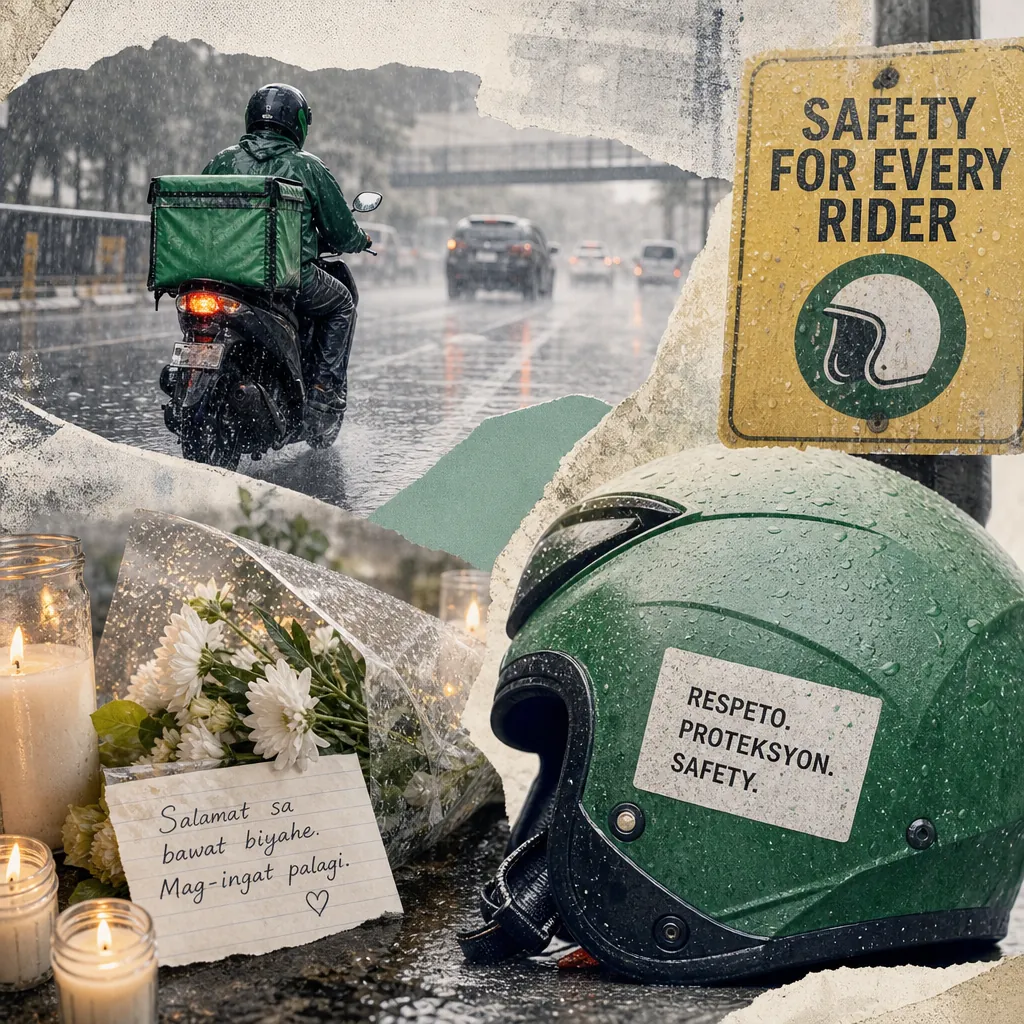
The day's conversation opened with tragedy and closed with a call to action. On August 9, a delivery rider in Antipolo City died after a falling tree and utility pole crushed him while he sought shelter from the relentless southwest monsoon, known locally as "habagat." The news broke through a Facebook post by Antipolo Mayor Jun-Andeng Ynares, who expressed grief that the victim lost his life "sa gitna ng kanyang paghahanapbuhay at pagsisikap para sa kanyang pamilya" — in the midst of earning a living and striving for his family. Within hours, major networks like ABS-CBN and GMA amplified the story, and by evening, the conversation had shifted from raw news to collective mourning, with viral posts drawing tens of thousands of emotional reactions. One post alone accumulated over 35,900 "sad" reactions and 806 "care" reactions, signaling deep public empathy for delivery riders' sacrifices. A parallel incident in Sampaloc, Manila, where another rider was injured by a falling tree, reinforced the narrative of systemic hazards for two-wheeled vehicles during severe weather.
While the tragedy dominated social media, the news media carried a quieter but steady stream of automotive industry developments. Electric vehicle (EV) brands expanded their footprint: RADAR EV Pickup opened a Cebu dealership, VinFast launched three e-motorcycle models in the Philippines, and BYD celebrated its Sealion 6 DM-i's second anniversary with a drive-in cinema event. Toyota hosted its first-ever "Legacy Experience" highlighting its history, and Nissan reported a return to profit after a year of restructuring. These stories, though less emotionally charged, painted a picture of an industry in motion — embracing electrification, expanding beyond Metro Manila, and building community among owners.
The juxtaposition of these two streams — the human cost of riding and the corporate push for growth — frames the day's conversation. For the automotive and motorcycle sectors, the tragedy underscores the urgent need for rider safety advocacy, while the industry's own developments offer opportunities to demonstrate commitment to that cause. The public's overwhelming grief is not just a moment of sympathy; it is a demand for accountability and action. Brands that respond with genuine, safety-focused initiatives may earn lasting trust, while those that remain silent risk appearing disconnected from the very people who use their products.
Key themes
- Tragic death of a delivery rider sparks national grief: The Antipolo incident, where a rider was killed by a falling tree and utility pole, became the day's dominant story. Viral posts and news coverage drew tens of thousands of emotional reactions, turning a local tragedy into a national conversation about rider safety and the dignity of essential workers.
- Rider safety during severe weather emerges as systemic concern: A second incident in Sampaloc, Manila, where a rider was injured by a falling tree, highlighted the broader risks faced by motorcycle riders during the monsoon. The repeated sharing of these stories underscored the widespread nature of the hazard and raised questions about urban preparedness.
- Calls for kindness and structural accountability: The conversation evolved into two parallel demands: public empathy for riders (e.g., not pranking them, giving tips) and institutional responsibility for infrastructure safety. Viral posts urged compassion, while news coverage implicitly criticized utility infrastructure vulnerability.
- EV expansion accelerates across the Philippines: RADAR EV Pickup opened a Cebu dealership, VinFast launched three e-motorcycle models, and BYD celebrated its Sealion 6 DM-i's second anniversary. These moves signal a growing push for electrification beyond Metro Manila, with brands investing in regional presence and community building.
- Corporate milestones and recovery stories: Nissan returned to profit after restructuring, Jetour's T2 surpassed 500,000 global sales, and Toyota hosted its first Legacy Experience. These stories reflect an industry adapting to new market realities, from electrification to brand heritage.
- Infrastructure failures under scrutiny: The collapse of a wall along EDSA in Makati, described as "substandard" by officials, and the broader flood-control issues highlighted by the monsoon raised questions about government accountability. This theme intersects with rider safety, as falling trees and poles point to maintenance lapses.
- Transport strike postponed due to floods: The transport group MANIBELA canceled its planned strike on August 10, citing severe flooding. The strike was intended to push for a fare increase from the current ₱13 minimum, reflecting ongoing tensions over fuel prices and driver livelihoods.
- Rider vulnerability extends beyond weather: A separate incident involving a female rider hit by a truck, where the driver allegedly fled, and a traffic enforcer shot for refusing to release an impounded motorcycle, underscored the broader dangers riders face on the road, from reckless drivers to enforcement-related violence.
How the narratives stack
Dominant: The delivery rider's death in Antipolo is the clear dominant narrative of the day, both in social media engagement and news coverage. The story's emotional weight — reflected in over 35,000 "sad" reactions on a single post — and its rapid amplification by major networks made it the day's most significant development. Within the captured set, this story drew the most attention, with coverage spanning Facebook, Twitter, YouTube, and online news outlets. The narrative evolved from breaking news to a broader discourse on rider safety, infrastructure resilience, and the dignity of essential workers.
Counter-narrative: Amid the grief, a quieter but persistent counter-narrative emerged from the automotive industry's corporate developments. EV brands like RADAR, VinFast, and BYD pushed forward with expansions and celebrations, signaling business-as-usual optimism. This narrative, while not directly opposing the tragedy, offered a contrasting view of the sector — one focused on growth, innovation, and community, rather than risk and loss. It serves as a reminder that the industry is not monolithic, and that even as riders face dangers, companies are investing in safer, cleaner technologies.
Emerging: A third narrative is emerging around infrastructure accountability. The collapse of a wall along EDSA, described as "substandard" by Public Works Secretary Vince Dizon, and the broader flood-control issues highlighted by the monsoon, point to systemic failures in urban planning and maintenance. This narrative, still nascent, could gain traction as investigations unfold and as the public connects the Antipolo tragedy to broader questions about why trees and poles fall, and why flood-control projects fail. Within the captured set, this theme appeared in several news articles, but it has not yet reached the emotional intensity of the rider safety discourse.
Suppressed: The story of the traffic enforcer shot in Dasmariñas for refusing to release an impounded motorcycle received relatively little attention compared to its severity. This incident, which highlights the dangers faced by law enforcement in traffic management, was covered by Inquirer Online but did not generate the same level of engagement as the rider death. Similarly, the postponed transport strike, which speaks to the economic pressures on drivers, was reported but not widely discussed on social media. These under-covered stories point to a broader conversation about the risks and rights of those who work on the roads — a conversation that the public may not be ready to fully engage with amid the emotional response to the Antipolo tragedy.
Platform insights
- Facebook: The dominant platform for both news dissemination and emotional engagement. Viral posts from community pages and advocates accumulated tens of thousands of reactions and thousands of shares, with one post reaching 2,064 shares and 35,922 "sad" reactions. The platform's timeline showed a clear progression from breaking news alerts in the early afternoon to grief-stricken memorial posts and advocacy messaging by the evening. Facebook's reaction buttons — particularly "sad" and "care" — became a barometer of public empathy, with users expressing collective mourning through these features.
- Twitter/X: Served primarily as a rapid news syndication channel, where updates from ABS-CBN News and other outlets provided concise, shareable headlines for real-time information. One tweet from @ABSCBNNews reached over 27,000 views, but engagement was less emotional compared to Facebook, focusing instead on factual details and official statements. The platform's character limit and real-time nature made it ideal for breaking news, but it lacked the depth of emotional expression seen on Facebook.
- Reddit: Provided a space for raw, informal user sentiment. A tribute post by user u/Open_Society_8998, titled "Delivery Rider killed by fallen tree in San Roque, Antipolo," captured the somber mood with the caption "Sad news for today :(( RIP kay kuya na nagtatrabaho lang pero namatay dahil natumbahan ng dalawang poste." Reddit's upvote system and comment threads allowed for more nuanced discussion, though engagement was lower than on Facebook.
- YouTube: Hosted longer-form news reports from GMA News and TV5, which extended the story's lifespan. However, comment activity was minimal, suggesting passive consumption rather than active discussion. YouTube's role was primarily to provide in-depth video coverage for viewers seeking more detail than social media posts could offer.
Key voices and communities
- Mainstream news and public affairs broadcasters: Major Philippine media organizations like ABS-CBN, GMA, and TV5 dominated the early conversation, breaking the Antipolo incident across their platforms. Their reporting style prioritized factual updates — road clearing operations, medical response, and government advisories — over emotional framing. Their reach amplified the story to mass audiences and set the initial narrative frame.
- Local government and public safety officials: Antipolo Mayor Jun-Andeng Ynares and Manila's emergency response units served as authoritative voices, providing first-hand account details and on-the-ground response information. The mayor's personal Facebook post was the originating source for the Antipolo incident, and his statements carried institutional weight, shaping the narrative with grief and caution.
- Viral content sharers and advocacy influencers: A group of high-engagement Facebook accounts amplified the story through emotional, human-interest framing. One post had over 35,000 sad reactions and 2,000 shares, dramatically outperforming news media in emotional engagement. These accounts used the incident to advocate for greater public respect for delivery riders, emphasizing their daily risks and the dignity of their labor.
- General public and rider communities: The large, participatory base of the conversation, engaging primarily through reactions, shares, and comments. Their collective response — overwhelmingly grief and empathy — signaled the emotional weight of the story and amplified its visibility. The high number of sad and care reactions indicated a deeply personal connection to the victim's story, with any incident involving riders triggering a strong empathetic response.
Narrative streams
The Antipolo tragedy: A rider's death becomes a national conversation
The day's most significant narrative stream began with a breaking news alert from Antipolo Mayor Jun-Andeng Ynares, who took to Facebook to report the death of a delivery rider crushed by a falling tree and utility pole. The rider, whose name was not immediately released, had sought shelter from the heavy rain when the incident occurred. The mayor's post, which drew over 200 reactions and 17 shares, set a somber tone, expressing grief that the victim died "sa gitna ng kanyang paghahanapbuhay at pagsisikap para sa kanyang pamilya." Within hours, ABS-CBN News and GMA News amplified the story, with TV Patrol Weekend and 24 Oras Weekend airing segments that broadened the reach to a national audience. The coverage drew significant engagement: one major network's post about the incident received over 1,200 reactions and 130 shares, while a rival network's similar coverage received over 900 reactions.
As the day progressed, the narrative evolved from raw news to emotional commentary. A viral Facebook post urging the public to "be kinder to delivery riders" accumulated over 35,900 "sad" reactions and 806 "care" reactions, with the post arguing that "people who are just fighting their way through life honestly and doing their best to provide for themselves and their loved ones deserve to make it home safely." Another post, with nearly 1,500 "care" reactions, stated, "No one working hard to provide for themselves and their loved ones deserves to lose their life in such a tragic way." On Reddit, user u/Open_Society_8998 posted a tribute titled "Delivery Rider killed by fallen tree in San Roque, Antipolo," writing, "Sad news for today :(( RIP kay kuya na nagtatrabaho lang pero namatay dahil natumbahan ng dalawang poste."
The emotional response was not limited to social media. The story also drew heavy newspaper coverage, with the Daily Tribune's article on the deadly habagat, which mentioned the rider's death, carrying an estimated advertising-equivalent value of ₱244,218 — the cost of buying the same space as advertising. This figure, while not a measure of readership, indicates the prominence of the story in the day's news cycle.
The read for the sector is clear: the public is deeply concerned about rider safety, and any brand associated with delivery services or motorcycle manufacturing must take note. The tragedy has turned a local incident into a national conversation about worker protection, and the emotional engagement suggests that audiences are primed for messages about rider welfare. For automotive and motorcycle stakeholders, this is an opportunity to demonstrate genuine commitment to safety, but it is also a risk if they appear tone-deaf to the public's grief.
Rider safety during severe weather: A systemic concern
A parallel incident in Sampaloc, Manila, where another motorcycle rider was injured by a falling tree, reinforced the narrative that riders face systemic hazards during the monsoon season. The incident, shared by multiple news pages, drew over 80 "sad" reactions and 4 "care" reactions, indicating that even non-fatal incidents trigger strong empathetic responses. The coverage highlighted firefighters dismantling trees and roads becoming impassable, underscoring the widespread nature of the hazard.
An emotional editorial post expanded on this theme, noting that "For some, it is just a delivery. But for them, it is livelihood." This framing positioned the incidents not as isolated accidents but as a reflection of the daily dangers riders face while earning a living. The post, which drew over 17,000 sad reactions and nearly 1,000 shares, urged the public to "be kinder to delivery riders. Don't prank or take advantage of them, and if you can, consider giving them a tip."
The conversation also touched on the broader context of the southwest monsoon, which has caused widespread flooding and landslides across Luzon. According to the National Disaster Risk Reduction and Management Council (NDRRMC), eight individuals have died due to the effects of Typhoons Luis and Maymay and the enhanced southwest monsoon. The deaths include two in Rizal due to rockslide, two in Batangas due to drowning and electrocution, two in Benguet due to landslide, and two in La Union due to landslide, electrocution, and drowning. Over 124,000 families, or 486,000 individuals, have been affected across multiple regions.
For the automotive sector, this narrative highlights the need for weather-related safety guidelines for riders. The repeated incidents of riders being struck by falling trees and debris suggest a clear public interest in actionable guidance that could prevent similar tragedies. Brands that publish such materials now, framed with sensitivity to the recent deaths, could demonstrate proactive leadership and provide genuine value to the riding community.
EV expansion: Industry growth amid tragedy
While the tragedy dominated social media, the news media carried a steady stream of automotive industry developments, particularly in the electric vehicle segment. RADAR EV Pickup Philippines opened a Cebu dealership with Pacific Autoworld Inc., giving the brand a stronger base for serving customers across the Visayas. The new outlet, located in Banilad, Cebu City, displays the battery-electric RD6 Econ and the RD6 EM-P 4WD plug-in hybrid. The partnership supports UAAGI Auto Group's expansion across the Visayas and Mindanao, placing sales and service closer to buyers outside Metro Manila.
VinFast Philippines officially expanded its portfolio beyond four-wheelers with the unveiling of three e-motorcycle models: the Viper, Evo, and Feliz II. Sourced from the company's manufacturing facility in Haiphong, Vietnam, these models offer distinct features to meet the needs of a diverse customer base. VinFast e-Motorcycle Philippines CEO Ireneo Fabros said the brand aims to compete in the two-wheeler market with all-electric offerings, signaling a shift toward electrification in the motorcycle segment.
BYD Cars Philippines celebrated the second anniversary of its Sealion 6 DM-i plug-in hybrid SUV with a drive-in cinema night at Ayala Malls Trinoma in Quezon City. More than 60 owners participated, joining a convoy from several points across Luzon. The event highlighted the growth of the BYD Sealion 6 Facebook group, which now counts more than 25,000 active members nationwide. The Sealion 6 Owners Club, which began as a small group for early buyers, has developed into one of the more active local vehicle clubs, with regular gatherings to discuss operating costs and day-to-day ownership.
These developments, while not directly related to the tragedy, paint a picture of an industry in motion. The expansion of EV brands beyond Metro Manila, the entry of new players like VinFast into the motorcycle segment, and the growing community around BYD vehicles all suggest a sector that is adapting to new market realities. For stakeholders, these stories offer a counterpoint to the day's somber tone, reminding them that the industry is also about innovation and growth.
Infrastructure failures: A growing concern
The monsoon rains exposed significant infrastructure vulnerabilities, with the collapse of a wall along EDSA in Makati City drawing particular attention. The wall, which fell during heavy rain on Saturday night, was described as "substandard" by Public Works Secretary Vince Dizon, who inspected the site with MMDA General Manager Nicolas Torre III. Dizon noted that the wall was made of hardiflex and drywall instead of cement, saying, "Hindi ito semento. Hardiflex lang ito, drywall lang ito. Parang, ang nangyari dito, kung sino man ang gumawa nito, pinapalabas nila na semento, pero hindi naman pala semento." The collapse blocked two lanes of the northbound EDSA, causing traffic congestion.
This incident, along with the falling trees and utility poles that killed the delivery rider, raises questions about urban preparedness and maintenance. The Daily Tribune's article on the "Deadly habagat" explicitly linked the floods to the alleged P1-trillion corruption scandal involving ghost flood-control projects, stating that "The P1-trillion corruption scandal siphoned money meant for flood-control infrastructure into ghost projects and kickbacks." While this claim is not yet proven, it reflects a growing public concern about government accountability.
For the automotive sector, infrastructure failures have direct implications. Poorly maintained roads and falling debris pose risks to all road users, not just riders. Brands that advocate for safer infrastructure, without directly blaming government agencies, could position themselves as responsible industry voices. The public's positive response to real-time infrastructure updates, such as NLEX flood preparedness and Mandaluyong passability advisories, indicates a strong demand for actionable information during severe weather.
Transport strike postponed: Economic pressures on drivers
The transport group MANIBELA announced the postponement of its planned transport strike on August 10, citing severe flooding caused by the southwest monsoon. In a Facebook post, the group said it wanted to prioritize the safety and well-being of every driver and their families. The strike was intended to push for a fare increase from the current ₱13 minimum, following the rise in fuel prices due to tensions in the Middle East. No new date for the strike has been announced.
This development is significant for the automotive sector because it highlights the economic pressures on drivers and riders. The postponed strike, while not directly related to the Antipolo tragedy, underscores the precarious livelihoods of those who depend on two-wheeled vehicles for income. For brands, this is a reminder that rider welfare is not just about physical safety but also about economic security. Supporting initiatives that address fare fairness or fuel costs could resonate with the riding community.
Rider vulnerability beyond weather: Traffic enforcement and accidents
Two other incidents on August 9 highlighted the broader dangers riders face on the road. In Dasmariñas City, Cavite, a traffic enforcer was shot after refusing to release an impounded motorcycle. The incident occurred when the enforcer and his colleague flagged down a motorcycle carrying two riders without helmets, discovered the registration was expired and the driver had no valid license, and marked the vehicle for impoundment. Hours later, the suspect returned and shot the enforcer. The story, covered by Inquirer Online, drew relatively little attention compared to the Antipolo tragedy, but it underscores the risks faced by both riders and law enforcement in traffic management.
Separately, a viral case of a female rider struck by a truck whose driver allegedly fled the scene gained traction on entertainment-oriented public affairs platforms. This incident, covered by TV5, reinforced public concerns about driver accountability and vulnerable road user protection. The co-occurrence of these stories within the same news cycle points toward a convergence of rider safety narratives into a broader "riders at risk" theme that encompasses weather hazards, reckless drivers, and inadequate protections.
For the automotive sector, these incidents highlight the need for comprehensive safety campaigns that cover both weather and traffic hazards. The public's empathetic response to any incident involving riders suggests that brands that acknowledge these struggles and contribute meaningfully to rider protection will be well-received.
Conversation trajectory
Over the next 48 hours, expect the conversation to shift from grief to accountability. As media organizations publish follow-up analysis pieces, the focus will likely move toward questions about infrastructure maintenance, utility pole placement, and whether local governments are doing enough to protect riders during severe weather. The high emotional engagement on posts expressing grief and calls for kindness indicates a receptive audience for accountability-focused follow-up reporting.
Within 3–5 days, the viral video amplification and advocacy crossover will likely fuel a broader push around rider welfare, including calls for hazard pay, better weather protocols for delivery platforms, and public education about safe sheltering practices. The circulation of CCTV footage showing the rider seeking shelter before the accident has driven exceptional engagement, and this visual component will likely sustain the narrative.
Over 1–2 weeks, the conversation may expand to systemic rider vulnerability narratives, as the separate incidents involving the female rider hit by a truck and the traffic enforcer shooting converge into a broader "riders at risk" theme. This pattern will likely produce sustained conversation, expanding beyond the immediate Antipolo tragedy.
Key trigger events that will reshape the conversation include: the release of official incident investigation findings from local authorities (likely within 2–3 weeks), which could redirect anger toward specific utility companies or contractors; the next major weather system affecting Metro Manila and Rizal, which will re-energize the conversation with fresh urgency; and any safety policy announcements from delivery platform companies in response to public pressure, which would be rapidly amplified by advocacy-oriented accounts and rider communities.
Response guidance
For communicators in the automotive and motorcycle sectors, the immediate priority is to demonstrate genuine commitment to rider safety without appearing opportunistic. The public's overwhelming grief, reflected in tens of thousands of emotional reactions, demands a somber and respectful response. Brands should avoid any language that could be construed as marketing or self-promotion, and instead focus on practical actions that support rider welfare.
One effective approach is to launch a rider safety public service campaign targeting the typhoon season. This directly addresses the most immediate and emotionally resonant aspect of the conversation while reinforcing brand commitment to rider welfare. The campaign should include practical tips on avoiding hazards like falling trees and utility poles, referencing real-world examples from the recent incidents. This should be deployed within 48 hours of the incident peak to remain relevant.
Another approach is to coordinate with traffic and weather authorities to amplify real-time safety advisories on brand social media channels. The public's positive response to NLEX flood preparedness and Mandaluyong passability updates indicates strong demand for actionable information during severe weather. This positions automotive brands as community partners in public safety, enhancing reputation without direct promotion.
For longer-term engagement, consider launching a rider welfare initiative that goes beyond weather safety to address broader risks, including traffic accidents and enforcement-related violence. This demonstrates sustained commitment rather than a one-off response to tragedy, building lasting trust with the rider community and the public.
When addressing the tragedy directly, use language that acknowledges the rider's dedication and the public's grief. For example: "Our deepest condolences to the family and loved ones of the delivery rider who lost his life in Antipolo. His dedication to his work and his family is a testament to the resilience of Filipino workers. We are committed to supporting efforts that make riding safer for everyone."
When responding to concerns about rider safety, emphasize shared responsibility: "We take the safety of all road users, especially motorcycle riders, very seriously. The recent incidents in Antipolo and Sampaloc remind us that severe weather creates unpredictable hazards. We encourage all riders to seek safe shelter, avoid trees and utility poles during storms, and prioritize their lives over delivery deadlines."
Sensitive topics to navigate include the death itself, which is deeply emotional; infrastructure failure, which should be addressed without directly blaming government agencies; and rider working conditions, which touch on labor rights. Brands should acknowledge the dignity of riders' work and support their welfare without appearing to exploit worker struggles for corporate gain.
Finally, monitor the conversation for shifts toward product liability or industry criticism. As the story matures, comments may shift toward what could have prevented the deaths, including vehicle safety considerations. Prepare pre-drafted responses or educational content highlighting your safety technologies and commitment to rider protection, ready to deploy if the conversation pivots in that direction.
See the full picture behind today's signals.
This report draws from Media Meter's MediaWatch, our real-time monitoring engine tracking 2,470+ Philippine sources across print, broadcast, digital, and social. Explore how the platform turns raw coverage into decision-grade intelligence, then see how it's configured for teams like yours — whether you're in PR agencies, corporate comms, government, or marketing.
Want more? Browse our Report Library for sector and crisis intelligence, or request a demo and we'll have your brand set up before the call.
Want this kind of intelligence on your brand?
This brief is built on the same MediaWatch methodology that runs continuously across every brand we monitor. See your competitive landscape, Impact Score, and narrative trajectory in a 30-minute demo.