School safety fears dominate as DepEd orders multi-layered security after Tacloban shooting
A tragic school shooting in Tacloban City and a classroom knife attack have sparked urgent calls for security reforms, with DepEd ordering metal detectors and CCTV, while experts caution against blaming video games. Entertainment news also drew heavy coverage.
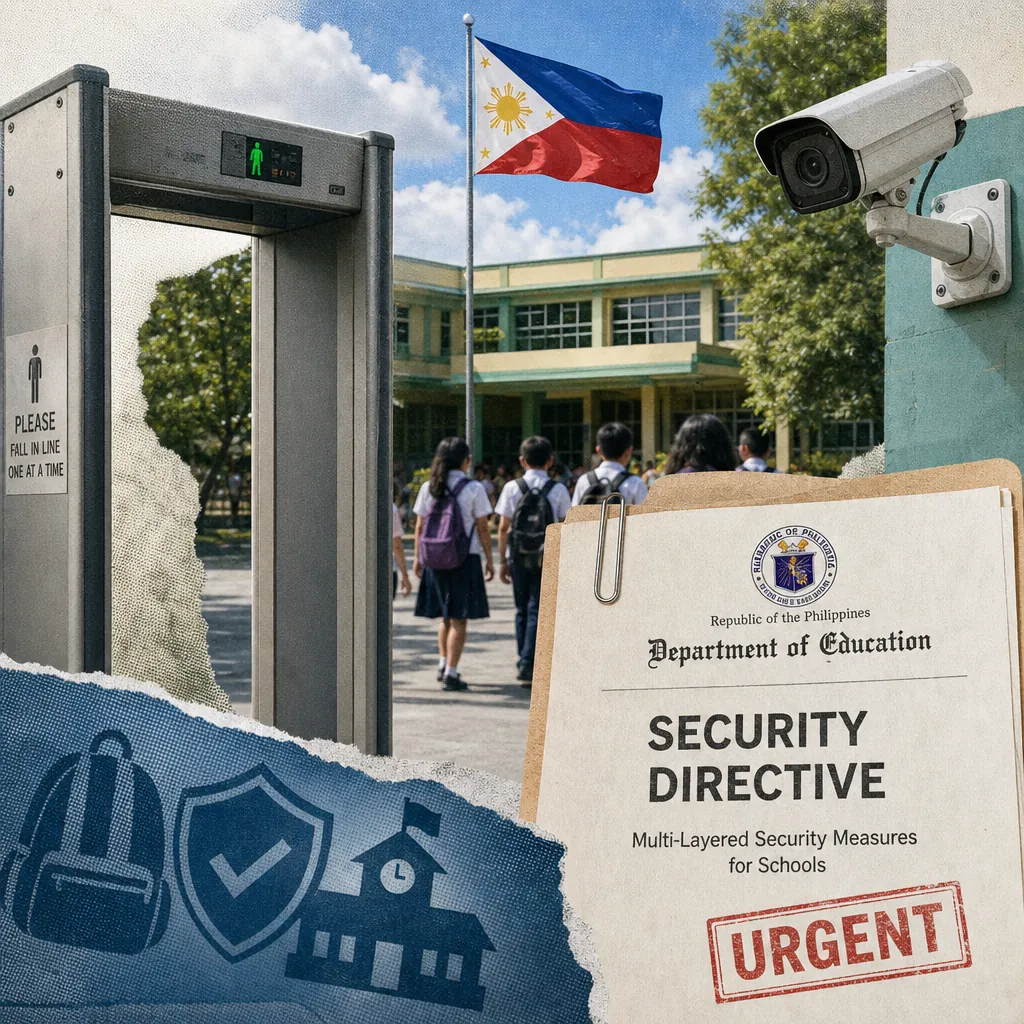
The opening of the school year in the Philippines has been overshadowed by a wave of violence that has left parents, educators, and officials grappling with how to keep students safe. The most urgent story is the June 22 shooting at San Jose National High School in Tacloban City, which left three students dead and has prompted the Department of Education (DepEd) to order a nationwide multi-layered security strategy. At the same time, a separate classroom knife attack by a 14-year-old in General Trias, Cavite, and foiled mass casualty plots linked to violent online subcultures have deepened public anxiety. The conversation on social media and in the press has been intense, with many calling for immediate action while others warn against scapegoating video games. Entertainment news about celebrity couples and TV network battles also drew significant coverage, but the dominant narrative is the crisis in school safety.
Key themes
- DepEd orders multi-layered security in all schools The Department of Education has announced the nationwide implementation of a School Safety Campaign following the Tacloban shooting. Measures include bag inspections using handheld metal detectors, stricter visitor management, regular bag checks, installation of CCTV cameras, and strategic deployment of security personnel. Physical structures such as fences, visitor pathways, lighting, and emergency exits will undergo safety audits to identify high-risk campuses. The DepEd is also coordinating with the Philippine National Police (PNP) and the Union of Local Authorities of the Philippines (ULAP) to align response protocols. [2]
- Tacloban shooting and other violent incidents shatter sense of safety The June 22 shooting at San Jose National High School left three students dead. Authorities partly blamed one of the two underage suspects' exposure to violent video games. A separate incident involved a 14-year-old student attacking a classmate with a knife in General Trias, Cavite. Additionally, foiled mass casualty plots were linked to violent online subcultures, including the game GoreBox. These events have led to widespread fear among parents and educators, with one columnist describing the situation as "schools in peril." [5]
- Experts and gamers caution against blaming video games In the wake of the Tacloban shooting, some authorities pointed to violent video games as a contributing factor. However, experts and gaming communities have pushed back, arguing that the link between video games and real-world violence is not supported by evidence. An article in Inquirer Plus features a parent, Cris, who is worried about his 13-year-old son's gaming habits and online chats, but experts caution against simplistic blame. The piece notes that many gamers are well-adjusted and that focusing on games distracts from deeper issues like mental health and school security. [10]
- Teacher-content creator calls for legitimate learning resources A teacher and content creator known as "Teacher Karla" has gone viral on TikTok, appealing to DepEd to provide standard and legitimate learning resources for teachers handling new subjects under the three-term school year. She says many teachers struggle to find reliable materials and that she was fortunate to be noticed by a publishing house that provided books. Her video has resonated with many educators who echo the same plea. [4]
- Online sales profitability challenges for e-commerce entrepreneurs A column in the Manila Times discusses the struggles of e-commerce entrepreneurs who, despite generating sales through platforms like Shopee, Lazada, and TikTok Shop, find profits eroded by commissions, advertising, affiliate incentives, and shipping costs—potentially approaching a quarter of the selling price. The article explores whether sellers should leave platforms and sell through Facebook or their own websites. [3]
- DICT digital reforms reduce courier complaints The Department of Information and Communications Technology (DICT) has intensified reforms in the private express and messengerial delivery service (PEMEDES) sector. The launch of Oplan Bantay Padala and the PEMEDES Licensing Portal established a centralized system for complaints monitoring, rider registration, and compliance tracking. Since January, courier complaints have steadily declined from 1,210 in January to 182 in April, indicating improved accountability. [11]
- Celebrity news dominates entertainment coverage A significant portion of the captured media covers entertainment topics, including Coco Martin and Julia Montes discussing marriage plans, Nadine Lustre saying she wouldn't want to love again if she and her boyfriend break up, and the upcoming series "Someone, Someday" starring Kathryn Bernardo and James Reid. The battle between TV networks is also highlighted, with ABS-CBN shows airing on TV5. [1][7][8][9][12][13][14][15][16][17][18][19]
How the narratives stack
Dominant Within the captured set, the dominant narrative is the school safety crisis triggered by the Tacloban shooting and subsequent violent incidents. This story generated the most urgent coverage, with DepEd's security directive, expert commentary, and parental anxiety all receiving substantial attention. The coverage value of items related to school safety is significant, with the DepEd announcement alone worth an estimated ₱225,736 in advertising-equivalent value, and the Inquirer Plus article on video games worth ₱689,224. The Daily Tribune column "When classrooms turn into battlegrounds" also contributed ₱173,160. This narrative dominates because it involves immediate policy action, public fear, and a clear call for change.
Counter-narrative A counter-narrative pushes back against blaming video games for youth violence. Experts and gamers argue that the evidence does not support a causal link and that focusing on games distracts from addressing mental health, school security, and other root causes. This perspective is represented in the Inquirer Plus article and is likely to gain traction among gaming communities and civil liberties advocates.
Emerging An emerging narrative is the call from teachers for better learning resources, as voiced by Teacher Karla on TikTok. This story highlights systemic issues in the education system beyond security—namely, the lack of standard materials for new subjects. It has the potential to grow as more teachers share their experiences.
Suppressed A story that is under-covered relative to its importance is the DICT's digital reforms in the courier sector. While the data shows a significant drop in complaints, this story received only one article in the captured set. Given the public's reliance on delivery services, the success of these reforms could be a positive narrative for the government, but it is not receiving the attention it might deserve.
Platform insights
- Facebook: The teacher-content creator Teacher Karla posted her appeal on Facebook (referred to as the "Blue app"), where it gained traction among educators. Facebook remains a key platform for community organizing and sharing grievances within the education sector.
- TikTok: Teacher Karla's original video was posted on TikTok, where it went viral. TikTok's algorithm amplifies emotional and relatable content, making it a powerful tool for teachers to voice concerns directly to the public and to DepEd.
- YouTube: Nadine Lustre's interview with Karen Davila was published on YouTube, generating views and comments. YouTube is a primary platform for long-form celebrity interviews and vlogs.
- X (formerly Twitter): While not explicitly mentioned in the inputs, X is likely a platform for real-time discussion of breaking news like the Tacloban shooting, with hashtags and trending topics.
Key voices and communities
- Department of Education (DepEd) – The official voice announcing the School Safety Campaign and coordinating with law enforcement. Their statements set the policy direction.
- Teachers and educators – Represented by Teacher Karla and others who are demanding better resources. They are a vocal community on social media, using TikTok and Facebook to amplify their concerns.
- Parents – Parents like Cris, featured in the Inquirer Plus article, are anxious about their children's safety and online activities. Their personal stories humanize the issue.
- Experts and gamers – Psychologists, child development experts, and gaming communities who caution against blaming video games. They provide a nuanced perspective that counters simplistic narratives.
- Entertainment personalities and fans – Celebrities like Coco Martin, Julia Montes, Nadine Lustre, and Kathryn Bernardo drive engagement on social media. Their fan communities are active on multiple platforms.
Narrative streams
School safety crisis and DepEd's response
The most pressing narrative stream is the school safety crisis following the June 22 shooting at San Jose National High School in Tacloban City, where three students were killed. The incident has been described as a "punch to the gut" in a Daily Tribune column, which notes that schools are now "in peril" and that the opening of the school year, once marked by excitement, is now met with "agonizing, unfamiliar dread." [5] In response, the DepEd announced a multi-layered security strategy as part of its School Safety Campaign. This includes the use of handheld metal detectors for bag inspections, stricter visitor management, regular bag checks, installation of CCTV cameras, and strategic deployment of security personnel. Physical structures such as fences, visitor pathways, lighting, and emergency exits will undergo safety audits to identify high-risk campuses. The DepEd is also actively aligning response protocols with the Philippine National Police (PNP) and the Union of Local Authorities of the Philippines (ULAP). [2] The coverage of this announcement was worth an estimated ₱225,736 in advertising-equivalent value, indicating its prominence in the news. The column "When classrooms turn into battlegrounds" adds a personal perspective, with the author expressing fear as a parent: "We used to worry about whether they'd finish their baon or pass their quizzes. Now, a dark, suffocating weight." [5] This stream is likely to continue as schools implement the new measures and as further incidents or investigations unfold.
The debate over video games and violence
A related but distinct narrative stream is the debate over whether violent video games contribute to real-world violence. Authorities partly blamed the Tacloban shooting on one of the suspects being hooked on violent video games. However, an Inquirer Plus article features experts and gamers cautioning against this blame. The article profiles Cris, a father who is worried about his 13-year-old son Richard's gaming habits, including late-night play and online chats that mentioned "gambling." Cris also caught his son cursing in chats. But the article emphasizes that experts say the link between video games and violence is not supported by evidence, and that focusing on games distracts from addressing mental health, school security, and other factors. [10] This article carried an estimated advertising-equivalent value of ₱689,224, the highest among the school safety items, suggesting it resonated with readers. This stream is important because it shapes public discourse and potential policy responses—if lawmakers are swayed by the blame-games narrative, they may push for restrictions on video games rather than addressing deeper issues.
Teachers' plea for learning resources
A third narrative stream, emerging from social media, is the call from teachers for DepEd to provide standard and legitimate learning resources. Teacher Karla, a content creator, posted a TikTok video appealing to DepEd, saying, "Kailangan po namin ng standard at legit resources lalo na po sa mga bagong subject na ino-offer ngayong school year." She noted that she was fortunate to be noticed by a publishing house that provided books, but many teachers are struggling. [4] This story highlights a systemic issue: the introduction of new subjects under the three-term school year without adequate materials. The coverage value of this item was ₱280,780. This stream could grow as more teachers share their experiences on social media, potentially forcing DepEd to respond.
E-commerce profitability challenges
A separate narrative stream, not related to education, addresses the profitability challenges of e-commerce entrepreneurs. A column in the Manila Times discusses how selling through multiple online channels like Shopee, Lazada, and TikTok Shop can erode profits due to commissions, advertising, affiliate incentives, and shipping costs, which can approach a quarter of the selling price. The article explores whether sellers should leave platforms and sell through Facebook or their own websites. [3] This stream is relevant to the broader business community and reflects ongoing concerns about platform costs. The coverage value was ₱618,240.
DICT's courier reforms
The DICT's digital reforms in the courier sector represent a positive narrative stream. The launch of Oplan Bantay Padala and the PEMEDES Licensing Portal has led to a steady decline in complaints, from 1,210 in January to 182 in April. [11] This story demonstrates how digitalization can improve accountability. The coverage value was ₱194,635.2.
Entertainment and celebrity news
A large portion of the captured media covers entertainment news, including celebrity relationships, TV network battles, and upcoming shows. Notable items include Coco Martin and Julia Montes discussing marriage plans [1], Nadine Lustre saying she wouldn't want to love again if she and her boyfriend break up [8], and the upcoming series "Someone, Someday" starring Kathryn Bernardo and James Reid [15]. The battle between TV networks is also highlighted, with ABS-CBN shows like "Kapamilya Deal or No Deal" and "Everybody Sing" airing on TV5 starting July 4. [7] These stories generate high engagement on social media but are less consequential for the education sector.
Conversation trajectory
- School safety measures (1–2 weeks): The DepEd's security directive will be implemented in the coming weeks. Expect news reports on the rollout, including challenges such as cost, logistics, and potential privacy concerns. If further incidents occur, the narrative will intensify.
- Video game debate (2–4 weeks): The debate over video games and violence may lead to legislative proposals or public hearings. Gaming communities and experts will continue to push back, and the conversation may shift toward mental health and school security.
- Teacher resources (1–3 months): Teacher Karla's viral appeal could spark a broader movement. DepEd may be pressured to respond with a plan for providing standard resources. If not, the issue could escalate into protests or media campaigns.
- E-commerce profitability (ongoing): The column's discussion of platform costs reflects a persistent concern. As platforms adjust fees, entrepreneurs may increasingly explore alternative sales channels.
- DICT reforms (3–6 months): The decline in courier complaints is a positive trend. If sustained, it could serve as a model for other sectors. However, without continued media coverage, the story may fade.
Trigger events: A new school violence incident, a legislative hearing on video games, a DepEd announcement on learning resources, or a major platform fee change could shift the conversation.
Response guidance
For communicators in the education sector, the priority is to address school safety transparently. DepEd should provide regular updates on the implementation of security measures, including progress and challenges. It is important to acknowledge parental fears while avoiding panic. On the video game issue, communicators should rely on expert evidence and avoid scapegoating. For teachers' resource concerns, DepEd should engage with teacher communities on social media and outline a plan for providing standard materials. For e-commerce and courier sectors, highlighting successful reforms and addressing cost concerns can build trust. Entertainment communicators should continue to leverage social media for engagement but be mindful of sensitive topics like relationships and privacy.
See the full picture behind today's signals.
This report draws from Media Meter's MediaWatch, our real-time monitoring engine tracking 2,470+ Philippine sources across print, broadcast, digital, and social. Explore how the platform turns raw coverage into decision-grade intelligence, then see how it's configured for teams like yours — whether you're in PR agencies, corporate comms, government, or marketing.
Want more? Browse our Report Library for sector and crisis intelligence, or request a demo and we'll have your brand set up before the call.
Want this kind of intelligence on your brand?
This brief is built on the same MediaWatch methodology that runs continuously across every brand we monitor. See your competitive landscape, Impact Score, and narrative trajectory in a 30-minute demo.