Telco friction and digital government push define the day
The Philippine telecom conversation on July 20-21, 2026, was split between consumer frustration over service and porting issues on Reddit and a coordinated government push for digital services via the eGovPH Hackathon and AI-for-MSME initiatives. PLDT's new plan launch drew scrutiny over hidden fees, while Globe backed a data sovereignty executive order. The DICT-Landbank AI partnership and Converge's youth tech program signaled a broader digital transformation agenda.
The Philippine telecommunications conversation on July 20–21, 2026, ran on two parallel tracks that rarely touched. On one side, consumers on Reddit and Facebook aired detailed frustrations with PLDT, Globe, and Smart—service terminations that could not be completed, porting processes that required physical store visits, eSIM activations that stalled for days, and prepaid fiber connections that blinked red just before load expiry. On the other side, the Department of Information and Communications Technology (DICT) and its partners pushed a coordinated narrative of digital progress: the eGovPH Hackathon 2026 kicked off, the DICT signed a memorandum of understanding with Land Bank of the Philippines to develop artificial-intelligence tools for micro, small, and medium enterprises (MSMEs), and Converge launched a youth tech-literacy program in Oriental Mindoro. The two tracks are not unrelated—every government digital service depends on the same networks that consumers are complaining about—but the day’s conversation treated them as separate worlds.
The most significant development in terms of consequence for the sector was the DICT-Landbank AI partnership, announced on July 20. Under the memorandum, the two agencies will develop a mobile-first platform called the MSME AI Tech Stack, which will offer AI assistants to help entrepreneurs prepare business plans, organize documentary requirements, set prices, review contracts, create marketing materials, and identify financing and government assistance programs. The platform will support Filipino, English, and other major Philippine languages. The partnership is part of the ASEAN Priority Economic Deliverable on AI-Powered MSME Growth, which the Philippines is championing as chair of the ASEAN Summit this year. The DICT and Landbank will identify priority financing use cases, conduct pilot implementations, and collect operational feedback. The initiative signals that the government is moving beyond connectivity—the traditional telco domain—into application-layer services that could reshape how small businesses interact with digital infrastructure. For telcos, this creates both an opportunity (as potential partners for connectivity and cloud services) and a risk (if the government’s own platforms set expectations for reliability that commercial networks struggle to meet).
Yet the loudest public response on July 20 came from a different corner: Reddit. A thread titled "PLDT releases new plans" drew 85 upvotes and 62 comments, making it the single most-engaged piece of content in the monitored window. The discussion centered on PLDT’s new Fiber Unli All plans (starting at ₱1,499 for 200 Mbps), which bundle unlimited fiber, landline calls, Cignal TV, and HBO Max. But the conversation quickly turned to the fine print: agents on Facebook had been advertising "free installation," but a clarifying post on July 20 revealed that the free installation promo was no longer available and that all plans now carried an additional ₱100/month ONU installation fee for 36 months plus a ₱50/month Cignal activation fee for six months. One agent’s promotional post on Facebook accumulated 5 angry reactions alongside 8 likes, a visible signal of consumer frustration. The Reddit thread likely dissected these hidden costs, comparing PLDT’s offers against Globe and Converge. The gap between agent promises and actual terms created a reputational risk that materialized as angry reactions and skeptical Reddit commentary.
Meanwhile, a separate Reddit thread captured a user in the Lahug/Busay area of Cebu City who reported that PLDT’s service had been "terrible" for two weeks—technicians never arrived, and the connection repeatedly went slow and then dropped entirely. The user explicitly stated they were planning to switch to Converge. This post, though small (1 like, no comments), reinforced a pattern of service-failure narratives that appeared across multiple threads: a Globe GFiber Prepaid user reported a blinking red LOS light two days before their promo load expired, with their complaint via the GlobeOne app cancelled without resolution; a PLDT user described being unable to terminate service because unpaid bills from December 2025 had gone unresolved, and the 171 hotline failed to detect their telephone number; another user trying to port from Smart Prepaid to Globe Prepaid discovered that a Unique Subscriber Code (USC) could only be obtained through a physical Smart Store, calling the process "ang hassle naman kung ganun." These posts, clustered on July 20, created a narrative arc from plan announcement to operational obstacles, with sentiment shifting from cautious interest to open frustration.
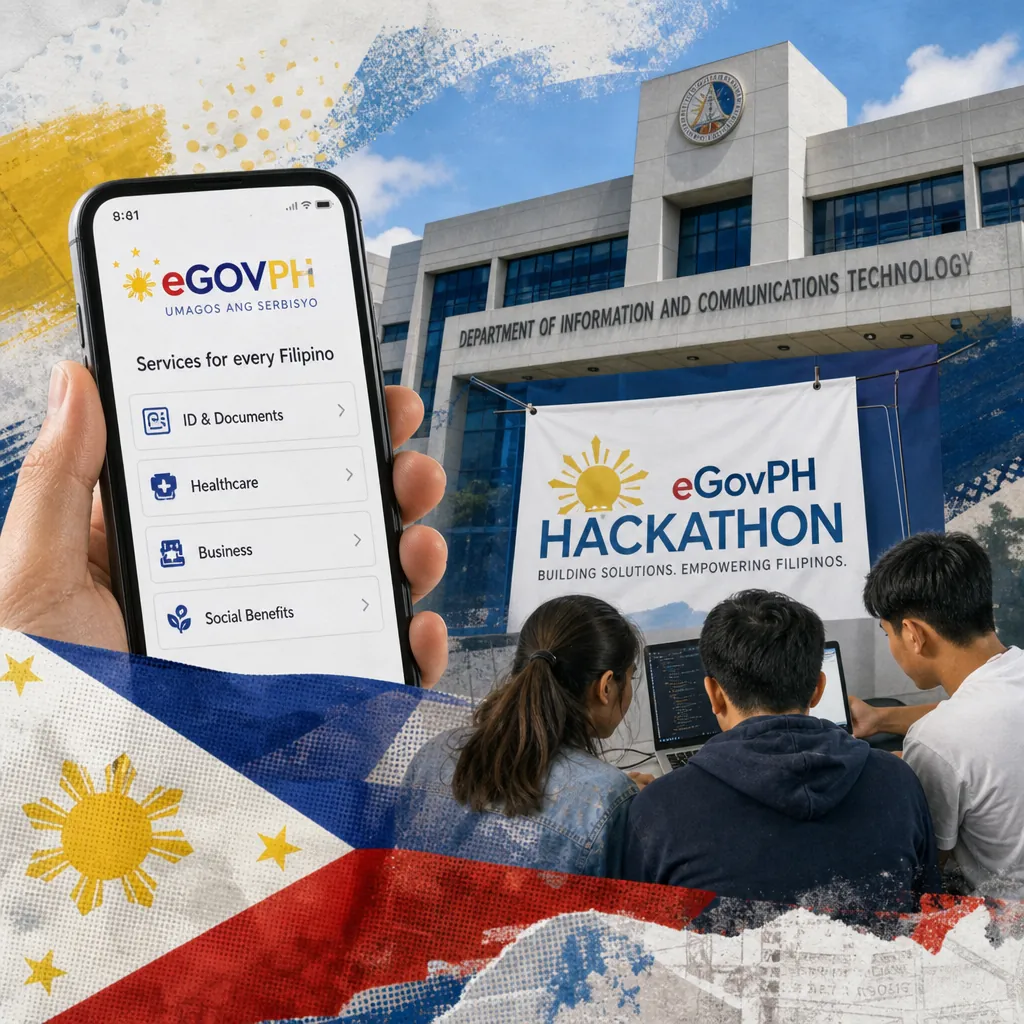
On the government digital front, the DICT’s eGovPH Hackathon 2026 began on July 21 at the SMX Convention Center, bringing together developers, designers, and innovators to build digital solutions for public service delivery. The hackathon was framed as "Digital Bayanihan," a term borrowed from UnionBank’s private-sector playbook by DICT Secretary Henry Aguda. The event was preceded by a flurry of Facebook posts on July 20—logistical reminders for participants to arrive early, bring laptops and signed NDAs, and arrange overnight accommodation. Engagement on these posts was low (5 likes each), but the high share count on an earlier eGovPH tutorial post (464 shares) indicated strong public interest in practical adoption assistance. The DICT also announced a partnership with Pampanga province to expand digital services, including the National Broadband Program’s free Wi-Fi with 10GB access and security restrictions to block online gambling. This post garnered 28 likes and 18 love reactions, the highest emotional engagement in the DICT dataset, suggesting public appreciation for tangible infrastructure commitments.
Converge ICT Solutions added to the digital-inclusion narrative with the launch of its "TechForGood: Code the Future, Build New Paths" program in Oriental Mindoro, in partnership with Stairway Foundation Inc. and LAYERTech Labs. The program introduces underserved grade-school students to basic programming and robotics using open-source tools and low-cost kits. Converge Vice President Jay-Anne Encarnado said the initiative supports the company’s evolution from an internet service provider into a technology company focused on innovation for social good. The program builds on Converge’s long-running partnership with Stairway Foundation that began in 2023, which previously focused on providing devices, connectivity, and protection against online child exploitation.
Globe Telecom, meanwhile, positioned itself on the policy front. On July 20, Globe publicly backed President Ferdinand Marcos Jr.’s Executive Order No. 119, which provides a framework for government cloud adoption while ensuring sensitive state data remains within Philippine jurisdiction. The post on Facebook received 0 likes, 0 comments, and only 1 share—minimal public engagement—but the strategic alignment with data sovereignty positions Globe as a trusted partner for government digitalization. This could indirectly pressure PLDT and Smart to articulate their own cloud-security and government partnership narratives more visibly, especially as enterprise and public-sector clients increasingly prioritize jurisdictional data control.
Globe also launched Globe Cloud, a branded cloud storage service starting at ₱39/month for 50GB, entering a market where local subscribers currently rely mostly on foreign providers like Dropbox and Google One. The service offers four tiers: Basic (50GB for ₱39/30 days), Standard (200GB for ₱169/30 days), Premium (1TB for ₱379/30 days), and Premium+ (2TB for ₱499/30 days). An introductory rate of ₱5/month for the first three months is available, and sign-up does not require a credit card. The launch signals Globe’s ambition to expand beyond connectivity into digital services, a move that aligns with the broader industry trend of telcos becoming "techcos."
Smart Communications expanded the availability of its Smart Home WiFi Postpaid service to over 100 Smart Stores nationwide, targeting over 1.3 million households in 3,200 barangays. The fixed wireless access service does not require fiber lines or complex installations, making it a plug-and-play option for areas where fiber is not yet available. The expansion caters to households in North Luzon, Central Luzon, South Luzon, National Capital Region, Visayas, and Mindanao. Marjorie Garrovillo, First Vice President and Co-OIC at Smart, said the company aims to be "more than just a service provider" and a "dependable partner in our subscribers' journey toward their goals."
DITO Telecommunity strengthened its global technology partnerships at MWC Shanghai 2026, signing a strategic cooperation memorandum with Esurfing IoT Technology Ltd. and meeting with China Telecom Global to discuss emerging developments in telecommunications and digital technology. DITO’s delegation explored trends in digital technologies and opportunities for future collaboration. The company framed its participation as part of its commitment to "nation-building" through connectivity and digital innovation.
Key themes
- PLDT plan launch overshadowed by fee confusion and agent inconsistency – The rollout of PLDT’s new Fiber Unli All plans (₱1,499 for 200 Mbps, ₱1,899 for 400 Mbps, ₱2,599 for 800 Mbps) generated high Reddit engagement (85 upvotes, 62 comments) but also revealed a gap between agent promises of "free installation" and the actual terms: a ₱100/month ONU installation fee for 36 months and a ₱50/month Cignal activation fee for six months. One Facebook post accumulated 5 angry reactions, signaling consumer frustration. The inconsistency across dozens of agent posts—some still listing discontinued plans—risks eroding trust.
- Service termination and porting friction dominate Reddit complaints – Multiple Reddit threads on July 20 detailed specific pain points: a PLDT user unable to cancel service due to unresolved unpaid bills and a non-responsive 171 hotline; a Smart-to-Globe porting attempt blocked by the requirement to visit a physical Smart Store for a Unique Subscriber Code; a Globe eSIM postpaid activation that stalled for over 24 hours without update. These posts created a narrative that switching providers is unnecessarily difficult, undermining the Mobile Number Portability (MNP) policy’s intent.
- Prepaid fiber reliability questioned as users report LOS failures near load expiry – A Globe GFiber Prepaid user reported a blinking red LOS light two days before their promo load expired, with their complaint via the GlobeOne app cancelled without resolution. The user suspected deliberate throttling or disconnection near expiry, a narrative that directly undermines the "reliable speeds" claims in agent promotions. This pattern, if unaddressed, could erode trust in the prepaid fiber model.
- DICT-Landbank AI partnership signals government push into application-layer services – The memorandum of understanding signed on July 20 aims to develop AI tools for MSMEs, including business plan preparation, pricing, contract review, and marketing. The mobile-first platform will support multiple Philippine languages. This initiative positions the DICT as a digital service provider, not just a connectivity regulator, and could set expectations for network reliability that telcos must meet.
- eGovPH Hackathon 2026 kicks off with low public engagement but high institutional backing – The hackathon, running July 21–22, brought together developers to build digital solutions for public service delivery. Facebook posts about the event received minimal engagement (5 likes each), but the framing as "Digital Bayanihan" and the high share count on an earlier eGovPH tutorial (464 shares) suggest latent public interest in practical digital government tools.
- Converge and Globe expand digital services beyond connectivity – Converge launched a youth tech-literacy program in Oriental Mindoro, teaching coding and robotics to underserved grade-schoolers. Globe launched Globe Cloud, a branded cloud storage service, and backed Executive Order No. 119 on government cloud adoption. These moves reflect a broader industry shift from pure connectivity to value-added digital services.
- Smart Home WiFi Postpaid expands to over 100 stores – Smart’s fixed wireless access service is now available in over 100 Smart Stores nationwide, targeting 1.3 million households in 3,200 barangays. The plug-and-play device does not require fiber lines, making it a key offering for underserved areas. The expansion was announced via a press release on July 21.
- DITO strengthens global tech partnerships at MWC Shanghai – DITO signed a memorandum with Esurfing IoT Technology Ltd. and met with China Telecom Global to explore digital innovation opportunities. The company framed its participation as part of its nation-building mission, reinforcing its commitment to evolving alongside the technology landscape.
How the narratives stack
Dominant – Within the captured set, the dominant narrative is the consumer friction story, driven by Reddit threads about PLDT service termination, porting hurdles, and prepaid fiber reliability. This narrative generated the highest engagement (85 upvotes, 62 comments on the PLDT plans thread) and the most detailed, narrative-driven feedback. It is dominant in terms of genuine audience response, not just volume of items. The DICT’s digital government push, while institutionally significant, generated far less public engagement.
Counter-narrative – The government and telco corporate communications present a counter-narrative of digital progress: the DICT-Landbank AI partnership, the eGovPH Hackathon, Converge’s youth tech program, Globe’s cloud storage launch and EO 119 endorsement, and Smart’s Home WiFi expansion. This narrative emphasizes innovation, inclusion, and public-private collaboration. It is almost entirely top-down, with no organic user-generated discussion or critical responses captured. The counter-narrative does not directly address the consumer friction points, creating a disconnect between what brands say and what users experience.
Emerging – A nascent narrative around the DICT’s evolving role as both regulator and competitor in digital services is emerging. The Pampanga free Wi-Fi partnership, which offers 10GB access with gambling restrictions, positions the DICT as a connectivity provider that overlaps with telco offerings. The MSME AI Tech Stack could reduce reliance on telco infrastructure partners for digital services. This narrative is still low-volume but has strategic implications for the competitive landscape.
Suppressed – The story of Converge’s youth tech program in Oriental Mindoro received relatively little attention in the captured set, despite its significance as a concrete example of bridging the digital divide. The program’s focus on open-source tools and low-cost kits, combined with training for local community leaders, represents a sustainable model for tech literacy that could be scaled. Its low visibility may be due to the monitoring scope, which was weighted toward telco-specific keywords rather than education or CSR stories.
Platform insights
- Reddit – Reddit was the dominant platform for substantive customer experience discussions. All friction-related threads—PLDT termination, Smart-to-Globe porting, Globe eSIM activation delay, GFiber LOS failure, and the Converge inquiry—appeared on Reddit, with the PLDT plans thread drawing 85 upvotes and 62 comments. The platform functioned as a troubleshooting community where users traded workarounds and shared frustrations. Engagement peaked on Monday evening (July 20) after the plan announcements. Reddit users provided the most detailed, narrative-driven feedback, often seeking peer advice rather than expecting corporate solutions. The platform’s influence is disproportionate to its user base because its content is highly searchable and remains visible for weeks.
- Facebook – Facebook served as a controlled corporate broadcast channel and a hub for agent-driven promotions. The DICT’s eGovPH posts, PLDT agent posts, and Globe’s EO 119 endorsement all appeared on Facebook, but engagement was extremely low—most posts had zero or single-digit likes and shares. The exception was the Smart Home WiFi promo, which drew 10 angry reactions and 55 comments, indicating a vocal audience with unresolved grievances. Agent posts promoting PLDT and Globe plans flooded feeds with near-identical copy, but the lack of official brand verification and the presence of conflicting information (e.g., "free installation" vs. actual fees) risk blurring the line between legitimate and gray-market resellers. Facebook’s role as a sales channel is clear, but its effectiveness as a trust-building platform is questionable.
- Twitter – Twitter saw minimal activity. A single DICT post about PASUC 2026 received 125 views and 2 comments with zero engagement. Two tweets about Globe GFiber and Smart Home WiFi also saw low engagement (0–2 likes). Twitter appears to be a low-priority channel for these conversations, possibly because the audience is smaller or less likely to discuss internet issues there. However, the platform could become relevant during outage events, when hashtags like #PLDTDown or #GlobeDown typically trend.
- YouTube – No YouTube activity was captured in the monitored set. However, the growing demand for visual, educational content—such as speed test comparisons and installation walkthroughs—suggests that YouTube and TikTok could become important platforms for consumer-generated content in the coming weeks.
Key voices and communities
- Consumer advocates and power users (Reddit) – This group drives the most detailed and influential conversations. They are tech-savvy, early adopters who compare plans, share troubleshooting advice, and influence each other’s purchasing decisions. Their posts average 1–2 likes but generate targeted, often detailed replies—a sign of high engagement within a niche audience. They value factual, peer-validated answers over brand promises. A single Reddit thread explaining how to bypass a SIM porting hurdle can amplify negative word-of-mouth about customer service friction. This group shapes the technical reputation of all telcos.
- Independent sales agents (Facebook) – A high-volume, low-engagement network of agents dominates Facebook feeds with repetitive promotional posts for PLDT, Globe, and Smart fiber plans. Dozens of posts from different accounts—many with identical or near-identical copy—offer free installation, same-day processing, and direct messaging for applications. These agents are not officially affiliated but are authorized resellers or freelancers earning commission per sale. Their messaging is purely transactional, and they rarely address service quality or customer experience. The lack of oversight on agent messaging represents a reputational liability for the brands they represent.
- Government digital transformation advocates (DICT and LGUs) – This group consists of DICT officials and local government units actively promoting the eGovPH Super App and related digital initiatives. Their content appears primarily on Facebook and Twitter, with posts emphasizing convenience, partnership agreements, and the narrative of "Bagong Pilipinas" digital governance. While their engagement numbers are moderate, their influence stems from institutional authority and the ability to shape public perception of government digital services. They frame digital transformation as a unifying, pro-people movement.
- Disgruntled consumers reacting to ads (Facebook) – A vocal cluster of users actively engages with official promotional posts from PLDT, Smart, and Globe by expressing frustration or skepticism. Their presence is most visible on the Smart Home WiFi promo, which generated over fifty comments and ten angry reactions. These users do not form an organized community but appear sporadically when promotional content triggers memories of poor service, billing issues, or unmet speed promises. Their collective messaging reads as "prove it first," with many users demanding reliability guarantees before considering promotions.
- Tech-savvy citizens and developer community (eGovPH Hackathon) – Hackathon participants and independent developers form a smaller but highly engaged stakeholder segment, concentrated around the eGovPH Hackathon 2026 event on Facebook. Their activity is primarily logistical—sharing reminders, discussing requirements, and expressing anticipation—but their potential influence lies in their ability to build solutions that directly impact digital government services and, by extension, telco integration points like eSIM or mobile ID verification. This community represents the end-users and builders who will test and integrate telco-dependent features within government apps.
Narrative streams
PLDT’s new plan launch: agent hype meets consumer scrutiny
On July 19–20, a wave of Facebook posts from PLDT-authorized agents promoted the company’s new Fiber Unli All plans. Agents like Gel Dizon and Glory Mallari offered "1 day process and 1 day installation" alongside promises of free installation and speed boosts. The plans start at ₱1,499 for 200 Mbps and bundle unlimited fiber, landline calls, Cignal TV, and HBO Max Standard. By July 20, however, a clarifying post from an agent trainer revealed that the free installation promo was no longer available and that all plans now carried an additional ₱100/month ONU installation fee for 36 months (total ₱3,600) plus a ₱50/month Cignal activation fee for six months. This disclosure triggered a noticeable sentiment change: one identical promotional post that had accumulated 8 likes and 1 share also drew 5 angry reactions, suggesting that some viewers were frustrated by what they perceived as hidden charges.
The Reddit thread titled "PLDT releases new plans" became the analytical hub, with 85 upvotes and 62 comments. While the exact comments are not visible in the data, the high engagement indicates that the community was dissecting the value proposition and fee structure. The thread likely compared PLDT’s offers against Globe and Converge, and discussed the lock-in period of three years. The risk for PLDT lies in inconsistent messaging: agents cited varying speeds and prices for the same plan, and some still listed discontinued plans (e.g., Plan 1399, 1799, 2499). This confusion could erode trust at the point of sale. The Switcher Promo (50% discount for six months for customers coming from Globe, Converge, etc.) was also promoted by agents, but its terms were not uniformly communicated.
For PLDT’s communications team, the most critical insight is the gap between agent promises and actual terms. The angry reactions on Facebook and the skeptical Reddit discussion suggest that consumers are alert to hidden fees. A centralized, consistent disclosure should precede or accompany any agent-driven campaign to prevent confusion. The Reddit thread also presents an opportunity: a verified PLDT representative could join the discussion to clarify plan terms and address concerns, signaling transparency and rebuilding trust.
Service termination and porting: the friction points that drive churn
Three Reddit threads on July 20 highlighted specific operational pain points that, if left unaddressed, could accelerate customer churn. The first, titled "PLDT TERMINATION," described a user who needed proof of cancellation to move out of their dorm but had outstanding unpaid bills since December 2025 due to poor service. The user reported that their call to PLDT’s hotline 171 failed to detect their telephone number. The post amplified a sentiment that poor connectivity justified non-payment, and that termination processes are opaque. The second thread involved a user trying to port from Smart Prepaid to Globe Prepaid, who discovered that a Unique Subscriber Code (USC) could only be obtained through a physical Smart Store. The user called the process "ang hassle naman kung ganun" and noted the inconvenience of traveling to a store at 9:30 PM. The third thread described a Globe eSIM postpaid activation that had been pending for over 24 hours without any update, with the user expressing frustration that the process was not as fast as expected.
These posts reveal a systemic issue: while the industry promotes digital-first solutions (eSIM, mobile number portability), the actual processes still require physical presence or suffer from delays. The USC requirement for Smart-to-Globe porting is a competitive disadvantage compared to Globe’s digital eSIM application, even if that application process also has delays. The PLDT termination story underscores the need for a visible digital termination or billing dispute resolution portal, as the current reliance on a non-responsive 171 hotline is a vulnerability. For Globe, the eSIM activation delay highlights a gap in activation transparency; providing real-time status updates could mitigate frustration.
The geographic dimension is also notable: a separate Reddit post from a user in the Lahug/Busay area of Cebu City reported a two-week wait for a PLDT technician with no resolution, driving the user to consider switching to Converge. This suggests that localized service issues in Metro Cebu areas may accelerate provider switching discussions. The post received no replies, indicating either low visibility or that other users lacked firsthand knowledge, but it underscores that word-of-mouth on Reddit remains a critical early indicator of churn risk.
Prepaid fiber: the promise of flexibility meets reliability concerns
Prepaid fiber emerged as a growing category, with Globe GFiber Prepaid being the most heavily promoted product by agents on Facebook. Agents highlighted ₱699–₱999 installation fees and free 7–30 days of unlimited internet, with the "no lock-up/contract" messaging repeated across multiple posts. However, a user experience story on Reddit served as a cautionary tale: a Globe GFiber Prepaid user reported that their connection had a blinking red LOS light just two days before their promo load expired, and their complaint via the GlobeOne app was cancelled without resolution. The user asked, "Is this one of the Globe tactics since prematurely kahapon na malapit na mag-expire ang load sa Gfiber kaya parang kumukusa siyang mawalan ng internet?" This suspicion of deliberate throttling or disconnection near expiry emerged as a notable narrative thread, directly undermining the "reliable speeds" claims in the agent posts.
For Globe, this incident creates a perception of intentional service interruption to prompt reloads—a narrative that, if left unaddressed, could erode trust in the prepaid model. A transparent explanation and proactive compensation (e.g., free extended service days) would mitigate reputational damage. The broader implication is that any network issue during the first 30 days of prepaid fiber can permanently damage trust, making the trial period critical for customer retention.
DICT-Landbank AI partnership: a new layer in the digital ecosystem
The DICT and Land Bank of the Philippines signed a memorandum of understanding on July 20 to jointly develop AI-enabled digital solutions for MSMEs. The partnership is part of the ASEAN Priority Economic Deliverable on AI-Powered MSME Growth, which seeks to expand access to affordable AI tools for MSMEs across the region as the Philippines chairs the ASEAN Summit this year. Under the accord, the DICT will work with Landbank to strengthen the creditworthiness of MSMEs, improve productivity, and grow their business. The mobile-first platform, called the MSME AI Tech Stack, will offer AI assistants that can help entrepreneurs prepare business plans, organize documentary requirements, set prices, review contracts, create marketing materials, and identify financing and government assistance programs. It will support Filipino, English, and other major Philippine languages.
This initiative signals that the DICT is moving beyond its traditional role as a connectivity regulator into application-layer services. For telcos, this creates both an opportunity and a risk. On the opportunity side, telcos could partner with the DICT to provide the connectivity and cloud infrastructure that the AI platform will run on. On the risk side, if the government’s own platforms set expectations for reliability that commercial networks struggle to meet, telcos could face increased scrutiny. The partnership also positions the DICT as a competitor in the digital services space, potentially reducing reliance on telco infrastructure partners for government digitalization.
The announcement was covered by multiple news outlets, including GMA News Online, Newsbytes Philippines, and Head Topics Online, with a combined advertising-equivalent value of approximately ₱753,000 across the captured set. The coverage was factual and promotional, with no critical analysis. The DICT’s press release emphasized the partnership’s alignment with ASEAN priorities and the Philippines’ chairmanship, framing it as a regional leadership story.
eGovPH Hackathon 2026: Digital Bayanihan in action
The eGovPH Hackathon 2026 began on July 21 at the SMX Convention Center, bringing together developers, designers, and innovators to build digital solutions for public service delivery. The event was framed as "Digital Bayanihan," a term borrowed from UnionBank’s private-sector playbook by DICT Secretary Henry Aguda. The hackathon was preceded by a flurry of Facebook posts on July 20—logistical reminders for participants to arrive early, bring laptops and signed NDAs, and arrange overnight accommodation. Engagement on these posts was low (5 likes each), but the high share count on an earlier eGovPH tutorial post (464 shares) indicated strong public interest in practical adoption assistance.
The hackathon is part of the DICT’s broader push to accelerate digital transformation, which also includes the National Broadband Program’s free Wi-Fi initiative and partnerships with local government units like Pampanga. The Pampanga partnership announcement on July 20 promised free Wi-Fi with 10GB access and security restrictions to block online gambling, and it garnered 28 likes and 18 love reactions—the highest emotional engagement in the DICT dataset. The framing of the hackathon as a continuation of private-sector innovation suggests that the DICT is actively courting tech talent and developer communities, potentially accelerating the development of government digital services that may reduce reliance on telco infrastructure partners.
Converge’s youth tech program: bridging the digital divide
Converge ICT Solutions launched its "TechForGood: Code the Future, Build New Paths" program in Oriental Mindoro in June, in partnership with Stairway Foundation Inc. and LAYERTech Labs. The program introduces underserved grade-school students to basic programming and robotics using open-source tools and low-cost kits, so learning can continue after workshops end. Activities included training local community leaders to sustain lessons, guiding students to build robots from scratch, and teaching simple coding to operate their creations. The program supports Converge’s evolution from an internet service provider into a technology company focused on using innovation for social good.
The initiative builds on Converge’s long-running partnership with Stairway Foundation that began in 2023, which previously focused on providing devices, connectivity, and protection against online child exploitation. The new program adds a skills-development component, addressing the digital skills gap that is often cited as a barrier to inclusive growth. The program was covered by The Voice Newsweekly and Context.ph, with a combined advertising-equivalent value of approximately ₱131,000. The coverage was positive and framed the program as a model for public-private collaboration in education.
Globe’s dual moves: cloud storage and policy alignment
Globe Telecom made two strategic announcements on July 20–21. First, it launched Globe Cloud, a branded cloud storage service starting at ₱39/month for 50GB, with an introductory rate of ₱5/month for the first three months. The service offers four tiers: Basic (50GB for ₱39/30 days), Standard (200GB for ₱169/30 days), Premium (1TB for ₱379/30 days), and Premium+ (2TB for ₱499/30 days). Sign-up does not require a credit card. The launch positions Globe as a competitor to foreign cloud storage providers like Dropbox and Google One, and signals its ambition to expand beyond connectivity into digital services.
Second, Globe publicly backed President Marcos Jr.’s Executive Order No. 119, which provides a framework for government cloud adoption while ensuring sensitive state data remains within Philippine jurisdiction. The endorsement was posted on Facebook on July 20 but received negligible engagement (0 likes, 1 share). Despite the low public response, the strategic alignment with data sovereignty positions Globe as a trusted partner for government digitalization. This could indirectly pressure PLDT and Smart to articulate their own cloud-security and government partnership narratives more visibly, especially as enterprise and public-sector clients increasingly prioritize jurisdictional data control.
Smart Home WiFi Postpaid expansion
Smart Communications announced the expansion of its Smart Home WiFi Postpaid service to over 100 Smart Stores nationwide. The fixed wireless access service does not require fiber lines or complex installations, making it a plug-and-play option for areas where fiber is not yet available. The expansion targets over 1.3 million households in 3,200 barangays across North Luzon, Central Luzon, South Luzon, National Capital Region, Visayas, and Mindanao. Marjorie Garrovillo, First Vice President and Co-OIC at Smart, said the company aims to be "more than just a service provider" and a "dependable partner in our subscribers' journey toward their goals." The announcement was covered by Tech Manual PH, with an advertising-equivalent value of approximately ₱239,000.
DITO at MWC Shanghai 2026
DITO Telecommunity strengthened its global technology partnerships at MWC Shanghai 2026, signing a strategic cooperation memorandum with Esurfing IoT Technology Ltd. and meeting with China Telecom Global to discuss emerging developments in telecommunications and digital technology. The delegation explored trends in digital technologies and opportunities for future collaboration. DITO framed its participation as part of its commitment to "nation-building" through connectivity and digital innovation. The event was covered by Unbox Ph, with an advertising-equivalent value of approximately ₱122,000.
Conversation trajectory
- Prepaid fiber adoption driving a parallel support conversation: Promotional content for GFiber Prepaid and PLDT Home prepaid plans is drawing strong engagement from agents, but a growing counter-narrative of service issues after initial activation is emerging. The LOS failure just before load expiry, coupled with the cancelled complaint, suggests that post-activation friction will likely escalate from a fringe issue into a mainstream topic within the next 2–3 weeks, particularly on Reddit and Facebook comment threads. Expect a surge in posts comparing advertised speeds with real-world performance as early installations are completed and subscribers share feedback.
- Porting and MNP friction becoming a sustained pain point: Multiple users are detailing the difficulty of requesting a USC from Smart to port out. These stories are accumulating into a clear pattern: the MNP process, meant to lower switching barriers, is perceived as opaque and inconvenient. Expect this conversation to peak around the first anniversary of the SIM Registration Act’s full implementation (likely August 2026), as users compare the registration experience to the porting experience. The clustering of MNP-related posts within 24 hours suggests a tipping point may be near.
- Performance disparity between mobile and fixed wireless causing confusion: A DITO Home Wowfi user reported speeds of only 10–20 Mbps despite their prepaid SIM achieving nearly 100 Mbps. Similarly, a detailed troubleshooting post about a single PC getting 30 Mbps while other devices receive 700+ Mbps on the same network suggests that device-specific or configuration issues are being blamed on the ISP. This trend will drive increased demand for simple, visual explainers on how CPE placement, 5G vs. LTE bands, and router settings affect real-world speeds. Telcos that proactively publish such guides within the next month can reduce support costs and capture positive sentiment.
- Agent-led sales saturation on Facebook creating brand noise and potential trust issues: A high volume of nearly identical "apply now" posts from multiple agent accounts promotes PLDT, Globe, and DITO plans, often with personal phone numbers and vague claims like "1 day process" or "free installation." While this drives visible engagement, the lack of official brand verification and the presence of "openline modem" ads alongside official offers risk blurring the line between legitimate and gray-market resellers. This could lead to a fraud or misleading-claim controversy within 6–8 weeks, especially if a consumer group or regulator like the NTC issues a reminder about unauthorized selling.
- eGovPH adoption driving heightened internet quality expectations: The significant sharing activity on the eGovPH tutorial post (464 shares) indicates strong public interest in using the government super-app. As more Filipinos download and register for eGovPH to access services like SSS, PhilHealth, and digital IDs, frustration with slow or intermittent connectivity will likely intensify within 1–2 months. This creates a direct reputational link between government digital initiatives and telco performance, especially for PLDT and Smart whose networks carry the bulk of mobile data traffic.
Key trigger events that will reshape this conversation include: the end of the "Free Installation" promo period on July 31, 2026, which will likely spur a final wave of sign-ups followed by a concentrated period of post-installation complaints or praise; the expected release of Q2 2026 telco performance metrics by the NTC (likely late August), which will be used as ammunition in speed and coverage debates; the ramp-up of back-to-school promotions in mid-August that will intensify prepaid fiber and postpaid plan advertising; and any announced changes to the SIM Registration Act enforcement timeline or MNP procedures, which would directly amplify the porting friction narrative.
Strategic timing recommendations: Prepare a proactive MNP experience guide that explains step-by-step how to obtain a USC from each provider, including online methods where available. This can be positioned as a public service resource. Publish it before the end of the first week of August, ahead of the expected back-to-school migration wave. Additionally, monitor agent-led Facebook posts for potential compliance issues—if a single complaint about non-delivery or hidden fees gains traction, it could snowball into a reputational crisis for the associated brand. Recommend that clients create a rapid-response protocol for addressing such complaints publicly, ideally within 24 hours, to contain damage.
Response guidance
Platform-specific approaches:
- Reddit: Assign a verified corporate representative to engage in the PLDT plans thread and the service termination/porting threads. Provide clear, factual answers about plan terms, the ONU fee, and the USC request process. Avoid generic "please DM us" responses; instead, offer step-by-step guides or direct links to support pages. For the Lahug/Busay PLDT service failure post, respond with a direct apology, a specific escalation point, and a commitment to schedule a technician within 24–48 hours. Reddit users value transparency; a timely, official response can turn a potentially negative thread into a positive engagement opportunity.
- Facebook: Publish an official, unified plan comparison for PLDT’s Fiber Unli All plans, including a clear breakdown of all fees (ONU installation, Cignal activation). Pin this post to the top of the page. For the Smart Home WiFi promo that drew 10 angry reactions and 55 comments, assign a community manager to reply to top-level comments with empathy and offer to check account-specific issues via private message. For the DICT’s eGovPH and hackathon posts, engage by sharing supportive messages that underscore the telco’s role in enabling the digital platforms being built.
- Twitter: Although Twitter activity is low, monitor hashtags like #PLDTDown or #GlobeDown for real-time outage reports. Create a pre-approved response template that acknowledges the issue, provides an estimated restoration time, and links to the official status page. On LinkedIn, share Globe’s EO 119 endorsement as a thought-leadership post, tagging relevant government agencies and emphasizing the industry’s alignment with national digitalization goals.
Key messages:
- "We are committed to transparent communication about our new plans and service improvements. All fees, including the ONU installation fee and Cignal activation fee, are clearly disclosed during application. No hidden charges." This directly addresses the fee confusion that generated angry reactions.
- "For billing and account concerns, our support team is ready to assist through multiple channels—please reach out to us directly so we can resolve your case quickly and fairly." This responds to the termination and unpaid-bill scenario without airing account details in public.
- "Mobile number portability is designed to give you freedom of choice, and we continue to improve the process to make it more convenient—including exploring digital options for requesting USC." This neutralizes the frustration around the physical store requirement.
- "eSIM technology is evolving, and we provide clear guidance on how to activate and transfer services. For specific questions, our online FAQs and support chat are available 24/7." This builds trust among users confused about eSIM activation delays.
- "Reliable connectivity is the foundation of the Philippines’ digital government vision—our networks are built to support every transaction on eGovPH." This aligns telco messaging with the DICT’s digital transformation narrative.
Sensitive topics to navigate:
- Unpaid bills and service termination: Avoid publicly discussing past due amounts or accusing customers of non-payment. Instead, focus on helping the user reach the correct resolution desk and emphasize that each case is handled individually. The emotional tone in the termination post suggests financial stress; a sympathetic but solution-oriented approach is essential.
- Physical store requirements for porting: Acknowledge that in-store identity verification is mandated by SIM Registration Act rules, but reassure users that the industry is working with regulators to expand digital verification methods. Do not dismiss the inconvenience; instead, frame it as a security measure while signaling future improvements.
- Prepaid fiber reliability near load expiry: The LOS incident and cancelled complaint create a perception of intentional throttling. Respond by validating the concern and providing a transparent explanation of what causes LOS lights and how complaints are handled. Offer proactive compensation (e.g., free extended service days) to mitigate reputational damage.
- Agent certification and accuracy: If a brand officially contradicts an agent’s post, it may alienate its sales channel. Approach by offering a general reminder to verify terms with official channels, without publicly calling out any agent by name. Provide approved templates to agents to ensure consistency.
Response priorities:
- Address the PLDT termination and porting frustration threads on Reddit within 24 hours, as these involve active users seeking immediate help. A written reply from an official account can de-escalate the situation and demonstrate responsiveness. Provide a contact link and case reference number.
- Publish an official, unified plan comparison on PLDT’s social channels within 24–48 hours, including a simple table of new Fiber Unli All plans with applicable fees. This cuts through the noise of dozens of agent posts and provides a reliable reference.
- Proactively engage the Reddit discussion on PLDT’s new plans by posting a detailed breakdown inside the existing thread. Reddit users value transparency; include the reasoning behind the fee structure and a direct offer to answer questions.
- Amplify the positive CSR stories and the EO 119 endorsement across social channels to balance service-related complaints. Use Globe’s policy stance to reinforce brand values of security and national interest, and pair it with the Converge youth tech program and DICT hackathon narratives for a diversified positive portfolio.
See the full picture behind today's signals.
This report draws from Media Meter's MediaWatch, our real-time monitoring engine tracking 2,470+ Philippine sources across print, broadcast, digital, and social. Explore how the platform turns raw coverage into decision-grade intelligence, then see how it's configured for teams like yours — whether you're in PR agencies, corporate comms, government, or marketing.
Want more? Browse our Report Library for sector and crisis intelligence, or request a demo and we'll have your brand set up before the call.
Want this kind of intelligence on your brand?
This brief is built on the same MediaWatch methodology that runs continuously across every brand we monitor. See your competitive landscape, Impact Score, and narrative trajectory in a 30-minute demo.