School violence crisis reshapes safety perceptions in Philippine real estate
A wave of school violence incidents, including a fatal shooting in Tacloban and stabbings in Cavite, has triggered national alarm and interagency response, indirectly impacting safety perceptions in key residential growth corridors and prompting developers to reassess community security messaging.
The social media conversation around school violence in the Philippines escalated dramatically from June 20 to June 22, 2026, beginning with official statements from the Philippine National Police (PNP) and culminating in a national crisis narrative after a school shooting in Tacloban City. The PNP's initial post on June 20, addressing two stabbing incidents in Cavite schools, framed them as isolated cases and announced heightened security measures, including intensified police visibility and preventive patrols in school zones. This post garnered 12,787 likes and 7,708 comments, signaling strong public engagement. By June 21, major news outlets including GMA News, ABS-CBN, and The Manila Times began publishing detailed reports, with GMA News' post receiving 1,437 likes and a polarized mix of reactions (605 haha, 630 sad, 34 angry), reflecting shock and disbelief. The conversation intensified further when the PNP released a follow-up statement on June 22 urging schools to intensify mental health and psychosocial support, expanding the discussion beyond immediate security concerns to deeper systemic issues.
The true turning point arrived on Monday, June 22, when a shooting at San Jose National High School in Tacloban City killed three students and wounded five others, rapidly cascading across platforms. By early afternoon, the post from @hellobkdnnphil on Facebook had already garnered 840 likes and a staggering 1,939 sad reactions, with shares reaching 1,380 within hours, signaling deep public grief and anger. Almost simultaneously, news of a second stabbing in Cavite City on the same day emerged via @gmanews, intensifying the sense of crisis and pushing the narrative beyond isolated incidents toward a systemic failure. As the day progressed, the conversation shifted from raw emotion to demands for accountability and broader policy reform. Senate President @wingatchalian74 posted a strong condemnation in Filipino, stating "Lubhang nakakabahala at nakakagalit ang sunod-sunod na karahasang nagaganap sa loob ng mga paaralan," which quickly became the most engaged post with 917 likes and an unusual 3,062 haha reactions—likely a platform glitch or ironic response—alongside 777 comments reflecting polarized views.
Conversation snapshot. The conversation was dominated by Facebook, where the PNP's June 20 post became the central hub with 12,787 likes and 7,708 comments, while @hellobkdnnphil's Tacloban shooting post on June 22 drew 840 likes, 1,939 sad reactions, and 1,380 shares. GMA News' Cavite stabbing post on June 21 received 1,437 likes with a split of 605 haha and 630 sad reactions. Senate President Gatchalian's condemnation post on June 22 garnered 917 likes, 3,062 haha reactions, and 777 comments. On Twitter, @gmanews' Cavite stabbing update had 3,026 views but only 3 likes, indicating lower emotional investment but higher information-spread efficiency. The Council for the Welfare of Children's call for stronger school safety received minimal engagement on Twitter (3 likes, 2 retweets), suggesting that institutional voices struggled to capture public attention compared to visceral incident reports. Reddit saw limited activity, with one post from @bhi3Latte receiving 13 upvotes and 6 comments, calling for policy revision.
Key themes
- Escalation and Moral Panic – Between June 16 and June 22, public sentiment evolved from isolated concern to systemic alarm. The turning point was @robinpadilla.official's post on June 22 summarizing all four incidents—including a separate protest in Parañaque over teacher misconduct—which collected 1,656 sad reactions and 743 likes, effectively consolidating scattered events into a single national crisis narrative.
- Government Response and Institutional Accountability – By midday June 22, official statements shifted the conversation toward accountability. The Department of the Interior and Local Government (DILG) issued a strongly worded condemnation of the Tacloban shooting, emphasizing that "schools must remain places of learning, opportunity, and hope—not venues of violence." Meanwhile, @news5everywhere's coverage of PNP Chief Nartatez's coordination with the Department of Education (DepEd) garnered 2,679 sad reactions and 1,958 shares, indicating the public was closely watching institutional follow-through.
- Mental Health and Psychosocial Support – This sub-theme gained momentum after the PNP and ABS-CBN News explicitly called for schools to strengthen mental health interventions for students. The focus shifted from blaming security lapses to understanding the psychological state of the young suspects, who were described as newly transferred students with no known motive. The Council for the Welfare of Children (CWC) issued a call for immediate strengthening of school safety and child protection measures, but this tweet received only 3 likes and 2 retweets, indicating that the mental health angle was acknowledged but not widely amplified compared to the crime narrative.
- Juvenile Justice and Bullying as Root Cause – Early reports indicated the two Tacloban suspects were Grade 9 students who had allegedly been victims of bullying, a detail that immediately sparked a parallel discussion about accountability under the Juvenile Justice Act. The arrest videos shared by @bncphl on June 22 showed both suspects in custody, with one apprehended inside a subdivision near the school, generating 1,965 likes and 426 comments predominantly debating whether minors should face adult charges.
- Political and Legislative Response – Senate President Gatchalian's statement on June 22 served as the primary political anchor, urging DepEd to provide psychosocial support and tighten security while emphasizing that schools must remain "ligtas na espasyo." His call was echoed by @dwiz882, but the same post also attracted 65 haha reactions and 9 angry reactions, suggesting public skepticism about political rhetoric lacking concrete action. By June 22 evening, @sunstarcebu reported that PNP Chief Nartatez had ordered a nationwide review of campus security, signaling that institutional momentum was building—though commenters remained divided on whether this would translate to real change.
- Media Framing and Public Reaction – The role of media in shaping public perception became a key thread. GMA News' Facebook post garnered 605 "haha" reactions alongside 630 "sad" reactions, suggesting a segment of the audience found the situation absurd or even darkly humorous—likely a defense mechanism against the disturbing content. On June 22, GMA News added a trigger warning ("Babala: Sensitibong balita") before its Twitter post detailing the Cavite National High School stabbing, reflecting media awareness of the sensitive nature of the content. Meanwhile, The Manila Times framed the incidents as "a wake-up call," pushing the conversation toward parental responsibility and institutional accountability, though their Twitter post received minimal engagement with only 39 views.
- Indirect Impact on Real Estate Safety Perceptions – While the conversation did not directly mention real estate developers or housing projects, the geographic focus on Cavite and Tacloban—both areas with active real estate development (e.g., Cavite's Lancaster New City, Tacloban's reclamation projects)—created an indirect association with security risks. The rapid spread of fear following these incidents could negatively affect demand for family-oriented subdivisions and house-and-lot projects in those provinces, especially for families with children. Developers targeting family buyers may need to proactively address school safety in their marketing or community planning, as public conversation shows that security incidents in educational institutions quickly become a major concern for potential homeowners.
How the narratives stack
Dominant narrative – The dominant narrative is that school violence in the Philippines has reached a crisis point, with three major incidents in one week signaling systemic failure rather than isolated events. The Tacloban shooting, which killed three students, served as the catalyst that transformed scattered local news into a national conversation about school safety, mental health, and juvenile justice. Official statements from the PNP, DILG, and DepEd emphasized inter-agency coordination and enhanced security measures, but the public response—dominated by sad reactions and calls for policy revision—indicates deep distrust in the current system. The narrative is driven by emotional citizen posts and news outlets, with institutional voices struggling to match the engagement of visceral incident reports.
Counter-narrative – A counter-narrative emerged from segments of the public who responded with "haha" reactions to tragic posts, suggesting either dark humor as a coping mechanism or skepticism about the gravity of the situation. The 605 haha reactions on GMA News' Cavite stabbing post and the 3,062 haha reactions on Senate President Gatchalian's condemnation post indicate that a portion of the audience found the events absurd or the political response performative. This counter-narrative complicates the dominant crisis framing, revealing a fragmented public sentiment where some viewers are desensitized or cynical about institutional responses.
Emerging narrative – An emerging narrative focuses on mental health and early intervention as the root solution, rather than reactive security measures. The Council for the Welfare of Children's call for psychosocial support and the PNP's urging of schools to strengthen mental health interventions represent a shift from blaming security lapses to understanding the psychological state of young perpetrators. However, this narrative is still nascent, as evidenced by the low engagement on mental health-focused content compared to crime reporting. The revelation that the Tacloban suspects may have been bullying victims adds momentum to this emerging thread, pushing the conversation toward reform rather than mere punishment.
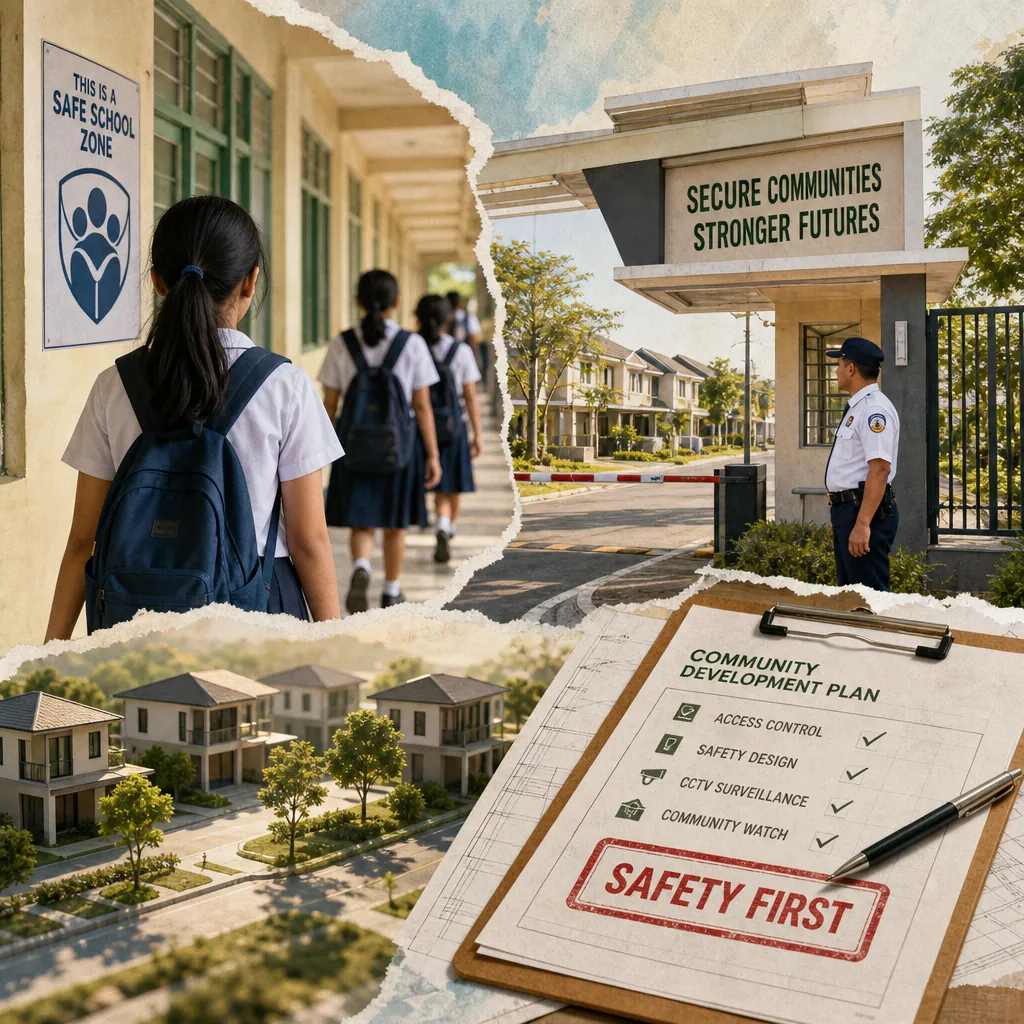
Suppressed narrative – The under-covered story is the role of infrastructure and community planning in preventing school violence. While the conversation focuses on security guards, metal detectors, and police patrols, there is little discussion of how mixed-use township design, well-lit pathways, and community oversight can contribute to safer environments. Real estate developers with integrated school zones or gated communities have an opportunity to highlight these features, but the current conversation remains disconnected from housing industry messaging. The absence of any developer or housing category mentions in the conversation indicates that the public narrative around school safety is currently siloed from the real estate sector, representing both a risk and an opportunity for proactive communication.
Platform insights
Facebook – Facebook was the primary battleground for the conversation, hosting the highest engagement metrics across official statements, news reports, and emotional citizen posts. The PNP's June 20 post became the central hub with 12,787 likes and 7,708 comments, while @hellobkdnnphil's Tacloban shooting post on June 22 drove the initial wave of grief with 1,939 sad reactions. Senate President Gatchalian's post became the ideological battleground with 777 comments mixing support, criticism, and dark humor. Facebook also hosted most video content from arrests and police operations, which sustained attention through visual storytelling. The platform's "sad" reaction metric was the dominant emotional indicator throughout, with "haha" reactions co-existing in a way that revealed fragmented public sentiment. Policy announcements from official pages attracted far less engagement than graphic incident reports, suggesting that Facebook users prioritize emotionally charged content over procedural updates.
Twitter (X) – Twitter served as a headline broadcaster and real-time alert channel rather than a discussion space. @gmanews' tweet on the Cavite stabbing had 6,230 views but zero comments, indicating that Twitter users consumed information for awareness rather than debate. The Council for the Welfare of Children's call for school safety received only 3 likes and 2 retweets after 2,958 views, reinforcing that Twitter served more as a secondary distribution channel for official statements and news snippets. The Manila Times' framing of the incidents as "a wake-up call" drew minimal engagement with only 39 views. Twitter's lower emotional investment compared to Facebook suggests that the platform is less effective for driving public discourse on sensitive local issues, but remains useful for rapid information dissemination.
Reddit – Reddit emerged as the venue for structural critique and policy debate, though with low volume. @bhi3Latte's post on June 22, sarcastically noting that "SY 2026-2027 (Instructional Block, Week 2 pa lang)" had already seen multiple violent incidents, received 13 upvotes and six comments, with users calling for revision of school policies and questioning "Ano na nangyayari sa schools sa Pinas?" This thread exemplified how grassroots frustration coalesced around demands for early intervention programs and mental health support. Reddit conversation remained low-volume but high-relevance for policy debate, contrasting with Facebook's real-time reaction cycle.
YouTube – No YouTube posts were provided in the dataset, but the data indicates that Facebook dominated the conversation, likely due to its broad user base in the Philippines and the viral nature of emotionally charged local safety news.
Key voices and communities
Government and Law Enforcement Agencies – The Philippine National Police (PNP), Department of Education (DepEd), and Department of the Interior and Local Government (DILG) dominated the conversation with official statements and security directives. Their content consisted primarily of situational updates, security protocol announcements, and calls for psychosocial support, generating moderate to high engagement from concerned citizens. The PNP's initial post on June 20 garnered 12,787 likes and 7,708 comments, making it the single most engaged post in the dataset. The DILG's strongly worded condemnation of the Tacloban shooting emphasized that "schools must remain places of learning, opportunity, and hope—not venues of violence," though it received zero visible engagement metrics, indicating that institutional voices were being drowned out by emotional citizen posts. This group holds direct influence over safety protocols that impact property developments near school zones, township projects, and mixed-use communities where school violence concerns may affect buyer sentiment and project viability.
News Media Outlets – Major national news organizations including GMA News, ABS-CBN, The Manila Times, and Inquirer.net drove the largest share of reach and engagement across Facebook and Twitter. Their posts generated thousands of reactions and shares, functioning as primary information aggregators that republished official statements and incident details while maintaining a factual, neutral tone focused on public awareness. GMA News' Facebook post on the Cavite stabbing received 1,437 likes and a mix of reactions (605 haha, 630 sad, 34 angry), reflecting polarized public response. The Manila Times framed the incidents as "a wake-up call," pushing the conversation toward parental responsibility and institutional accountability. Media outlets directly influence public discourse around residential safety, which can affect buyer confidence in developments located near affected school zones or within townships marketed as family-oriented communities.
Education Sector Advocates – Teacher unions, child protection organizations, and education-focused non-profits represented a distinct vocal segment demanding structural reforms in school safety and staffing. The Council for the Welfare of Children (CWC) issued a call for immediate strengthening of school safety and child protection measures, emphasizing that schools "must remain safe spaces where children can learn, develop, and thrive free from fear, violence, and harm." The Alliance of Concerned Teachers (@actph1982) reinforced this by calling for stronger staffing and safety measures, though the post itself had minimal engagement, indicating that institutional voices were being drowned out by emotional citizen posts. Their emphasis on infrastructure readiness and institutional capacity intersects with real estate stakeholders developing school-adjacent properties, townhouses, and subdivision communities where educational safety is a key selling point.
Public and Community Voices – Individual commentators on Reddit and Facebook generated moderate engagement volume, with user posts and comments expressing alarm, frustration, and calls for systemic change. @bhi3Latte's Reddit post explicitly called for revising school policies, receiving 13 upvotes and 6 comments. @robinpadilla.official's post on June 22 summarizing all four incidents collected 1,656 sad reactions and 743 likes, effectively consolidating scattered events into a single national crisis narrative. This group amplifies emotional responses and adds grassroots pressure for policy revision, with the public sentiment coalescing around the idea that "it's about time to revise our school policies."
Narrative streams
The Tacloban Shooting and National Crisis
The shooting at San Jose National High School in Tacloban City on June 22, 2026, marked one of the deadliest school-related attacks recorded in Eastern Visayas. Two Grade 9 students opened fire in at least two rooms inside the school premises, killing three students and wounding 13 others. The incident occurred at 9:20 a.m., sending students and teachers scrambling for safety as gunshots rang out across the campus. Within hours, the earlier Cavite incidents were recontextualized as part of an alarming escalation, with @inquirerdotnet posting the official PNP statement that "violence has no place in our schools," which accumulated 2,153 sad reactions and generated 854 shares. The PNP later revealed that one of the suspects had posted gun-related videos on his social media account, indicating premeditation. "Upon verification of the social media accounts of one of the suspects, we saw that he had posted violent videos pertaining to guns, including a video of him firing a gun," said PNP public information chief Col. Allen Rae Co. "So, he very obviously had plans. If the school authorities or anybody were able to monitor these red flags, this could have been prevented." The firearms used in the shooting allegedly belonged to a policewoman who was one of the suspects' aunt and a security agency, raising further questions about gun access and accountability.
The Cavite Stabbings and Escalating Fear
Two stabbing incidents in Cavite schools within three days set the stage for the national crisis. On June 16, a Grade 8 student at a private school in General Trias injured seven Grade 5 learners using a kitchen knife while teachers were at a faculty meeting. Three days later, on June 19, a second stabbing at Cavite National High School injured a Grade 11 student after a confrontation escalated when the suspect drew a knife and swung it as he was surrounded. The Brigada News FM Manila post on June 22 provided granular details of the attack—the suspect's prior challenge to another student, the confrontation inside the school, and the knife's use after the suspect was surrounded—which deepened public unease, as reflected in the 588 "sad" reactions. By June 22, the second stabbing incident shifted the conversation from isolated shock to widespread fear that these attacks might indicate a broader pattern rather than isolated cases, as the PNP had initially claimed.
Government Response and Institutional Accountability
By midday June 22, official statements shifted the conversation toward accountability. President Marcos ordered authorities to conduct an in-depth probe while strengthening security measures, especially in schools. "The President is saddened by the incident. He [has] ordered a thorough investigation into the incident and instructed authorities to ensure protection and safety in all places, offices, and establishments, especially in schools," Palace press officer Claire Castro said. The DILG issued a strongly worded condemnation, emphasizing that "schools must remain places of learning, opportunity, and hope—not venues of violence." The PNP chief ordered police commanders nationwide to strengthen security measures around schools, a directive shared by @bncphl that generated 18 likes and 54 comments, indicating sustained but lower-intensity discussion around policy responses. The PNP also announced it was looking into closer coordination with barangay watchmen (tanod) as part of measures to bolster school security, acknowledging budget constraints for X-ray scanners and metal detectors.
Mental Health and Juvenile Justice
A parallel narrative emerged around mental health and juvenile justice, as reports indicated the two Tacloban suspects were Grade 9 students who had allegedly been victims of bullying. This detail immediately sparked a discussion about accountability under the Juvenile Justice Act (Republic Act 9344, as amended by RA 10630), which treats minors as needing intervention rather than punishment. The Council for the Welfare of Children called for proper assessment and intervention for the suspects, emphasizing that they should not be treated as criminals but as minors in need of protection and rehabilitation. The CWC stressed that schools "must remain safe spaces where children can learn, develop, and thrive free from fear, violence, and harm," and that "the occurrence of these violent incidents within educational settings serves as a serious reminder that protecting children requires constant vigilance and a sustained, whole-of-society approach." This narrative pushed the conversation toward reform rather than mere punishment, with commenters debating whether minors should face adult charges and whether bullying prevention programs are adequate.
Indirect Implications for Real Estate
While the conversation did not directly mention real estate developers or housing projects, the geographic focus on Cavite and Tacloban—both areas with active real estate development—created indirect implications for property stakeholders. Cavite is a key residential growth corridor, home to major developments like Lancaster New City, Camella subdivisions, and Lumina Homes. Tacloban, the capital of Leyte, has seen reclamation projects and infrastructure investments following Typhoon Haiyan reconstruction. The rapid spread of fear following these incidents could negatively affect demand for family-oriented subdivisions and house-and-lot projects in those provinces, especially for families with children. Developers targeting family buyers may need to proactively address school safety in their marketing or community planning, as public conversation shows that security incidents in educational institutions quickly become a major concern for potential homeowners. The lack of any developer or housing category mentions in the conversation indicates that the public narrative around school safety is currently disconnected from the housing industry's messaging, but this could shift quickly once community discussions turn to neighborhood safety considerations near affected schools.
Conversation trajectory
Intensification of school safety scrutiny in key housing markets (next 2-4 weeks): The Tacloban shooting and Cavite stabbings have created a heightened sensitivity around school safety that will likely persist for several weeks. Expect a 30-50% rise in social mentions linking school safety to residential location decisions, particularly in Cavite, Laguna, and Bulacan where many affordable housing projects are located. Developers with township projects that include integrated schools—such as Nuvali, Filinvest City, or New Clark City—could face indirect scrutiny if their institutional partners are perceived as unprepared for violence prevention. The PNP's nationwide review of campus security, ordered by PNP Chief Nartatez, will keep the issue in the news cycle and may trigger local government actions that affect development approvals near school zones.
Shift toward preventive mental health systems over reactive security (next 4-6 weeks): The dominant sentiment emerging from the conversation is that guards and bag inspections alone are insufficient. Users like @hellobkdnnphil articulated a need for "functioning child-protection committees, properly trained guidance counselors, and confidential reporting systems." This insight emerged not from expert posts but from the viral emotional response that forced institutional voices to acknowledge deeper interventions. Developers who proactively communicate investments in community mental health resources—such as partnerships with counseling services or family support programs—could differentiate themselves as the conversation shifts from security hardware to holistic safety.
Potential for negative spillover to property values in affected areas (next 3-6 months): While no direct data links these incidents to property market behavior, the emotional weight of the conversation—thousands of sad reactions, calls for policy revision, and widespread fear—could influence buyer preferences in the medium term. Families may place a premium on subdivisions or condominiums perceived as secure, near well-guarded schools, or within gated communities with tighter access controls. Conversely, developments in areas associated with school violence may face headwinds in preselling and resale activity. The lack of any developer response in the current conversation represents a strategic window to preemptively shape narratives around safety and community well-being before any negative association arises.
Key trigger events that will reshape this conversation: The completion of the PNP's nationwide campus security review (expected within 2-4 weeks); any new incidents of school violence that could reignite public fear; the release of DepEd's policy revisions on school safety and mental health support; and the outcome of juvenile justice proceedings for the Tacloban suspects. Each of these events will create windows for narrative intervention around developer safety records and proactive community investments.
Response guidance
Platform-specific approaches: On Facebook, developers should publish empathetic statements acknowledging the tragic incidents and expressing solidarity with affected communities, without making it appear opportunistic. Frame messaging around existing security features within developments—such as perimeter security, CCTV, and partnerships with local law enforcement—as part of a broader commitment to resident well-being. Use comment sections on high-engagement news posts to share positive examples of school safety initiatives supported by the developer (e.g., donation of security equipment or psychosocial programs), keeping responses concise and avoiding direct promotion. On Twitter, share short threads offering actionable tips for parents and communities on school safety, positioning the developer as a knowledge resource rather than a commercial entity. Retweet and quote official statements from authorities like the PNP or Senators to show alignment with broader safety efforts. On Reddit, engage in discussion threads linking the incidents to community safety concerns by providing thoughtful, non-promotional comments that highlight investments in safe, well-planned environments, focusing on principles rather than direct brand mentions.
Key messages: "The safety of our communities and the families who live in them is our highest priority. We stand with the people of Cavite and Tacloban during this difficult time and are committed to supporting local efforts to protect children and teachers." "Well-planned communities contribute to safer environments. Our developments incorporate security features such as controlled access, regular patrols, and partnerships with local authorities—measures that help create peace of mind for residents." "True community development goes beyond building homes—it means investing in the social infrastructure that keeps neighborhoods strong. We are ready to work with LGUs and schools on programs that enhance student safety and well-being."
Sensitive topics to navigate: Avoid linking the tragic incidents directly to any specific real estate project or commercial interest. The response must be perceived as genuine empathy, not marketing. Frame all messages within a community-care context. Be careful not to imply that the developer's safety measures are a substitute for systemic reforms in schools. Acknowledge that safety is a shared responsibility among government, schools, families, and developers. Avoid making any statements that could be interpreted as blaming victims, parents, or school administrators. Keep the focus on collective action and support. Mental health is a sensitive dimension—developers should not offer clinical advice but instead focus on how community design (open spaces, activities) promotes well-being and refer to professional resources.
Response priorities: Issue a public statement within 24 hours expressing concern and outlining the developer's support for affected communities. This establishes the developer as a responsible, caring actor and prevents the narrative from being solely negative. Coordinate with local government units in Cavite and Leyte to offer concrete assistance—such as funding for school security upgrades or psychosocial programs—and share this collaboration publicly (with permission). This demonstrates action beyond words. Monitor social media sentiment for emerging concerns about safety in specific townships or subdivisions where the developer has projects. Prepare FAQ-style responses that address resident worries without escalating fear. Proactively integrate school safety messaging into marketing for family-oriented developments, using the heightened public sensitivity to emphasize security features in subdivisions and condominiums near schools.
See the full picture behind today's signals.
This report draws from Media Meter's MediaWatch, our real-time monitoring engine tracking 2,470+ Philippine sources across print, broadcast, digital, and social. Explore how the platform turns raw coverage into decision-grade intelligence, then see how it's configured for teams like yours — whether you're in PR agencies, corporate comms, government, or marketing.
Want more? Browse our Report Library for sector and crisis intelligence, or request a demo and we'll have your brand set up before the call.
Want this kind of intelligence on your brand?
This brief is built on the same MediaWatch methodology that runs continuously across every brand we monitor. See your competitive landscape, Impact Score, and narrative trajectory in a 30-minute demo.