Philippine real estate: luxury sales surge as pasalo listings signal mid-market strain
A snapshot of the Philippine real estate conversation on June 19, 2026, covering strong luxury developer sales, a surge in secondary-market pasalo listings, and the LRT-1 Cavite extension controversy.
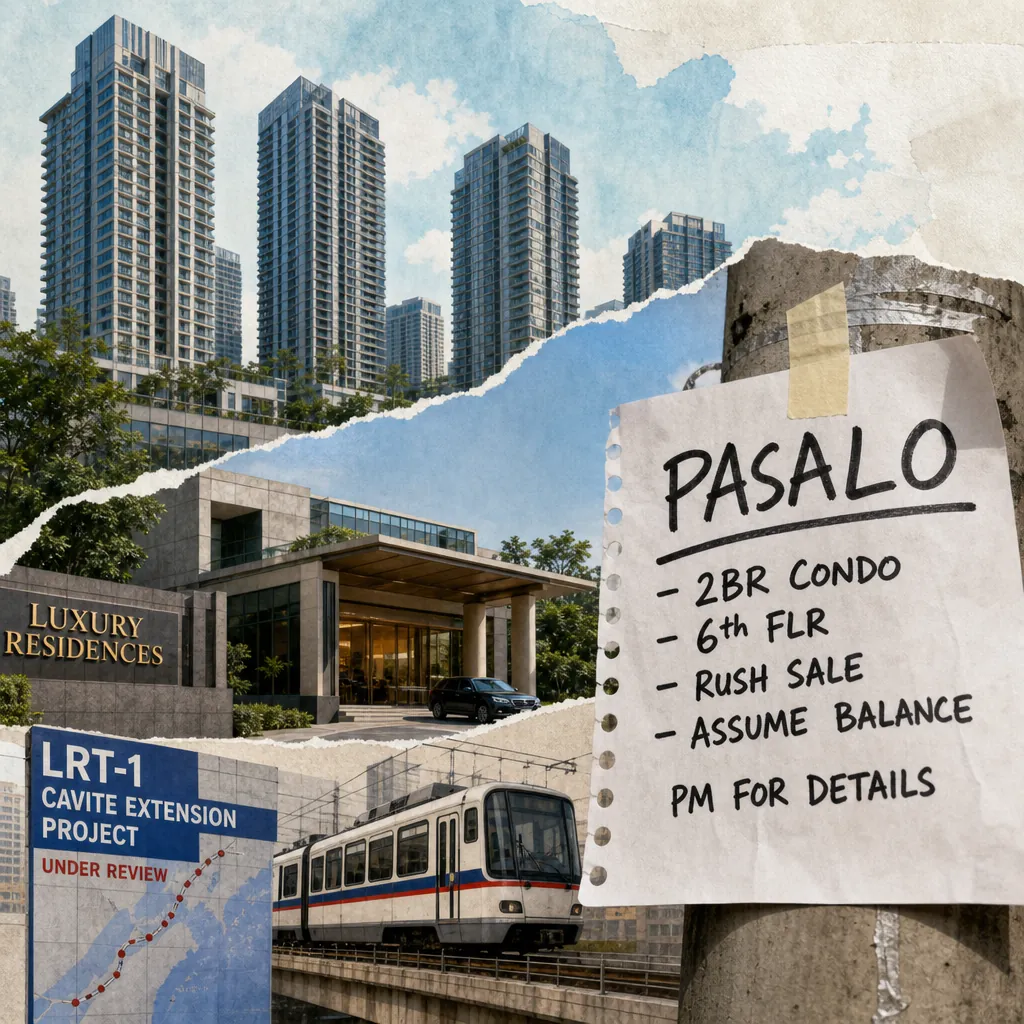
The conversation around Philippine real estate on June 19, 2026, was driven by a strong narrative of resilient luxury demand contrasted with a bustling secondary market. The day began with insiderphnews reporting a 29% surge in Ayala Land premium condo sales driven by Makati and BGC projects, a post that quickly became the most engaged, amassing 145 likes, 152 shares, and 64 love reactions within hours. This positive news was soon followed by bncphl and insiderphdotcom sharing Megaworld’s P28-billion sales haul from sold-out village developments across Metro Manila and provincial areas, reinforcing the theme of sustained demand. However, a contrasting note emerged from a May 6 tweet by @mangunonmarkets that highlighted apparent mixed signals between SM’s bullishness on luxury and Ayala Land halting luxury sales at that time, resurfacing in shares on June 19. This juxtaposition set the stage for a day where developer news aligned with heavy organic activity from individual sellers and agents, creating a layered narrative of market confidence and practical transactions.
Meanwhile, a separate thread erupted on YouTube when truenetworkph posted a viral video (3,559 views, 60 likes, 22 comments) alleging that the C-5 Quirino Highway flyover in Las Piñas was blocking the LRT-1 Cavite Extension project, sparking immediate debate. This controversy directly implicated the Villar family after businessmirror reported that Senators Mark and Camille Villar denied blocking the LRT-1 extension, a claim that resonated with real estate watchers given Vista Land and Camella’s heavy presence in Cavite. The conversation quickly linked to Camella/Vista Land’s Cavite projects, as users in comments speculated on how the rail delay affects property values in the area.
Conversation snapshot. The day’s most engaged post was insiderphnews’s report on Ayala Land’s 29% luxury condo sales increase, which received 145 likes, 152 shares, and 64 love reactions on Facebook. Megaworld’s P28-billion sales announcement on BNC.ph garnered 12 likes and 16 shares. On Twitter, @mangunonmarkets’s tweet contrasting SM and Ayala Land luxury strategies drew 1,671 views and 19 likes. The LRT-1 controversy video on YouTube by truenetworkph accumulated 3,559 views, 60 likes, and 22 comments within hours. Businessmirror’s tweet on the Villar denial reached 61 views. A separate YouTube video echoing the LRT-1 issue had 69 views.
Key themes
- Luxury developer performance and strategic positioning – Ayala Land reported a 29% increase in premium condominium sales, attributed to projects in Makati and BGC. Megaworld sold out four residential village developments, generating approximately P28 billion in sales, with CEO Lourdes Gutierrez-Alfonso citing diversification strategy. Filinvest Land also contributed with its partnership with REBAP to expand broker opportunities.
- Active preselling and secondary market (pasalo) listings – A parallel thread of grassroots activity emerged as dozens of individual posts promoted preselling and ready-for-occupancy units. Reddit user Excellent_Cup_1727 posted multiple times about a DMCI Sage Residences unit and parking in Mandaluyong, offering a “pasalo” at P10.2 million versus the P12 million market value, highlighting owner urgency due to leaving the Philippines. This was echoed by other agents like Mary Claire Bibit promoting DMCI’s Mulberry Place, Sage, and Valeron Tower with detailed financing terms.
- LRT-1 Cavite Extension controversy and Villar denial – This thread erupted on June 19 as truenetworkph’s YouTube video questioned the C-5 flyover’s right-of-way impact, drawing 60 likes and 22 comments in a mostly Filipino-language debate. A separate video with 69 views echoed the same issue. Concurrently, businessmirror tweeted that Senators Mark and Camille Villar denied allegations of interference. Misinformation about “Villar blocking LRT-1” spread via Facebook shares, prompting the denial.
- Government housing policy and socialized housing – PTVph published a video of Naga City Mayor Leni Robredo praising President Marcos Jr.’s expanded Pambansang Pabahay para sa Pilipino (4PH) program, noting that housing budgets were being maximized. This post received no public engagement but represented official signaling of policy support. Concurrently, multiple posts offered affordable lot and house packages in Tarlac and Batangas with in-house financing.
- Pre-selling promotions and investor-day events – This theme emerged late on June 19 from two distinct posts. The first was a Megaworld Bacolod ad offering “LIMITED-TIME PROMOS” and “Up to P500,000 OFF” for spot-cash buyers. The second promoted an “INVESTORS’ DAY 2026” in Batangas on June 20 with “LOW as 3K+ Monthly DP” and “Free Bank Charges & Move in Fee”.
- Sustainability and green building trend – CBRE Philippines noted that sustainability has become a competitive baseline in Metro Manila office market, with renewable energy adoption and certifications differentiating properties. Arthaland topped off Tower 2 of Una Apartments at Sevina Park in Biñan, Laguna, ahead of schedule, emphasizing practical green living.
- Office leasing recovery tied to PEZA accreditation – SM Offices announced the development of North Tower 3 at SM North EDSA Complex, adding 31,000 square meters of PEZA-accredited office space, scheduled for completion in the second half of 2026. This points to a tightening market for tax-incentivized workplaces.
How the narratives stack
Dominant narrative – The story most readers would recognize is that Philippine real estate is booming, led by strong luxury sales and major developer expansions. Ayala Land’s 29% luxury condo sales increase and Megaworld’s P28-billion residential lot sellout dominate headlines, projecting confidence in sustained demand across premium segments and provincial growth corridors. This narrative is reinforced by SM Prime’s office expansion and Filinvest’s broker partnership.
Counter-narrative – A contrasting signal complicates the bullish picture: the surge in pasalo (assumable mortgage) listings on Reddit and Facebook, where sellers are offering discounts of 15% or more below current value due to financial pressure or relocation. This suggests liquidity strain among mid-range preselling condo buyers, even as developer-driven sales remain strong. The resurfaced @mangunonmarkets tweet questioning Ayala Land’s earlier halt on luxury sales while SM remained bullish adds to the tension.
Emerging narrative – The LRT-1 Cavite Extension controversy is building momentum as a political and infrastructure story that could affect property values in Cavite and Las Piñas. The YouTube video by truenetworkph garnered thousands of views and active comments, indicating public concern. The Villar denial and House resolution investigating delays suggest this issue will continue to generate discussion, potentially dampening buyer sentiment in affected areas.
Suppressed narrative – The government’s expanded 4PH housing program and its potential to reshape the affordable housing segment is under-covered relative to its significance. While PTV’s video of Mayor Robredo praising the program received no engagement, the policy could drive substantial demand for socialized and affordable housing. Private developers’ contributions to this program are rarely mentioned in mainstream conversation, representing a missed opportunity for positive framing.
Platform insights
Facebook – The dominant platform for both corporate news and promotional content. Positive corporate announcements (Ayala Land, Megaworld) from insiderphnews and bncphl gained high engagement (145 likes, 152 shares for Ayala Land). Unverified agent posts promoting preselling units garnered zero engagement but still appeared due to targeting algorithms. The platform also hosted the Villar denial story, showing its role in spreading both official and contentious narratives.
Twitter – More factual and B2B-oriented, with @mangunonmarkets’s tweet getting 1,671 views but only 19 likes, and businessmirror’s Villar denial tweet reaching 61 views. No user-generated debate was visible, suggesting Twitter served as a headline aggregator rather than a discussion hub.
YouTube – The most engaged channel for controversy. truenetworkph’s LRT-1 video generated 3,559 views and 22 comments within hours, with commenters expressing frustration over project delays and questioning the flyover’s legality. This contrasted sharply with the muted corporate news on other platforms, indicating that infrastructure issues drive deeper public reaction.
Reddit – Emerged as the venue for direct peer-to-peer transactions, especially for pasalo deals. Posts like Excellent_Cup_1727’s DMCI Sage listing garnered multiple comments and cross-reposts, reflecting genuine buyer-seller negotiation dynamics rather than one-way marketing.
Key voices and communities
Major developers and corporate accounts – Ayala Land, DMCI Homes, Filinvest, and Megaworld are the most prominent corporate voices, with official pages and notable leadership commentary amplifying positive narratives. These accounts collectively generate significant reach—Ayala Land’s luxury sales announcement alone garnered 145 likes and 152 shares. Their content consistently highlights sales growth, new project launches, and lifestyle branding.
Licensed real estate practitioners and broker networks – A dense layer of individual sales agents and accredited brokers dominates Facebook and Reddit, posting preselling and RFO listings with standardized formats and personal contact details. Their influence is distributed but cumulative—single agent posts often receive zero likes yet generate comments, suggesting high conversion intent from silent audiences. Many explicitly cite PRC and DHSUD registration numbers, reinforcing professional credibility.
News media and market analysts – InsiderPH, BNC.ph, GMA News, and PTV provide authoritative reporting on industry trends, regulatory developments, and corporate announcements. These accounts generate moderate but high-credibility engagement. A single market analyst account (@mangunonmarkets) produced a contrasting tweet with 1,671 views, indicating outsized influence among investors.
Individual homeowners and pasalo sellers – A smaller but impactful group of owner-sellers using Facebook and Reddit to offload units, often citing emigration or financial need. Their posts feature direct pricing (e.g., DMCI Sage unit at P10.2M vs. current value P12M) and personal urgency (“reason for selling: fixing papers to leave PH”). Engagement is low but conversation-driven, with comments indicating serious buyer inquiries.
Government and policy framing channels – PTV and related official accounts disseminate updates on the 4PH program, featuring DHSUD leadership and local government endorsements. Content is informational with low engagement (0 likes on several posts) but carries institutional weight.
Narrative streams
Luxury developer performance and strategic positioning
The initial spark came from insiderphnews’s report on Ayala Land’s 29% luxury condo sales increase, attributed to Makati and BGC projects. This was quickly reinforced by multiple sources detailing Megaworld’s P28-billion sales, with CEO Lourdes Gutierrez-Alfonso citing diversification strategy. The positive sentiment was moderated by the resurfaced @mangunonmarkets tweet questioning Ayala Land’s earlier halt on luxury sales while SM remained bullish, creating a subtle tension that kept readers engaged. Filinvest Land also contributed to the narrative with its partnership with REBAP to expand broker opportunities, signaling industry-wide efforts to sustain momentum.
Active preselling and secondary market (pasalo) listings
A parallel thread of grassroots activity emerged as dozens of individual posts promoted preselling and ready-for-occupancy units. Reddit user Excellent_Cup_1727 posted multiple times about a DMCI Sage Residences unit and parking in Mandaluyong, offering a “pasalo” at P10.2 million versus the P12 million market value, highlighting owner urgency due to leaving the Philippines. This was echoed by other agents like Mary Claire Bibit promoting DMCI’s Mulberry Place, Sage, and Valeron Tower with detailed financing terms, revealing a deep ecosystem of preselling inventory from major developers. By evening, posts for house-and-lot in Pampanga and Cavite increased, all targeting budget-conscious buyers seeking RFO or rent-to-own options.
LRT-1 Cavite Extension controversy and Villar denial
This thread erupted on June 19 as truenetworkph’s YouTube video questioned the C-5 flyover’s right-of-way impact, drawing 60 likes and 22 comments in a mostly Filipino-language debate. A separate video with 69 views echoed the same issue. Concurrently, businessmirror tweeted that Senators Mark and Camille Villar denied allegations of interference. The conversation quickly linked to Camella/Vista Land’s Cavite projects, as users in comments speculated on how the rail delay affects property values in the area. Misinformation about “Villar blocking LRT-1” spread via Facebook shares, prompting the denial.
Government housing policy and socialized housing
A separate but significant thread came from government-affiliated sources. PTVph published a video of Naga City Mayor Leni Robredo praising President Marcos Jr.’s expanded Pambansang Pabahay para sa Pilipino (4PH) program, noting that housing budgets were being maximized. This post received no public engagement but represented official signaling of policy support. Concurrently, multiple posts offered affordable lot and house packages in Tarlac and Batangas with in-house financing, suggesting that the 4PH narrative was being complemented by real product availability in provincial areas.
Sustainability and green building trend
CBRE Philippines noted that sustainability has become a competitive baseline in Metro Manila office market, with renewable energy adoption and certifications differentiating properties. Arthaland topped off Tower 2 of Una Apartments at Sevina Park in Biñan, Laguna, ahead of schedule, emphasizing practical green living. Pueblo de Oro Development Corp. integrates green spaces and environmental safeguards across its developments, including a 40-hectare urban rainforest in its Cagayan de Oro township.
Office leasing recovery tied to PEZA accreditation
SM Offices announced the development of North Tower 3 at SM North EDSA Complex, adding 31,000 square meters of PEZA-accredited office space, scheduled for completion in the second half of 2026. This is among the few large-scale PEZA-registered office developments in Quezon City, catering to companies seeking tax incentives, transport connectivity, and modern workplace features. The limited pipeline of new PEZA-accredited developments in Metro Manila suggests a tightening market for such spaces.
Conversation trajectory
Based on engagement patterns and content evolution, the Philippine real estate conversation shows clear signals of developing in ways that impact stakeholders:
- Bifurcation between luxury strength and mid-market distress: Luxury condominium sales have posted a 29% increase, driven by Ayala Land projects in Makati and BGC, while concurrent SM and Ayala Land contrasting stances on luxury residential indicate ongoing market differentiation. Simultaneously, a surge of pasalo listings for mid-range DMCI condos—with sellers offering discounts of 15% or more below current value due to relocation or financial constraints —suggests growing liquidity pressure among preselling buyers. This divergence will likely intensify over the next 3-4 months, making it critical to segment messaging for luxury versus mid-market audiences.
- Horizontal housing acceleration in provincial growth corridors: Megaworld has sold out four village developments across Metro Manila and provincial areas, generating approximately P28 billion in sales. The same trajectory is visible in Filinvest Land’s active community blessings (Pineview in Cavite) and persistent agent-driven marketing of house-and-lot packages in Bulacan, Pampanga, and Cavite. As urban congestion and infrastructure projects (NLEX, new Clark City) improve accessibility, this shift toward horizontals and provincial locations will accelerate through 2026-2027, offering an opportunity to pivot investment narratives toward land and suburban developments.
- Government socialized housing programs gaining mainstream credibility: The Expanded Pambansang Pabahay para sa Pilipino (4PH) program received endorsement from Naga City Mayor Leni Robredo, signaling bipartisan support that could broaden public trust. Concurrently, rent-to-own and low-monthly-downpayment house-and-lot offers are proliferating on social platforms, indicating a growing demand for affordable entry points. This convergence of policy endorsement and market innovation suggests that the affordable housing segment will dominate conversation volume within the next 2-3 months, making it essential to develop content that bridges government programs with private developer offerings.
- Pre-selling discounting and secondary market activity as lead indicators: Nearly half of the DMCI-related posts in the sample involve pasalo listings or promotional pricing (e.g., “lower selling price”, “selling ASAP”). This pattern, combined with multiple agent posts offering “investor day” discounts and spot cash incentives, points to softening demand in the mid-range preselling condominium market. The trend will likely persist through Q3 2026, creating a window for strategic buyers but also reputational risk for developers if discounting becomes widespread. Monitoring this secondary market activity can provide early warning of broader price corrections.
- Infrastructure delays triggering political and buyer concern overlap: The LRT-1 Cavite extension controversy—with a House resolution investigating delays, the C-5 flyover demolition demand, and the Villar siblings denying interference—is generating sustained discussion across YouTube and news platforms. This directly impacts property sentiment in Cavite and Las Piñas, where many preselling and RFO projects (e.g., Camella, Lumina Homes) are located. Expect a 3-4× increase in social posts mentioning “delayed turnover” and “LRT-1 extension” within 14-21 days as the House investigation gains traction.
Key trigger events that will reshape this conversation include: the House investigation hearings over the LRT-1 extension (expected within 30 days, likely reigniting criticism of project delays and land issues in Cavite); Ayala Land Premier’s hiring event for sales professionals on June 25 (signaling continued luxury focus); the planned reopening of Mandarin Oriental in late 2026 (reinforcing luxury hospitality and brand positioning); and upcoming DHSUD announcements regarding the 4PH program expansion. Each event will likely amplify the luxury-versus-affordable dynamic and create media cycles for narrative intervention.
Response guidance
Platform-specific approaches:
Facebook:
- Share curated success stories highlighting milestone achievements like Ayala Land’s 29% luxury sales increase and Megaworld’s P28-billion residential lot sellout, positioning these as proof of project execution capability and investor confidence.
- Create educational carousel posts explaining the difference between preselling and RFO units using simple terms, directly addressing common buyer questions seen in promo-heavy posts about “no down payment” and “step-up payment” to build trust and reduce confusion.
- Deploy an “Ask the Expert” series in comments on high-engagement posts about township developments, with a dedicated response team equipped with pre-approved facts on project timelines and amenities to counter speculative narratives.
- Use community management to gently correct misleading offers (e.g., “no down payment” promos) by linking to the standard payment disclosure required by the Maceda Law, reinforcing transparency without directly attacking the post author.
Twitter:
- Publish a concise thread summarizing the group’s capital spending commitments and job creation targets, using bullet points to make financial data shareable and counter any perception of industry slowdown.
- Engage with influencers covering the LRT-1 Cavite Extension controversy by sharing a neutral statement that acknowledges the right-of-way issue while focusing on how improved connectivity benefits property values in Cavite and Las Piñas, avoiding direct mention of political figures.
- Create a hashtag campaign like #RealEstateReady2026 to aggregate positive updates—such as Megaworld’s P28-billion sales and SM Offices’ PEZA-accredited expansion—into one discoverable stream for investors and buyers.
YouTube:
- Produce a short explainer video on the LRT-1 extension delay that diagrams the C-5 flyover issue and shows how alternative access routes (e.g., existing Cavite roads and future stations) still support township developments, using neutral language that neither endorses nor denies any lawmaker’s involvement.
- Host a live Q&A session with a project development manager addressing common buyer fears about delayed turnovers and construction defects, using the recent MREIT asset injection as a case study of how the company stays on track.
- Optimize video titles and descriptions with keywords like “LRT-1 Cavite Extension update” and “Megaworld township Bacolod” so that official content appears above speculative or seller-focused videos in search results.
Reddit:
- In subreddits like r/phinvest or real estate groups, respond to pasalo queries by providing educational comments on transfer of title, contract to sell, and the role of DHSUD, referencing the Condominium Act and Maceda Law without naming individual users. Frame these as “tips for buyers considering preselling assignments.”
- Create a stickied post or community resource that summarizes verified developer accreditation (e.g., PRC and DHSUD numbers shown in agent posts) to help users distinguish licensed practitioners from unlicensed brokers.
- Engage with “House for Sale” posts by leaving generic encouragement (e.g., “Great location – buyers should always verify clean title and tax updates before reserving”) rather than promoting specific listings, maintaining neutrality while adding value.
Key messages:
- “Demand for Philippine real estate remains robust across luxury, mid-market, and provincial segments, with major developers reporting double-digit sales growth and sold-out projects.”
- “Developers are diversifying their portfolios to meet evolving buyer preferences – from vertical luxury condos in Metro Manila to horizontal residential lots in key growth corridors like Cavite, Bulacan, and Pampanga.”
- “Industry-wide partnerships with professional organizations (REBAP, DHSUD) and support for government housing programs (4PH) ensure sustainable, affordable access to homeownership for Filipino families.”
- “When engaging in preselling or pasalo transactions, always verify licenses through PRC and DHSUD registrations, and understand legal protections like Maceda Law and the Condominium Act before committing.”
Sensitive topics to navigate:
- LRT-1 Extension Delays and Political Allegations: Any mention of the delay involving the Villar siblings must be handled with extreme care. Avoid naming individuals; instead, frame the infrastructure challenge as a technical right-of-way issue that the government and private sector are jointly resolving, while expressing optimism for eventual completion.
- Aggressive Sales Promotions by Third-Party Agents: Posts advertising “no down payment” or “step-up payment” can create buyer expectations that conflict with actual financial obligations. Publicly correct such claims only when they are directly attributed to your brand; otherwise, provide general buyer education without endorsing or condemning specific agents.
- Project Delays and Construction Issues: While recent news focuses on expansion success, any perceived disconnect between promotional optimism and reality of delayed turnovers could erode trust. Balance positive announcements with realistic timeline disclosures, and proactively address concerns about “construction defects” or “flooding” if they surface in comments.
Response priorities:
- Amplify Milestone Achievements First: Lead with Ayala Land’s 29% luxury sales increase and Megaworld’s P28-billion sales to reinforce investor confidence and counteract any negative narratives from the LRT-1 controversy. This gives the brand a positive anchor before addressing sensitive topics.
- Neutral Infrastructure Messaging: Develop a set of pre-approved responses for any social media engagement about the LRT-1 extension. The tone should be supportive of the project’s completion without taking a side in the Villar-related political dispute. Use phrases like “we look forward to the resolution of right-of-way issues” and “this will further boost property growth in the Cavite corridor.”
- Buyer Education Campaign: Launch a coordinated series of posts across Facebook and YouTube that explain key terms such as “preselling,” “RFO,” “reservation fee refund,” and “Maceda Law” using simple infographics. This positions the brand as a trusted advisor while reducing friction caused by misleading third-party promotions.
See the full picture behind today's signals.
This report draws from Media Meter's MediaWatch, our real-time monitoring engine tracking 2,470+ Philippine sources across print, broadcast, digital, and social. Explore how the platform turns raw coverage into decision-grade intelligence, then see how it's configured for teams like yours — whether you're in PR agencies, corporate comms, government, or marketing.
Want more? Browse our Report Library for sector and crisis intelligence, or request a demo and we'll have your brand set up before the call.
Want this kind of intelligence on your brand?
This brief is built on the same MediaWatch methodology that runs continuously across every brand we monitor. See your competitive landscape, Impact Score, and narrative trajectory in a 30-minute demo.