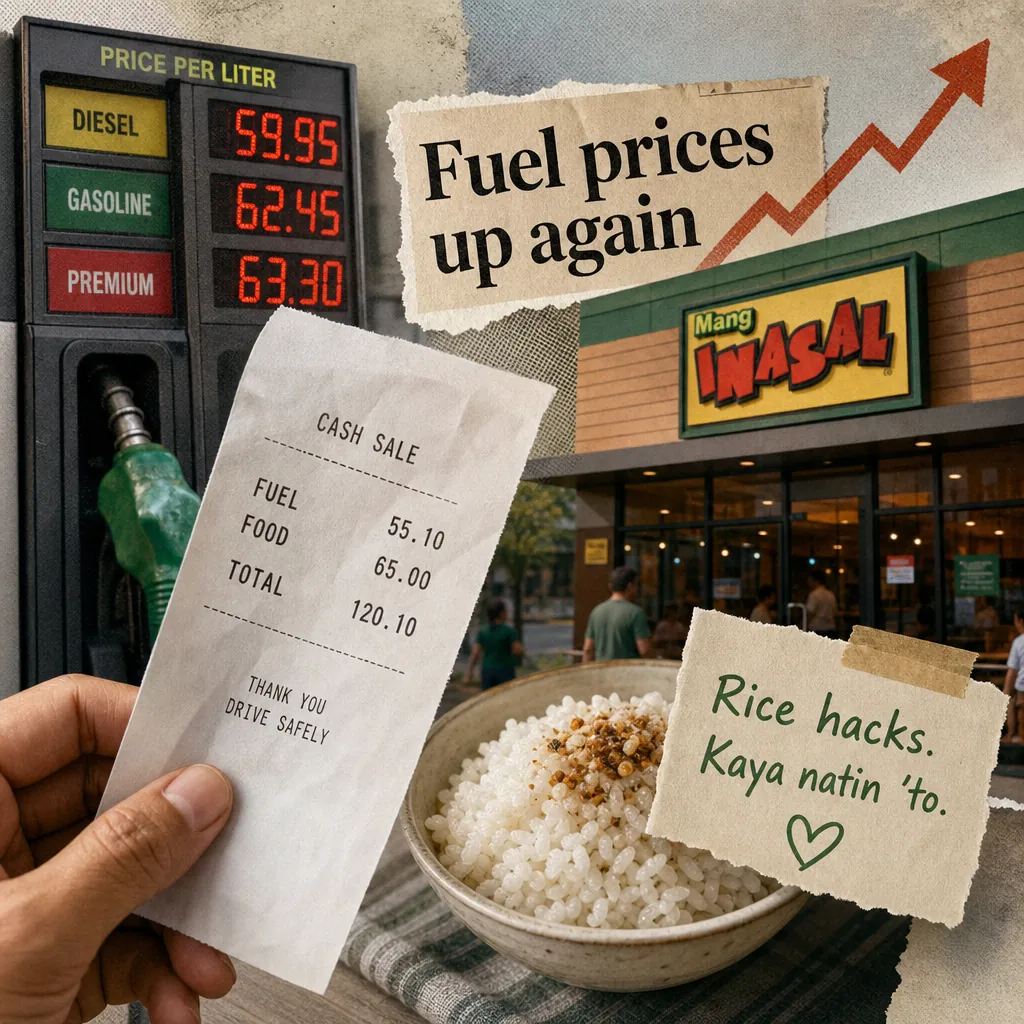
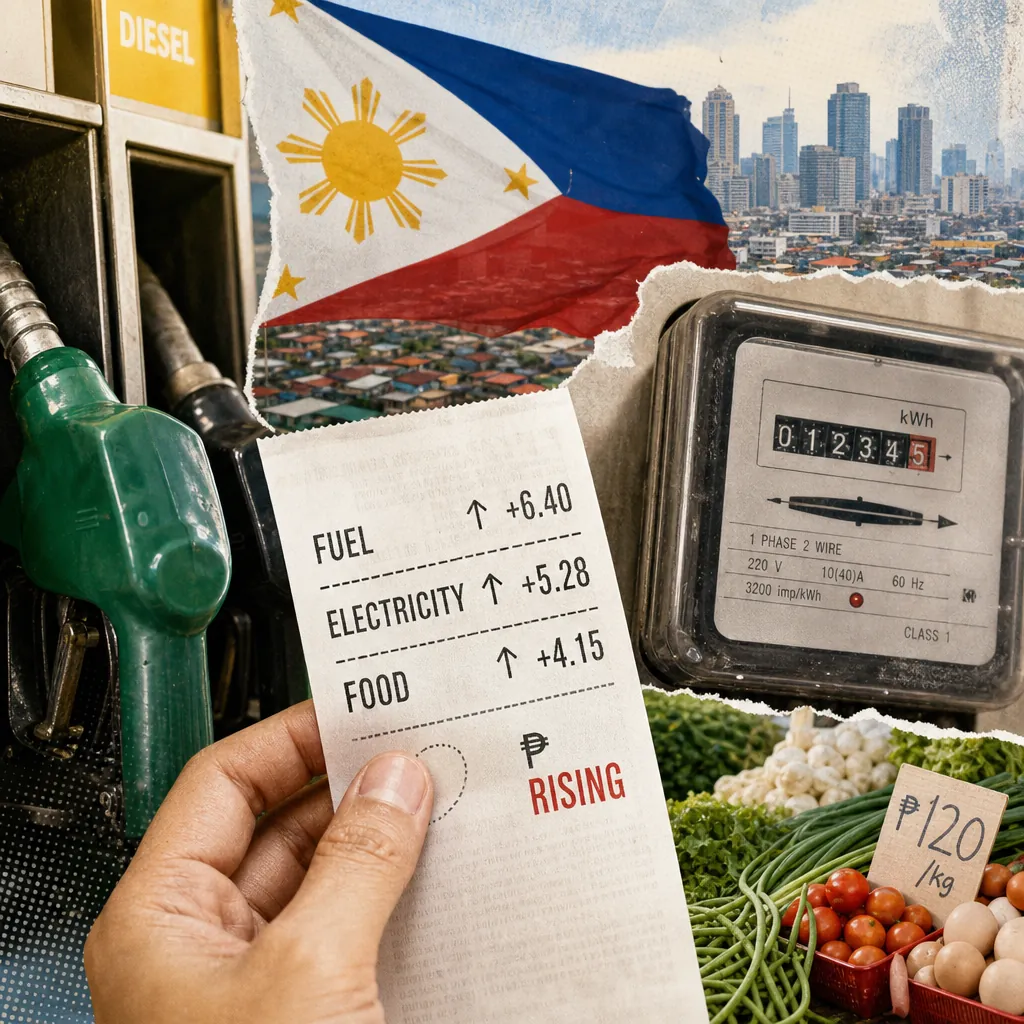
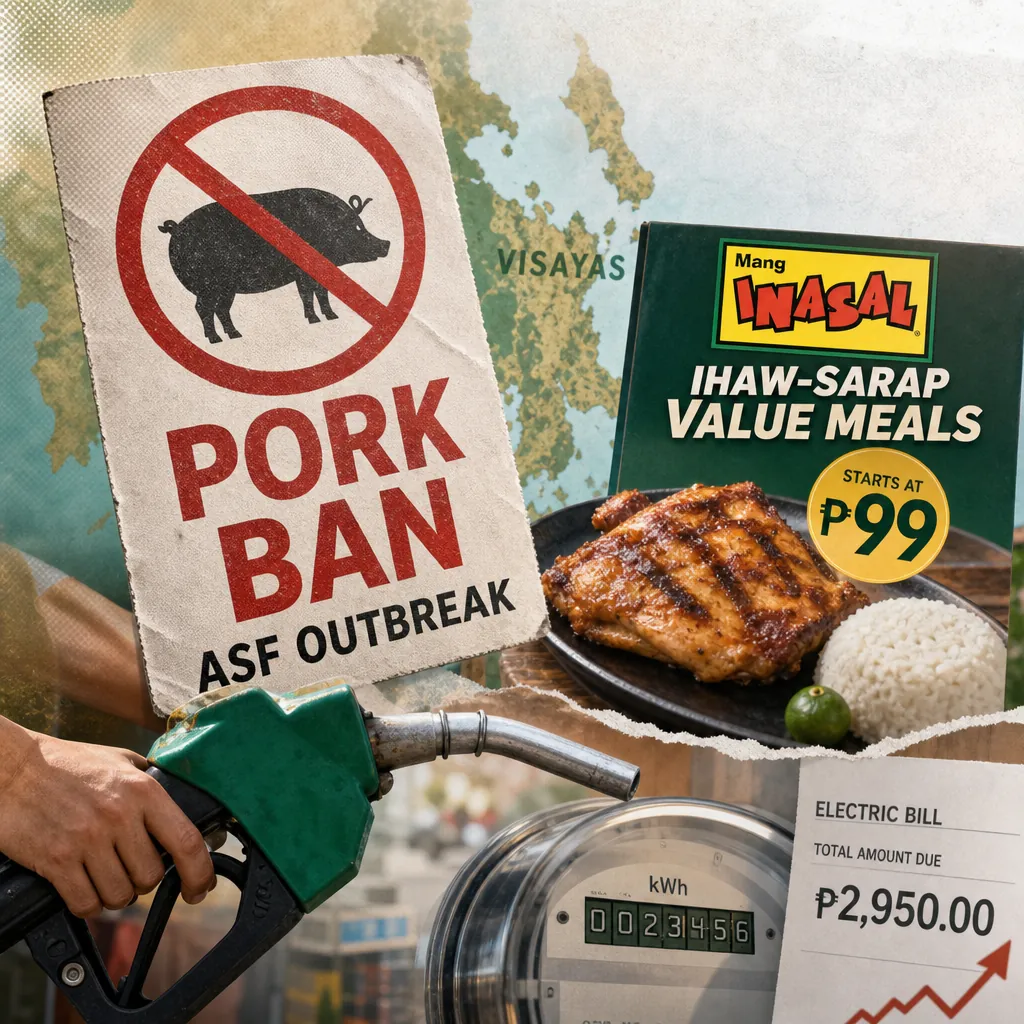
Shakey's closures, ASF spread, and Jollibee brand value define PH food sector
A daily snapshot of the Philippine food and beverage sector on June 24, 2026, covering Shakey's store closures and price hikes, the spread of African Swine Fever to Capiz, Jollibee's brand value milestone, and government rice subsidies.
The conversation on June 24, 2026, broadened significantly, moving beyond transport fare adjustments to directly intersect with food prices and restaurant industry pressures. Early in the day, @ibcdigital13 shared President Marcos Jr.’s announcement of the "Benteng Bigas Meron Na" program, crediting key measures for bringing down rice prices and detailing the program’s implementation. This was a direct government narrative around food affordability. Simultaneously, @alvin.elchico posted on Facebook a "DAY 2 UPDATE" celebrating that diesel prices had dropped for a second consecutive day in the world market, with an appeal for "MORE pa please! 🙏🙏🙏," generating 50 likes and awareness among commuters and logistics-dependent industries. However, the most influential development came mid-day when @bilyonaryo_ph reported that Shakey's Pizza Asia Ventures Inc. (SPAVI) was "closing underperforming stores and raising menu prices as weak consumer spending and higher costs pressure margins." This post quickly became a focal point with 14,317 views, 54 likes, 10 shares, and 19 comments—marking a turning point that connected macroeconomic pressure directly to the quick-service restaurant sector. By evening, @bworldph raised the systemic issue of farm-to-market infrastructure gaps, quoting DTI Undersecretary Mary Jean Pacheco on the need for "efficient, resilient, and inclusive food distribution," though with minimal engagement (355 views, 1 like), indicating that technical policy discussions remained niche compared to consumer-facing price news.
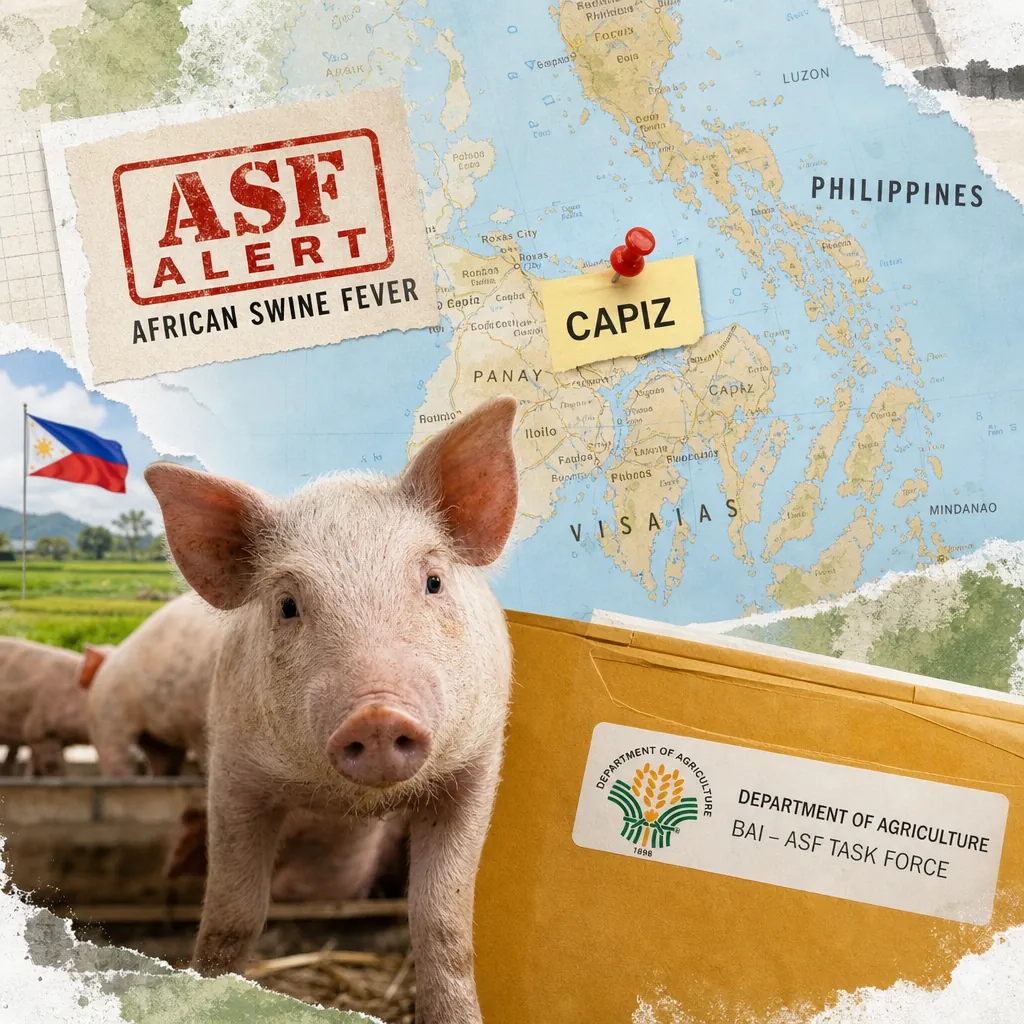
Meanwhile, the African Swine Fever (ASF) conversation escalated further as the outbreak spread beyond Negros Occidental into Capiz. pnagovph reported that the Office of the Provincial Veterinarian in Iloilo was urging swine farmers not to panic and to strictly observe biosecurity measures amid new confirmed ASF cases in Capiz. On the same day, dailyguardianph confirmed that around 50 hogs had died at a farm in Barangay Banate, Pontevedra, Capiz, due to suspected ASF, though the post drew only 35 views, indicating lower public awareness of the new cluster. A Capiz town immediately banned the entry of pork products, a post by inquirerdotnet that garnered 1,020 views. Meanwhile, remateph also reported 500 pigs killed in San Enrique, echoing the earlier devastating number but confirming the scale remained a major concern. The British Chamber of Commerce Philippines added a stark economic dimension on Facebook: Executive Vice Chairman Chris Nelson said the country’s pig herd has fallen to its lowest level since 1994, and called for increasing pork imports to address supply shortages and lower prices. The post drew 29 likes and 19 haha reactions, reflecting a mix of recognition and bitter humor.
In a separate but related development, Jollibee Foods Corp. (JFC) announced that its flagship Jollibee brand posted a 32-percent increase in brand value to $3.3 billion, retaining its position as the Philippines' second most valuable brand for the third straight year, according to the Brand Finance Philippines 50 2026 report. The report attributed the stronger valuation to sustained customer demand, improved brand strength, and continued appeal across key markets. Mang Inasal, another JFC-owned chain, was named a "Brand to Watch" with a 28-percent rise in brand value to $482 million. These positive brand narratives provided a counterpoint to the broader cost pressures facing the sector.
Key themes
- Shakey's store closures and price hikes signal QSR margin squeeze — Shakey's Pizza Asia Ventures Inc. (SPAVI) confirmed it is closing 15 to 20 underperforming stores and raising menu prices selectively, citing weak consumer spending and higher input costs. This marks a concrete signal that the quick-service restaurant (QSR) sector is feeling the squeeze beyond general inflation, with implications for other major chains like Jollibee, Mang Inasal, and Chowking.
- ASF spreads to Capiz, triggering pork bans and supply fears — African Swine Fever (ASF) has now spread beyond Negros Occidental to Capiz, with around 50 hogs dying in a single farm and a town banning pork product entry. The British Chamber of Commerce Philippines noted the national pig herd has fallen to its lowest level since 1994, intensifying supply concerns and calls for increased pork imports.
- Government rice subsidy program offers relief but draws skepticism — The "Benteng Bigas Meron Na" program, distributing 10 kilograms of rice to over 210,000 households in four tranches, was announced as a key government intervention to lower rice prices. However, a single "haha" reaction on one post suggests public doubt about its effectiveness.
- Jollibee and Mang Inasal brand values rise amid economic headwinds — Jollibee's brand value increased 32% to $3.3 billion, while Mang Inasal's rose 28% to $482 million, according to the Brand Finance Philippines 50 2026 report. These gains reflect strong consumer loyalty and brand strength even as the broader economy faces inflationary pressures.
- Farm-to-market infrastructure gaps persist — DTI Undersecretary Mary Jean Pacheco highlighted the need for efficient, resilient, and inclusive food distribution, pointing to systemic logistics inefficiencies that affect food pricing and availability across the supply chain. This technical discussion, though low in engagement, underscores a structural challenge that keeps food prices high even when global commodity prices ease.
- Fuel price drops offer temporary relief — Diesel prices dropped for a second consecutive day in the world market, generating positive but cautious public reaction. While fuel directly affects food transport costs, this relief is temporary and unlikely to offset broader inflation sentiment.
- ASF vaccine rollout expected in Q3 2026 — The Department of Agriculture (DA) expects approval for the commercial rollout of AVAC live vaccines against ASF by the third quarter of 2026, offering a potential turning point for supply recovery. This news introduces a hopeful counter-narrative that could reshape public sentiment if the vaccine materializes.
- Lance Gokongwei invests P2.03 billion in PhilWeb — Tycoon Lance Gokongwei is acquiring up to a 15% stake in gaming technology firm PhilWeb Corp., signaling confidence in the Philippine business recovery and indirectly benefiting Gokongwei-linked food enterprises such as Universal Robina.
How the narratives stack
- Dominant narrative — The dominant story on June 24 is the convergence of cost pressures across the Philippine food sector. Shakey's store closures and price hikes serve as a bellwether for the QSR industry, while the ASF outbreak in Capiz threatens pork supply and prices. Government rice subsidies and fuel price drops offer partial relief but are met with public skepticism. The overall narrative is one of a sector under strain from weak consumer spending, rising input costs, and supply chain disruptions.
- Counter-narrative — Jollibee and Mang Inasal's rising brand values provide a counterpoint to the gloom. These brands demonstrate that strong consumer loyalty and effective marketing can sustain growth even in a challenging environment. The DA's expected ASF vaccine rollout also offers a hopeful long-term solution to the pork supply crisis. Additionally, Lance Gokongwei's P2.03 billion investment in PhilWeb signals broader confidence in the Philippine economy, indirectly benefiting food conglomerates.
- Emerging narrative — The import debate is gaining traction as a potential solution to pork shortages. The British Chamber of Commerce Philippines' call for increased pork imports introduces a trade-liberalization perspective that could reshape policy discussions. This narrative may intensify as ASF continues to spread and domestic supply tightens. The DTI's farm-to-market infrastructure discussion, while currently niche, could become more prominent as concrete proposals emerge.
- Suppressed narrative — The structural inefficiencies in food distribution, as raised by DTI Undersecretary Pacheco, remain under-covered relative to their significance. Without improvements in farm-to-market logistics, price relief from lower global oil prices or government subsidies may not fully translate to retail prices. This issue affects the entire food supply chain but receives little public attention compared to consumer-facing price news.
Platform insights
- Facebook — Facebook remained the primary platform for high-engagement consumer-facing news. @abscbnnews's diesel price drop report generated 2,017 likes and 158 comments, the highest interaction of the day, reflecting broad public interest in fuel costs. @alvin.elchico's similar post attracted 50 likes, while @peoplestonight.net's rice subsidy post saw only 1 reaction. Government pages like @radyopilipinas saw minimal engagement, suggesting that official aid announcements are less shareable than real-time price movement updates. The British Chamber's ASF post on Facebook drew 29 likes and 19 haha reactions, indicating a mix of recognition and bitter humor among users.
- Twitter — News outlets dominated Twitter. @bilyonaryo_ph's Shakey's closure report achieved the highest views (14,317) and robust shares (10) and comments (19), making it the most effective platform for business-oriented food industry news. @abscbnnews's retweet of the diesel update garnered 2,100 views but zero likes, indicating that Twitter serves as a broadcast channel rather than an engagement hub for this topic. Technical policy content (@bworldph) received very low interaction.
- YouTube — No significant food-related video content was observed in the dataset. The absence of video reaction content suggests the crisis was still in its informational phase, not yet driving consumer panic or vlogger-driven price discussions.
Key voices and communities
- Government and policy institutions — Officials and agencies including the Office of the President, the Department of Trade and Industry (DTI), and local government units are prominent voices in the food-pricing conversation. Their messaging focuses on government interventions such as the Benteng Bigas Meron Na rice subsidy program and DTI-led supply chain reforms. While their raw engagement is low, the content carries institutional authority and is amplified by allied media.
- Corporate leaders and industry analysts — Business-focused accounts, particularly those covering publicly listed food-service operators, are driving high-impact conversation around margin pressure and store rationalisation. The Shakey's announcement by @bilyonaryo_ph generated over 14,000 views and 19 comments, reflecting strong audience interest in the financial health of major casual-dining brands. Jollibee's brand value announcement also drew attention, reinforcing the narrative of brand strength as a buffer against economic headwinds.
- Mainstream broadcast media and price-watch influencers — Major news networks (ABS-CBN, Bilyonaryo) and price-monitoring personalities such as Alvin Elchico command large, engaged audiences around cost-of-living topics. A single ABS-CBN post on petroleum price movements accumulated over 2,000 likes and 158 comments, demonstrating intense public hunger for real-time price data. These media stakeholders are the primary channel through which price-sensitive consumers learn about food and fuel cost changes.
- Local government officials and task forces — Provincial and municipal leaders across Negros Occidental, Capiz, and Iloilo dominate the ASF conversation through official statements, executive orders, and press briefings. These accounts generate high trust signals and targeted engagement, with posts about hog deaths and pork bans drawing significant viewership. Their content focuses on announcing confirmed ASF cases, imposing border controls, and calling for calm among swine farmers.
- Business and trade organizations — The British Chamber of Commerce Philippines emerged as a new voice in the ASF conversation, with its Executive Vice Chairman Chris Nelson publicly stating that the country's pig herd has fallen to its lowest level since 1994 and calling for increased pork imports. This post generated 29 likes and 19 haha reactions, indicating a mix of agreement and skepticism from the public. The chamber represents international business interests and brings a trade-liberalization perspective to the ASF debate.
Narrative streams
Shakey's store closures and QSR margin squeeze
Shakey's Pizza Asia Ventures Inc. (SPAVI) confirmed on June 24 that it is closing 15 to 20 underperforming stores and raising menu prices selectively, citing weak consumer spending and higher input costs. Company executives said the restaurant operator is taking a more disciplined approach to costs and expansion as consumers continue to prioritize essential spending over discretionary purchases. SPAVI Chairman Christopher Po described 2026 as a year of restructuring and streamlining, adding that the company is "not letting a good crisis go to waste." The announcement generated 14,317 views on Twitter, making it the most engaged business story of the day. This development is significant because it provides concrete evidence that consumer spending weakness is now affecting major QSR chains, serving as a bellwether for the broader sector. For stakeholders in the Philippine food industry—particularly QSR operators, FMCG manufacturers, and retailers—this reinforces the need for agile portfolio management, value-focused offerings, and cost-control measures.
African Swine Fever spreads to Capiz
The ASF outbreak, which had already devastated Negros Occidental, spread to Capiz on June 24, with around 50 hogs dying in a single farm in Barangay Banate, Pontevedra. The municipal government of Dumarao in Capiz imposed a temporary total ban on the entry and passage of pork products and other swine-related items as a precautionary measure. The British Chamber of Commerce Philippines added a stark economic dimension, noting that the country's pig herd has fallen to its lowest level since 1994 and calling for increased pork imports to address supply shortages and lower prices. This post drew 29 likes and 19 haha reactions, reflecting a mix of recognition and bitter humor. The DA's expected approval for AVAC live vaccines by Q3 2026 offers a potential turning point, but immediate price anxiety will dominate as supply tightens. For food companies that rely on pork as an input—such as processed meats, canned goods, and QSRs—the import argument provides a potential avenue for price stabilization, but it may alienate domestic producer partners.
Jollibee and Mang Inasal brand value milestones
Jollibee Foods Corp. announced that its flagship Jollibee brand posted a 32-percent increase in brand value to $3.3 billion, retaining its position as the Philippines' second most valuable brand for the third straight year, according to the Brand Finance Philippines 50 2026 report. Mang Inasal, another JFC-owned chain, was named a "Brand to Watch" with a 28-percent rise in brand value to $482 million. The report attributed the stronger valuations to sustained customer demand, improved brand strength, and continued appeal across key markets. JFC CEO Ernesto Tanmantiong said strong brands remained central to the company's long-term growth strategy as they reinforced customer loyalty and business resilience. These positive brand narratives provide a counterpoint to the broader cost pressures facing the sector, demonstrating that strong consumer loyalty and effective marketing can sustain growth even in a challenging environment.
Government rice subsidy program
President Marcos Jr.'s "Benteng Bigas Meron Na" program was announced on June 24, with @ibcdigital13 crediting key measures for bringing down rice prices and detailing the program's implementation. @peoplestonight.net reported that over 210,000 households would receive 10 kilos of rice each in four tranches, distributed under the leadership of First Lady Liza Araneta-Marcos and QC Mayor Joy Belmonte, explicitly to aid families affected by "patuloy na pagtaas ng presyo ng mga bilihin." The post accumulated one "haha" reaction, suggesting some public skepticism. This theme directly addresses food staple affordability, a core concern for consumers and food businesses alike. The program signals continued government intervention to cushion the impact of high rice prices, a staple that directly shapes household spending on branded food items.
Farm-to-market infrastructure gaps
DTI Undersecretary Mary Jean Pacheco raised the systemic issue of farm-to-market infrastructure gaps, emphasizing the need for "efficient, resilient, and inclusive food distribution." Despite low engagement (355 views, 1 like), this technical discussion is foundational for understanding why food prices remain high even when global commodity prices ease. It connects to government rice programs and consumer price sensitivity, suggesting that without infrastructure improvements, price relief may be temporary. For food manufacturers, this discussion signals that regulatory attention on supply chain efficiency may intensify, potentially affecting import tariffs, logistics costs, and raw material availability.
Conversation trajectory
- QSR margin squeeze and menu price adjustments accelerating (next 6–8 weeks) — Shakey's store closure announcement is likely the first of several such announcements from major QSR players facing similar margin pressures. Expect at least two to three additional major chains to announce similar measures within the next 6–8 weeks, as foot traffic data and same-store sales trends continue to soften. The conversation will likely pivot from isolated complaints toward systemic criticism of price-value mismatches, making value meal bundles and loyalty programs critical defensive messaging.
- ASF-driven pork price anxiety intensifies (next 2–4 weeks) — With ASF now confirmed in Capiz and the national pig herd at its lowest since 1994, conversations will pivot sharply toward pork price increases, shrinkflation accusations against processed meat brands, and comparative searches for budget meal alternatives. The emotional resonance of "mahal na ang pork" is already building in comment threads across local news outlets. The DA's vaccine timeline may temper some panic in the medium term, but immediate price anxiety will dominate.
- Government rice subsidy programs become a central narrative anchor (next 3–5 weeks) — As more tranches of the "Benteng Bigas Meron Na" program roll out, public discourse will increasingly compare the quality and availability of subsidized versus commercial rice, potentially sparking renewed debate on import tariff policies. This creates a narrow window for brands to highlight any cost-absorption efforts before frustration resurfaces.
- Food safety scrutiny heightens (next 2–4 weeks) — The combination of ASF border controls, the emphasis on FDA LTO requirements for processed pork products, and global food safety incidents will drive a parallel conversation around food labeling, expiration dates, and traceability. Expect increased engagement with FDA, DTI, and DA-related content, particularly as panic buying and hoarding behaviors emerge in more localized markets.
Key trigger events that will reshape this conversation include: the next tranche of the rice subsidy program distribution (expected within the next 2–3 weeks), which will amplify comparisons between government-subsidized and commercial rice pricing; the official DA/BAI situation report on ASF (expected within 5–7 days, likely confirming broader spread across Capiz and Western Visayas); the first major pork price adjustment announcement from major wet markets or QSR chains; and the commercial rollout approval of the AVAC vaccine (expected within Q3 2026), which will reshape the long-term supply narrative but may create short-term confusion.
Response guidance
For stakeholders in the Philippine food industry—particularly QSR operators, FMCG manufacturers, and retailers—these conversations have direct implications. The Shakey's store closure announcement reinforces the need for agile portfolio management; brands should review their footprint in high-cost, low-traffic locations and consider shifting toward delivery-centric models or smaller-format stores. The rice subsidy narrative indicates that consumers remain highly attentive to staple prices; any brand that introduces price increases without clear value justification risks being compared unfavorably to government assistance programs. Conversely, the farm-to-market policy discussion suggests that regulatory attention on supply chain efficiency may intensify, potentially affecting import tariffs, logistics costs, and raw material availability for food manufacturers. Brands that proactively communicate their efforts to stabilize prices or improve food safety can build goodwill in this environment.
Platform-specific approaches:
- Facebook: Deploy infographics explaining the rationale behind price adjustments and government subsidy programs to address consumer concerns about rising costs. Share verified updates on ASF containment measures and processed pork safety to counter misinformation. Use community-management teams to respond empathetically to comments about price hikes, emphasizing available support mechanisms while avoiding defensive language.
- Twitter: Publish concise threads summarizing the Shakey's restructuring and contextualizing it as an industry-wide challenge driven by weak consumer spending and higher input costs. Amplify DA announcements on ASF vaccine rollout with clear timelines to demonstrate government action. Use relevant hashtags like #ASFUpdate or #FoodSafetyPH to connect broader economic narratives with localized updates.
- YouTube: Produce short explainer videos on how ASF affects pork supply and prices, with expert commentary to contextualize fluctuations. Create a series highlighting small business owners who have benefited from government programs, aligning with MSME empowerment themes.
Key messages:
- The government is actively implementing targeted assistance programs—such as the Benteng Bigas rice subsidy and ASF vaccine rollout—to cushion the impact of rising prices on low-income households and stabilize supply.
- Rising input costs are pressuring food service operators like Shakey's, but industry adjustments such as store rationalization and menu price revisions reflect a necessary response to protect long-term viability.
- African Swine Fever is not a food safety risk to humans—the virus affects only pigs. Properly cooked pork and FDA-regulated processed products pose no health threat to consumers.
- Established Philippine brands like Jollibee and Mang Inasal have strong brand equity built on decades of quality and trust, providing a buffer against economic headwinds.
- Improvements in farm-to-market logistics, as discussed by the DTI, aim to reduce post-harvest losses and bring down consumer prices over the medium term.
Sensitive topics to navigate:
- Avoid characterizing price increases as permanent or unilateral; emphasize the challenging macroeconomic environment and the company's efforts to absorb costs where possible.
- Discuss ASF impacts without alarming consumers; focus on containment efforts and data-driven updates rather than speculative shortage scenarios.
- Frame government aid as supplementary rather than a full solution, acknowledging that low-income families still face economic strain and that programs like Benteng Bigas are interim measures.
- When addressing Shakey's store closures and price increases, avoid blaming the company or consumers; instead, focus on the challenging macroeconomic environment and note that such moves are common across the QSR industry during downturns.
- Discuss rice subsidy distribution carefully to avoid creating expectations of indefinite supply; highlight that the program is tranche-based and targets the most vulnerable households.
Want this kind of intelligence on your brand?
This brief is built on the same MediaWatch methodology that runs continuously across every brand we monitor. See your competitive landscape, Impact Score, and narrative trajectory in a 30-minute demo.