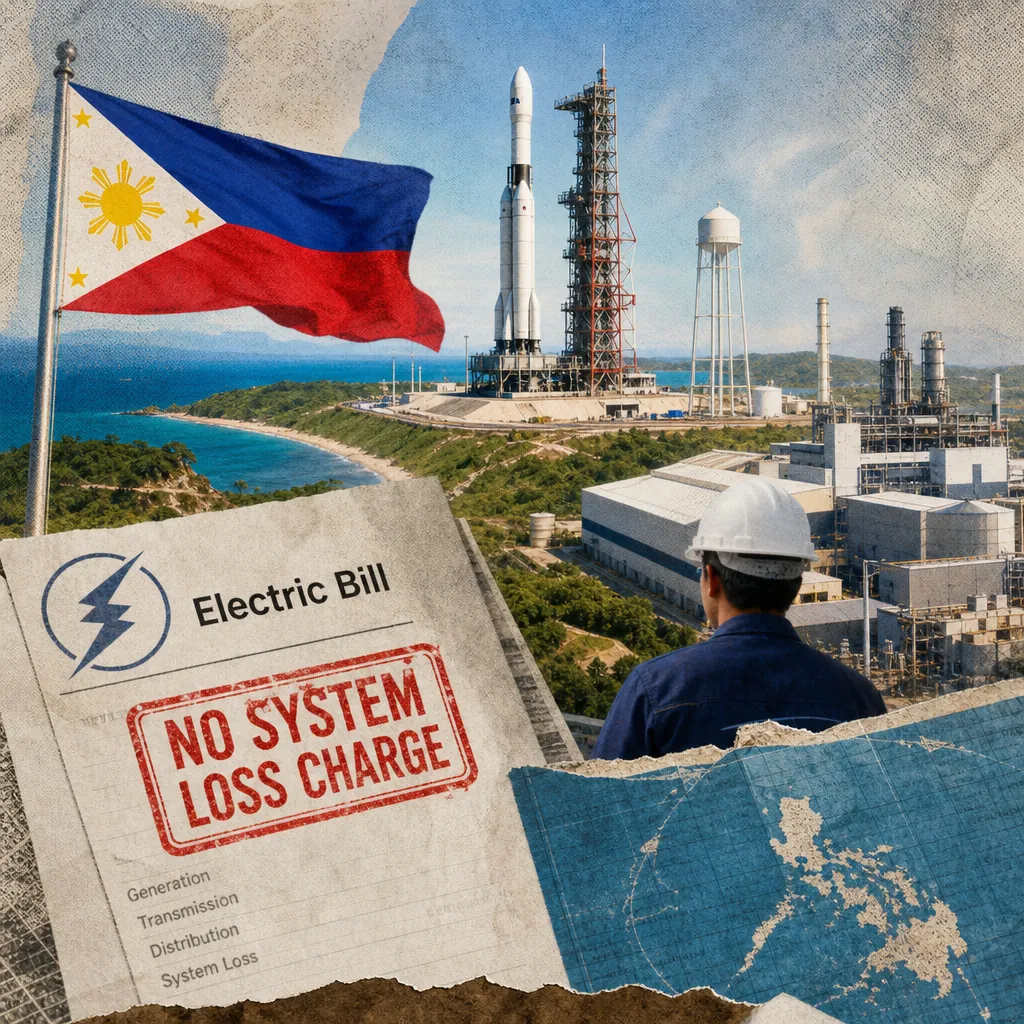
System loss debate, energy deals, and political drama dominate July 30
The July 30 conversation was shaped by President Marcos's call to end system loss charges, Meralco's response, and major energy deals, alongside political controversies and entertainment news.
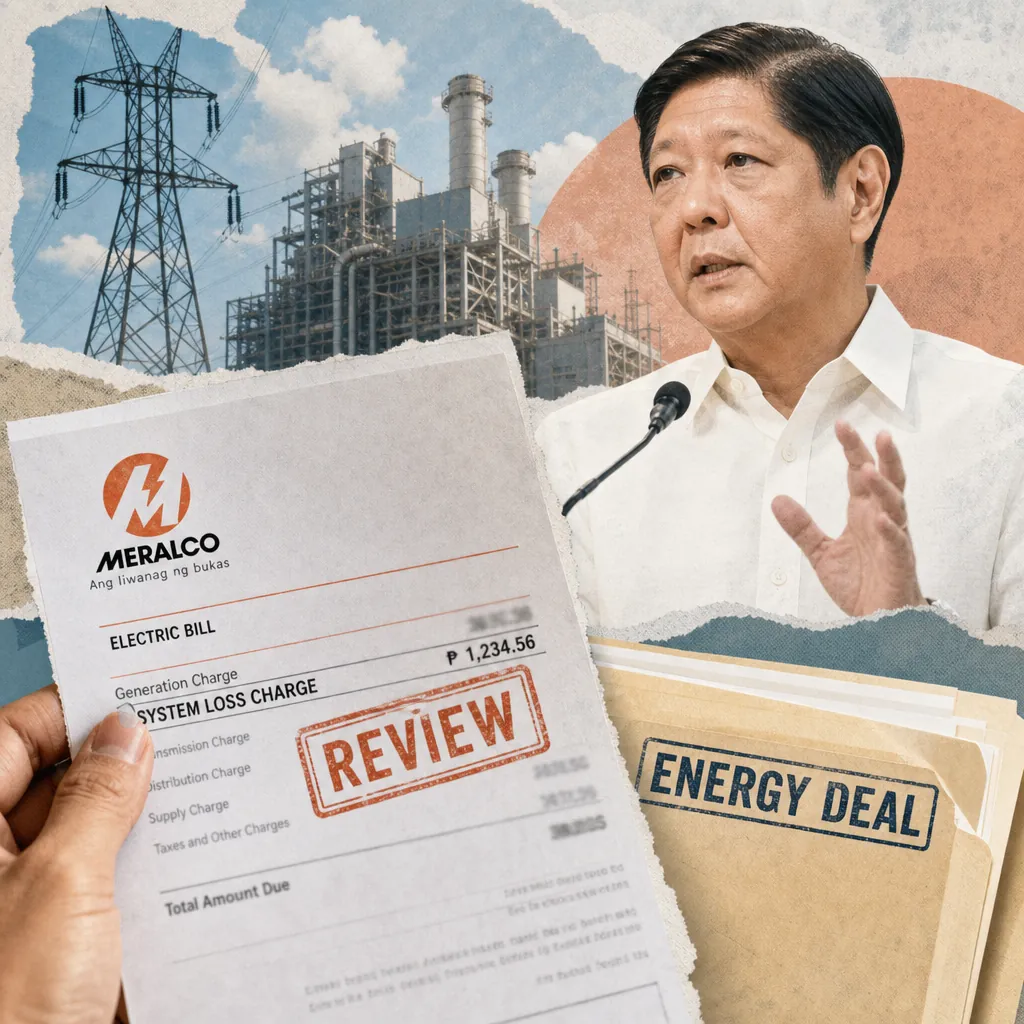
The July 30 conversation was shaped by President Marcos's call to end system loss charges, Meralco's response, and major energy deals, alongside political controversies and entertainment news.
Key themes
- System loss charges under fire – President Marcos's SONA call to remove system loss charges from consumer bills sparked debate, with Meralco chairman Manuel Pangilinan questioning who would absorb the cost and lawmakers arguing the charges are illegal.
- Energy deals and acquisitions – Major power players signed a Malampaya gas supply deal expected to lower electricity costs, while EDC confirmed no talks on a $5-billion Indonesian takeover offer but acknowledged its potential fit in Meralco's portfolio.
- Political controversies and disinformation – Vice President Sara Duterte accused a news outlet of splicing her speech, while the House prosecution in her impeachment trial was urged to present "shock and awe" evidence. Senator Cayetano denied seeking a ceasefire with Lacson.
- Consumer and labor issues – A court suspended the P85 wage hike in NCR, drawing criticism from labor groups, while a proposal for motorcycle taxi body cameras emerged to boost rider safety.
- Entertainment and culture – Alex Calleja announced a new Netflix special during his Australia-Singapore tour, and the "DonLai" viral moment from ASAP XP Australia dominated social media.
- Corporate social responsibility and innovation – Globe's Hapag Movement and GoGIVE platform won PR awards, while Lazada joined Meta's affiliate program to boost social commerce.
- Disaster preparedness for mompreneurs – A blog post offered practical tips for home-based entrepreneurs to build disaster-resilient businesses, highlighting the vulnerability of small enterprises.
How the narratives stack
Dominant – The system loss charge debate dominated the captured set, with multiple news outlets covering President Marcos's SONA call, Meralco's response, and Senate hearings. The Manila Bulletin Online and Philstar Online carried extensive coverage, with the Manila Bulletin article on system loss drawing an estimated advertising-equivalent value of ₱731,456, the highest in the set. The story resonated because it directly affects every electricity consumer and pits the administration against powerful utilities.
Counter-narrative – Meralco and industry players argue that removing system loss charges without a clear replacement would cost the industry tens of billions of pesos, potentially leading to higher generation costs or reduced investment. Senator Erwin Tulfo questioned whether utilities would actually lose money, suggesting the impact may be overstated.
Emerging – The proposed Pax Silica initiative, which could generate 800,000 jobs in AI and data centers, is gaining attention but remains tentative, with Malacañang cautioning that terms are not final. This story could reshape the tech and energy landscape if it materializes.
Suppressed – The disaster-proofing advice for mompreneurs received little coverage despite its practical importance for a large segment of the economy. Only one blog post addressed it, suggesting a gap in mainstream media attention to small business resilience.
Platform insights
- Facebook – The system loss debate generated significant engagement, with netizens sharing and commenting on posts from Manila Bulletin and Philstar. The emotional appeal of lower electricity bills drove shares, while Meralco's defense sparked debate.
- X (formerly Twitter) – Political controversies, especially VP Sara's accusation of spliced video and the Cayetano-Lacson feud, trended with hashtags like #DonLai and #SystemLoss. Users shared clips and opinions, amplifying the reach of news articles.
- Reddit – The "DonLai" viral moment from ASAP XP Australia was posted on Reddit, with users finding humor in the edited photo and the parody of Meteor Garden. This platform drove the entertainment narrative.
- YouTube – The Saksi report on motorcycle taxi body cameras and the MTRCB hearing on It's Showtime likely drew views, but no specific engagement figures were provided.
Key voices and communities
- Government officials and regulators – President Marcos, Senator Erwin Tulfo, and ERC chairperson Francis Saturnino Juan shaped the system loss debate. Their statements were widely quoted and analyzed.
- Industry leaders – Manuel V. Pangilinan (Meralco) and Jerome Cainglet (EDC) provided the corporate perspective on energy costs and acquisitions. Their comments carried weight in business circles.
- Political figures – Vice President Sara Duterte, Senator Alan Peter Cayetano, and former Rep. Niel Tupas drove the political narrative, with accusations and defenses playing out in news and social media.
- Entertainment personalities – Alex Calleja and Melai Cantiveros engaged fans through tour announcements and viral moments, drawing attention from entertainment-focused communities.
- Consumer advocates and labor groups – Kamanggagawa Party-list Representative Elijah San Fernando argued against the wage hike suspension, representing worker interests.
Narrative streams
System loss charges: Who pays?
President Ferdinand Marcos Jr., in his fifth State of the Nation Address on July 27, called on Congress to amend the Electric Power Industry Reform Act (EPIRA) to prohibit charging system loss to consumers. System loss is the difference between electricity generated and electricity that reaches consumers, caused by technical factors (line resistance) and non-technical factors (theft or pilferage). Currently, utilities pass these costs to consumers. Marcos argued it is unfair to make consumers pay for losses they did not cause.
Meralco chairman Manuel V. Pangilinan responded that removing the charge would cost the industry tens of billions of pesos, asking, "Who's going to pay for that?" He noted the impact would cut across generation, transmission, and distribution. The Energy Regulatory Commission (ERC) chairperson Francis Saturnino Juan said non-technical system loss is only 1-1.5% of total system loss, so removing it would have a small impact on utility revenues.
Senator Erwin Tulfo questioned whether utilities would actually lose money, suggesting they could absorb the cost. The Manila Bulletin Online article on this topic had the highest advertising-equivalent value in the captured set at ₱731,456, indicating heavy coverage. The debate is likely to continue in Congress as EPIRA amendments are drafted.
Energy deals: Malampaya gas and EDC acquisition
Prime Energy, led by tycoon Enrique Razon, signed an interim natural gas supply deal with South Premiere Power Corp. (SPPC) to supply Malampaya gas to the 1,200-MW Ilijan power plant in Batangas from September 1, 2026 to February 25, 2027. SPPC is jointly owned by Manuel V. Pangilinan, Ramon Ang, and Sabin Aboitiz. The deal is expected to reduce fuel costs and help lower electricity prices, as Malampaya gas is cheaper than imported alternatives. This arrangement provides flexibility amid volatile global energy markets.
Separately, Energy Development Corp. (EDC), the country's leading geothermal producer, confirmed it is not in talks over Indonesian firm PT Barito Renewables Energy's $5-billion unsolicited offer to acquire the company. However, EDC President Jerome Cainglet said the offer was not dismissed. Pangilinan, whose Meralco PowerGen Corp. (MGEN) is expanding renewables, said EDC "could be a good addition" to MGEN's portfolio. The Philstar article on this topic had an advertising-equivalent value of ₱431,092, reflecting business interest.
Political controversies: VP Sara, Cayetano, and the impeachment trial
Vice President Sara Duterte accused a local online tabloid of publishing a "deliberately spliced and misleading" video of her speech outside the International Criminal Court detention facility in The Hague. She claimed the video omitted context about her statement that ₱5,000 could hire gunmen in the Philippines, which she said was an example of extra-judicial killing, not the drug war. The Manila Bulletin Online article on this had an advertising-equivalent value of ₱334,400.
In the impeachment trial over alleged misuse of confidential funds, former Iloilo Rep. Niel Tupas Jr. said prosecutors had established that the Office of the Vice President withdrew ₱612.5 million in cash, but needed "shock and awe" evidence to prove wrongdoing. The defense has not disputed the cash withdrawals but argues they were properly used.
Senator Alan Peter Cayetano denied seeking a "ceasefire" in his word war with Senator Panfilo Lacson, who alleged corruption in public works projects in Taguig. Cayetano said he is ready to face the allegations. The ABS-CBN News article on this had an advertising-equivalent value of ₱606,441.
Entertainment: Alex Calleja's Netflix special and "DonLai" viral moment
Comedian Alex Calleja announced he will debut his third Netflix special during his international tour in Australia and Singapore. The tour, titled "Good Times sa Australia" and "Happy 4 All sa Singapore," will feature The Comedy Crew. Calleja said the tour will be the first to showcase his new set. His previous specials, "Tamang Panahon" (2025) and "Past Is Past" (2026), were recorded during birthday shows.
A viral moment from ASAP XP Australia saw netizens joking that Melai Cantiveros was the "third party" in the breakup of Donny Pangilinan and Belle Mariano, after a parody of Meteor Garden called "iF4" went viral on Reddit. The Bandera Inquirer Online article on this had an advertising-equivalent value of ₱150,822.
Consumer and labor issues: Wage hike suspension and motorcycle taxi body cameras
The Pasig City Regional Trial Court issued a status quo ante order suspending the ₱85 wage increase for workers in the National Capital Region. Kamanggagawa Party-list Representative Elijah San Fernando argued this violates the Labor Code, which prohibits courts from issuing injunctions against wage orders. He said the ₱85 increase is already small and the suspension hurts workers. The RMN article on this had an advertising-equivalent value of ₱81,510.
A proposal to require motorcycle taxi riders to wear body cameras emerged from a House hearing, following the killings of two riders in Cavite and Caloocan. The LTFRB and motorcycle taxi companies are considering the measure as a deterrent and monitoring tool. The GMA News Online article had an advertising-equivalent value of ₱297,679.
Corporate social responsibility: Globe's awards
Globe's Hapag Movement, which addresses involuntary hunger through meal support, livelihood training, and nutrition education, won Silver for Best CSR Program at the PR Asia Awards. Globe's in-house communications team also won Bronze for Best PR by an In-House Team. Separately, Globe's GoGIVE platform, which allows prepaid users to donate data to causes, won Silver in the Technology Category at the PR Awards Asia-Pacific. These recognitions highlight Globe's ecosystem-driven approach to nation-building.
Disaster preparedness for mompreneurs
A blog post on Enjoying Wonderful World offered practical tips for home-based entrepreneurs to build disaster-resilient businesses, including protecting inventory, maintaining communication, and planning for recovery. The post had an advertising-equivalent value of ₱190,242 but received no other coverage in the captured set, indicating a gap in mainstream media attention to small business resilience.
Conversation trajectory
- System loss reform (4-6 weeks) – The debate will intensify as Congress considers EPIRA amendments. Expect public hearings and lobbying from utilities. The outcome will depend on political will and industry pushback.
- Energy deals (2-4 weeks) – The Malampaya gas deal will proceed, but the EDC acquisition may face regulatory scrutiny if Barito renews its offer. Meralco's interest could lead to a bidding war.
- Impeachment trial (4-8 weeks) – The prosecution will need to present compelling evidence to maintain public interest. The defense will likely challenge the legality of cash withdrawals.
- Wage hike suspension (1-2 weeks) – Labor groups may appeal to the Supreme Court. The issue could become a rallying point for workers' rights advocates.
- Entertainment (1-2 weeks) – Alex Calleja's tour and Netflix special will keep the comedy community engaged. The "DonLai" moment may fade but could resurface if new content emerges.
Trigger events to watch:
- Congressional hearings on EPIRA amendments
- Barito's next move on EDC acquisition
- New evidence in VP Sara's impeachment trial
- Supreme Court ruling on wage hike suspension
Response guidance
- For energy companies: Communicate clearly about the impact of system loss removal on operations and investments. Engage with lawmakers to find a balanced solution that protects consumers without harming industry viability.
- For political figures: Avoid misleading edits of speeches; ensure full context is provided. In impeachment proceedings, focus on evidence rather than rhetoric.
- For consumer advocates: Use the wage hike suspension as a case study to highlight the need for stronger labor protections. Mobilize public support through social media campaigns.
- For entertainment brands: Leverage viral moments like "DonLai" for engagement, but be mindful of potential backlash. Alex Calleja's tour is a good opportunity for cross-promotion with streaming platforms.
- For small business advocates: Amplify disaster preparedness content through partnerships with local government and media. The lack of coverage suggests a need for more accessible, practical resources.
See the full picture behind today's signals.
This report draws from Media Meter's MediaWatch, our real-time monitoring engine tracking 2,470+ Philippine sources across print, broadcast, digital, and social. Explore how the platform turns raw coverage into decision-grade intelligence, then see how it's configured for teams like yours — whether you're in PR agencies, corporate comms, government, or marketing.
Want more? Browse our Report Library for sector and crisis intelligence, or request a demo and we'll have your brand set up before the call.
Want this kind of intelligence on your brand?
This brief is built on the same MediaWatch methodology that runs continuously across every brand we monitor. See your competitive landscape, Impact Score, and narrative trajectory in a 30-minute demo.