Telco Pricing Under Fire as Senators Push Student Discounts
A look at how a senator's proposal for student mobile discounts dominated social conversation, while news coverage focused on infrastructure sharing and data center expansion.
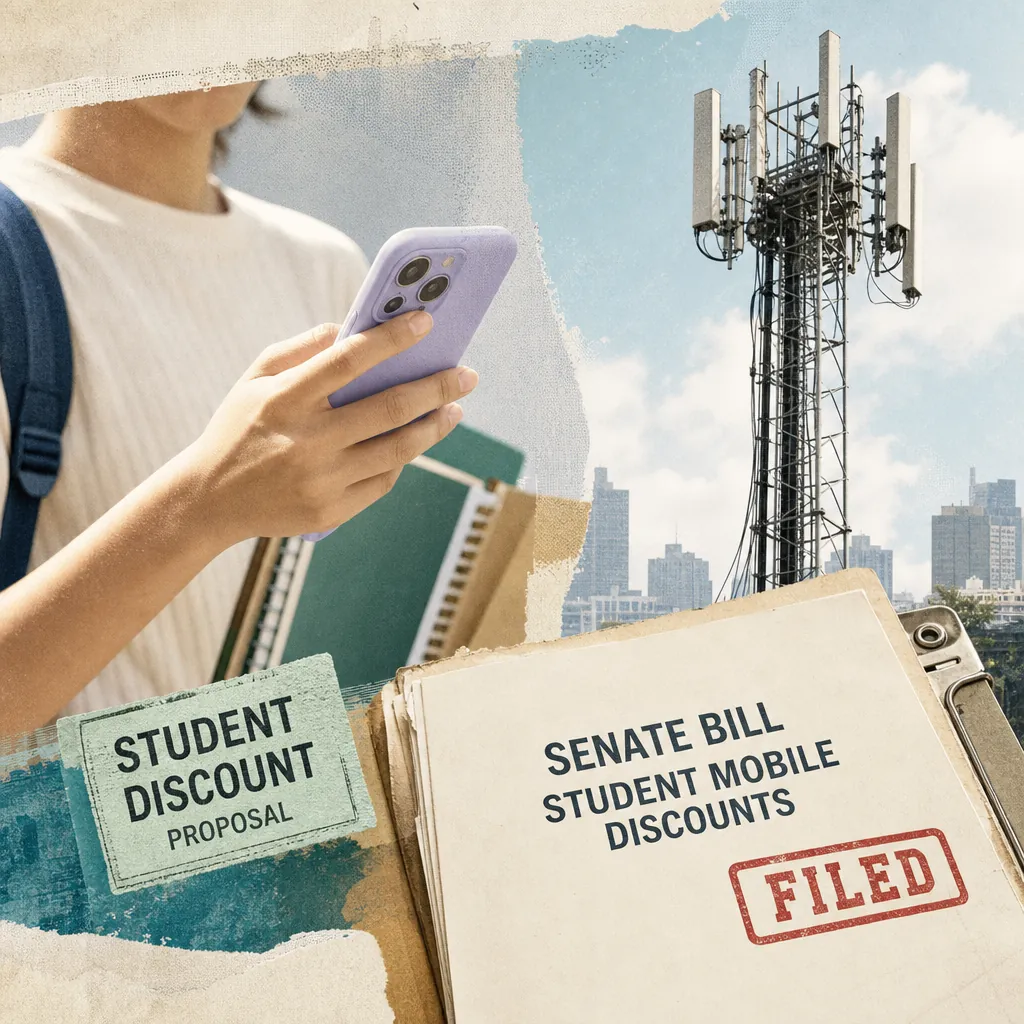
The day's conversation around Philippine telecommunications opened with a feel-good sports story and quickly pivoted into a policy fight over the price of mobile data. On Sunday, August 16, social media users first celebrated a Premier Volleyball League (PVL) win by PLDT's Kath Arado in front of her hometown crowd in Lanao del Norte. But that positive buzz was soon overtaken by a far more consequential development: Senator Erwin Tulfo's proposal to mandate a 20% discount on mobile load, postpaid plans, and internet packages for all Filipino students. The proposal, framed as a response to the frequent disruption of online classes due to bad weather, drew a flood of reactions on Facebook—many of them mocking, some genuinely frustrated. Meanwhile, the day's news coverage told a different story, one of an industry quietly repositioning itself for the future: PLDT announced plans for its largest data center yet, and Globe Telecom pushed for a national policy on shared underground fiber conduits. Together, these threads paint a picture of an industry caught between populist pricing pressure and the heavy capital demands of building the networks of tomorrow.
Key themes
- Student discount proposal sparks skepticism and debate — Senator Erwin Tulfo's call for a 20% student discount on mobile services dominated social media, with a Facebook post drawing 285 "haha" reactions and 126 comments, signaling public doubt about its feasibility.
- Sports success offers a positive brand halo — PLDT's PVL win, covered by Inquirer Online and Daily Tribune Online, generated modest but uniformly positive engagement, providing a counterpoint to pricing controversies.
- Industry pushes for shared infrastructure — Globe Telecom and the Philippine Chamber of Telecommunications Operators backed a national policy for shared underground conduits, aiming to reduce fiber cuts and speed up network rollout.
- PLDT eyes record data center expansion — PLDT's data center arm, Vitro Inc., is scouting sites in southern Luzon for a facility that could be the largest in the Philippines, with a planned capacity of 100 megawatts.
- Legislative pressure on telco pricing intensifies — Beyond Tulfo's proposal, Senator Loren Legarda filed the Sulit Load Act, which would cap prepaid rates and make load non-expiring, adding to the regulatory headwinds facing the industry.
- Rural economic hardship underscores connectivity gaps — A viral story about Benguet farmers discarding vegetables due to low prices drew 155 "sad" reactions, highlighting the economic context behind calls for cheaper data.
- Weather-related disruptions frame the affordability debate — The student discount proposal was justified by the frequent cancellation of in-person classes due to bad weather, implicitly linking network reliability to educational access.
- Industry consolidation and investment continue — News of the MPTC-SMC tollway merger, led by PLDT chairman Manuel V. Pangilinan, and Converge's AI center launch, showed the broader digital economy moving forward.
How the narratives stack
Dominant — Within the captured set, the student discount proposal was the clear leader in social engagement, with the main Facebook post generating 285 "haha" reactions, 68 likes, and 126 comments. This dwarfed the sports-related posts and reflected a public that is both skeptical of the proposal's practicality and frustrated with the cost of connectivity. The dominance of this narrative on social media, however, was not mirrored in the news articles, which focused more on infrastructure and business developments.
Counter-narrative — The news coverage offered a counter-narrative of industry progress and responsibility. Articles on Globe's conduit-sharing proposal and PLDT's data center expansion presented telcos as proactive players investing in network resilience and capacity. This contrasts with the social media portrayal of telcos as profiteering entities that need to be forced into giving discounts.
Emerging — A notable emerging theme is the industry's shift toward infrastructure sharing. The proposed $500-million submarine fiber system linking PLDT, Globe, and Converge, along with the conduit-sharing policy, signals a move away from duplicative builds toward collaborative investment. This could reshape competitive dynamics and improve network resilience, but it also raises questions about antitrust and the pace of deployment.
Suppressed — The story of rural economic hardship, exemplified by the Benguet farmers discarding vegetables, received significant emotional engagement (155 "sad" reactions) but was not directly connected to the telco conversation in the news media. This under-covered angle highlights the real-world consequences of connectivity gaps and could become a powerful narrative if linked to pricing debates.
Platform insights
- Facebook — Facebook was the primary battleground for the student discount proposal. The main post drew 285 "haha" reactions, 68 likes, and 126 comments, with a notable split between amusement and anger (7 "angry" reactions). The platform's comment sections became a space for debate, though specific usernames were not captured. A second variant with a link drew additional "love" and "care" reactions, showing a segment of users appreciated the senator's intent. The unrelated Benguet vegetable story also performed well on Facebook, with 155 "sad" reactions, indicating that users were processing multiple economic grievances simultaneously.
- Twitter — Twitter played a secondary role. The initial sports mention of PLDT drew 3,467 views, but the student discount proposal on Twitter received only 191 views and a single like. This suggests that Twitter was not the source of the policy conversation but rather a mirror for content originating on Facebook. The platform's real-time nature could amplify the issue if it gains traction, but for now, engagement is minimal.
- YouTube — No significant telco-related activity was observed on YouTube in the captured set. However, the platform could become relevant if the student discount proposal gains legislative momentum and attracts video commentary from news outlets or influencers.
Key voices and communities
- Sports fans and volleyball communities — A niche but active group that amplifies PLDT's positive brand associations through coverage of PVL games. The hometown victory of Kath Arado generated over 3,400 views on Twitter and positive articles in Inquirer Online and Daily Tribune Online. This community is not a driver of policy conversations but provides a steady stream of goodwill.
- Political figures and their amplifying networks — Senator Erwin Tulfo and his team are the primary drivers of the student discount proposal. The proposal's framing around educational access and weather disruptions resonates with many Filipinos, but the high "haha" reaction count suggests widespread skepticism about its feasibility. Senator Loren Legarda's Sulit Load Act adds another legislative voice pushing for lower rates.
- Industry executives and analysts — Figures like PLDT chairman Manuel V. Pangilinan and Globe's general counsel Froi Castelo are shaping the narrative around infrastructure investment and policy. Their statements on data center expansion and conduit sharing, covered by BusinessWorld and Malaya Business Insight, present a forward-looking industry focused on resilience and capacity.
- Rural and agricultural communities — The Benguet farmers' story, though not directly about telecom, represents a constituency that feels the economic pinch of high costs and poor infrastructure. Their emotional resonance on social media (155 "sad" reactions) makes them a potential ally in arguments for affordable connectivity, but also a group that could turn against telcos if they are seen as indifferent to rural needs.
Narrative streams
The Student Discount Proposal: A Populist Flashpoint
The day's most significant social media story was Senator Erwin Tulfo's proposal for a 20% discount on mobile prepaid load, postpaid plans, and internet packages for all Filipino students. The proposal was announced on August 16, with the senator citing the frequent disruption of online classes due to bad weather as a key justification. The main Facebook post, which included the full text and a link, generated 285 "haha" reactions, 68 likes, and 126 comments, along with 7 "angry" reactions. This reaction pattern suggests that many users viewed the proposal as unrealistic or performative, while a smaller segment expressed genuine frustration over connectivity costs.
The proposal taps into a real grievance: the high cost of mobile data in the Philippines, which is among the most expensive in Southeast Asia. For students who rely on prepaid load for online classes, any discount would be welcome. However, the public's skepticism is rooted in the practical challenges of implementing such a discount—how would it be verified, who would bear the cost, and would it actually lower prices or just shift the burden? The "haha" reactions reflect a belief that the proposal is more about political posturing than genuine reform.
For telcos, this proposal represents a direct threat to pricing flexibility. If it gains legislative traction, it could compress margins and force adjustments in bundling and promotional strategies. The industry's response, or lack thereof, will be closely watched. A proactive approach—such as highlighting existing student discounts or explaining the cost structure of prepaid load—could help shape the narrative. But any response must be careful not to appear dismissive of student needs, given the emotional weight of the issue.
The Sulit Load Act: A Parallel Legislative Push
Adding to the regulatory pressure, Senator Loren Legarda filed the Sulit Load Act, which proposes to lower regular prepaid call and text rates and make paid load non-expiring. The bill would require the National Telecommunications Commission (NTC), along with the Department of Information and Communications Technology, the Department of Trade and Industry, and the Philippine Competition Commission, to review and rationalize prepaid rates. Pending that review, the bill sets interim maximum rates of P0.50 per SMS, P2 per minute for domestic calls, and P3 per minute for mobile-to-landline calls.
This bill, covered by Manila Times Online, is more detailed than Tulfo's proposal and could have a more immediate impact if passed. It addresses consumer complaints about load expiration and unexpected deductions, which are common pain points. The bill's emphasis on consumer protection aligns with public sentiment, but it also raises concerns about the financial viability of telcos if rates are capped too low. The industry will likely push back, arguing that such caps could hinder network investment.
Infrastructure Sharing: The Industry's Answer to Cost Pressures
While legislators focus on pricing, the industry is moving toward a model of shared infrastructure to reduce costs and improve resilience. Globe Telecom, through the Private Sector Advisory Council's Digital Infrastructure sector, has proposed a national policy for underground conduit systems. The policy would establish common technical standards, designate a lead agency for deployment, and define maintenance responsibilities. Globe's general counsel, Froi Castelo, who also heads the Philippine Chamber of Telecommunications Operators, said the policy would "accelerate network rollouts, improve resilience to service disruptions and optimize investments."
This proposal comes in response to the more than 14,000 fiber cut incidents Globe recorded in 2025, caused by natural disasters, accidents, and theft. A unified national policy would reduce the fragmentation caused by differing local government regulations and make it easier to bury fiber underground, where it is less vulnerable to damage.
The news analysis from Malaya Business Insight highlighted a broader trend: the country's biggest telco rivals—PLDT, Globe, and Converge—are considering a $500-million shared submarine fiber system. This marks a significant shift from the traditional model of duplicating infrastructure. The logic is compelling: AI, cloud computing, and surging data traffic will require enormous capacity, and building separate submarine routes across the archipelago would be prohibitively expensive. Sharing the backbone could free up capital for other investments and improve redundancy, which is critical in a typhoon-prone country.
For the sector, this shift toward sharing is a double-edged sword. On one hand, it could lead to more efficient use of resources and better network resilience. On the other, it raises antitrust concerns and could reduce competition in the long run. Regulators will need to balance these interests.
PLDT's Data Center Ambitions
PLDT's data center arm, Vitro Inc., is scouting sites in southern Luzon for its next expansion, which could become the largest data center in the Philippines. According to PLDT chairman Manuel V. Pangilinan, the company has presented potential sites to its board. Vitro president Victor Genuino said the facility "has to be" 100 megawatts (MW), which would significantly add to the company's existing capacity of 62.4 MW across nine data centers.
The planned facility would cater to hyperscalers—large cloud providers like Amazon Web Services, Google, and Microsoft—as well as growing demand from artificial intelligence and enterprise customers. Southern Luzon is attractive because it can support the substantial power and water requirements of data centers, which are resource-intensive.
This expansion is part of a broader trend in the Philippines, which is becoming a hub for data centers in Southeast Asia. The government has been supportive, and the recent launch of Converge's AI and Scale-Up Center, in partnership with the Department of Trade and Industry, underscores the country's ambitions. For PLDT, this investment is a bet on the future of digital services in the country, but it also requires massive capital outlays that could strain finances if not managed well.
The Sports Halo: PLDT's Positive Brand Moment
The PVL On Tour stop in Tubod, Lanao del Norte, provided a rare opportunity for fans outside Manila to watch PLDT play live. Kath Arado, a six-time PVL Best Libero, had 19 digs as PLDT swept Akari in four sets. Arado, who hails from Iligan, was visibly emotional playing in front of her family. "It's not often that people outside Manila get to watch us play live," she said. "I also really wanted my younger sibling to see me, especially because they're also a volleyball player. I want to inspire them through the way I play."
The coverage, which appeared in Inquirer Online and Daily Tribune Online, framed the win as a personal triumph and a community event. The social media engagement was modest—3,467 views on Twitter and two likes on Facebook—but uniformly positive. This sports halo provides a counter-narrative to the pricing controversies, reinforcing PLDT's connection to local communities and Filipino pride.
For the brand, this is a low-cost, high-authenticity opportunity. Amplifying such stories in regional media could build goodwill that cushions against negative narratives. However, the low engagement ceiling suggests it is not a high-leverage channel for shifting public opinion on policy issues.
Rural Hardship and the Connectivity Gap
A viral story about farmers in Benguet discarding vegetables due to low prices and high transport costs drew 155 "sad" reactions on Facebook, along with 46 likes and 24 shares. While not directly about telecom, the story highlights the economic hardship that underpins the affordability debate. Farmers unable to reach trading centers face similar challenges to students unable to attend online classes—both are constrained by infrastructure gaps.
This narrative could become a powerful argument for expanding connectivity in rural areas. If telcos are seen as profiting while rural communities struggle, they could face backlash. Conversely, framing connectivity investments as part of a broader digital inclusion strategy could preempt criticism. The "Konektadong Pinoy" narrative, which emphasizes universal access, is relevant here.
Conversation trajectory
The student discount proposal is likely to gain momentum as it moves through the legislative process. Senate committee hearings, expected within the next 3-6 weeks, will generate substantial coverage and public commentary. The conversation volume could grow 2-3 times within 2-3 weeks as the proposal is debated. Telcos should prepare proactive messaging that acknowledges affordability concerns while emphasizing network investment and existing programs.
The Sulit Load Act, if it progresses, could also become a major talking point. Its detailed provisions on rate caps and load expiration may attract more serious policy discussion than Tulfo's proposal, which is seen as more symbolic.
On the infrastructure front, the proposed submarine fiber system and conduit-sharing policy are likely to be discussed in industry forums and possibly in regulatory proceedings. These developments could reshape the competitive landscape and improve network resilience, but they may also raise antitrust questions.
The typhoon season, which peaks from September to November, represents a vulnerability window. If network outages occur during this period, the student discount proposal's framing around weather disruptions could intensify, linking network reliability to educational access. Telcos should be prepared to respond to any service interruptions with transparency and speed.
Trigger events to watch: Senate hearings on the student discount bill, the progress of the Sulit Load Act, announcements on the submarine fiber system, and any major weather-related network outages.
Response guidance
For communicators in the telecommunications sector, the immediate priority is to prepare a comprehensive response framework for the student discount proposal. This should include factual background on existing affordability programs, the cost structure of prepaid load, and the potential impact of mandated discounts on network investment. The tone should be neutral and informative, avoiding any language that could be seen as dismissive of student needs.
On social media, particularly Facebook, monitor comment sections on posts about the proposal. The high "haha" reaction count suggests that engaging directly with the mockery could backfire. Instead, focus on sharing positive stories about network investment and community engagement, such as the PVL win, to build reputational capital.
For the Sulit Load Act, prepare a position statement that acknowledges consumer concerns about load expiration and unexpected deductions while explaining the industry's perspective on pricing. Emphasize the value of network quality and coverage, which are also important to consumers.
On infrastructure sharing, proactively communicate the benefits of shared conduits and submarine cables, such as reduced fiber cuts and faster rollout. This positions the industry as forward-thinking and collaborative, countering the narrative of profiteering.
Finally, incorporate rural economic context into public affairs messaging. Highlight investments in agricultural areas and digital inclusion initiatives to preempt criticism that telcos are urban-centric. The "Konektadong Pinoy" narrative can be a useful framework.
Sensitive topics to navigate: the specific 20% discount figure, which should be addressed neutrally; the perceived mockery of the proposal, which requires a careful balance between engagement and restraint; and the Benguet farmer story, which should not be opportunistically linked to telecom pricing.
Key messages to consider: "Connectivity affordability remains a priority, and existing programs already provide various options for students and budget-conscious consumers." "Continued investment in network infrastructure and service quality remains the foundation for delivering value to all customers." "We welcome constructive dialogue with policymakers and stakeholders on how to improve connectivity access for Filipino students." "Our commitment to Filipino communities extends beyond connectivity, as demonstrated through sports partnerships and community support initiatives."
See the full picture behind today's signals.
This report draws from Media Meter's MediaWatch, our real-time monitoring engine tracking 2,470+ Philippine sources across print, broadcast, digital, and social. Explore how the platform turns raw coverage into decision-grade intelligence, then see how it's configured for teams like yours — whether you're in PR agencies, corporate comms, government, or marketing.
Want more? Browse our Report Library for sector and crisis intelligence, or request a demo and we'll have your brand set up before the call.
Want this kind of intelligence on your brand?
This brief is built on the same MediaWatch methodology that runs continuously across every brand we monitor. See your competitive landscape, Impact Score, and narrative trajectory in a 30-minute demo.