Trump Press Ban Backfires as Networks Halt Coverage
US television networks suspended pooled White House coverage after President Trump barred CNN, MS NOW and Politico, leaving his own remarks inaudible. The standoff dominated a day of heavy political and economic news.
President Donald Trump's decision to bar three news organizations from the White House produced an immediate, visible consequence on Monday: the five major US broadcast networks refused to provide pooled television coverage of his events, and the president's own remarks became inaudible as a result.7182
The standoff began Friday, when Trump announced on his Truth Social platform that reporters from CNN, MS NOW and Politico would be denied White House credentials over what he called "FAKE NEWS."4461 The three outlets filed a joint lawsuit on Monday arguing the ban violates the First Amendment, the US constitutional guarantee of press freedom.5969 In response, ABC, CBS, CNN, Fox and NBC — which normally rotate responsibility for filming the president on behalf of all television outlets, a system known as the "pool" — said they would suspend that arrangement in solidarity.71 CNN had been scheduled to serve as the pool network on Monday.82
The practical effect was immediate. At a ribbon-cutting for a new White House helipad, Trump spoke without a pool microphone, and the White House's own feed carried only the drone of a parked Marine One helicopter.7682 Even Newsmax, one of the few networks to air the event, acknowledged on air that the situation was "one example" of the president's press restrictions "backfiring just a little bit."76 The White House press corps, in an opinion piece, called on other reporters to follow the banned outlets out the door if the ban continued.59
Key themes
- Five networks suspend pooled White House coverage in protest. ABC, CBS, CNN, Fox and NBC jointly halted the rotating pool arrangement that provides shared television footage of presidential events, saying no administration should restrict a news organization over its reporting.71
- Trump's helipad remarks go unheard without pool audio. With no pool microphone present, the White House's official feed captured only helicopter noise, and the president was inaudible during the event.7682
- CNN, MS NOW and Politico sue over credential revocation. The three outlets filed a joint lawsuit Monday arguing the ban violates the First Amendment, escalating a years-long conflict between Trump and the press.5969
- A First Amendment attorney predicts the administration will lose in court. Aaron Terr of the Foundation for Individual Rights and Expression called the action "blatantly unconstitutional," while the White House said it would not back down.44
- The White House promotes its own news app amid the ban. The administration pitched an official app as a way to receive news "straight from the Trump Administration," drawing comparisons to state media in authoritarian countries.81
- Trump's approval rating falls to 32 percent, the lowest of his career. A Reuters/Ipsos poll found only 32 percent of Americans approved of his job performance, with just 17 percent approving of his handling of the cost of living.4657
- Paramount settles antitrust suit, clearing path for $111 billion Warner Bros. Discovery acquisition. The settlement with California and 11 other states removes the last major regulatory obstacle to a deal that would combine two major studios, HBO, CBS, CNN and dozens of other networks under the Ellison family.6583
- A cut fibre cable halts flights at major US East Coast airports. An Amtrak construction crew accidentally severed a fibre line in New Jersey, forcing the Federal Aviation Administration to pause flights at Newark, JFK, LaGuardia, Teterboro, Philadelphia and Boston, snarling more than 1,000 flights.6095
How the narratives stack
Dominant: The press-ban standoff and the networks' response dominated Monday's coverage across the items captured here. The story had multiple distinct developments — the lawsuit, the pool suspension, the inaudible helipad event, the White House app promotion — each generating its own coverage. The Reuters/Ipsos poll showing Trump at 32 percent approval, his lowest ever, added a second dimension, linking the press conflict to broader dissatisfaction over the cost of living and the ongoing war with Iran.4657 Within the captured set, this cluster of stories drew the most items and the heaviest coverage value, with individual pieces carrying estimated advertising-equivalent values ranging from roughly $60,000 to over $1.9 million.4682
Counter-narrative: The Paramount-Warner Bros. Discovery settlement offered a competing frame for the day's media news — consolidation rather than confrontation. The $111 billion deal, which would put two movie studios, HBO, CBS, CNN and dozens of other networks under Larry and David Ellison, cleared its last major regulatory hurdle when Paramount settled with California and 11 other states.6583 The settlement terms require Paramount to spend at least $300 million more each year on domestic film production and to release 30 movies in each of the first two years after the deal closes, rising to 32 in the following three years, with at least four independent films and 20 percent blockbusters annually.83 The counter-narrative here is that while the White House was fighting the press, the largest media merger in years was quietly proceeding — and CNN, one of the banned outlets, would end up under Ellison ownership.65
Emerging: The aviation outage demonstrated the fragility of aging US air traffic control infrastructure. The FAA halted traffic at some of the busiest airports in the country after a telecom circuit failed and a backup fibre cable was accidentally cut by a construction crew.60 The incident occurred on the same day that 130 world leaders were arriving in New York for the United Nations General Assembly, amplifying its visibility.60 Congress had awarded $12.5 billion for air traffic control upgrades the previous year, and the episode raised questions about whether that investment was reaching the systems that need it most.60 Separately, the Trump administration moved to change a Biden-era policy that required airlines to refund travelers for cancellations and significant delays, exempting carriers from 10 types of disruptions deemed "not within their control."70
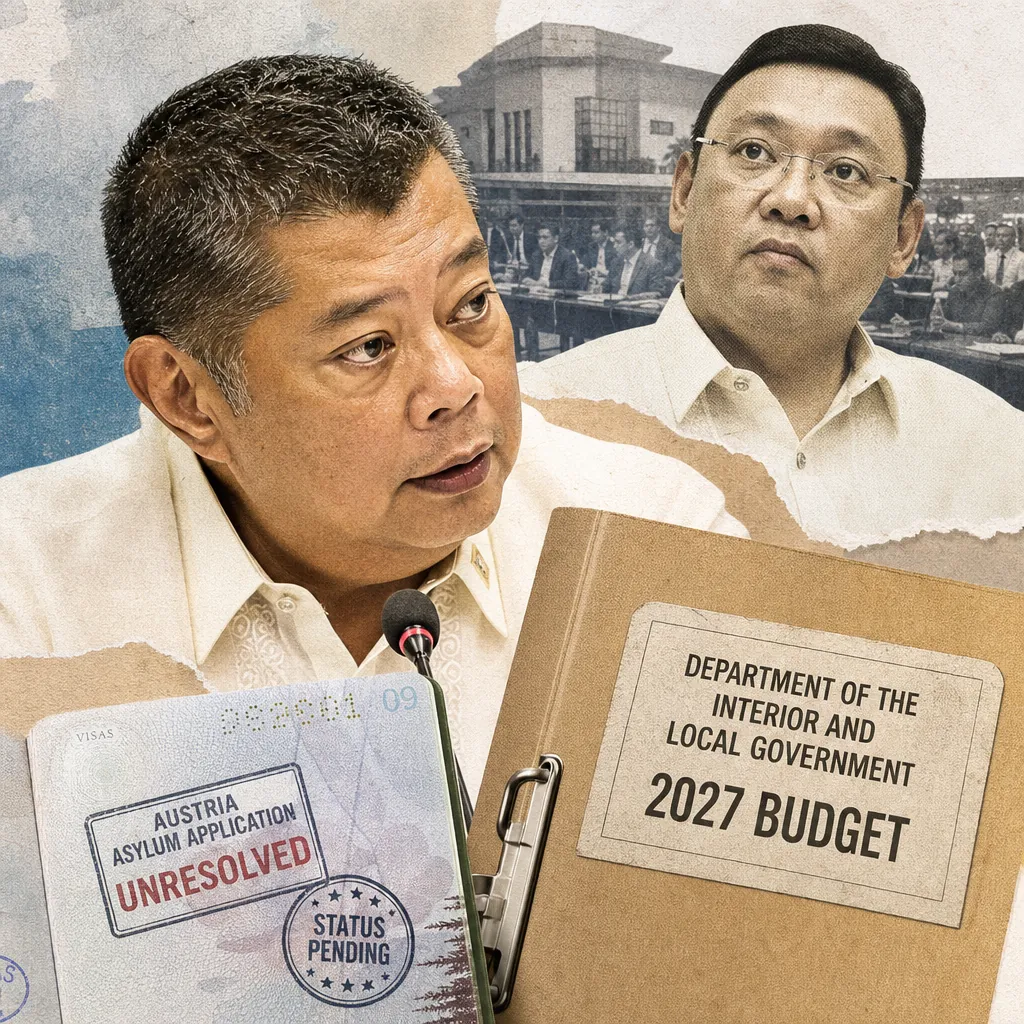
Under-covered: Several significant stories in the captured set received less attention than the press-ban standoff. The Department of Migrant Workers appealed for additional 2027 funding, citing global tensions and the need to prepare for their impact on overseas Filipino workers; the department and the Overseas Workers Welfare Administration jointly requested P37 billion but the Department of Budget and Management reduced this to P11.62 billion.21 In the Philippines, the Department of Agriculture backed a proposal to set a P210-per-kilo floor price for live hogs as farmgate prices fell to P120 to P160 per kilo, but Secretary Francisco Tiu Laurel Jr. said no existing law gives the agency authority to impose such a floor.23 The Department of Energy said it did not expect fuel price spikes similar to March 2026, when the US-Iran war began, but also did not expect costs to return to pre-war levels by year's end, with gasoline set to rise by over P4 per liter, diesel by over P8 per liter and kerosene by at least P6 per liter.6 These stories carried substantial coverage value — the DOE item alone was valued at over P712,000 — but did not generate the volume of items that the press-ban story did.6
Platform insights
Facebook: The platform carried a mix of official statements and viral claims. Senator Rodante Marcoleta used Facebook to announce he would no longer participate in Vice President Sara Duterte's impeachment trial if the court "desecrates the Constitution."13 The Philippine Eagle Foundation posted about a forest fire that destroyed an eagle nest in Surigao del Norte, highlighting the threat to the critically endangered national bird.15 A police clarification about a Bukidnon student's death noted that a viral rumor about bullying had spread on social media before being refuted by hospital records.20
X (formerly Twitter): The platform served as the primary channel for real-time official statements during the aviation outage. US Department of Transportation Secretary Sean Duffy posted that an Amtrak construction crew had accidentally cut a fibre line in New Jersey, causing the telecom outage that forced the FAA to pause flights.95 The White House used X to promote its official news app, drawing widespread criticism and comparisons to state media.81
Reddit and YouTube: The captured items did not include specific engagement data from these platforms, though the broader conversation around the press ban and the aviation outage generated significant discussion across social channels. The absence of platform-specific engagement figures in the monitoring writeup means the distribution of attention across these platforms cannot be characterized from the available data.
Key voices and communities
US broadcast networks and press freedom organizations: The five major networks — ABC, CBS, CNN, Fox and NBC — acted collectively, issuing a joint statement that "the public has a vital interest in receiving accurate, independent information about its government."71 The Foundation for Individual Rights and Expression, a nonprofit that defends First Amendment rights, predicted the administration would lose in court.44 The White House press corps called on other reporters to follow the banned outlets out the door.59
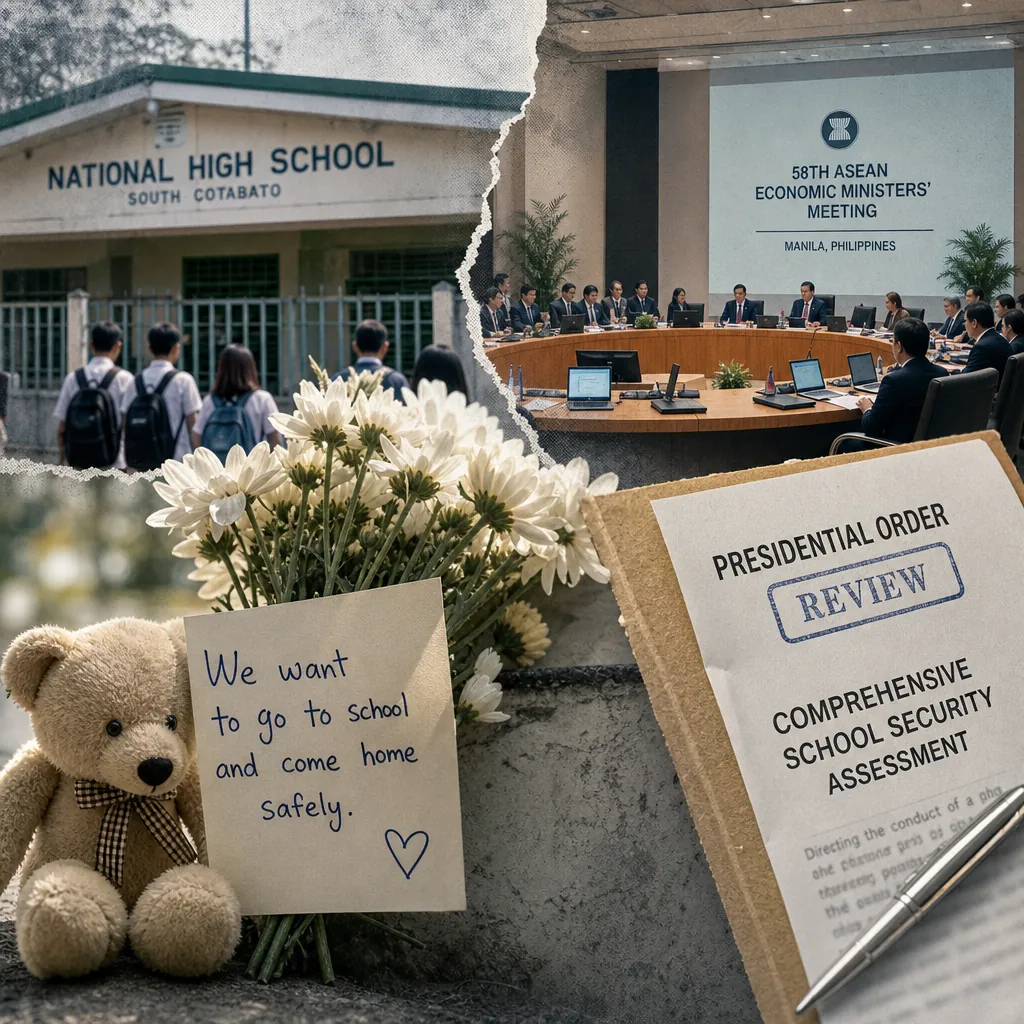
Philippine government officials and agencies: Energy Secretary Sharon Garin addressed fuel price increases in an ambush interview at the Batasang Pambansa, saying the country cannot control oil prices amid Middle East volatility.6 Agriculture Secretary Francisco Tiu Laurel Jr. backed a hog floor price proposal while acknowledging the agency lacks legal authority to impose it.23 Interior Secretary Jonvic Remulla visited Banga National High School after a shooting left three students dead, calling for tighter controls on children's social media access and firearms.90 The Department of Education announced a School Digital Safety Campaign in response to campus violence.98
Philippine protest organizers and civil society: Bagong Alyansang Makabayan (Bayan) secretary-general Mong Palatino said the Sept. 21 anti-corruption rally near Mendiola was a success despite "fear-mongering" and "overkill measures" from police and Malacañang.10 The National Capital Region Police Office reported the rallies were peaceful, with more than 17,000 police officers deployed since Saturday night.11 The Manila Police District estimated the crowd at Liwasang Bonifacio at 2,200 when the gathering ended.79
International news agencies: Bernama, the Malaysian national news agency, signed a memorandum of understanding with Russia's TASS to strengthen cooperation in news and multimedia content exchange, professional expertise and emerging technologies.1 The Organisation of Asia-Pacific News Agencies (OANA) also signed an agreement with the Global Fact-Checking Network to improve fact-checking and enhance the reliability of information in the digital space.4
Sports communities: Malaysia's national football team, known as Harimau Malaya, prepared for the FIFA ASEAN Cup 2026 in Indonesia, with interim coach Tan Cheng Hoe describing the addition of naturalized players Bergson da Silva and Manuel Hidalgo and heritage player Brad Tapp as a "new breath" for the squad.2 Bergson described his call-up as a "dream come true" after more than five years playing in Malaysia.16 Three players were ruled out due to injuries and replaced.12 Vietnam's goalkeeper Lê Giang Patrik expressed pride at being called up again.18
Narrative streams
US networks suspend pooled coverage after White House press ban
The five major US broadcast networks — ABC, CBS, CNN, Fox and NBC — suspended their rotating pool coverage of the White House on Monday, a rare collective action by fiercely competitive organizations.71 The pool system, in which one network films presidential events on behalf of all television outlets, is the primary mechanism by which the public sees and hears the president. CNN had been assigned to serve as the pool network on Monday but was unable to do so after Trump revoked its credentials, along with those of MS NOW and Politico, over the weekend.82
The consequences were visible immediately. At a helipad ribbon-cutting on the South Lawn, Trump spoke without a pool microphone, and the White House's official feed carried only the drone of a stationary Marine One helicopter.76 Newsmax host Bianca de la Garza remarked on air: "Obviously the ramifications are right here. Can't hear what the president's saying."76 The White House later promoted its own news app on X, pitching it as a way to receive "the news that matters most — straight from the Trump Administration," drawing criticism that it was behaving like state media.81
CNN, MS NOW and Politico filed a joint lawsuit Monday seeking to restore their access, arguing the ban violates the First Amendment.5969 Aaron Terr, director of public advocacy at the Foundation for Individual Rights and Expression, predicted the administration "will not fare well in court because its action here is blatantly unconstitutional."44 The White House told Fox News Digital that Trump is not backing down.44
This is not Trump's first attempt to bar journalists from the White House. During his first term, he sought to ban CNN's Jim Acosta by revoking his credentials after a contentious news conference about the 2018 midterm elections; CNN filed a lawsuit then as well, arguing the action would create a "dangerous chilling effect" for journalists covering elected officials.61
The read for the sector: news organizations that depend on White House access for coverage now face a choice between accepting restrictions on their reporting and losing the ability to document the president's activities. The pool suspension demonstrated that collective action can impose costs on the administration — Trump's own message went unheard — but it also means the public loses independent television coverage of the presidency. For media companies, the episode raises questions about how much access is worth and what alternatives exist when official channels close.
Trump approval falls to career low as cost-of-living concerns dominate
A Reuters/Ipsos poll released Monday found that only 32 percent of Americans approved of Trump's job performance, the lowest level of his political career across both terms.4657 The four-day poll, conducted among 1,277 US adults, showed a three-point drop from the previous week and a decline from 47 percent approval in the hours after he was first sworn in in January 2025.4657
Approval among Republicans fell to 73 percent from 82 percent a week earlier, suggesting dissatisfaction within his own party.57 Only 17 percent of respondents approved of his handling of the cost of living, which Americans identified as the top issue determining how they will vote in the November 3 midterm elections, when Republicans are defending narrow congressional majorities.57 The poll closed on Sunday, before the press-ban standoff escalated on Monday.57
The decline reflects public frustration with the ongoing US-Iran war, now in its seventh month, and its effect on fuel prices. Trump told a Fox News reporter over the weekend that he was weighing whether to "wipe Iran out," describing his options as "wiping Iran out, letting them rot economically, or making a deal."74 The war has killed at least 18 US service members and thousands of Iranians, and has rattled the global economy.74 Gas costs about $4.50 per gallon in the US, and an opinion column noted that Americans are struggling to afford meat while the president focuses on banning news outlets.89
The read for the sector: the poll numbers suggest that the administration's confrontations with the press are not addressing the economic concerns that matter most to voters. For media organizations covering the midterms, the cost-of-living issue and the Iran war will likely dominate campaign coverage, while the press-freedom conflict becomes a secondary storyline that nonetheless shapes how the administration interacts with journalists.
Paramount clears final hurdle for $111 billion Warner Bros. Discovery acquisition
Paramount Skydance reached a settlement Monday with California and 11 other states that had sued to block its $111 billion acquisition of Warner Bros. Discovery, removing the last major regulatory obstacle to one of the largest media mergers in history.6583 The settlement includes commitments to bring more film production to the US — spending at least $300 million more each year on domestic production — and to increase annual film releases progressively after the deal closes.83
Under the agreement, Paramount will produce 30 movies in each of the first two years after the deal closes, rising to 32 in the following three years. At least four of those films each year must be independent films, and at least 20 percent must be blockbusters.83 California Attorney-General Rob Bonta, who led the antitrust case, had repeatedly said he wanted "structural" changes; the settlement terms were characterized as giving up "not much" in exchange for clearing the deal.65
The combined company would control two major movie studios, HBO, and television networks including CBS, CNN and dozens more, all under the ownership of Larry and David Ellison.65 The Ellison family, one of the world's wealthiest, will have combined control of major media assets spanning film, television and streaming.65
The read for the sector: the consolidation puts a significant share of US media under a single family's control, raising questions about editorial independence at outlets including CNN — one of the networks currently banned from the White House. For advertisers and content producers, the deal creates a larger single buyer for programming and advertising inventory, which could shift negotiating dynamics across the industry. For journalists at the acquired properties, the transition to new ownership introduces uncertainty about editorial direction and staffing.
Aviation outage exposes aging US air traffic control infrastructure
The Federal Aviation Administration halted flights at some of the busiest airports on the US East Coast on Monday after a telecom circuit failed and a backup fibre cable was accidentally cut by an Amtrak construction crew in New Jersey.6095 The ground stop affected Newark Liberty International, John F. Kennedy International, LaGuardia, Teterboro, Philadelphia International and Boston Logan, snarling more than 1,000 flights.60
The outage occurred on the same day that 130 world leaders and dozens of ministers were arriving in New York for the annual high-level meeting of the United Nations General Assembly.60 FAA Administrator Bryan Bedford said a replacement circuit had also failed, and flights resumed at LaGuardia and Philadelphia while remaining paused at Newark, JFK and Teterboro.6095 Norwegian Prime Minister Jonas Gahr Støre was among those affected, with his flight from Ottawa to New York cancelled.53
The incident demonstrated the fragility of the aging US air traffic control system, which Congress awarded $12.5 billion to upgrade the previous year.60 The FAA did not immediately respond to requests for comment.95
Separately, the Trump administration announced it was changing a Biden-era policy that required airlines to refund travelers for cancellations and significant delays, exempting carriers from 10 types of disruptions deemed "not within their control."70 The original policy, part of the FAA Reauthorization Act of 2024, required refunds when flights were cancelled or significantly delayed.70
The read for the sector: airlines and airports face renewed scrutiny over infrastructure resilience, while the refund policy change shifts financial risk from carriers to passengers for certain types of disruptions. For travelers, the combination of an aging system and reduced refund protections means more uncertainty when flights are disrupted. For the aviation industry, the outage highlights the gap between funding allocated for modernization and the systems actually in place.
Philippine fuel prices rise amid Middle East volatility
Energy Secretary Sharon Garin said Monday that the Philippines does not expect fuel price spikes similar to March 2026, when the US-Iran war began, but also does not expect costs to return to pre-war levels by the end of the year.6 Gasoline prices are set to rise by over P4 per liter, diesel by over P8 per liter and kerosene by at least P6 per liter.6
Garin said the country cannot control oil prices, especially since the market is volatile due to renewed tensions in the Middle East. "So it's big compared to the recent weeks, but unfortunately it's not within our control because even Saudi Arabia, all the other countries..." she said in an ambush interview at the Batasang Pambansa.6 The Department of Energy does not expect prices to rise by around P20 per liter, the level seen during the March spike.6
In Thailand, Deputy Prime Minister and Finance Minister Ekniti Nitithanprapas said the government may consider targeted reductions in fuel excise tax, particularly for E20 (ethanol blend) and B20 (biodiesel blend) fuels, if necessary to ease the impact of high energy prices while supporting the agricultural sector.19 He said the government had several tools to manage energy prices, including using the Oil Fuel Fund, seeking cooperation from oil refineries to use excess refining margins to ease retail prices, and reducing fuel excise tax.19
The read for the sector: transport operators, logistics companies and consumers across Southeast Asia face higher fuel costs that will feed into the price of goods and services. For governments, the challenge is balancing support for vulnerable sectors against the fiscal cost of subsidies and tax cuts. The Philippines' admission that it cannot control prices contrasts with Thailand's consideration of targeted tax relief, highlighting different approaches to the same regional pressure.
Philippine anti-corruption protests mark Martial Law anniversary
Thousands of protesters marched from Liwasang Bonifacio to the vicinity of Mendiola Peace Arch in Manila on Monday to mark the 54th anniversary of the declaration of Martial Law and to demand accountability over a multibillion-peso flood control corruption scandal.10 The Manila Police District estimated the crowd at 2,200 when the gathering ended at 4:53 p.m., after initially counting 1,100 at the start.79
Bagong Alyansang Makabayan (Bayan) secretary-general Mong Palatino said the rally was a success despite "fear-mongering" and "overkill measures" from police and Malacañang. "No overkill security measures and spreading of fear can stop the people's demand for truth and justice," he said.10 The National Capital Region Police Office reported the rallies were peaceful, with more than 17,000 police officers deployed since Saturday night.11 NCRPO chief Brig. Gen. Christopher Abraha said the preparations and cooperation of organizers contributed to the peaceful conduct of the demonstrations.11
The protests also marked the second iteration of the "Trillion Peso March," which emerged last year amid a corruption controversy surrounding flood control projects.11 In Bataan, artist and novelist Levy Balgos dela Cruz spoke about Martial Law abuses and the continuing culture of impunity before about 50 young people, questioning how long those implicated in the flood control scandal would stay in jail.14
The read for the sector: the protests signal sustained public attention on corruption and accountability, which will keep pressure on government agencies and contractors involved in infrastructure projects. For media covering the story, the challenge is maintaining momentum on a complex scandal that involves multiple agencies and jurisdictions. The National Bureau of Investigation served a subpoena on the Department of Public Works and Highways regional office in Davao, seeking documents related to some 50 allegedly questionable flood-control and road projects, indicating the investigation is expanding.54
Sara Duterte impeachment trial examines business interests
The 27th day of Vice President Sara Duterte's impeachment trial focused on her business interests, with Securities and Exchange Commission Director Gerardo del Rosario testifying that the SEC has not received any document showing she transferred ownership of businesses linked to her to other people.75 Del Rosario confirmed that Duterte was listed as an incorporator of Metro City Chow Foods Corp. in 2016 and served on its board of directors from 2018 to 2025, including after she became vice president in 2022.7597
Del Rosario said the SEC's only basis for the disappearance of Duterte's name from subsequent General Information Sheets was the filings themselves, and there was no separate legal document proving a formal transfer of ownership.32 He said the Senate should decide whether Duterte violated the constitutional ban on the vice president engaging in any business.97 Senate President Sherwin Gatchalian asked whether Duterte's membership on the company's compensation committee meant she had direct participation in management.97
House prosecution spokesperson Ace Barbers said Jaime T. Cruz, identified as an incorporator of the same businesses, may be called as a witness.64 The prosecution still has several witnesses and documents to present.64 Meanwhile, detained Senator Rodante Marcoleta said he no longer intends to join the impeachment trial, citing constitutional concerns, and reiterated his opposition to Senator Francis Escudero's designation as presiding officer.13
The read for the sector: the trial's focus on corporate records and constitutional interpretation puts the SEC in an unusual position of providing factual testimony while deferring legal conclusions to the Senate. For businesses, the case highlights the importance of maintaining clear documentation of ownership changes, particularly for individuals holding public office. The outcome will set a precedent for how the constitutional ban on officials engaging in business is interpreted and enforced.
Conversation trajectory
US press-ban litigation (next 2–4 weeks): The lawsuit filed by CNN, MS NOW and Politico will proceed through federal court, with the administration expected to argue it has discretion over White House credentials. A ruling could come within weeks if the court expedites the case, as it did during the 2018 Acosta dispute. Watch for whether other news organizations join the suit or file supporting briefs, and whether the networks maintain their pool suspension if the ban continues.
Trump approval and midterm dynamics (through November 3): The Reuters/Ipsos poll showing 32 percent approval will be followed by further surveys as the midterm elections approach. Watch for whether the cost-of-living issue continues to dominate voter concerns and whether Republican approval continues to erode. The Iran war's trajectory — whether it escalates, de-escalates or continues at current intensity — will shape both fuel prices and public sentiment.
Paramount-Warner Bros. Discovery integration (next 3–6 months): With the settlement clearing regulatory obstacles, Paramount can begin finalizing the acquisition. Watch for announcements about leadership changes at acquired properties, particularly CNN, and whether the production commitments in the settlement are implemented as stated. The deal's closure will reshape the competitive landscape for streaming, film production and television news.
Philippine fuel prices (next 4–6 weeks): The announced increases of over P4 per liter for gasoline and over P8 for diesel will take effect in the coming weeks. Watch for whether the Department of Energy adjusts its forecasts, whether the government introduces subsidies or other relief measures, and how transport groups respond. The situation in the Middle East will be the primary variable.
Philippine impeachment trial (next 2–4 weeks): The prosecution is expected to present additional witnesses, potentially including Jaime T. Cruz. Watch for whether Marcoleta follows through on his threat to withdraw from the trial and whether the Senate addresses his constitutional objections. The trial's outcome will have implications for the 2028 presidential election.
Trigger events: A federal court ruling on the press-ban lawsuit; the next Reuters/Ipsos poll; the formal closure of the Paramount-Warner Bros. Discovery deal; the next Philippine fuel price adjustment; and any escalation or de-escalation in the US-Iran war.
Response guidance
For news organizations covering the White House: Assess your organization's dependence on official access and develop contingency plans for covering the presidency without pool credentials. The networks' collective action demonstrated that coordinated responses can impose costs, but also that the public loses independent coverage when access is restricted. Consider whether alternative channels — court filings, congressional testimony, leaked documents — can substitute for direct access.
For media companies evaluating consolidation: The Paramount-Warner Bros. Discovery deal shows that large acquisitions can clear regulatory hurdles with production and release commitments rather than structural changes. If your organization is involved in or affected by consolidation, review the settlement terms to understand what commitments are being made and how they might affect competitive dynamics.
For communicators in the aviation sector: The East Coast outage and the refund policy change put infrastructure resilience and passenger protections in the spotlight. Prepare messaging that addresses both the immediate disruption and the longer-term investment needed to prevent similar incidents. Be transparent about what caused the outage and what steps are being taken to prevent recurrence.
For Philippine government agencies and businesses: The fuel price increases will affect transport costs, food prices and consumer spending. Prepare communications that explain what is driving the increases, what relief measures are available, and what consumers and businesses can do to manage the impact. Avoid blaming external factors without acknowledging domestic policy options.
For organizations monitoring the Philippine impeachment trial: The focus on corporate records and constitutional interpretation means that businesses with government-linked owners or directors should review their documentation. Ensure that ownership changes are properly recorded and that public officials' business interests are accurately disclosed.
For communicators in the education sector: The Banga National High School shooting and the Department of Education's digital safety campaign highlight growing concerns about children's online exposure and campus security. Prepare messaging that addresses both physical safety measures and digital literacy, and coordinate with law enforcement and local government on prevention efforts.
For media organizations covering protests and civil unrest: The Manila rallies were peaceful, but the organizers' criticism of police "overkill" and the heavy deployment of 17,000 officers show that the balance between security and civil liberties remains contested. Report on both the organizers' demands and the government's response, and verify crowd estimates from multiple sources.
See the full picture behind today's signals.
This report draws from Media Meter's MediaWatch, our real-time monitoring engine tracking 2,470+ Philippine sources across print, broadcast, digital, and social. Explore how the platform turns raw coverage into decision-grade intelligence, then see how it's configured for teams like yours — whether you're in PR agencies, corporate comms, government, or marketing.
Want more? Browse our Report Library for sector and crisis intelligence, or request a demo and we'll have your brand set up before the call.
Want this kind of intelligence on your brand?
This brief is built on the same MediaWatch methodology that runs continuously across every brand we monitor. See your competitive landscape, Impact Score, and narrative trajectory in a 30-minute demo.