Remulla Retracts Roque Asylum Claim as DILG Budget Faces Scrutiny
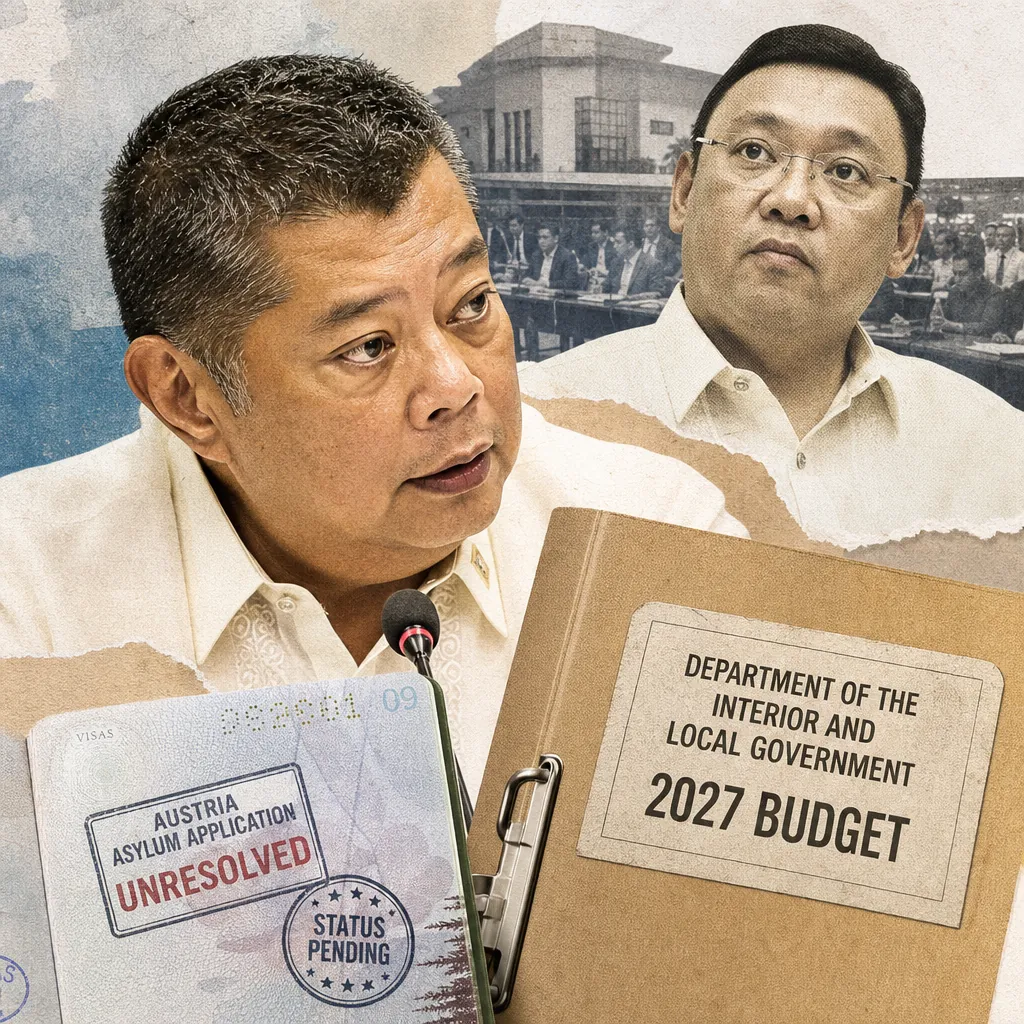
Interior Secretary Jonvic Remulla admitted he was wrong about Harry Roque's asylum status, saying the application remains unresolved in Austria. The correction came during House deliberations on the DILG's 2027 budget, where lawmakers also pressed the agency on school shootings and free WiFi irregularities.
The Conversation
Interior Secretary Jonvic Remulla told reporters at the Batasang Pambansa complex on Tuesday evening that he had been wrong when he said former presidential spokesperson Harry Roque's asylum application in Austria had been denied, correcting a claim he first made on September 15.1 "I was wrong," Remulla said after the House of Representatives finished plenary deliberations on the Department of the Interior and Local Government's proposed 2027 budget, adding that the application has been pending for nine months against a normal processing period of about six.29 Roque had called the earlier statement "fake news" and insisted he was still waiting for Austrian authorities to decide.1
The correction surfaced in two languages and across at least three outlets. Manila Bulletin's Filipino-language report carried the admission under the headline "I was wrong!"1 while the Inquirer's global desk framed the status as "in limbo, not denied."29 A separate Inquirer report quoted Camarines Sur Rep. Arnie Fuentebella, who was defending the DILG's spending plan, telling lawmakers that Roque's application had passed the normal six-month course but was "neither approved or disapproved."70 Roque, wanted in the Philippines on human trafficking charges tied to a Philippine offshore gaming operator hub, has not disclosed which country he is seeking safe haven in.70
The asylum correction was one thread in a day of DILG-related scrutiny. Remulla also told reporters that the government is pursuing people who influenced students to plan school shootings, saying four other plots had been foiled and one suspect was nearly caught.12 He described the Banga National High School shooter in South Cotabato as "a good kid" who had been exposed to the deep web and Satanism, an honor student who was neither bullied nor a bully.8 Separately, the father of the Grade 9 student involved in the September 18 shooting was removed from his post as a Disaster Risk Reduction and Management personnel at the Department of Education and placed under investigation, according to Rep. Maria Carmen Zamora, who disclosed the move during House budget deliberations.87 Authorities have said the student obtained the gun used in the attack, which killed three students, from his father.87
Key themes
- Remulla retracts a claim he made a week earlier about Roque's asylum status. The Interior Secretary said on September 22 that Roque's application to Austria remains pending after nine months, correcting his September 15 statement that it had been denied.129 The reversal matters because the government had been publicly asserting a fact about a fugitive former official that turned out to be wrong.
- The DILG budget hearing became a venue for accountability questions. Lawmakers used the plenary deliberations on the department's 2027 spending plan to press Remulla on the asylum claim, the Banga shooting, and the pursuit of online figures who encouraged school attacks.1229 The budget process is one of the few regular opportunities for legislators to question cabinet secretaries on the record.
- Four school shooting plots were foiled and one suspect is being pursued. Remulla said the individuals influencing students are based in the Philippines, that one was nearly caught, and that four others involved in planning school shootings had been arrested.12 The disclosure connects the Banga attack to a wider pattern of online radicalization of students.
- The Banga shooter's father was removed from his DepEd post. Rep. Zamora told the House that the father, a Disaster Risk Reduction and Management personnel at the Department of Education, was relieved and placed under investigation after authorities traced the gun to him.87 DepEd said it has no separate internal policy on responsible gun ownership by employees and expects personnel to follow existing law.87
- The Ombudsman's "ghost internet" probe is focused on the DICT. Assistant Ombudsman Mico Clavano said the fact-finding investigation into the government's free WiFi program will center on the Department of Information and Communications Technology, describing a scheme where hardware was installed but the software did not work.94 The DICT said it welcomes the inquiry and maintains zero tolerance for corruption.94
- A P37.5-billion local government assistance fund drew criticism as discretionary spending. ACT Teachers party-list Rep. Antonio Tinio called the Financial Assistance to Local Government Units "President's LGU pork," noting the fund has no spending limit for infrastructure projects and is the same size as its 2026 allocation.10 The program directly funds local priority projects and infrastructure modernization.
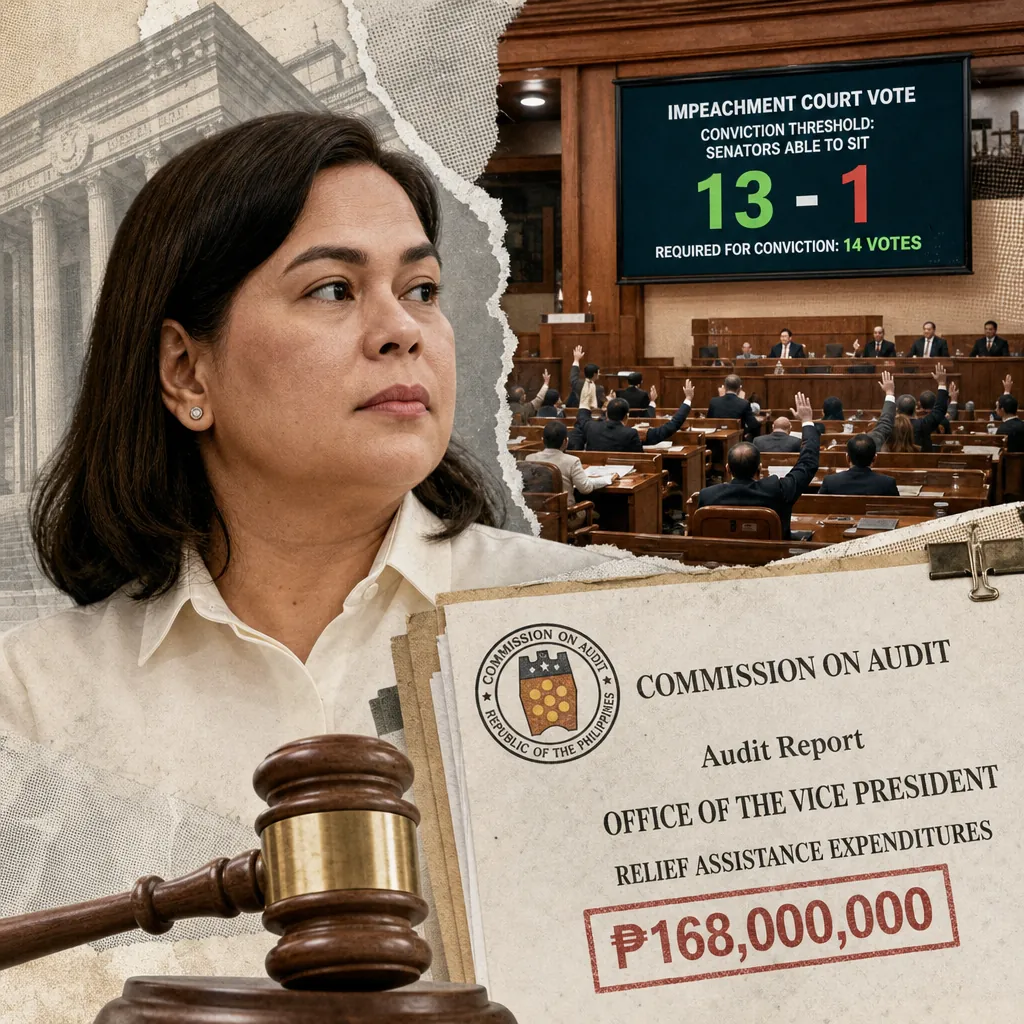
- The Senate impeachment court set oral arguments on the conviction-vote threshold. Presiding officer Senator-judge Francis Escudero said Wednesday's session would be devoted to arguments on whether the number of votes required to convict Vice President Sara Duterte should remain at 16, with each party given 15 minutes.7 The threshold question has divided the court and now requires a formal ruling.
- A state procurement official testified that a Duterte-linked firm received 49 government contracts. PhilGEPS Division chief Rendell Sopeña confirmed that GenCorp Industries Inc. received 49 contract awards worth a combined P35.878 million from July 2022 to June 2026, a period beginning less than a month after Duterte assumed the vice presidency.49 The testimony came during the impeachment trial.
How the narratives stack
Dominant: The asylum correction dominated the day's DILG coverage. Remulla's admission was carried by Manila Bulletin in Filipino and by the Inquirer in English, and it was the rare instance of a cabinet secretary publicly retracting a factual claim about a high-profile fugitive.129 The story's dominance rests on the number of items in the captured set that addressed it and on the fact that it emerged from a scheduled budget hearing rather than an investigative report. Within the items reviewed here, the correction drew coverage across at least three separate reports, and the Inquirer's global desk treated it as a standalone story.2970 The underlying facts are straightforward: Remulla said on September 15 that Austria had denied Roque's application; on September 22 he said that was wrong and the application remains pending.1
Counter-narrative: The Banga school shooting and its aftermath ran alongside the asylum story and, in terms of the number of distinct developments, carried more new information. Remulla described the shooter's online exposure, disclosed that four other plots had been foiled, and said one suspect was nearly caught.812 The father's removal from DepEd was disclosed separately during budget deliberations.87 These are three separate developments in a single day, each with consequences for school safety policy and for how the government handles online radicalization of minors. The asylum story is a correction; the shooting story is an unfolding investigation with arrests and policy questions attached.
Emerging: The Ombudsman's "ghost internet" investigation into the DICT is at the fact-finding stage, meaning no charges have been filed and the scope is still being defined.94 Assistant Ombudsman Clavano said the probe will center on the DICT and described a scheme where hardware was installed but the software did not function, leaving intended beneficiaries without service.94 The DICT's response — welcoming the inquiry and asserting zero tolerance — is a standard institutional posture at this stage. What makes this worth tracking is the size of the government's free WiFi program and the fact that the Ombudsman has named a specific agency as the center of the investigation.
Under-covered: The proposed P240 border fee for travelers and its effect on overseas Filipino workers received limited attention in the items reviewed here, appearing in a single report quoting immigration experts.39 The fee, proposed under the Civil Aviation and Immigration Security Services program, would help recover the P10.7-billion partnership with United States-based Securiport LLC.39 Loreto Soriano of the Migration and Policy Development Center raised concern that the fee would affect OFW rehires, known as "Balik-Manggagawa," who return to the country for vacation or to renew employment with the same employer.39 Nearly two million OFWs returning to the country would be affected, according to the report.39 The story placed low in the captured set despite affecting a large and organized constituency.
Platform insights
Facebook: The day's most consequential social activity came from institutional and advocacy accounts rather than individual virality. Transport group Manibela posted an open letter on Facebook calling for immediate government action to support jeepney drivers and operators amid continuing oil price hikes, with chairman Mar Valbuena urging President Marcos and concerned agencies to protect drivers' livelihoods.21 Pasig City Mayor Vico Sotto used a social media post to apologize to residents affected by delays in three infrastructure projects in Buting, Pinagbuhatan, and Maybunga, calling the situation "unacceptable" and saying he was embarrassed each time he passed the unfinished projects.32 Sotto also issued notices of termination against the contractor and said he would ban contractors who renege from getting new contracts.32 Both posts are examples of officials and advocacy groups using Facebook as a direct channel to constituents and the press.
X: The platform carried political and media-industry reaction to the White House's decision to bar CNN, MS NOW, and Politico from White House grounds. The three outlets filed a joint lawsuit in the U.S. District Court for the District of Columbia arguing the ban violates due process and freedom of the press.69 Vice President JD Vance defended the ban in a C-SPAN interview and at Joint Base Andrews, saying the outlets would lose "special access" but could still report.99100 Actor Randy Quaid posted support for the ban on Monday, calling the outlets "fake news."99 The White House also launched "Trump TV," a 24/7 YouTube livestream, and promoted it on X.2380
Reddit and YouTube: No meaningful activity from these platforms appeared in the items reviewed here. The White House's Trump TV launch on YouTube is a publisher-side development rather than an organic community conversation.23
Key voices and communities
Interior Secretary Jonvic Remulla and the DILG: Remulla was the day's most quoted official, addressing the asylum correction, the Banga shooting, and the pursuit of online radicalizers in a series of ambush interviews at the Batasang Pambansa.181229 His framing of the shooter as "a good kid" exposed to the deep web and Satanism is a specific characterization that will shape how the government discusses online radicalization of students.8 The DILG's budget deliberations gave lawmakers a structured opportunity to question him, and the asylum correction emerged from that setting.29
House lawmakers on the budget panel: Rep. Fuentebella defended the DILG's spending plan while confirming the asylum application's unresolved status.70 Rep. Tinio criticized the P37.5-billion FALGU allocation as discretionary "pork."10 Rep. Zamora disclosed the removal of the shooter's father from DepEd.87 These interventions show the budget process functioning as a scrutiny mechanism, with lawmakers extracting information that had not been volunteered.
The Senate impeachment court: Presiding officer Escudero set the oral arguments schedule on the conviction-vote threshold.7 House lead prosecutor Rep. Gerville Luistro said Mamamayang Liberal party-list Rep. Leila de Lima would lead the prosecution panel during Wednesday's arguments.7 The defense team, through deputy spokesperson Justin Gular, distanced itself from Davao City Mayor Sebastian Duterte's statement on his sister's business interests, saying the mayor was not their client.66 SEC official Gerardo del Rosario testified that the list of companies he discussed was prepared at the House's request.72
Transport and advocacy groups: Manibela's Mar Valbuena framed the oil price hikes as a direct threat to jeepney drivers' livelihoods, using an open letter on Facebook to demand government action.21 The group's intervention comes as fuel prices remain elevated, and it positions drivers as among the most directly affected by rising petroleum costs.21
Local government officials: Pasig Mayor Vico Sotto's public apology for delayed infrastructure projects and his termination of the contractor's notices represent a local executive taking direct responsibility for project failures.32 The move is notable for its specificity — three barangays named, a contractor terminated, a ban threatened — and for its channel, a social media post rather than a press conference.32
Narrative streams
Remulla corrects the record on Roque's asylum application
The correction was specific and unambiguous. Remulla had said on September 15 that Austria had denied Roque's asylum request.1 On September 22, after the House finished plenary deliberations on the DILG's 2027 budget, he told reporters the application remains pending and that he had been wrong.129 He said asylum applications normally take six months to resolve, and Roque's has been pending for nine.29 Rep. Fuentebella, defending the DILG's budget, told lawmakers the application had passed the normal six-month course but was "neither approved or disapproved."70
Roque, a former presidential spokesperson, is wanted in the Philippines on human trafficking charges tied to a Philippine offshore gaming operator hub.70 He has not disclosed which country he is seeking asylum in, though Remulla's earlier statement named Austria.1 The legal significance of the correction is that the Philippine government had been publicly asserting a fact about a fugitive's legal status that it did not have. The political significance is that the correction came from a cabinet secretary during a budget hearing, in response to a question that arose from the earlier claim.
For the DILG, the episode raises questions about how the department verifies information about high-profile cases before publicizing it. For Roque, the correction removes a data point his critics had used against him — that his asylum bid had failed — and restores the status of his case to unresolved. For the broader public, the episode is a reminder that official statements about pending legal matters can be wrong, and that the correction process depends on the official being asked again.
The Banga shooting investigation widens
Three developments in a single day expanded the Banga National High School shooting story beyond the September 18 attack itself. Remulla said the government is pursuing individuals who influenced students to plan school shootings, that four other plots had been foiled, and that one suspect was nearly caught.12 He said the individuals are based in the Philippines.12 He also described the shooter as an honor student who had been exposed to the deep web and Satanism, was not bullied, and had never been a bully.8
Separately, Rep. Zamora told the House during DepEd budget deliberations that the shooter's father had been removed from his post as a Disaster Risk Reduction and Management personnel at the Department of Education and placed under investigation.87 Authorities have said the student obtained the gun used in the attack from his father.87 DepEd said it has no separate internal policy on responsible gun ownership by employees and expects personnel to follow existing law.87
The read for the education sector is that the investigation is now touching DepEd's own personnel policies. The department's admission that it has no internal policy on employee gun ownership, combined with the fact that the weapon used in a school shooting was traced to a DepEd employee, creates pressure for the department to adopt one. For law enforcement, the disclosure that four other plots were foiled suggests the Banga attack was not an isolated incident but part of a pattern of online-influenced planning. For parents and schools, the developments raise questions about how students are being radicalized online and what monitoring exists.
The context matters: the Banga shooting killed three students and prompted Remulla to call for tighter controls on children's social media access and firearms during a visit to the school on September 21.8 The investigation's expansion into online influence networks and DepEd personnel policies suggests the government is treating the attack as a symptom of a broader problem rather than a single incident.
The impeachment trial turns to the conviction-vote threshold
The Senate impeachment court wrapped up Day 28 of Vice President Sara Duterte's trial with presiding officer Escudero announcing that Wednesday's session would be devoted to oral arguments on the conviction-vote threshold.7 Each party will be given 15 minutes to argue, after which senator-judges may ask questions before voting on a motion filed by Senator-judge Erwin Tulfo.7 The threshold debate centers on whether the number of votes required to convict Duterte should remain at 16.7
The procedural question has divided the court and now demands a formal ruling. House lead prosecutor Rep. Luistro said Rep. Leila de Lima would lead the prosecution panel during Wednesday's arguments.7 The defense team, through Gular, declined to comment on Davao City Mayor Sebastian Duterte's statement about his sister's business interests, saying the mayor was not their client.66 House prosecution spokesperson Zia Alonto Adiong argued that the defense's position on dividends — that corporations are not required by law to declare them — strengthens the prosecution's case by failing to answer where the money behind Duterte's increased net worth came from.86 SEC witness del Rosario confirmed that the law does not automatically require dividend declarations in such situations.86 The prosecution said 10 companies connected to Duterte and her husband, Manases Carpio, did not declare dividends for several years.86
Separately, PhilGEPS Division chief Sopeña testified that GenCorp Industries Inc., a corporation linked to Duterte, received 49 government contract awards worth a combined P35.878 million from July 21, 2022 to June 2026.49 The period began less than a month after Duterte assumed the vice presidency on June 30, 2022.49 SEC official del Rosario told the court that the list of companies he testified about was prepared in response to a request from the House of Representatives.72
The read for the political sector is that the trial is entering a procedural phase that could determine its outcome before the substance is fully argued. The threshold vote — whether 16 senators or a different number are needed to convict — is the kind of question that can end a trial or extend it. For Duterte's defense, the procedural motion is an opportunity to challenge the court's framework. For the prosecution, the day's testimony on contracts and dividends adds to a record that will matter if the trial reaches a final vote.
The Ombudsman's free WiFi investigation focuses on the DICT
Assistant Ombudsman Clavano said the fact-finding probe into the government's free WiFi program will center on the Department of Information and Communications Technology.94 He described a scheme the Ombudsman is calling "ghost internet," in which hardware was installed but the software did not work, leaving intended beneficiaries without service.94 "When you ask people who were supposed to benefit from the free WiFi, nothing appears there right? So only hardware is installed, and the point of question, or the subject of investigation is, the software — why is it not working?" Clavano said.94
The DICT said it welcomes the inquiry and maintains a policy of zero tolerance against corruption.94 The investigation is at the fact-finding stage, meaning no charges have been filed and the scope is still being defined. The free WiFi program is a government initiative intended to provide internet access in public places, and the allegation is that in some locations the service was never functional despite hardware being installed.
The read for the technology and governance sector is that the investigation, if it proceeds, will test whether the DICT's procurement and implementation processes can withstand scrutiny. The department's public posture — welcoming the inquiry — is a standard response at this stage, but the Ombudsman's decision to name the DICT as the center of the investigation signals that the anti-graft body sees the department's role as central rather than peripheral. For citizens who were supposed to benefit from free WiFi, the investigation is a test of whether the program's failures were administrative or deliberate.
The P37.5-billion local government assistance fund draws criticism
Rep. Tinio flagged the proposed P37.5-billion allocation to the Financial Assistance to Local Government Units in 2027, calling it "President's LGU pork."10 The program directly funds local priority projects, infrastructure modernization, and other urgent community needs.10 Tinio said the funds are highly discretionary, with no spending limit for infrastructure projects, and noted the allocation is the same size as its 2026 budget.10 "Pambihira itong President's LGU pork na ito. Walang anumang limit sa dami at laki ng budget para sa infrastructure project," he said.10
The FALGU program is a mechanism for the national government to provide financial assistance to local government units for priority projects. The criticism is that the fund's discretionary nature and lack of spending limits make it vulnerable to political use. The fact that the allocation is unchanged from 2026 — P37.5 billion in both years — suggests the program has become a fixed feature of the budget rather than a temporary measure.
The read for local government finance is that the fund's size and discretion make it a recurring point of contention. For LGUs that receive assistance, the program is a source of project funding. For critics, it is a channel for national government influence over local projects without the scrutiny that accompanies regular budget line items. The debate is likely to continue as the budget moves through Congress.
The Senate takes up the system loss charge removal
Sen. Erwin Tulfo sponsored Senate Bill No. 2486, the "Systems Loss Charge Removal Act," on the Senate floor on Tuesday.54 The measure would remove system loss charges from consumers' electricity bills by making distribution utilities shoulder the cost and mandating the Energy Regulatory Commission to vet costs charged to consumers.54 System loss charges are the costs of electricity lost during transmission and distribution, which utilities currently pass through to consumers.
The bill's progress comes after the Bureau of Internal Revenue announced on September 14 that the allowable system loss charge, within the ERC-approved cap, would be excluded from gross sales for value-added tax purposes.48 MORE Electric and Power Corp. President Roel Castro welcomed the VAT removal as partial relief but said it would not address the bigger problem of insufficient power supply in the Visayas.48 "This is a welcome move by the government... We have to understand, this is a certain percentage of a certain percentage," Castro said.48
The read for electricity consumers is that the two measures — the VAT removal and the Senate bill — address different parts of the same cost. The VAT removal reduces the tax on the system loss charge; the Senate bill would remove the charge itself from consumers' bills. For distribution utilities, the bill would shift a cost they currently pass through to their own books, which could affect their finances depending on how the ERC implements the mandate. For the ERC, the bill adds a vetting responsibility that could change how it reviews utility costs.
Conversation trajectory
The DILG budget deliberations will continue, and further corrections or disclosures are possible. The House plenary deliberations on the DILG's 2027 budget are part of the broader budget process, which typically runs through the fall. Lawmakers have demonstrated a willingness to question Remulla on specific cases, and the asylum correction shows that the budget hearing format can produce information that would not otherwise surface. Watch for further questions on the Banga investigation and the department's handling of online radicalization cases. Observation window: the next two to three weeks of budget deliberations.
The Senate impeachment court's ruling on the conviction-vote threshold will shape the trial's next phase. Wednesday's oral arguments, with 15 minutes per party, will be followed by a vote on Senator Tulfo's motion.7 The outcome will determine whether the trial proceeds under the current threshold or a different one. If the threshold changes, the prosecution's path to conviction could become harder or easier depending on the direction. Observation window: the court's ruling, expected within days of the arguments.
The Ombudsman's free WiFi investigation will move from fact-finding to a more defined phase. The investigation is currently centered on the DICT, and the Ombudsman has described a specific scheme.94 The next signals to watch are whether the investigation expands to other agencies or contractors, whether the DICT's internal review produces findings, and whether the Ombudsman files charges. Observation window: the next four to six weeks.
The Banga shooting investigation will produce more arrests or policy proposals. Remulla said one suspect was nearly caught and four plots were foiled.12 The father's removal from DepEd and the department's admission that it has no internal gun policy suggest that personnel and policy questions will continue to surface.87 Watch for whether DepEd adopts an internal policy on employee gun ownership and whether the government proposes new controls on children's social media access, which Remulla called for on September 21.8 Observation window: the next month.
The Senate bill on system loss charges will move through the legislative process. The bill reached the plenary on Tuesday, and its progress will depend on the Senate's schedule and the level of opposition from utilities.54 The BIR's VAT removal is already in effect prospectively, so consumers may see some relief before the bill passes.48 Watch for the ERC's implementation of the VAT removal and any utility challenges to the Senate bill. Observation window: the next two to three months.
Trigger events to watch: the Senate impeachment court's ruling on the conviction-vote threshold; the next DILG budget deliberation session; any Ombudsman filing in the free WiFi case; any new arrests in the Banga investigation; and the Senate's scheduling of the system loss bill for further debate.
Response guidance
For government communicators handling pending legal cases: Verify the status of a case with the relevant foreign or domestic authority before making public statements about it. Remulla's September 15 claim that Roque's asylum bid had been denied was corrected a week later, and the correction drew more coverage than the original claim.129 When a case is pending, the accurate statement is that it is pending, and the correction process should be proactive rather than reactive to a reporter's question.
For education sector communicators addressing school safety: The Banga investigation has moved into personnel and policy territory. DepEd's admission that it has no internal policy on employee gun ownership is a gap that will draw scrutiny.87 Prepare clear statements on what the department's policies are, what they will be, and how they will be enforced. Avoid characterizing the shooter in ways that could be read as excusing the act; Remulla's "good kid" description drew attention for that reason.8
For technology and governance communicators at the DICT: The Ombudsman's investigation is at the fact-finding stage, and the department has said it welcomes the inquiry.94 The appropriate posture is cooperation and transparency about the program's implementation. Prepare to explain how the free WiFi program was procured, how it was implemented, and what the department is doing to ensure that installed hardware is functional. Avoid dismissing the investigation as routine; the Ombudsman has named the department as the center of the probe.94
For local government communicators: Vico Sotto's public apology for delayed projects and his termination of the contractor's notices is a model for how to handle project failures.32 The elements that worked: specificity about which projects and which barangays, direct acknowledgment of the problem, and concrete action against the contractor. If your LGU has delayed projects, consider whether a similar approach — naming the problem and the remedy — would be more effective than a general statement.
For transport and energy sector communicators: Manibela's open letter on Facebook is a reminder that advocacy groups are using social media to set the terms of the fuel price debate.21 The group's framing — that jeepney drivers are among the most directly affected by oil price hikes — is specific and hard to dispute. If your organization is involved in fuel price policy, prepare to address the livelihood impact on drivers, not just the macroeconomic picture.
For financial and economic communicators: The BIR's micro taxpayer abatement program reported 6,234 applications in its first two months, with 5,000 approved, covering P84.5 million in tax liabilities and P24.82 million in abatement fees paid.22 The program's momentum followed the President's mention of it in the State of the Nation Address and intensified information campaigns.22 If your organization works with micro taxpayers, the program's existence and eligibility criteria are worth communicating; the BIR has said it wants qualified taxpayers to know the relief is available.22
For media industry communicators: The White House's ban on CNN, MS NOW, and Politico and the outlets' lawsuit raise questions about press access that go beyond the United States.69 Bernama's editor-in-chief said at an international forum in Moscow that no single newsroom can monitor the entire information environment alone, making cooperation among news agencies essential in the fight against fake news.17 The Malaysian news agency also proposed a rapid verification network among Asia-Pacific news agencies and joint training in detecting manipulated content.24 If your organization is in the news industry, the cooperation proposals are worth tracking as a potential model for regional verification efforts.
See the full picture behind today's signals.
This report draws from Media Meter's MediaWatch, our real-time monitoring engine tracking 2,470+ Philippine sources across print, broadcast, digital, and social. Explore how the platform turns raw coverage into decision-grade intelligence, then see how it's configured for teams like yours — whether you're in PR agencies, corporate comms, government, or marketing.
Want more? Browse our Report Library for sector and crisis intelligence, or request a demo and we'll have your brand set up before the call.
Want this kind of intelligence on your brand?
This brief is built on the same MediaWatch methodology that runs continuously across every brand we monitor. See your competitive landscape, Impact Score, and narrative trajectory in a 30-minute demo.