Villar LRT probe, floods, and housing policy shape Philippine real estate talk
A daily snapshot of Philippine real estate conversation on June 15, 2026, covering the Ombudsman's investigation into the Villar senators over the LRT-1 Cavite extension, flooding and extreme weather events, government housing programs, and developer brand narratives.
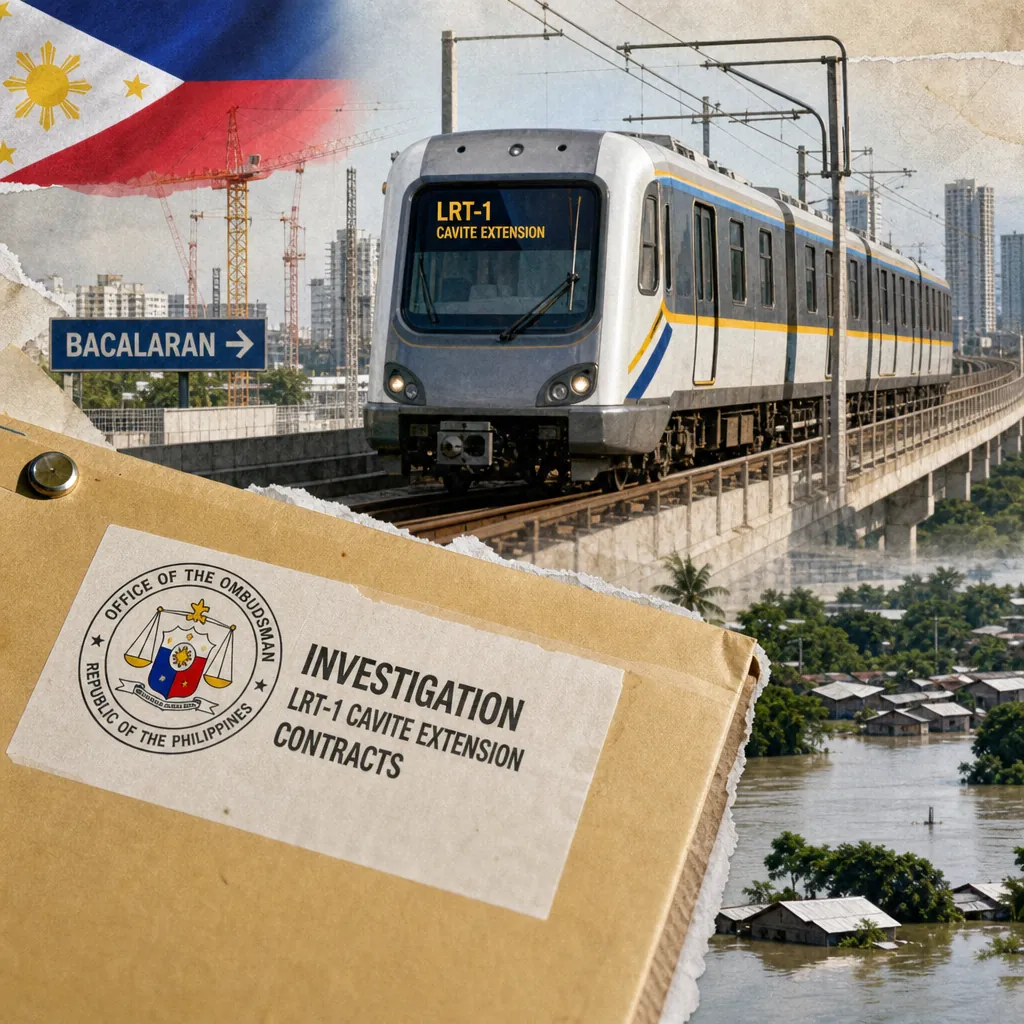
The conversation on June 15, 2026, was dominated by a single explosive story: the Office of the Ombudsman announced it was investigating Senators Mark and Camille Villar for allegedly blocking the Light Rail Transit Line 1 (LRT-1) Cavite extension to reroute the rail system through their family's properties along C5 Road in Las Piñas. The allegation, first reported by multiple news outlets after Ombudsman Jesus Crispin Remulla's radio interview, quickly spread across Facebook, Reddit, and Twitter, generating intense public anger and cynicism. A post from Philstar News on Facebook amassed 2,872 likes and 1,189 shares, with a strikingly high 2,528 angry reactions and 1,564 haha reactions, signaling both outrage and disbelief. On Reddit, a user's post summarizing the article gained 572 upvotes and 50 comments, where users connected the accusation to the Villar family's extensive real estate holdings under Vista Land and Camella. The conversation quickly broadened into a critique of developer influence on infrastructure planning, with commuters and transparency advocates demanding accountability. Running parallel to this political scandal were persistent concerns about flooding and extreme weather. Heavy rains caused the Marilao River in Bulacan to overflow, and a hailstorm in Calamba, Laguna, raised new questions about property resilience. Meanwhile, the government's housing agenda continued to generate low-engagement posts, including the Department of Human Settlements and Urban Development (DHSUD) extending the deadline for homeowners' association re-registration and President Marcos Jr. visiting earthquake-affected areas in Mindanao. Developer brand narratives, such as Robinsons Land's 46th anniversary post emphasizing "proven stability" and Filinvest Alabang Inc.'s international award, offered a contrasting positive tone, but the day's dominant signal was the intersection of infrastructure, politics, and real estate speculation.
Conversation snapshot. The day's most engaging post was Philstar News's Facebook report on the Villar investigation, which drew 2,872 likes, 1,189 shares, and a combined 4,092 angry and haha reactions, making it the clear center of attention. A Reddit post on the same topic received 572 upvotes and 50 comments, driving deeper analysis. In contrast, the DHSUD's Facebook post about President Marcos's earthquake response in Sarangani garnered 1,758 likes and 727 love reactions, reflecting a more positive but less viral sentiment. The hailstorm video from Calamba on Facebook received 106 likes and 35 shares, while a thunderstorm advisory on YouTube had 3,145 views but zero comments, indicating passive consumption of weather content. The 4PH housing program thread on Twitter saw negligible engagement, with single-digit views, highlighting a gap between policy announcements and public awareness.
Key themes
- Political interference in infrastructure projects – The Ombudsman's investigation into the Villar senators for allegedly blocking the LRT-1 Cavite extension to benefit their family's land holdings dominated the conversation, with high engagement across platforms reflecting public anger and cynicism.
- Flooding and extreme weather as property risk – Heavy rains causing river overflow in Bulacan and a hailstorm in Calamba, Laguna, reinforced concerns about climate resilience for residential areas, though no direct developer attribution appeared in these posts.
- Government housing programs struggling for visibility – Posts about the Expanded Pambansang Pabahay para sa Pilipino (4PH) Program and the National Housing Authority's earthquake relief received very low engagement, indicating a gap between policy and public awareness.
- Developer brand storytelling gaining traction – Robinsons Land's 46th anniversary post emphasizing "proven stability" generated 118 likes and 199 shares, a high share-to-like ratio suggesting strong organic endorsement. Filinvest Alabang Inc.'s FIABCI World Prix d'Excellence award also received modest but positive attention.
- Regulatory updates for homeowners' associations – The DHSUD extended the deadline for HOA re-registration to December 18, 2026, a move that generated informational posts but limited public discussion.
- Earthquake aftermath and disaster response – President Marcos Jr. visited Sarangani to distribute aid after the magnitude 7.8 earthquake, with DHSUD officials present, providing a positive narrative of government responsiveness.
- Infrastructure privatization backlash – A post about the privatization of the CBK hydroelectric plant and NAIA airport system received 171 likes, 123 angry reactions, and 99 sad reactions, indicating public disapproval of asset transfers to private consortiums.
- Stalled infrastructure projects eroding trust – The Alaminos-San Pablo Bypass Road in Laguna, stalled for ten years, generated 3,119 likes and 674 comments on Facebook, reflecting deep frustration over delayed projects that affect property accessibility and values.
How the narratives stack
Dominant narrative – The dominant story on June 15 was the Ombudsman's investigation into the Villar senators for allegedly blocking the LRT-1 Cavite extension to benefit their family's real estate holdings. This narrative, amplified by major news outlets and social media, framed the Villars as using political power to reroute public infrastructure through their properties, stalling a project millions of commuters in Cavite have awaited for years. The high volume of angry and haha reactions on Facebook posts indicated both outrage and cynical amusement, while Reddit discussions delved into the implications for Vista Land and Camella developments. This narrative directly threatens the reputation of Villar-linked developers and raises broader questions about developer influence on infrastructure planning.
Counter-narrative – Running against the corruption narrative was the government's disaster response in Sarangani, where President Marcos Jr. and DHSUD officials distributed aid to earthquake victims. This story, covered by multiple outlets, generated positive engagement (1,758 likes and 727 love reactions on DHSUD's Facebook post) and reinforced trust in the administration's ability to respond to crises. While not directly addressing the Villar allegations, it provided a contrasting image of government competence and care. Additionally, developer brand milestones like Robinsons Land's anniversary and Filinvest's award offered a positive industry narrative focused on stability and global recognition, though these received far less attention than the Villar story.
Emerging narrative – A growing thread is the intersection of extreme weather and property risk. The hailstorm in Calamba, Laguna, and the thunderstorm advisories across Luzon are expanding the conversation beyond flooding to include hail, lightning, and wind damage. This narrative is still in its early stages, with moderate engagement on weather posts, but it signals a potential shift in buyer concerns toward broader climate resilience. Developers who proactively communicate about structural features (e.g., hail-resistant roofs, drainage systems) may be able to differentiate themselves as this narrative gains momentum during the peak rainy season.
Suppressed narrative – The government's socialized housing program, the Expanded Pambansang Pabahay para sa Pilipino (4PH), remains severely under-covered in social media conversations. Official posts about the program receive negligible engagement (single-digit views), and there is little public discussion about eligibility, financing, or project locations. This gap between policy importance and public awareness means that misinformation or negative experiences could fill the vacuum. Private developers aligned with socialized housing have an opportunity to co-create educational content that bridges this awareness gap, but the current lack of attention also means that the program's successes or failures are not being shaped by public discourse.
Platform insights
Facebook was the primary battleground for the Villar investigation and infrastructure grievances. The Philstar News post on the LRT-1 probe generated the highest engagement of the day, with a striking emotional reaction profile: 2,528 angry and 1,564 haha reactions alongside 2,872 likes. This mix of outrage and mockery suggests users were both furious and cynical about the allegations. The platform also hosted the hailstorm video from Calamba (106 likes, 35 shares) and developer brand posts like Robinsons Land's anniversary (118 likes, 199 shares). Facebook's reaction buttons allowed users to express complex emotions without commenting, making it the dominant channel for sentiment expression.
Reddit served as the analytical hub for the Villar story. A user's text-only summary of the Philstar article received 572 upvotes and 50 comments, with discussions linking the allegations to the Villar family's real estate portfolio and broader corruption in infrastructure planning. The platform's threaded format enabled deeper, more nuanced conversations compared to Facebook's reaction-driven engagement. Reddit also hosted discussions about the DHSUD's HOA re-registration extension, though with lower volume.
Twitter functioned as a news relay rather than a discussion space. The official Philippine Star tweet about the Villar investigation received only 10 likes and 3 shares, indicating that the platform was used for announcement but not for dialogue. Government housing program posts on Twitter also saw negligible engagement, with single-digit views. However, the LRT-1 extension block story on Twitter via Philstarnews amassed over 128,000 views and 2,043 likes, suggesting that politically charged infrastructure scandals can still generate high viewership on the platform, even if comments are limited.
YouTube was a passive broadcast channel for weather and disaster content. The thunderstorm advisory video from GMA News received 3,145 views but zero comments, while the flood damage video from June 14 had 955 views and 7 comments. YouTube's audience consumes weather and disaster content without participating in discussion, limiting its role in shaping real estate sentiment compared to Facebook's comment threads.
Key voices and communities
Urban commuters and transit rights advocates – This group, active on Facebook and Reddit, reacted intensely to the Villar investigation. Their posts generated high engagement, with one news outlet's report earning over 2,800 likes and 1,189 shares. They frame the Villars' alleged actions as a direct abuse of power to funnel public infrastructure through family-owned properties, stalling a project millions in Cavite have awaited for years. A Reddit post titled "Long overdue na mga Villar dito. Sana makasuhan" gathered 572 upvotes and 50 comments, reflecting strong grassroots demand for legal consequences. This group is directly affected by development timelines and land use decisions, and their outrage signals reputational risk for developers linked to delayed or contentious infrastructure projects.
Government transparency and anti-corruption networks – Independent media accounts, political commentators, and oversight-focused Facebook pages amplify the Ombudsman's investigation with a mix of Tagalog and English content. Their content typically receives fewer raw likes but high share rates, indicating influence through network diffusion. They emphasize institutional accountability and due process, often quoting Ombudsman Remulla's radio interview verbatim. For real estate stakeholders, this group represents a watchdog function that can escalate land-use or regulatory conflicts into political scandals.
DHSUD and homeowner association communities – The Department of Human Settlements and Urban Development (DHSUD) and affiliated news outlets drive conversation around regulatory updates, notably the six-month extension for homeowners' association re-registration. This content is low in emotional reactions but high in informational value, reaching organized homeowner networks. The DHSUD's own Facebook post about the Sarangani earthquake relief garnered 1,758 likes and 727 love reactions, reflecting broad community appreciation for government presence. This group directly manages policies affecting subdivisions, socialized housing, and homeowner governance.
Developer brand advocates and institutional legacy messengers – Established developers and their official corporate accounts invest in brand heritage and corporate social responsibility narratives. Robinsons Land's 46th anniversary post emphasizing "proven stability" generated 118 likes and 199 shares, a high share-to-like ratio suggesting strong organic endorsement. SM Prime's turnover of a school building in Quezon City received 21 likes and 15 comments. Filinvest Alabang Inc.'s FIABCI World Prix d'Excellence award was shared by a news account with modest engagement but significant prestige signaling. This group represents the positive face of the industry and can be leveraged for co-branded trust campaigns.
Infrastructure privatization and political economy critics – A distinct stakeholder cluster comprising alternative news outlets and politically engaged audiences is heavily focused on the privatization of strategic public assets. A detailed post about the transfer of the CBK hydroelectric plant to the Aboitiz-led Thunder Consortium and NAIA to San Miguel's NNIC received 171 likes, 119 shares, and a striking 123 angry and 99 sad reactions, indicating strong public disapproval. This group critiques the transfer of public assets to private conglomerates, emphasizing high bid amounts and revenue share percentages while questioning long-term public benefit. For developers involved in large-scale mixed-use townships or public-private partnership projects, monitoring this group's narrative is vital, as broader mistrust of privatization could affect public acceptance of developer-led infrastructure components.
Narrative streams
The Villar LRT-1 investigation: A political scandal with real estate implications
The day's most significant narrative stream was the Ombudsman's announcement that it is investigating Senators Mark and Camille Villar for allegedly interfering with the LRT-1 Cavite extension project. According to Ombudsman Jesus Crispin Remulla, graft investigators are examining claims that the Villar siblings sought to alter the railway's alignment so it would pass through C-5 Road in Las Piñas, where the Villar family reportedly owns properties. The project, which was targeted for completion in 2027, has been stalled, and Remulla stated that "it should have reached Cavite" but for the alleged interference. This story exploded across social media, with Philstar News's Facebook post receiving 2,872 likes, 1,189 shares, and a combined 4,092 angry and haha reactions. The high number of haha reactions alongside angry ones suggests that many users viewed the allegations with cynical amusement, possibly mocking the political class. On Reddit, a user's post summarizing the article gained 572 upvotes and 50 comments, where users explicitly linked the accusation to the Villar family's real estate portfolio under Vista Land and Camella. The conversation quickly evolved into broader scrutiny of developer influence on infrastructure planning, with commenters speculating that the delay directly served their development timeline for Camella communities in the area. This narrative directly threatens the reputation of Villar-linked developers and raises questions about the integrity of land-use planning in high-value corridors like Cavite and Las Piñas. For the real estate sector, the key takeaway is that any perception of route manipulation can trigger massive negative sentiment, and developers with political ties face heightened scrutiny. The Ombudsman's investigation is ongoing, and any formal case against the Villars could depress valuations for Vista Land and Camella projects near the contested alignment.
Flooding and extreme weather: Expanding the property risk conversation
A second major narrative stream centered on flooding and extreme weather events, which have become a recurring concern for property owners and developers. On June 14, heavy rains caused the Marilao River in Bulacan to overflow, forcing residents to evacuate. On June 15, a hailstorm hit Calamba, Laguna, with residents reporting hailstones damaging property. The hailstorm video on Facebook received 106 likes and 35 shares, while a thunderstorm advisory from GMA News on YouTube garnered 3,145 views. These posts, though not explicitly about real estate, carry implicit warnings for buyers in flood-prone areas. The hailstorm in Calamba adds a new dimension to the climate risk conversation, expanding it beyond flooding to include hail, lightning, and wind damage. For developers with projects in affected regions, this narrative underscores the importance of proactive communication about structural resilience features, such as elevated lot grading, detention basins, and hail-resistant roofing. The absence of direct developer mentions in current weather posts is a grace period, not a guarantee; as the rainy season peaks, conversations will increasingly link climate volatility to construction quality and long-term property resilience.
Government housing programs: Low engagement, high opportunity
The government's socialized housing agenda continued to generate posts, but with very low public engagement. The Expanded Pambansang Pabahay para sa Pilipino (4PH) Program, which aims to provide affordable housing to low-income families, was promoted in a Twitter thread that received only 10 views. The National Housing Authority's announcement of a one-month amortization moratorium and P75 million in financial aid for earthquake-affected beneficiaries received only five likes on Facebook. This low engagement indicates a significant gap between policy announcements and public awareness. For developers aligned with socialized housing, this presents an opportunity to fill the information vacuum by creating co-branded educational content that explains eligibility requirements, financing options, and project locations in simple terms. The DHSUD's extension of the HOA re-registration deadline to December 18, 2026, also generated informational posts but limited discussion, suggesting that regulatory updates are not yet capturing public attention.
Developer brand narratives: Stability and recognition as trust signals
Amid the political scandal and weather concerns, several developer brand posts offered a contrasting positive narrative. Robinsons Land published a 46th anniversary post emphasizing "proven stability" through economic cycles, which received 118 likes and 199 shares—a high share-to-like ratio indicating strong organic endorsement. Filinvest Alabang Inc. became the first Philippine developer to win two Gold awards at the FIABCI World Prix d'Excellence, a milestone that, while receiving only 1 like and 3 shares on a news account, signals international recognition for master-planned urban development. SM Prime turned over a new school building in Quezon City, featuring upcycled plastic chairs, earning 21 likes and 15 mostly positive comments. These posts frame developers as responsible, long-term partners in nation-building, focusing on sustainability, community impact, and international recognition. In an environment of political uncertainties and extreme weather concerns, homebuyers appear to be gravitating toward developers with long track records and third-party validation.
Infrastructure privatization backlash
A separate but related narrative stream involved the privatization of major state assets. A detailed post from archlightnews about the transfer of the CBK hydroelectric plant in Laguna to the Aboitiz-led Thunder Consortium for ₱36.27 billion and the entire NAIA airport system to San Miguel's NNIC with an 82.16% revenue share received 171 likes, 119 shares, and a striking 123 angry and 99 sad reactions. The post generated 66 comments, with the emotional reaction split heavily toward anger and sadness, signaling that infrastructure privatization is a contested issue that could spill over into developer-linked projects, especially those involving public-private partnerships or land conversions. For developers involved in large-scale mixed-use townships or PPP projects, monitoring this group's narrative is vital, as broader mistrust of privatization could affect public acceptance of developer-led infrastructure components.
Conversation trajectory
Political corruption allegations against a major developer family will dominate sector discourse for weeks, potentially reshaping consumer trust. The Ombudsman's public investigation into the Villar senators' alleged interference with the LRT-1 Cavite extension has generated an unusually high volume of angry and laughing reactions across multiple platforms. This narrative is already spilling into discussions about Vista Land, Camella, and Lumina Homes, with comment threads linking the scandal to broader perceptions of title issues and developer dealings. Expect this conversation to intensify over the next 2-4 weeks as the Ombudsman's verification process unfolds, potentially triggering renewed scrutiny of developer-related complaints on platforms like DHSUD and Pag-IBIG channels. (Observation window: next 2-4 weeks)
Regulatory compliance for homeowners' associations will create a secondary but growing conversation stream as the new deadline approaches. The DHSUD's extension of HOA re-registration to December 18, 2026, is generating early awareness among community-focused accounts. This shift will likely drive discussions about HOA dispute resolution, condo dues mismanagement, and sinking fund transparency over the next 4-6 months, particularly as HOAs scramble to complete documentary requirements. The conversation will peak around November-December 2026, creating an opportunity for stakeholders to provide educational content on proper association governance and legal compliance. (Observation window: next 4-6 months)
Earthquake aftermath in Southern Mindanao will fuel conversations about construction quality and disaster resilience in housing. The magnitude 7.8 earthquake that hit Sarangani and nearby regions, with President Marcos Jr. inspecting damaged facilities and the DHSUD assisting displaced families, is already prompting discussions on platforms about construction defects, flooding in condos, and building permit adequacy in quake-prone areas. Expect this narrative to ripple into inquiries about developer track records in Mindanao projects—particularly socialized housing and mid-rise condo developments—within 3-6 weeks, as displaced families and local communities seek accountability and rebuilding support. (Observation window: next 3-6 weeks)
Extreme weather events will sustain climate-risk conversations through the rainy season. The hailstorm in Calamba and thunderstorm advisories across Luzon are expanding the perceived risk set for homebuyers from solely flooding to include hail, lightning, and wind damage. Over the next 2-3 months (peak rainy season), conversations will increasingly link climate volatility to construction quality and long-term property resilience. Developers should proactively publish structural specifications and climate-adaptation features to differentiate projects in affected regions. (Observation window: next 2-3 months)
Key trigger events that will reshape this conversation include: the Ombudsman's formal case filing or testimonies from LRT officials (likely within 1-2 months), which will dramatically amplify the Villar scandal's impact on consumer trust in associated housing brands; the DHSUD's mid-October 2026 reminder campaign for HOA re-registration, which will spike compliance-related queries and complaints; and any new seismic activity or aftershocks in Mindanao, which could reignite scrutiny of construction standards and developer responsibility in disaster-prone regions.
Response guidance
Platform-specific approaches:
Facebook: Deploy controlled messaging from official pages that focus on positive industry contributions to national infrastructure, such as support for transit-oriented development and compliance with regulatory requirements. Avoid direct engagement with highly emotional comment threads where anger and mockery dominate, as this risks amplifying negative sentiment. Use community management to flag and respond to factual inaccuracies about real estate processes—such as right-of-way acquisition or zoning—with clear, non-defensive explanations that redirect to official sources like DHSUD or LRTA. Publish short-form video or infographic content highlighting how responsible developers coordinate with government agencies on public-private partnerships, using the recent DHSUD extension for HOA re-registration as an example of regulatory cooperation.
Twitter/X: Engage with credible news outlets and policy accounts by sharing statements that reaffirm commitment to lawful development and public interest, without naming individuals under investigation. Retweet official DHSUD or Ombudsman updates to show alignment with due process. Proactively address the narrative of "developers blocking progress" by posting concise threads that explain the legal and procedural steps in infrastructure projects, including right-of-way negotiations and environmental compliance. Tag relevant agencies like DPWH and NEDA to demonstrate collaborative intent.
Reddit: Engage indirectly by having representatives participate in threads about urban development or infrastructure, providing detailed but neutral explanations of how land use alignments are determined legally, and why rerouting requires multiple approvals. Focus on educational value rather than defending any specific party. Avoid directly replying to highly upvoted critical comments, but use "report" functions on any unsubstantiated claims that could be considered defamatory. Instead, seed evidence-based comments that cite public records of developer compliance with DHSUD and HLURB.
YouTube: For comment sections on news videos about the LRT investigation, deploy a standard response that acknowledges the public's frustration while reaffirming that proper legal processes are underway, and that the industry supports timely, transparent infrastructure development. Produce short explainer content titled "How LRT Extensions Actually Get Approved" that walks through the roles of DPWH, LRTA, and local governments, subtly demonstrating that any changes to alignment require rigorous public hearings and impact assessments.
Key messages:
- The Philippine real estate industry is fully committed to lawful, transparent processes that prioritize public transit connectivity and community welfare.
- Major infrastructure projects like LRT extensions follow a rigorous multi-agency approval framework that includes zoning hearings, environmental compliance, and right-of-way negotiations with all stakeholders.
- Developers support strong regulatory oversight by DHSUD and other bodies, as evidenced by recent extensions for HOA compliance and ongoing earthquake response coordination.
- Unsubstantiated allegations harm public trust in vital housing and infrastructure projects; the industry encourages all parties to await the outcome of official investigations before drawing conclusions.
- The real estate sector actively collaborates with government to address housing needs, from socialized housing to transit-oriented developments that reduce commute times for Filipino families.
Sensitive topics to navigate:
- Allegations of political interference with infrastructure alignments: Avoid defending or attacking specific senators; focus on the existing legal and procedural safeguards that prevent any single entity from unilaterally altering approved routes. Frame the discussion around institutional checks rather than individuals.
- Public anger over delayed transit projects: Acknowledge commuter frustration empathetically without making promises about future timelines. Emphasize that delays often stem from complex multi-party negotiations and that all stakeholders—including developers—are committed to accelerating progress within legal bounds.
- Conflict of interest perception involving developer-owned land: Do not deny or confirm any specific property holdings. Instead, reinforce that all land acquisitions for infrastructure undergo public scrutiny, valuation, and compensation processes mandated by law, and that developers operate within these rules.
- Flooding and subdivision safety: Balance reassurance with factual data on elevation, drainage systems, and adaptive design features. Avoid downplaying climate challenges.
- Privatization of public assets: Avoid direct commentary on political deals but emphasize the need for infrastructure rehabilitation and improved services without endorsing specific transactions.
See the full picture behind today's signals.
This report draws from Media Meter's MediaWatch, our real-time monitoring engine tracking 2,470+ Philippine sources across print, broadcast, digital, and social. Explore how the platform turns raw coverage into decision-grade intelligence, then see how it's configured for teams like yours — whether you're in PR agencies, corporate comms, government, or marketing.
Want more? Browse our Report Library for sector and crisis intelligence, or request a demo and we'll have your brand set up before the call.
Want this kind of intelligence on your brand?
This brief is built on the same MediaWatch methodology that runs continuously across every brand we monitor. See your competitive landscape, Impact Score, and narrative trajectory in a 30-minute demo.