Turn Social Listening Into Your Editorial Calendar
Learn how social listening turns everyday conversations into a data-driven editorial calendar for smarter content planning in the Philippines.

Picture this: your content team is scrolling through comments in their social listening feed when someone on a rival's TikTok post asks, for the third time that week, "wait, does this actually work for combination skin?" Nobody flags it. Nobody writes it down. Ten days later, a direct competitor posts the definitive answer, it racks up shares, it gets pulled into an AI-generated answer box, and your brand is now the third voice answering a question you saw coming and did nothing about. This is exactly the problem social listening, applied properly to your editorial calendar, is built to solve.
Filipino audiences spend nearly 34 hours a week on social media, among the highest engagement in the region, which means the conversations your calendar should be drawing from are already happening at a volume most teams aren't fully tapping. Most content teams already have a listening tool running somewhere in the building. 76% of marketers worldwide now use social listening software, increasingly for planning rather than just brand safety. But Sprout Social's own research found that while most brands do a decent job hearing what audiences say, they don't consistently act on it. That gap, between what people are already telling you and what actually makes it onto your calendar, is exactly where editorial planning either closes the distance or quietly widens it. Here's how to close it.
In this article
- Separate Listening From Monitoring So You Plan Instead of React
- Mine Recurring Questions for Your Explainer and FAQ Pipeline
- Turn Complaint Clusters Into "How We Fixed It" Content
- Let Category Conversations Define Your Content Pillars, Not Just Your Post Ideas
- Match Your Listening Cadence to Your Editorial Cadence
- Localize by Region and Platform, Not Just by Topic
- Anchor Reactive Content to the Filipino Cultural Calendar
- Close the Loop: Feed Performance Back Into Your Next Listening Cycle
- From Conversation to Calendar
- Frequently Asked Questions
1. Separate Listening From Monitoring So You Plan Instead of React
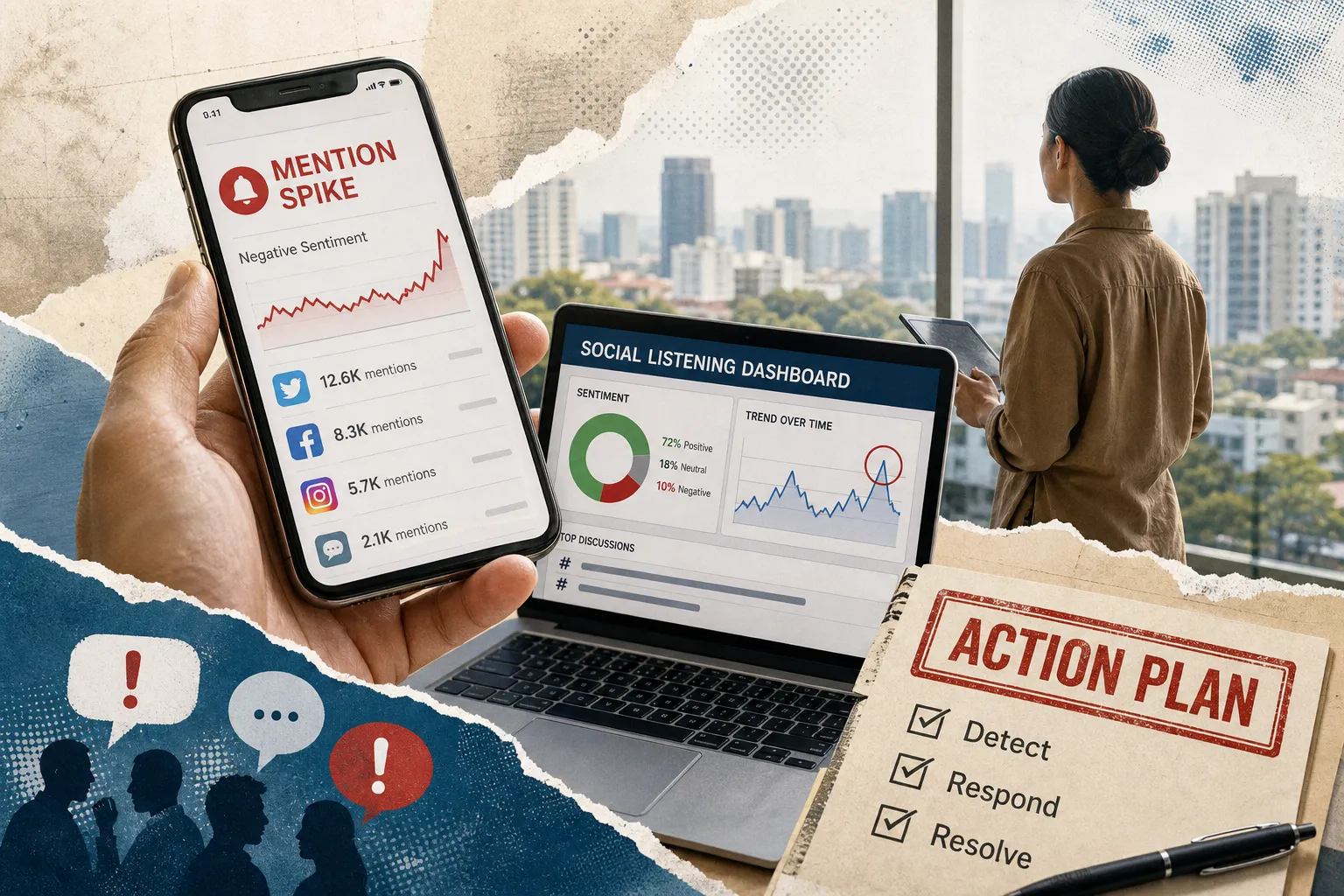
Monitoring is your support and comms team watching for direct mentions so they can reply fast and protect the brand. Listening is a different job entirely: tracking the broader, often unbranded conversation for patterns worth building content around. Content teams that only see the monitoring feed only ever get reactive posts. Content teams that get the listening layer get calendar material.
A fintech brand's support inbox might field the same confused question about how interest is computed dozens of times a week. That's monitoring, and it gets answered one ticket at a time. It's only when someone tracks that question as a recurring pattern across Facebook comments, app store reviews, and community forums over several weeks that it becomes what it actually is: a content gap. Media Meter's MediaWatch tracks brand, category, and competitor conversation across 1,500+ Philippine sources, which is the raw material this kind of pattern-spotting actually needs. A single day's mentions won't show you a trend, but a few weeks of tracked volume will, and whoever notices first is usually the one who ends up ranking for the question instead of just answering it in a ticket.
2. Mine Recurring Questions for Your Explainer and FAQ Pipeline
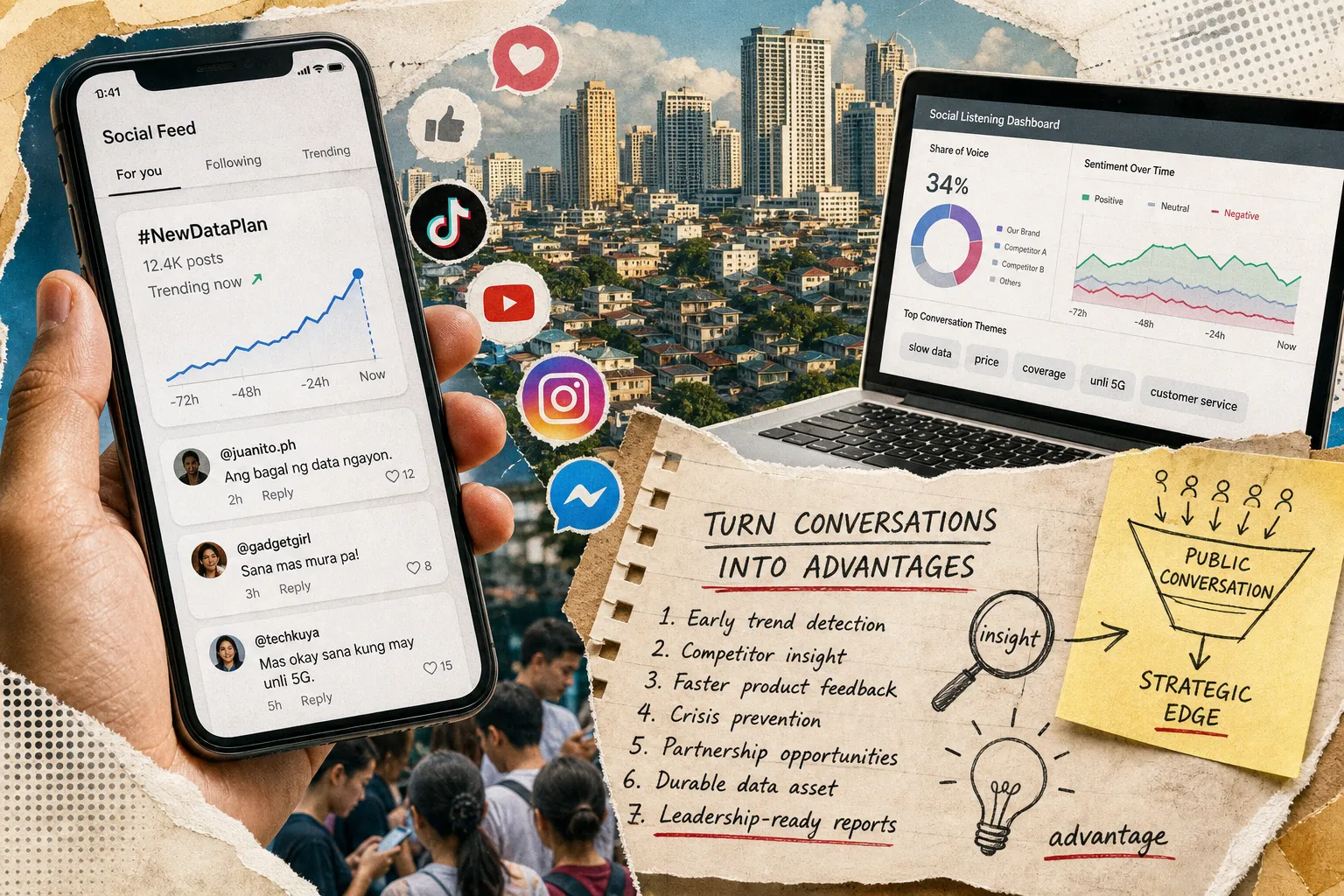
The single highest-value output of any listening program, for a content or SEO team specifically, is the recurring question. Every time the same question shows up across comment sections, forums, or DMs, your audience is handing you a content brief and a set of keywords for free. Increasingly, that same question format is what gets pulled into AI Overviews and chatbot answers, not just organic search results.
A telco brand might keep seeing variations of "why did my data promo expire before I used it up" across its social channels and community forums. Instead of leaving that buried in scattered replies, it becomes a proper explainer with a structured FAQ section, the kind of format that's built to be lifted directly into a search snippet or an AI-generated answer. That's the practical bridge between social listening and answer engine optimization: the questions are already public, and someone just has to be the one who bothers to structure the answer properly.
3. Turn Complaint Clusters Into "How We Fixed It" Content
A cluster of similar complaints is more than a reputation risk to manage down. It's proof that a real content gap exists, and addressing it head-on tends to outperform generic educational content because it's answering something people are visibly frustrated about.
A skincare brand that sees the same breakout complaint show up more than 40 times across comments and reviews in the two weeks after a launch has two options: quietly hope it blows over, or investigate, then publish a transparent usage guide or myth-busting post that names the concern directly and explains what's actually happening. The second option usually gets shared more, because it reads as a brand that was paying attention rather than one that got caught off guard, and the comparison posts that get written afterward tend to favor whichever brand actually addressed it.
Note: if a piece quotes or paraphrases a specific commenter, get consent or strip identifying details before publishing. The Data Privacy Act of the Philippines (RA 10173) covers how personal data, including comments tied to an identifiable person, can be reused in branded content, and anonymizing is both the safer legal move and the one that keeps people from feeling exposed for asking an honest question.
4. Let Category Conversations Define Your Content Pillars, Not Just Your Post Ideas
Individual questions and complaints fill in your weekly calendar. Recurring themes across the wider category conversation, not just your own brand's mentions, should be shaping your standing content pillars, the topics you always have a slot for regardless of what's trending that week.
A food and beverage brand tracking broader flavor and format conversation across TikTok and food forums, not just mentions of its own products, will notice the same ingredient or format mentioned in hundreds of posts within a two-week window, well before it hits mainstream food media. That's not a one-off post, it's a recurring "trend, translated" pillar the calendar can be built around season after season. Media Meter's SharedView extends that visibility across Facebook, X, Instagram, and YouTube, giving you the full cross-platform picture instead of one platform's echo chamber.
5. Match Your Listening Cadence to Your Editorial Cadence
Listening data is only useful if it arrives on a rhythm your calendar can actually use. A weekly listening digest should feed your reactive and timely content slots. A monthly or quarterly sentiment and theme review should be what validates or retires your standing content pillars.
In practice, that means your calendar needs two different types of open slots: a recurring "responsive" slot each week that stays unassigned until the latest listening digest tells you what belongs there, and a pillar-review meeting every quarter where you check whether last quarter's assumptions about what your audience cares about still hold up. Without that second cadence, calendars tend to keep running pillars long after the conversation has moved on.
6. Localize by Region and Platform, Not Just by Topic
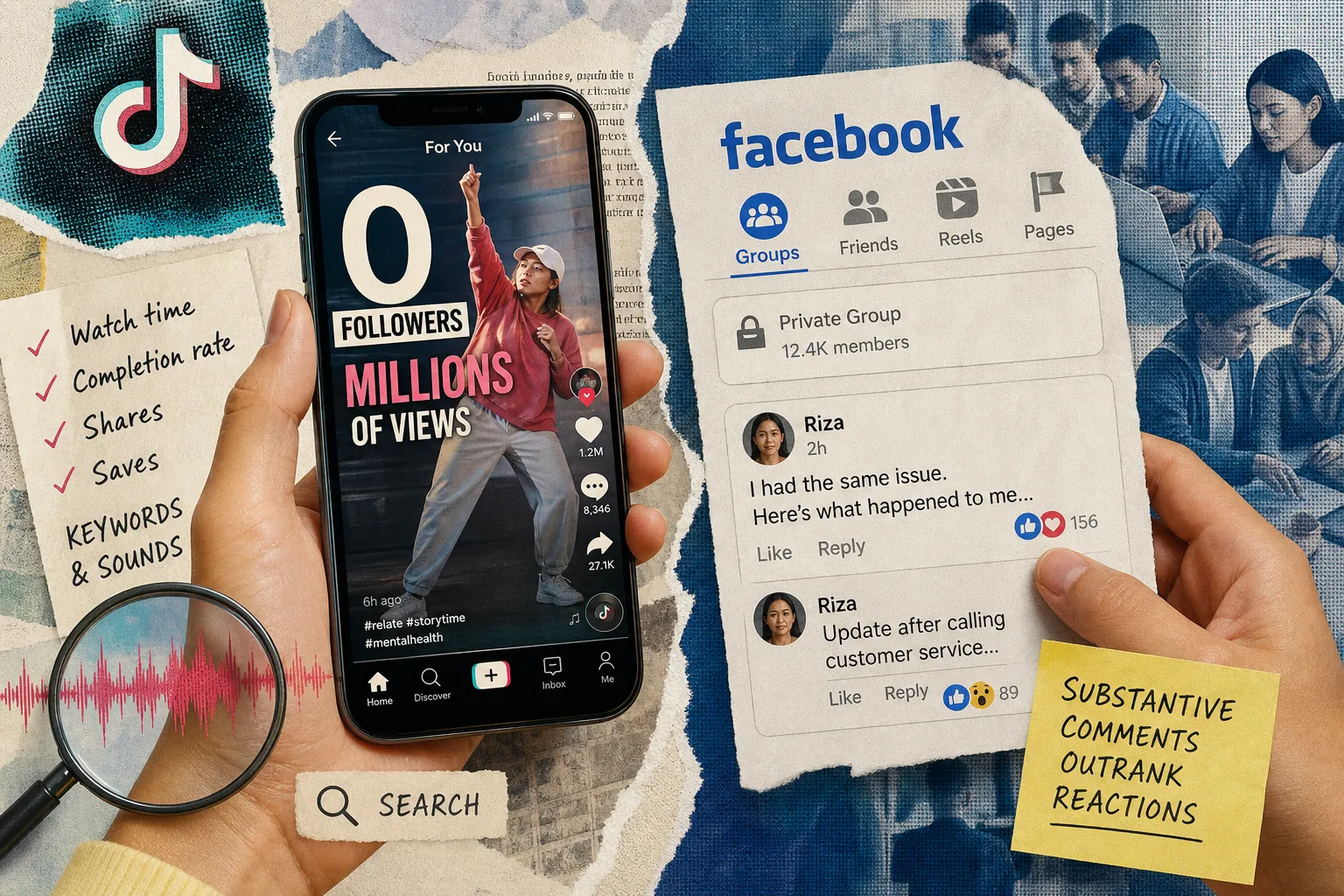
Philippine social conversation doesn't move as one block. What's trending in Facebook groups looks different from what's trending in TikTok comments, and what's picking up in Cebu or Davao often shows up weeks before it reaches Metro Manila. A national content calendar built only on Metro Manila-centric or single-platform listening will consistently miss the earliest, most useful signal.
An e-commerce brand that notices a product gaining traction in regional Facebook groups before it shows up in Metro Manila search volume has a genuine head start: a regional content angle or localized campaign it can run before the trend is competing with every other brand's near-identical national post.
7. Anchor Reactive Content to the Filipino Cultural Calendar
Not every piece of listening-driven content needs to be a scramble. The Philippine cultural calendar (BER months, Valentine's, Undas, back-to-school, and the 9.9 through 12.12 shopping events) follows predictable yearly patterns, which means listening insights tied to those moments can be planned for well in advance instead of rushed out reactively.
A fashion brand that tracks early "Christmas outfit" conversation, which historically starts creeping up as soon as the "-ber" months begin, can have a content series ready to go four to six weeks ahead rather than publishing after the trend has already peaked in everyone else's feed. Reactive doesn't have to mean rushed if you know roughly when the reaction is coming.
8. Close the Loop: Feed Performance Back Into Your Next Listening Cycle
The calendar shouldn't be the last stop. Once a listening-informed piece goes live, its performance (did the explainer actually reduce repeat questions in your comments, did the myth-busting post shift sentiment, did the regional angle get picked up nationally) is itself a signal worth listening to.
Building this feedback step into quarterly reporting, rather than treating each article as a closed case once it's published, is what separates a team that occasionally gets a viral hit from one that keeps getting better at knowing what to publish next instead of guessing at it again next quarter.
From Conversation to Calendar
None of this requires guessing harder, just treating the conversations already happening around your brand and your category as a standing input to editorial planning rather than an occasional glance at a dashboard before a meeting. Teams that build listening into their calendar rhythm, weekly for the responsive slots, quarterly for the pillars, consistently spend less time staring at a blank content calendar and more time publishing things their audience was already asking for.
Media Meter helps content and marketing teams turn scattered conversations into calendar-ready intelligence and package the before-and-after proof stakeholders ask for, with Philippine-calibrated coverage across the platforms your audience actually uses. Contact us to see how real-time social listening can take the guesswork out of your next editorial quarter.