Chinese auto brands surge 177% in PH as regional CKD policy tensions mount
Jetour Auto Philippines posts a 177% sales surge and seeks dealer partners, while Malaysian localization mandates and a BPI insurance complaint signal reputational and policy risks for the Philippine automotive sector.
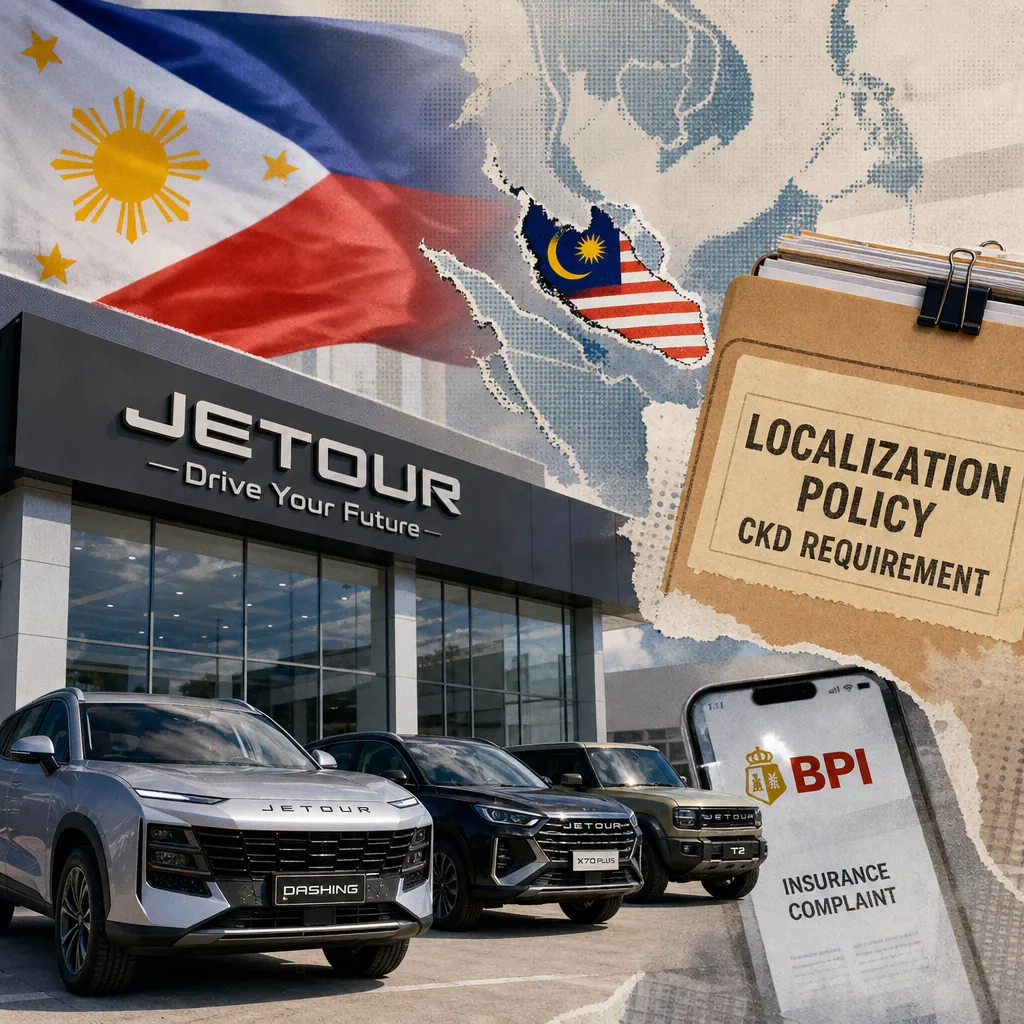
The Philippine automotive conversation on July 7, 2026, was dominated by two parallel narratives: the accelerating expansion of Chinese brands into the local market and intensifying regional policy debates over local assembly requirements. Jetour Auto Philippines reported a 177% year-on-year sales surge in the first five months of 2026 and is actively recruiting new dealer partners, a development that signals a structural shift in market dynamics. At the same time, Changan Philippines announced expansion to five additional locations, reinforcing the pattern of Chinese automakers scaling their Philippine footprint. These developments were accompanied by a detailed consumer complaint about BPI MS Car Insurance claims handling for a BYD Seal 5 DM-i, highlighting growing pains in after-sales support infrastructure as Chinese EV adoption rises. Meanwhile, policy debates from neighboring Malaysia—where the government has imposed a minimum import price for EVs and demanded greater localization of completely knocked-down (CKD) vehicles—are spilling into Philippine digital spaces, foreshadowing potential regulatory shifts.
Key themes
- Chinese brand sales surge reshapes market — Jetour Auto Philippines posted a 177% year-on-year sales increase in the first five months of 2026 and is actively seeking dealer partners to expand its network. Changan Philippines is opening five additional locations, indicating sustained momentum for Chinese marques. Globally, Jetour climbed to 8th position in South Africa's new-vehicle market and posted nearly 250% sales growth in Q1 2026.
- CKD localization policy tensions escalate regionally — Malaysia's Minister of International Trade and Industry (MITI) publicly insisted that carmakers must use genuine local content in CKD vehicles, not merely imported parts disguised as assembly. A second post reiterated that Malaysia should not be treated as a mere sales destination. These statements drew 316 combined likes and 227 comments on Facebook, with 104 "haha" reactions signaling public skepticism.
- EV import restrictions spark affordability debate — A Reddit thread criticized Malaysia's new regulation requiring imported EVs to have a minimum CIF value of RM200,000 (about ₱2.6 million) and 180kW power output, arguing it pushes EVs into a premium niche. The post garnered 533 upvotes and 152 comments, with users questioning whether such rules accelerate or hinder EV adoption amid global fuel price volatility.
- Consumer insurance complaint signals reputational risk — A Reddit user detailed a frustrating BPI MS Car Insurance claims process for a brand-new BYD Seal 5 DM-i, citing slow response times, an incorrect Repair Letter of Authority, and prolonged vehicle downtime. The user threatened to escalate to the Insurance Commission and media outlets, representing a canary-in-the-coal-mine for after-sales service quality as Chinese EV adoption grows.
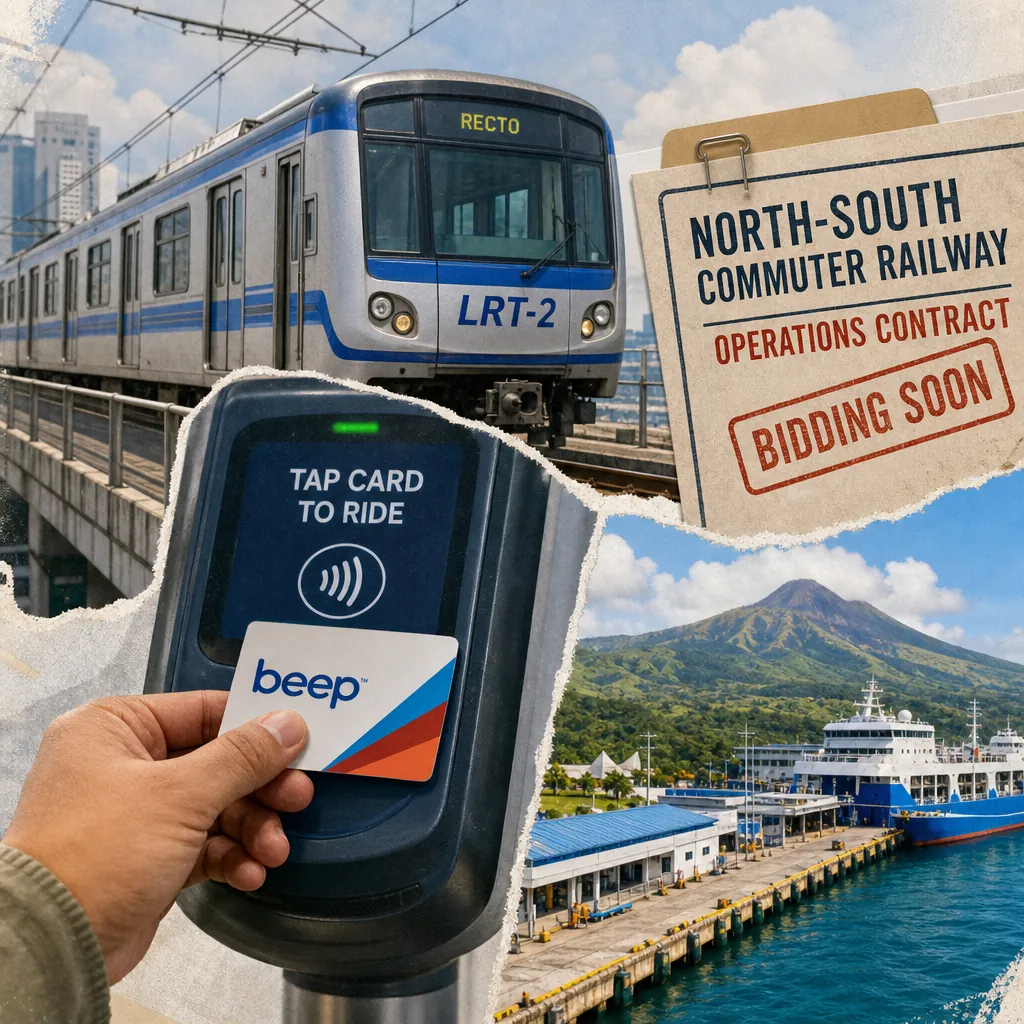
- Infrastructure developments support rail connectivity — Filinvest Land Inc. turned over a 6,000-square-meter property in Bicutan to the Department of Transportation (DOTr) for the Bicutan Station, a key interchange between the North-South Commuter Railway (NSCR) and the Metro Manila Subway. The station will use a unidirectional track-sharing design, creating a continuous rail link from Clark to Calamba.
- Overwhelming public demand for active transport infrastructure — A Pulse Asia survey cited by Mobility Awards found that 94% of Filipinos support increased investment in bike lanes and pedestrian walkways, and 93% want dedicated public transport lanes. The survey places pressure on legislators to allocate at least ₱1 billion for active transport infrastructure.
- Fuel subsidy digital disbursement via GCash — The DOTr and LTFRB partnered with GCash to deliver fuel subsidies directly to public utility vehicle drivers' e-wallets, eliminating long queues and improving transparency. The initiative responds to rising global fuel prices driven by Middle East geopolitical developments.
- TGR Philippine Cup returns with sustainability focus — The Toyota Gazoo Racing Philippine Cup resumed at Clark International Speedway, featuring low-carbon biofuels and serving as a "rolling laboratory" for innovation. The event debuted the Tamaraw Racing Class using a locally made one-make race car.
How the narratives stack
Dominant — Within the captured set, the dominant narrative is the rapid expansion of Chinese automotive brands in the Philippines, led by Jetour's 177% sales surge and dealer recruitment drive. This story drew significant attention on Twitter and Facebook, with posts from industry analysts and news accounts highlighting the structural shift in market dynamics. The narrative is reinforced by global sales data showing Chinese brands climbing rankings in South Africa and Pakistan.
Counter-narrative — A counter-narrative emerges from the policy debate around CKD localization and EV import restrictions, primarily driven by Malaysian developments but resonating in Philippine digital spaces. Critics argue that protectionist measures like Malaysia's RM200,000 minimum import price for EVs make electric vehicles less accessible, contradicting energy security and climate goals. This narrative frames government intervention as potentially counterproductive, especially when fuel prices are volatile.
Emerging — The consumer complaint about BPI MS Car Insurance represents an emerging narrative around after-sales service quality for Chinese EVs. While currently low in engagement (3 upvotes, 3 comments), the user's explicit threat to escalate to the Insurance Commission and media outlets could trigger broader conversation about insurer accountability and dealer transparency as Chinese EV adoption grows.
Suppressed — The overwhelming public demand for bike lanes and pedestrian infrastructure, as revealed by the Pulse Asia survey, receives relatively little social media discussion compared to the Chinese brand expansion and policy debates. Despite 94% of Filipinos supporting active transport investment, the topic is under-covered in the captured set, possibly because it lacks the novelty of the Chinese brand surge or the controversy of the CKD policy debate.
Platform insights
- Facebook — The platform served as the primary channel for official policy announcements, with the paultanautonews page driving the CKD localization narrative through two MITI-focused posts that accumulated 316 combined likes and 227 comments. The high volume of "haha" reactions (104 total) signaled public skepticism toward government localization mandates. A local dealer page also used Facebook to promote CKD bookings for the iCaur V23, indicating grassroots marketing for Chinese EVs is active on the platform.
- Twitter — This channel drove the market intelligence narrative, with analysts like @ryan_bubear and @paultantk providing sales data that contextualized the Chinese brand surge across South Africa, Pakistan, and the Philippines. The @bilyonaryo_ph post on Jetour Philippines' 177% sales surge was the most locally relevant, garnering 816 views. Tech-focused accounts like @catl_official and @tychodefeijter detailed the Jetour Zongheng F700's impressive specs, including a 1,400 km range and 10-minute charging time, adding technological credibility to the expansion story.
- Reddit — This platform emerged as the space for policy critique and consumer grievance. The May 7 thread by u/nelphieris_ on Malaysia's EV import restrictions became the anchor conversation for the CKD vs. CBU debate, accumulating 533 upvotes and 152 comments over two months. By July 7, the conversation had evolved to include direct comparisons between upcoming models like the Jetour F700 and Nissan Navara PHEV versus the BYD Shark, with users asking for pricing rumors and discussing how regional policies would affect market competition. The BPI MS insurance complaint thread, though low in engagement, represents a high-risk early warning signal.
Key voices and communities
- EV policy critics and enthusiasts — Concentrated on Reddit, this community produces detailed policy critiques that generate high engagement. The thread criticizing Malaysia's EV import restrictions received over 500 upvotes and 150 comments, indicating strong resonance among EV advocates and policy watchers. Participants frequently contrast CKD versus CBU trade-offs, questioning whether such rules accelerate or hinder EV adoption given global fuel price volatility. Their arguments about affordability and energy security are directly actionable for communications teams framing policy rationales.
- Chinese automaker expansion boosters — A mix of industry news accounts and brand advocates on Twitter and Facebook actively promote the rapid growth of Chinese automakers like Jetour, Chery, Omoda Jaecoo, and iCaur in markets including the Philippines, South Africa, and Pakistan. These posts consistently highlight double- or triple-digit sales increases and emphasize disruption through aggressive localization, competitive pricing, and advanced EV/PHEV technology.
- Consumer advocacy and complaint communities — Small but highly vocal pockets on Reddit share negative service experiences with automotive-related financial products, particularly car insurance claims. The BPI MS Car Insurance complaint thread, though modest in engagement, includes a user threatening escalation to the Insurance Commission and media outlets. This group's willingness to involve regulators and media makes them a high-priority stakeholder for crisis monitoring and response.
- International market analysts — A cluster of Twitter accounts provides data-driven analysis of automotive sales trends across multiple continents, often spotlighting Chinese brand performance. Accounts like @ryan_bubear and @stockcompounder publish regular sales breakdowns for South Africa and Pakistan, respectively, with moderate engagement. Their neutral, data-driven tone makes them credible sources for inclusion in industry intelligence reports.
Narrative streams
Jetour's 177% sales surge and Chinese brand expansion in the Philippines
The most significant development in the captured set is Jetour Auto Philippines' announcement of a 177% year-on-year sales surge in the first five months of 2026, coupled with an active search for new dealer partners. The post by @bilyonaryo_ph garnered 816 views and signaled a major shift in market dynamics. This local data point is part of a broader global trend: in South Africa, Jetour sales surged nearly 250% in Q1 2026, and the brand climbed to 8th position in the new-vehicle market. In Pakistan, Haval and Jetour are among the top-selling SUVs. The expansion is not limited to Jetour—Changan Philippines is opening five additional locations, and the iCaur V23 is being marketed for CKD bookings on Facebook. The read for the sector is that Chinese automakers are gaining critical mass in the Philippines, creating competitive pressure on Japanese incumbents and presenting new opportunities for local assembly, parts supply, and after-sales services. For PLDT and Smart, the digital features in these new EVs (e.g., screen-heavy dashboards) could inform content partnerships or advertising opportunities. For Malacañang, the rapid expansion signals potential local investment and job creation that may feature in economic messaging.
CKD localization policy tensions and the Malaysian precedent
On July 7, two Facebook posts from paultanautonews reported MITI Minister Johari Abdul Ghani's statements that carmakers should not treat Malaysia as merely a sales destination and must use genuine local content in CKD vehicles. The first post garnered 192 likes and 154 comments, with 51 "haha" reactions suggesting public cynicism toward the policy's enforceability. The second, more declarative post drew 124 likes and 73 comments, with 53 "haha" reactions continuing the skeptical tone. These statements connect directly to a Reddit debate initiated on May 7 by u/nelphieris_, who criticized Malaysia's new regulation requiring imported EVs to cost at least RM200,000 CIF and produce 180kW, arguing that "this feels like a step in the opposite direction – forcing EVs into a premium niche when they should be becoming a mainstream alternative". The thread's 533 upvotes reflected widespread resonance with this critique. For Philippine policymakers, the Malaysian moves offer a case study in how localization requirements can affect market pricing and consumer access. The TRAIN law excise tax structure and EVIDA incentives are already contested issues in the Philippines, and similar protectionist measures could be invoked by local industry groups. Communications teams should prepare briefing materials on how the Philippines' approach—zero tariffs for CKD EVs and excise tax exemptions—differs from Malaysia's more restrictive stance.
Consumer insurance complaint: a canary in the coal mine for after-sales service
A Reddit post by u/PrideObjective8079 detailed a frustrating BPI MS Car Insurance claims process for their brand-new BYD Seal 5 DM-i. The user noted that the insurance provider issued a Repair Letter of Authority with incorrect details, causing the authorized casa to delay repairs, and wrote "parang hindi nila binabasa nang buo yung email thread" ("it's like they don't read the entire email thread"). With only 3 upvotes and 3 comments, the post represents an isolated consumer grievance rather than a viral moment, but its timing alongside the Jetour and Changan expansion news highlights a growing tension: as new Chinese EV brands flood the Philippine market, the support infrastructure—including insurance claims handling—appears unprepared for the volume of claims. The user explicitly threatened to escalate the matter to the Insurance Commission and media outlets, a warning that communications teams at both BPI and BYD Philippines should monitor closely given the reputational stakes involved. This narrative stream underscores the need for proactive service review and rapid-response protocols for claims-related social media mentions.
Infrastructure developments: Filinvest Land turnover and rail connectivity
Filinvest Land Inc. (FLI) turned over a 6,000-square-meter property in Bicutan to the DOTr, clearing the way for the Bicutan Station—a key interchange between the North-South Commuter Railway (NSCR) and the Metro Manila Subway. The station will use a unidirectional track-sharing design, allowing Metro Manila Subway trains to run on the NSCR line, creating a continuous rail link connecting Clark, Metro Manila, and Calamba. FLI also announced plans to build the Filinvest Pedestrian Link, an elevated pedestrian bridge connecting the station to its adjacent 6.5-hectare property and future developments. The NSCR, with a budget of ₱873.6 billion, will slash travel time from Clark to Calamba to 2.5 hours from four hours. This development is part of a broader infrastructure push that includes Sumitomo Corp.'s interest in operating and maintaining the NSCR and investing in renewable energy projects. The read for the sector is that improved rail connectivity could shift commuting patterns, potentially reducing road congestion and influencing automotive sales in areas served by the new lines.
Public demand for active transport and fuel subsidy digitalization
A Pulse Asia survey cited by Mobility Awards found that 94% of Filipinos support increased investment in bike lanes and pedestrian walkways, and 93% want dedicated public transport lanes. The survey, conducted in May, places pressure on legislators to allocate at least ₱1 billion for active transport infrastructure. Meanwhile, the DOTr and LTFRB partnered with GCash to deliver fuel subsidies directly to public utility vehicle drivers' e-wallets, streamlining the disbursement process and eliminating long queues. The initiative responds to rising global fuel prices driven by Middle East geopolitical developments. These two streams—active transport demand and digital subsidy delivery—reflect a broader push for more efficient and sustainable transportation solutions in the Philippines.
Conversation trajectory
Over the next 4–6 weeks, the conversation is expected to evolve along several tracks:
- Chinese brand expansion will intensify as Jetour and Changan open new dealerships and actual road presence increases. The next CAMPI sales report (expected within weeks) will quantify Chinese brand share growth against incumbents, likely reinforcing the narrative of a structural market shift.
- CKD policy debate will spill over from Malaysia as Philippine-focused Reddit and Twitter spaces draw parallels to local excise tax exemptions and zero-tariff policies under EVIDA. Any official Philippine government statement on CKD local content requirements or EV import policy—especially if MITI's Malaysia statements are cited in local hearings or media commentary—could trigger a spike in discussion.
- Consumer insurance complaints may amplify if the BPI MS claims case escalates to the Insurance Commission or media outlets. The user's explicit threat to involve media and regulators makes this a high-priority early-warning signal. A single viral post could trigger a wave of similar complaints, especially as Chinese EV adoption grows and claims volumes rise.
- Infrastructure developments will continue to generate positive coverage as the NSCR and Metro Manila Subway projects progress. The Filinvest Land turnover and Sumitomo's interest in rail operations signal sustained momentum for rail connectivity.
Trigger events to watch:
- Next CAMPI sales report (quantifies Chinese brand share)
- Insurance Commission complaint escalation from the BPI MS claims case
- Official Philippine government statement on CKD local content requirements or EV import policy
- Opening of new Jetour or Changan dealerships in the Philippines
- Any media coverage of the BPI MS insurance complaint
Response guidance
For BPI communications team:
- Immediate: Address the Reddit insurance complaint directly with an official response. Acknowledge the error in the Repair Letter of Authority, apologize for the delay, and outline steps being taken to expedite the claim. Offer a dedicated claims officer contact and a public escalation path (e.g., Insurance Commission) to show transparency.
- Short-term: Review claims handling protocols for EV-related incidents, particularly around response times and document accuracy. Develop a rapid-response framework for claims-related social media mentions to prevent escalation.
- Medium-term: Proactively communicate improvements in claims processing for EVs to rebuild trust. Consider a targeted campaign highlighting streamlined claims for new energy vehicles.
For Malacañang communications team:
- Brief on regional CKD localization trend: Use the Malaysian moves and the public critique of EV affordability as a case study to inform messaging around any forthcoming excise tax, safeguard duty, or EV incentive announcements. Position the Philippines as a balanced competitor that attracts investment while ensuring consumer choice.
- Monitor EV policy sentiment: The Reddit debate about Malaysia's EV import restrictions offers a lens to test messaging around new EV incentives or tariff adjustments. Develop a concise explainer that addresses "affordability vs. local assembly" concerns to preempt negative framing.
- Highlight active transport demand: The Pulse Asia survey showing 94% support for bike lanes provides a strong mandate for infrastructure investment. Use this data to justify budget allocations for active transport.
For PLDT and Smart:
- Explore content partnerships: The digital features in new Chinese EVs (e.g., connected dashboards, telematics) present opportunities for content partnerships or advertising. Monitor the Jetour and Changan expansion for potential B2B collaborations.
- Monitor charging infrastructure conversation: As Chinese brand growth intensifies, demand for public charging points will rise. Position PLDT/Smart as enablers of the EV ecosystem through smart charging narratives.
General sector guidance:
- Avoid anti-Chinese brand sentiment: Posts celebrating Jetour growth may trigger nationalist backlash or questions about quality/after-sales. Engage neutrally—acknowledge increased choice but avoid taking sides.
- Frame CKD vs. CBU policy carefully: Malaysia's strict localization demands may be invoked by Philippine protectionists. Recognize the need for local value addition, but caution that overly restrictive policies can limit early EV adoption. Support with examples of balanced policies.
- Prepare for aftersales service scrutiny: As Chinese EV adoption grows, expect increased attention on parts availability, repair timelines, and insurance claims handling. Proactive communication about service network expansion can mitigate reputational risk.
See the full picture behind today's signals.
This report draws from Media Meter's MediaWatch, our real-time monitoring engine tracking 2,470+ Philippine sources across print, broadcast, digital, and social. Explore how the platform turns raw coverage into decision-grade intelligence, then see how it's configured for teams like yours — whether you're in PR agencies, corporate comms, government, or marketing.
Want more? Browse our Report Library for sector and crisis intelligence, or request a demo and we'll have your brand set up before the call.
Want this kind of intelligence on your brand?
This brief is built on the same MediaWatch methodology that runs continuously across every brand we monitor. See your competitive landscape, Impact Score, and narrative trajectory in a 30-minute demo.