Floods, fraud, and EV momentum shape PH auto day
A daily snapshot of Philippine automotive conversation: monsoon flooding strands motorists, online vehicle fraud draws scrutiny, and EV adoption accelerates with new model launches and enforcement debates.
The day's conversation in the Philippine automotive space ran on three parallel tracks: a monsoon that turned Metro Manila streets into rivers, a police-recovered stolen Ford Ranger that exposed the risks of buying vehicles online, and a burst of electric-vehicle momentum that ranged from a new Ford hybrid launch to a viral debate over clamping gas cars at charging stations. Each thread drew its own audience, and together they sketched a sector caught between old vulnerabilities and new opportunities.
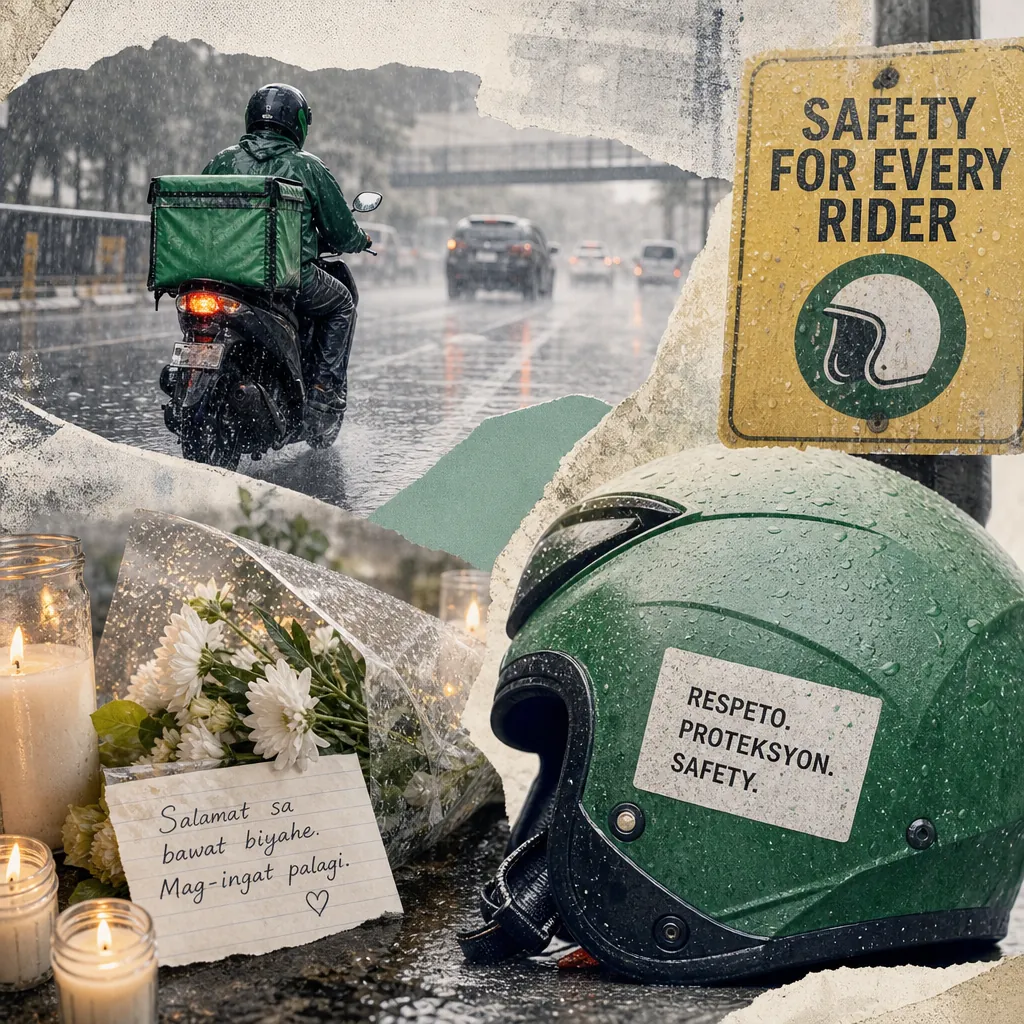
The flooding was the day's most visceral story. As the southwest monsoon (habagat) battered the capital, social media filled with videos of cars wading through waist-deep water, a tree crushing a vehicle along Lacson Street, and a motorcycle rider killed in Muntinlupa when a tree fell on the road. The Philippine STAR's footage of waist-deep flooding in Parañaque drew over 3,000 reactions and 582 comments on Facebook, while the same clip accumulated more than 32,000 views on Twitter. Local government units, led by the Manila City Disaster Risk Reduction and Management Department (MCDRRMD), posted a steady stream of updates reassuring residents that roads remained passable despite gutter-deep flooding at choke points like Taft Avenue and Quirino Station. But the public's response was telling: a media repost of one update drew 998 likes, 192 shares, and 412 comments, with 309 "sad" reactions and 290 "haha" reactions — a mix of frustration and dark humor that suggested fatigue with the annual ritual of flooding in the same places.
Meanwhile, the Quezon City Police District (QCPD) reported the recovery of a stolen 2020 Ford Ranger that had been offered for sale online for ₱970,000 to an unsuspecting buyer, who discovered the documents and plate number were fake. The story resonated across platforms, drawing 55 likes and 7 shares on one Facebook post, and 1,111 views on Twitter. The QCPD's reminder to verify vehicle documents through the Land Transportation Office (LTO) before completing transactions became the day's actionable takeaway, linking the fraud narrative directly to the agency's role in consumer protection.
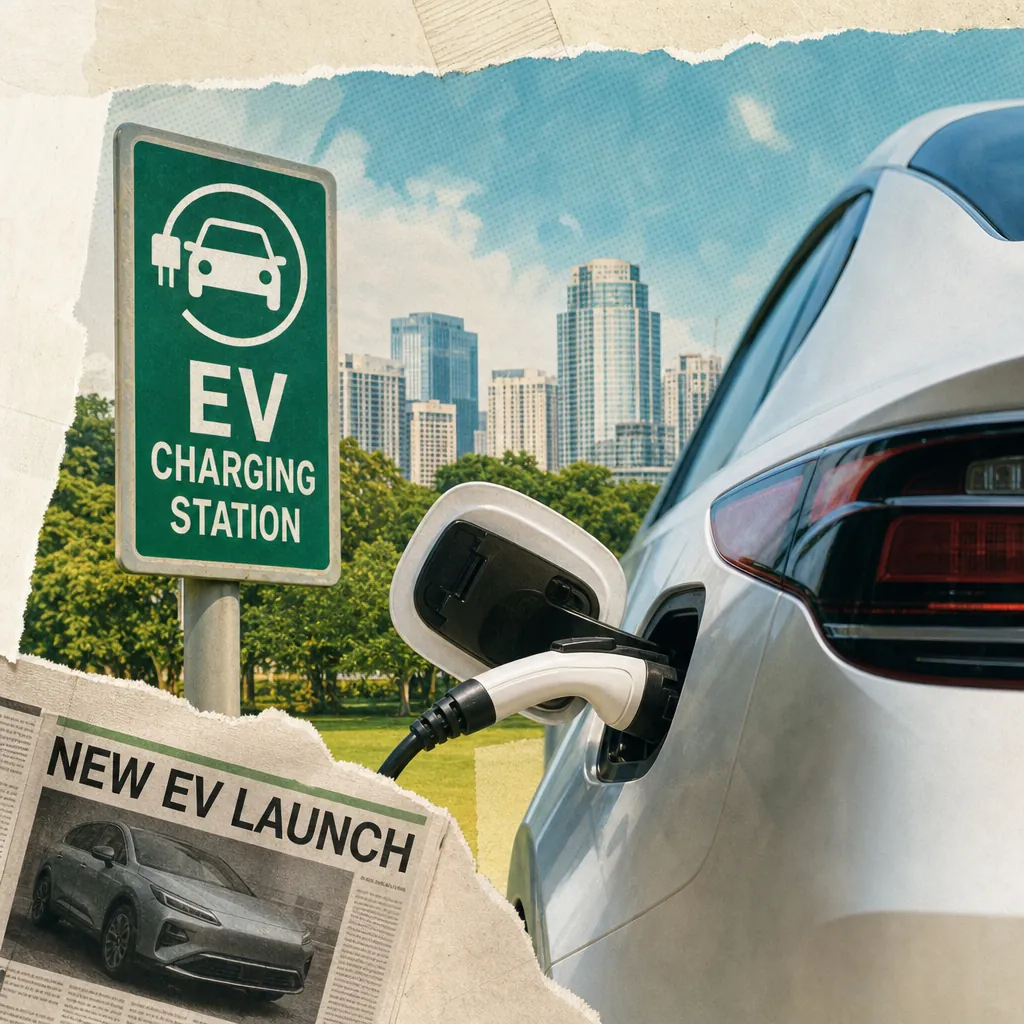
On the EV front, Ford Philippines launched the all-new 2026 Territory Platinum Hybrid, building on the success of its Territory Hybrid, which has sold 4,405 units as of June 2026 and made Ford the country's second-largest hybrid-electric-vehicle brand. The launch was covered by Inquirer Plus, which also reported that Chinese brands MG and Omoda-Jaecoo continue to grow, with Omoda-Jaecoo ranking as the third-best-selling battery electric vehicle (BEV) brand in the country for the first half of 2026. A Reddit post showing an internal combustion engine (ICE) car clamped at an EV charging station at Solaire drew 293 upvotes and 43 comments, with commenters largely approving of the enforcement — a signal that public sentiment is shifting toward protecting EV infrastructure.
Key themes
- Monsoon flooding exposes vehicle vulnerability and infrastructure gaps: The day's dominant theme was the physical toll of flooding on vehicles and the public's frustration with recurring flood-prone areas. Videos of cars struggling in deep water and a fatal tree-fall incident in Muntinlupa highlighted the risks motorists face, while the MCDRRMD's repeated "passable" assurances drew skepticism from residents who saw chest-deep flooding in their own barangays.
- Online vehicle fraud raises consumer protection alarms: The QCPD's recovery of a stolen Ford Ranger sold online with fake documents became a cautionary tale, with authorities urging buyers to verify documents through the LTO. The story's cross-platform engagement — from Facebook reactions to Twitter views — underscored growing public anxiety about the safety of online vehicle purchases.
- EV adoption accelerates with new launches and market data: Ford's Territory Platinum Hybrid launch, combined with strong sales figures for the Territory Hybrid and the rise of Chinese EV brands like Omoda-Jaecoo, signaled a maturing EV market. Global data showing EVs now cheaper than hybrids on average added context to the local momentum.
- Enforcement of EV infrastructure rules gains public approval: The clamping of an ICE car at a Solaire charging station drew strong support on Reddit, with 293 upvotes and 43 comments. This suggests a public appetite for protecting EV charging spots, a sentiment that could influence policy and brand messaging.
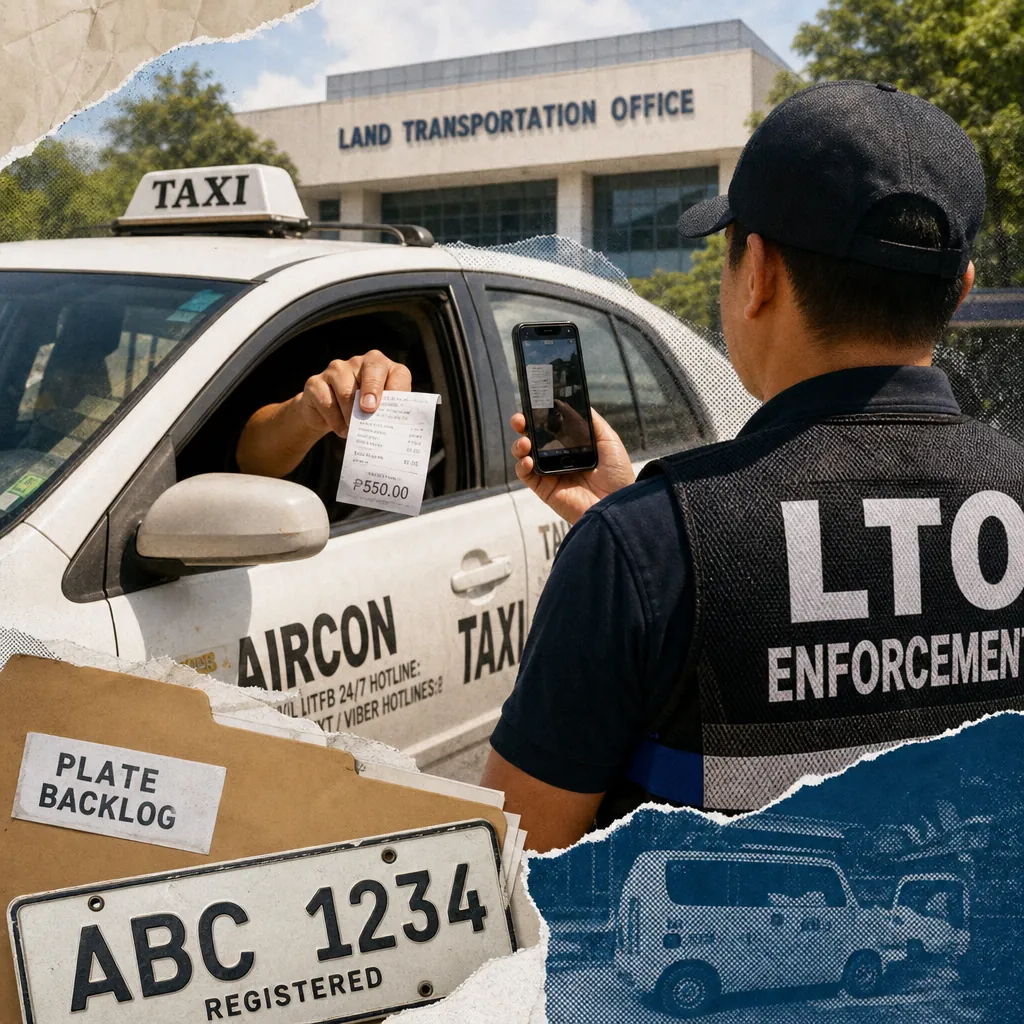
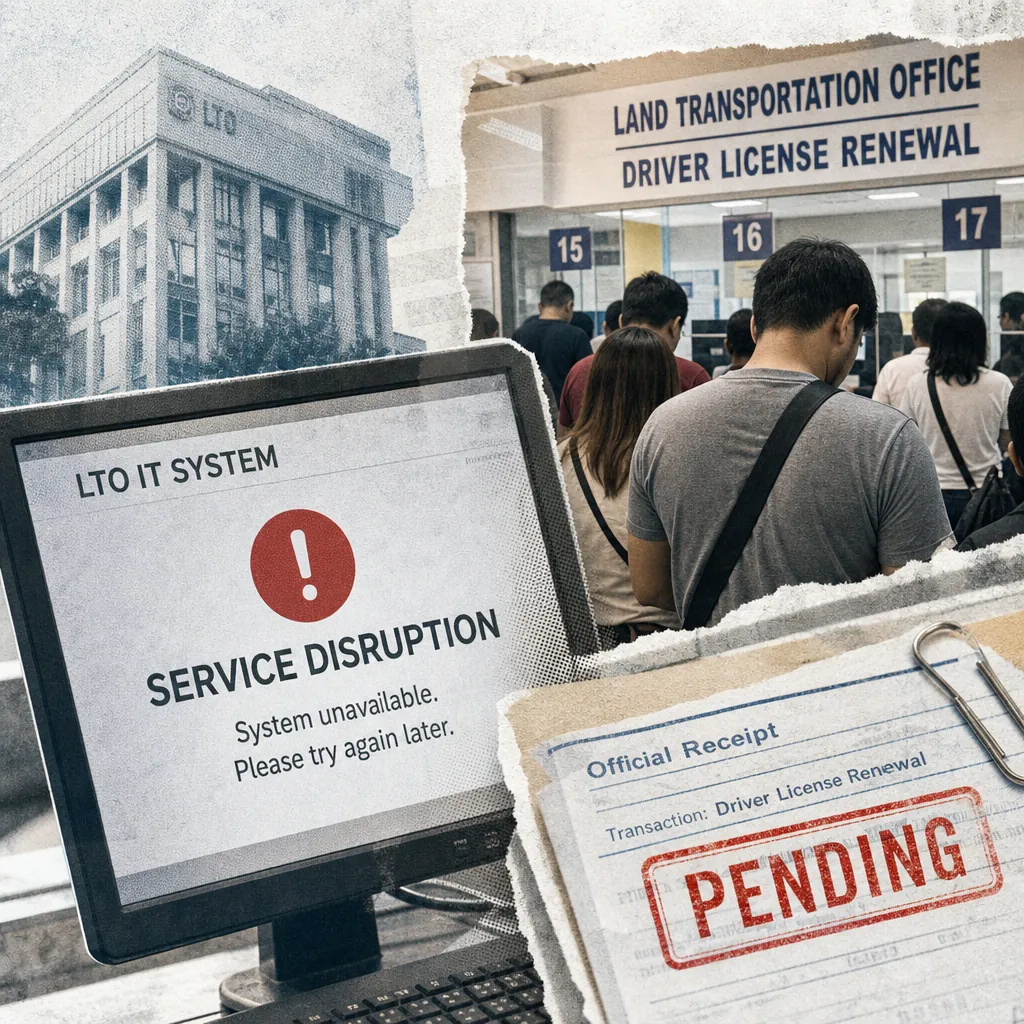
- LTO system reliability and plate distribution remain pain points: The LTO's Land Transportation Management System (LTMS) outages and the ongoing license plate backlog continued to generate public frustration, with viral posts about improvised plates and calls for stricter enforcement drawing tens of thousands of views. The launch of LTO-7's online plate spotter offered a glimmer of progress.
- Regulatory crackdowns target colorum vehicles and overcharging taxis: The LTFRB intensified its crackdown on colorum (illegal) public utility vehicles in Northern Mindanao and suspended a taxi operator for overcharging a foreign tourist ₱2,000 for a five-minute trip. These actions reinforced a narrative of regulatory vigilance, though public skepticism about consistent enforcement persisted.
- Motorcycle safety emerges as a distinct concern: Two motorcycle riders were killed in separate highway accidents in southern Cebu, and a rider died in Muntinlupa when a tree fell on his vehicle. These incidents highlighted the vulnerability of motorcycle riders during severe weather and on busy highways, prompting calls for better road safety measures.
- Government infrastructure projects and vehicle auctions draw attention: The DOTr's agreement with the Villar Group to build the Las Piñas LRT-1 station and the Bureau of Customs' negotiated sale of luxury vehicles (including a Ferrari SF90 Stradale for ₱30.1 million) provided positive news stories, showing government action on mobility and asset disposal.
How the narratives stack
Dominant: The monsoon flooding narrative dominated the day's conversation, both in volume and emotional weight. The Philippine STAR's Parañaque video alone drew over 3,000 reactions and 582 comments on Facebook, and the Muntinlupa rider death added a tragic dimension. This was the story that most directly affected ordinary motorists and commuters, and it generated the highest engagement across platforms. Within the captured set, flood-related posts accounted for the majority of high-engagement items, though this may reflect the monitoring's focus on vehicle-related content.
Counter-narrative: Amid the chaos, a counter-narrative of preparedness and response emerged from government agencies. The MMDA, under Chairman Atty. Don Artes, deployed tow trucks, military trucks, and rapid response vehicles, and posted updates on asset deployment. The MCDRRMD's systematic flood monitoring — with updates every hour or so — provided a structured, reassuring counterpoint to the raw footage of stranded vehicles. However, public skepticism was evident in the muted engagement and "haha" reactions to some official posts, suggesting that the counter-narrative was not fully convincing.
Emerging: The EV adoption story is emerging as a significant trend, with multiple signals converging: Ford's hybrid launch, strong sales for Chinese EV brands, and the viral approval of EV charging enforcement. Global data showing EVs now cheaper than hybrids on average adds a cost-competitiveness angle that could accelerate adoption in the Philippines. This narrative is still building, but the day's events suggest it will grow in prominence.
Suppressed: The story of the two motorcycle riders killed in Cebu highway accidents received coverage in the captured set but did not generate the same level of social engagement as the flooding or fraud stories. This is a significant safety issue that deserves more public attention, particularly given the vulnerability of motorcycle riders during the monsoon season. The lack of viral traction may reflect a desensitization to road fatalities, but it remains an under-covered aspect of the day's conversation.
Platform insights
- Facebook: The dominant platform for both official updates and viral content. The Philippine STAR's Parañaque flood video led all engagement with over 3,000 reactions and 582 comments, while the MCDRRMD's flood updates drew hundreds of reactions and shares. Facebook also hosted the QCPD's Ford Ranger fraud post, which received 81 likes, 8 shares, and 8 comments. The platform's reaction buttons provided a nuanced picture of public sentiment, with "sad" and "haha" reactions often outnumbering "likes" on flood-related posts.
- Twitter (X): Functioned as the rapid-news wire, with the Philippine STAR's flood clip accumulating over 32,000 views and the MMDA's asset deployment thread reaching 2,700 views despite zero likes. Twitter was also the platform for the most tragic update — the Muntinlupa rider death — shared as hard news. Engagement was primarily through views and likes rather than comments, indicating a consumption pattern focused on quick situational awareness.
- Reddit: Community discussions focused on practical consumer concerns and EV enforcement. The post about the ICE car clamped at Solaire drew 293 upvotes and 43 comments, with commenters largely approving. A first-time car buyer's post about a 2016 Mazda 3 received 196 upvotes and 25 comments, reflecting strong community support for practical purchases. Reddit also hosted technical discussions about coolant mixing and infotainment repairs, showing a community that values peer validation over official channels.
- YouTube: While not a major source of original content in this window, YouTube hosted historical enforcement videos, such as the Highway Patrol Group arresting fake green plate holders and the LTO identifying a driver with a fake "7" protocol plate. These videos provided context for ongoing enforcement concerns but did not generate significant new engagement.
Key voices and communities
- Consumer Advocacy and Fraud Watchdogs: Concerned citizens and community pages on Facebook and Twitter amplified the QCPD's Ford Ranger fraud story, sharing police advisories and cautionary tales. Their primary message was the importance of verifying vehicle documents through the LTO before completing any transaction. This group's high-volume sharing of the fraud story made it a key driver of the consumer protection narrative.
- Motorcycle Enthusiast Communities: Active on Reddit and Facebook, this group consists of riders seeking purchasing advice, maintenance tips, and community-organized events. The day's discussions included a first-time maxi scooter buyer comparing the Honda ADV 350 and Yamaha Xmax 300, and a debate over mixing coolants at a Honda dealership. Their influence is characterized by detailed technical discussions and strong peer-to-peer trust.
- Regulatory and Law Enforcement Entities: The LTO, QCPD, LTFRB, and MMDA maintained active public communications channels, serving as authoritative sources for vehicle-related regulations and enforcement updates. Their posts on license extensions, system outages, and enforcement actions drew hundreds to thousands of views, but also faced public skepticism about consistency and reliability.
- Automotive Lifestyle and Enthusiast Owners: Car owners sharing personal milestones, technical fixes, and EV adoption experiences on Reddit, Facebook, and YouTube. The first-time Mazda 3 buyer's post and the EV charging clamp discussion were notable examples. This group's authentic testimonials and pain points around dealership service are valuable for brand communicators.
- Media and Commercial Vehicle Sellers: Automotive journalists, dealership marketing pages, and online sellers operating on Facebook, Twitter, and YouTube. Their content includes promotional posts for vehicles like the VinFast VF 3 and Toyota Vios, as well as news coverage of launches like the Ford Territory Platinum Hybrid. Their reach and commercial intent make them critical for competitive intelligence.
Narrative streams
Monsoon flooding: From inconvenience to tragedy
The day's flooding narrative evolved from isolated incidents to a systemic critique of urban infrastructure. Early posts showed a car navigating two-foot floods along NS Amoranto Avenue in Quezon City, and the Manila City DRRM reported a tree falling on a vehicle along Lacson Street. By late afternoon, the Philippine STAR's report on waist-deep flooding at Fourth Estate in Parañaque became the day's most resonant moment, amassing over 3,000 reactions and 582 comments as motorists shared their own experiences of being trapped. The Muntinlupa rider death — a 65-year-old man killed when a tree fell on his motorcycle — elevated the stakes from property damage to loss of life.
The MCDRRMD's flood monitoring updates, posted on Facebook and Twitter, provided a structured counterpoint. The department's use of standardized flood depth classifications (gutter-deep, ankle-deep, etc.) was praised for its clarity, but the repetition of the same locations — Taft Avenue, Quirino Station, PGH — across multiple updates fueled public frustration. A media repost of one update drew 998 likes, 192 shares, and 412 comments, with 309 "sad" reactions and 290 "haha" reactions, reflecting a public that was both concerned and resigned.
For the automotive sector, the flooding narrative carries direct implications. The viral footage of cars struggling in deep water creates negative associations with vehicle capability, but it also presents an opportunity for brands to highlight water-wading specifications and flood-resilience features. The absence of any automotive brand voice in the conversation allowed the negative imagery to solidify, suggesting a gap that proactive communicators could fill.
Online vehicle fraud: A cautionary tale with systemic implications
The QCPD's report on the recovered stolen Ford Ranger was the day's most significant consumer protection story. The vehicle had been mortgaged for ₱650,000 in June 2022, and the respondents failed to return it despite demands. It was later offered for sale online for ₱970,000 to an unsuspecting buyer, who discovered the documents and plate number were fake. The QCPD's reminder to verify documents through the LTO became the actionable takeaway.
The story's cross-platform engagement — 55 likes and 7 shares on one Facebook post, 1,111 views on Twitter — indicates strong public resonance. The emotional split between sympathy and schadenfreude (13 "sad" reactions and 5 "haha" reactions on one version) suggests a complex public response. The case also raises questions about the effectiveness of current verification processes and the LTO's ability to protect consumers, given that the vehicle had been listed as stolen since 2024.
For banks and financial institutions, this narrative presents an opportunity to offer value-added verification services or partner with law enforcement on awareness campaigns. The QCPD's advisory directly links the fraud to the need for LTO verification, creating a clear role for financial institutions in facilitating secure transactions.
EV momentum: New launches, market data, and enforcement debates
The EV narrative was multifaceted. Ford Philippines launched the all-new 2026 Territory Platinum Hybrid, a sportier and more premium variant of its successful Territory Hybrid. The company reported 4,405 units sold as of June 2026, making it the country's second-largest hybrid-electric-vehicle brand. Inquirer Plus also reported that Chinese brands MG and Omoda-Jaecoo continue to grow, with Omoda-Jaecoo ranking as the third-best-selling BEV brand in the first half of 2026, with 1,484 units sold.
Global data added context: a report from Mobility Global showed that the average price of an EV worldwide has fallen to about $37,000, down 9% from 2020, while hybrid prices have risen 16% to $39,000. This price crossover, driven by falling battery costs and Chinese manufacturing scale, suggests that EVs are becoming more accessible in emerging markets like the Philippines.
The Reddit post about the ICE car clamped at Solaire drew 293 upvotes and 43 comments, with commenters largely approving of the enforcement. This indicates strong public support for protecting EV charging infrastructure, a sentiment that could influence policy and brand messaging. However, automotive clients should avoid appearing to endorse punitive measures against their own customers; a balanced approach would acknowledge the need for proper EV infrastructure use while highlighting plans to expand charging station availability.
Regulatory enforcement: Crackdowns and system reliability
The LTO and LTFRB were active on multiple fronts. The LTFRB intensified its crackdown on colorum (illegal) public utility vehicles in Northern Mindanao, conducting surprise inspections in Iligan City. The agency also suspended a taxi operator and driver for 30 days for overcharging a foreign tourist ₱2,000 for a five-minute trip, with the LTO confiscating the driver's license and impounding the taxi. These actions reinforced a narrative of regulatory vigilance, though public skepticism about consistent enforcement persisted, as evidenced by the viral post calling for action against erring buses (95,266 views, 3,714 likes).
The LTO's system reliability remained a pain point. The Land Transportation Management System (LTMS) was temporarily unavailable due to a technical issue, drawing 553 views but zero engagement, suggesting public fatigue with recurring system failures. The LTO-7's launch of an online license plate "spotter" website offered a positive development, allowing motorists in Central Visayas to check the availability of their plates online. This initiative addresses the long-standing license plate backlog, a recurring source of public frustration.
Government infrastructure and asset disposal
Two positive government stories emerged. The Department of Transportation (DOTr) reached an agreement with the Villar Group to build the Las Piñas LRT-1 station, with the group accepting three nonnegotiable conditions, including lifting the mortgage on donated land. Transport Secretary Giovanni Lopez emphasized that commuters are the real winners. The Bureau of Customs' negotiated sale of forfeited goods and luxury vehicles generated ₱33.5 million in revenues, including a 2018 Lexus LX570 sold for ₱2 million and a 2024 Ferrari SF90 Stradale for ₱30.1 million. These stories provided a counterpoint to the day's negative narratives, showing government action on mobility and asset disposal.
Conversation trajectory
- Flood-related vehicle damage discussions will intensify: Within 48–72 hours, expect a surge in conversations about water intrusion, engine damage, and insurance claims as floodwaters recede and damage assessment begins. Automotive brands should prepare preemptive customer care messaging for dealerships and service centers, and consider publishing flood safety guides that address water-wading specifications and post-flood inspection protocols.
- Online vehicle fraud concerns will persist: The Ford Ranger case is likely to remain in public consciousness for the next 3–6 weeks, with more buyers sharing verification experiences. This creates a window for banks and financial institutions to offer value-added verification services or partner with law enforcement on awareness campaigns. The QCPD's advisory provides a clear call to action.
- EV adoption narrative will accelerate: The combination of new model launches, strong sales data, and the viral approval of EV charging enforcement suggests the EV conversation will grow. Expect more discussions about charging infrastructure, battery safety in flood conditions, and the cost competitiveness of EVs versus hybrids. Brands should leverage this momentum with clear, educational content.
- LTO system reliability will remain a reputational risk: The LTMS outage and the license plate backlog are recurring issues that could resurface with any new technical disruption. The LTO-7 plate spotter is a positive step, but broader system modernization is needed. Government communicators should prepare responsive templates for potential outages and proactively communicate modernization efforts.
Trigger events to watch: The next significant rain event or typhoon declaration could produce a 5–10× surge in flood-related conversation volume. Any LTO or MMDA announcement regarding flood-affected vehicle registration or road closures would reframe the conversation toward regulatory compliance. The release of September vehicle sales data from industry associations could connect flood concerns with sales performance narratives. Policy announcements regarding EV incentives or charging infrastructure expansion could significantly reframe the EV conversation.
Response guidance
For automotive brands, the flooding narrative presents an opportunity to position vehicles as resilient and to provide practical safety guidance. Develop content that highlights water-wading specifications, flood preparedness tips, and after-sales support during weather emergencies. Avoid criticizing specific vehicle makes or models based on viral videos; instead, frame the conversation around driver awareness and the unpredictable nature of flood conditions.
For government agencies, the public's skepticism toward official "passable" reports suggests a need for more granular, honest updates. The MCDRRMD's flood depth classifications were well-received, but the repetition of the same locations fueled frustration. Consider partnering with local government units to provide real-time, location-specific data that acknowledges the reality of conditions.
For financial institutions, the Ford Ranger fraud case highlights the importance of consumer education around online vehicle purchases. Offer verification services or partner with law enforcement on awareness campaigns. Position your brand as a trusted protector against scams, using the QCPD's advisory as a springboard.
For EV stakeholders, the strong public approval of charging enforcement suggests a supportive environment for EV adoption. However, avoid appearing to endorse punitive measures against customers. Instead, highlight plans to expand charging infrastructure and educate consumers on proper charging etiquette. Leverage the price crossover data to emphasize the cost competitiveness of EVs.
Sensitive topics to navigate include the "haha" reactions to flood posts, which could be perceived as mocking affected residents; the perception of recurring flooding, which may lead to skepticism about infrastructure improvements; and discrepancies between post times and conditions, which could confuse users. Always emphasize the latest official updates and acknowledge public frustration with empathy.
In all communications, prioritize transparency and practical assistance over promotional messaging. The public is actively seeking solutions, and brands that provide helpful, non-promotional content will build trust and credibility.
See the full picture behind today's signals.
This report draws from Media Meter's MediaWatch, our real-time monitoring engine tracking 2,470+ Philippine sources across print, broadcast, digital, and social. Explore how the platform turns raw coverage into decision-grade intelligence, then see how it's configured for teams like yours — whether you're in PR agencies, corporate comms, government, or marketing.
Want more? Browse our Report Library for sector and crisis intelligence, or request a demo and we'll have your brand set up before the call.
Want this kind of intelligence on your brand?
This brief is built on the same MediaWatch methodology that runs continuously across every brand we monitor. See your competitive landscape, Impact Score, and narrative trajectory in a 30-minute demo.