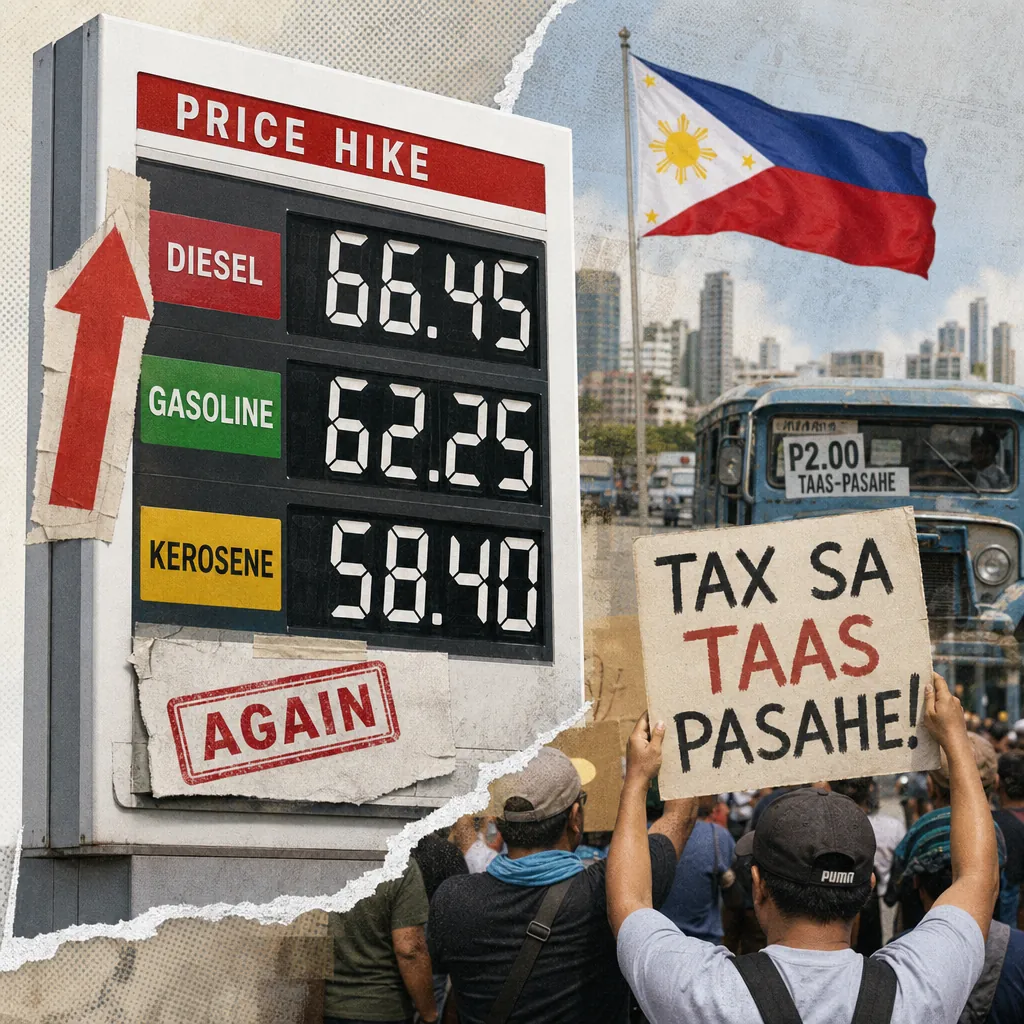
Fuel price hikes and electricity rate increase dominate conversation as consumers brace for compounding cost-of-living pressures
A daily snapshot of the conversation around fuel and electricity price increases in the Philippines on July 10, 2026, and their downstream implications for food affordability, consumer behavior, and the operating environment for major food and beverage companies.
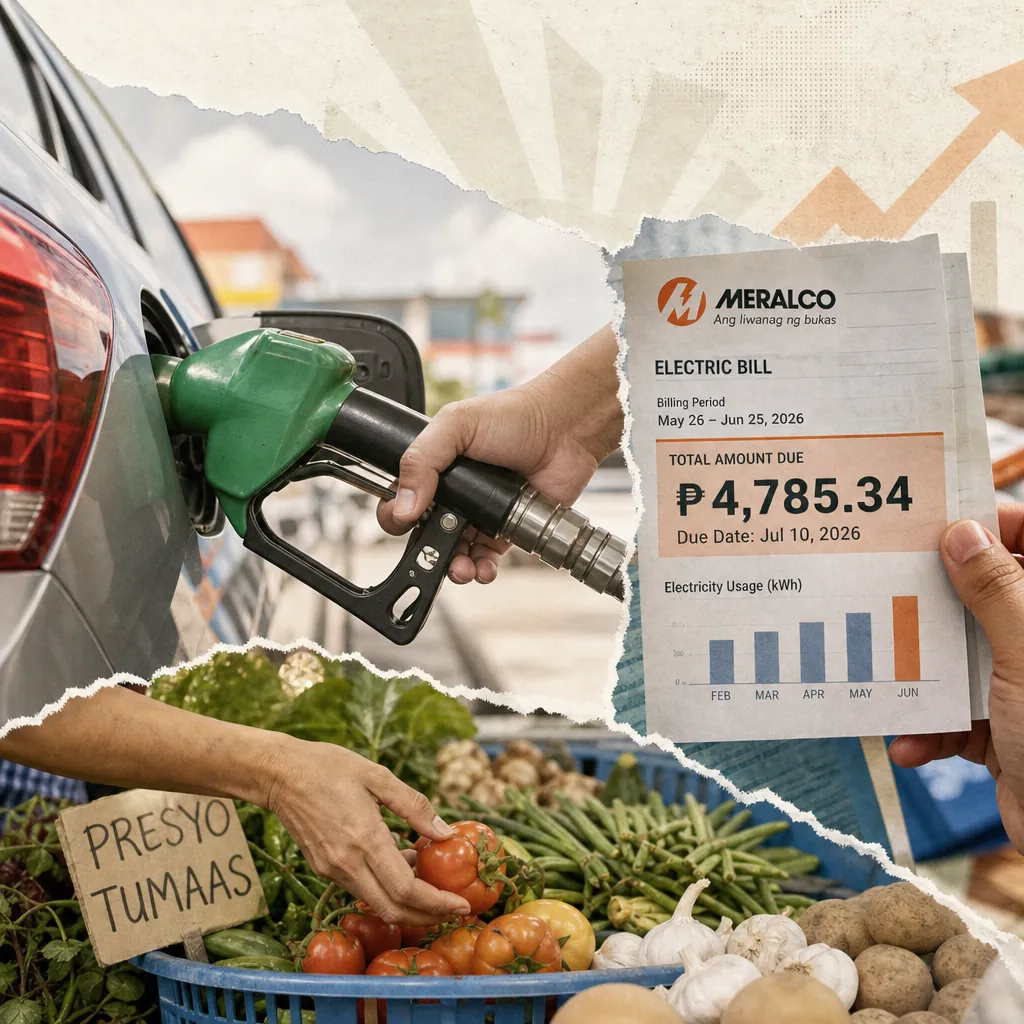
The conversation on July 10, 2026, was dominated by a single, compounding narrative: fuel and electricity prices are rising simultaneously, and consumers are bracing for the impact on their household budgets. The day's most significant development was the announcement by the Manila Electric Company (Meralco) of a ₱0.3428 per kilowatt-hour (kWh) increase in electricity rates for July, bringing the overall rate for a typical household to ₱14.8261 per kWh. This means an additional ₱69 on the monthly bill of a household consuming 200 kWh. Meralco attributed the increase to higher generation charges, driven by elevated fuel prices and the ongoing Middle East tensions affecting the Wholesale Electricity Spot Market (WESM), where demand in Luzon hit a record high. This announcement came alongside forecasts of a diesel price hike of ₱2 to ₱4 per liter in the coming week, with gasoline prices also expected to rise by up to ₱1 per liter, set to take effect on July 14. The convergence of these increases created a powerful narrative of a cost-of-living crisis, with consumers expressing frustration and anger across social media platforms. A single Facebook post from a senator announcing a resolution to investigate high electricity rates garnered over 21,770 likes and 3,570 shares, reflecting deep public frustration that quickly became intertwined with the fuel price narrative. The conversation, while centered on energy costs, carries direct implications for the food and beverage sector, as higher transport and utility costs inevitably cascade into food prices, squeezing both household budgets and corporate margins.
Key themes
- Compounding cost-of-living crisis – The simultaneous announcements of fuel, electricity, and LPG price increases created a unified narrative of financial strain. Consumers connected diesel increases to transport costs, which in turn affect food prices. A Facebook post from TV Patrol using the hashtag #PricePatrol summed up the triple blow: "Namumurong tumaas na naman ang presyo ng petrolyo… Posible ring sumipa ang singil sa kuryente…" This post drew 97 comments, with 137 "haha" reactions and 81 "angry" reactions, indicating a mix of disbelief and rage.
- Historical price escalation as a framing device – Users referenced earlier massive hikes to contextualize the July 2026 increases. A Facebook post from October 2025 broke down year-to-date net increases—gasoline +₱15.30/L and diesel +₱17.15/L—attributing them to US sanctions on Russia and the Ukraine war. Another post from March 2026 claimed a "biggest fuel price hike in PH history" with diesel jumping up to ₱24/L, and the video on BNC's Business 360 channel garnered 3,318 views and 16 comments. By referencing these past spikes, the July conversation positioned the current hikes as part of an ongoing, worsening trend.
- Government and institutional response as a counter-narrative – The most influential thread was the Senate resolution post from July 10, which mentioned the impact of high electricity costs on "pagkain, gamot, edukasyon" (food, medicine, education) and micro, small, and medium enterprises (MSMEs). This post framed the crisis as systemic, calling for a review of energy sector laws. The high engagement (21,770 likes, 20,648 love reactions) suggests widespread support for institutional action, and the explicit mention of food security made this a bridge between the fuel narrative and food price concerns.
- Regional and local language amplification – Provincial and community-based media amplified the national price hike news in local languages like Ilocano, Cebuano, and Hiligaynon. These outlets reach audiences who may not consume national English-language news, and their posts often see higher per-capita engagement. One regional post had 30 "haha" and 19 "angry" reactions on a diesel update, indicating strong emotional resonance.
- Call for review of Oil Deregulation Law – An editorial in Pilipino Star Ngayon called for a review of the Oil Deregulation Law, passed in 1998, arguing that while it promised free competition and better prices, in practice price increases are fast but rollbacks are slow and small. The editorial supported the Department of Energy's proposal for a national fuel reserve equivalent to 60 days of supply.
- Food safety concerns from international outbreaks – While not directly related to the Philippine cost-of-living conversation, two articles from Newsweek and Huffpost reported on a surge in cyclosporiasis cases in the United States, with nearly 1,000 cases in Michigan and over 500 in Ohio. The parasitic infection causes severe gastrointestinal distress and is linked to fresh produce. This serves as a reminder of food safety risks that could affect consumer confidence in imported or fresh food items.
- Business and investment developments – Lance Gokongwei, president and CEO of JG Summit Holdings Inc., joined the board of PhilWeb Corp. after a ₱2.03-billion investment in the listed gaming technology company. This signals a strategic move into digital infrastructure and AI-enabled systems. Additionally, DoubleDragon Corp. announced it is on track to open the first Filipino hotel in Japan, the 482-room Hotel101-Niseko, in December 2026.
How the narratives stack
Dominant – Within the captured set, the dominant narrative is the compounding cost-of-living crisis driven by fuel and electricity price increases. This narrative accounts for the highest engagement and the largest number of news articles. The Meralco rate hike announcement and the diesel price forecast were covered by multiple outlets, including Manila Bulletin Online, Philstar Online, Bombo Radyo Philippines, and Inquirer Online, with a combined advertising-equivalent value (AVE) of over ₱490,000 across the items captured here. The social media conversation was overwhelmingly focused on this theme, with the senator's post on electricity rates generating the highest engagement of any single piece of content in the dataset.
Counter-narrative – A counter-narrative, though less prominent in volume, is the call for institutional action and policy reform. The editorial in Pilipino Star Ngayon calling for a review of the Oil Deregulation Law and the senator's resolution to investigate electricity rates represent a push for systemic solutions rather than just absorbing the price increases. This narrative frames the crisis as a structural failure requiring legislative reform, rather than a temporary market fluctuation.
Emerging – An emerging narrative is the potential for food price increases as a downstream effect of higher fuel and electricity costs. While no posts in the dataset directly mention specific food brands, the conversation is beginning to connect the dots. The senator's post explicitly mentions food as a basic need affected by high electricity costs, and the TV Patrol post uses the hashtag #PricePatrol, which could easily extend to food prices. This narrative is still nascent but has the potential to grow rapidly as the fuel price hikes take effect and consumers see higher prices at the grocery store and in restaurants.
Suppressed – The under-covered story in this dataset is the direct impact on food and beverage companies. Despite the clear implications for food affordability and corporate margins, no posts or articles in the captured set explicitly discuss how Jollibee, San Miguel, Nestlé, or other major food brands are responding to the cost pressures. This silence may indicate that consumers are still blaming "the system" rather than individual companies, but it also represents a gap in the conversation that could be filled by proactive corporate communication. If food prices rise noticeably in the coming weeks, the backlash could shift toward specific brands, especially those perceived as profiteering.
Platform insights
- Facebook: The dominant platform for emotional and political framing. The viral Senate resolution post and TV Patrol's summary posts became hubs for comments that likely discussed everyday impacts, including food costs. The spread of local-language posts (Ilocano, Cebuano, Hiligaynon) showed how the issue resonated regionally. Engagement was high, with the senator's post receiving over 21,000 likes and 3,500 comments, and the TV Patrol post drawing a mix of "haha" and "angry" reactions that signal bitter exasperation rather than amusement.
- YouTube: More analytical and news-driven. ANC's "Market Edge" on July 10 explicitly connected fuel hikes to excise taxes and corporate news, including Lance Gokongwei joining PhilWeb's board. The channel also covered how "consumers told to brace for another fuel price hike" as part of a broader market wrap. A video on diesel topping ₱160 per liter earned over 16,000 views and 72 reactions, reflecting high audience anxiety.
- Twitter: Brief breaking-news style updates with low engagement but high information density. INQToday and CDNDigital tweets spread the diesel hike forecasts quickly, though few retweets or replies were recorded. Twitter remains the hub for real-time price alerts and calls for government action.
Key voices and communities
- Mainstream National News Media – Major news organizations including ANC, ABS-CBN News, Inquirer, and GMA News are driving sustained coverage of the parallel price surges in fuel, electricity, and LPG. Their content reaches hundreds of thousands across YouTube, Facebook, and Twitter, with individual reports on diesel price forecasts garnering over 5,500 views. These outlets frame price hikes as a recurring economic burden, often linking them to global tensions such as the Middle East conflict and US sanctions, while providing forward-looking estimates from industry sources.
- Consumer Public and Motorists – Everyday Filipinos and transport-affected users generate the bulk of engagement on Facebook and Twitter, reacting with sadness, anger, and sarcastic humor to price hike announcements. A single post from a regional radio page received 23 likes, 8 shares, and 8 comments—mostly expressing dismay in local languages. The emotional tone is overwhelmingly frustrated, as seen in the 137 "haha" reactions on a TV Patrol post that actually signal bitter exasperation rather than amusement.
- Government and Policymakers – A sitting senator has actively inserted himself into the price hike conversation by filing Senate Resolution No. 508 and posting a detailed explanation in Filipino, which generated massive engagement (21,770 likes, 3,578 comments). The resolution calls for a probe into the country's high electricity rates, explicitly linking them to the burden on families and MSMEs. Other government figures are not directly visible, but the presence of this single high-profile voice suggests a potential pivot toward consumer protection narratives.
- Regional and Local News Outlets – Provincial and community-based media—such as Bombo Radyo Baguio, GMA Regional TV, and DZME—are amplifying the national price hike news in local languages like Ilocano, Cebuano, and Hiligaynon. These outlets reach audiences who may not consume national English-language news, and their posts often see higher per-capita engagement. One regional post had 30 "haha" and 19 "angry" reactions on a diesel update, indicating strong emotional resonance.
Narrative streams
The Meralco rate hike and its implications
The Manila Electric Company (Meralco) announced a ₱0.3428 per kWh increase in electricity rates for July, bringing the overall rate for a typical household to ₱14.8261 per kWh. This means an additional ₱69 on the monthly bill of a household consuming 200 kWh. Meralco attributed the increase to higher generation charges, driven by elevated fuel prices and the ongoing Middle East tensions affecting the Wholesale Electricity Spot Market (WESM), where demand in Luzon hit a record high. This announcement was covered by Manila Bulletin Online in a Filipino-language article, which explained the breakdown of the increase: the generation charge rose by ₱0.1800 per kWh due to higher fuel prices, and charges from Power Supply Agreements (PSAs) increased by ₱0.2678 due to the impact of the Middle East conflict. The WESM rate also rose to ₱8.0337 per kWh after Luzon demand reached a record high. The coverage value of this article was estimated at ₱121,764 in advertising-equivalent value. For the food and beverage sector, higher electricity costs directly affect manufacturing and cold-chain logistics, squeezing margins for companies like San Miguel, Nestlé, and Jollibee. Restaurants and sari-sari stores, which rely on refrigeration, will also feel the pinch, potentially leading to higher prices for consumers.
Diesel price forecast and the Middle East connection
Industry sources projected a diesel price increase of ₱2 to ₱4 per liter for the week starting July 14, with gasoline prices also expected to rise by up to ₱1 per liter. The forecast was attributed to renewed tensions between the United States and Iran over the strategic Strait of Hormuz, following Iran's attack on vessels transiting the strait outside Tehran's approved shipping route. The US launched retaliatory strikes and revoked sanctions relief for Iranian oil exports. This story was covered by multiple outlets, including Philstar Online, Bombo Radyo Philippines, and Inquirer Online, with a combined AVE of over ₱480,000 across the captured items. The diesel price hike is particularly significant for the food sector because it directly increases transportation costs for raw materials and finished goods. For companies like Jollibee, which operates a large logistics network, and San Miguel, which distributes beverages and food products nationwide, higher diesel costs will put pressure on margins. Consumers may see higher prices for delivered goods, including food delivery services.
The call for policy reform: Oil Deregulation Law review
An editorial in Pilipino Star Ngayon called for a review of the Oil Deregulation Law, which was passed in 1998. The law was intended to promote free competition in the oil industry and provide better prices for the public. However, the editorial argued that in practice, price increases are fast but rollbacks are slow and small. The editorial noted that oil prices are now easily affected by wars, Middle East tensions, shipping route problems, peso-dollar exchange rates, and global market movements. When oil moves, it affects not just motorists but also fares, food prices, farmers' costs, business operations, and family budgets. The editorial supported the Department of Energy's proposal for a national fuel reserve equivalent to 60 days of supply and an increase in the minimum inventory requirement of oil companies. This narrative stream is important for the food sector because any policy changes that stabilize fuel prices would also stabilize food production and distribution costs. Conversely, if no action is taken, the sector could face continued volatility.
The Senate resolution on electricity rates
A senator filed Senate Resolution No. 508 calling for an investigation into the country's high electricity rates. In a Facebook post that garnered over 21,770 likes and 3,578 comments, the senator stated, "Panahon nang alamin ang ugat ng problemang ito at isulong ang mga reporma" (It's time to find the root of this problem and push for reforms). The post explicitly mentioned the impact of high electricity costs on "pagkain, gamot, edukasyon" (food, medicine, education) and MSMEs. This narrative stream bridges the energy and food conversations, highlighting how electricity costs affect food production, storage, and ultimately consumer prices. For food companies, this could lead to increased regulatory scrutiny and potential calls for price controls or subsidies. The high engagement on this post indicates strong public support for government intervention, which could shape the policy environment for the food sector.
International food safety concerns: Cyclospora outbreak
While not directly related to the Philippine cost-of-living conversation, two articles from Newsweek and Huffpost reported on a surge in cyclosporiasis cases in the United States. Nearly 1,000 people in Michigan have been diagnosed with the parasitic infection, which causes severe gastrointestinal distress including prolonged, watery, and sometimes explosive diarrhea. The outbreak is the largest in state history, and investigations are ongoing in 28 other states, including Ohio, where over 500 cases have been reported. The infection is linked to fresh produce, and health agencies are highlighting key safety and prevention measures. This serves as a reminder of food safety risks that could affect consumer confidence in imported or fresh food items. For Philippine food companies that export to the US or rely on imported produce, this outbreak underscores the importance of supply chain vigilance and food safety protocols.
Business developments: Lance Gokongwei joins PhilWeb board
Lance Gokongwei, president and CEO of JG Summit Holdings Inc., has officially joined the board of PhilWeb Corp. after a ₱2.03-billion investment in the listed gaming technology company. The appointment was covered by multiple outlets, including Manila Times Online, Inquirer Online, and Philstar Online, with a combined AVE of over ₱493,000 across the captured items. Gokongwei said he is pleased to join PhilWeb at an important stage in the company's development, noting that "technology infrastructure, operational intelligence, compliance systems, and scalable digital platforms are becoming increasingly important across regulated digital ecosystems." This development is relevant to the food sector because JG Summit Holdings has significant interests in food and beverage through Universal Robina Corporation (URC) and other subsidiaries. Gokongwei's move into digital infrastructure and AI-enabled systems could signal a broader strategy to leverage technology in the food supply chain, from logistics to consumer engagement.
Conversation trajectory
Based on engagement patterns and content evolution, the fuel price hike conversation shows clear signals of developing in ways that impact food and FMCG client objectives:
- Spillover from fuel to food price anxiety: The sustained drumbeat of diesel hikes—projected at ₱2–₱4 per liter next week and already exceeding ₱160 per liter in recent months—will rapidly shift consumer anger toward food costs as transport and logistics expenses cascade downstream. Social comments already express frustration with compounding bills, as seen in the high engagement on electricity price announcements and the senator's resolution on energy costs, which garnered over 21,000 reactions and 3,500+ comments. Within 7–10 days of the next diesel increase, expect a surge in discussions linking fuel prices to higher presyo at karinderya and grocery stores, with hashtags like #presyo and #shrinkflation gaining traction.
- Demand for budget and value messaging intensifies: As households tighten belts, conversation will increasingly center on "budget meals," "value meals," and affordable alternatives. The narrative shift from transport to food will mirror the pattern seen in previous fuel crises, where searches and mentions of cost-saving food options spiked 2–3× within two weeks of a price hike announcement. Brands like Jollibee, Chowking, and Lucky Me should prepare for heightened scrutiny on portion sizes and pricing given the parallel trend of shrinkflation. Early indicators include the emotional reaction mix—predominantly "haha" and "angry" reactions on fuel price posts—suggesting a public mood that is cynical but poised to redirect anger toward everyday essentials.
- Government intervention calls will escalate: The energy price hearings already proposed in the Senate (Senate Resolution No. 508) will likely expand to include food price investigations as the public connects the dots. Expect political figures and advocacy groups to amplify demands for DTI price freezes on basic goods, NFA rice subsidies, and stricter monitoring of palengke prices. This creates a regulatory risk window for processed food and beverage brands, particularly those reliant on imported inputs like wheat, soy, and cooking oil.
- Platform specialization in food price discourse: Regional Facebook pages and YouTube channels are already localizing fuel news in Tagalog, Cebuano, and Ilocano. This pattern will extend to food price conversations, with local-language content about presyo ng manok, bigas, and mantika seeing disproportionate growth. Twitter remains the hub for real-time price alerts and calls for government action, while TikTok and Facebook Reels will likely carry viral "budget challenge" and baon cost-cutting tips. Your clients should prepare regionally tailored messaging and monitor local influencer conversations.
Key trigger events that will reshape this conversation include: the next oil price rollback or hike scheduled for Tuesday, July 14, 2026, which will anchor renewed food price discussions; the release of the July food price index by the Philippine Statistics Authority (typically mid-month), providing data ammunition for consumer advocates; and any Senate hearing on energy costs that spills over into food supply chain inquiries within the next 2–3 weeks.
Response guidance
Platform-Specific Approaches:
Facebook:
- Share informative infographics illustrating how fuel price increases cascade into food production and logistics costs, using clear visuals that show the chain from farm to table. Consumers are already expressing fatigue and anger—validate those emotions while providing context about structural factors (Middle East tensions, excise taxes) rather than appearing dismissive.
- Engage in comment sections on high-engagement posts by deploying a rapid-response team that answers questions about how brands are managing costs (e.g., value meals, loyalty programs) without promising price freezes that may be unsustainable.
- Leverage community groups (e.g., budget-conscious mom groups, micro-entrepreneur networks) to share practical tips on stretching meals and finding promos, positioning your client brands as empathetic allies rather than distant corporations.
Twitter:
- Create concise, data-driven threads that break down the real impact of fuel hikes on everyday food items (e.g., rice, cooking oil, transport of perishables), using the official hashtags already trending like #PricePatrol.
- Engage with local news accounts that are covering the price hike narrative by replying with a neutral, factual clarification when misleading claims surface—e.g., clarifying that not all oil companies apply the same margins.
- Monitor and quote-tweet well-intentioned consumer advocates who accurately explain supply-side pressures, amplifying their voices with a thank-you note and a link to a brand's own value initiatives (e.g., fixed-price menu, meal bundles).
YouTube:
- Produce short, mobile-friendly explainers (under 60 seconds) hosted by a neutral narrator to walk viewers through the timeline of fuel and food price movements, using the same visuals shared on Facebook to maximize cross-platform reach.
- Optimize video titles and descriptions with keywords like "presyo ng pagkain tataas 2026" and "fuel price effect food" so that when users search for price hike information, official brand content appears alongside news reports.
- Pin a comment on each video that directs viewers to a blog or FAQ page where more detailed breakdowns of cost-management strategies are provided, avoiding political commentary while acknowledging consumer frustration.
Key Messages:
- Fuel price increases directly affect the cost of producing and transporting food—every step from farm inputs to delivery vehicles adds pressure to the supply chain.
- Our brands are actively working to absorb costs where possible and offer value options—such as budget-friendly meal bundles and fixed-price menus—to help families manage.
- We support transparent communication about pricing, and we encourage consumers to check official sources for accurate price adjustment announcements rather than relying on unverified claims.
- Sustainable long-term solutions require broader energy policy reforms; we advocate for stable fuel pricing that protects both businesses and households.
Sensitive Topics to Navigate:
- Accusations of price gouging: Avoid defensiveness. Instead, publicly share the key drivers behind any price adjustments (e.g., raw material, transport, excise taxes) and reference industry data to show margins remain slim.
- Political polarization around Middle East conflict: Steer clear of foreign policy commentary. Frame price hikes as a global supply issue, not a domestic failure, while acknowledging that Filipino consumers are disproportionately affected due to import dependence.
- Comparison to past price spikes (e.g., "biggest fuel hike in PH history"): Do not downplay the severity. Use a tone of concern and solidarity, then pivot to what your clients are doing to mitigate the impact—e.g., offering more sari-sari store friendly pack sizes or subsidized logistics for franchisees.
Response Priorities:
- Address the "cumulative burden" narrative immediately. Consumers are seeing simultaneous increases in fuel, electricity, and LPG—this creates a perception that everything is getting unaffordable. Respond by clustering all cost-saving initiatives (e.g., power-saving tips, fuel-efficient delivery routes, bundling promos) into one easy-to-find hub on your brand's website or social media profile.
- Proactively brief franchisees and frontline staff so they can answer customer questions consistently. Equip them with simple talking points about why prices are rising and where value can still be found, preventing mixed messages that erode trust.
- Monitor and engage with regional posts in local languages—several posts are in Tagalog, Ilocano, Cebuano, etc. Assign linguistically appropriate responders to avoid tone-deaf national-level messaging that misses nuanced local sentiment.
Example Language for Common Scenarios:
- When consumers ask why prices are rising: "We understand how tough another price increase feels. The cost of everything from the ingredients we source to the fuel that delivers them has gone up. We're doing our best to keep our favorite meals affordable—check out our new value bundles designed to stretch your budget."
- When comparing to previous hikes: "You're right—this is one of the largest adjustments we've seen. We're in the same boat as every Filipino family. That's why we've frozen prices on our most popular items and added more sachet options for smaller budgets. No spin—just transparency and action."
- When engaging on electricity cost complaints affecting food storage: "Higher electricity bills hit restaurants and sari-sari stores particularly hard. We're working with our logistics partners to optimize cold-chain routes and pass savings back to our store owners. If you run a small food business, DM us for energy-saving tips specific to your setup."
See the full picture behind today's signals.
This report draws from Media Meter's MediaWatch, our real-time monitoring engine tracking 2,470+ Philippine sources across print, broadcast, digital, and social. Explore how the platform turns raw coverage into decision-grade intelligence, then see how it's configured for teams like yours — whether you're in PR agencies, corporate comms, government, or marketing.
Want more? Browse our Report Library for sector and crisis intelligence, or request a demo and we'll have your brand set up before the call.
Want this kind of intelligence on your brand?
This brief is built on the same MediaWatch methodology that runs continuously across every brand we monitor. See your competitive landscape, Impact Score, and narrative trajectory in a 30-minute demo.