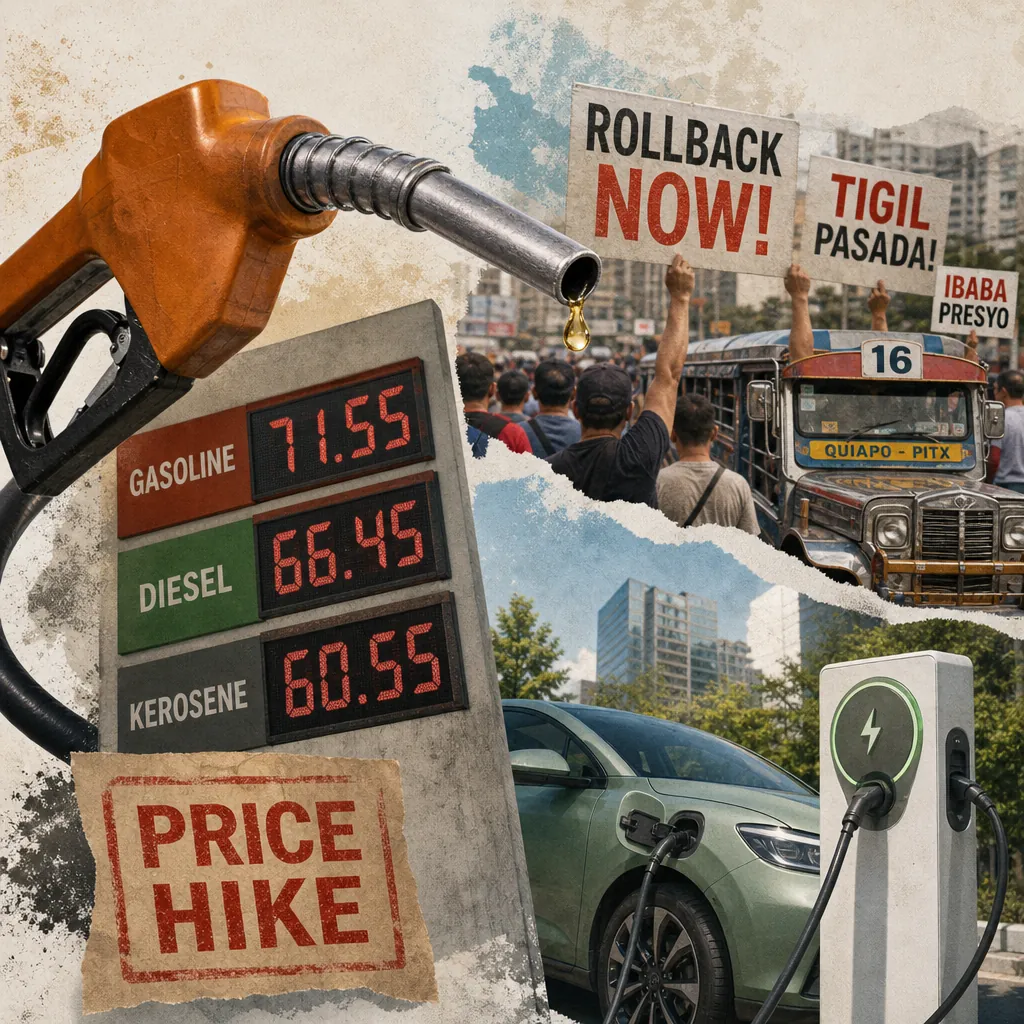
Jeepney passenger falls, PUV operators face sanctions, and a comedian calls out Meralco: A day of transport safety and consumer frustration
A viral video of a passenger falling from a speeding jeepney, LTFRB show-cause orders against 34 PUV operators who attended an INC rally, and comedian Jayson Gainza's humorous complaint about a PHP17,000 Meralco bill dominate the day's conversation on transport safety, regulatory enforcement, and electricity costs.
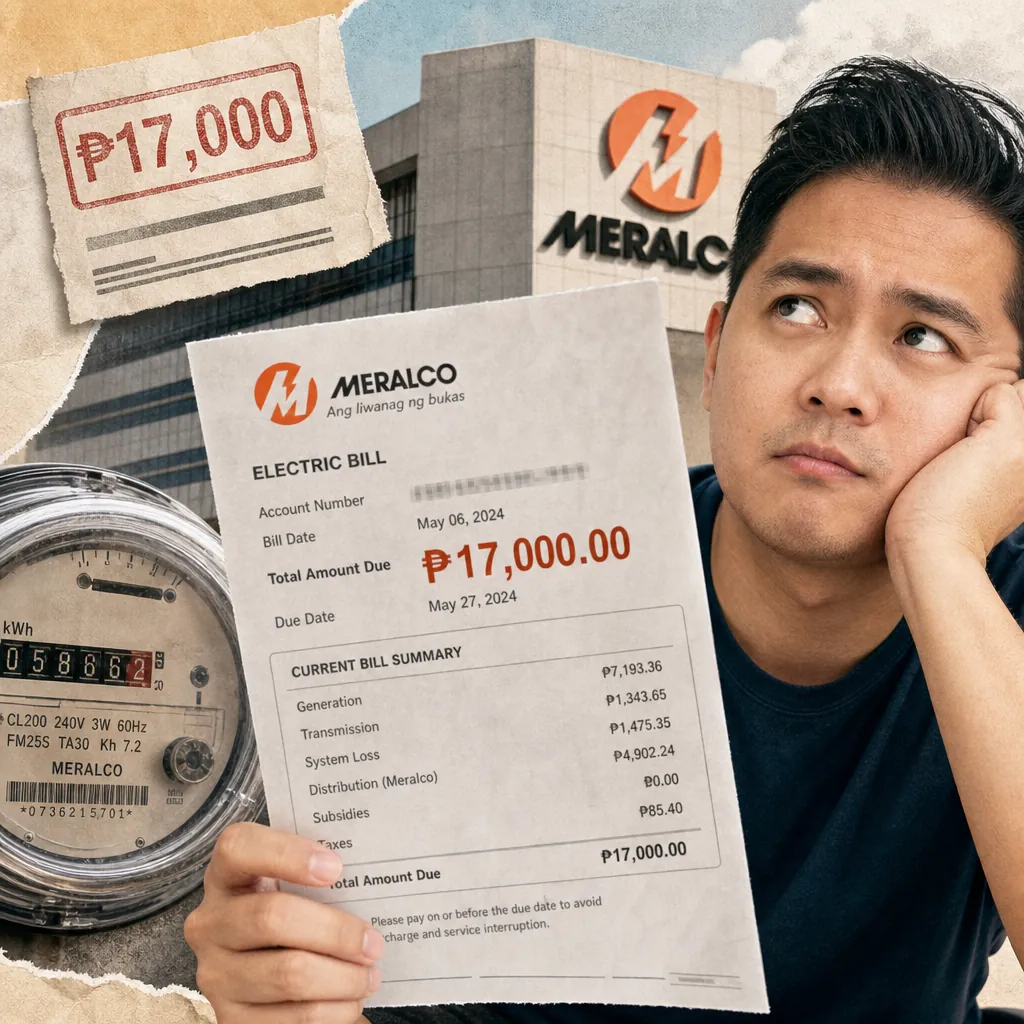
A viral video of a passenger falling from a speeding jeepney in Quezon City, the Land Transportation Franchising and Regulatory Board (LTFRB) issuing show-cause orders to 34 public utility vehicle (PUV) operators who allegedly skipped their routes to attend an Iglesia Ni Cristo (INC) rally, and comedian Jayson Gainza's humorous complaint about a PHP17,000 Meralco bill dominated the day's conversation on transport safety, regulatory enforcement, and electricity costs. The incidents highlight ongoing tensions between commuter safety, operator compliance, and consumer frustration with utility costs.
The most widely shared moment came from a dashcam video that captured a passenger tumbling out of a jeepney on Aurora Boulevard in Quezon City. The vehicle was traveling at high speed and suddenly swerved to overtake another car, causing the passenger to lose balance and fall onto the road, rolling several times. The Land Transportation Office (LTO) immediately issued a show-cause order against the driver and suspended his license for 90 days, while also placing an alarm on the vehicle. The incident drew attention to the prevalence of so-called "patok" jeepneys—public utility jeeps known for reckless driving and over-speeding—on Aurora Boulevard, a major thoroughfare. The video, aired on GMA News' "24 Oras" and widely shared on social media, sparked public outrage and renewed calls for stricter enforcement of traffic rules and driver accountability [1].
Separately, the LTFRB sent show-cause orders to 34 PUV operators—including bus and UV Express operators—who were reported to have stopped plying their routes on Tuesday to attend the INC rally in Quezon City. The agency acknowledged the right to peaceful assembly but stressed that operators have an obligation to ensure continuous public service. The operators were ordered to explain why their franchises should not be suspended or canceled, citing Memorandum Circular No. 2011-004, which prohibits unjustified trip cancellations. The hearing is set for July 9 [2]. The INC rally itself was peaceful, with Manila Mayor Isko Moreno Domagoso expressing confidence in the group's orderly conduct, noting that no disturbances were recorded overnight [3].
On the consumer front, comedian Jayson Gainza posted a photo of his Meralco bill totaling PHP17,845.79 on social media, humorously asking the utility to explain how his household—which he claimed has no laundry shop, no talyer (auto repair shop), and no four swimming pools—could incur such a high charge. His post, which included a sarcastic remark about solar power potentially reducing his bill to PHP12,000, resonated with many Filipinos struggling with rising electricity costs. The post garnered significant engagement, reflecting widespread frustration with Meralco's billing and the high cost of power in the Philippines [4].
Key themes
- Passenger safety and reckless driving: The viral video of a passenger falling from a jeepney underscores the dangers posed by reckless driving, particularly by "patok" jeepneys. The LTO's swift action—issuing a show-cause order and suspending the driver's license—signals a zero-tolerance approach, but the incident raises questions about enforcement effectiveness on high-risk routes.
- LTFRB cracks down on PUV operators attending rallies: The LTFRB's show-cause orders to 34 PUV operators who allegedly skipped their routes to attend the INC rally highlight the tension between the right to protest and the obligation to provide continuous public transport service. The agency's stance may deter future disruptions but could also spark debate over workers' rights.
- Electricity cost frustration: Jayson Gainza's humorous complaint about a PHP17,000 Meralco bill taps into a broader consumer sentiment about high electricity costs in the Philippines. The post's virality reflects public demand for transparency in billing and affordable power, especially as the government pushes for renewable energy and electric vehicle adoption.
- Road safety and traffic enforcement: Multiple road accidents reported today—including a police officer shot dead in Zamboanga del Sur, a female rider killed in Roxas City, and two deaths in Quezon province—highlight the persistent issue of road safety. The incidents range from motorcycle crashes to a pedestrian struck by a rolling tire, underscoring the need for comprehensive traffic safety measures.
- Infrastructure improvements: The Metropolitan Manila Development Authority (MMDA) inaugurated a new covered footbridge with lighting along Visayas Avenue in Quezon City, addressing long-standing pedestrian safety concerns. The project, aligned with President Marcos Jr.'s directive to improve traffic conditions, aims to serve the average 1,655 pedestrians who cross the area daily [5].
- Cebu BRT realignment controversy: Cebu City Vice Mayor Tomas Osmeña filed an amended resolution rejecting the proposed realignment of the Cebu Bus Rapid Transit (CBRT) project, accusing two large business companies of hijacking the project against the interests of the urban poor. The City Council will hold a special session on July 3 to deliberate [6].
- EV-friendly dining and charging infrastructure: A feature on five Michelin-recognized restaurants in Metro Manila that are accessible to electric vehicle (EV) owners highlights the growing integration of EV charging infrastructure with lifestyle destinations. This aligns with the government's target of 50% EV adoption by 2040 and over 20,000 charging stations [7].
How the narratives stack
Dominant: The dominant narrative in the captured set is the intersection of transport safety and regulatory enforcement, driven by the viral jeepney passenger fall and the LTFRB's action against PUV operators. These stories generated the most public engagement and media coverage, with the dashcam video being widely shared and the LTFRB's show-cause orders drawing attention to the balance between protest rights and public service obligations. The coverage value of these items within the set is significant, with the Philstar articles on the LTFRB and the footbridge each carrying estimated advertising-equivalent values of over PHP100,000 [2][5].
Counter-narrative: A counter-narrative emerges from the INC rally itself, which was portrayed as peaceful and orderly by Manila Mayor Isko Moreno Domagoso. This contrasts with the LTFRB's punitive action against operators who attended, suggesting a divergence between political endorsement of the rally and regulatory enforcement. The mayor's statement that he has no fear when the INC holds rallies reinforces the group's reputation for disciplined conduct [3].
Emerging: An emerging narrative is the growing consumer frustration with electricity costs, as exemplified by Jayson Gainza's viral post. This could signal a broader public discourse on energy pricing, especially as the government promotes renewable energy and electric vehicles. The post's engagement suggests that high electricity bills are a pain point for many households, and Meralco may face increased scrutiny [4].
Suppressed: A suppressed story within the captured set is the broader context of road safety beyond the viral jeepney incident. While the passenger fall received extensive coverage, other road accidents—such as the police officer shot dead, the female rider killed in Roxas City, and the two deaths in Quezon—received less attention, possibly because they lacked the viral video element. These incidents collectively point to a systemic issue of road safety that deserves more sustained coverage.
Platform insights
- Facebook: The viral jeepney video was widely shared on Facebook, where it sparked heated discussions about reckless driving and the need for stricter enforcement. The platform's algorithm amplified the video due to high engagement (shares and comments), making it a trending topic. Facebook also hosted Jayson Gainza's post about his Meralco bill, which garnered thousands of reactions and comments, reflecting the platform's role in amplifying consumer grievances.
- X (formerly Twitter): On X, the conversation around the jeepney incident and the LTFRB show-cause orders was more focused on policy and accountability. Users debated the balance between the right to protest and the duty to provide public service, with some criticizing the LTFRB for targeting operators while others supported the crackdown. The platform also saw discussions about the INC rally, with users sharing updates and opinions.
- YouTube: The dashcam video of the passenger falling was uploaded to YouTube by GMA News and other channels, where it garnered significant views. The platform served as a primary source for the raw footage, which was then embedded in news articles and shared on social media. Comments on the video reflected public anger and calls for the driver's prosecution.
- Reddit: On Reddit, particularly in Philippine subreddits, the jeepney incident and the Meralco bill post were discussed in threads about daily life and frustrations. Users shared personal anecdotes about reckless jeepney drivers and high electricity bills, contributing to a sense of shared experience. The platform's upvote system highlighted the most resonant comments, often those calling for systemic change.
Key voices and communities
- Land Transportation Office (LTO) and LTFRB: These regulatory bodies are central to the day's narrative, with the LTO issuing show-cause orders and suspending licenses for the jeepney driver, and the LTFRB targeting PUV operators who attended the INC rally. Their actions position them as enforcers of safety and service continuity, but also as potential targets of criticism for overreach.
- Commuters and public transport users: The viral jeepney video has galvanized commuters who regularly face reckless driving and unsafe conditions. Online comments and social media posts reflect a demand for better enforcement and accountability from both drivers and regulators.
- Iglesia Ni Cristo (INC): The INC is a key voice in the rally narrative, with its members participating in a peaceful protest. The group's disciplined conduct, as noted by Mayor Isko, reinforces its reputation, but the LTFRB's action against operators who attended creates a tension between religious freedom and regulatory compliance.
- Consumer advocates and ordinary Filipinos: Jayson Gainza's post has resonated with a wide audience, making him an unofficial spokesperson for consumer frustration with Meralco. His humorous yet pointed critique has sparked conversations about electricity pricing, billing transparency, and the cost of living.
- Local government officials: Manila Mayor Isko Moreno Domagoso and Cebu City Vice Mayor Tomas Osmeña are notable voices. Domagoso's endorsement of the INC rally's peacefulness contrasts with Osmeña's aggressive stance against the CBRT realignment, highlighting different approaches to urban governance and public engagement.
Narrative streams
The jeepney passenger fall: A viral moment for road safety
The dashcam video of a passenger falling from a speeding jeepney on Aurora Boulevard has become the day's most impactful visual story. The incident occurred when the jeepney, traveling at high speed, suddenly swerved to overtake another vehicle, causing a passenger to lose balance and fall onto the road. The passenger, who was not identified in reports, was fortunate not to be hit by following vehicles. The LTO's response was swift: it issued a show-cause order to the driver and suspended his license for 90 days, while also placing an alarm on the vehicle to prevent its use. The incident has reignited public concern about "patok" jeepneys—a term for public utility jeeps known for aggressive driving and over-speeding—which are common on Aurora Boulevard. The video, aired on GMA News' "24 Oras" and widely shared on social media, has drawn over 144,000 in estimated advertising-equivalent value across coverage [1]. The story underscores the persistent challenge of enforcing traffic rules in the Philippines, where reckless driving often goes unpunished until a viral video forces action. For the transport sector, this incident may prompt stricter monitoring of jeepney operations and could lead to calls for mandatory speed limiters or GPS tracking on PUVs.
LTFRB vs. PUV operators: Balancing protest rights and public service
The LTFRB's decision to issue show-cause orders to 34 PUV operators who allegedly stopped plying their routes to attend the INC rally on Tuesday has sparked debate. The operators, including bus and UV Express services, were reported to have participated in the rally, leaving commuters stranded. The LTFRB, while acknowledging the right to peaceful assembly, emphasized that operators have a legal obligation to provide continuous service under Memorandum Circular No. 2011-004, which prohibits unjustified trip cancellations. The hearing is set for July 9, and operators face potential suspension or cancellation of their franchises [2]. This action has drawn mixed reactions: some support the LTFRB's stance as necessary to protect commuters, while others view it as an infringement on the right to protest. The INC rally itself was peaceful, with Mayor Isko Moreno Domagoso noting that no disturbances were recorded and that he feels secure when the INC holds rallies [3]. The incident highlights the delicate balance between religious and political expression and the practical needs of the commuting public. For the transport sector, this could set a precedent for how regulators handle future disruptions caused by mass gatherings.
Jayson Gainza's Meralco bill: A humorous take on a serious issue
Comedian Jayson Gainza's social media post about his PHP17,845.79 Meralco bill has struck a chord with many Filipinos. In his post, Gainza humorously addressed Meralco directly, saying, "Dear @meralcoph, we do not have a laundry shop, we do not have a talyer, and we certainly do not have four swimming pools—please explain how you computed this so high." He also sarcastically noted that if he switched to solar, his bill might drop to PHP12,000, adding, "You'd get even richer!" The post has been widely shared, with many users sharing their own high bills and frustrations. The Philippine Entertainment Portal's coverage of the post has an estimated advertising-equivalent value of over PHP153,000 [4]. The post taps into a broader public sentiment about the high cost of electricity in the Philippines, which is among the highest in Southeast Asia. Meralco, the country's largest private electric distribution utility, serving 39 cities and 72 municipalities, has faced repeated criticism over billing accuracy and rate increases. For the energy sector, this viral moment underscores the need for better communication with consumers and perhaps more transparent billing practices. It also highlights the growing interest in solar power as an alternative, though the upfront costs remain a barrier for many.
Road accidents: A grim tally
Beyond the viral jeepney incident, several other road accidents were reported today, painting a grim picture of road safety in the Philippines. In Zamboanga del Sur, a police corporal was shot dead by motorcycle-riding assailants, an incident that also involves road violence [8]. In Roxas City, a 24-year-old female motorcycle rider died after hitting a dump truck [9]. In Quezon province, two people died in separate accidents: one was struck by a rolling tire that detached from a passing truck, and another lost control of his motorcycle [10]. These incidents, while less viral, highlight the daily toll of road accidents. The estimated advertising-equivalent value of coverage for these stories ranges from PHP66,000 to PHP208,000 [8][9][10]. For policymakers, these deaths underscore the need for comprehensive road safety measures, including better infrastructure, stricter enforcement of traffic laws, and public education campaigns.
Cebu BRT realignment: A political battle
Cebu City Vice Mayor Tomas Osmeña has filed an amended resolution rejecting the proposed realignment of the Cebu Bus Rapid Transit (CBRT) project, accusing two large business companies of hijacking the project against the interests of the urban poor. The City Council will hold a special session on July 3 to deliberate on the resolution, which shifts the council's position from merely urging the Department of Transportation (DOTr) to reject the realignment to formally declaring the city's outright opposition. Osmeña stated, "We are not asking the DOTr to reject, we are rejecting. If the city disapproves the realignment, DOTr cannot override it" [6]. The CBRT, a flagship infrastructure project, has been mired in controversy over its route, with critics arguing that the realignment favors business interests over commuters. The Philstar coverage of this story has an estimated advertising-equivalent value of over PHP633,000 [6]. For the transport sector, this dispute could delay the project further, affecting commuters and investors alike.
Infrastructure and EV readiness
On a more positive note, the MMDA inaugurated a new covered footbridge with lighting along Visayas Avenue in Quezon City, addressing long-standing pedestrian safety concerns. The project, aligned with President Marcos Jr.'s directive to improve traffic conditions, serves an average of 1,655 pedestrians daily and is expected to reduce jaywalking and accidents [5]. Meanwhile, a feature on five Michelin-recognized restaurants in Metro Manila that are accessible to EV owners highlights the growing integration of EV charging infrastructure with lifestyle destinations. The article notes that as charging infrastructure becomes more accessible, diners can enjoy meals while their vehicles charge, making EV ownership more convenient [7]. This aligns with the government's target of 50% EV adoption by 2040 and over 20,000 charging stations, as discussed at a recent BusinessWorld Insights forum on "Powering the Electric Shift" [11]. For the energy and transport sectors, these developments signal a gradual shift toward sustainable mobility, though challenges remain in terms of cost and infrastructure rollout.
Conversation trajectory
- Short-term (1–2 weeks): The LTFRB's hearing on July 9 for the 34 PUV operators will be a key event. Depending on the outcome, it could either reinforce regulatory authority or spark backlash from transport groups. The viral jeepney video may lead to increased enforcement on Aurora Boulevard and possibly a city-wide crackdown on "patok" jeepneys.
- Medium-term (1–3 months): The Cebu City Council's special session on July 3 could result in a formal rejection of the CBRT realignment, potentially delaying the project and leading to legal battles. Consumer frustration with Meralco bills may intensify, especially if rates rise further, potentially prompting a Senate inquiry or consumer protests.
- Long-term (6–12 months): The cumulative effect of road accidents and viral safety incidents could push for legislative action on road safety, such as mandatory speed limiters for PUVs or stricter licensing requirements. The EV narrative may gain traction as more charging stations are installed, but high electricity costs could hinder adoption unless solar and renewable energy become more affordable.
Trigger events to watch: The LTFRB hearing on July 9; the Cebu City Council special session on July 3; any further viral posts about Meralco bills; and the release of official road accident statistics for the first half of 2026.
Response guidance
For communicators in the transport and energy sectors, the day's events offer several lessons:
- Transport regulators: Proactive enforcement and swift action, as demonstrated by the LTO and LTFRB, can build public trust. However, ensure that actions are seen as fair and not politically motivated. Communicate clearly about the rationale behind show-cause orders to avoid perceptions of overreach.
- PUV operators and drivers: The viral jeepney incident is a reminder that reckless driving can have severe consequences, both for passengers and for the operator's reputation. Invest in driver training and consider installing dashcams and speed limiters to improve safety and accountability.
- Utility companies like Meralco: Consumer frustration with high bills is a growing reputational risk. Proactive communication about billing calculations, rate adjustments, and assistance programs can help mitigate backlash. Engaging with influencers like Jayson Gainza—perhaps by offering a transparent explanation—could turn a negative into a positive.
- Local government units: Infrastructure projects like footbridges and BRT systems are critical for safety and mobility, but they must be seen as serving the public interest, not private business. Engage with communities early and transparently to avoid accusations of hijacking.
- EV advocates and renewable energy proponents: The viral Meralco post highlights public interest in solar power as a cost-saving measure. Use this momentum to promote incentives for rooftop solar and EV adoption, while addressing concerns about upfront costs and grid reliability.
See the full picture behind today's signals.
This report draws from Media Meter's MediaWatch, our real-time monitoring engine tracking 2,470+ Philippine sources across print, broadcast, digital, and social. Explore how the platform turns raw coverage into decision-grade intelligence, then see how it's configured for teams like yours — whether you're in PR agencies, corporate comms, government, or marketing.
Want more? Browse our Report Library for sector and crisis intelligence, or request a demo and we'll have your brand set up before the call.
Want this kind of intelligence on your brand?
This brief is built on the same MediaWatch methodology that runs continuously across every brand we monitor. See your competitive landscape, Impact Score, and narrative trajectory in a 30-minute demo.