Habagat floods, landslides, and infrastructure failures grip PH
A daily snapshot of the conversation around the enhanced southwest monsoon, covering floods, landslides, infrastructure failures, and public response.
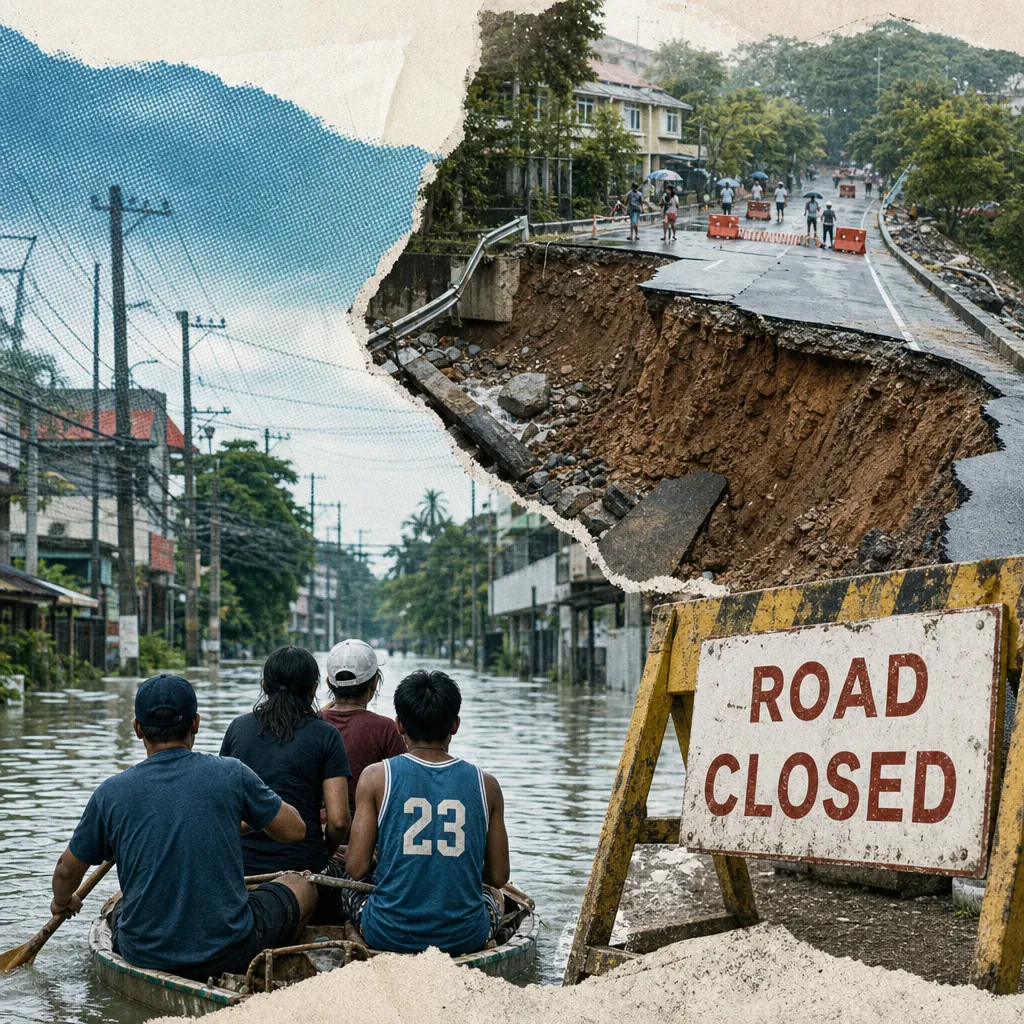
The enhanced southwest monsoon, known locally as "habagat," turned a routine weather forecast into a multi-hazard crisis across Luzon on Sunday, August 9, 2026. The day's conversation on social media and in the news was dominated by the immediate, visceral consequences of relentless rain: floods that trapped families, landslides that buried homes, and infrastructure that buckled under the strain. The narrative began with official advisories from the Philippine Atmospheric, Geophysical, and Astronomical Services Administration (PAGASA), the state weather bureau, warning that rains would persist over parts of Luzon until midweek. But it quickly shifted from forecast to lived reality as citizens posted on-the-ground documentation of the unfolding disaster.
The most striking early development was a viral CCTV clip shared on Facebook by netizen Tanya Caballero, showing two men rescuing a child from dangerous floodwaters in Barangay Marulas, Kawit, Cavite, on Saturday, August 8. The post served as an emotional catalyst, generating 577 comments and framing the weather story around human resilience and immediate danger. The clip was later cross-posted to Reddit, where it amassed 247 upvotes, amplifying the story of ordinary citizens acting as first responders. As the day progressed, attention shifted to Romblon, where local authorities reported damage from strong winds in San Andres and Calatrava, with six houses destroyed in Barangay Agpudlos alone. The conversation here took on a tragic dimension as reports emerged of a tornado-like event, with one post detailing a resident's account of hearing the wind approach before watching their roof being torn away. The emotional weight was captured by 448 "sad" reactions on the main post about the Calatrava incident.
By evening, the narrative expanded into direct appeals for help. A post from Ma'am Edcel Vicente in Barangay Pandan, Romblon, described a landslide that had damaged her home, and she publicly shared her GCash number for donations, illustrating how the conversation pivoted from reporting to mobilizing community-based aid. Concurrently, an earthquake of magnitude 1.7 was recorded in Calatrava, Romblon, adding a seismic layer to an already burdened region. The news media echoed these themes, with reports of landslides in Baguio City, floods in Bulacan, and infrastructure damage across Central Luzon. The day's coverage, as captured in the monitored set, was extensive, with numerous articles from outlets like the Inquirer, Manila Times, and Daily Tribune detailing the human toll and the strain on public systems.
Key themes
- Heroic rescues and human interest stories: The viral CCTV footage of two men saving a child from floodwaters in Cavite became the defining image of the day, dominating early engagement and setting a tone of compassion and community resilience. Similar rescue stories emerged from Ilocos Sur, where a family of four was saved, and Bulacan, where families were trapped by rising waters.
- Escalating damage reports and urgent appeals: As the day wore on, the conversation shifted from individual heroics to a broader tally of destruction. Posts from Romblon detailed damage from tornado-like winds, with reports of unroofed houses and a clear emotional turn as "sad" reactions vastly outpaced other engagement metrics. By evening, direct pleas for financial assistance, such as the one from a landslide victim in Romblon, marked a transition from passive observation to active solicitation of aid.
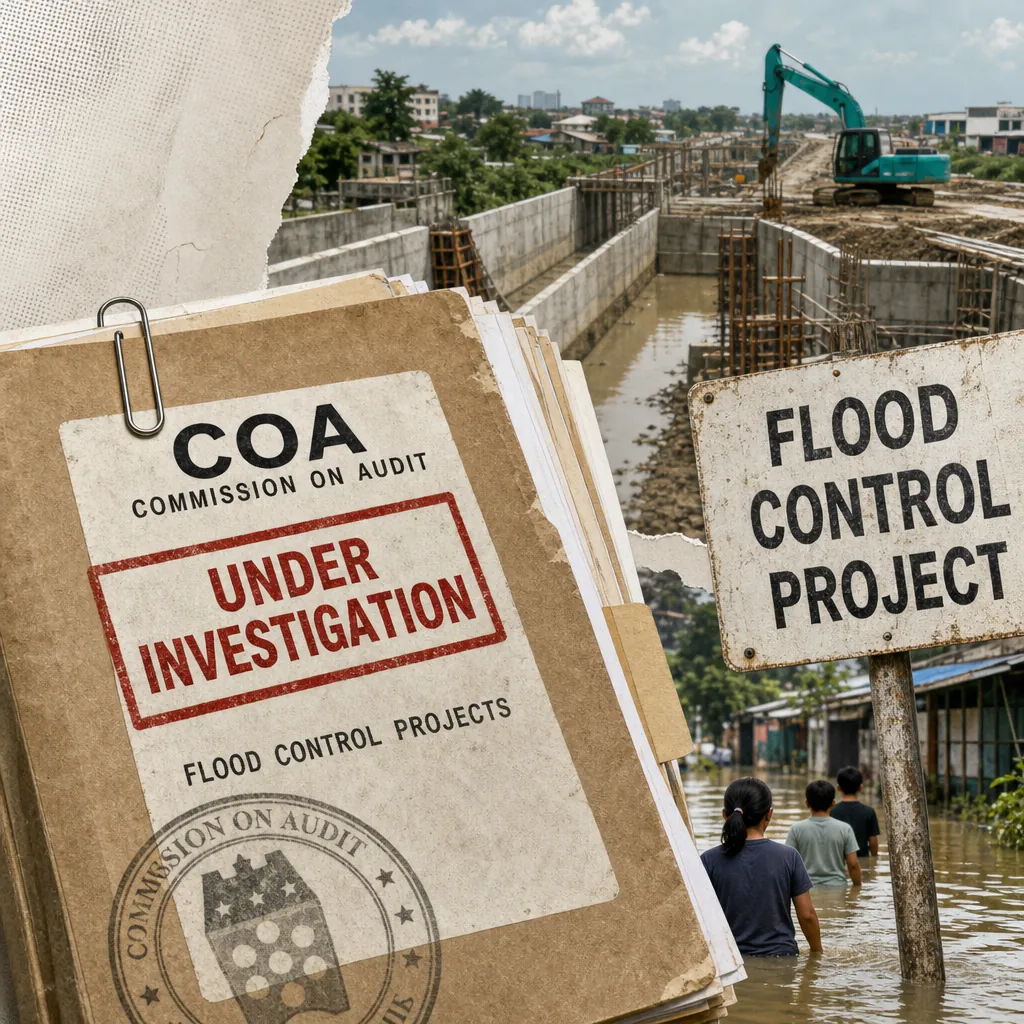
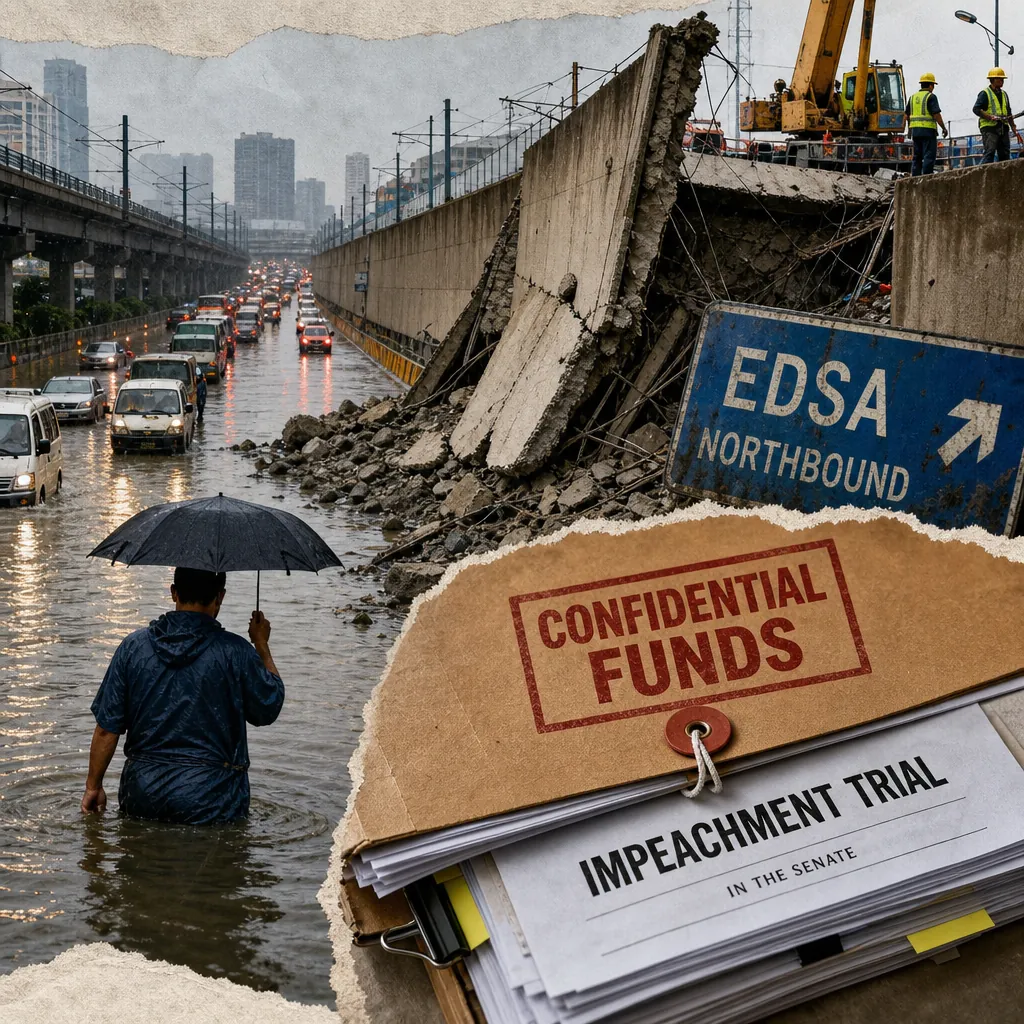
- Infrastructure failures and public frustration: The day saw multiple reports of infrastructure buckling under the weather, including a fallen tree disrupting LRT-1 operations in Metro Manila, a collapsed retaining wall along EDSA, and impassable bridges in Zambales and Bulacan. These incidents fueled a growing narrative of systemic vulnerability and government neglect, with a viral post of a public works official reacting angrily to potholes on EDSA drawing over 5,500 reactions and more than 2,200 comments.
- Government response and political accountability: The conversation increasingly turned to the adequacy of the government's disaster response. President Ferdinand Marcos Jr. was reported to be closely monitoring the situation, and the Palace assured the public of heightened alert. However, the Senate Blue Ribbon Committee announced an investigation into substandard infrastructure projects, and a lawmaker called for sanctions on the contractor of non-operational pumping stations in Marikina, signaling a political dimension to the crisis.
- Multiple hazards stacking: The simultaneous occurrence of monsoon rains, a tornado in Romblon, and minor earthquakes in Romblon and Mindoro created a perception of overlapping crises that overwhelmed local response capacity. The Ambuklao Dam's water release added to the sense of a "cascade effect," with downstream communities placed on alert.
- Class suspensions and disruption of daily life: The weather forced the suspension of classes in multiple provinces, including Zambales and Occidental Mindoro, and the postponement of PBA basketball games. These disruptions highlighted the broad impact of the monsoon on everyday activities, from education to sports and transportation.
- Community mobilization and volunteerism: Amid the destruction, there was a strong undercurrent of community solidarity. Social media was used to organize rescues, share information, and solicit donations. The viral rescue footage and the outpouring of sympathy for affected families underscored the public's willingness to help, even as they criticized the government's preparedness.
How the narratives stack
Dominant: The dominant narrative of the day was the immediate, human impact of the monsoon—the floods, landslides, and rescues that unfolded across Luzon. This was driven by the viral rescue footage and the steady stream of damage reports from affected areas. Within the captured set, this narrative dominated both social media engagement and news coverage, with numerous articles detailing specific incidents of destruction and heroism.
Counter-narrative: A counter-narrative emerged around infrastructure and government accountability. While the dominant narrative focused on the weather event itself, this thread highlighted the failures of public systems—the LRT-1 disruption, the EDSA potholes, the non-operational pumping stations—and questioned whether the government was prepared for such events. This narrative was particularly strong on Reddit, where users framed the disruptions as predictable failures rather than isolated incidents.
Emerging: An emerging narrative was the convergence of disaster and infrastructure criticism into a broader critique of governance. The viral reaction to the public works official's frustration over potholes, combined with the Senate's announcement of an investigation into substandard projects, suggested that the weather event was becoming a catalyst for political accountability. This narrative was still developing but had the potential to shape public perception of the administration's competence.
Suppressed: A story that received relatively little attention in the captured set was the long-term economic impact of the monsoon, particularly on agriculture and small businesses. While there were reports of damaged houses and infrastructure, the broader economic consequences—such as crop losses and supply chain disruptions—were not prominently featured. This under-covered angle could become more significant as the full extent of the damage becomes clear.
Platform insights
- Facebook: Facebook served as the primary hub for real-time, emotional storytelling and community mobilization. It was the original source for the CCTV rescue footage and the site where the most visceral damage and aid requests emerged, with posts receiving thousands of reactions and detailed comment threads. The progression was clear: from PAGASA's official advisory, to shared citizen footage, to structured pleas for donations.
- Reddit: Reddit functioned as an aggregator and secondary discussion space, where the rescue story was cross-posted for a wider audience, gaining significantly more upvotes (247 and then 256) than the original Facebook posts. Crucially, Reddit was where the conversation shifted toward technical and logistical failures, as seen in the LRT-1 disruption post, which framed the event through a lens of public service inadequacy.
- YouTube: YouTube saw a divergence from the news cycle, with one video post featuring entertainment content from GMA Network's show "TBATS On The Go." This illustrates that while weather-related news dominated text-based and social feeds, the video platform maintained a normal programming schedule, indicating a potential space for official news channels to more aggressively capture user attention during crisis periods.
Key voices and communities
- Local disaster response agencies: The Municipal Disaster Risk Reduction and Management Offices (MDRRMOs) and the Philippine Red Cross were prominent voices, providing authoritative updates on typhoon impacts, coordinating evacuations, and documenting on-the-ground conditions. Their content, such as the rescue footage in Kawit, Cavite, generated significant community traction and demonstrated public trust in these agencies as credible information sources during emergencies.
- Affected residents and community-based relief networks: Flood and landslide-affected individuals, particularly in Romblon and Cavite, represented a highly engaged but localized stakeholder group. Their authentic, first-person accounts generated empathy-driven engagement, with posts about damaged homes receiving hundreds of "sad" and "care" reactions. This group's content often included direct appeals for financial assistance, exemplifying the raw, personal cost of the disaster.
- Commuters and urban infrastructure watchdogs: Urban commuters, particularly those reliant on rail transit in Metro Manila, constituted a distinct stakeholder group focused on infrastructure vulnerability during inclement weather. Their real-time observational updates on the LRT-1 disruption highlighted the intersection between weather events and daily urban life, and their framing of service disruptions as predictable failures resonated with a niche but advocacy-oriented community.
- Official government weather and seismic monitoring agencies: PAGASA and PHIVOLCS served as authoritative anchors for the entire conversation, providing the scientific data that other stakeholder groups referenced. Their official advisories on the enhanced southwest monsoon and seismic activity were widely shared as primary sources, even when engagement on their own posts appeared moderate. The public looked to these agencies for both practical guidance and emotional reassurance.
- National officials and political commentators: High-profile government officials and political account holders became transient influencers during the crisis. The most illustrative example was the reaction of the Public Works Secretary to potholes on a newly rehabilitated EDSA section, which received 5,562 likes and 2,269 comments, making it the single most engaging post in the sample. This incident highlighted the political stakes attached to infrastructure quality, especially during severe weather when compromised roads exacerbate public frustration.
Narrative streams
The Heroic Rescue and Human Interest Narrative
This thread emerged immediately on Sunday morning with the reposting of the CCTV rescue footage, which dominated early engagement. The clip of two men saving a child from floodwaters became the defining image of the day, amassing 247 upvotes on Reddit when cross-posted and igniting a wave of appreciation for ordinary citizens acting as first responders. The story was picked up by news outlets, with the Inquirer reporting on a similar rescue in Ilocos Sur, where a family of four was saved from rising floodwaters. These stories set a compassionate tone but also implicitly highlighted the dangers residents faced, creating a contrast that would later sharpen into criticism of preparedness levels. The emotional resonance of these narratives was evident in the high number of "sad" and "care" reactions on related posts, indicating that the public was deeply moved by the human toll of the disaster.
The Escalation of Damage Reports and the Shift to Urgent Appeals
As the morning turned to afternoon, the conversation moved from individual heroics to a broader tally of destruction. Posts from Romblon detailed the damage from the tornado-like winds, with reports of unroofed houses and a clear emotional turn as "sad" reactions vastly outpaced other engagement metrics on these threads. The news media provided a more systematic account, with reports of 72 houses damaged in Iloilo City, 21 houses in Zambales, and landslides in Baguio City and Benguet. By evening, the timeline culminated in the direct plea for financial assistance from a Romblon resident whose post about the landslide destroying her kitchen and cracking her walls marked a transition from passive observation to active solicitation of aid. This post, while smaller in reach (18 likes), represented the raw, personal cost of the disaster and resonated deeply within local networks. The shift from reporting to appealing highlighted the inadequacy of institutional support and the reliance on community-based aid.
Infrastructure Failures and the Critique of Government Preparedness
Although not the dominant thread on Sunday, the groundwork for a critical discourse was laid, particularly on Reddit. A post concerning LRT-1 operations detailed a disruption caused by a fallen tree on the tracks, which forced trains to terminate at Central Terminal and left passengers crowding the EDSA station. This specific infrastructure failure, paired with another post on the Ambuklao Dam releasing water from eight gates as a precaution, began to connect the weather event to systemic vulnerabilities. The news media amplified this narrative, with reports of a collapsed retaining wall along EDSA-Ayala in Makati City and impassable bridges in Zambales and Bulacan. The Senate Blue Ribbon Committee's announcement of an investigation into substandard projects added a political dimension, framing the infrastructure failures as evidence of corruption and neglect. This thread pointed to the fragility of critical systems under stress and suggested that the public was increasingly connecting weather-related failures to broader questions about construction quality and maintenance funding.
Government Response and the Politics of Disaster
The government's response to the crisis was a significant narrative stream, with President Ferdinand Marcos Jr. reported to be closely monitoring the situation. Palace press officer Claire Castro said Marcos had directed concerned agencies to remain on heightened alert, closely coordinate on water releases, and take necessary preventive measures. However, the public's perception of the response was mixed. The viral reaction to the Public Works Secretary's frustration over potholes on EDSA—garnering over 5,500 reactions and more than 2,200 comments—signaled intense public attention on the gap between rehabilitation promises and visible outcomes. The Marikina lawmaker's call for sanctions on the contractor of non-operational pumping stations further underscored the political stakes. The narrative suggested that while the government was taking action, the public was skeptical of its effectiveness, and the crisis was becoming a test of the administration's competence.
The Human Toll: Deaths, Injuries, and Displacement
The human cost of the monsoon was a sobering undercurrent throughout the day. The National Disaster Risk Reduction and Management Council (NDRRMC) reported that the death toll from the combined effects of the monsoon and recent tropical cyclones had risen to eight, with over 124,000 families affected. The news media detailed specific incidents: two deaths in Rizal due to a rockslide, two in Batangas due to drowning and electrocution, two in Benguet due to a landslide, and two in La Union due to various causes. In Baguio City, a landslide struck three houses, leaving four rescued and three missing. These reports underscored the severity of the disaster and the ongoing risk to life and property. The emotional weight of these losses was reflected in the high number of "sad" reactions on related social media posts, indicating that the public was mourning the victims and concerned for the safety of those still in harm's way.
Conversation trajectory
The conversation around the enhanced southwest monsoon is likely to evolve in several ways over the coming days. First, the shift from weather reporting to personal vulnerability narratives is expected to intensify within 48-72 hours as more affected families document their situations. The strong "sad" reaction counts relative to engagement on tornado damage posts indicate growing public empathy that will soon translate into demands for faster government response. Second, infrastructure criticism is likely to converge with weather-related disruptions, as the LRT-1 service interruptions and EDSA pothole coverage become framed as systemic failures rather than isolated incidents. The public is already connecting these dots, which could extend to broader critiques of the administration's infrastructure program if further service disruptions occur during ongoing rains. Third, volunteerism and civic heroism are emerging as a counter-narrative, with the sharing of rescue footage generating a parallel conversation celebrating grassroots action and community resilience. This positive narrative is gaining traction but remains underutilized by official channels; expect independent content creators to dominate this space within 3-5 days, potentially reshaping public expectations around government responsiveness. Finally, the multiple hazard stacking—tornado, earthquakes, and monsoon rains—is creating a perception of overlapping crises that overwhelms local response capacity. This "cascade effect" narrative will likely gain momentum over the coming days, and government agencies should prepare for questions about coordination capacity across multiple simultaneous disaster events.
Key trigger events that will reshape this conversation include: the NDRRMC situational report expected within 24-48 hours, which will likely formalize the extent of damage and trigger broader media coverage across television and print outlets. The potential declaration of a state of calamity in affected areas would strongly amplify political dimensions, especially if relief distribution appears delayed. Additionally, the continuation of monsoon rains into Monday as forecast by PAGASA will sustain public attention and potentially extend this conversation for another week.
Response guidance
For government agencies and communicators, the next 48 hours present a critical window to deploy proactive messaging that acknowledges the human toll while highlighting response efforts. Given the strong emotional engagement around the Romblon landslide and tornado incidents, officials should consider visible on-the-ground presence within 72 hours to counter the perception of detachment. The infrastructure conversation, particularly around EDSA, requires immediate acknowledgment and a concrete remediation timeline, as the high engagement suggests this matter will not dissipate without a substantive response.
For private sector clients in infrastructure and transport, the LRT-1 disruption presents both a reputational risk and an opportunity to demonstrate transparency through real-time service updates and passenger assistance narratives. Engaging with the volunteerism angle—perhaps by highlighting employee participation in rescue efforts—could help balance negative coverage. Monitoring the convergence of disaster and infrastructure narratives will be essential over the next 7-10 days, as this combined storyline has the potential to shape broader assessments of government performance.
Platform-specific approaches: On Facebook, deploy official agency advisories directly within comment threads on high-engagement posts about weather alerts, and leverage verified page accounts of government disaster response units to post real-time updates on rescue operations. On Reddit, prioritize responses in threads sharing user-generated rescue footage, providing calm, factual acknowledgments of ongoing response efforts. Avoid overly promotional or defensive language when addressing infrastructure concerns; instead, focus on what actions are being taken and timelines for resolution. On YouTube, focus any video responses on short, informative clips from official briefings or public information campaigns that explain safety protocols for monsoon rains and severe weather, and utilize video descriptions to include direct links to official emergency hotlines and evacuation center information.
Key messages should emphasize that government agencies are actively monitoring the enhanced southwest monsoon and coordinating response efforts across affected regions, that public safety is the top priority, and that infrastructure teams are on the ground addressing issues such as fallen trees and damaged railway lines. The public should be encouraged to rely only on official sources like PAGASA and PHIVOLCS for weather and earthquake updates.
Sensitive topics to navigate include property damage and personal loss, where responses should avoid appearing to minimize the impact on affected families and focus on ongoing assessment and support. Infrastructure deficiencies should be acknowledged directly with corrective actions outlined, without engaging in blame or excuses related to weather impacts. Public transport disruption information must be communicated clearly and empathetically, acknowledging passenger inconvenience while explaining the safety rationale for operational adjustments.
See the full picture behind today's signals.
This report draws from Media Meter's MediaWatch, our real-time monitoring engine tracking 2,470+ Philippine sources across print, broadcast, digital, and social. Explore how the platform turns raw coverage into decision-grade intelligence, then see how it's configured for teams like yours — whether you're in PR agencies, corporate comms, government, or marketing.
Want more? Browse our Report Library for sector and crisis intelligence, or request a demo and we'll have your brand set up before the call.
Want this kind of intelligence on your brand?
This brief is built on the same MediaWatch methodology that runs continuously across every brand we monitor. See your competitive landscape, Impact Score, and narrative trajectory in a 30-minute demo.