PH Political Turmoil Dominates as Economy Slows
A daily snapshot of Philippine conversation on August 7, 2026, covering the impeachment trial, the 'maleta boys' recantation scandal, the Legarda-Leviste travel controversy, and the weak Q2 GDP growth.
The conversation on August 7, 2026, was a dense tangle of political intrigue, economic anxiety, and disaster response, with the impeachment trial of Vice President Sara Duterte and the escalating Ombudsman investigation into former House Speaker Martin Romualdez dominating the discourse. The day opened with Malacañang publicly appealing for senator-judges to remain impartial, as Palace Press Officer Usec. Claire Castro warned that some appeared to be acting "more like lawyers for one side than fair judges." This initial framing set a combative tone that amplified rapidly when the Philippine National Police announced they were tracking Senator Ronald "Bato" dela Rosa's whereabouts through his associates, a move that triggered a wave of speculation about the senator's possible flight. The conversation's trajectory on Friday demonstrated a clear cause-and-effect pattern, as each institutional action generated immediate public reaction and counter-statements from political camps, creating a feedback loop that deepened partisan polarization across all platforms.
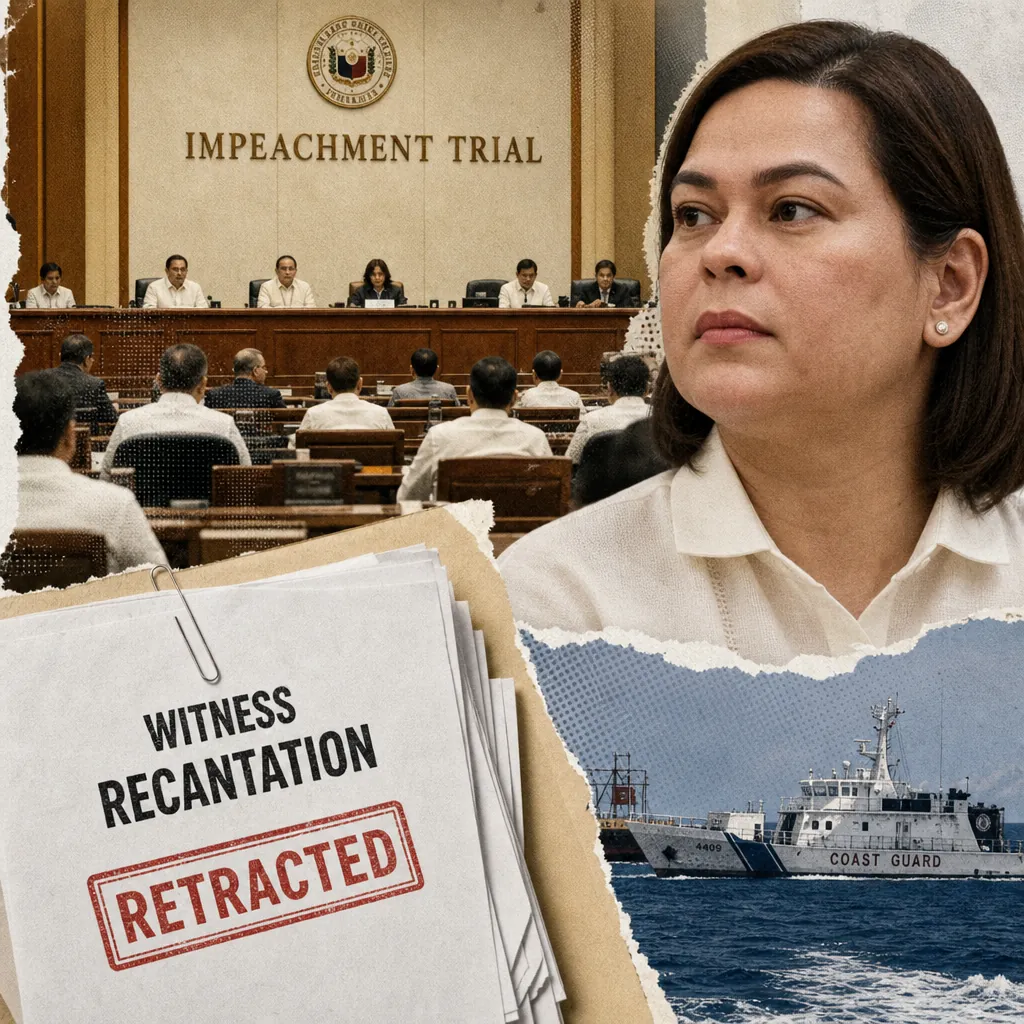
The impeachment narrative evolved through distinct phases on August 7, beginning with the Palace's call for impartiality and quickly shifting to the explosive recantation controversy. Ombudsman Jesus Crispin Remulla emerged as the central figure, directly accusing former Speaker Romualdez's camp of engineering the recantation of three former bodyguards who had sworn to delivering cash-filled suitcases. Remulla's statement, captured in a UNTV report, drew immediate pushback from Romualdez, who countered that the accusation demonstrated Remulla's prejudice and proved the underlying allegations were "false and trumped up." The back-and-forth escalated throughout the day as Remulla doubled down, telling reporters that the recantations actually strengthened his case, since the office possessed "a lot of other evidence" including 18 men who originally came forward in February. This legal chess match dominated Facebook conversations, where the Ombudsman's posts about recording every session and the men signing "freely and comfortably" accumulated engagement and skepticism. Notably, a Daily Guardian post detailing Remulla's vow to charge the recanting bodyguards as co-accused and accessories after the fact drew both praise and derision, with the haha reactions outnumbering likes on the official account itself.
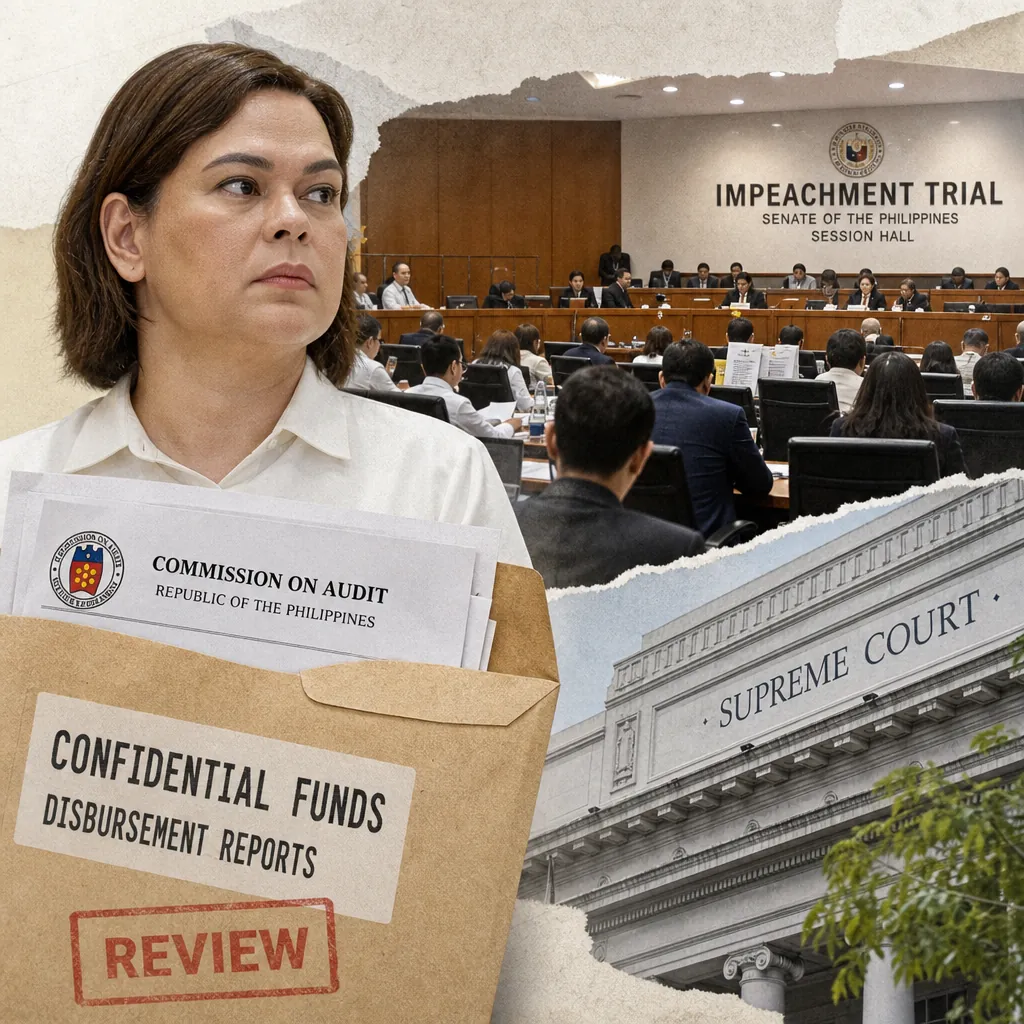
Parallel to the impeachment proceedings, a surge of conversation centered on Vice President Sara Duterte's dominant position in presidential preference polls, which served as a counter-narrative to the Palace's attacks. The UNTV post announcing Duterte's gratitude for leading Pulse Asia, SWS, and OCTA surveys generated exceptional engagement, with 174 likes and 114 haha reactions, suggesting mixed public sentiment about her political resilience. The Pulse Asia results, which placed Duterte first, Senator Bong Go second for vice president, and Robin Padilla as the top senator candidate, exploded across platforms with over 1,400 likes and 780 comments on Facebook, becoming the day's most-engaged post. This survey data served as ammunition for Duterte supporters while providing critics with material for economic anxiety narratives. A Reddit post by u/Miserable-Peach-5225, citing an Economics Professor JC Punongbayan analysis, connected the Q2 2026 GDP growth of 2.3% to political instability, asking whether investors would continue to trust the Philippine economy "if another Duterte becomes president." This post garnered 33 likes and 44 comments, sparking debate about economic competence and investment confidence that continued throughout the day with a second identical post drawing even more engagement.
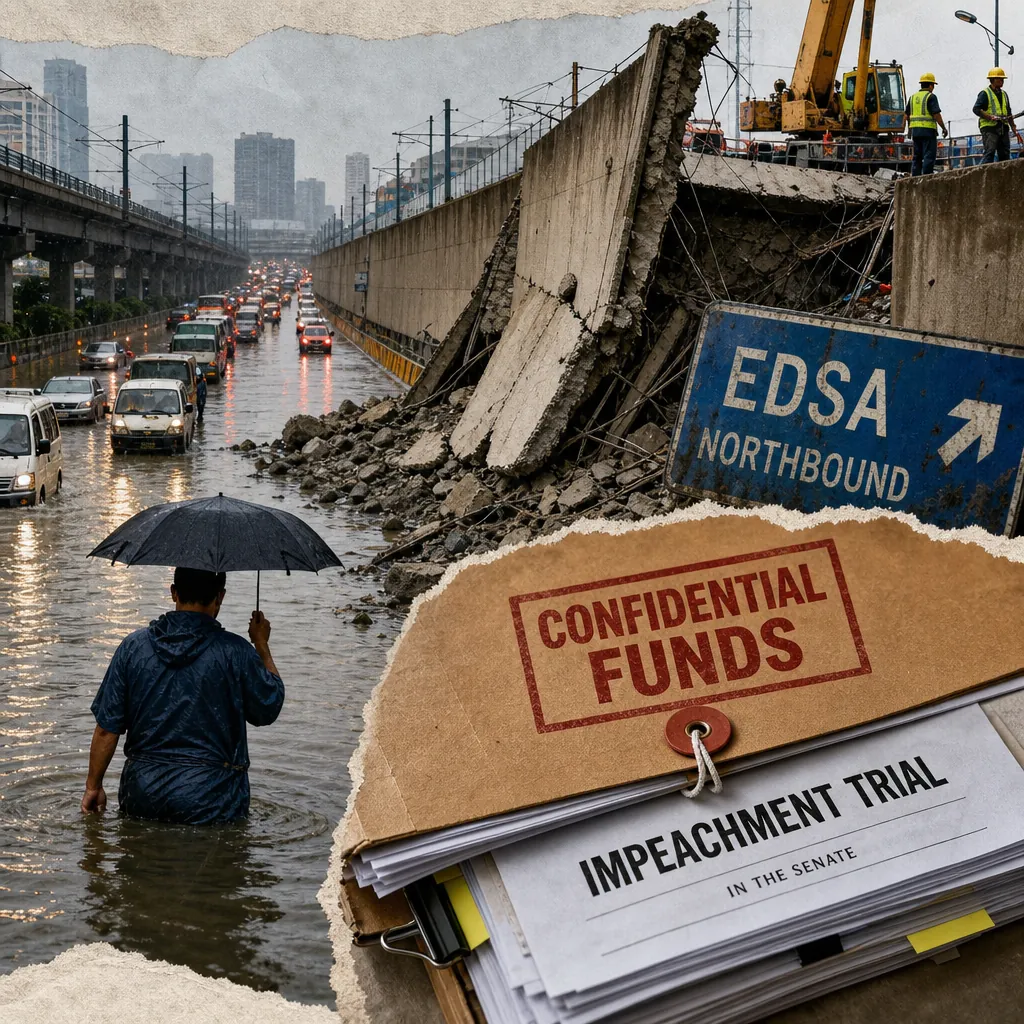
While political drama consumed the majority of attention, weather-related disaster coverage created a separate thread focused on government responsiveness. The flooding in Santa Fe, Romblon, where residents faced power outages due to the southwest monsoon, produced some of the most emotionally charged reactions of the day, with the post generating 124 likes, 89 sad reactions, and 110 shares. This humanitarian story intersected with political criticism when the Palace used the moment to attack Vice President Duterte for being abroad during the calamity, with Undersecretary Castro stating Duterte had "fallen short of demonstrating professionalism" by not remaining in the country. That Palace statement drew 10 haha reactions from users who found the criticism ironic given broader governance failures, illustrating how the disaster narrative became weaponized in the ongoing political feud. Meanwhile, infrastructure news offered a brief reprieve, with the DOTr securing land donations for the LRT-1 Cavite extension, a story that appeared twice on Reddit with moderate engagement, signaling public interest in tangible progress amid the political noise.
Key themes
- Impeachment trial and the battle for narrative control: The impeachment trial of Vice President Sara Duterte is a central focus, with the Palace demanding impartiality from senator-judges while the Ombudsman accuses the Romualdez camp of witness tampering. The public is consuming these narratives through highly partisan filters, with mockery (haha reactions) often outpacing genuine engagement.
- The 'maleta boys' recantation saga: Four of the 18 alleged bagmen recanted their statements implicating President Marcos Jr. and former Speaker Romualdez in flood control kickbacks. The Ombudsman insists the recantations strengthen the case, while Romualdez calls them proof of fabrication. This story is generating engagement roughly four times higher than typical political content.
- Economic anxiety and political instability: The Q2 2026 GDP growth of 2.3%—the weakest in 16 years outside the pandemic—is being linked to political turmoil. Reddit discussions question investor confidence and the economic competence of the administration, with some warning that a Duterte presidency in 2028 could further harm the economy.
- Legarda-Leviste travel controversy: Senator Loren Legarda and her son, Rep. Leandro Leviste, left the country on Aug. 2, a day before a subpoena was issued against Leviste in a "honey trap" plot. Legarda's medical leave explanation is met with widespread public mockery, with "haha" reactions dominating engagement.
- Disaster response politicized: The southwest monsoon and Tropical Depression Maymay caused flooding and deaths, but the Palace's criticism of VP Duterte's absence during the calamity turned disaster response into a political football. Local government efforts in Romblon and Baguio are contrasted with national-level distractions.
- Survey-driven political resilience: VP Duterte leads presidential preference polls across Pulse Asia, SWS, and OCTA, with her supporters leveraging this as validation. Critics attempt to reframe her popularity as an economic liability, creating a split narrative.
- Institutional credibility under strain: The Ombudsman, NBI, and PNP are projecting impartiality while facing public skepticism. The Supreme Court's ruling on precautionary hold departure orders adds a legal dimension to the travel controversies, but public trust in institutions appears fragile.
- Infrastructure and governance wins as counterweight: Positive stories like the LRT-1 Cavite extension land donation and the P150-million Batac market rebuilding fund offer a reprieve from political noise, with zero negative reactions, suggesting an appetite for tangible governance outcomes.
How the narratives stack
Dominant: The impeachment trial and the "maleta boys" recantation controversy are the dominant narratives, with high-engagement content across Facebook and Twitter. The Ombudsman's accusations against Romualdez's camp and the recantations themselves are driving a proxy battle over institutional integrity. Within the captured set, this story drew the most items and the highest engagement, with posts about the recantation drawing engagement levels roughly four times higher than typical political content.
Counter-narrative: The economic anxiety narrative, linking weak GDP growth to political instability, serves as a counter-narrative to the administration's messaging. Reddit discussions and some Facebook posts question whether investors will trust the economy under continued political turmoil, with the 2.3% Q2 growth figure being used as evidence of mismanagement.
Emerging: The Legarda-Leviste travel controversy is emerging as a significant story, with public mockery dominating reactions. The timing of their departure relative to the subpoena is fueling allegations of evasion, and the story is merging with the broader corruption narrative around the "honey trap" plot and solar power contracts.
Suppressed: The disaster response story, particularly the flooding in Santa Fe and Baguio, is being overshadowed by political drama. While local government efforts are praised, the national-level politicization of the calamity response is suppressing a more substantive discussion of disaster preparedness and climate resilience.
Platform insights
- Facebook: The primary battleground for narrative warfare, with official accounts from UNTV and Daily Guardian driving the impeachment and survey stories to mass audiences. Engagement patterns showed pronounced partisan emoting—the haha reactions outpaced sad or angry reactions on politically charged posts—suggesting that users employed mockery as their primary rhetorical stance toward opposing camps.
- Twitter: Functioned as the news ticker for rapid-fire developments, with UNTV and other outlets posting breaking updates on the recantation controversy, PNP tracking of Dela Rosa, and the Ombudsman's accusations. Twitter conversations were more news-forward and less commentary-driven, with short headlines generating modest engagement but serving as the reference point for Facebook discussions that followed.
- Reddit: Hosted the most analytical and economically-focused discussions, with the GDP and investment posts from u/Miserable-Peach-5225 generating substantive policy debates. Reddit users engaged with the economic implications of political instability more deeply, connecting survey numbers and impeachment developments to investor confidence and long-term growth prospects.
- YouTube: Rappler's daily wrap-up video on the Legarda-Leviste travel and economic slowdown reached over 1,600 views, extending the story's reach into a more general news audience. The platform lacked direct user sentiment due to no comments section, but its presence signaled mainstream media's treatment of these as interconnected news cycles.
Key voices and communities
- Pro-Administration and Palace-Aligned Media Entities: State-affiliated and administration-leaning news outlets amplify Palace statements, particularly those from Press Officer Claire Castro. They frame the impeachment process as a legal matter that must proceed without bias, while portraying VP Duterte as derelict in her duties during disasters. Their content maintains substantial reach, with individual posts garnering hundreds of interactions.
- Opposition and Anti-Uniteam Political Voices: A loose coalition of opposition figures and progressive accounts challenges the administration's narrative, particularly around economic performance. They leverage academic credentials and economic data, with posts about GDP growth and political instability drawing significant comment threads. Their messaging frames the Uniteam administration as economically incompetent and politically unstable.
- Duterte Loyalist and Pro-Sara Supporters: A highly mobilized base of supporters for VP Sara Duterte dominates engagement metrics, particularly on Facebook. Their posts celebrating her survey leads outperform other political content, with over 1,400 likes and 1,200 "haha" reactions. They position her as the rightful successor for 2028, dismissing impeachment charges as politically motivated persecution.
- Legal and Investigative Institutional Voices: The Office of the Ombudsman, PNP, and NBI constitute an influential institutional bloc whose statements drive news cycles. Ombudsman Remulla's press briefings on the recantation issue dominate coverage, projecting an image of impartial legal process while actively countering claims of witness coercion.
- Disaster Response and Local Government Stakeholders: A smaller but highly engaged group focused on typhoon response and local governance. Their content documents flooding, clearing operations, and power restoration, with high sad reactions indicating genuine public concern. They implicitly contrast local preparedness with national-level political distractions.
Narrative streams
The "Maleta Boys" Recantation: A Proxy Battle for Institutional Integrity
The recantation of four of the 18 "maleta boys"—former bodyguards who claimed to have delivered cash-filled suitcases to President Marcos Jr., former Speaker Romualdez, and other officials as kickbacks from flood control projects—has become a defining story. Ombudsman Remulla directly accused Romualdez's camp of engineering the recantations, saying the office possessed "a lot of other evidence" including 18 men who originally came forward in February. Romualdez denied the accusation, calling it proof of Remulla's prejudice and asserting the allegations were "false and trumped up." The public response was sharply divided, with Facebook posts about the recantation drawing engagement levels roughly four times higher than typical political content. One of the "maleta boys," George Villanon Jr., claimed they were offered P20 to P25 million to recant, adding another layer of intrigue. Ten of the 18 were arrested for failing to post bail over perjury charges, while four others recanted. This story is likely to remain in headlines for weeks, as the Ombudsman's dual-track approach—pursuing the original complaint while penalizing recanters—signals institutional hardening. The coverage of this story across the captured set was substantial, with multiple items from Inquirer, Manila Bulletin, and Manila Times, collectively worth an estimated ₱1.5 million in advertising-equivalent value.
Economic Slowdown and the 2028 Shadow
The Philippine economy grew by just 2.3% in the second quarter of 2026, the weakest quarterly growth in 16 years outside the pandemic, according to the Philippine Statistics Authority. This figure, down from 2.8% in the previous quarter and 5.4% a year earlier, fell short of the already downgraded full-year target of 3.5 to 4.5%. The slowdown is attributed to the Middle East war and weak government spending. On Reddit, a post by u/Miserable-Peach-5225 connected this to political instability, asking whether investors would continue to trust the economy "if another Duterte becomes president." This narrative poses a direct reputational threat to both the administration's economic messaging and VP Duterte's future viability. The Inquirer's coverage of the GDP data drew heavy newspaper coverage, worth an estimated ₱468,000 in advertising-equivalent value. The economic anxiety narrative is likely to gain traction as the impeachment trial continues and economic data remains weak.
Legarda-Leviste Travel: A Credibility Crisis Unfolds
Senator Loren Legarda and her son, Rep. Leandro Leviste, left the Philippines on Aug. 2, a day before the NBI issued a subpoena against Leviste in connection with the alleged "honey trap" plot involving Executive Secretary Ralph Recto. Legarda confirmed she filed a medical leave covering Aug. 3 to 5, but the public response was overwhelmingly mocking, with "haha" reactions outnumbering all other emotional responses combined. The Ombudsman expressed confidence they would return, but this assurance did little to temper skepticism. The story merged with the Ombudsman's separate probe into solar power contracts, creating a unified narrative of overlapping scandals around a prominent political family. The Rappler video on the travel drew over 1,600 views, and the Manila Times coverage was worth an estimated ₱450,000 in advertising-equivalent value. This story is likely to intensify as the Senate reconvenes and the NBI's investigation progresses.
Disaster Response as a Political Football
The enhanced southwest monsoon and Tropical Depression Maymay caused flooding, landslides, and deaths, with the death toll climbing to six. The Palace criticized VP Duterte for being abroad during the calamity, with Undersecretary Castro stating she had "fallen short of demonstrating professionalism." This criticism drew mockery from users who found it ironic given broader governance failures. Local government efforts in Santa Fe, Romblon, and Baguio City were highlighted, with high sad reactions indicating genuine public concern. The politicization of disaster response is likely to intensify as the typhoon season peaks, with each weather event providing an opportunity for both sides to trade accusations. The Manila Times coverage of the death toll was worth an estimated ₱327,000 in advertising-equivalent value.
Survey-Driven Political Resilience
VP Sara Duterte continues to lead presidential preference surveys across Pulse Asia, SWS, and OCTA, with her supporters leveraging this as validation. The Pulse Asia results, which placed Duterte first, Bong Go second for vice president, and Robin Padilla as the top senator candidate, became the day's most-engaged post on Facebook with over 1,400 likes and 780 comments. Her public gratitude post drew overwhelmingly positive sentiment with nearly 800 "love" reactions. However, critics on Reddit and Facebook are attempting to reframe her popularity as an economic liability, connecting her potential presidency to investor confidence concerns. This tension between legal vulnerability and political strength will likely sustain high engagement as the trial progresses.
Conversation trajectory
- Escalation of the Ombudsman-Romualdez confrontation into a sustained narrative arc: The recantation controversy is rapidly becoming a defining story, with the Ombudsman directly accusing the former Speaker's camp of engineering witness reversals while simultaneously announcing that the former bodyguards will be charged as co-accused and accessories. This dual-track approach signals an institutional hardening that will likely keep this story in headlines for weeks. Expect coverage to intensify as the public follows the fate of the "maleta boys" and the credibility battle between the Ombudsman and the former Speaker's camp plays out in both traditional and social media. Observation window: 2-4 weeks.
- Impeachment trial narrative shifting from legal process to political survival: The conversation is increasingly framing the Senate trial as a high-stakes political confrontation rather than a purely judicial proceeding, with Malacañang calling on senator-judges to remain impartial even as some are seen as "acting more like lawyers for one side than fair judges." Simultaneously, VP Duterte's continued dominance in presidential preference surveys is generating significant discussion about her political resilience. This tension between legal vulnerability and political strength will likely sustain high engagement, particularly as the House prosecution panel and the VP's camp trade accusations about "bending the law" in the proceedings. Observation window: 4-6 weeks.
- Economic anxiety merging with political uncertainty in public discourse: A notable emerging trend connects the sluggish GDP growth under the current administration to the political turmoil between the President and Vice President, with discussions increasingly questioning whether investor confidence can survive prolonged instability. While this narrative currently originates from a limited segment of the discourse, the Q2 2026 growth figure of 2.3% is being used as evidence of economic mismanagement, and this line of argument is likely to gain traction and spread as the impeachment trial continues and economic data remains weak. Observation window: 3-6 months.
- Weather response and disaster preparedness becoming a political football: The heavy rains and flooding caused by the enhanced southwest monsoon are generating localized engagement, but a more significant pattern is emerging where disaster response is being politicized alongside the impeachment proceedings. A Palace official's criticism of the Vice President for being abroad during calamities is a clear attempt to weaponize disaster response for political advantage. This trend will likely intensify as the typhoon season peaks over the next several weeks, with each weather event providing an opportunity for both sides to trade accusations about commitment and professionalism. Observation window: 2-3 months.
Trigger events to watch:
- Formal filing of charges against the recanting former bodyguards and any subsequent court proceedings.
- Senate impeachment trial sessions, particularly any testimony from the recanting witnesses or new evidence presented by the prosecution.
- Release of the next round of presidential preference surveys in the coming weeks.
- The Senate's reconvening, which will force the issue of Legarda's return and her explanation to colleagues.
- Any public statement from the Ombudsman regarding the preliminary investigation timeline, especially if the respondents fail to appear.
Response guidance
For communicators in the government and public sector, the immediate priority is to control the "maleta boys" narrative with legal clarity. Use official statements from agencies like the NBI and Ombudsman to explain why recantations do not invalidate a case, reinforcing the integrity of the investigation. Avoid direct confrontation with the emotional undercurrents visible in the high "haha" reactions; instead, frame responses as procedural and evidence-based.
Reinforce administrative competence through infrastructure and crisis response wins. Positive stories like the LRT-1 extension land donation and the quick clearing operations in flood-hit areas should be amplified to counterbalance the negative political and economic narratives. This serves as tangible evidence of the "Build Better More" agenda and responsive governance.
For banking and financial sector clients, prepare for market volatility communications. Monitor mentions linking GDP performance to political instability, and prepare holding statements that focus on institutional stability and long-term fundamentals rather than engaging in political defensiveness. The economic anxiety narrative could influence consumer confidence and investor sentiment, potentially affecting financial services usage patterns and capital market activity.
For the Vice President's communications team, the Palace's criticism regarding absence during Typhoon Maymay requires careful handling. Given her strong survey numbers, the risk is not popularity but perceived dereliction of duty. Encourage proactive, visible engagements with disaster-affected communities and public support for relief operations to neutralize the "elitist" or "absentee" label.
Sensitive topics to navigate include the Palace's criticism of VP Duterte's absence during calamities, direct accusations of witness tampering between high-ranking officials, and the negative GDP growth narrative linked to political turmoil. Stick to factual records and avoid commenting on personal motivations, as this fuels retaliatory personal politics and distracts from governance.
Key messages should emphasize that legal processes are built to withstand attempts at obstruction, that the administration's focus remains on delivering tangible results, and that government agencies are actively responding to emergencies. Avoid taking sides in what is increasingly becoming a polarized political battle.
See the full picture behind today's signals.
This report draws from Media Meter's MediaWatch, our real-time monitoring engine tracking 2,470+ Philippine sources across print, broadcast, digital, and social. Explore how the platform turns raw coverage into decision-grade intelligence, then see how it's configured for teams like yours — whether you're in PR agencies, corporate comms, government, or marketing.
Want more? Browse our Report Library for sector and crisis intelligence, or request a demo and we'll have your brand set up before the call.
Want this kind of intelligence on your brand?
This brief is built on the same MediaWatch methodology that runs continuously across every brand we monitor. See your competitive landscape, Impact Score, and narrative trajectory in a 30-minute demo.