LTO crackdown on viral road stunts draws public mockery
The Land Transportation Office's rapid enforcement against content creators and riders involved in dangerous viral road stunts dominated the day's conversation, drawing heavy public engagement marked by amusement and debate over rider rights and due process.
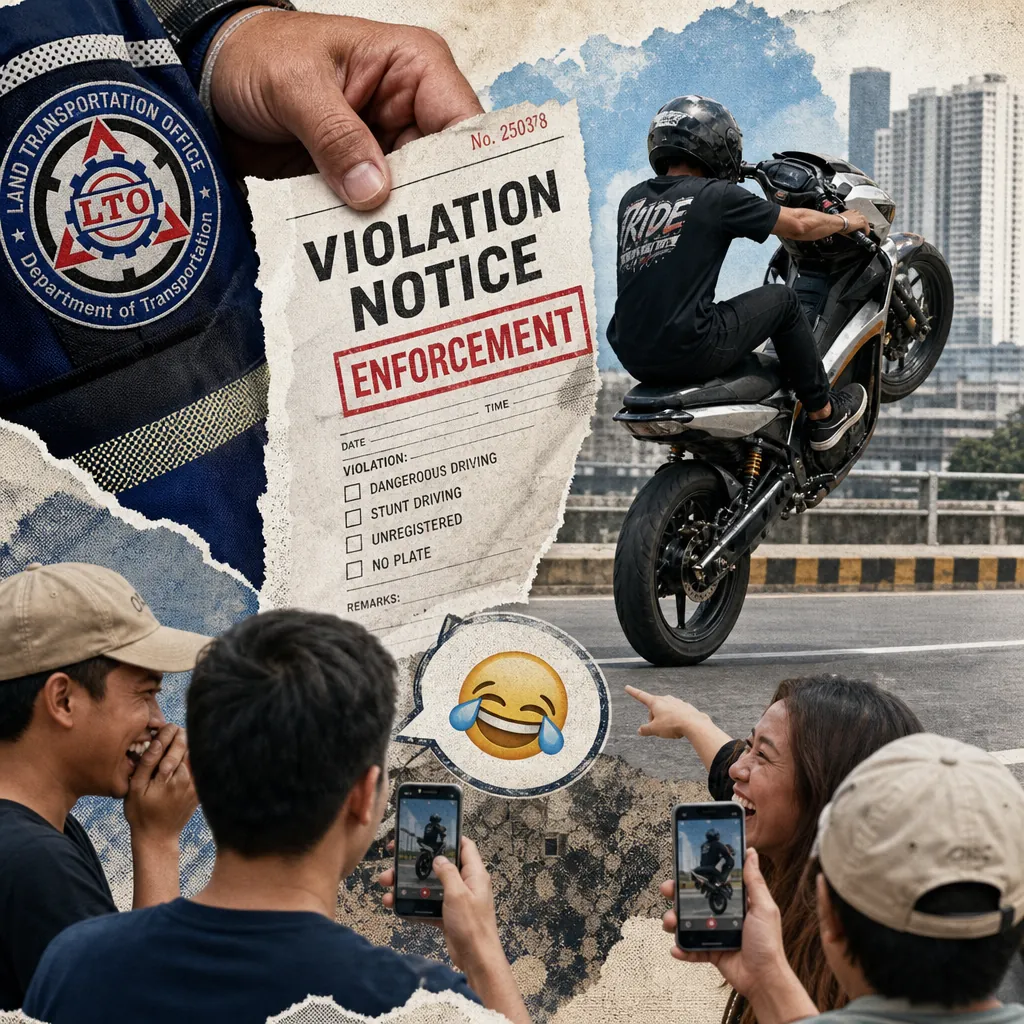
The day's conversation was dominated by the Land Transportation Office's (LTO) rapid-fire enforcement against content creators and riders whose viral videos showed dangerous road stunts. What began as a summons for a motorcycle rider caught on camera driving hands-free in Passi City, Iloilo, escalated within 48 hours into show-cause orders, 90-day preventive license suspensions, and a broader public debate about road safety, rider livelihoods, and the limits of enforcement authority. The story unfolded across broadcast news, social media, and online news outlets, with the public's initial amusement—thousands of "haha" reactions on Facebook—gradually giving way to more serious conversations about due process and the rights of riders.
The LTO's sequence was textbook enforcement escalation. On July 31, the agency announced it had summoned content creators over a viral video, while GMA's Saksi reported that a motorcycle rider in Passi City was being asked to explain why he had released the handlebars while driving. The same clip on Facebook drew 189 likes and 432 haha reactions, showing that the initial audience response leaned toward amusement more than alarm. Overnight, the tone changed: by August 1, LTO had issued a show-cause order against the rider for overspeeding, citing a tachometer reading of 8,000 rpm, and had suspended his license for 90 days while placing the motorcycle on alarm. Enforcement broadened later that day. The Inquirer reported that LTO issued show-cause orders against two content creators involved in producing social media content that depicted dangerous and irresponsible traffic violations. News5's Frontline Weekend amplified the story with a video titled "Ilang content creators na nambangga ng sasakyan para sa content, pinagpapaliwanag ng LTO," which quickly became the most-viewed tweet in the set at 22,982 views.
The conversation then found a named face in Galawang Osas Bata, who confirmed that his license had been placed under 90-day preventive suspension and said he was considering hiring a personal driver since he could no longer legally drive. That detail, shared widely with 17 haha reactions and three shares, introduced a comic subplot that threatened to dilute the seriousness of the LTO action. Meanwhile, the LTO made its position explicit in one post, saying that the actions shown in content creator videos were "nakakabahala" because they could cause danger and accidents on the road.
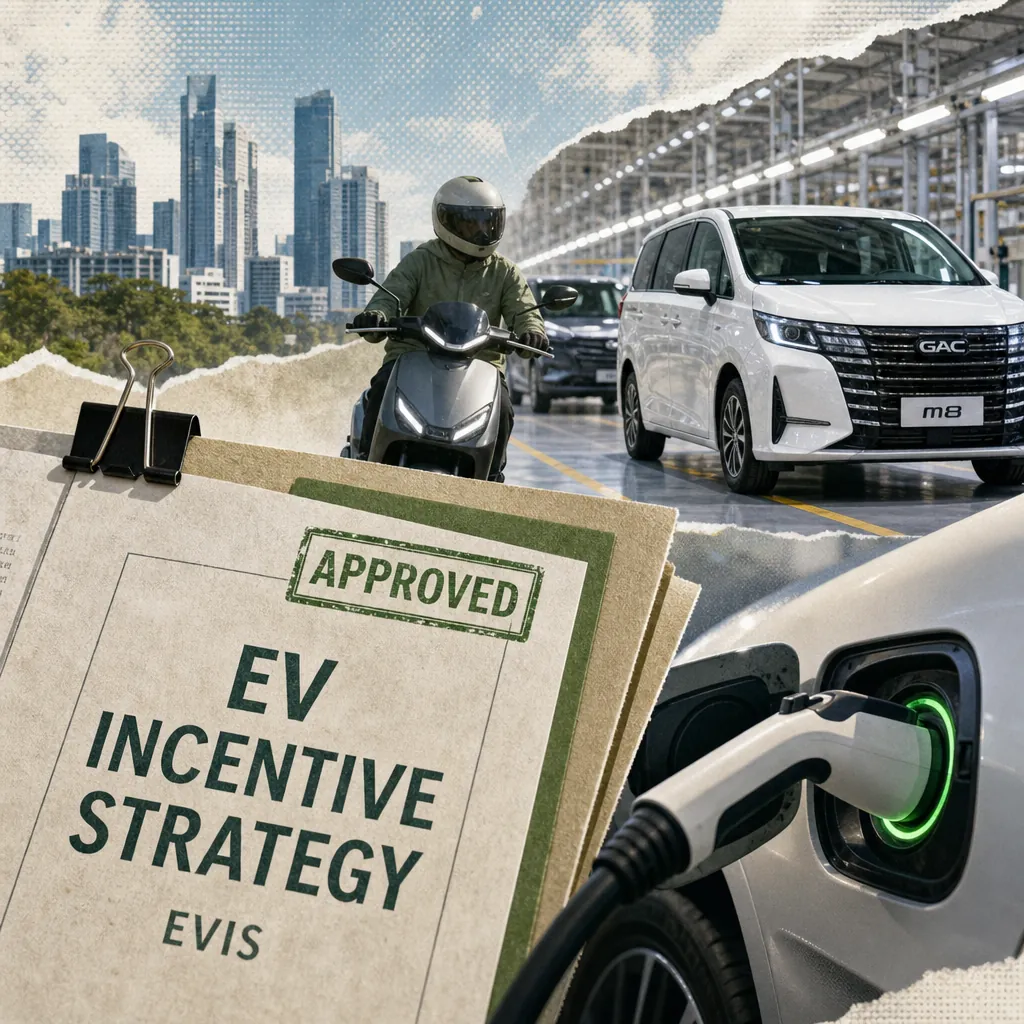
Beyond the enforcement narrative, the day's coverage included a range of automotive industry news: Tesla topped Philippine EV sales in June, Kia partnered with UnionBank for flexible car payments, GAC unveiled a three-model MPV lineup, and VinFast announced a battery-swapping network for its electric motorcycles. These stories, while less prominent in the social conversation, provided context for the broader mobility landscape in which the LTO's actions took place.
Key themes
- LTO's Rapid Enforcement Escalation: From July 31 to August 1, the LTO's public sequence was consistent: first announce a summons, then issue show-cause orders, then suspend licenses and flag vehicles. This rapid cadence was repeated in regional outlets and the national press, creating a clear cause-and-effect timeline for audiences. By August 1 evening, headlines in Bulgar and other outlets were already using "suspinde" in the lede, confirming that enforcement, not mere warning, became the dominant storyline.
- Public Sentiment From Meme to Debate: During the first 24 hours, the dominant sentiment was mockery. Facebook posts built around the no-hands rider attracted 443 haha reactions and 206 comments, and one post's framing "Woooo! No hands! Soon: No license" drew 160 haha reactions of its own. As the Galawang Osas Bata personal-driver story appeared, the tone started splitting: some audiences saw the absurdity of the creator's response, while others began asking about fairness and due process.
- Rider Livelihood and Safety: By August 2, the enforcement thread had given rise to broader rider welfare conversations. A multi-homing campaign post argued that riders should not be "alipin ng iisang app" and collected nine likes and two comments. A separate rider-safety poll asked when it is justifiable to pause work or refuse a booking, drawing 32 likes and 98 comments, the largest comment count among rider-rights posts in the dataset. This showed that the LTO story was not being discussed in isolation; it was feeding into pre-existing anxieties about rider protection and platform dependence.
- Regulatory Clarification: Almost as soon as enforcement news peaked, a separate thread emerged to clarify what LTO and LGU enforcers can and cannot do. On August 1, LTO Chief Asec. Markus Lacanilao fielded a question on whether motorcycles on pickup beds or hitch carriers are illegal. On August 2, a detailed Facebook explainer said LGU traffic enforcers generally cannot confiscate physical driver's licenses during routine apprehensions, citing RA 4136 and DOTr Memorandum Circular No. 001-2026. Because this clarification arrived after the viral suspension stories, it likely served as a corrective to public confusion about enforcement authority.
- Electric Vehicle Momentum: Amid the enforcement news, the automotive industry continued its push toward electrification. Tesla topped Philippine EV sales in June, VinFast opened 21 electric motorcycle showrooms and announced a battery-swapping network, and BYD introduced the Atto 2 with both electric and plug-in hybrid options. Mitsubishi welcomed the Electric Vehicle Incentive Strategy executive order with a P7-billion investment to locally produce hybrid electric vehicles.
- Automaker Partnerships and Promotions: Kia Philippines partnered with UnionBank to offer flexible car payment options, Honda teamed up with Dunkin to give donuts with every new NAVi motorcycle purchase, and Porsche Philippines celebrated its 30th anniversary with a one-off 911 Targa 4 GTS. These stories highlighted the industry's efforts to attract buyers through financing deals and lifestyle tie-ins.
- Road Safety and Enforcement Beyond the Viral Stunts: The LTO's actions were part of a broader enforcement push. In Iloilo, the LTO issued 248 Temporary Operators Permits during a three-day operation in Calinog and nearby towns. In Quezon City, a pickup driver was suspended for a hit-and-run involving a child. In Cebu City, the BanTal Discipline Zone was relaunched to enforce traffic rules along a congested corridor. These stories underscored the systemic nature of road safety challenges.
How the narratives stack
Dominant: The LTO's crackdown on viral road stunts is the dominant narrative of the day, both in terms of news coverage and social engagement. The story's rapid escalation—from summons to suspension—provided a clean three-step storyline that newsrooms across platforms mirrored. The public's response, while initially mocking, has shifted toward a more serious discussion of road safety and enforcement. Within the captured set, this story drew the most engagement, with a single Facebook post amassing over 400 haha reactions and a News5 tweet reaching nearly 23,000 views.
Counter-narrative: A counter-narrative emerged around rider rights and due process. As the LTO suspended licenses, rider advocacy communities began questioning whether the enforcement was fair, especially for those whose livelihoods depend on riding. Posts about multi-homing and the right to refuse unsafe bookings gained traction, framing the issue as one of economic security rather than individual recklessness. This narrative challenges the LTO's framing of the crackdown as purely a safety measure.
Emerging: The regulatory clarification thread is emerging as a significant subplot. As audiences sought to understand what enforcers can and cannot do, explainers about license confiscation rules and motorcycle transport on pickup beds gained attention. This shift from outrage to education suggests that the conversation is maturing, with drivers and riders seeking practical guidance on their legal obligations and protections.
Suppressed: Within the captured set, the broader context of road safety—such as the fatal motorcycle crash in Kabankalan and the hit-and-run in Quezon City—received less attention than the viral stunt story. These incidents, which highlight the real-world consequences of reckless driving, were covered by regional outlets but did not generate the same level of social engagement. The focus on entertainment-driven content may be overshadowing the more sobering aspects of road safety.
Platform insights
- Facebook: Facebook served as the reaction hub for the LTO story. The GMA News Feed no-hands post amassed 443 haha reactions and 206 comments, while the Galawang Osas Bata update earned 17 haha reactions and three shares. Facebook also hosted the strongest rider-welfare and educational posts, making it the most conversationally diverse platform. The platform's reaction buttons allowed users to express amusement, which dominated the early response, but comment threads revealed a growing seriousness.
- Twitter/X: Twitter functioned as the breaking-news wire. The first summons post appeared there on July 31, followed by the show-cause order and the Inquirer's two-creator story on August 1. The highest-performing item was News5's Frontline Weekend clip with 22,982 views, far above the official announcements, indicating entertainment-driven content outstripped agency messaging. Twitter's real-time nature made it the go-to platform for updates and recaps.
- YouTube: YouTube carried both institutional explainers and community-driven content. News5 and GMA posted their reports on July 31 and August 1, while the LTO Chief interview added regulatory depth. At the same time, a "Counterflow KAMOTE" compilation drew 7,261 views and 119 likes, confirming that user-generated traffic-violation content remains a resilient genre despite LTO action. YouTube's longer-form format allowed for more detailed explanations, but also hosted the "kamote" genre that the LTO is trying to curb.
Key voices and communities
- Land Transportation Office (LTO): The central authority shaping the conversation. The LTO's official communications are relatively sparse but highly consequential, as they set the news agenda for broadcast media and social platforms. The agency frames its actions as protecting public safety, with strong language about the risks these videos create. Its show-cause orders and suspensions are the primary drivers of the narrative.
- Mainstream Broadcast and Digital Media: Major Philippine news organizations provide the amplification loop, translating LTO actions into viral clips and newscast packages across Facebook, Twitter, and YouTube. Coverage spans nightly newscasts and dedicated public-interest segments, with one "Frontline Weekend" clip receiving over 22,000 views on Twitter. The media's framing often mixes accountability with entertainment, as seen in the "lagot sa LTO" phrasing used by a leading network.
- Stunt Content Creators and Vloggers: This group includes motorcycle riders and vloggers who produce stunt or crash-based videos for engagement, and who are now the direct target of LTO enforcement. One content creator publicly acknowledged the consequences by considering hiring a personal driver after his license suspension, while promising to stop producing damage-focused content during the investigation. Their influence is built on viral reach rather than institutional authority, and their content often normalizes risky road behavior.
- General Public and Road-User Communities: The public's role is split between amused spectators and concerned road users, with Facebook reaction data showing strong "haha" dominance across viral posts. At the same time, rider advocacy communities are using the moment to discuss safety, livelihood, and the right to refuse unsafe bookings. This group is a barometer for public tolerance of risky driving behavior.
Narrative streams
LTO's Enforcement Blitz: From Summons to Suspension
The LTO's handling of the viral road stunt videos is a masterclass in rapid enforcement communication. The sequence began on July 31 when the agency announced it had summoned content creators over a viral video. The same day, GMA's Saksi reported that a motorcycle rider in Passi City, Iloilo, was being asked to explain why he had released the handlebars while driving. By August 1, the LTO had issued a show-cause order against the rider for overspeeding, citing a tachometer reading of 8,000 rpm, and had suspended his license for 90 days while placing the motorcycle on alarm. The agency also issued show-cause orders against two content creators involved in producing social media content that depicted dangerous and irresponsible traffic violations.
The LTO's public statements emphasized the danger of such content. In one post, the agency said, "Mahigpit na minamanmanan ng LTO ang mga content na inilalabas ng mga content creator na ito. Nakakabahala ang mga ipinapakitang aksyon sa kanilang mga video dahil maaaring magdulot ang mga ito ng panganib at aksidente sa kalsada." This translates to: "The LTO is strictly monitoring the content released by these content creators. The actions shown in their videos are alarming because they could cause danger and accidents on the road."
The speed of enforcement gave newsrooms a clean three-step storyline—summons, show-cause order, suspension—that every major platform mirrored. This created a sense of inevitability and consequence that resonated with audiences. For the automotive industry, this signals a tightening regulatory environment where association with reckless driving content carries reputational risk. Brands should monitor LTO announcements closely, as they may indicate broader policy shifts on road safety and vehicle use.
Public Reaction: From Meme to Debate
The public's initial response to the LTO crackdown was overwhelmingly one of amusement. A Facebook post showing the no-hands rider attracted 443 haha reactions and 206 comments, while another post's framing "Woooo! No hands! Soon: No license" drew 160 haha reactions. This mockery was not just directed at the rider but also at the absurdity of the situation—a content creator considering hiring a personal driver after losing his license. The Galawang Osas Bata update, shared with 17 haha reactions and three shares, introduced a comic subplot that threatened to dilute the seriousness of the LTO action.
However, as the story progressed, the tone began to shift. By August 2, rider advocacy communities were using the moment to discuss broader issues of livelihood and safety. A multi-homing campaign post argued that riders should not be "alipin ng iisang app" (slaves of a single app), collecting nine likes and two comments. A rider-safety poll asked when it is justifiable to pause work or refuse a booking, drawing 32 likes and 98 comments—the largest comment count among rider-rights posts in the dataset. This shift from mockery to debate suggests that the public is beginning to engage with the underlying issues of rider protection and platform dependence.
For automotive brands, this dual sentiment presents both an opportunity and a risk. The humorous framing allows brands to participate in the conversation without looking heavy-handed, using "consequences" framing to reinforce safe driving. However, the emerging rider-rights narrative requires careful handling to avoid alienating riders as a group. Brands should support rider safety without blaming riders, and should amplify constructive voices from rider communities.
Rider Livelihood and Safety: The Undercurrent
While the LTO crackdown dominated headlines, a parallel conversation about rider livelihood and safety was gaining momentum. The enforcement actions, which included 90-day preventive suspensions, directly threatened the incomes of riders who depend on their motorcycles for work. This was reflected in posts about multi-homing—the practice of working for multiple ride-hailing apps—and the right to refuse unsafe bookings. A rider-safety poll asking when it is justifiable to pause work or refuse a booking drew 98 comments, indicating strong engagement from the riding community.
These conversations are not new; they reflect long-standing anxieties about the gig economy and the precariousness of platform-based work. The LTO crackdown provided a catalyst for these discussions to resurface, as suspended riders shared personal stories and called for due process. For mobility and automotive clients, this is a critical moment to support rider safety without alienating platform partners. Brands can engage with rider communities on safety and livelihood issues, positioning themselves as allies rather than adversaries.
Regulatory Clarification: Know Your Rights
As the enforcement wave peaked, a separate thread emerged to clarify what LTO and LGU enforcers can and cannot do. On August 1, LTO Chief Asec. Markus Lacanilao fielded a question on whether motorcycles on pickup beds or hitch carriers are illegal. On August 2, a detailed Facebook explainer said LGU traffic enforcers generally cannot confiscate physical driver's licenses during routine apprehensions, citing RA 4136 and DOTr Memorandum Circular No. 001-2026. This clarification arrived after the viral suspension stories, suggesting it served as a corrective to public confusion about enforcement authority.
The timing is significant: audiences may have spent hours believing local enforcers could seize licenses in any traffic stop. The explainer provided much-needed clarity, but its late arrival highlights the risk of misinformation spreading during fast-moving enforcement stories. For automotive stakeholders, this presents an opportunity to produce or amplify accurate "know your rights" content, positioning the industry as a helpful source of practical information. Brands can share official LTO clarifications rather than issuing independent interpretations, building trust with drivers and riders.
Electric Vehicle Momentum: The Industry's Other Story
Amid the LTO crackdown, the automotive industry continued its push toward electrification. Tesla ranked as the Philippines' top-selling electric vehicle brand in June 2026, according to sales data from the Chamber of Automotive Manufacturers of the Philippines Inc. and Truck Manufacturers Association. This followed a similar finish in May, giving Tesla two consecutive months at the top of the local EV market. The brand did not disclose its June sales volume or market share, but its performance came as the automaker posted record vehicle deliveries in several overseas markets.
VinFast also made headlines with the opening of 21 electric motorcycle showrooms in major Philippine cities and the announcement of a battery-swapping network. The system will allow riders to exchange a depleted battery for a fully charged unit in about one minute, with around 30,000 stations planned nationwide. The battery subscription model starts at P439 a month, with the first 12 months free for up to 20 swaps. This addresses a key barrier to EV adoption—charging infrastructure—and could accelerate the shift to electric two-wheelers.
BYD introduced the Atto 2 with both battery-electric and plug-in hybrid powertrains, offering a claimed driving range of up to 380 kilometers for the EV and a combined range of 1,340 km for the hybrids. Mitsubishi welcomed the Electric Vehicle Incentive Strategy executive order with a P7-billion investment to locally produce hybrid electric vehicles. These developments signal a robust and competitive EV market, with multiple brands vying for Filipino consumers.
For the automotive industry, the EV momentum is a positive counterpoint to the enforcement narrative. It shows that the sector is evolving toward cleaner and more sustainable mobility, even as regulators crack down on dangerous behavior. Brands can leverage this momentum by highlighting their EV offerings and supporting the government's electrification goals.
Automaker Partnerships and Promotions: Driving Sales
Several automakers announced partnerships and promotions aimed at boosting sales. Kia Philippines partnered with UnionBank to offer credit card installment plans and auto financing options for car buyers. The arrangement covers all Kia models, including the recently launched Sportage Turbo Hybrid. Customers may use a UnionBank credit card to pay through the bank's PayEasy program at participating Kia dealerships, with installment terms of three, six, 12, 24, or 36 months. This flexibility is designed to make car ownership more accessible.
Honda Philippines partnered with Dunkin to give customers a box of donuts with every new Honda NAVi purchased during a three-month promotion. The promotion runs from 27 July to 27 October 2026, with each voucher exchangeable for an exclusive Honda x Dunkin box with eight Classic Donuts. Honda tied the promotion to the Filipino practice of taking home pasalubong for family and friends, making it culturally resonant.
Porsche Philippines celebrated its 30th anniversary with a one-off 911 Targa 4 GTS and the local debut of the new 911 Turbo S Hybrid. The one-off Targa 4 GTS, created in collaboration with Porsche Exclusive Manufaktur, features a bespoke pastel orange exterior hue and handcrafted details. The 911 Turbo S is the most powerful series-production 911 ever, with 711hp and 800Nm on tap from its new T-Hybrid powertrain.
These promotions and launches reflect a competitive market where brands are using financing deals, lifestyle tie-ins, and exclusive models to attract buyers. For the industry, this indicates a healthy level of consumer interest, even as the LTO crackdown dominates the news cycle.
Conversation trajectory
Over the next 2-3 weeks, the LTO enforcement narrative is likely to consolidate around "content creators as responsible road users." The agency's administrative hearings tied to the show-cause orders will be a key trigger, potentially leading to formal charges or dismissals. Public scrutiny on vloggers who stage risky scenarios for engagement is expected to grow, creating reputational risk for automotive and motorcycle brands if sponsorship or endorsement relationships are exposed.
The entertainment-oriented "kamote" content is evolving into "enforcement entertainment," where clips of reckless driving are paired with the consequence of license suspension. This signals continued audience appetite for dangerous-driving footage, but the narrative will increasingly include the "consequence" element. Brands should expect user-generated content featuring their vehicles in reckless scenarios to resurface, requiring rapid response protocols.
There is also a growing demand for "know your rights" and regulatory clarification content. Posts explaining when LGU traffic enforcers can confiscate licenses, and clarifications from LTO leadership on gray areas like transporting motorcycles on pickup beds, are gaining traction. This pattern indicates a shift from outrage to education, as drivers and riders seek guidance on legal obligations and protections.
Rider livelihood and safety concerns are becoming intertwined with enforcement. Alongside the crackdown, rider-community debates about refusing unsafe bookings, multi-homing, and income security are gaining momentum. Expect these conversations to converge within 3-4 weeks as suspended riders share personal stories and call for due process. For mobility and automotive clients, this is a critical moment to support rider safety without alienating platform partners.
Key trigger events that will reshape this conversation include: the LTO's administrative hearings, likely to dominate discussion within the next one to two weeks; further LTO public guidance on content-creation activities and road safety, which would spur another cycle of educational content; and continued LTO monitoring of viral road videos, which could yield new show-cause orders and reset the news cycle at any time.
Response guidance
For communicators in the automotive and mobility sector, the LTO crackdown presents both opportunities and risks. The public's overwhelmingly humorous response to enforcement stories allows brands to participate in the conversation without looking heavy-handed, using "consequences" framing to reinforce safe driving. However, the emerging rider-rights narrative requires careful handling to avoid alienating riders as a group.
Key messages to consider:
- Road safety enforcement is aimed at preventing dangerous behavior from being copied, not at silencing content creators or restricting online expression.
- The LTO is following established legal processes: show-cause orders, a 90-day preventive suspension, and an ongoing investigation involving both drivers and registered owners.
- Content creators have significant influence over their audiences and should model safe road behavior, especially for young and new riders.
- Creative content that promotes safety is welcome; stunts that damage vehicles or endanger the public are not acceptable forms of entertainment.
- Due process remains a priority: preventive suspension is not a final judgment, and the investigation will determine the appropriate outcome.
Platform-specific approaches:
- On Facebook, publish a simple visual explainer that breaks down the enforcement sequence—show-cause order, license surrender, 90-day preventive suspension, and ongoing investigation—because Facebook posts are drawing high volumes of emotional reactions that suggest audiences are reacting to the spectacle rather than understanding the legal process. Pin an official clarification comment on high-engagement news posts to preempt misinformation about license confiscation.
- On Twitter/X, launch a short thread that maps the incident timeline—viral video, public attention, show-cause order, license suspension, and next steps—because Twitter is where breaking updates and "ICYMI" recaps are concentrating attention. Amplify official statements with visual cues, such as graphics highlighting the violations like no-hands riding, excessive RPM, and intentional vehicle crashes.
- On YouTube, develop a short "Know Your LTO Rules" video series that addresses common questions raised in comments, including whether motorcycles can be carried on pickup beds and how the new digital violation system works. Post a pinned comment on viral news clips with a concise official statement and a link to the full explainer.
Sensitive topics to navigate:
- Preventive suspension before a final ruling: emphasize that this is a standard safety measure while the inquiry continues, and avoid language that implies guilt.
- Freedom of expression versus public safety: frame the issue as a question of lawful behavior on public roads, not as censorship of content creators.
- Public mockery of dangerous stunts: avoid shaming individuals, and keep responses respectful to prevent the conversation from becoming a pile-on that distracts from road safety.
- Potential perceptions of heavy-handedness: balance firm enforcement messaging with clear explanations of the rights of drivers and registered owners.
Strategic opportunities:
- Launch a short-form educational campaign that uses the enforcement wave as a teachable moment, pairing lighthearted "don't be like this rider" framing with clear road-safety tips. This aligns with the public's existing amusement and avoids the feeling of corporate nagging.
- Activate a brand-safety monitoring protocol for any owned or sponsored vehicles appearing in staged-crash or stunt videos, and coordinate directly with the LTO if branding becomes visible. The active investigation makes immediate response necessary to avoid association with reckless behavior.
- Produce or amplify accurate "know your rights" content around the LTO's recent license-confiscation clarification, focusing on electronic violation logging and motorist obligations. This builds trust and positions the industry as a helpful source of practical information.
By engaging constructively with the enforcement narrative and supporting rider safety, automotive brands can turn a potentially negative story into an opportunity to demonstrate responsibility and leadership in road safety.
See the full picture behind today's signals.
This report draws from Media Meter's MediaWatch, our real-time monitoring engine tracking 2,470+ Philippine sources across print, broadcast, digital, and social. Explore how the platform turns raw coverage into decision-grade intelligence, then see how it's configured for teams like yours — whether you're in PR agencies, corporate comms, government, or marketing.
Want more? Browse our Report Library for sector and crisis intelligence, or request a demo and we'll have your brand set up before the call.
Want this kind of intelligence on your brand?
This brief is built on the same MediaWatch methodology that runs continuously across every brand we monitor. See your competitive landscape, Impact Score, and narrative trajectory in a 30-minute demo.