EV incentives, fare hikes, and rice tariffs dominate PH transport news
A daily snapshot of the Philippine automotive and transport sector, covering the new EV manufacturing incentives, transport fare hike petitions and strikes, rice import safeguard duties, and new vehicle launches.
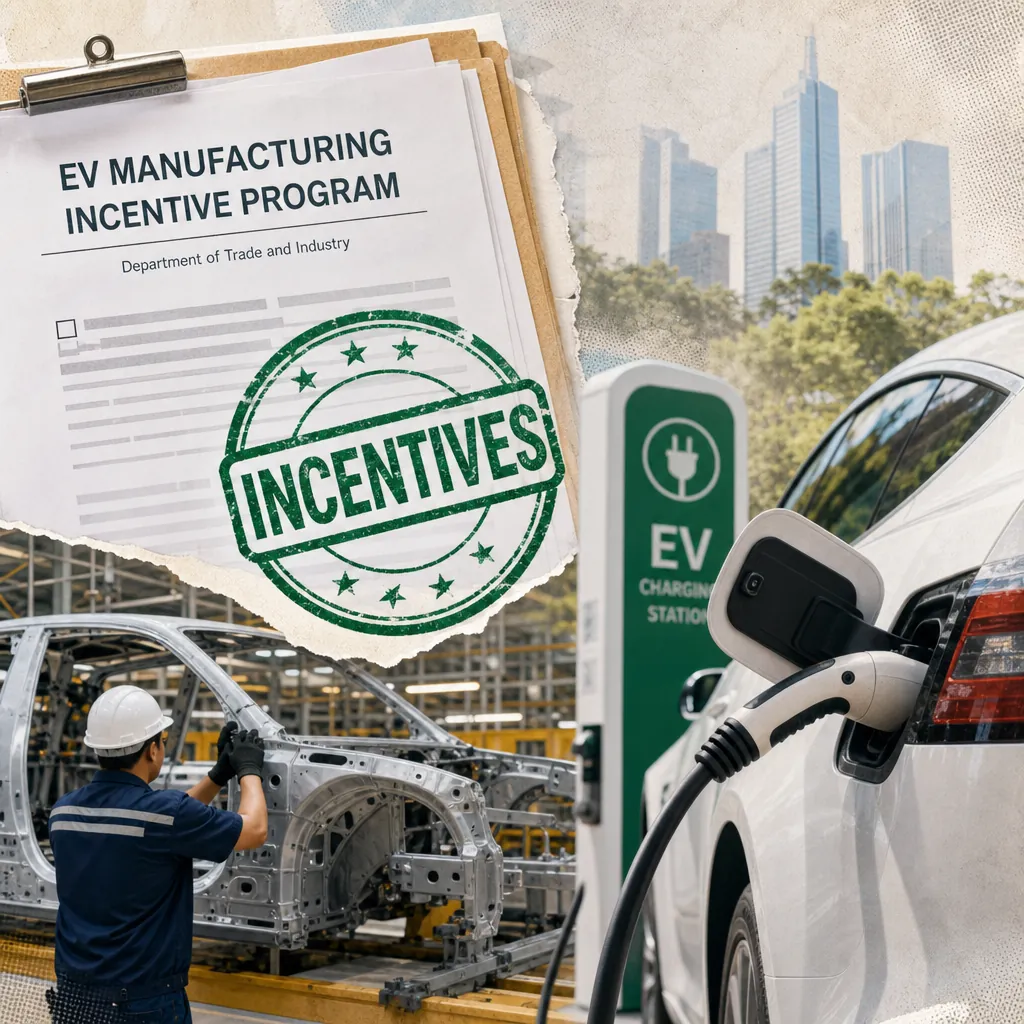
The day's conversation in the Philippine automotive and transport sector was anchored by a major policy development: President Ferdinand Marcos Jr.'s signing of Executive Order 121, which establishes the Electric Vehicle Incentive Strategy (EVIS) Program. This move, aimed at boosting local EV manufacturing through fiscal incentives, drew widespread coverage and commentary, with officials projecting significant price reductions for consumers. Alongside this, transport groups announced a three-day strike to push for fare hikes, farmer organizations petitioned for higher rice import duties, and several new vehicle models and dealership expansions were unveiled. The narrative is a mix of policy optimism, consumer concerns, and industry growth signals, reflecting a sector in transition toward electrification amid economic pressures.
Key themes
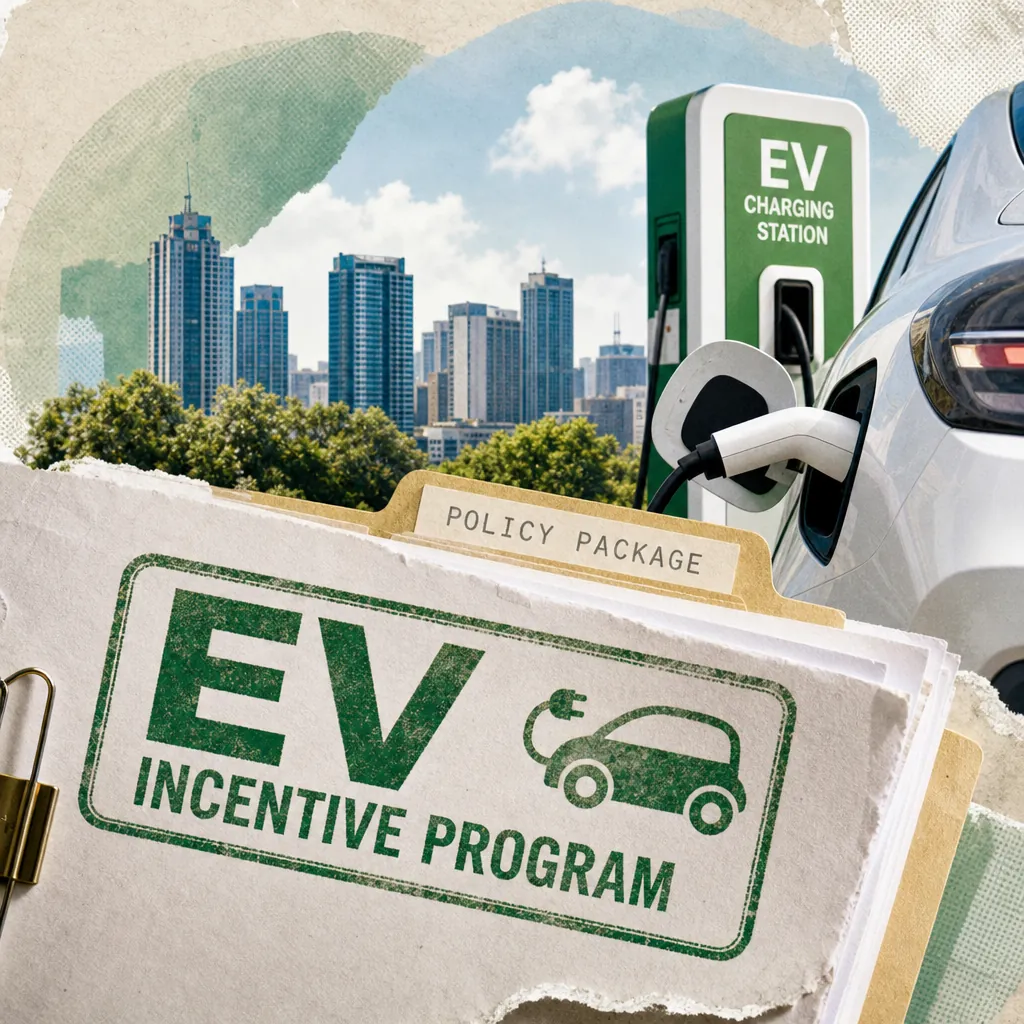
- EV manufacturing push: EO 121 establishes the EVIS Program, offering up to P60 billion in fiscal support to attract investments in local EV production, with projected price cuts of 6-12% for consumers.
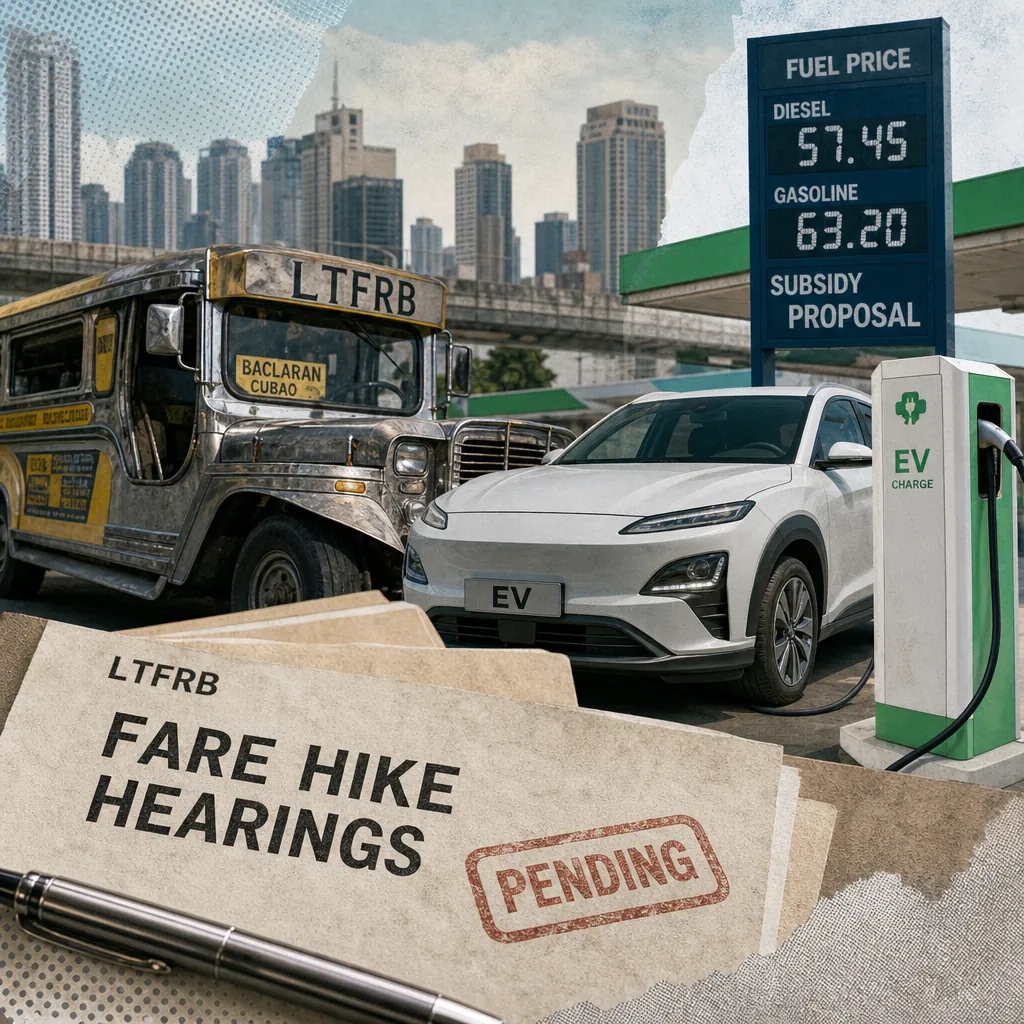
- Transport strike and fare hikes: Manibela and other groups plan a three-day strike from Aug. 10-12, demanding provisional fare increases as fuel prices climb; the LTFRB is weighing the impact on commuters and the economy.
- Rice import safeguard duty: Farmer groups petition for an additional 30% duty on rice imports to protect local producers, citing a surge in imports since the Rice Tariffication Law.
- New vehicle launches and expansions: Lexus introduces the all-new ES with hybrid and EV options, VinFast launches e-scooters and opens 21 dealerships, and GWM expands with a new BGC dealership.
- Motorcycle market growth: Honda Philippines targets 13% sales growth, driven by demand from delivery platforms and high fuel prices.
- EV adoption in public transport: Cagayan de Oro councilor urges taxi operators to embrace EVs as Green GSM enters the region, despite driver concerns.
- Global EV and tech trends: Xiaomi unveils a boxy EREV SUV, Ather Energy narrows losses, and Boeing's 737 MAX 7 certification signals aerospace recovery.
- Consumer and safety concerns: Viral videos of motorcycle accidents and pedestrian incidents highlight road safety issues, while an 'AI tax' drives up electronics prices.
How the narratives stack
- Dominant: The EVIS Program and its potential to lower EV prices and boost local manufacturing. This story dominated the captured set, with multiple articles from Panay News, Maharlika News, and others, and it carries significant consequence for the sector's future.
- Counter-narrative: The transport strike and fare hike petitions present a contrasting view, focusing on the immediate hardships of fuel prices and the need for government intervention, challenging the optimistic EV narrative with ground-level economic realities.
- Emerging: The expansion of EV infrastructure and new model launches, such as VinFast's e-scooters and Lexus's electric ES, signal a growing consumer shift toward electrification, though adoption barriers remain.
- Suppressed: The story of road safety and the human cost of motorcycle accidents, while covered in local news, received less attention in the broader conversation compared to policy and market developments, despite its direct impact on riders and families.
Platform insights
- Facebook: Local news outlets and community pages shared videos of motorcycle accidents and pedestrian incidents, generating high engagement through shares and comments, often with emotional reactions. The Cagayan de Oro EV taxi discussion also sparked debate among local drivers.
- X (Twitter): Policy announcements and corporate news, such as the EVIS Program and Honda's sales growth, were shared by industry analysts and journalists, with retweets and quote tweets driving discussion on economic implications.
- YouTube: Viral videos of the Davao motorcycle crash and the pedestrian lane incident in Iloilo drew significant views and comments, highlighting public concern over road safety.
- Reddit: While not directly observed in the provided data, Reddit threads on related topics like EV adoption and transport issues often feature detailed user discussions, which could be a source of community sentiment.
Key voices and communities
- Government officials: Energy Secretary Sharon Garin and Finance Secretary Frederick Go are key voices promoting the EVIS Program, framing it as a step toward energy independence and economic growth.
- Transport groups: Manibela chairman Mar Valbuena represents the striking drivers, articulating the plight of operators facing rising fuel costs and demanding fare adjustments.
- Farmer organizations: The Federation of Free Farmers and Magsasaka Party-list advocate for protective tariffs, representing agricultural interests against import competition.
- Automotive industry executives: Leaders like Jomel Jerezo of Honda Philippines and executives from GWM and VinFast provide insights into market trends and expansion plans.
- Local officials and regulators: Figures like Cagayan de Oro Councilor Enrico Salcedo and LTFRB Chair Vigor Mendoza II shape the conversation on EV adoption and fare regulation.
Narrative streams
EVIS Program: A New Era for Philippine EV Manufacturing
President Ferdinand Marcos Jr. signed Executive Order 121 on July 29, establishing the Electric Vehicle Incentive Strategy (EVIS) Program. This program offers fiscal incentives, including tax perks and up to P60 billion in support, to attract investments in the local manufacture of hybrid and battery electric vehicles, as well as parts and components. The goal is to expand domestic EV production, create jobs, reduce fossil fuel dependence, and position the Philippines as a regional automotive hub.
Energy Secretary Sharon Garin highlighted that the Department of Energy estimates EV prices could drop by 6 to 12 percent, translating to potential savings of up to P200,000 per vehicle, depending on the model. This price reduction is expected to improve market competition and give consumers more options. Finance Secretary Frederick Go called the order "a major step toward developing a globally competitive EV manufacturing industry."
The EVIS Program is a significant policy shift, as it not only encourages EV adoption but also aims to build a local manufacturing base. This could reduce the country's reliance on imported vehicles and create a new industrial sector. However, the success of the program will depend on attracting substantial investments and building the necessary infrastructure, such as charging networks.
Transport Strike and Fare Hike Petitions: The Struggle for Fair Wages
Transport groups, led by Manibela, announced a three-day strike from August 10 to 12 to pressure the government into granting a provisional fare increase. This follows a hearing by the Land Transportation Franchising and Regulatory Board (LTFRB) on pending fare hike petitions. The groups argue that rising fuel prices, exacerbated by Middle East tensions, have made it unsustainable for operators to continue without fare adjustments.
LTFRB Chair Vigor Mendoza II said the board will invite representatives from the Department of Economy, Planning and Development (DEPDev), Department of Labor and Employment (DOLE), and Department of Energy (DOE) to the next hearing to weigh the impact of any increase on commuters, transport workers, and the broader economy. The board plans to send a recommendation for an interim fare hike to Malacañang this week.
Manibela chairman Mar Valbuena lamented, "The oil price hike has made us suffer for a long time. A fare increase would have been the answer, but we could not get it today." The strike is a direct response to the perceived inaction, and it threatens to disrupt commuters across the country. The LTFRB's careful deliberation reflects the delicate balance between protecting commuters from higher costs and ensuring transport operators can survive.
Rice Import Safeguard Duty: Protecting Local Farmers
The Federation of Free Farmers (FFF) and the Magsasaka Party-list have petitioned the Tariff Commission to impose an additional 30% safeguard duty on imported rice, on top of the current 15% tariff. They argue that the surge in imports since the Rice Tariffication Law (RTL) of 2019, which lifted import volume limits, has hurt local producers.
According to their petition, rice imports have averaged 3.446 million metric tons annually since 2019, nearly triple pre-law levels. Imports in 2022 and 2024 were at least 37% higher than the previous three-year average, and arrivals in the first half of 2026 alone reached 2.9 million metric tons, nearly 83% of the annual average over the past seven years. The US Department of Agriculture expects the Philippines to import 5.2 million metric tons this year.
The proposed safeguard duty, under Republic Act 8800 (Safeguard Measures Act), is designed to discourage import volumes that cause or threaten serious injury to local producers. The groups also recommend revising the minimum access volume (MAV) system to better regulate imports while staying WTO-compliant. This issue is critical for food security and rural livelihoods, but it also risks higher rice prices for consumers, a politically sensitive topic.
New Vehicle Launches and Dealership Expansions: The Market Responds
Several automakers are expanding their presence in the Philippines, signaling confidence in the market's growth. Lexus Philippines is set to introduce the all-new ES executive sedan this August, offering both hybrid and fully electric powertrains—the first time a battery electric version of the ES will be available locally. The redesigned cabin features updated displays, connectivity, and the latest driver assistance technology.
VinFast has officially launched its first e-scooters in the country, with three models: the Evo, Feliz II, and Viper. Prices range from P62,900 to P73,900, with options for battery subscription or purchase. The company has also opened 21 dealership locations nationwide, offering sales, service, and spare parts, with plans to expand further.
GWM Philippines, distributed by Luxuriant Automotive Group Inc., signed a memorandum of agreement with dealer partner EvoXterra to establish a new dealership in Bonifacio Global City (BGC), set to open in the third quarter of 2026. This expansion aims to bring GWM's SUVs, pickups, and New Energy Vehicles closer to urban consumers.
These launches and expansions reflect a broader trend of electrification and premium offerings in the Philippine market, catering to a growing middle class and environmentally conscious buyers.
Motorcycle Market Growth: Honda's Optimism
Honda Philippines Inc. (HPI) is targeting a 13% growth in sales this year, building on last year's 1.04 million units sold, which accounted for 56% of total motorcycle sales in the country. Vice President Jomel Jerezo attributes this growth to strong demand from online delivery platforms and consumers seeking practical transport options amid high fuel prices and congested roads.
HPI is also targeting female and Gen Z riders, recognizing a shift in demographics. The company's optimism is a positive signal for the broader motorcycle industry, which continues to be a vital part of the country's transportation ecosystem.
EV Adoption in Public Transport: A Local Perspective
In Cagayan de Oro, Councilor Enrico Salcedo is urging taxi operators to embrace electric vehicles, as Green GSM prepares to deploy 200 electric units in the region. Many taxi drivers are wary, fearing it will diminish their livelihood. LTFRB Region 10 Director Alexes Joseph Bendijo noted that the units will be deployed elsewhere if local operators resist.
Salcedo argues that EVs are the future of land conveyances and that local transport groups must adapt. This tension between innovation and livelihood protection is a microcosm of the national debate on EV adoption, highlighting the need for just transition policies that support workers.
Global EV and Tech Trends: Context from Abroad
Xiaomi unveiled the SkyNomad, a boxy seven-seat extended-range EV SUV, which is not yet available in Malaysia or the Philippines. The company plans global expansion starting in 2027, with right-hand-drive markets targeted for 2028. This signals the entry of more Chinese EV brands into Southeast Asia.
India's Ather Energy narrowed its first-quarter loss significantly, driven by strong demand for its Rizta scooters. Revenue surged 90% to 12.17 billion rupees, and vehicle sales jumped 81% to 83,173 units. This demonstrates the growing appetite for electric two-wheelers in emerging markets.
In the aerospace sector, Boeing's 737 MAX 7 received FAA certification, a major milestone after years of delays. This could have implications for Philippine airlines looking to modernize their fleets.
Consumer and Safety Concerns: The Human Side
Viral videos of a motorcycle accident in Davao City, where a live-in partner died, and a pedestrian lane incident in Iloilo, where a rider was slapped, highlight ongoing road safety issues. These incidents spark public outrage and calls for stricter enforcement of traffic laws.
Additionally, an "AI tax" is driving up the price of gaming computers and electronics, as memory and storage costs surge due to AI demand. This affects consumers and could have broader economic implications.
Conversation trajectory
- Short-term (1-2 weeks): The transport strike from Aug. 10-12 will likely dominate headlines, with potential disruptions and negotiations. The LTFRB's recommendation on fare hikes will be closely watched.
- Medium-term (1-3 months): The EVIS Program's implementation details, including the specific incentives and investor interest, will unfold. New EV models and dealership openings will continue to shape consumer choices.
- Long-term (6-12 months): The success of EV manufacturing incentives will depend on infrastructure development and market adoption. The rice tariff decision will impact food prices and farmer livelihoods.
Trigger events to monitor: The outcome of the transport strike, the Tariff Commission's ruling on rice duties, the first major investment under EVIS, and the launch of the Lexus ES EV in the Philippines.
Response guidance
For communicators in the automotive and transport sector, the key is to balance optimism about electrification with empathy for economic pressures. When discussing EV incentives, emphasize the long-term benefits of lower operating costs and environmental impact, while acknowledging the upfront costs and infrastructure challenges. For transport groups, focus on the need for fair wages and the government's role in facilitating dialogue. For farmers, highlight the importance of protecting local livelihoods while ensuring food security. Use clear, plain language to explain policy impacts, and engage with community concerns on social media to build trust. Avoid overpromising on price reductions or immediate solutions; instead, provide realistic timelines and actionable information.
See the full picture behind today's signals.
This report draws from Media Meter's MediaWatch, our real-time monitoring engine tracking 2,470+ Philippine sources across print, broadcast, digital, and social. Explore how the platform turns raw coverage into decision-grade intelligence, then see how it's configured for teams like yours — whether you're in PR agencies, corporate comms, government, or marketing.
Want more? Browse our Report Library for sector and crisis intelligence, or request a demo and we'll have your brand set up before the call.
Want this kind of intelligence on your brand?
This brief is built on the same MediaWatch methodology that runs continuously across every brand we monitor. See your competitive landscape, Impact Score, and narrative trajectory in a 30-minute demo.