EV Incentives and Fare Hikes Dominate PH Transport News
A daily snapshot of Philippine transport and mobility conversations, covering the EV incentives program, public transport fare hike petitions, road safety issues, and industry developments.
The day's conversation in the Philippine transport sector was a study in contrasts: a forward-looking push for electric vehicles (EVs) and green mobility sat alongside the gritty, everyday realities of commuters and operators grappling with rising costs and safety concerns. The most significant news came from the government's signing of an executive order aimed at boosting local EV manufacturing, a move that could lower prices and reshape the market. At the same time, the Land Transportation Franchising and Regulatory Board (LTFRB) prepared to hear petitions for public utility vehicle (PUV) fare hikes, a perennial issue that pits operator survival against commuter wallets. Road safety also took center stage, with a viral hit-and-run incident and a blind man's fall into an uncovered drainage ditch highlighting the dangers of the country's roads and infrastructure projects. These threads—policy ambition, economic pressure, and safety lapses—wove through the day's coverage, offering a snapshot of a sector in transition.
Key themes
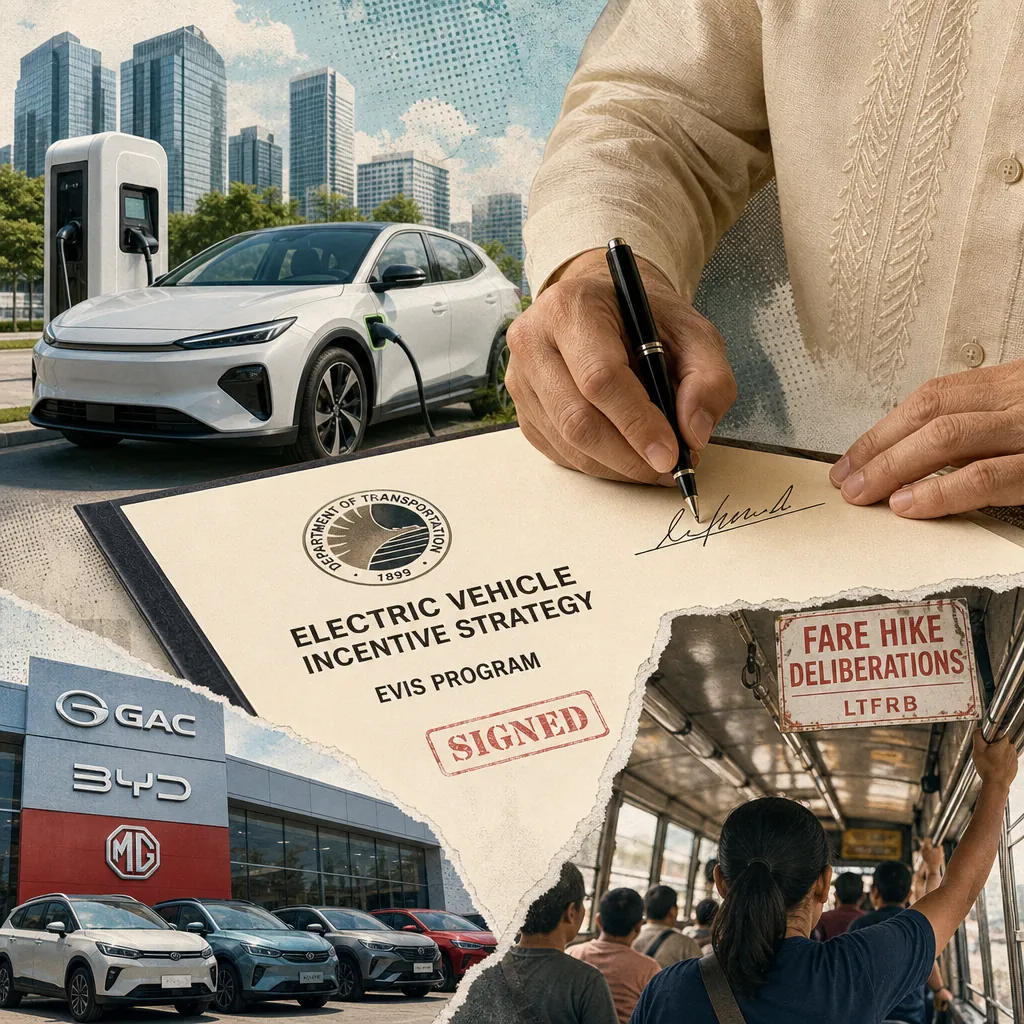
- EV incentives take center stage: The signing of Executive Order 121, establishing the Electric Vehicle Incentive Strategy (EVIS) Program, dominated transport news. The order aims to lower EV prices by 6-12% and attract investments in local manufacturing, potentially saving consumers up to P200,000 per vehicle.
- Fare hike petitions face scrutiny: The LTFRB scheduled a public hearing for August 3 to tackle multiple petitions from transport groups seeking fare increases ranging from P2 to P10 for jeepneys, UV Express, motorcycle taxis, and taxis, citing rising fuel costs and operating expenses.
- Road safety concerns resurface: A blind man's fall into an uncovered drainage in Pasay City and a viral hit-and-run incident in Cebu highlighted ongoing safety lapses on roads and infrastructure projects, prompting calls for stricter enforcement and better protective measures.
- Green mobility expands: VinFast opened 21 electric motorcycle showrooms in the Philippines, while Ford celebrated the first anniversary of its Territory Hybrid, signaling growing consumer interest in electrified vehicles.
- Regulatory efficiency touted: The LTFRB reported resolving 86% of show cause order cases since January, aiming for zero backlog, while also extending the P1 LRT-2 fare promo to ease commuter costs.
- Government services reach rural areas: The LTO and DAR signed an agreement to bring road safety education and licensing services to agrarian reform beneficiaries in the Ilocos Region, improving access for farming communities.
- Infrastructure and safety gaps: The Pasay drainage incident exposed inadequate safety measures at DPWH projects, leading to inspections of other construction sites.
- Industry growth and competition: BYD and GAC launched new models, while WinZir's anniversary raffle of a BYD Sealion 5 underscored the crossover between gaming and automotive marketing.
How the narratives stack
Dominant: The EV incentives program, anchored by EO 121, was the most consequential story of the day. It represents a clear policy shift with tangible economic implications—lower prices, potential savings, and a push for local manufacturing. The coverage, including statements from Energy Secretary Sharon Garin and industry players like BYD, framed this as a win for consumers and the economy. Within the captured set, this story drew substantial coverage across multiple outlets, including Manila Times and Philstar, with significant advertising-equivalent value, reflecting its prominence in the day's news cycle.
Counter-narrative: The fare hike petitions present a counterpoint to the optimistic EV narrative. While the government pushes for modernization and green mobility, transport groups argue that rising fuel costs and operational expenses are squeezing their livelihoods. The LTFRB's public hearing is a forum for these grievances, but the wide range of requested increases (P2 to P10) suggests a lack of consensus and potential friction between operators and regulators. This narrative grounds the sector in the immediate economic pressures facing everyday Filipinos.
Emerging: The expansion of electric vehicle options, from VinFast's e-motorcycles to Ford's hybrid success and BYD's new models, points to a gradual but steady shift in consumer preferences. The government's incentives are likely to accelerate this trend, but challenges like charging infrastructure remain. This emerging story is about market transformation, with both opportunities and hurdles.
Suppressed: The road safety issues, particularly the Pasay drainage incident and the hit-and-run cases, received coverage but were overshadowed by the policy and economic stories. The blind man's fall is a stark reminder of infrastructure failures, yet it did not generate the same level of attention as the EV or fare hike news. This under-covered story deserves more scrutiny, as it directly affects vulnerable road users and highlights systemic safety gaps.
Platform insights
- Facebook: The primary platform for public engagement, with posts from news outlets like Abante News and Philstar drawing reactions and shares. The viral hit-and-run videos and the blind man's incident likely sparked emotional responses, with users expressing outrage and demanding accountability. Facebook's algorithm favors such high-engagement content, amplifying these safety stories.
- X (formerly Twitter): Used for real-time updates and commentary, particularly on regulatory news like the LTFRB hearings and the EV incentives. Hashtags like #EVIS and #FareHike may have trended, with users debating the merits of the policies. X also served as a platform for journalists and industry insiders to share insights and quotes.
- YouTube: The Abante News video on the LTO's show cause order against a content creator drew attention, with viewers commenting on the intersection of social media and traffic enforcement. YouTube's longer-form content allows for deeper dives into such stories, though engagement metrics were not specified.
- Reddit: While not explicitly mentioned, Reddit's Philippine subreddits likely discussed the fare hikes and EV incentives, with users sharing personal experiences and opinions. The platform's community-driven nature fosters detailed discussions, but its reach is smaller compared to Facebook.
Key voices and communities
- Government officials: Energy Secretary Sharon Garin and Transportation Secretary Giovanni Lopez were prominent, framing the EV incentives and fare promos as pro-consumer and pro-investment. Their statements provided official positions and data, shaping the narrative.
- Transport groups: Operators and drivers, represented by groups filing fare hike petitions, voiced their struggles with rising costs. Their perspective humanizes the economic pressures and challenges the government's modernization agenda.
- Industry players: Executives like Bob Palanca of BYD and representatives from Ford and VinFast contributed to the EV narrative, expressing optimism about market growth and the impact of government support. Their insights lend credibility to the sector's potential.
- Advocacy groups and concerned citizens: The blind man's incident and hit-and-run cases mobilized public sympathy and calls for better safety measures. These voices, amplified through social media, push for accountability and infrastructure improvements.
- Media outlets: Publications like Manila Times, Philstar, and Daily Tribune played a crucial role in disseminating news and editorials, shaping public discourse. Their coverage, including editorials on reckless driving, set the tone for the day's conversations.
Narrative streams
EV Incentives: A Policy Push for Green Mobility
The signing of Executive Order 121 by President Ferdinand Marcos Jr. on July 29, 2026, marked a significant step in the Philippines' transition to electric vehicles. The order establishes the Electric Vehicle Incentive Strategy (EVIS) Program, which aims to reduce EV prices by 6 to 12 percent and attract investments in local manufacturing. Energy Secretary Sharon Garin highlighted that the Department of Energy estimates potential savings of up to P200,000 per vehicle, depending on the model. This policy is designed to make EVs more accessible to Filipino consumers while fostering a domestic industry.
The coverage of this story was substantial, with multiple outlets reporting on the projected price reductions and the government's commitment to building, not just using, EVs. The Manila Times and Head Topics both carried the story, with advertising-equivalent values of approximately ₱349,460 and ₱289,977 respectively, indicating significant space dedicated to the announcement. The narrative emphasized the dual benefits of consumer savings and industrial growth, positioning the Philippines as a competitive player in the global EV market.
Industry reactions were positive. Bob Palanca, managing director of BYD Cars Philippines, expressed confidence that the government's push would support continued growth in the electrified vehicle segment. He noted that the President's encouragement in the State of the Nation Address was a positive signal, though he stressed the need for faster charging infrastructure rollout. This sentiment was echoed in the launch of BYD's Seal 5 sedan and Atto 2 SUV, which were introduced to the market as part of the company's expansion.
The EVIS program is part of a broader strategy to reduce the country's dependence on imported fossil fuels and cut greenhouse gas emissions. By incentivizing local manufacturing, the government hopes to create jobs and lower costs, making EVs a viable option for more Filipinos. However, challenges remain, including the high upfront cost of EVs, limited charging stations, and the need for consumer education. The policy's success will depend on sustained government support and private sector investment.
Fare Hike Petitions: Balancing Operator Needs and Commuter Burdens
On August 3, the Land Transportation Franchising and Regulatory Board (LTFRB) will hold a public hearing to address multiple petitions for fare increases from transport groups representing jeepneys, UV Express units, motorcycle taxis, and taxis. The requested increases range from P2 to P10 for jeepneys, reflecting the diverse financial pressures faced by operators. LTFRB Chair Vigor Mendoza II acknowledged the challenge of reconciling these varying requests, stating that the hearing will allow each petitioner to explain the basis of their proposal.
The petitions are driven by rising fuel prices and increasing operational costs, which have squeezed the incomes of drivers and operators. For many, the fare hikes are a matter of survival, as they struggle to make ends meet amid inflation. However, commuters, many of whom are also feeling the pinch of rising living costs, may resist higher fares. The LTFRB will consider factors such as commuters' ability to pay, inflation, and fuel prices before making a decision.
This story was covered by Daily Tribune and Philstar, with advertising-equivalent values of ₱113,120 and ₱153,561.60 respectively. The coverage highlighted the tension between the need for affordable public transport and the economic realities of operators. The hearing is expected to be contentious, with both sides presenting their cases. The outcome will have significant implications for millions of daily commuters and the viability of the public transport sector.
The fare hike issue is not new; it recurs whenever fuel prices spike. In the past, the government has sometimes intervened with subsidies or temporary fare adjustments to mitigate the impact. However, the current situation is complicated by the ongoing modernization program, which requires operators to invest in new, more expensive vehicles. The LTFRB's decision will need to balance these competing interests, ensuring that public transport remains accessible while allowing operators to sustain their businesses.
Road Safety: A Blind Man's Fall and the Fight for Safer Streets
A disturbing incident in Pasay City highlighted the dangers that pedestrians, especially those with disabilities, face on the country's roads. Lourdfil Cruz, a totally blind masseur, fell into an uncovered drainage construction site on F.B. Harrison Street while walking to work. The site, part of a Department of Public Works and Highways (DPWH) project, lacked warning barriers, despite sand sacks being present. The incident, which occurred on July 26, was reported on August 1 by Head Topics Online, with an advertising-equivalent value of ₱293,400.
The fall underscores the inadequate safety measures at many construction sites, which pose risks to pedestrians and motorists alike. City officials have begun inspections of other construction sites to ensure compliance with safety standards. The incident also drew attention to the challenges faced by persons with disabilities in navigating public spaces, which are often not designed with their needs in mind.
This story is part of a broader pattern of road safety concerns. In the same week, three hit-and-run incidents went viral, including one in Cebu City where a traffic enforcer was run over at a red light. An editorial in Philstar, with an advertising-equivalent value of ₱296,725.80, called for stricter punishment for reckless drivers, noting that authorities had identified the drivers in all three cases. The editorial argued that justice is essential for deterring such behavior and maintaining public trust in the rule of law.
The road safety narrative is a counterpoint to the government's modernization agenda. While the administration promotes EVs and improved public transport, the reality on the ground is that roads remain dangerous, especially for vulnerable users. The lack of safety barriers at construction sites and the prevalence of hit-and-run incidents suggest that enforcement and infrastructure improvements are lagging behind policy ambitions.
Green Mobility Expands: VinFast, Ford, and the Rise of Electrified Vehicles
The electric vehicle market in the Philippines is gaining momentum, with several companies expanding their offerings. VinFast, a Vietnamese automaker, opened 21 electric motorcycle showrooms across the country, introducing three models: Evo, Feliz II, and Viper. This move, covered by Manila Standard with an advertising-equivalent value of ₱804,969, marks a significant step in VinFast's expansion in Southeast Asia's two-wheeler market. The company aims to build a comprehensive green mobility ecosystem, offering cost-effective and sustainable transportation options.
Ford Philippines also celebrated the first anniversary of its Territory Hybrid, which has become one of the best-selling electrified vehicles in the market. The Philippines was the first market to launch this model, and it has breached the 1,000-customer mark in just over three months. The Territory Hybrid's success reflects growing consumer interest in hybrid vehicles, which offer a compromise between fuel efficiency and range anxiety.
These developments are supported by the government's EV incentives, which are expected to lower prices and stimulate demand. However, challenges remain, including the need for more charging infrastructure and consumer awareness. The expansion of electric motorcycles and hybrid SUVs suggests that the market is diversifying, catering to different segments and needs.
The coverage of these launches, including GAC's new MPVs and BYD's new models, indicates a vibrant and competitive market. Companies are investing in the Philippines, betting on the government's commitment to green mobility. The success of these ventures will depend on the implementation of the EVIS program and the development of supporting infrastructure.
Regulatory Efficiency: LTFRB's Zero Backlog Goal and Fare Promos
The LTFRB reported resolving 86% of show cause order (SCO) cases issued from January to July, with 622 of 720 cases resolved. These orders are issued for franchise violations, road crashes, and other breaches of regulations. Chair Vigor Mendoza II emphasized the speed of resolution without sacrificing due process, aiming for zero backlog. This efficiency is crucial for maintaining order in the public transport sector and ensuring that violators are held accountable.
In a related move, the Department of Transportation extended the Piso Fare Cashback Promo for LRT-2 commuters until the end of August. This promo allows passengers using select cashless payment cards to pay as little as P1 per trip, saving up to P17 per ride. The extension, made in partnership with RCBC and SSS, aims to make rail fares more affordable while promoting cashless payments. Transportation Secretary Giovanni Lopez thanked the partners for extending the promo, which provides additional savings for commuters.
These initiatives reflect the government's efforts to improve the efficiency and affordability of public transport. The LTFRB's case resolution rate is a positive sign, but the backlog of 71 cases, including 47 from law enforcement operations, indicates ongoing challenges. The fare promos, while beneficial, are temporary measures that do not address the underlying cost pressures on commuters.
Government Services for Rural Communities: LTO-DAR Partnership
The Land Transportation Office (LTO) Region 1 and the Department of Agrarian Reform (DAR) Region 1 signed a memorandum of agreement to expand road safety education, driver licensing services, and transport-related programs for agrarian reform beneficiaries (ARBs) in the Ilocos Region. The agreement, signed on July 31, aims to improve farming communities' access to government services. Under the partnership, the LTO will conduct seminars on traffic laws, road regulations, and defensive driving, along with capability-building activities.
This initiative is significant because it brings essential services to rural areas, where access to government offices is often limited. Agrarian reform beneficiaries, who are farmers and their families, will benefit from driver education and licensing, which can improve their livelihoods and mobility. The partnership also includes transportation assistance and other collaborative initiatives, reflecting a holistic approach to rural development.
The coverage of this story, in both Daily Tribune and online, with advertising-equivalent values of ₱159,964 and ₱91,506 respectively, highlights the government's commitment to inclusive service delivery. However, the implementation will require coordination between the two agencies and adequate resources to reach all intended beneficiaries.
Conversation trajectory
Observation window: 1-2 weeks
The LTFRB's public hearing on fare hikes on August 3 will be a critical event. The outcome will likely set the tone for transport policy in the coming months. If the board approves significant increases, commuters may face higher costs, potentially sparking public backlash. Conversely, if the hikes are rejected or minimized, operators may continue to struggle, leading to service disruptions or protests. The decision will also signal the government's stance on balancing consumer protection and industry viability.
Observation window: 1-3 months
The implementation of the EVIS program will be closely watched. The projected price reductions of 6-12% may take time to materialize as manufacturers adjust their production and supply chains. The entry of new players like VinFast and the expansion of existing brands like BYD and Ford will test consumer demand. The development of charging infrastructure will be a key indicator of the market's readiness for EVs. Government support, including incentives and regulatory streamlining, will be crucial for sustaining growth.
Observation window: 3-6 months
The road safety narrative may gain momentum if more incidents occur or if advocacy groups push for stricter enforcement. The DPWH's response to the Pasay drainage incident, including inspections and safety improvements, will be monitored. The government's ability to address infrastructure gaps and enforce traffic laws will influence public perception and trust. Additionally, the success of the LTO-DAR partnership in rural areas could serve as a model for other regions, expanding access to transport services.
Trigger events to watch:
- LTFRB decision on fare hike petitions (expected within weeks)
- Announcement of new EV models or investments in charging infrastructure
- Reports of further road accidents or safety violations
- Updates on the implementation of EO 121 and its impact on EV prices
- Public reactions to fare changes, potentially leading to protests or social media campaigns
Response guidance
For communicators in the transport sector, the key is to align messaging with the public's concerns and the government's policy direction. On the EV front, emphasize the long-term savings and environmental benefits, while acknowledging the need for infrastructure development. Highlight success stories like Ford's Territory Hybrid and VinFast's expansion to build confidence in the market.
On fare hikes, transparency is crucial. Clearly explain the basis for any increases, including fuel costs and operational expenses, and demonstrate how the LTFRB is considering commuter welfare. Engage with transport groups and commuters through public consultations and social media to address concerns and build consensus.
Road safety should be a priority in messaging. Acknowledge the Pasay incident and other accidents, and outline concrete steps to improve safety, such as better signage, enforcement, and infrastructure design. Collaborate with advocacy groups and local governments to show a commitment to protecting all road users.
Finally, leverage the positive news about regulatory efficiency and service expansion to build trust. Communicate the LTFRB's case resolution achievements and the LTO-DAR partnership as examples of the government's responsiveness. Use plain language and relatable examples to connect with everyday Filipinos, and be prepared to address criticism with data and empathy.
See the full picture behind today's signals.
This report draws from Media Meter's MediaWatch, our real-time monitoring engine tracking 2,470+ Philippine sources across print, broadcast, digital, and social. Explore how the platform turns raw coverage into decision-grade intelligence, then see how it's configured for teams like yours — whether you're in PR agencies, corporate comms, government, or marketing.
Want more? Browse our Report Library for sector and crisis intelligence, or request a demo and we'll have your brand set up before the call.
Want this kind of intelligence on your brand?
This brief is built on the same MediaWatch methodology that runs continuously across every brand we monitor. See your competitive landscape, Impact Score, and narrative trajectory in a 30-minute demo.