LTO's 'No VIP' Crackdown Dominates Auto News
The LTO's show-cause order against Derek Ramsay over a fake plate on a Porsche, alongside internal discipline and fuel subsidies, shapes the day's automotive conversation.

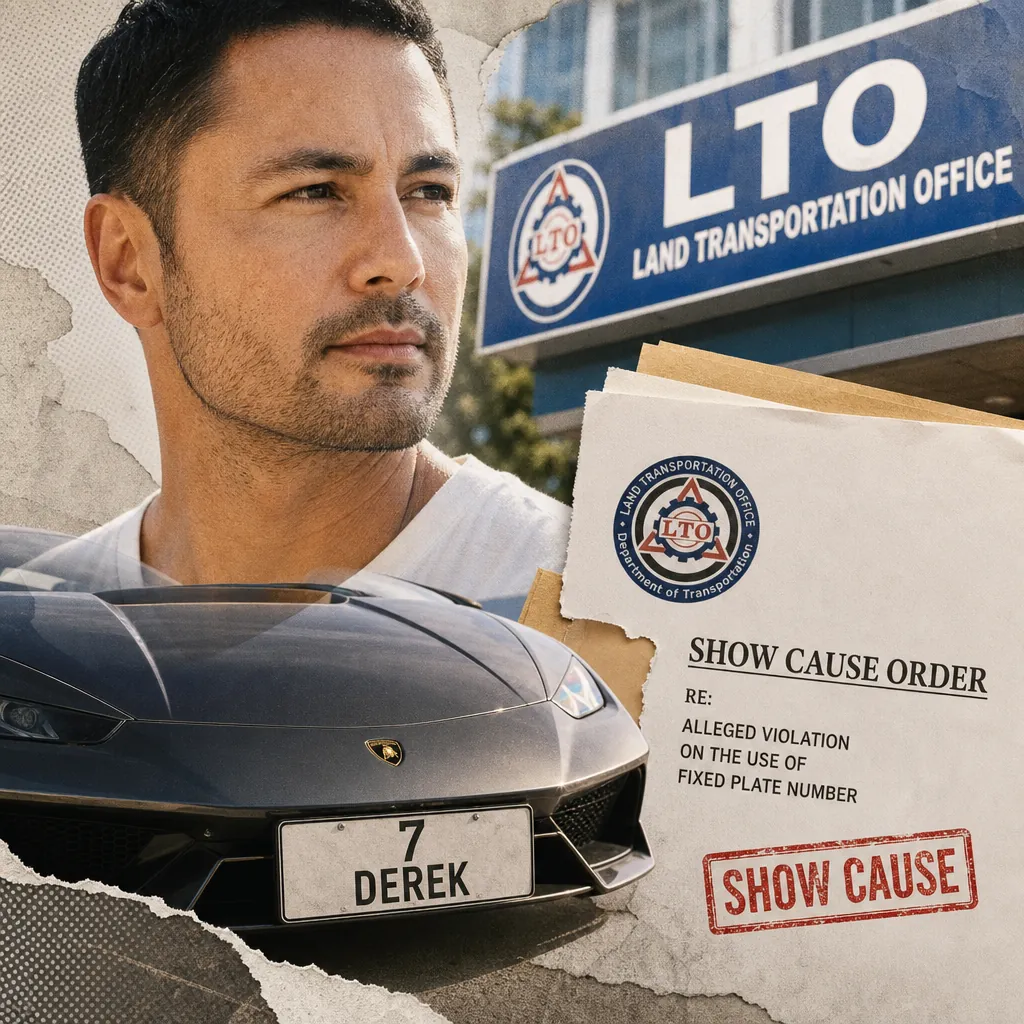
The day's conversation in the Philippine automotive sector was anchored by a single, high-voltage enforcement story: the Land Transportation Office (LTO) issued a show-cause order against actor Derek Ramsay, the registered owner of a Porsche 918 Spyder found using a fake license plate. The news broke on Friday, August 14, and by Saturday had exploded across broadcast, online, and social media, drawing tens of thousands of views and hundreds of comments. Running parallel was a quieter but strategically significant development: the launch of a fuel discount program for public utility vehicles (PUVs), which received comparatively modest attention. Together, these threads framed a narrative about government enforcement credibility—aggressive action against a celebrity, swift discipline of its own personnel, and a populist subsidy for drivers—that dominated the day's automotive news.
The LTO's action against Ramsay was confirmed by LTO Chief Assistant Secretary Markus Lacanilao, who told Bilyonaryo News Channel that the agency had ordered the registered owner and designated driver to appear before its Intelligence and Investigation Division. The plate on the Porsche did not match the alphanumeric combination assigned to the vehicle, a violation of the Use of Number Plates rules. The story gained traction immediately: a BNC YouTube segment on the supercar accumulated 29,059 views within hours, and a tweet from BNC announcing the show-cause order drew 45,563 views—the highest engagement of any post in the captured set. By Saturday, August 15, BNC confirmed Ramsay as the actor involved, triggering a cascade of mainstream coverage, including segments on GMA's 24 Oras Weekend, which added 10,050 combined views. The conversation quickly evolved from reporting to legal analysis when Atty. Bueno uploaded a breakdown of the "Registered Owner Rule"—the principle that the registered owner remains accountable even if the vehicle has been sold without transferring registration. That video earned 7,503 views and 561 likes, signaling public appetite for understanding the legal stakes.
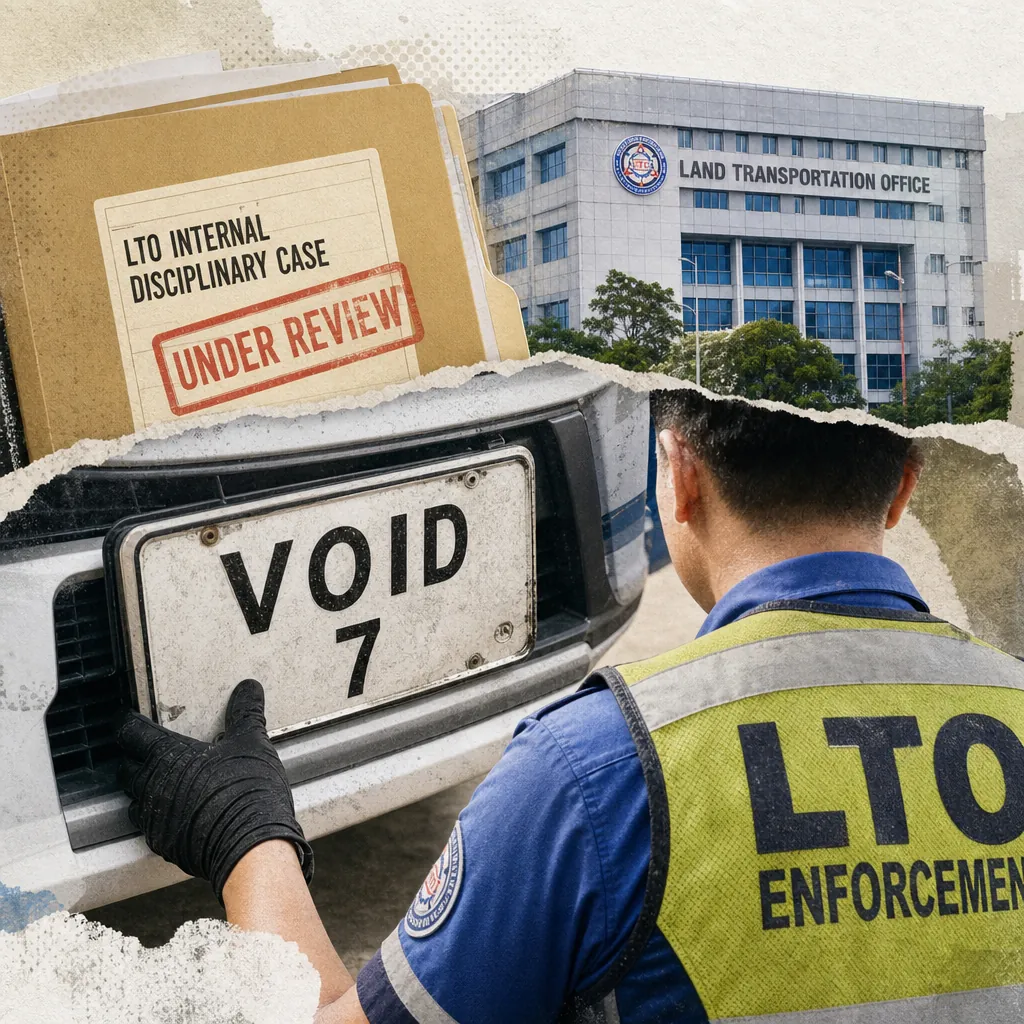
Ramsay responded via Instagram, declaring, "I do not drive any cars with fake plates. All my vehicles have proper plates," and pledging cooperation. Public reaction was mixed but leaned skeptical: a Facebook post summarizing his statement drew 44 "haha" reactions, and a major post about the saga accumulated 193 "haha" reactions, suggesting amusement or disbelief rather than outrage. The LTO reinforced its "no VIP" messaging with a second enforcement story: a video surfaced showing an LTO patrol vehicle counterflowing in Santiago City, Isabela, on August 12. Lacanilao ordered immediate dismissal proceedings, stating, "Pinasisibak ko ang nasabing drayber at inihahanda na ang pagsasampa ng kaukulang kaso laban sa kanya. Walang sinuman ang higit sa batas, kabilang ang ating mga sariling tauhan." (I am dismissing the said driver and preparing the filing of the appropriate case against him. No one is above the law, including our own personnel.) This story drew over 2,600 combined views on Twitter and Facebook, with the hashtag #DRAYBERNGLTO trending in regional feeds. The parallel messaging positioned the LTO as an equal-opportunity enforcer, though some skepticism remained—one post about the dismissal drew 14 "haha" reactions.
Meanwhile, the LTFRB (Land Transportation Franchising and Regulatory Board) launched a P12-per-liter fuel discount for PUVs and UV Express units on August 15, part of the UPLIFT program. The discount requires no fuel subsidy card—just the vehicle's plate number—and raises the weekly subsidy limit from P1,500 to P1,800 while keeping the same 150-liter cap. LTFRB Chairman Vigor Mendoza personally inspected participating gas stations on day one, generating a positive framing post. However, this story was overshadowed by the LTO controversy, appearing in only a few regional broadcasts and Shell promotional posts. Notably, the LTFRB's separate apprehension of nine dilapidated UV Express units on Saturday drew more engagement (197 Facebook likes) than the fuel subsidy announcement, suggesting public interest in service quality enforcement over subsidy updates.
Key themes
- Celebrity Enforcement as Public Spectacle: The Ramsay case turned a routine regulatory action into a national talking point within 24 hours. The BNC exclusive confirming Ramsay's identity triggered a cascade of mainstream coverage, with GMA's primetime weekend newscast dedicating significant airtime. The conversation evolved from factual reporting to legal analysis (Atty. Bueno's Registered Owner Rule explainer) to public opinion (Ramsay's Instagram response). The story's staying power stems from its intersection of celebrity culture, luxury vehicles, and government accountability—a combination that resonates deeply with Filipino audiences.
- Institutional Credibility Through Internal Enforcement: The LTO patrol car counterflow incident, though initially missed by mainline media, became a strategic reinforcement of the agency's integrity messaging. When the dismissal order went public on August 15, it directly supported Lacanilao's earlier "Walang VIP sa pagpapatupad ng batas" (no VIP in law enforcement) statement. The story generated 88 comments on a detailed Facebook explanatory post, with most engagement focused on whether the LTO would truly follow through with prosecution. This internal enforcement narrative effectively neutralized criticism that the Ramsay case was merely performative.
- PUV Welfare as Counterprogramming: The P12/L fuel discount implementation received comparatively modest coverage, largely through regional GMA channels and LTFRB's own social media. LTFRB Chairman Vigor Mendoza's personal inspection of participating gas stations on August 15 generated a positive framing post, emphasizing the program's accessibility for drivers. However, this story was overshadowed by the LTO controversy, appearing in only a few regional broadcasts and Shell station promotional posts. Notably, the LTFRB's separate apprehension of nine dilapidated UV Express units on Saturday received more engagement (197 likes on Facebook) than the fuel subsidy announcement itself, suggesting the public's interest in service quality enforcement outweighed subsidy program updates.
- Legal Education as Engagement Driver: The Ramsay case sparked a wave of explanatory content, with Atty. Bueno's video on the Registered Owner Rule attracting 7,503 views and 561 likes. This demonstrates a public appetite for understanding the legal framework around vehicle ownership and liability. The discussion highlighted a common consumer blind spot: selling a vehicle without transferring registration leaves the seller as the registered owner, and thus accountable, until the LTO records are updated. This presents an opportunity for automotive stakeholders to position themselves as educators on proper transfer procedures.
- Fuel Subsidy Implementation Under Scrutiny: The fuel discount program's launch shifted from announcement coverage to operational scrutiny. Initial coverage was largely informational, but the conversation will likely pivot toward accessibility complaints, participating station shortages, and perceived implementation gaps within the first week. The increase in weekly subsidy limits from P1,500 to P1,800 with the same 150L cap creates a natural measurement point for public satisfaction. Regional coverage from GMA's provincial bureaus indicates the conversation will not remain Metro Manila-centric.
- Counterfeit Document Crackdown: A separate but related story emerged from Bacolod City, where two individuals were arrested for selling fake driver's licenses and other government documents. The LTO's Negros Island Region office, in coordination with the Philippine National Police, conducted an entrapment operation at a printing shop. This story reinforces the LTO's broader enforcement narrative against document fraud, complementing the fake plate case and signaling a sustained crackdown on all forms of registration and licensing irregularities.
- Dealership Energy Management as a Business Trend: Away from enforcement, Borromeo Motoring Group signed a retail electricity supply agreement with COREnergy for 20 dealerships in Luzon, with a combined contracted capacity of approximately 1.22 megawatts. This marks the automotive group's entry into the competitive retail electricity market, part of the Department of Energy's Retail Aggregation Program. The transition is expected by September, reflecting a broader industry trend toward strategic energy management to reduce operational costs.
- MPV Shift in Buyer Preferences: An online feature from EveryTechEver highlighted a shift in Filipino family car preferences from midsize SUVs to modern MPVs. The article argues that MPVs are now designed around people, with greater emphasis on passenger comfort, cabin flexibility, and fuel efficiency, including electrified options. This reflects changing buyer priorities and could signal a market trend worth tracking for automotive manufacturers and dealers.
How the narratives stack
Dominant: The LTO's "No VIP" enforcement narrative, anchored by the Ramsay fake plate case and reinforced by the internal disciplinary action, dominated the captured conversation. This narrative drew the highest engagement across platforms, with mainstream news clips accumulating tens of thousands of views and hundreds of comments within a 24-hour window. The story's dominance is evident in the volume of coverage and the breadth of public response, making it the clear lead of the day.
Counter-narrative: The fuel subsidy program and PUV welfare initiatives represent a counter-narrative focused on government support for drivers, but they were overshadowed by the enforcement story. The LTFRB's actions—fuel discounts and apprehension of dilapidated UV Express units—received comparatively modest attention, suggesting that while the government is pushing a supportive agenda, the public's attention is captured by accountability stories. This counter-narrative may gain traction as implementation issues surface.
Emerging: The legal education angle around the Registered Owner Rule is emerging as a significant sub-narrative. Atty. Bueno's explainer video attracted substantial engagement, indicating a public desire to understand the legal implications of vehicle ownership and transfer. This could evolve into a broader conversation about consumer rights and responsibilities, potentially influencing how automotive stakeholders communicate about registration processes.
Suppressed: The counterfeit driver's license crackdown in Bacolod received coverage but was largely overshadowed by the celebrity case. This story is significant because it highlights the LTO's broader enforcement against document fraud, which could affect public confidence in the licensing system. Within the captured set, it drew less attention than the Ramsay saga, but it represents an under-covered story with potential implications for road safety and regulatory integrity.
Platform insights
- YouTube: YouTube served as the primary venue for long-form coverage. BNC's exclusive interview and subsequent analysis videos dominated viewership, with the Ramsay segment reaching 29,059 views, while Atty. Bueno's legal explainer contributed an additional 7,503 views within hours of posting. GMA's 24 Oras Weekend segments added another 10,050 combined views, demonstrating sustained interest across broadcast platforms throughout Saturday. The platform's strength lies in its ability to host detailed, explanatory content that audiences actively seek out.
- Twitter/X: Short-form updates drove real-time conversation, particularly around the confirmation that Ramsay was the actor involved and the subsequent dismissal order for the LTO driver. The BNC tweet announcing the SCO confirmed by Lacanilao accumulated 45,563 views, making it the highest-engagement tweet in the dataset, though it generated minimal direct discussion—only one comment—suggesting consumption rather than conversation. Twitter served as a news wire, with users viewing and sharing updates but engaging less in discussion compared to Facebook.
- Facebook: Engagement was more evenly distributed across posts. The Philippine Star's Ramsay summary generated 276 reactions and 135 comments, while the LTO driver's dismissal explanatory post received 88 comments. The prevalence of "haha" reactions (193 on the first post, 44 on Ramsay's response) indicates a distinctly skeptical public response to the celebrity's involvement, contrasting with the mostly supportive reactions on the LTO internal disciplinary action. Facebook's comment sections became spaces for debate about due process and accountability.
- Reddit: A Reddit presence exists but shows minimal engagement in captured data, indicating a gap between the platform's potential and current activity. The platform may be underutilized for automotive regulatory discussions, but its absence in this conversation suggests that Reddit is not yet a significant venue for such topics in the Philippines.
Key voices and communities
- National Transport Regulators and Enforcement Agencies: The LTO and LTFRB are the dominant institutional voices, with their actions generating the majority of engagement. Their enforcement messaging reached substantial audiences, with one LTO-related post exceeding 45,000 views. The agencies' coordinated rollout of announcements—show-cause orders, fuel discount programs, and internal disciplinary actions—demonstrates clear strategic communications capability. Their primary narrative centers on equal application of traffic laws, with LTO leadership explicitly stating "Walang VIP sa pagpapatupad ng batas" across multiple public statements.
- Broadcast and Digital News Media: Traditional broadcasters and digital news outlets, including GMA Regional TV, 24 Oras Weekend, and Bilyonaryo News Channel, are driving conversation amplification. BNC's exclusive confirmation of the actor's identity became the primary source reused across other outlets, establishing a clear information chain. These outlets consistently reach audiences in the thousands per video segment, and their framing balances public service information with accountability journalism.
- Automotive Enthusiast and Advocacy Communities: Passionate vehicle-focused communities, including supercar collectors and transport-policy advocates, are generating high emotional engagement, primarily through Facebook and YouTube shorts. The fake plate controversy has energized this segment, with a viral YouTube short summarizing the incident reaching over 3,200 views. Facebook reactions heavily lean toward amusement, with over 190 "haha" reactions, suggesting public skepticism or entertainment at the celebrity's situation. These communities emphasize the Registered Owner Rule and legal accountability.
- Public Transport and Fuel Subsidy Beneficiaries: Drivers and operators of PUVs and UV Express units represent an operational stakeholder group directly affected by government fuel policies and franchise enforcement. The LTFRB's P12-per-liter fuel discount program generated news coverage across multiple GMA regional platforms, and the agency's apprehension of nine UV Express units drew nearly 200 Facebook reactions, including 97 "haha" reactions indicating some public mockery of the impounded vehicles. This group directly experiences the regulatory environment and is essential for tracking the sector's health.
- Celebrity and Entertainment Media Ecosystem: The involvement of a high-profile actor has pulled lifestyle and entertainment media into the automotive regulatory conversation. Entertainment-focused programs like Abantelliling included the LTO story alongside celebrity gossip coverage, while dedicated celebrity news accounts attracted tens of thousands of views on the exclusive confirmation of the actor's identity. This ecosystem frames the story through a personal accountability lens, emphasizing questions of who is truly at fault when ownership transfers are incomplete.
Narrative streams
The Ramsay Show-Cause Order: A Case Study in Celebrity Enforcement
The LTO's show-cause order against Derek Ramsay is the day's defining story, not just for its celebrity angle but for the legal and procedural questions it raises. A show-cause order is a formal directive requiring the recipient to explain why a certain action should not be taken—in this case, why the LTO should not suspend or revoke the driver's license of the registered owner and designated driver of the Porsche 918 Spyder. The LTO's verification found that the plate number on the vehicle had a different alphanumeric combination than the one assigned to it, a violation of the Use of Number Plates rules. The order requires the parties to appear before the LTO's Intelligence and Investigation Division and submit a verified or sworn explanation.
The story's evolution from news event to legal analysis to public opinion demonstrates the multi-stage nature of modern media narratives. Atty. Bueno's explainer on the Registered Owner Rule was pivotal: it clarified that under Philippine law, the registered owner remains accountable to the LTO until a proper transfer of ownership is recorded, even if the vehicle has been sold. This principle is often misunderstood by the public, and the video's 7,503 views and 561 likes indicate a strong appetite for such education. Ramsay's Instagram statement—"I do not drive any cars with fake plates. All my vehicles have proper plates"—was met with skepticism, as evidenced by the 44 "haha" reactions on a Facebook post summarizing his response. The public's amusement suggests a perception that the celebrity is trying to distance himself from responsibility, despite the legal framework holding him accountable.
The LTO's "no VIP" messaging was reinforced by Lacanilao's statements, including "Walang palakasan, walang palusot, at walang exemption" (no connections, no excuses, and no exemptions). This framing positions the agency as an equal-opportunity enforcer, which resonates with a public often frustrated by perceived impunity among the wealthy and powerful. However, the skepticism evident in the "haha" reactions indicates that the public is not entirely convinced, and the LTO will need to follow through with transparent proceedings to maintain credibility.
For the automotive sector, this case highlights a common consumer blind spot: the failure to transfer registration after a sale. The vehicle had reportedly been sold to a vlogger without transferring registration, leaving Ramsay as the registered owner and thus liable. This presents an opportunity for dealers and manufacturers to educate buyers on the importance of completing the transfer process, potentially positioning themselves as responsible advocates for proper vehicle ownership protocols.
Internal Accountability: The LTO Patrol Driver Counterflow Case
A second enforcement story, involving an LTO patrol vehicle caught counterflowing in Santiago City, Isabela, on August 12, became a strategic reinforcement of the agency's integrity messaging. Counterflowing—driving against the direction of traffic—is a serious violation that endangers public safety. When the video surfaced, LTO Chief Lacanilao ordered immediate dismissal proceedings, stating that no one is above the law, including the agency's own personnel. The swift action was widely covered, with over 2,600 combined views on Twitter and Facebook, and the hashtag #DRAYBERNGLTO trending in regional feeds.
This story is significant because it demonstrates that the LTO is willing to discipline its own, which bolsters its credibility when enforcing against external violators. The 90-day preventive suspension and show-cause framework used against the patrol driver mirror the process applied to Ramsay, establishing a visible precedent of equal treatment. Public reaction was largely supportive, with 88 comments on a detailed Facebook explanatory post, though some skepticism remained—one post drew 14 "haha" reactions, suggesting that some users doubted the agency would follow through with prosecution.
The internal accountability narrative effectively neutralized criticism that the Ramsay case was merely performative. By showing that the LTO applies the same standards to its own personnel, the agency strengthens its position as a fair and impartial enforcer. For automotive stakeholders, this signals a regulatory environment where compliance is non-negotiable, and it may foreshadow stricter enforcement of traffic laws across the board.
Fuel Subsidy Launch: A Quiet Counterpoint
While the LTO dominated headlines, the LTFRB quietly launched a fuel discount program for public utility vehicles on August 15. The program offers a P12-per-liter discount for qualified PUJ (public utility jeepney) and UV Express drivers at participating gas stations, under the UPLIFT program. The discount requires no fuel subsidy card—just the vehicle's plate number—and raises the weekly subsidy limit from P1,500 to P1,800 while keeping the same 150-liter cap. LTFRB Chairman Vigor Mendoza personally inspected participating stations on day one, with a photo documentation post drawing views in the tens.
Coverage of the fuel subsidy was modest, appearing in a few regional GMA broadcasts and Shell promotional posts. The story was overshadowed by the LTO controversy, but it represents a significant government initiative to support drivers facing high fuel costs. The program's simplicity—no card, just a plate number—is designed to reduce barriers for drivers, and the increased subsidy limit reflects an effort to provide more substantial relief.
However, the conversation around the fuel subsidy is likely to shift from announcement to operational scrutiny within the first week. Potential issues include participating station shortages, beneficiary confusion, and processing delays. Regional coverage from GMA's provincial bureaus indicates that the conversation will not remain Metro Manila-centric, and driver testimonials about station participation and processing times will shape the program's perceived success. For automotive stakeholders, monitoring this program's implementation is important because it affects the operational costs of PUV operators, which in turn influences the health of the commercial vehicle market.
Counterfeit License Crackdown: A Parallel Enforcement Track
In Bacolod City, two individuals were arrested on August 14 for selling fake driver's licenses and other government documents. The entrapment operation, conducted by the LTO's Negros Island Region office and the Philippine National Police, targeted a printing shop in the Manuela Building. LTO OIC Regional Director Jeck Conlu said that their personnel had been monitoring after authorities repeatedly encountered motorists carrying counterfeit licenses, with five to six fake documents previously confiscated in joint operations.
This story, while less prominent than the Ramsay case, reinforces the LTO's broader enforcement against document fraud. Fake licenses undermine road safety and the integrity of the licensing system, and the crackdown signals that the LTO is addressing this issue at multiple levels. The arrest also highlights the coordination between the LTO and local law enforcement, which is essential for effective enforcement. For the automotive sector, this story underscores the importance of verifying the authenticity of licenses and registrations, particularly in the used-car market where fraudulent documents can be a concern.
Dealership Energy Management: A Business Trend
Away from enforcement, Borromeo Motoring Group signed a retail electricity supply agreement with COREnergy for 20 dealerships in Luzon, with a combined contracted capacity of approximately 1.22 megawatts. This marks the automotive group's entry into the competitive retail electricity market, part of the Department of Energy's Retail Aggregation Program. The program allows qualified customers to choose their electricity supplier, potentially reducing costs and improving energy management. The transition is expected by September, marking the first phase of a broader initiative.
This development reflects a growing trend among automotive dealerships to manage operational costs strategically, particularly energy expenses. By aggregating their electricity demand, dealerships can negotiate better rates and potentially invest in renewable energy sources. For the industry, this signals a shift toward more sophisticated business operations, which could influence how dealerships approach other cost-saving measures. The story received moderate coverage, with an estimated advertising-equivalent value of ₱214,182, indicating that it was noted but not a major conversation driver.
MPV Shift: Changing Buyer Preferences
An online feature from EveryTechEver highlighted a shift in Filipino family car preferences from midsize SUVs to modern MPVs. The article argues that MPVs are now designed around people, with greater emphasis on passenger comfort, cabin flexibility, and fuel efficiency, including electrified options. This reflects changing buyer priorities, as families place more value on everyday convenience and cost-effectiveness over the traditional SUV's ground clearance and style.
The feature, which carried an estimated advertising-equivalent value of ₱828,018, suggests that the MPV segment is gaining traction in the Philippine market. This could signal an opportunity for manufacturers to expand their MPV offerings, particularly with electrified options that address fuel cost concerns. For dealers, understanding this shift is crucial for inventory planning and marketing strategies. The article's focus on GAC MPVs indicates that Chinese brands are positioning themselves to capture this growing demand.
Conversation trajectory
Over the next 7–10 days, the conversation is likely to evolve in several ways. First, the LTO's formal resolution of the Ramsay show-cause order will be a key trigger event. If the LTO issues a decision, it could either reinforce the "no VIP" narrative or, if perceived as lenient, spark criticism. The public will be watching for transparency and consistency in the process. Second, the fuel subsidy program's first-week assessment will surface implementation issues, such as station participation and processing times. Driver feedback will shape the program's perceived success and could generate negative sentiment if problems arise. Third, additional enforcement actions under the "No VIP" banner are likely, as the LTO chief has signaled a sustained crackdown. Any new cases involving luxury vehicles or high-profile individuals will likely draw significant attention.
In the medium term (2–4 weeks), the legal education angle around the Registered Owner Rule may continue to grow, as more content creators and media outlets produce explainers. This presents an opportunity for automotive stakeholders to sponsor or develop clear guidance on proper vehicle transfer procedures, addressing an identified information gap. The counterfeit license crackdown may also expand, with more arrests and coverage, reinforcing the LTO's enforcement credibility.
Trigger events to watch include: the LTO's official statement on the Ramsay case (likely within 2–4 weeks), which will determine whether this remains a cautionary tale or escalates into a larger discussion about luxury vehicle registration practices; the first-week assessment of the fuel discount program's operational effectiveness (projected within 5–7 days), as driver feedback begins circulating through operator associations; and any additional enforcement actions under the "No VIP" banner, which the current LTO chief has signaled will continue.
Response guidance
For communicators in the automotive sector, the day's conversation offers several actionable insights. First, there is a clear opportunity to develop educational content around proper vehicle registration transfer procedures, leveraging the Ramsay case as a cautionary example without naming individuals. This positions brands as consumer-education leaders while the topic is top-of-mind. Given the viral nature of the story, this content window remains open for roughly one additional news cycle—respond within the next 48 hours for maximum relevance.
Second, monitor and prepare a response framework for potential follow-up enforcement stories, particularly any involving luxury or high-performance vehicles. The LTO chief's repeated statements—including "No connections, no excuses, and no exemptions"—signal a sustained crackdown that could next target importers, dealers, or even manufacturer-authorized repair shops implicated in plate irregularities. Pre-position holding statements that emphasize compliance support rather than defensiveness, as public sentiment currently favors strict enforcement.
Third, track the fuel discount program's implementation over the coming weeks, as any reported hiccups—station shortages, beneficiary confusion, or delays—could generate negative PUV-sector sentiment that spills over into broader transportation policy discussions. For clients active in commercial vehicle segments, consider proactive content highlighting how fuel subsidies and modernization incentives interact, framing brands as partners in operator viability rather than passive beneficiaries of regulatory shifts.
On platforms, Facebook is the primary space for public debate, so engage with comment sections on news posts to clarify legal procedures and correct misinformation. YouTube is ideal for long-form educational content, such as explainers on the Registered Owner Rule. Twitter is best for real-time updates and official statements, but engagement is more consumption-oriented, so focus on concise, factual messaging. Reddit remains underutilized but could be a venue for deeper technical discussions if the community grows.
Sensitive topics to navigate include the celebrity dimension of the fake plate case, which could overshadow substantive regulatory issues; communications should focus strictly on legal and procedural aspects rather than the individual's personal life. The discrepancy between buying and selling a vehicle without completing registration transfer is a common point of confusion; responses should explain the Registered Owner Rule clearly without appearing to assign blame without due process. The internal disciplinary action against the LTO patrol driver should be framed as standard enforcement, not exceptional behavior, to avoid appearing defensive or self-congratulatory. Public reactions to the apprehension of the nine UV Express units include mocking responses, which could trivialize the regulatory effort; communications should consistently frame these actions within the broader passenger safety and public welfare context.
See the full picture behind today's signals.
This report draws from Media Meter's MediaWatch, our real-time monitoring engine tracking 2,470+ Philippine sources across print, broadcast, digital, and social. Explore how the platform turns raw coverage into decision-grade intelligence, then see how it's configured for teams like yours — whether you're in PR agencies, corporate comms, government, or marketing.
Want more? Browse our Report Library for sector and crisis intelligence, or request a demo and we'll have your brand set up before the call.
Want this kind of intelligence on your brand?
This brief is built on the same MediaWatch methodology that runs continuously across every brand we monitor. See your competitive landscape, Impact Score, and narrative trajectory in a 30-minute demo.