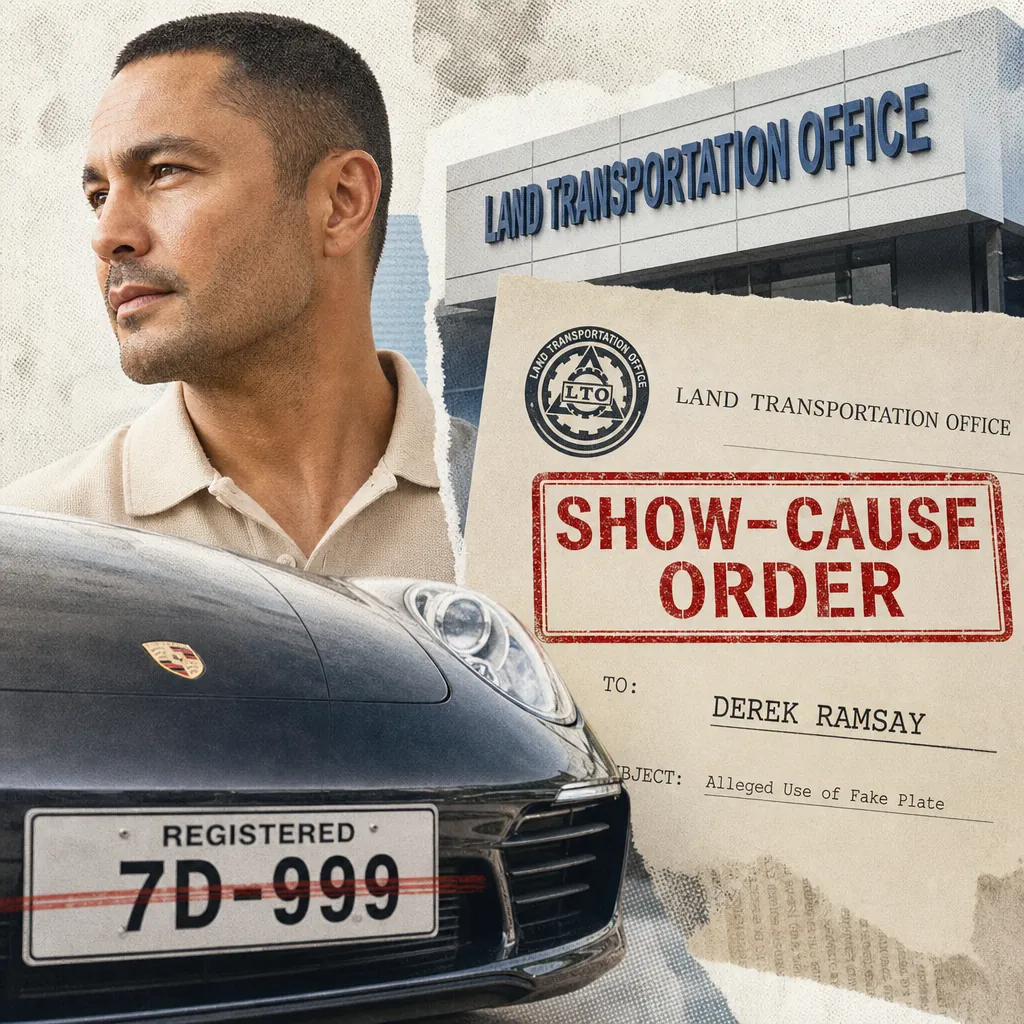
LTO's 'No VIP' Crackdown Hits Derek Ramsay, Reshapes PH Auto
The LTO's show cause order against actor Derek Ramsay over a fake supercar plate dominates Philippine automotive conversation, alongside intensifying hybrid MPV competition and road safety accountability.
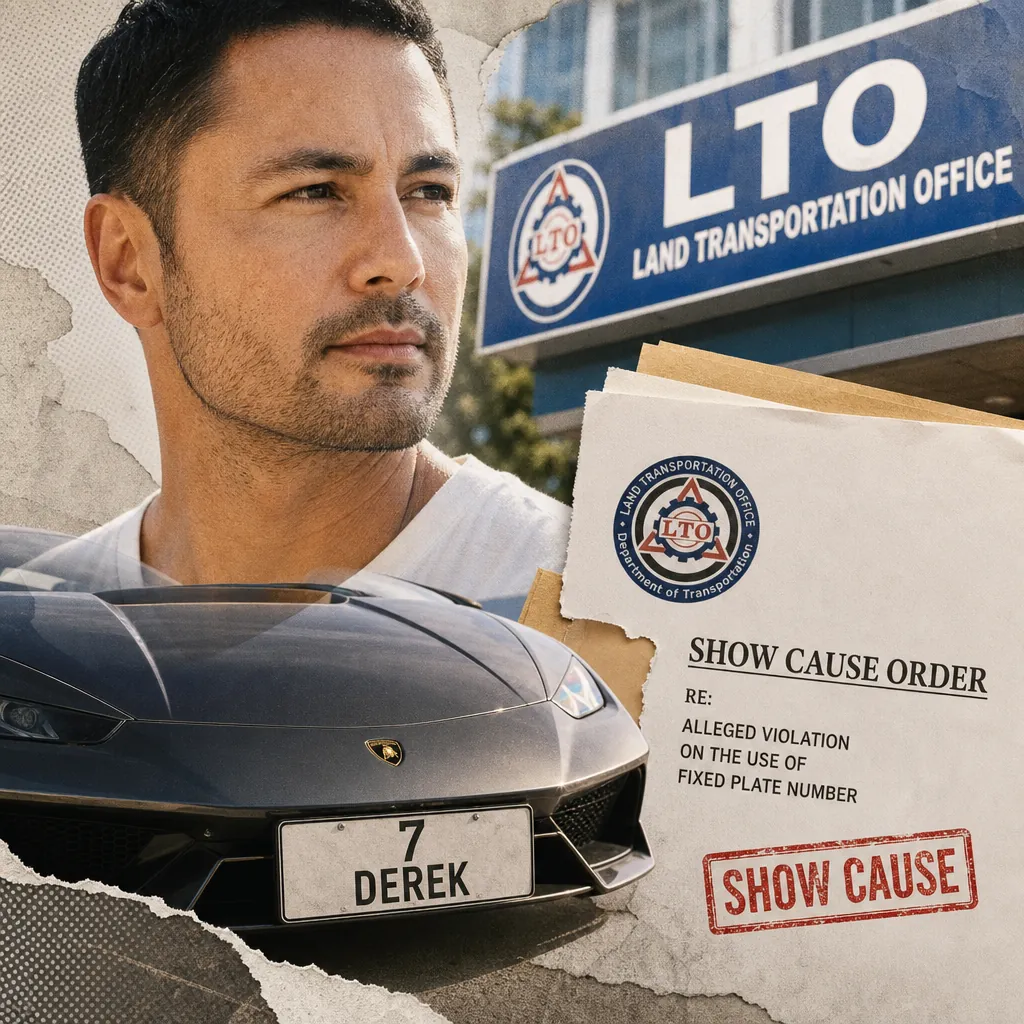
The day's conversation in the Philippine automotive sector was defined by a single, high-voltage enforcement story that crossed from regulatory news into mass entertainment: the Land Transportation Office (LTO) issued a show cause order against actor-businessman Derek Ramsay over a supercar allegedly using a fake license plate. The story broke on August 14, 2026, and within hours had generated tens of thousands of views, hundreds of comments, and a wave of public mockery that underscored both the LTO's aggressive new enforcement posture and the public's appetite for seeing the wealthy held to account. Running alongside this celebrity-driven drama was a quieter but equally significant narrative: the intensifying competition in the hybrid and plug-in hybrid MPV segment, as Chinese brands like MG and GAC challenge Toyota's long-standing dominance, and a sobering series of road safety incidents that prompted the LTO to order the dismissal of one of its own agents. Together, these threads paint a picture of an industry at a crossroads—regulatory scrutiny tightening, electrification accelerating, and public trust in road safety hanging in the balance.
The Ramsay case was the day's dominant story across all platforms. The LTO initially withheld the actor's name, referring only to an "actor-entrepreneur," but Bilyonaryo News Channel (BNC) confirmed it was Ramsay, and LTO Chief Assistant Secretary Markus Lacanilao drove the message home with a phrase that would echo across social media: "Walang VIP sa pagpapatupad ng batas" (There are no VIPs in law enforcement). The agency's verification had found that the alphanumeric combination on the supercar's plate did not match official records, leading to a 90-day preventive suspension of the driver's license and an impound order on the vehicle. The public response was swift and irreverent—one Facebook post from Abante News drew 435 likes, 663 "haha" reactions, and 217 comments, while a corresponding tweet amassed nearly 17,000 views by day's end. The story's entertainment value was undeniable, but it also carried a serious message about accountability that resonated across socioeconomic lines.
Meanwhile, the automotive media was busy framing a different kind of battle. AutoDeal Philippines published a video review of the 2026 MG G50 PHEV, a seven-seat MPV priced under ₱1.5 million, which quickly amassed 22,290 views and 594 likes. AutoIndustriya followed with a review of the G50 Max PHEV, explicitly positioning it as the "Innova HEV challenger at last?"—a direct threat to the Toyota Innova Zenix HEV, which had previously faced no real competition in the hybrid MPV space. The narrative was reinforced by GAC Philippines unveiling its expanded MPV lineup, including the GN8 PHEV with a 1,032 km combined range at ₱3.338 million, and by a wave of dealer promotions offering discounts of up to ₱100,000 on the Zenix HEV. The message was clear: the electrified MPV segment is heating up, and consumers are the beneficiaries of a price war that shows no signs of cooling.
But the day was not all about product launches and celebrity scandals. A series of fatal road accidents—including a motorcycle back-rider killed in a crash, an e-trike fatality in Ozamiz City, and a rider dying after an SUV collision in Lanao del Norte—generated significant emotional engagement, with one Facebook post receiving 585 "sad" reactions. The most institutionally significant incident was an LTO-7 patrol vehicle striking a cyclist in Mandaue City. The agency's response was swift: LTO Chief Lacanilao ordered the immediate dismissal of the deputized agent involved and issued a show cause order for reckless driving, with the official statement drawing 163 comments from the public. The agency also released preliminary CCTV findings suggesting the cyclist may have been pushed into the vehicle's path after a separate bicycle collision, a narrative intervention that sought to reframe the incident from institutional negligence to tragic accident. This dual focus—enforcement against the public and accountability within its own ranks—defined the LTO's communications strategy for the day.
Key themes
- LTO's 'No VIP' Enforcement Campaign — The LTO's show cause order against Derek Ramsay over a fake supercar plate dominated the day's conversation, reinforcing the agency's message that no one is above the law. The case followed earlier actions against a government agency, the PNP, and a Toyota Fortuner owner, signaling a sustained crackdown on unauthorized plates.
- Hybrid MPV Price War Intensifies — The MG G50 PHEV, priced under ₱1.5 million, is being positioned as the first real challenger to the Toyota Innova Zenix HEV, with GAC also entering the fray. Toyota responded with aggressive discounts of up to ₱100,000 on the Zenix, signaling a competitive battle that benefits consumers.
- Road Safety Tragedies Spark Public Grief — Multiple fatal accidents involving motorcycles and e-trikes drew significant emotional engagement, with one post receiving 585 "sad" reactions. The LTO's own patrol vehicle striking a cyclist in Mandaue City became a focal point for institutional accountability.
- Government Accountability Under Scrutiny — The LTO's swift action against its own agent in the Mandaue incident—ordering dismissal and filing charges—was met with public approval but also skepticism, as netizens questioned whether enforcement is applied evenly across all sectors.
- Electrified Vehicles as the 'Sweet Spot' — The conversation around hybrids and plug-in hybrids is shifting from "eco-friendly" to "cost-efficient and practical," with affordability and family value emerging as the dominant consumer messages.
- Dealer Promotions and Pricing Integrity — A wave of dealer-level discount posts for the Zenix HEV, ranging from ₱50,000 to ₱100,000, created an impression of negotiable pricing that could undermine suggested retail price integrity.
- Motorcycle Safety and Rider Vulnerability — Fatal accidents and international incidents, such as a woman forced to jump off a Rapido scooter in India, highlighted ongoing concerns about rider safety and the need for better enforcement and education.
- Regulatory Enforcement Skepticism — The Oplan BanTal motorcycle lane implementation in Cebu drew 141 comments and 186 "haha" reactions, reflecting public skepticism about the practicality of new traffic rules.
How the narratives stack
Dominant — The LTO's crackdown on fake plates, culminating in the Derek Ramsay show cause order, was the day's most significant story. It dominated across platforms, with the most-viewed posts accumulating approximately 16,000 to 17,000 views each. The narrative was reinforced by LTO Chief Lacanilao's repeated assertion that "Walang VIP sa pagpapatupad ng batas," a message amplified across multiple outlets. Within the captured set, this story drew the heaviest coverage and engagement, making it the clear lead.
Counter-narrative — The hybrid MPV price war, led by the MG G50 PHEV's challenge to the Toyota Innova Zenix HEV, offered a counterpoint to the enforcement-focused narrative. While the Ramsay case was about accountability and punishment, the MPV story was about market competition and consumer choice. The two narratives coexisted, with the MPV story drawing substantial engagement from automotive enthusiasts and potential buyers.
Emerging — The road safety accountability narrative, particularly the LTO-7 cyclist incident, is emerging as a significant thread. The agency's swift response—ordering the agent's dismissal and filing charges—was a proactive crisis communication move, but the public's emotional response to fatal accidents suggests this issue has staying power. The August 17 hearing date will be a key test of whether the LTO's accountability messaging holds.
Suppressed — The story of the LTO's show cause orders against dealers for delayed license plates—over a hundred of them issued back in May 2024—received relatively little attention in the day's conversation, despite being a significant consumer rights issue. This counter-narrative questions whether enforcement is evenly applied across powerful and non-powerful actors, but it was overshadowed by the celebrity-driven Ramsay case.
Platform insights
- Facebook — The most reactive platform, where humor dominated. The Abante post on the Ramsay case accumulated 663 "haha" reactions, while the LTO's official statement on the Mandaue incident drew 163 comments. Facebook was also the primary hub for emotional engagement on road safety tragedies, with the "BACK-RIDER PATAY" post receiving 585 "sad" reactions.
- Twitter/X — The fastest information diffusion. A breaking news tweet from Philippine Daily Inquirer amassed 5,304 views, while Abante's teaser reached 16,950 views by midday. Twitter functioned as a headline feed that pushed users toward other platforms for full details, with less deep comment-level engagement than Facebook.
- YouTube — The primary source of original reporting. Automotive media reviews of the MG G50 PHEV drew significant viewership, with AutoDeal's video amassing 22,290 views and 594 likes. The BNC "Agenda" episode that confirmed Ramsay's identity drew 5,864 views and 55 comments within hours, signaling the platform's role in breaking the story.
Key voices and communities
- Mainstream News and Broadcast Media — Outlets like Bilyonaryo News Channel, Philippine Daily Inquirer, and Abante News amplified the Ramsay story, framing it around the LTO's "no one is above the law" stance. Their coverage generated the highest visibility, with one Facebook post reaching over 16,000 views.
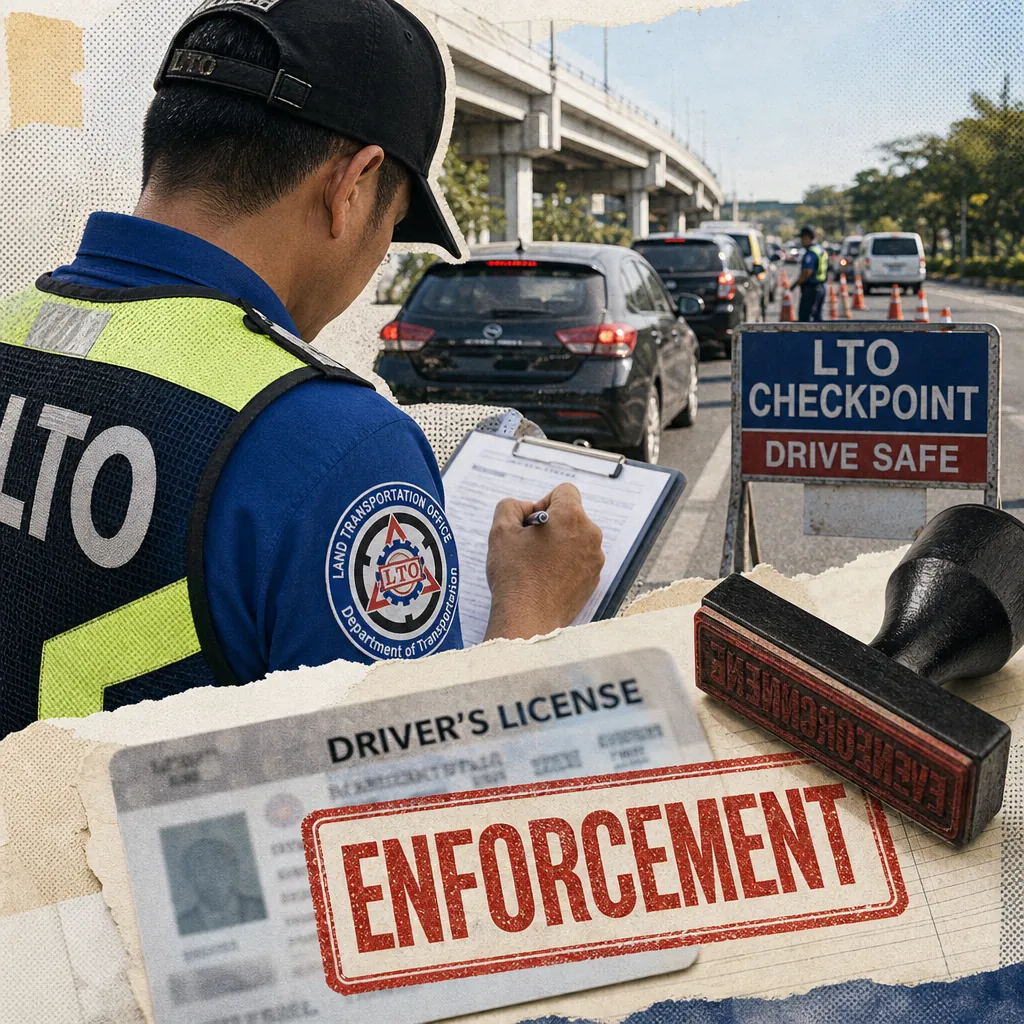
- Regulatory and Government Entities — The LTO, led by Chief Assistant Secretary Markus Lacanilao, was the central actor, using press conferences and official statements to project an image of fairness and strict enforcement. Their messaging emphasized uniform application of rules across all vehicle types and owner profiles.
- Automotive Press and Enthusiast Communities — Specialist outlets like AutoDeal and AutoIndustriya shaped the electrified MPV narrative, with reviews that explicitly compared Chinese PHEVs to Japanese hybrids. Enthusiast communities on Facebook and Reddit engaged in technical discussions about vehicle registration and plate verification.
- General Public and Viral Content Consumers — The broad online audience drove the Ramsay story's virality through humor and mockery. Their "haha" reactions and rapid sharing demonstrated the power of schadenfreude in sustaining a news cycle, and their commentary provided a real-time gauge of public sentiment on issues of privilege and fairness.
Narrative streams
The Derek Ramsay Show Cause Order: A Case Study in Viral Enforcement
The LTO's show cause order against Derek Ramsay was the day's defining story, but its roots go back months. The agency had been building a narrative of equal enforcement since February, when it issued a show cause order against the PNP Mobile Patrol for alleged reckless driving along Taft Avenue. That case, along with a May case involving a government agency's fake red plate on a Ford Explorer, established a pattern of the LTO policing its own ranks and other government entities. By August, the agency was ready to take on a celebrity.
The LTO's verification process found that the alphanumeric combination on Ramsay's supercar plate did not match official records, leading to a 90-day preventive suspension of the driver's license and an impound order. The agency initially withheld Ramsay's name, but BNC confirmed it within hours, and LTO Chief Lacanilao's statement—"Walang VIP sa pagpapatupad ng batas"—became the rallying cry of the day. The public response was a mix of mockery and approval, with one viral post captioned "SUPERCAR PERO PEKE ANG PLAKA" (Supercar but fake plate) drawing 663 "haha" reactions.
The case's significance extends beyond the celebrity angle. It signals that the LTO under Lacanilao is serious about enforcing plate authenticity, and that no one—not even a famous actor—is exempt. For automotive stakeholders, this is a clear warning: compliance verification is a rising priority, and any registration irregularity can trigger viral scrutiny within hours. The case also highlighted the LTO's effective use of media to project an image of fairness, a model that other government agencies may be expected to follow.
The Hybrid MPV Price War: MG, GAC, and Toyota Battle for the Filipino Family
While the Ramsay case dominated headlines, the automotive media was busy framing a different kind of battle: the fight for the hybrid MPV segment. The MG G50 PHEV, priced under ₱1.5 million, was positioned as the first real challenger to the Toyota Innova Zenix HEV, which had previously enjoyed a monopoly in the segment. AutoIndustriya's review explicitly asked if the G50 Max was the "Innova HEV challenger at last?", and the video drew 3,768 views and 90 likes.
GAC Philippines also entered the fray, unveiling its expanded MPV lineup including the GN8 PHEV with a 1,032 km combined range at ₱3.338 million. The GN8's introductory price and range claims generated speculative discussion about its place in the luxury segment, though engagement was lower than for the more accessible MG and Toyota models.
Toyota responded with aggressive promotions, including up to ₱100,000 off the Zenix Q HEV as part of its August "Drive Deals" campaign. Dealer-level posts proliferated across social media, offering discounts ranging from ₱50,000 to ₱100,000, along with financing schemes and trade-in offers. This wave of promotional content signaled a price war that benefits consumers but risks devaluing the resale value narrative that traditional brands rely on.
The consumer conversation around electrified vehicles is shifting from "eco-friendly" to "cost-efficient and practical." The success of the MG G50 PHEV reviews, which emphasized value for money and family space, suggests that affordability is the dominant winning message. For automotive brands, the strategy is clear: pivot to total cost of ownership, fuel savings, and family practicality, rather than environmental benefits alone.
Road Safety and Institutional Accountability: The LTO-7 Cyclist Incident
The LTO-7 incident in Mandaue City, where a patrol vehicle struck a cyclist, was the day's most significant road safety story. Initial reports on GMA Regional TV's YouTube channel drew modest attention, but the story escalated when LTO Chief Lacanilao ordered the immediate dismissal of the deputized agent involved and issued a show cause order for reckless driving. The official statement drew 163 comments from the public, reflecting a demand for transparency.
The agency also released preliminary CCTV findings suggesting the cyclist may have been pushed into the vehicle's path after a separate bicycle collision. This narrative intervention sought to reframe the incident from institutional negligence to a tragic accident, but the public's emotional response to road fatalities remained strong. The August 17 hearing date will be a key test of whether the LTO's accountability messaging holds.
This incident is part of a broader pattern of road safety tragedies that dominated regional news cycles. Fatal accidents involving motorcycles and e-trikes in Ozamiz City, Lanao del Norte, and Capiz drew significant engagement, with one post receiving 585 "sad" reactions. The convergence of these incidents suggests a persistent public safety narrative that could influence policy discussions around PUV modernization and road safety regulations.
The Electrified Vehicle Landscape: Beyond MPVs
The day's conversation also touched on the broader electrified vehicle landscape. Ford Philippines rolled out the new Territory Hybrid Platinum trim at ₱1.655 million, with a ₱56,000 premium over the Titanium grade, highlighting the growing variety of hybrid options. XPENG confirmed it will launch in the Philippines in September with two models: the L03 AI crossover under ₱2 million and the X9 seven-seater MPV around ₱4.5 million. The brand's direct entry, without a third-party distributor, signals confidence in the Philippine market's appetite for smart EVs.
VinFast, the Vietnamese electric vehicle maker, is also preparing to enter the local e-motorcycle market with three models, backed by a network of 28 dealerships. The Daily Tribune's coverage noted that the dealership network could carry as much weight as the motorcycles themselves, addressing consumer concerns about service, battery life, and wet-weather performance.
These developments, along with the hybrid MPV price war, paint a picture of a market in transition. Electrification is no longer a niche concern but a mainstream conversation, driven by affordability and practicality. For stakeholders, the opportunity lies in positioning themselves as enablers of this transition, whether through financing, infrastructure, or education.
Conversation trajectory
- Escalation of LTO enforcement narrative — The Ramsay case is likely to sustain conversation for 3-5 weeks, with the entertainment crossover keeping it in the public eye. The resolution of the show cause order, anticipated within 4-8 weeks, will determine whether the narrative shifts toward enforcement credibility or procedural criticism. Expect the "no one is above the law" theme to dominate for the next 4-6 weeks, creating both reputational risk and opportunity for clients in the regulatory compliance space.
- Intensification of hybrid MPV competition — The MG G50 PHEV's sub-₱1.5 million price point has generated substantial interest, and the conversation will likely accelerate through Q4 as more Chinese brands enter the segment. Toyota's aggressive discounts may force other players to respond, leading to a price war that could reshape consumer expectations. The GAC GN8 PHEV's premium positioning will test whether the luxury PHEV segment can sustain momentum.
- Road safety accountability as a durable theme — The LTO-7 incident and the wave of fatal accidents suggest that road safety will remain a prominent conversation. The August 17 hearing will be a key trigger event, and similar incidents involving government vehicles will increasingly be framed within an accountability context. The strong negative emotional response indicates this narrative has staying power.
- Verified documentation as a public trust battleground — The technical details of plate verification, such as alphanumeric mismatches, are gaining traction among audiences focused on process integrity. This will likely evolve into broader scrutiny of vehicle registration verification procedures across all vehicle classes, not just luxury segments. Expect media outlets to begin comparing verification protocols across agencies and dealers within 2-3 weeks.
- Trigger events to watch — The resolution of the Ramsay show cause order (4-8 weeks), the LTO-7 administrative hearing on August 17, the August 31 deadline for Toyota's Drive Deals promotion, and the September 30 reservation deadline for the GAC GN8 PHEV will all shape the conversation. Any additional viral enforcement videos or fatal accidents could trigger rapid amplification cycles.
Response guidance
For communicators in the automotive sector, the day's conversation offers several clear directives. First, the LTO's enforcement crackdown means that compliance verification is a rising priority. Brands should proactively audit their fleet's plate and registration documentation and communicate any corrective actions transparently. This positions them as responsible corporate citizens amid heightened scrutiny.
Second, the hybrid MPV price war presents an opportunity to engage with automotive media and enthusiasts. Brands should provide review units, technical briefings, and comparative data to outlets like AutoDeal and AutoIndustriya to ensure favorable positioning in the emerging narrative. Price-led messaging paired with real-world driving demonstrations will resonate strongly.
Third, road safety is a sensitive topic that requires a coordinated response protocol. Any brand appearing in a fatal accident narrative must respond with genuine sympathy, not defensive positioning. Acknowledge the emotional impact before sharing investigative updates, and consider supporting road safety campaigns to associate the brand with proactive solutions.
Finally, the LTO's accountability communications offer a template for government-facing clients. Aligning with the agency's transparency messaging—rather than defending against it—can help protect institutional reputations during regulatory scrutiny. The public's demand for consistent enforcement is high, and any perception of privilege could trigger unwanted scrutiny.
In the immediate 2-3 week window, automotive brands should reinforce compliance messaging and demonstrate proactive alignment with LTO enforcement priorities. For the medium-term (4-8 weeks), prepare educational content around the preventive suspension and show cause order processes, as audience questions indicate significant procedural knowledge gaps. Platform-differentiated content will be key: short-form platforms favor quick explainers, while longer-form venues can accommodate deeper dives into the technical aspects of vehicle registration and verification.
See the full picture behind today's signals.
This report draws from Media Meter's MediaWatch, our real-time monitoring engine tracking 2,470+ Philippine sources across print, broadcast, digital, and social. Explore how the platform turns raw coverage into decision-grade intelligence, then see how it's configured for teams like yours — whether you're in PR agencies, corporate comms, government, or marketing.
Want more? Browse our Report Library for sector and crisis intelligence, or request a demo and we'll have your brand set up before the call.
Want this kind of intelligence on your brand?
This brief is built on the same MediaWatch methodology that runs continuously across every brand we monitor. See your competitive landscape, Impact Score, and narrative trajectory in a 30-minute demo.