Metro Manila Floods Expose Infrastructure Gaps, Real Estate Risks
Heavy rains and garbage-clogged drains caused widespread flooding in Metro Manila on June 21, 2026, sparking public frustration and raising concerns about flood resilience in real estate developments. The conversation ties flooding to systemic waste mismanagement and infrastructure failures, with implications for property buyers and developers in flood-prone areas.
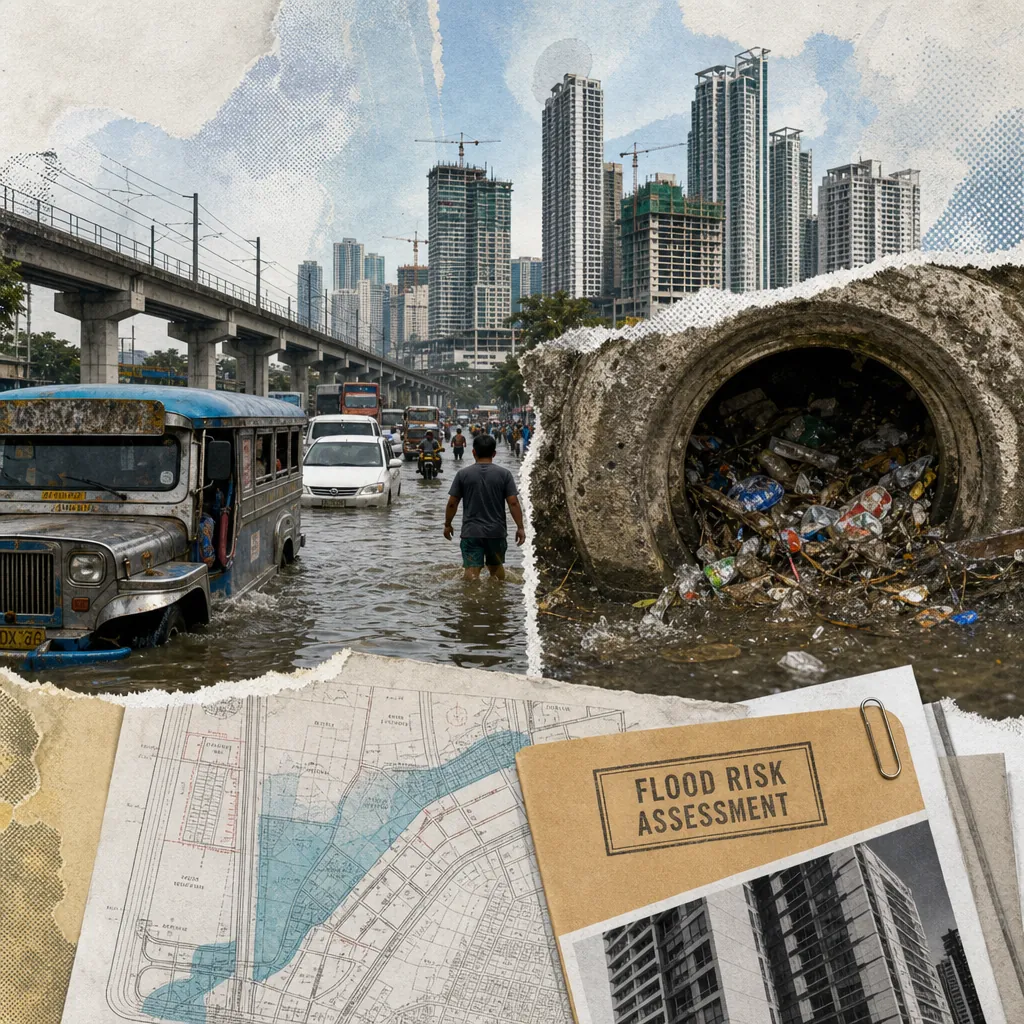
The conversation began unfolding on the evening of Sunday, June 21, 2026, when a series of posts from official accounts and news outlets documented sudden flash flooding across Metro Manila following intense thunderstorms. The Metropolitan Manila Development Authority (MMDA) posted almost apologetically about floods along EDSA Main Avenue, noting that waters receded quickly once garbage clogging steel gratings was cleared by residents. This set the tone for a narrative that immediately tied flooding not just to heavy rain but to systemic trash mismanagement. Within hours, posts from GMA News and other outlets showed flood waters on East Avenue in Quezon City ("gutter-deep" at 6 PM), on EDSA–Kamias, and in Valenzuela City, all with the same subtext: the floods were being exacerbated by blocked drainage. The Philippine Atmospheric, Geophysical and Astronomical Services Administration (PAGASA) advisories throughout the day had warned of thunderstorms over Greater Manila, Bulacan, Rizal, Laguna, and Cavite—areas that are also home to major township developments like Nuvali, Filinvest City, and Arca South. The timing was especially jarring for anyone monitoring real estate: the same afternoon that a hailstorm hit Magalang, Pampanga, discussions were already pivoting from weather updates to infrastructure accountability.
Conversation snapshot. The MMDA's post about clearing debris from EDSA drew 2,280 "haha" reactions and 1,408 on a Valenzuela flood post, revealing a dark humor among netizens who saw the garbage problem as a recurring punchline. GMA News's East Avenue flooding update received over 8,200 likes and 3,400 comments, making it the most engaged post of the day. A post from Bombo Radyo about flooding in Baclaran near the LRT station garnered 121 "haha" reactions and 114 comments, many sarcastically pointing out that underground drainage systems—often critical for nearby Ayala Land and DMCI projects—were failing at the first heavy rain of the season. The Department of Public Works and Highways (DPWH) post about declogging and 24-hour monitoring received 1,533 "haha" reactions, signaling low public trust in agency competency. On Twitter, PAGASA's thunderstorm advisories garnered up to 6,659 views but zero comments, serving as an authoritative alerting system rather than a conversational space. YouTube videos from @pilipinasweathernow (21K and 3K views) framed the flooding within a larger tropical cyclone context, warning that Typhoon Francisco (Mekkhala) would intensify the Southwest Monsoon, bringing sustained rains to Luzon through the coming days.
Key themes
- Trash as the immediate cause of flooding – The earliest narrative thread, driven by MMDA and news posts, consistently highlighted that floods receded only after garbage was removed from drainage grates. The high "haha" reaction counts on flood posts revealed a resignation—or dark humor—among netizens who saw the garbage problem as a recurring punchline. This early theme set the stage for deeper concerns about how developer master plans handle stormwater management in flood-prone zones.
- Infrastructure blame and developer accountability – By late evening, the conversation shifted from immediate cleanup to systemic criticism. A post from @carguideph asked bluntly, "Kamusta na ang flood control? Konting ulan baha na agad?" which encapsulated a growing frustration directed at local government and, by extension, the developers whose massive mixed-use townships (e.g., SMDC's MOA complexes, Megaworld's McKinley Hill, Vertis North) rely on municipal drainage networks. DPWH's reactive post felt inadequate, and the overwhelmingly "haha" sentiment signaled low public trust in agency competency. This thread directly threatened the sales pitch of any developer marketing flood-free living in areas like Bonifacio Global City (BGC), Makati Central Business District (CBD), or Nuvali.
- Typhoon Francisco amplifying the Habagat narrative – While the flooding story dominated Metro Manila feeds, YouTube updates from @pilipinasweathernow had already warned that Typhoon Francisco would intensify the Southwest Monsoon, bringing sustained rains to Luzon through the coming days. The Laguna provincial government's advisory on June 21 explicitly warned of potential flooding in low-lying CALABARZON areas from the enhanced Habagat. This expanded the geographic scope of concern beyond Metro Manila to include key real estate growth corridors like Cavite, Laguna, and Bulacan—all heavily marketed by Camella, Lumina Homes, and Vista Land for affordable house-and-lot packages. The ongoing threat of prolonged rains meant that the single-day flash flood narrative was not a one-off event but a preview of a whole monsoon season, raising lasting questions for property buyers about drainage design in new subdivisions.
- Developer responses amid macro pressures – On the same day, Megaworld Corp. announced it was cutting its capital expenditure (capex) for 2026 to P55 billion from the earlier P65 billion, citing rising raw material costs and higher interest rates. The company also scaled back residential launches to P50 billion. This news, while not directly related to flooding, added to a narrative of caution in the real estate sector. Meanwhile, Arthaland Corp. reported strong demand for its sustainability-focused projects in Laguna, with its Una Apartments Tower 3 carrying a sales value of about P2.3 billion. The company is pivoting to mid-market housing to dodge an industry glut. These contrasting moves—Megaworld pulling back, Arthaland pushing forward—highlight the divergent strategies developers are taking amid economic headwinds and environmental risks.
- Flood control projects under scrutiny – In Bohol, a P3.5-billion river protection project along the Loboc River is under scrutiny by provincial lawmakers following concerns that the massive flood control project could adversely affect the environment and tourism. The project, undertaken by DPWH, has drawn complaints from tourism stakeholders and local residents. This story, while outside Metro Manila, reinforces a broader theme of infrastructure projects facing public skepticism and environmental challenges.
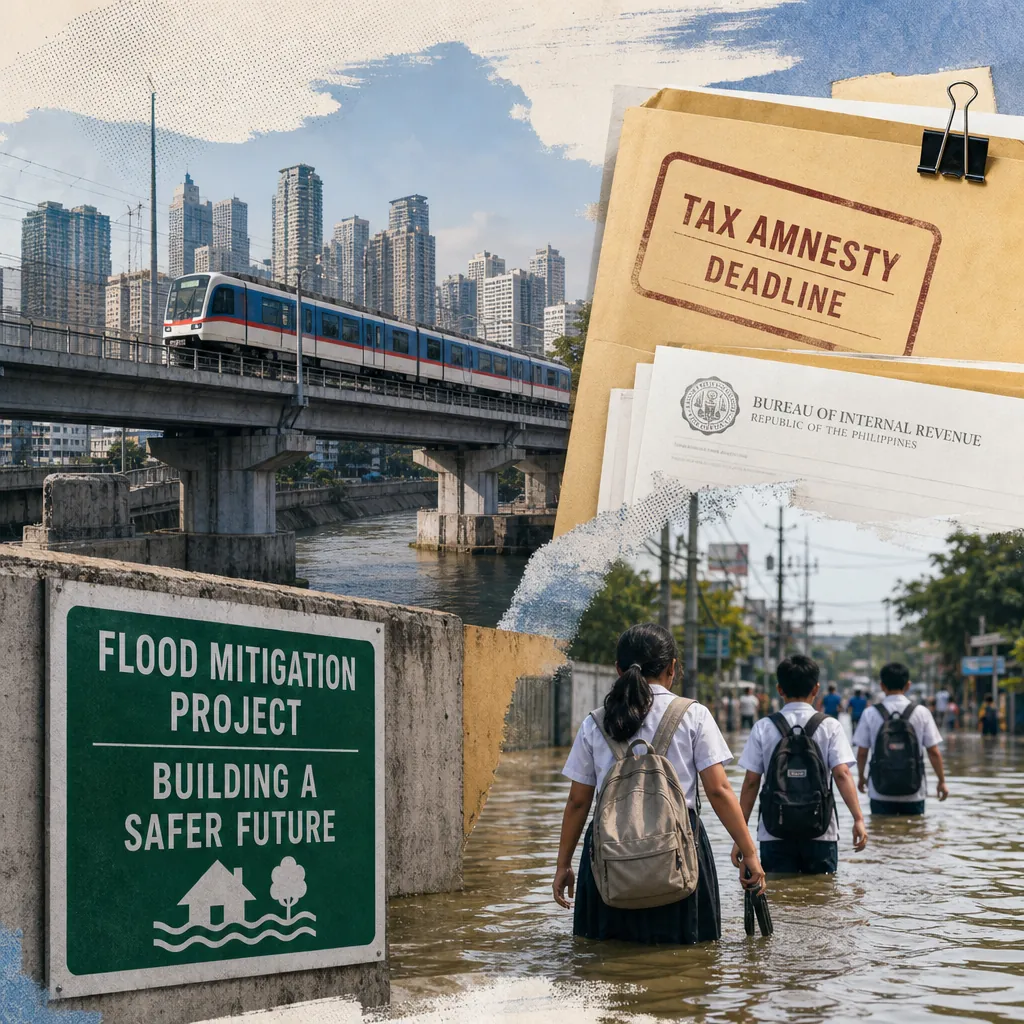
- Schools hit by tidal floods in Bulacan – In Hagonoy, Bulacan, tidal flooding during the second week of classes forced many schools to suspend in-person instruction and shift to modular and online learning. School officials are calling for elevated school buildings to keep students learning despite rising waters. The 4.9- to 5.2-foot high tides inundated campuses in communities nearest Manila Bay. This highlights the vulnerability of public infrastructure in low-lying areas and the need for climate-resilient design in community planning.
- Rainwater harvesting urged as El Niño nears – House Minority Leader Marcelino Libanan urged local government units to tap the People's Survival Fund (PSF) for rain-harvesting systems. Under the 2026 General Appropriations Act, P1 billion was allocated for the PSF to help finance climate adaptation initiatives, including the installation of functional rainwater collection and storage systems. This proposal comes amid an El Niño threat, with PAGASA saying that 47 areas, including Metro Manila, could experience dry weather by the end of November. The juxtaposition of flooding and drought underscores the need for integrated water management.
How the narratives stack
- Dominant narrative – The dominant story is that Metro Manila's flooding is caused by garbage-clogged drainage and inadequate infrastructure, with government agencies reacting rather than preventing. The public's response—heavy on sarcastic "haha" reactions—reflects a deep-seated frustration and resignation. This narrative directly impacts real estate by raising questions about flood resilience in urban and suburban developments. The conversation is amplified by news outlets and official accounts, with GMA News's East Avenue post receiving over 8,200 likes and 3,400 comments, indicating high public engagement and concern.
- Counter-narrative – A counter-narrative, driven by developer announcements, suggests that the real estate sector is adapting. Arthaland's strong sales in Laguna and its pivot to mid-market housing indicate that demand remains healthy for well-designed, sustainable projects. Megaworld's capex cut is framed as "measured growth" rather than retreat. This narrative attempts to project confidence and resilience, but it runs parallel to the flood conversation rather than directly engaging with it. The absence of developer-specific comments in the flood posts suggests that this counter-narrative has not yet been tested by direct public scrutiny.
- Emerging narrative – An emerging narrative links flooding to broader climate adaptation needs. The call for rainwater harvesting systems, the scrutiny of the Loboc River project, and the school closures in Bulacan all point to a growing recognition that infrastructure must be redesigned for extreme weather. This narrative is still fragmented but has the potential to coalesce into a demand for systemic change—including in how real estate developments are planned and marketed. The typhoon-enhanced monsoon season provides a recurring trigger that could accelerate this narrative.
- Suppressed narrative – The under-covered story is the specific role of real estate developers in contributing to or mitigating flood risk. While the conversation blames government agencies and trash mismanagement, there is little discussion of how massive township developments—with their impervious surfaces and altered drainage patterns—exacerbate flooding. Developers' flood control investments (e.g., retention ponds, elevated structures) are not being highlighted in the public discourse. This narrative is suppressed because the conversation is still focused on immediate causes (garbage) rather than systemic urban planning issues. However, as the monsoon season progresses, this could become a more prominent line of inquiry.
Platform insights
- Facebook – Facebook was the primary battleground for real-time flood reporting, with official accounts (MMDA, GMA News, ABS-CBN News) and news aggregators (Abante, Tribune) all posting within a few hours of each other. The high engagement on humor reactions (haha) and worried reactions (sad, care) created a layered emotional landscape—people were laughing at the absurdity but also genuinely concerned. The comment threads under GMA News's East Avenue post (3,416 comments) and Valenzuela post (945 comments) became de facto forums where residents named specific subdivisions and condo buildings that waterlogged fastest. This platform's community-driven nature allowed for rapid amplification of local knowledge, making it the most influential channel for shaping public perception of flood risk.
- Twitter (X) – DOST-PAGASA's thunderstorm advisories provided the factual backbone that news outlets quoted, but the platform lacked the same volume of community discussion. With zero comments on most tweets, Twitter served more as an authoritative alerting system rather than a conversational space. However, the view counts (up to 6,659 on one advisory) indicate high passive consumption by real estate professionals and buyers monitoring conditions before site visits. Twitter's role as a one-way information channel means it is less effective for gauging public sentiment but valuable for disseminating official warnings.
- YouTube – The two videos from @pilipinasweathernow (21K and 3K views) framed the flooding within a larger tropical cyclone context, which broader news outlets did not emphasize in their initial posts. This helped shift the narrative from a localized drainage issue to a sustained weather pattern affecting the entire Luzon real estate market—important for anyone evaluating preselling or ready-for-occupancy (RFO) properties in flood-prone provinces. YouTube's long-form format allows for deeper analysis, making it a platform for those seeking to understand the broader implications of weather events.
Key voices and communities
- Government agencies and official responders – The MMDA, DPWH, and local government units (LGUs) such as the Provincial Government of Laguna dominate the conversation as authoritative flood response and weather monitoring sources. These accounts generate high engagement through real-time incident reporting and cleanup updates, with MMDA's post on clearing debris from steel grating along EDSA receiving nearly 900 likes and substantial sharing. Their content consistently emphasizes swift action, such as removal of garbage blockages and 24-hour quick response team alerts. However, the public's sarcastic reactions (e.g., 1,533 "haha" on DPWH's post) indicate skepticism about the effectiveness of these efforts. These agencies indirectly shape public perception of flood risk in urban areas—a critical factor for property buyers evaluating locations like BGC, Makati CBD, or the Bay Area.
- Major news outlets and weather information providers – GMA News, ABS-CBN News, Bombo Radyo, and dedicated weather channels such as Pilipinas Weather Now serve as the primary amplifiers of flood and storm updates. Their posts consistently achieve the highest reach, with GMA News's East Avenue flooding update receiving over 8,200 likes and 3,400 comments. These accounts aggregate multiple official sources into digestible, shareable formats, driving broad public awareness. Their ability to concentrate public attention on specific flood-prone corridors (EDSA, C5, East Avenue) makes them essential partners for real estate stakeholders who need to address or mitigate flood concerns in mixed-use townships and preselling condos.
- Residents and commuters as informal fact-checkers – Local residents and commuters act as a decentralized, citizen-driven stakeholder group that directly intervenes in flood response (e.g., clearing garbage from steel grates) and shares real-time observations. Their anonymous contributions are frequently cited by official accounts and news outlets, giving them de facto authority in validating or challenging government effectiveness. This group's content often contrasts official messaging—for example, the comment "Kamusta na ang flood control? Konting ulan baha na agad?" captures a persistent skepticism that official efficiency reports cannot fully overcome. For real estate developers and property managers, this group's credibility on local flood patterns is unmatched. Engaging them through community forums or social listening can surface granular data on drainage issues in specific subdivisions or condo projects.
- Real estate developers and industry voices – While no developer directly commented on the flooding, several made announcements on June 21 that are relevant to the conversation. Megaworld Corp. announced a capex cut, signaling caution amid economic headwinds. Arthaland Corp. reported strong demand for its Laguna projects, positioning itself as a resilient player. The Chamber of Real Estate & Builders' Associations, Inc. (CREBA) is preparing for its 2026 National Convention with the theme "Beyond Shelter: Creating Communities, Transforming Lives". These voices are not yet engaging with the flood narrative, but their announcements provide context for how the sector is navigating macro pressures. Their silence on flooding could become a vulnerability if the conversation shifts to developer accountability.
Narrative streams
Flooding and infrastructure failure
The core narrative stream is the immediate flooding event and its attribution to garbage-clogged drainage. Posts from MMDA and GMA News showed floodwaters on major roads, with the MMDA noting that waters receded only after residents cleared trash from steel gratings. This framing—that flooding is a solvable problem of waste mismanagement—dominated the early conversation. However, the public's reaction, characterized by high "haha" reaction counts, suggests a deeper cynicism. The 2,280 "haha" reactions on the MMDA post and 1,533 on the DPWH post indicate that many see these cleanup efforts as Band-Aid solutions rather than systemic fixes. This narrative stream is significant for real estate because it directly challenges developer claims of "flood-free" living. If even EDSA—a national highway—can become impassable due to trash, then adjacent townships like Vertis North or Arca South are not immune. The conversation implicitly questions whether developers' drainage master plans are adequate when the surrounding municipal infrastructure is unreliable.
Developer caution and market recalibration
On the same day, Megaworld Corp. announced it was cutting its capital expenditure for 2026 to P55 billion from the earlier P65 billion, and scaling back residential launches to P50 billion. The company cited rising raw material costs and higher interest rates. This news, reported by multiple outlets, adds to a narrative of caution in the real estate sector. Megaworld's executive director Kevin Tan said, "We are not waiting for the environment to improve, and our strategy is built to perform within it". This statement reflects a defensive posture, acknowledging headwinds while projecting confidence. In contrast, Arthaland Corp. reported strong demand for its Una Apartments project in Biñan, Laguna, with Tower 3 carrying a sales value of P2.3 billion. The company is pivoting to mid-market housing to dodge an industry glut. These contrasting moves highlight the divergent strategies developers are taking: some are pulling back, while others are pushing into underserved segments. The flood conversation adds another layer of risk for developers with projects in flood-prone areas, as buyer concerns about drainage could further dampen demand.
Climate adaptation and policy responses
A third narrative stream involves policy responses to climate risks. House Minority Leader Marcelino Libanan urged local government units to tap the People's Survival Fund for rain-harvesting systems, noting that P1 billion was allocated for this purpose in the 2026 budget. This proposal comes amid an El Niño threat, with PAGASA warning that 47 areas could experience dry weather by the end of November. The juxtaposition of flooding and drought underscores the need for integrated water management. Meanwhile, in Bohol, a P3.5-billion river protection project along the Loboc River is under scrutiny over environmental and tourism concerns. The project, undertaken by DPWH, has drawn complaints from tourism stakeholders. These stories, while not directly about Metro Manila, contribute to a broader narrative of infrastructure projects facing public skepticism and environmental challenges. For real estate, this narrative stream suggests that future developments may face stricter environmental reviews and higher standards for climate resilience.
School disruptions and community vulnerability
In Hagonoy, Bulacan, tidal flooding during the second week of classes forced many schools to suspend in-person instruction and shift to modular and online learning. School officials are calling for elevated school buildings to keep students learning despite rising waters. The 4.9- to 5.2-foot high tides inundated campuses in communities nearest Manila Bay. This story highlights the vulnerability of public infrastructure in low-lying areas and the need for climate-resilient design in community planning. For real estate developers, this serves as a reminder that flood risk extends beyond Metro Manila to coastal and riverside communities. Affordable housing projects in these areas, such as those by Camella and Lumina Homes, may face reputational exposure if buyers perceive them as flood-prone. The school closures also underscore the broader social and economic costs of flooding, which can affect property values and community stability.
Conversation trajectory
- Next 48–72 hours: The immediate conversation will likely shift from reporting to analysis, with users sharing past flood comparisons and tagging developers whose projects are in affected areas. Real estate content creators and brokers may see a spike in questions about elevation levels, drainage systems, and historical flood data for listings near EDSA, C5, and other affected roads. The high engagement on flood posts suggests that this topic will remain top-of-mind for several days.
- Next 5–7 days: Expect the conversation to pivot toward systemic criticism, with posts questioning "dapat inayos na ng developers ang drainage" (developers should have fixed the drainage) and "sino ang magbabayad ng damage?" (who will pay for the damage?). This shift will put pressure on township and mixed-use developers to proactively communicate their flood mitigation measures. Early warning signs include the high engagement on posts that question flood control effectiveness, such as "Kamusta na ang flood control? Konting ulan baha na agad?".
- Next 2–4 weeks: The typhoon-enhanced monsoon season will test whether infrastructure improvements were actually made. If another heavy rainfall event occurs within the week, expect latent concerns to erupt into direct questions about specific projects' drainage certifications and building permits. Homebuyers and investors in preselling or recently turned over units may start linking weather events to potential defects—water seepage, mold, foundation issues—particularly for mid-rise and high-rise projects in flood-prone cities like Cavite, Laguna, and Bulacan.
- Trigger events that could reshape the conversation: The release of PAGASA's post-event rainfall and flood impact report (expected within 7–10 days) will provide official data to anchor claims. The next major typhoon or monsoon enhancement (likely within 4–6 weeks during the peak of the rainy season) will test whether infrastructure improvements were actually made. The upcoming quarterly earnings calls and investor briefings for publicly listed developers (mid-July to August) will face questions on how weather risks are being managed in project planning.
Response guidance
- Platform-specific approaches: On Facebook, publish visual content demonstrating proactive flood mitigation measures at project sites, such as drainage clearing and elevation strategies. Use before-and-after photos to show quick response. Engage commenters on posts about localized flooding by sharing actionable tips for property owners, like checking drainage or using water barriers. On Twitter, use real-time weather updates from PAGASA to inform followers about conditions affecting project areas. Create a branded hashtag like #SafeLivingPH to consolidate flood-related updates and testimonials from residents about well-maintained communities. On YouTube, produce short explainer videos on how modern township designs incorporate flood control (e.g., retention ponds, elevated structures). Add links in video descriptions to pages showing specific flood-prevention features of your projects.
- Key messages: "Our developments are designed with climate resilience in mind—from elevated building pads to adequate drainage systems that are regularly maintained." "We work closely with local government and agencies like DPWH and MMDA to ensure our communities are not contributing to urban flooding." "For current residents: if you experience flooding in your area, our 24/7 property management team is ready to assist. Your safety is our priority." "Transparency matters: we share our flood mitigation plans and annual drainage inspections with homeowners associations."
- Sensitive topics to navigate: Avoid deflecting blame to government or residents. Posts like "BAHA NA DULOT NG BASURA?" (Flooding caused by garbage?) can be interpreted as victim-blaming. Instead, acknowledge the shared responsibility of waste management while emphasizing the developer's role in maintaining proper drainage infrastructure. Do not claim that your projects are "flood-free"—that invites scrutiny during every heavy rain. Instead, use language like "minimizing flood risk" and "designed for heavy rainfall events." Address any implication that affordable housing is more prone to flooding by highlighting that all price points receive the same drainage standards.
- Response priorities: During active flooding, prioritize replying to social media queries from residents or potential buyers in affected project areas. Provide a dedicated hotline number in pinned comments. Within one week, publish a series of posts showcasing flood prevention investments: regular declogging, elevated infrastructure, and partnerships with DPWH. This turns a weather event into a credibility opportunity. For concerned motorists and the public, use targeted ads or promoted posts that appear alongside flood threads with a message like: "Looking for a home that withstands the weather? See our flood-resistant features."
See the full picture behind today's signals.
This report draws from Media Meter's MediaWatch, our real-time monitoring engine tracking 2,470+ Philippine sources across print, broadcast, digital, and social. Explore how the platform turns raw coverage into decision-grade intelligence, then see how it's configured for teams like yours — whether you're in PR agencies, corporate comms, government, or marketing.
Want more? Browse our Report Library for sector and crisis intelligence, or request a demo and we'll have your brand set up before the call.
Want this kind of intelligence on your brand?
This brief is built on the same MediaWatch methodology that runs continuously across every brand we monitor. See your competitive landscape, Impact Score, and narrative trajectory in a 30-minute demo.